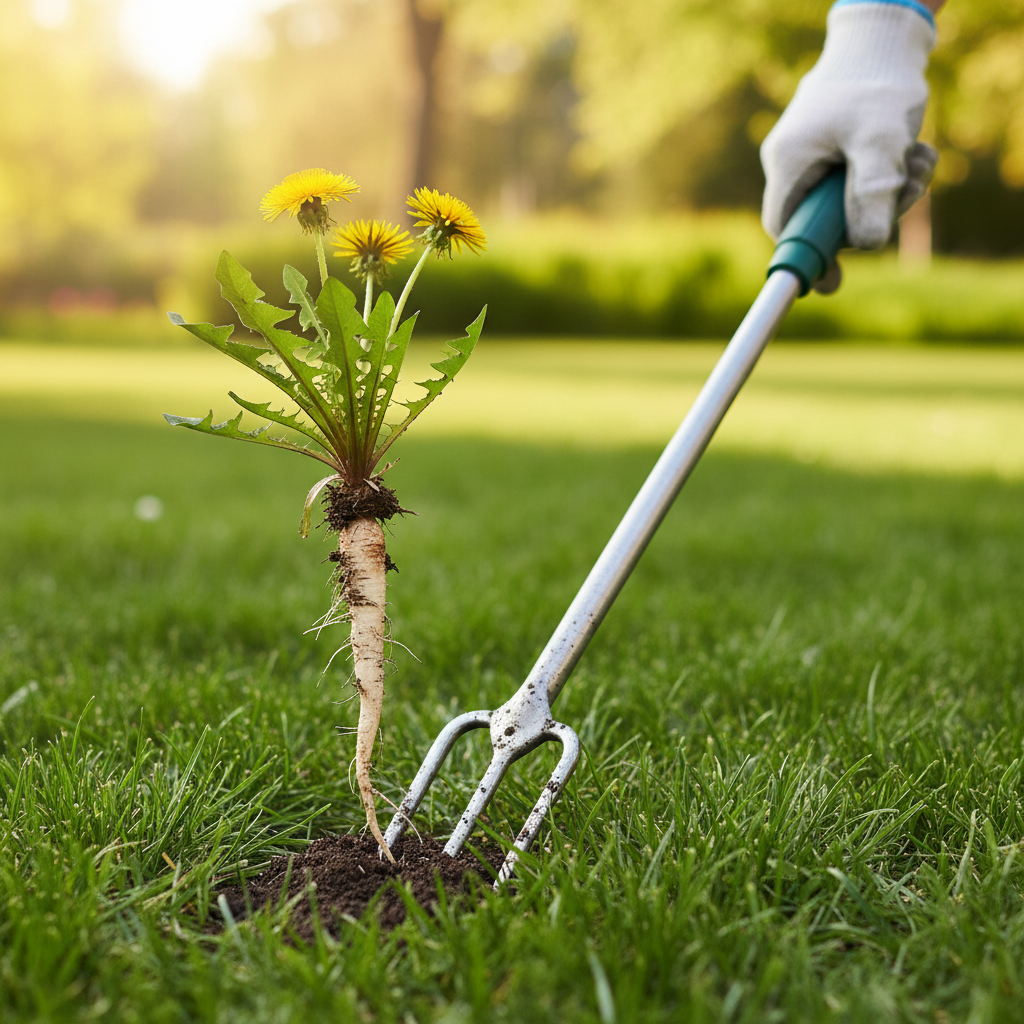
- Walk your lawn and identify all dandelion plants, noting their density and distribution. Are they scattered, or are there large clusters?
- Consider the overall health of your lawn. Thin, weak turf is more susceptible to dandelion invasion.
- If your lawn is generally healthy but has scattered dandelions: Manual removal or spot treatment is usually sufficient.
- If your lawn is thin and covered in dandelions: A broadcast herbicide application followed by significant lawn health improvements (aeration, overseeding, fertilizing) will be necessary.
Landscaping · Deck or fence project
| Project category | Landscaping |
|---|---|
| Problem type | Deck or fence project |
| Trade required | Landscaping |
| Urgency | Planned project |
| Safety risk | Moderate safety risk |
| DIY suitability | DIY for experienced homeowners |
| Cost category | High cost |
| Typical timeline | Most builds 3–10 days depending on size |
| Contractor type | Landscaping contractor |
Repair option
Replace failed boards, posts, and hardware; reseal the surface.
Replacement option
Rebuild when framing or the ledger connection is unsafe.
Common causes
- Rot at posts and ledger
- Storm damage
- Adding outdoor living space
Relevant tools:home improvement material pricesproject cost estimator
Published April 26, 2026Last updated August 17, 2026
Tools & materials you'll need
Affiliate linksAs an Amazon Associate FixlyGuide earns from qualifying purchases — at no extra cost to you. Prices and availability are accurate as of publication and subject to change.
Quick Answer
The most common mistake homeowners make when tackling dandelions is treating only the visible plant, not understanding its deep taproot system. True eradication requires either physically removing the entire taproot so it cannot regenerate, or using targeted herbicides that translocate to the root, preventing regrowth from the crown. Ignoring the taproot guarantees a speedy return.
The Problem
Dandelions are one of the most frustrating and persistent weeds for homeowners, seemingly popping up overnight and spreading rapidly. What looks like a simple nuisance on the surface is actually a formidable opponent beneath the soil. Many homeowners instinctively pull the yellow flower or spray the visible leaves, only to find the dandelion returning with a vengeance days or weeks later. This isn't bad luck; it's a fundamental misunderstanding of the dandelion's biology. The root of the problem (pun intended) lies with its deep, robust taproot. This taproot can extend 6 to 18 inches, or even deeper in loose soil, allowing the plant to store significant food reserves and regenerate aggressively from even a small piece left behind. Simply decapitating the plant or scorching its leaves with non-systemic treatments signals the taproot to send up new shoots, often making the problem worse by encouraging stronger growth or even multiple crowns from a damaged root. The true challenge is not just removing the green top, but eliminating the entire taproot to prevent regrowth and stop the spread of its prolific seeds.
How It Works
To effectively combat dandelions, it's crucial to understand their life cycle and unique construction. A dandelion (Taraxacum officinale) is a perennial broadleaf weed, meaning it lives for more than two years and has flat, wide leaves, unlike grasses. Its most defining characteristic is its thick, fleshy taproot. This taproot acts like an underground pantry, storing carbohydrates that fuel the plant's growth and allow it to survive harsh conditions, including drought and repeated attempts at removal. When you pull the top off a dandelion, or even just sever the crown (the point where the leaves emerge from the root), the taproot typically has enough stored energy to send up new shoots. In some cases, a damaged taproot can even split, leading to multiple new plants emerging from what was once a single dandelion.
Beyond the taproot, dandelions are masters of propagation. Each bright yellow flower head, if left undisturbed, produces hundreds of seeds. These seeds are attached to feathery parachutes, perfectly designed to be carried by the wind for miles, easily colonizing new areas of your lawn and your neighbors' lawns. A single dandelion plant can produce thousands of seeds in a season. Furthermore, dandelions have an impressive ability to adapt. They thrive in compacted, nutrient-poor soil where turfgrass struggles, often outcompeting grass for resources. Their broad leaves can smother young grass seedlings, and their deep roots can out-compete shallower-rooted lawn grasses for water and nutrients, further exacerbating their spread. Understanding this combination of deep taproots, prolific seed production, and competitive growth habits is key to developing an effective long-term eradication strategy.
Step-by-Step Fix
Step 1: Identify and Assess — Before you act, know your enemy.
- Walk your lawn and identify all dandelion plants, noting their density and distribution. Are they scattered, or are there large clusters?
- Consider the overall health of your lawn. Thin, weak turf is more susceptible to dandelion invasion.
- If your lawn is generally healthy but has scattered dandelions: Manual removal or spot treatment is usually sufficient.
- If your lawn is thin and covered in dandelions: A broadcast herbicide application followed by significant lawn health improvements (aeration, overseeding, fertilizing) will be necessary.
Step 2: Choose Your Weapon — Select the right removal method for the job.
- Manual Removal (Best for sparse dandelions): This is the most eco-friendly option but requires diligence.
- Tools: A dandelion weeder (a long, narrow tool designed to dig deep), a sharp trowel, or a crack weeder.
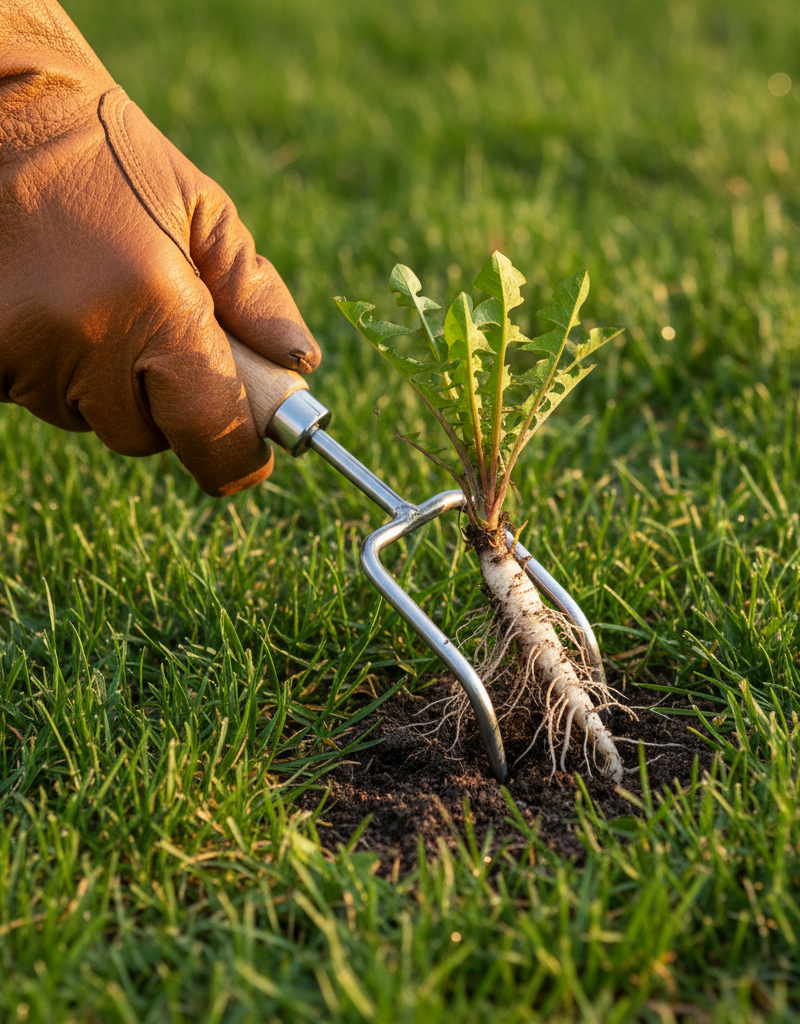
- Technique: Water the area thoroughly 24 hours before to soften the soil. Insert the tool next to the dandelion, angling it to follow the taproot as deep as possible. Pry up gently, ensuring the entire taproot comes out. Aim for at least 6–8 inches of root. If any part of the root crown or upper taproot breaks off, it will likely regenerate.
- Safety: Wear gardening gloves to protect your hands.
- Spot Treatment (Targeted herbicide for moderate invasions): Use a liquid, selective broadleaf herbicide.
- Product: Look for products containing 2,4-D, MCPP, or dicamba. These chemicals kill broadleaf weeds but spare grass.
- Application: Follow manufacturer instructions precisely. Apply directly to dandelion leaves on a calm, windless day to avoid drift to desirable plants. Apply when dandelions are actively growing (temperatures between 45–85°F) and not stressed by drought.
- Safety: Wear gloves, eye protection, and long sleeves. Do NOT apply near water sources or during rain.
- Broadcast Treatment (For severe infestations): If dandelions are rampant, a granular weed and feed product or a widespread liquid application may be needed.
- Product: Choose a weed and feed specific for broadleaf weeds. For liquid, consider hose-end sprayers for even coverage.
- Timing: Apply when rain is expected within 24–48 hours (for granular) or when temperatures are in the optimal range (45–85°F) for liquid. Ensure the lawn is moist.
- Safety: Read all label instructions carefully. Keep pets and children off the treated area until it's dry (liquid) or according to product instructions (granular).
Step 3: Post-Treatment Care (Manual Removal) — Don't leave a void for new weeds.
- After removing the dandelion, fill the hole with good quality topsoil or compost.
- Immediately sprinkle grass seed over the repaired area and lightly rake it in. This prevents other weed seeds from germinating in the exposed soil.
- Water the seeded area daily until new grass establishes.
Step 4: Post-Treatment Care (Herbicide Application) — Maximize effectiveness and prevent recurrence.
- Wait: Allow the herbicide to work. Most systemic herbicides take 7–14 days to show full effect. Do not mow for 2-3 days before or after application.
- Water Sparingly: Avoid heavy watering for 24–48 hours after liquid application to allow the herbicide to be absorbed.
- Monitor: Watch for yellowing and wilting of dandelions. If some survive, a repeat application may be needed after the recommended waiting period (check product label, usually 2-3 weeks).
Step 5: Follow Through with Prevention — The long-term strategy.
- Mow High: Set your mower to 3 inches or higher. Taller grass shades the soil, making it harder for dandelion seeds to germinate.
- Fertilize Properly: A healthy, dense lawn crowds out weeds. Fertilize 3–4 times a year based on soil test results.
- Overseed Annually: Introduce new grass varieties that are more vigorous and resistant to weeds and pests.
- Water Deeply and Infrequently: Encourage deep grass roots that can outcompete dandelions for moisture.
Common Causes
- Compacted Soil: Dandelions thrive in compacted soil where grass struggles. Their strong taproots can easily penetrate hard earth. Soil compaction prevents proper air, water, and nutrient exchange for turfgrass, creating an ideal environment for dandelions.
- Weak, Thin Lawn: A sparse or unhealthy lawn leaves open spaces and less competition for dandelion seeds to germinate and establish. Bare spots are an open invitation for weeds.
- Low Mowing Height: Mowing your lawn too short (below 3 inches) stresses grass, reduces its vigor, and allows more sunlight to reach the soil, encouraging weed seed germination.
- Improper Fertilization: Either too much or too little fertilizer, or applying the wrong type, can weaken your lawn. Also, using weed and feed products at the wrong time can be ineffective.
- Allowing Dandelions to Go to Seed: Each dandelion flower can produce hundreds of seeds, which are then carried by wind to rapidly spread across your and your neighbors' lawns. Ignoring a few yellow flowers quickly leads to a sea of white puffballs.
- Incorrect Removal Methods: Simply chopping off the top of a dandelion or leaving part of the taproot allows the plant to regenerate, often stronger than before, by drawing on stored energy reserves in the root.
Common Mistakes
- Pulling Without the Root: The single biggest mistake. If you pull the top off a dandelion but leave a significant portion of its taproot in the ground, it will almost certainly regenerate, often sending up multiple new shoots. Always aim to get at least 6-8 inches of the taproot.
- Mowing Over Flowering Dandelions: This scatters thousands of viable seeds across your lawn, effectively planting new dandelions with every pass. Remove flowers before they turn to seed if possible.
- Applying Herbicide at the Wrong Time: Applying herbicides when temperatures are too cold or too hot, or when dandelions are stressed, will drastically reduce their effectiveness. They need to be actively growing to absorb the chemical.
- Using Non-Selective Herbicides on the Lawn: Products like glyphosate (Roundup) will kill dandelions, but they will also kill your grass. Always use a selective broadleaf herbicide when treating weeds in your lawn.
- Ignoring Soil Health: A beautiful lawn is less susceptible to weeds. Simply killing dandelions without addressing underlying issues like compacted soil, poor fertility, or incorrect mowing ensures they'll return. Address the root cause, not just the symptom.
- Not Following Up: Getting rid of dandelions is rarely a one-time event. Successful control requires consistent effort, including proper lawn care, annual overseeding, and regular monitoring for new invaders.
Cost & Time Breakdown
| Task | DIY Cost | Pro Cost | Time |
|---|---|---|---|
| Manual Weeding (per plant) | $0–$5 | N/A | 1–2 minutes |
| Spot Treatment (DIY herbicide) | $10–$25 | $75–$150 (visit) | 15–30 minutes |
| Broadcast Herbicide (DIY) | $30–$80 | $150–$300 (full lawn) | 30–60 minutes |
| Professional Lawn Treatment | N/A | $200–$600 (seasonal) | Varies |
| Lawn Amendments (seed, soil) | $20–$100 | N/A | 1–2 hours |
Tips & Prevention
- Mow Your Lawn Higher: Maintain a grass height of 3 inches or more. Taller grass shades out young dandelion seedlings, preventing their growth and keeping the soil cooler and moister.
- Feed Your Lawn Regularly: A thick, healthy, well-fertilized lawn is the best defense against weeds. Conduct a soil test every few years to determine your lawn's specific nutrient needs.
- Overseed Annually: In late summer or early fall, overseed your lawn. This introduces new grass plants, making your turf denser and more competitive against weeds like dandelions.
- Water Deeply, Less Frequently: Encourage deep root growth in your turfgrass by watering deeply (1 inch per week) but infrequently. This helps grass outcompete dandelions for water.
- Catch Dandelions Before They Seed: If you see yellow flowers, remove them promptly by hand or spot treat before they turn into white puffballs and release thousands of seeds into your lawn.
- Aeration for Compacted Soil: If your soil is compacted, consider aerating annually or bi-annually. This improves air, water, and nutrient penetration, making your lawn healthier and less hospitable to dandelions.
When to Call a Professional
If your lawn is overwhelmed with dandelions, covering more than 30-40% of the area, or if you've repeatedly tried DIY methods without success, it's time to call a professional lawn care service. They have access to stronger, commercial-grade herbicides and specialized equipment for effective application that aren't available to homeowners. Furthermore, a professional can accurately diagnose underlying soil issues like extreme compaction or nutrient deficiencies that are contributing to the dandelion invasion and develop a comprehensive, long-term lawn health plan that includes proper fertilization, aeration, and potentially more advanced weed control strategies. They can save you significant time and effort, ensuring a healthier lawn in the long run.
Related Articles
Keep troubleshooting with these hand-picked guides from FixlyGuide:
- The #1 Mistake Killing Your Lawn's Clover—and the Easy fix That Spares Your Grass — Discover the most common mistake homeowners make when trying to eliminate clover, and learn how to remove it effectively without harming yo…
- The #1 Mistake Homeowners Make When Fighting Dandelions (And The Weeds Still Win) — Learn the surprising reason dandelions continue to plague your lawn and the effective, long-term strategies to reclaim your turf without en…
- The #1 Mowing Mistake That Invites Weeds (And How to Fix It in 15 Minutes) — Discover the secret to a thriving lawn and banish weeds by avoiding the most common mowing error homeowners make, improving grass health dr…
- The #1 Mistake Killing Your Lawn's Clover—And 3 Secrets to Get Rid of It for Good — Discover the common mistake homeowners make when trying to eliminate clover and learn three effective, grass-safe strategies to remove it p…
- The #1 Lawn Aeration Mistake Most Homeowners Make (And How to Fix It) — Timing is everything when it comes to lawn aeration, and doing it at the wrong time can do more harm than good for your grass.
- The #1 Mistake Homeowners Make When Their AC Drain Clogs (And The $5 Fix) — Discover the most common error homeowners make when tackling a clogged AC drain line and learn a simple, inexpensive solution to prevent co…
Should you do this yourself?
Answer five quick questions before you start. Safety outranks savings every time.
Your experience with work like this
How high do you have to work?
Does the job involve any of these?
Will it need a permit?
Specialty tools
Free and instant. Educational guidance only — not a quote, inspection, or professional diagnosis.
What should this project cost?
Enter your project details for a realistic cost range before you call anyone.
Cost depends heavily on which system turns out to be the source.
- Regional adjustment
- National average
- Labor share (typical)
- ~$1,620
- Quotes to collect
- 3 written estimates
Educational estimate based on national averages — not a binding quote. Always confirm with written local estimates.
Before you start
Check the difficulty, permits, and safety risk — then decide whether to call a pro.
- Estimate this projectGet a cost range for your scope and ZIP before you call anyone.Open
- Get local estimatesSend one request and compare written estimates from vetted pros.Open
Free, no signup required. Estimates are educational guidance, not a quote or an inspection.
Frequently asked questions
Why do dandelions keep coming back after I pull them?+
Dandelions return because they have a deep taproot that can regrow the plant from even a small piece left in the soil. If you don't remove the entire taproot, the dandelion will simply regenerate from the stored energy in the root.
What is the best time of year to get rid of dandelions?+
The best times are early spring (when they first emerge) and especially early fall. In fall, dandelions are actively sending nutrients down to their roots to prepare for winter, making them more susceptible to systemic herbicides that travel to the taproot.
Will mowing dandelions get rid of them?+
No, mowing only removes the visible flower and leaves. It does not kill the taproot and can actually spread seeds if the flowers have already turned into white puffballs. Mowing too short also weakens your grass, making it easier for new dandelions to establish.
Are 'weed and feed' products effective for dandelions?+
Weed and feed products can be effective if applied correctly at the right time (when dandelions are actively growing) and in the right conditions (often requiring a wet lawn for granular products). However, results can vary, and they may be less precise than targeted liquid spot treatments.
How can I prevent dandelions from coming back next year?+
Prevention is key: maintain a dense, healthy lawn by mowing high (3+ inches), fertilizing properly, overseeding annually in the fall, and watering deeply but infrequently. These practices help your grass outcompete dandelion seeds and seedlings.

Discussion
Loading comments…