- The 1 Summer Lawn Mistake Turning Your Grass Yellow (and How to Fix It) — Discover the most common summer lawn mistake that causes yellowing grass and learn the simple steps to revive your lawn.
- The 1 Summer Lawn Mistake That Guarantees Yellow Grass (It's Not Drought) — Understanding the most common mistake homeowners make with summer lawn care can save your grass from turning yellow and dying.
- Why Your Lawn Has Brown Spots AFTER Watering (And the Real Culprit) — Brown spots appearing after watering the lawn often signal improper watering techniques, soil compaction, or underlying issues like fungal…
- How Often to Water Your Lawn in Summer: A Homeowner's Guide — Watering your lawn correctly in summer is crucial for its health and appearance, preventing common issues like browning and shallow root gr…
- The 1 Mistake Turning Your Green Lawn Brown After Watering — Watering your lawn should make it greener, but brown spots appearing afterward can signal common issues like overwatering, fungal disease,…
Landscaping · Deck or fence project
| Project category | Landscaping |
|---|---|
| Problem type | Deck or fence project |
| Trade required | Landscaping |
| Urgency | Planned project |
| Safety risk | Moderate safety risk |
| DIY suitability | DIY for experienced homeowners |
| Cost category | High cost |
| Typical timeline | Most builds 3–10 days depending on size |
| Contractor type | Landscaping contractor |
Repair option
Replace failed boards, posts, and hardware; reseal the surface.
Replacement option
Rebuild when framing or the ledger connection is unsafe.
Common causes
- Rot at posts and ledger
- Storm damage
- Adding outdoor living space
Relevant tools:home improvement material pricesproject cost estimator
Published April 17, 2026Last updated August 17, 2026
How it works
A green lawn is a dense collection of individual grass plants performing photosynthesis. This process uses chlorophyll—the pigment that gives grass its green color—to convert sunlight, water, and carbon dioxide into energy for growth. The health of this system relies on a delicate balance, particularly during the high-stress conditions of summer.
Grass plants absorb water and nutrients through their root systems and release water vapor through their blades in a process called transpiration, which cools the plant. When summer heat intensifies, transpiration rates increase dramatically. If the roots cannot absorb water fast enough to match this loss, the plant becomes stressed. To conserve moisture, the plant's stomata (pores on the blades) close, slowing photosynthesis. This metabolic slowdown reduces chlorophyll production, causing the vibrant green to fade to yellow, a condition known as chlorosis.
Improper watering is the primary disruptor. Underwatering directly causes drought stress and cell dehydration. Conversely, overwatering saturates the soil, displacing oxygen that roots need for respiration. Oxygen-starved roots become inefficient, unable to absorb adequate water and nutrients, leading to the same yellowing symptoms as a drought-stricken lawn. Furthermore, waterlogged soil creates an ideal environment for fungal pathogens that can attack the grass, compounding the discoloration.
Step-by-Step Fix
Follow these diagnostic steps in order. The most common issues are addressed first. Do not apply fertilizer or pest control products until you have confirmed a diagnosis, as these can further stress a lawn suffering from drought or disease.
-
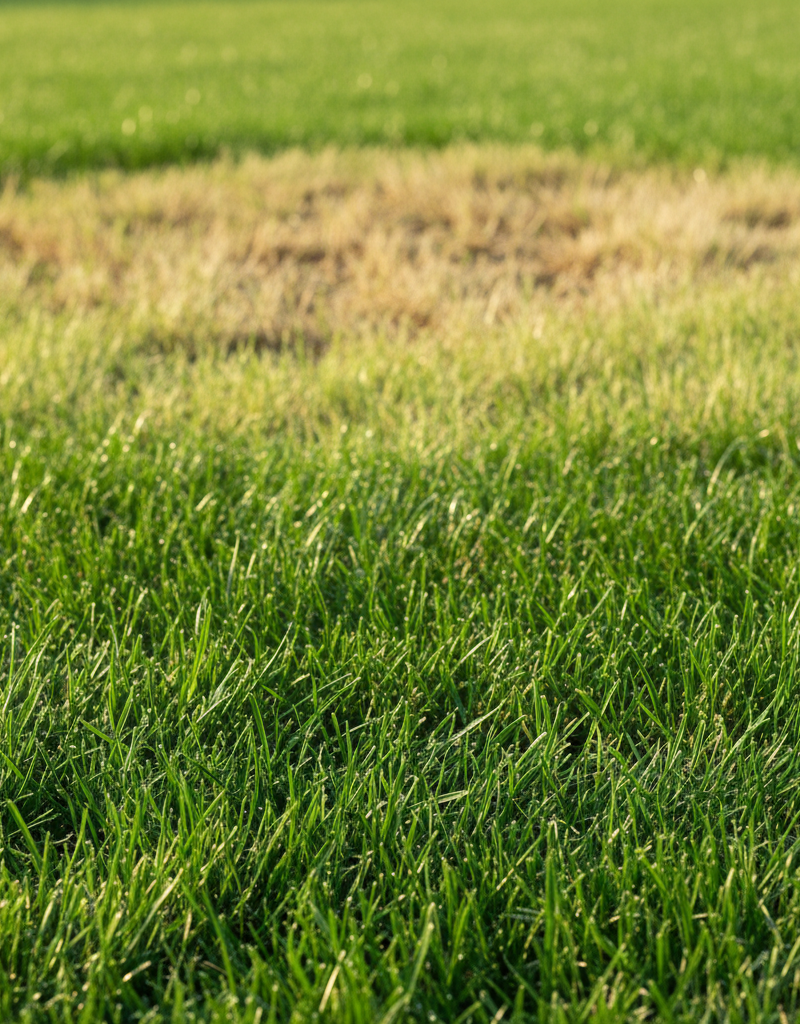
Perform a Visual Pattern Analysis — Before touching the lawn, observe the pattern of yellowing. Uniform yellowing across large areas exposed to full sun often points to heat stress and underwatering. Distinct, irregular patches or circles may indicate a fungal disease, pest damage, or localized issues like dog urine spots or compacted soil. Yellowing concentrated in low-lying, shady areas suggests overwatering and poor drainage.
-
Evaluate Soil Moisture — Use a 6-inch screwdriver or a small garden trowel to test the soil. In a yellow area, push the tool into the ground. If it penetrates easily and the soil is damp or muddy 2-4 inches down, overwatering is likely. If you meet significant resistance and can barely push the screwdriver more than 1-2 inches deep, the soil is dry and compacted, indicating underwatering.
- Probing Tip: Perform this test midway between watering sessions to get an accurate reading of typical soil conditions.
-
Conduct an Irrigation Audit — To confirm your watering amount, place several empty, flat-bottomed containers (like tuna or cat food cans) randomly across your lawn. Run your sprinkler system for a full cycle. Measure the depth of water in each can with a ruler and calculate the average. Most lawns require approxiately 1 to 1.5 inches of water per week, delivered in one or two deep sessions.
- This test also reveals poor sprinkler coverage. If some cans are full while others are nearly empty, you need to adjust sprinkler heads for more uniform distribution.
-
Correct an Underwatering Schedule — If your audit shows you are applying less than 1 inch of water per week, adjust your irrigation controller. Water deeply 1-2 times per week instead of shallowly every day. This encourages roots to grow deeper, making the lawn more resilient. Water between 4 AM and 8 AM to minimize evaporation from wind and sun.
- Cycle and Soak: If water runs off before it soaks in (common on slopes or in clay soil), use your controller's "cycle and soak" feature. Split the total watering time into two or three shorter cycles, with a 30-60 minute pause in between to allow for absorption.
-
Remedy an Overwatering Problem — If the soil is consistently soggy, immediately reduce watering frequency. Turn off automatic schedules and water manually only when the top 2 inches of soil feel dry. Check for leaking sprinkler heads or valves. In persistent cases, poor drainage is the culprit.
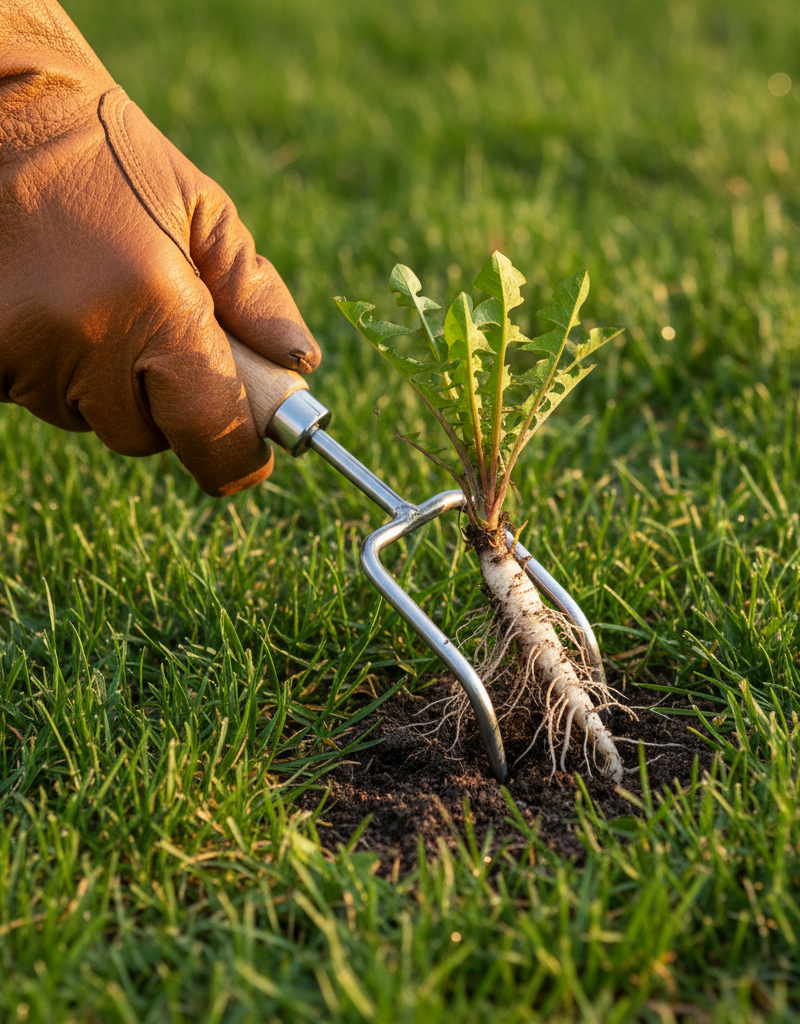
- Improve Drainage: Annual core aeration is the best long-term solution. For a quick fix in a small, waterlogged area, you can use a garden fork to manually poke deep holes into the soil to introduce air and improve water penetration.
-
Adjust Mowing Height — Raise your mower deck. Most cool-season grasses (like Fescue and Kentucky Bluegrass) thrive when mowed at 3 to 4 inches. Warm-season grasses (like Bermuda and Zoysia) can be shorter, but raising them to 2-2.5 inches during peak summer heat provides benefits. Taller grass shades the soil, keeps it cooler, reduces evaporation, and encourages deeper root growth. Never remove more than one-third of the blade height in a single mowing.
-
Diagnose Nutrient Deficiencies — If watering adjustments don't improve the lawn's color after 2-3 weeks, suspect a nutrient issue. Yellowing is a classic sign of nitrogen deficiency. A general yellowing with new blades appearing green might indicate an iron deficiency. Purchase a soil test kit from a local nursery or send a sample to your state's cooperative extension service for a detailed analysis of nutrient levels and pH.
- Soil Sample Collection: Use a trowel to collect 10-15 small soil cores, 4-6 inches deep, from various locations around the lawn. Mix them together in a clean bucket to create a single composite sample for testing.
-
Apply Corrective Nutrients — Based on your soil test, apply the required nutrients. For summer nitrogen application, use a slow-release granular fertilizer to prevent burning the lawn. Apply at a half-rate (e.g., 0.5 lbs of Nitrogen per 1,000 sq. ft.) to avoid surge growth. For a fast green-up without stimulating excessive growth, apply a liquid chelated iron supplement with a hose-end or pump sprayer, following all label instructions precisely.
- Warning: Never fertilize a dormant or severely drought-stressed lawn. Water the lawn thoroughly a day or two before applying any granular product, and water it in lightly afterward to activate it.
-
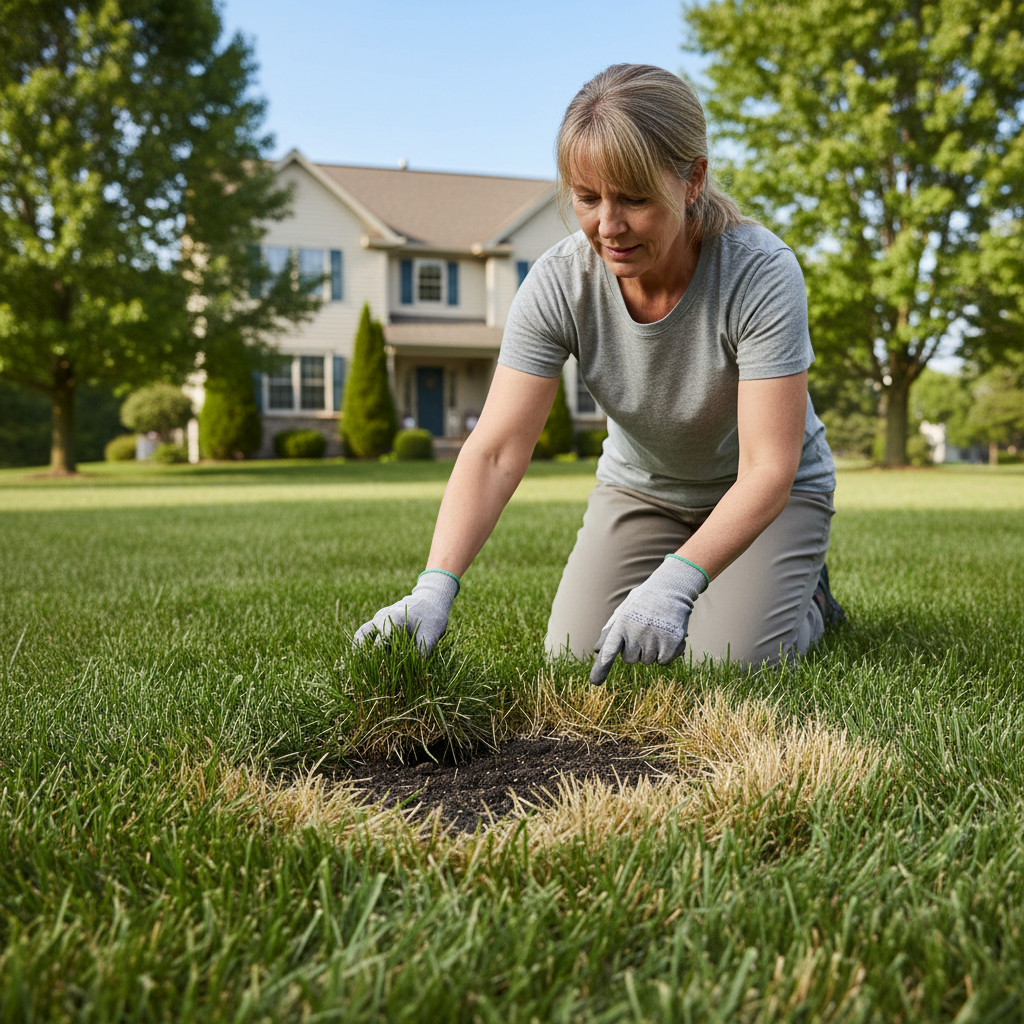
Inspect for Common Pests — If yellowing occurs in irregular, spreading patches, check for pests. For grub worms, grab a handful of the affected turf and pull upwards. If the turf peels back like a carpet, you'll likely see white, C-shaped grub larvae in the soil beneath. For chinch bugs (common in St. Augustine and Zoysia grass), part the grass at the edge of a yellowing patch and look for tiny black insects moving in the thatch layer.
- If Pests Are Found: Apply a targeted insecticide labeled for the specific pest you have identified. For grubs, a product containing Dylox offers curative control. For chinch bugs, a Bifenthrin-based product is effective.
-
Identify and Treat Fungal Disease — Overwatering and high humidity can lead to fungus. Look for specific signs: brown or yellow lesions on grass blades (Brown Patch, Dollar Spot), a powdery white coating (Powdery Mildew), or fine, cotton-like threads visible in the early morning dew (Pythium Blight).
- If Fungus Is Suspected: Apply a broad-spectrum fungicide labeled for lawn diseases. Improving air circulation by pruning nearby shrubs and correcting your watering schedule are crucial preventative steps.
Common mistakes
- Watering Lightly Every Day: This common practice encourages a shallow, weak root system that is highly susceptible to heat and drought. Instead, water deeply but infrequently (1-2 times per week) to train roots to grow down into the soil where moisture is more consistent.
- Applying High-Nitrogen Fertilizer in Peak Heat: Using a quick-release, high-nitrogen fertilizer (like a 29-0-4) on a summer lawn forces rapid blade growth that the stressed root system cannot support. This can burn the lawn and make it more vulnerable. Instead, use a slow-release formula or an organic fertilizer like milorganite, or opt for an iron-only supplement for greening.
- Mowing Too Short (Scalping): Cutting the grass too short removes too much of the photosynthetic blade surface, stressing the plant. It also exposes the soil to direct sunlight, increasing water evaporation and encouraging weed germination. Instead, raise your mower blade to the highest recommended setting for your grass type during summer.
- Assuming All Yellowing is Due to Drought: While underwatering is a major cause, homeowners often pour more water onto a lawn yellowing from overwatering or fungal disease, making the problem exponentially worse. Always diagnose the soil moisture and look for signs of disease before changing your watering routine.
- Compacting the Soil: Heavy foot traffic, parking vehicles on the lawn, or playing sports on wet turf compresses soil particles. This compaction squeezes out air pockets and creates a barrier that water and roots cannot penetrate, leading to thin, yellow turf. Instead, rotate high-traffic activities and perform annual core aeration.
- Confusing Dormancy with a Dead Lawn: During extreme heat and drought, cool-season grasses like Kentucky Bluegrass will intentionally go dormant, turning a uniform straw-yellow to conserve energy. This is a survival mechanism. Many homeowners mistake this for a dead lawn and either give up or overwater it. Instead, provide a dormant lawn with about 0.5 inches of water every 2-3 weeks to keep the plant crowns alive until cooler, wetter weather returns.
Cost & time breakdown
This table outlines potential costs and time commitments for diagnosing and fixing a yellow summer lawn. Pro costs can vary significantly based on location and company.
| Task | DIY Cost | Pro Cost | Time |
|---|---|---|---|
| Soil Test | $15 - $30 (for kit or lab fee) | $75 - $150 (for collection & analysis) | 30 minutes (DIY sample collection) |
| Irrigation System Audit & Adjustment | $0 - $10 (for new nozzles) | $100 - $250 | 1-2 hours |
| Core Aerator Rental | $70 - $100 (half-day rental) | $150 - $300 (per 5,000 sq. ft.) | 2-4 hours (for 5,000 sq. ft.) |
| Slow-Release Fertilizer Application | $40 - $60 (for 5,000 sq. ft. bag) | $80 - $150 (per application) | 45 minutes |
| Curative Grub Control Application | $30 - $50 (for 5,000 sq. ft. bag) | $100 - $200 (per application) | 45 minutes |
| Professional Lawn Care Diagnosis | N/A | $75 - $125 (for initial consultation) | 1 hour |
When to call a pro
While most causes of a yellowing lawn can be fixed with DIY adjustments, certain situations warrant professional intervention. Call a certified lawn care service or turfgrass specialist if you observe the following:
- Rapid, Widespread Decline: If a large percentage of your lawn turns yellow or brown very quickly (within a week or two), this could signal an aggressive disease like Pythium Blight or a severe insect infestation like armyworms, which require immediate and precise professional treatment.
- Persistent Problems Despite DIY Efforts: If you have correctly adjusted watering, mowing, and fertilization practices for over a month with no visible improvement, there may be a more complex underlying issue. This could include poor soil composition, severe compaction, buried construction debris, or a nutrient lockout due to improper pH.
- Complex Disease or Pest Identification: If you see clear signs of disease (e.g., distinct rings, spots on blades, visible fungal growth) or pests but cannot confidently identify the culprit, a pro can provide an accurate diagnosis and recommend the correct targeted chemical or biological controls, preventing the misapplication of ineffective products.
- Major Drainage or Grading Issues: If your lawn has significant areas of standing water after rain or irrigation, and basic aeration doesn't help, you may need professional help. A landscape contractor may need to install a French drain, create a swale, or re-grade the area to properly manage surface water.
Prevention & maintenance
A proactive approach is the best defense against a yellow summer lawn. Maintaining a healthy, resilient turf year-round will minimize summer stress and discoloration.
- Establish a Seasonal Fertilization Program: Feed your lawn based on its growth cycle. For cool-season grasses, the most important feedings are in the fall and late spring. For warm-season grasses, fertilize from late spring through late summer. Use a soil test to guide your nutrient choices.
- Perform Annual Core Aeration: For lawns with clay soil or high traffic, use a core aerator every fall (for cool-season grass) or early summer (for warm-season grass). This practice reduces soil compaction, improves water and nutrient infiltration, and enhances root development.
- Sharpen Mower Blades Regularly: Dull mower blades tear and shred grass blades, creating jagged wounds that lose more water and are easy entry points for disease. Sharpen your mower blades at least twice per season, or after every 10-12 hours of mowing.
- Overseed in the Fall (Cool-Season Lawns): Spreading new grass seed over your existing cool-season lawn each fall helps fill in thin areas, increases turf density, and introduces improved, more drought- and disease-resistant turfgrass cultivars. A thicker lawn is better able to choke out weeds and withstand summer stress.
- Monitor and Adjust Irrigation Seasonally: Don't "set it and forget it." Your lawn's water needs change weekly with temperature and rainfall. Install a rain sensor or a smart Wi-Fi irrigation controller that automatically adjusts based on local weather forecasts to prevent over- or underwatering.
- Control Thatch Buildup: A thatch layer thicker than 1/2 inch can act like a sponge, preventing water from reaching the soil and creating a haven for pests and diseases. If thatch is excessive, use a specialized dethatching rake or machine to remove it in the fall (cool-season) or spring (warm-season).
Related Articles
Keep troubleshooting with these hand-picked guides from FixlyGuide:
- The #1 Summer Lawn Mistake Turning Your Grass Yellow (and How to Fix It) — Discover the most common summer lawn mistake that causes yellowing grass and learn the simple steps to revive your lawn.
- The #1 Summer Lawn Mistake That Guarantees Yellow Grass (It's Not Drought) — Understanding the most common mistake homeowners make with summer lawn care can save your grass from turning yellow and dying.
- Why Your Lawn Has Brown Spots AFTER Watering (And the Real Culprit) — Brown spots appearing after watering the lawn often signal improper watering techniques, soil compaction, or underlying issues like fungal…
- How Often to Water Your Lawn in Summer: A Homeowner's Guide — Watering your lawn correctly in summer is crucial for its health and appearance, preventing common issues like browning and shallow root gr…
- The #1 Mistake Turning Your Green Lawn Brown After Watering — Watering your lawn should make it greener, but brown spots appearing afterward can signal common issues like overwatering, fungal disease,…
- That Greasy Drip? Why Your Stand Mixer Leaks Oil & What It Means — A stand mixer leaking oil usually means the internal food-grade grease is separating—a common, fixable issue, not a sign of imminent mixer…
What should this project cost?
Enter your project details for a realistic cost range before you call anyone.
Cost depends heavily on which system turns out to be the source.
- Regional adjustment
- National average
- Labor share (typical)
- ~$1,620
- Quotes to collect
- 3 written estimates
Educational estimate based on national averages — not a binding quote. Always confirm with written local estimates.
Frequently asked questions
How much water does my lawn need in summer?+
Most lawns require about 1 inch of water per week in summer, either from rainfall or irrigation. It's best to apply this in one or two deep watering sessions rather than frequent shallow ones.
Can overwatering make my lawn yellow?+
Yes, absolutely. Overwatering can suffocate grass roots by displacing oxygen in the soil, leading to yellowing and making the lawn more susceptible to fungal diseases.
What time of day should I water my lawn?+
The best time to water your lawn is in the early morning, between 4 AM and 8 AM. This minimizes water loss due to evaporation and allows the grass blades to dry before nightfall, which helps prevent fungal growth.
My lawn is yellow but the soil is wet. What should I do?+
If your lawn is yellow but the soil is wet, you are likely overwatering or have poor drainage. Reduce watering frequency, allow the soil to dry between sessions, and consider aerating your lawn to improve drainage and oxygen flow to the roots.
Can heat stress cause my lawn to turn yellow?+
Yes, extreme heat can cause your lawn to go dormant and turn a yellowish or brownish color as a protective mechanism. Ensuring proper deep watering can help mitigate heat stress, but sometimes dormancy is unavoidable in severe heatwaves.

Discussion
Loading comments…