- Over-reliance on automatic timers without adjustment: Setting a timer for 15 minutes every day without considering actual water needs or output leads directly to shallow watering.
- Misunderstanding grass physiology: The belief that grass needs frequent, light sips of water rather than deep, infrequent drinks.
- Poor soil health: Compacted soil or soil lacking organic matter struggles to absorb and retain water efficiently, leading to runoff and shallow root systems even with correct watering.
- Ignoring localized dry spots: Uneven sprinkler coverage or areas with different soil compositions can lead to some parts of the lawn drying out faster, requiring targeted, not overall, adjustments.
- Watering at the wrong time of day: Midday watering results in significant evaporation, while evening watering promotes fungal growth.
Landscaping · Deck or fence project
| Project category | Landscaping |
|---|---|
| Problem type | Deck or fence project |
| Trade required | Landscaping |
| Urgency | Planned project |
| Safety risk | Moderate safety risk |
| DIY suitability | DIY for experienced homeowners |
| Cost category | High cost |
| Typical timeline | Most builds 3–10 days depending on size |
| Contractor type | Landscaping contractor |
Repair option
Replace failed boards, posts, and hardware; reseal the surface.
Replacement option
Rebuild when framing or the ledger connection is unsafe.
Common causes
- Rot at posts and ledger
- Storm damage
- Adding outdoor living space
Relevant tools:home improvement material pricesproject cost estimator
Published May 9, 2026Last updated August 17, 2026
Tools & materials you'll need
Affiliate linksAs an Amazon Associate FixlyGuide earns from qualifying purchases — at no extra cost to you. Prices and availability are accurate as of publication and subject to change.
Quick Answer
Many homeowners believe frequent, light watering is best for their lawn, but this is the number one mistake that can lead to a weak, shallow-rooted, and disease-prone turf. The correct approach is to water deeply and infrequently, supplying about 1 inch of water per session. This encourages grass roots to grow deeper into the soil, seeking moisture, which makes your lawn more resilient to drought, heat stress, and reduces the likelihood of fungal diseases. Depending on your climate, soil type, and grass variety, this might mean watering once or twice a week, or even less during cooler periods.
The Problem
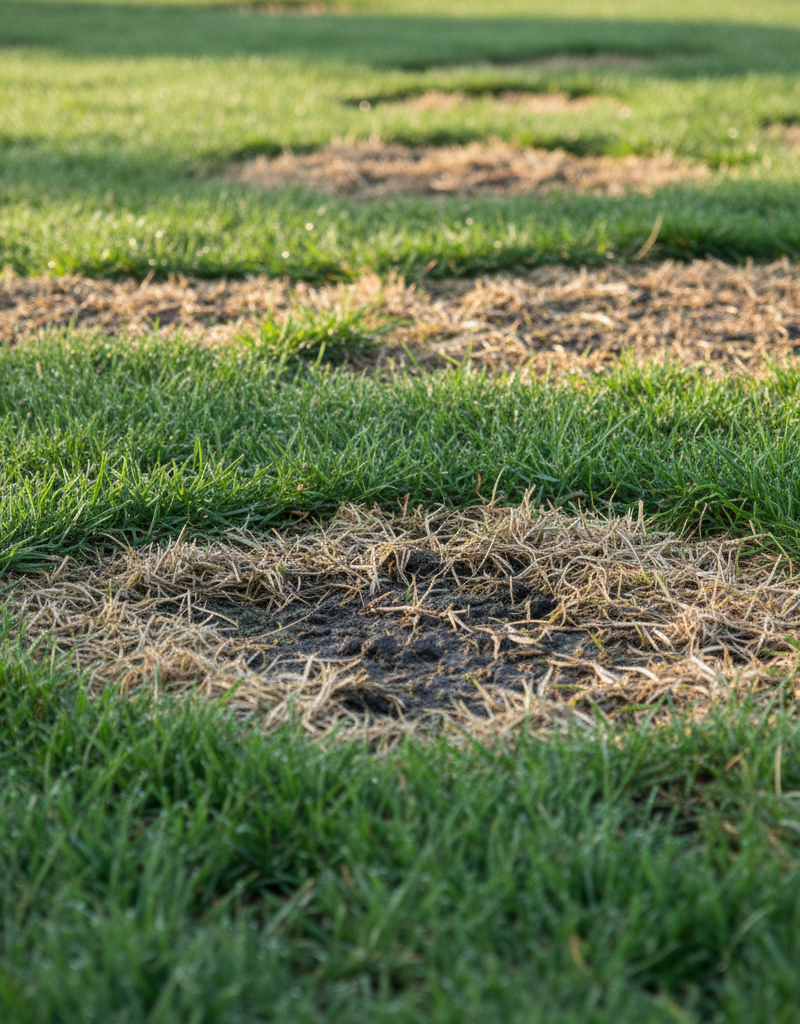
Imagine your lawn as a collection of tiny plants, each needing a drink. When you water lightly every day or every other day, you're only moistening the top inch or two of soil. The grass roots, being opportunistic, stay near the surface where the moisture is readily available. This creates a "lazy" root system that is highly vulnerable. As soon as a hot day hits or you miss a day of watering, those shallow roots dry out quickly, leading to wilting, browning, and even death of the grass. Furthermore, consistently wet soil surfaces create an ideal breeding ground for fungal diseases like brown patch and dollar spot, and can also encourage weed germination, as many weeds thrive in moist surface conditions.
The real problem isn't just about the grass dying; it's about the missed potential of a vibrant, resilient lawn that can largely take care of itself. A lawn with deep roots is a lawn that can tap into deeper soil moisture reserves, requiring less frequent intervention from you, saving water, and looking better year-round.
How It Works
Understanding how your lawn absorbs water is key to proper irrigation. Grass roots are constantly seeking moisture and nutrients. When water penetrates deeply into the soil (6-8 inches or more), the roots follow it. This deep root growth is analogous to building a strong foundation for a house – the deeper the foundation, the more stable and resilient the structure. A healthy, deep root system allows the grass to access a larger volume of soil for water and nutrients, making it far more tolerant of environmental stresses like high temperatures and dry spells.
Capillary action also plays a role. Water in the soil moves from areas of higher concentration to lower concentration, and it's also pulled downwards by gravity. When you apply water slowly over a longer period, gravity has more time to pull the water deeper into the soil profile. The soil particles themselves hold onto water, but only up to a certain point, called field capacity. Any water beyond field capacity will drain away due to gravity. The goal is to fill the soil's reservoir to field capacity within the root zone without over-saturating it. This process not only provides water but also facilitates gas exchange in the soil, allowing oxygen to reach the roots and carbon dioxide to escape, which is crucial for root health and nutrient uptake. Frequent, shallow watering, conversely, compacts the surface soil, reduces aeration, and starves the deeper roots of both water and oxygen.
Step-by-Step Fix
Your goal is to train your lawn to grow deep roots by watering deeply and infrequently. Here's how to achieve it:
-
Assess Your Lawn's Current State — Observe your grass for signs of stress. Before you change your watering schedule, know what you're working with. Look for wilting grass blades, a dull blue-green color (instead of vibrant green), or footprints that remain visible long after you've walked on the lawn. These are all indicators that your lawn is thirsty.
- If your lawn is severely stressed: Start with a deep watering immediately, then adjust your schedule.
-
Determine Your Soil Type — Different soils hold water differently. Sandy soils drain quickly and may need slightly more frequent watering (but still deep). Clay soils hold water longer and can be watered less often. You can do a simple soil ribbon test: take a handful of moist soil, squeeze it. If it forms a long ribbon, you have clay. If it crumbles, it's sandy. If it forms a short, fragile ribbon, it's loam.
-
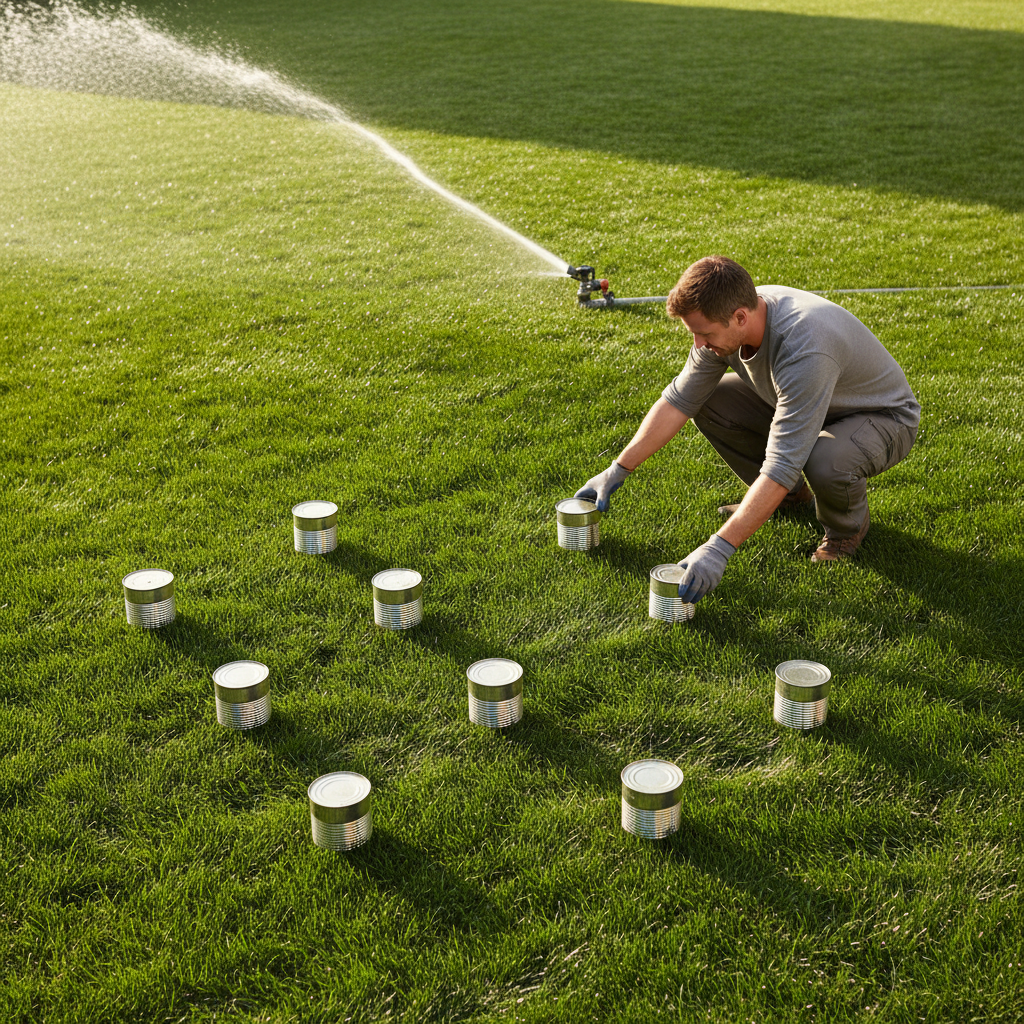
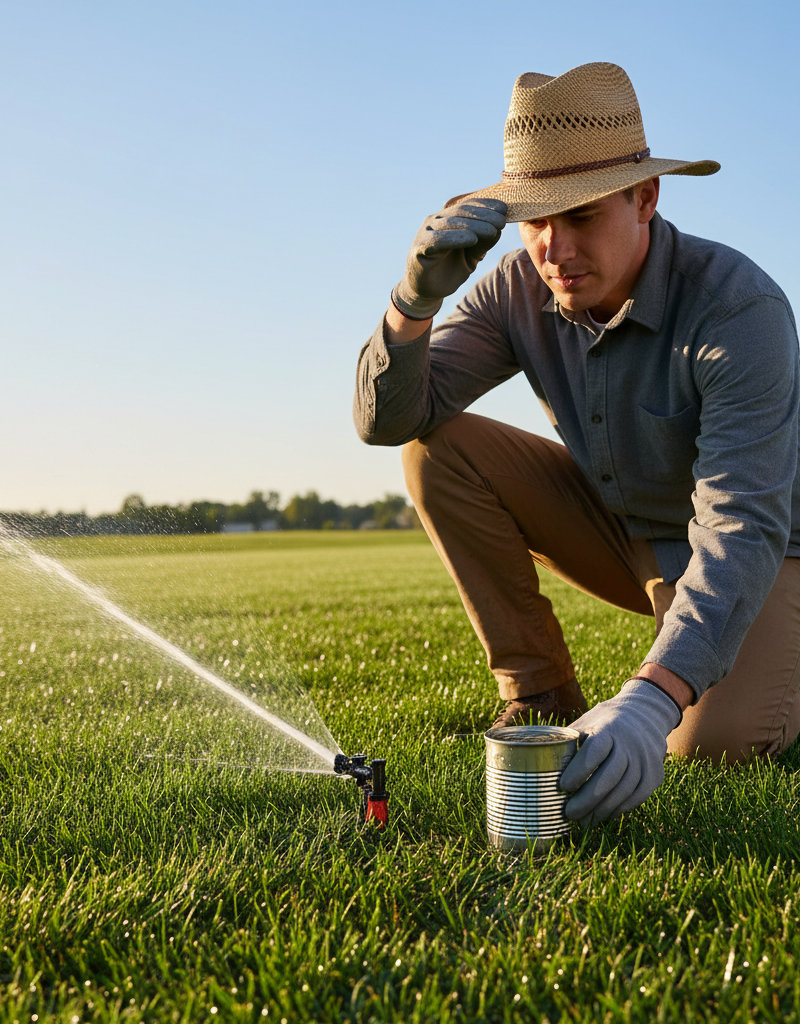
Measure Your Sprinkler's Output — Know how much water you're actually applying. This is the most critical step. Place several empty tuna cans or rain gauges evenly spaced across your lawn in a sprinkler zone. Run your sprinklers for 15 minutes. Measure the water in each can and calculate the average. Multiply this average by 4 to get your hourly output.
- Example: If your average is 0.25 inches in 15 minutes, your sprinkler applies 1 inch per hour.
- Safety Note: Always be aware of your surroundings when running sprinklers. Ensure hoses are not trip hazards and keep children and pets clear of active sprinkler heads.
-
Aim for 1 Inch of Water Per Session — Provide enough water to reach deep roots. Based on your sprinkler output, set your timer to deliver approximately 1 inch of water. For instance, if your sprinklers apply 1 inch per hour, you'll run them for one hour. If they apply 0.5 inches per hour, you'll need to run them for two hours. For very dry areas or compacted soil, you might need to use a 'cycle and soak' method: run the sprinklers for half the time, let it soak for an hour, then run for the remaining time. This prevents runoff.
-
Establish a Deep & Infrequent Schedule — Train your roots to go deep. Start by watering 1 inch, once a week. Observe your lawn. If it shows signs of stress before the week is up (wilting, dull color), consider watering twice a week, still aiming for 1 inch per session (e.g., 0.5 inches on Tuesday and 0.5 inches on Friday). During cooler weather or after rainfall, you can extend the interval between waterings.
-
Water in the Early Morning — Minimize evaporation and disease risk. The best time to water is between 4 AM and 9 AM. This allows the water to penetrate the soil before the sun's heat causes excessive evaporation. Watering in the evening leaves the grass wet overnight, creating a prime environment for fungal diseases.
-
Monitor Your Lawn and Adjust — Your lawn will tell you what it needs. Look for visual cues. If the grass starts to wilt or turn a blue-green color, it's time to water. If it remains vibrant and green, you might be able to extend the time between waterings. Factors like temperature, humidity, wind, and recent rainfall will all influence your specific watering needs. A simple screwdriver test can also help: if a screwdriver can easily penetrate 6-8 inches into the soil, it's likely adequately moist.
-
Consider Smart Watering Solutions — Automate for efficiency. Modern irrigation controllers can incorporate local weather data and soil moisture sensors to automatically adjust your watering schedule, ensuring your lawn gets exactly what it needs without waste.
Common Causes
- Over-reliance on automatic timers without adjustment: Setting a timer for 15 minutes every day without considering actual water needs or output leads directly to shallow watering.
- Misunderstanding grass physiology: The belief that grass needs frequent, light sips of water rather than deep, infrequent drinks.
- Poor soil health: Compacted soil or soil lacking organic matter struggles to absorb and retain water efficiently, leading to runoff and shallow root systems even with correct watering.
- Ignoring localized dry spots: Uneven sprinkler coverage or areas with different soil compositions can lead to some parts of the lawn drying out faster, requiring targeted, not overall, adjustments.
- Watering at the wrong time of day: Midday watering results in significant evaporation, while evening watering promotes fungal growth.
Common Mistakes
- Watering Daily or Every Other Day: This is the most common and damaging mistake. It encourages shallow roots, makes the lawn dependent on constant surface moisture, and increases disease susceptibility. Instead, aim for once or twice a week, delivering 1 inch of water each time.
- Ignoring Your Specific Grass Type: Different grass types have different water needs. Cool-season grasses like fescue might need more water in summer than warm-season grasses like Bermuda. Research your specific lawn variety.
- Not Measuring Sprinkler Output: Guessing how much water your sprinklers apply leads to either over- or under-watering. Always use tuna cans or rain gauges to accurately measure.
- Watering Based on a Calendar, Not Your Lawn's Needs: Always observe your lawn. If it just rained heavily, skip a scheduled watering. If it's unusually hot and dry, you might need to water slightly more frequently (but still deeply).
- Watering at Peak Evaporation Times: Watering in the afternoon sun means much of your water never reaches the roots. Stick to early mornings.
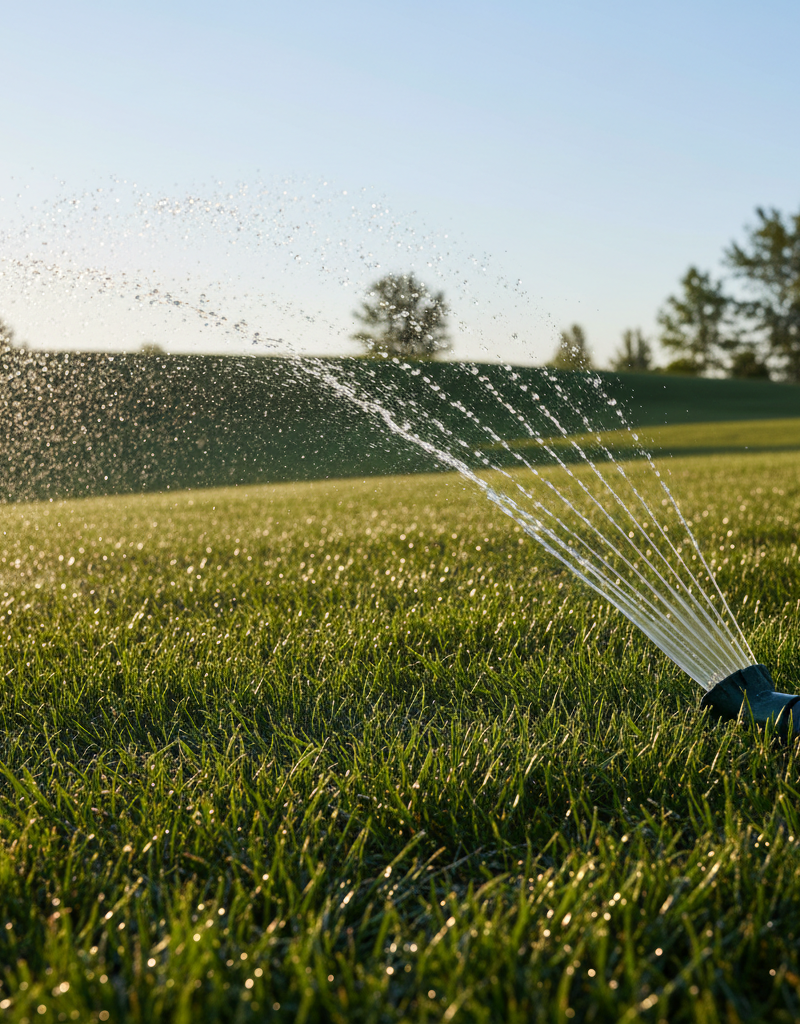
- Assuming Even Coverage: Sprinkler systems can have poor coverage due to clogged nozzles, incorrect head placement, or low water pressure. Regularly check for dry spots and address them.
Cost & Time Breakdown
| Task | DIY cost | Pro cost | Time |
|---|---|---|---|
| Sprinkler output measurement | $0–$10 | N/A | 20–30 minutes |
| Adjusting sprinkler timers | $0 | N/A | 5–10 minutes |
| Soil moisture sensor installation | $30–$100 | N/A | 15–30 minutes |
| Smart irrigation controller setup | $100–$300 | $200–$500+ | 30 mins – 1 hr |
| Basic soil test (DIY kit) | $15–$30 | N/A | 10 mins (test) |
| Lawn observation | $0 | N/A | Ongoing |
Tips & Prevention
- Mow High: Taller grass (2.5-3 inches for most varieties) shades the soil, reducing evaporation and encouraging deeper root growth. Never remove more than one-third of the blade height at a time.
- Aerate Annually: Core aeration relieves soil compaction, allowing water, air, and nutrients to penetrate more deeply to the root zone.
- Top-Dress with Compost: Applying a thin layer of compost annually improves soil structure, water retention, and provides slow-release nutrients, reducing the need for synthetic fertilizers.
- Know Your Grass Type: Research the specific water needs, mowing height, and disease susceptibility of your lawn's grass species to tailor your care practices.
- Install a Rain Sensor: This simple device connects to your irrigation system and automatically pauses watering cycles when it rains, preventing overwatering and saving water.
- Look for Early Warning Signs: Be vigilant for the first signs of wilting (grass turning a dull blue-green, footprints remaining). Address these promptly to prevent severe stress.
When to Call a Professional
While correct lawn watering seems straightforward, there are times when professional help is invaluable. If you're consistently struggling with an unhealthy lawn despite following proper deep and infrequent watering techniques, a professional can offer a soil analysis to identify underlying nutrient deficiencies, pH imbalances, or severe compaction issues that hinder water absorption. They can also diagnose and treat persistent lawn diseases or pest infestations that might be mimicking watering problems. For significant irrigation system overhauls, such as adding new zones, replacing major components like valves or the controller, or correcting widespread uneven coverage issues that you can't resolve with simple adjustments, engaging a licensed irrigation specialist is wise. They can design and install efficient systems tailored to your landscape, ensuring optimal water distribution and minimizing waste, potentially saving you money and water in the long run. Don't hesitate to call a pro if your lawn continues to struggle or if you suspect issues beyond basic watering adjustments.
Related Articles
Keep troubleshooting with these hand-picked guides from FixlyGuide:
- The #1 Watering Mistake That Kills Lawns (And How to Fix Yours in 10 Minutes) — Discover the most common watering mistake homeowners make and how to adjust your watering routine for a healthier, more resilient lawn.
- The 3 Lawn Mowing Mistakes Killing Your Grass (and How to Fix Them) — Discover the three most common lawn mowing mistakes homeowners make that damage their grass, and learn simple, actionable steps to correct…
- The #1 Pruning Mistake That Chokes Your Shrubs (And How to Fix It Right Now) — Discover the most common pruning error homeowners make and how to correct it for healthier, more vigorous shrub growth.
- The #1 Summer Lawn Mistake Turning Your Grass Yellow (and How to Fix It) — Discover the most common summer lawn mistake that causes yellowing grass and learn the simple steps to revive your lawn.
- The #1 Mowing Mistake That Invites Weeds (And How to Fix It in 15 Minutes) — Many homeowners unknowingly make a common mowing mistake that leaves their lawn vulnerable to weeds and disease. Learn the secret to a thic…
- The #1 Mistake Homeowners Make When a Gas Burner Won't Light (And the Easy Fix) — Before you call a technician, discover the most common, overlooked reason your gas stove burner isn't lighting and how to fix it yourself i…
Should you do this yourself?
Answer five quick questions before you start. Safety outranks savings every time.
Your experience with work like this
How high do you have to work?
Does the job involve any of these?
Will it need a permit?
Specialty tools
Free and instant. Educational guidance only — not a quote, inspection, or professional diagnosis.
What should this project cost?
Enter your project details for a realistic cost range before you call anyone.
Cost depends heavily on which system turns out to be the source.
- Regional adjustment
- National average
- Labor share (typical)
- ~$1,620
- Quotes to collect
- 3 written estimates
Educational estimate based on national averages — not a binding quote. Always confirm with written local estimates.
Before you start
Check the difficulty, permits, and safety risk — then decide whether to call a pro.
- Estimate this projectGet a cost range for your scope and ZIP before you call anyone.Open
- Get local estimatesSend one request and compare written estimates from vetted pros.Open
Free, no signup required. Estimates are educational guidance, not a quote or an inspection.
Get the print-ready PDF of this guide
A clean, ad-free, printable version you can keep on your phone or pin to the workshop wall. Free with a FixlyGuide account.
- Print-optimized layout
- Tools, materials & every step included
- Saved to your account
Frequently asked questions
How do I know if I'm watering deeply enough?+
You can check by pushing a long screwdriver or a soil probe into the soil after a watering session. It should penetrate easily to a depth of 6-8 inches. If it feels resistant at a shallower depth, you need to water longer. Alternatively, dig a small test hole to visually inspect the moisture depth.
What happens if I water too frequently?+
Watering too frequently, even if deeply, keeps the topsoil consistently wet. This encourages shallow root growth, making your lawn susceptible to drought stress, heat damage, and a higher risk of fungal diseases. It also promotes weed germination and can compact the soil over time.
Can I water my lawn in the evening?+
While watering in the evening can be tempting to avoid evaporation, it's generally not recommended. Leaving grass blades wet overnight creates an ideal environment for fungal diseases to develop and spread, especially in warmer temperatures. Early morning is the best time to water.
How much water does my lawn need per week?+
Most established lawns need about 1 to 1.5 inches of water per week, either from rainfall or irrigation. The key is to deliver this amount in one or two deep watering sessions, rather than many shallow ones, to encourage deep root growth.
Discussion
Loading comments…