- Mowing: Mow at a higher setting (3 inches or more) to encourage deeper root growth.
- Watering: Water deeply and infrequently to promote deep root development. Drought-stressed lawns are more attractive to grubs.
- Fertilization: Follow a balanced fertilization schedule. Avoid excessive nitrogen, which can create lush, tender growth that grubs prefer.
- Overseeding: Overseed damaged areas with grub-resistant grass varieties or a diverse mix that includes fescues or perennial ryegrass, which can sometimes tolerate more grub feeding than Kentucky bluegrass.
Landscaping · Deck or fence project
| Project category | Landscaping |
|---|---|
| Problem type | Deck or fence project |
| Trade required | Landscaping |
| Urgency | Planned project |
| Safety risk | Moderate safety risk |
| DIY suitability | DIY for experienced homeowners |
| Cost category | High cost |
| Typical timeline | Most builds 3–10 days depending on size |
| Contractor type | Landscaping contractor |
Repair option
Replace failed boards, posts, and hardware; reseal the surface.
Replacement option
Rebuild when framing or the ledger connection is unsafe.
Common causes
- Rot at posts and ledger
- Storm damage
- Adding outdoor living space
Relevant tools:home improvement material pricesproject cost estimator
Published April 27, 2026Last updated August 17, 2026
Tools & materials you'll need
Affiliate links- AmazonGranular grub control product1 bag · Type depends on timing (preventative vs. curative)
As an Amazon Associate FixlyGuide earns from qualifying purchases — at no extra cost to you. Prices and availability are accurate as of publication and subject to change.
Quick Answer
Eliminating lawn grubs effectively hinges on correct timing and product application. The most common mistake is applying grub control too late in the season, after significant damage has occurred. Early intervention in late spring or early summer with a preventative treatment, or a curative treatment in late summer to early fall, targets grubs when they are most vulnerable and minimizes lawn damage.
The Problem
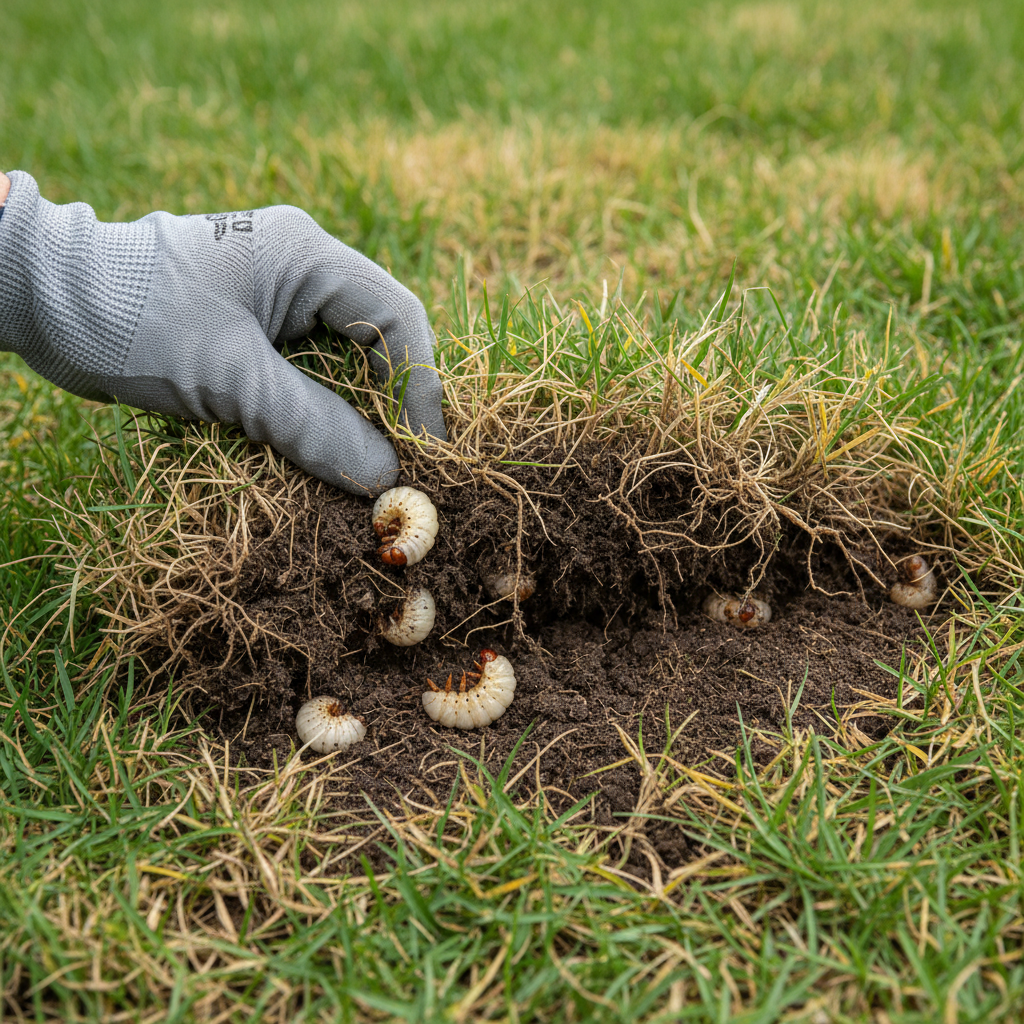
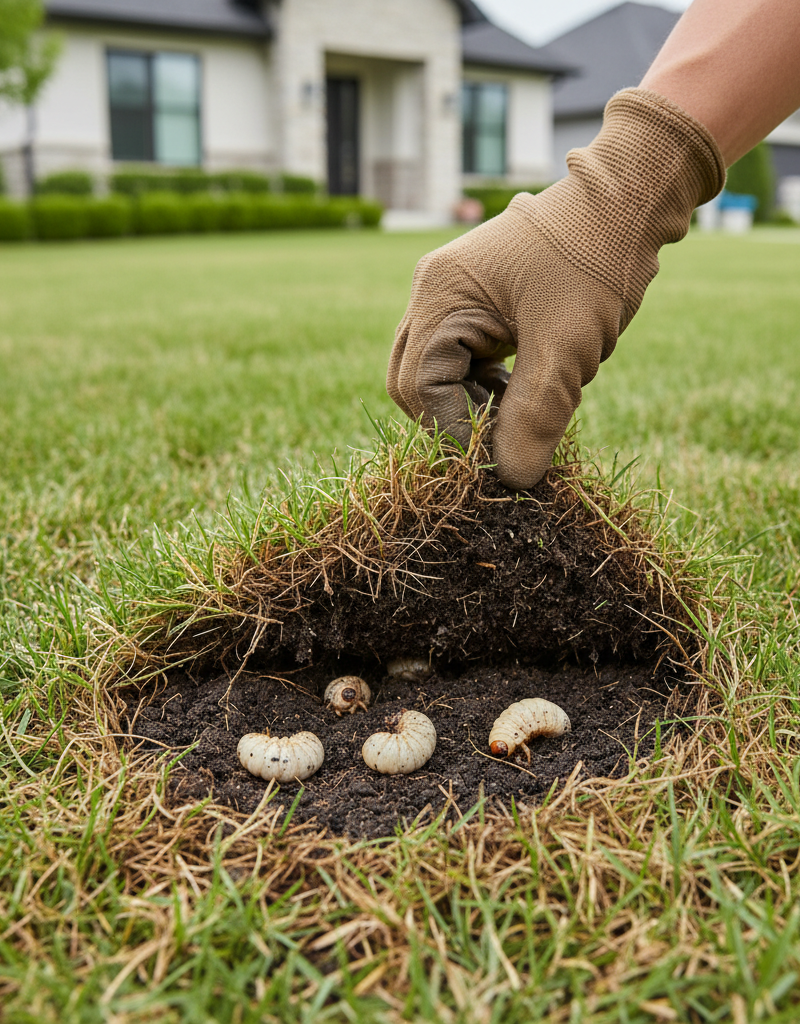
Your lush, green lawn suddenly has brown, dead patches that peel back like a rug, or perhaps you've noticed an increased presence of raccoons, skunks, or birds tearing up your turf. These are tell-tale signs of a subterranean invasion: white grubs. These C-shaped larvae, the offspring of various beetles like Japanese beetles, chafers, and May/June beetles, feed voraciously on the roots of your grass from late summer through fall and again in early spring. Left unchecked, grubs can decimate an entire lawn, turning vibrant turf into an unrooted mat of straw. The problem isn't just aesthetic; severe grub infestations weaken the lawn, making it susceptible to weeds, diseases, and further pest damage. Many homeowners try to treat grubs only after seeing extensive damage, which is often too late for maximum effectiveness or requires harsher applications. Understanding the grub life cycle is critical for successful control, allowing you to strike when they are most vulnerable.
How It Works
Solving a grub problem effectively means understanding the enemy's life cycle. Most destructive grubs in lawn environments, such as those from Japanese beetles or European chafers, follow a similar one-year trajectory.
Adult beetles typically emerge from the soil in late spring to mid-summer, usually from June to August, depending on your climate and the specific beetle species. After emerging, they mate and lay their eggs in the turf. These eggs are usually deposited about 2 to 4 inches deep in the soil, often preferring well-watered, healthy lawns.
Within a couple of weeks, typically in late July to mid-August, these eggs hatch into tiny, first-instar grubs. This is a critical window for preventative treatments. These young grubs begin to feed on grass roots immediately. As they grow, they molt through several instars (developmental stages) over several weeks, becoming larger and hungrier. By late summer and early fall (September to October), they are often in their second or third instar, at their most destructive feeding stage. At this point, they are actively eating roots, which is when you start to see significant lawn damage: irregular brown patches, spongy turf, and sections that can be rolled back like carpet because the roots are gone.
As temperatures drop in late fall, the grubs burrow deeper into the soil, often 4 to 8 inches down, to overwinter. They remain dormant in this state until soil temperatures rise again in early spring. In early spring (March to May), they move back up closer to the surface to resume feeding on roots for a short period before they pupate. Pupation, where they transform into adult beetles, typically occurs in late spring to early summer (May to June). The cycle then repeats.
The key takeaway is that grubs are most vulnerable when they are small and actively feeding near the surface. Preventative treatments work by killing the grubs shortly after they hatch. Curative treatments target the larger, actively feeding grubs. Applying products at the wrong time (e.g., a preventative product when grubs are already large and causing damage, or a curative product when grubs are still eggs) significantly reduces effectiveness and can waste time and money.
Step-by-Step Fix
1. Confirm Grub Presence and Identify Damaged Areas — Don't treat blindly; verify the problem.
Before applying any product, confirm you actually have grubs. Brown patches can be caused by various issues, including drought, disease, or other insects.
- Tools: Small shovel or trowel.
- Method: Choose a brown patch and a healthy patch near the border. Dig up a 1-foot square section of sod to a depth of about 2-4 inches. Gently pull back the turf and examine the soil and root zone for C-shaped white grubs. Count the number of grubs. If you find 6-10 or more grubs per square foot, treatment is warranted. Fewer than that usually means the lawn can tolerate the damage, or another issue is at play.
2. Choose the Right Grub Control Product — Preventative or Curative? Timing is everything.
Select a product based on the grub life cycle and the extent of your problem.
- Preventative (Best applied late spring/early summer, May-July): These products contain active ingredients like chlorantraniliprole (e.g., Scott's GrubEx) or imidacloprid. They work by killing grubs as they hatch or shortly after. Chlorantraniliprole offers a longer application window and is less toxic to beneficial insects. Imidacloprid needs to be watered in quickly after application.
- Curative (Best applied late summer/early fall, August-October): These products contain active ingredients like trichlorfon (e.g., Dylox) or carbaryl (e.g., Sevin). They act faster and are designed to kill larger, actively feeding grubs that are already causing damage. Curative treatments have a shorter residual effect and must be applied when grubs are present and actively feeding.
- Safety: Always read the product label carefully for specific instructions, safety precautions, and active ingredients. Wear gloves, long pants, and closed-toe shoes.
3. Prepare Your Lawn — Optimizing conditions for product effectiveness.
Proper preparation ensures the grub control product reaches the root zone.
- Mowing: Mow your lawn to its regular height a day or two before application. This helps the granules reach the soil surface.
- Moisture: For most granular products, the lawn should be slightly damp, or you should water lightly after application. This helps dissolve the granules and carry the active ingredient into the soil where grubs are active.
4. Apply Granular Grub Control Evenly — Consistent coverage is key.
Uneven application can lead to missed spots and ineffective treatment.
- Tools: Broadcast spreader or drop spreader.
- Application: Calibrate your spreader according to the product label's instructions for your specific model. Walk at a consistent pace, making overlapping passes to ensure uniform coverage across the entire affected area and a buffer zone around it. Avoid applying on windy days to prevent drift.
5. Water In the Product Thoroughly — Activate the treatment.
Watering moves the active ingredient into the soil profile where grubs live.
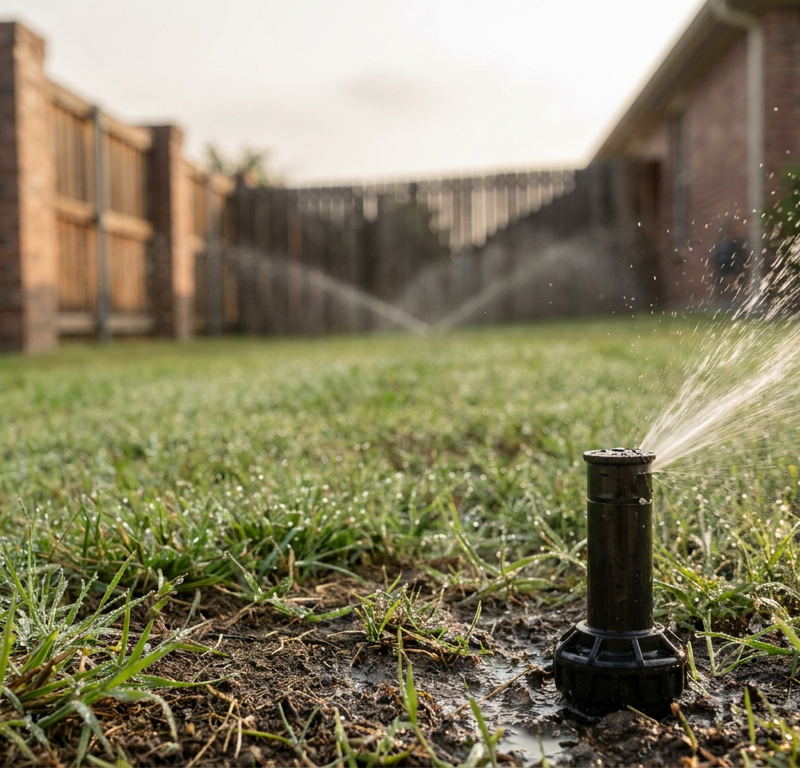
- Method: Immediately after applying granular products (especially those with imidacloprid or trichlorfon), water your lawn thoroughly. Aim for about 0.5 to 1 inch of water, which usually takes 20-30 minutes with a sprinkler, depending on water pressure. This step is crucial for activating the product and getting it down to the root zone. Ensure the water penetrates deep enough to reach the grubs.
- Timing: For some products like chlorantraniliprole, you have a longer window to water it in (a few days), but immediate watering is still beneficial.
6. Monitor and Re-evaluate — Assess effectiveness and plan future prevention.
After treatment, observe your lawn for signs of recovery and new grub activity.
- Observation: Over the next few weeks, look for new grub damage. If using a curative product, you might see a reduction in animal digging activity. Dig up small sections again in problem areas a few weeks after application (and watering in) to check for dead grubs.
- If it doesn't work: If grub activity persists, ensure you applied the correct product for the timing, followed all label directions, and watered it in properly. Sometimes a second application of a curative product might be necessary in severe, persistent infestations, but always consult the product label or a local extension office before reapplying.
7. Promote Lawn Health for Future Resistance — A strong lawn is your best defense.
Healthy turf is more resilient to pest damage.
- Mowing: Mow at a higher setting (3 inches or more) to encourage deeper root growth.
- Watering: Water deeply and infrequently to promote deep root development. Drought-stressed lawns are more attractive to grubs.
- Fertilization: Follow a balanced fertilization schedule. Avoid excessive nitrogen, which can create lush, tender growth that grubs prefer.
- Overseeding: Overseed damaged areas with grub-resistant grass varieties or a diverse mix that includes fescues or perennial ryegrass, which can sometimes tolerate more grub feeding than Kentucky bluegrass.
Common Causes
- Adult Beetle Activity: High populations of Japanese beetles, European chafers, or May/June bugs in your area signal a higher likelihood of eggs being laid in your lawn.
- Consistent Lawn Moisture: Adult beetles prefer to lay eggs in consistently moist soil, which is often found in well-watered lawns. Ironically, a healthy-looking lawn can be a target.
- Thatch Layer: A thick thatch layer (more than 0.5 inches) can provide an ideal environment for grubs and make it harder for insecticides to reach the soil.
- Previous Infestations: If you've had grubs before, it's likely beetles will return to lay eggs in the same general area, creating a recurring problem.
- Over-fertilization with Nitrogen: While grass needs nitrogen, excessive amounts can lead to tender, succulent root growth that is particularly appealing to grubs.
Common Mistakes
- Applying Grub Control Too Late/Wrong Time: This is the most common and critical mistake. Using a preventative product after grubs are large and causing damage, or a curative product when grubs are still eggs, will yield poor results. Timing is EVERYTHING.
- Not Confirming Grub Presence: Treating for grubs when brown patches are caused by drought, fungus, or another pest leads to wasted money and continued lawn issues. Always dig and confirm.
- Insufficient Watering After Application: Many granular grub control products must be watered in thoroughly to move the active ingredient into the soil and activate it. Skipping or skimping on this step renders the treatment ineffective.
- Using the Wrong Type of Product: Not all
Related Articles
Keep troubleshooting with these hand-picked guides from FixlyGuide:
- The #1 Mistake Killing Your Lawn's Clover—And 3 Secrets to Get Rid of It for Good — Discover the common mistake homeowners make when trying to eliminate clover and learn three effective, grass-safe strategies to remove it p…
- The #1 Dandelion Mistake Almost Every Homeowner Makes (and How to Fix It) — Many homeowners accidentally make dandelions worse. Learn the most common mistake and how to truly eliminate these persistent weeds for goo…
- How to Identify & Eliminate Grubs in Your Lawn — Get rid of lawn grubs with effective identification and treatment methods to restore your green, healthy lawn. Learn how to apply insectici…
- The #1 Mistake Killing Your Lawn's Clover—and the Easy fix That Spares Your Grass — Discover the most common mistake homeowners make when trying to eliminate clover, and learn how to remove it effectively without harming yo…
- The #1 Mistake Killing Your Lawn (and How to Remove Clover Without Chemicals) — Discover the most common mistake homeowners make when battling clover and learn effective, organic methods to eliminate it without harming…
- The #1 Mistake Homeowners Make When Their Dishwasher Stops Cleaning (And the Simple Fix) — Discover the most common reason your dishwasher isn't cleaning dishes and learn a simple, effective fix you can do yourself in minutes.
Should you do this yourself?
Answer five quick questions before you start. Safety outranks savings every time.
Your experience with work like this
How high do you have to work?
Does the job involve any of these?
Will it need a permit?
Specialty tools
Free and instant. Educational guidance only — not a quote, inspection, or professional diagnosis.
What should this project cost?
Enter your project details for a realistic cost range before you call anyone.
Cost depends heavily on which system turns out to be the source.
- Regional adjustment
- National average
- Labor share (typical)
- ~$1,620
- Quotes to collect
- 3 written estimates
Educational estimate based on national averages — not a binding quote. Always confirm with written local estimates.
Before you start
Check the difficulty, permits, and safety risk — then decide whether to call a pro.
- Estimate this projectGet a cost range for your scope and ZIP before you call anyone.Open
- Get local estimatesSend one request and compare written estimates from vetted pros.Open
Free, no signup required. Estimates are educational guidance, not a quote or an inspection.
Frequently asked questions
When is the best time to apply grub control?+
The best time for preventative grub control is late spring to early summer (May-July), targeting newly hatched grubs. For curative control of actively feeding grubs causing damage, apply in late summer to early fall (August-October).
How do I know if I have grubs?+
Look for irregular brown patches of turf that peel back easily like a carpet, as grubs eat the roots. You might also notice increased activity from animals like raccoons, skunks, or birds digging in your lawn. Confirm by digging a 1-foot square section of sod 2-4 inches deep and counting the C-shaped white grubs.
Are grub control products safe for pets?+
Many grub control products require precautions. Always read the product label carefully. Most recommend keeping pets off the treated area until it has been watered in and dried completely. Consider organic options like milky spore or neem oil for pet-friendlier alternatives, though their effectiveness may vary.
Discussion
Loading comments…