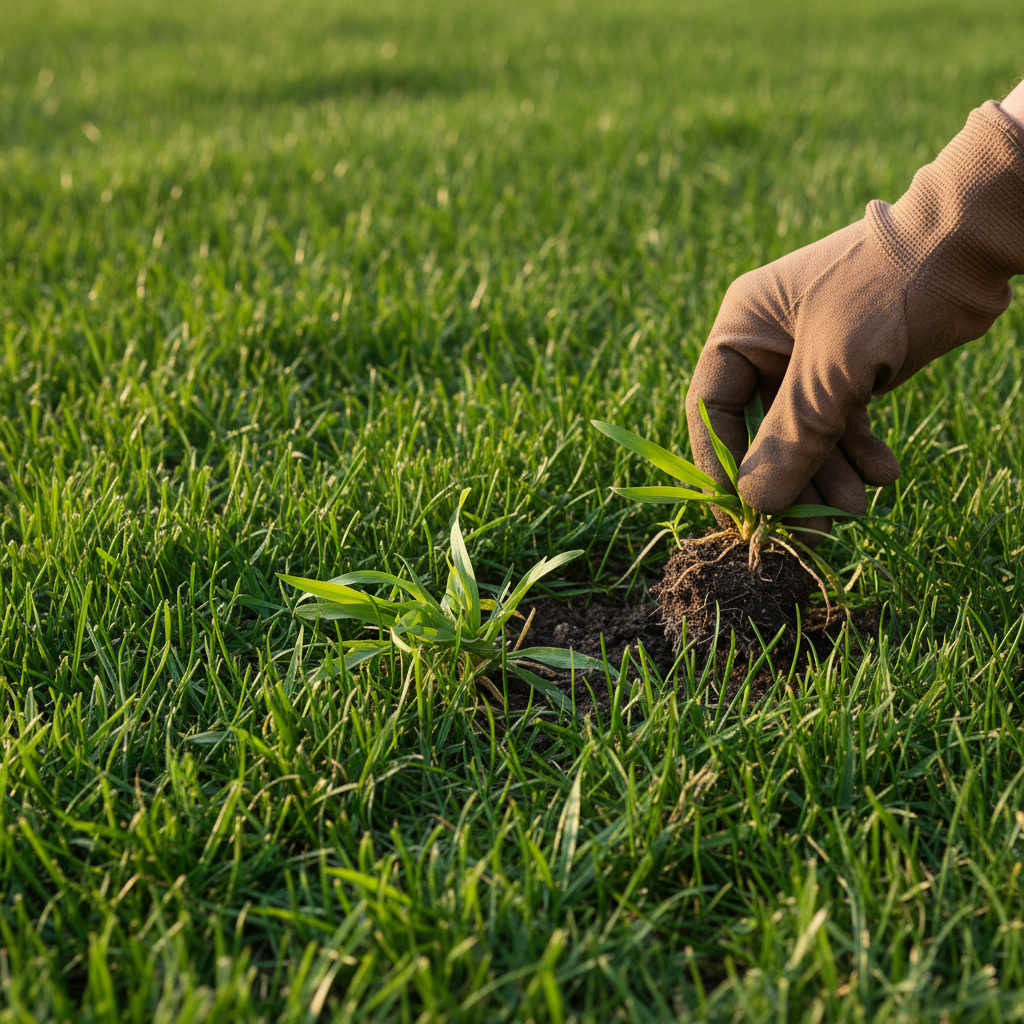
- Hand-Pull Young Crabgrass — Targeted removal before seed set.
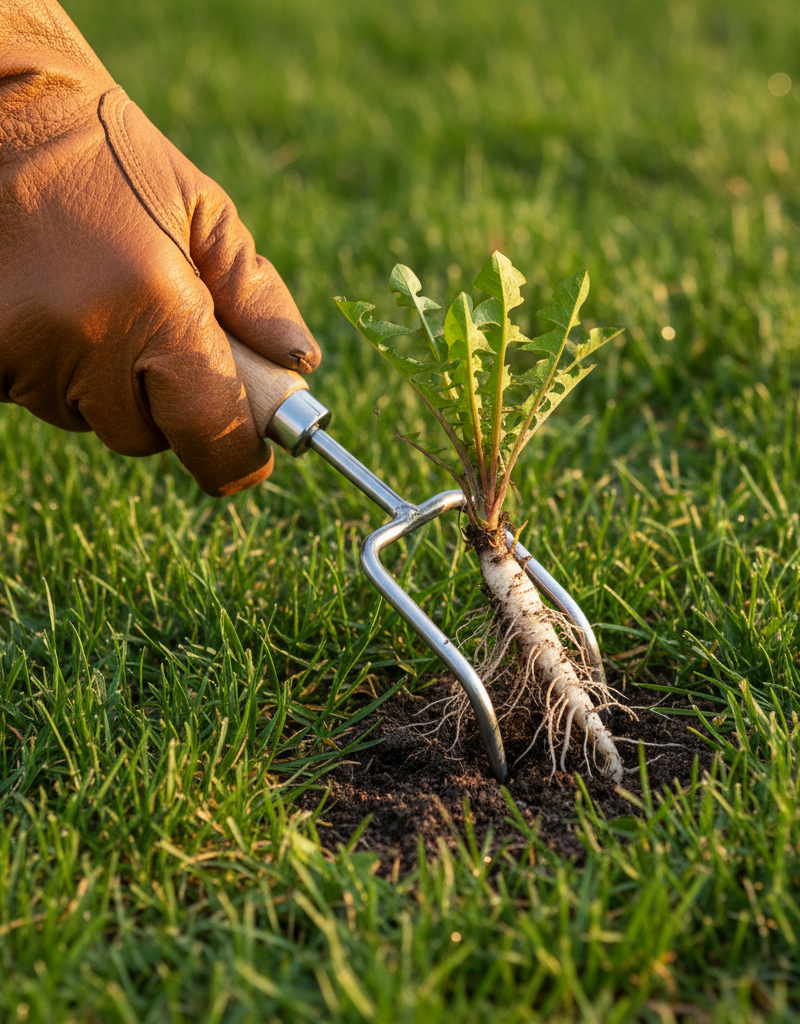
- Tools: A weeding fork, dandelion digger, or a sturdy pair of gardening gloves are helpful. Wait until the soil is moist (after a rain or watering) to make pulling easier and prevent leaving root fragments behind.
- Technique: Grasp the base of the plant firmly and pull slowly to extract the entire taproot. If the plant is large and has already set seed heads, bag the pulled plant and discard it, do not compost, to prevent spreading seeds.
- If large and seeded: If you find a large crabgrass plant with visible seed heads, carefully snip off the seed heads first and dispose of them in the trash before attempting to dig out the plant. This minimizes seed dispersal.
Landscaping · Deck or fence project
| Project category | Landscaping |
|---|---|
| Problem type | Deck or fence project |
| Trade required | Landscaping |
| Urgency | Planned project |
| Safety risk | Moderate safety risk |
| DIY suitability | DIY for experienced homeowners |
| Cost category | High cost |
| Typical timeline | Most builds 3–10 days depending on size |
| Contractor type | Landscaping contractor |
Repair option
Replace failed boards, posts, and hardware; reseal the surface.
Replacement option
Rebuild when framing or the ledger connection is unsafe.
Common causes
- Rot at posts and ledger
- Storm damage
- Adding outdoor living space
Relevant tools:home improvement material pricesproject cost estimator
Published June 2, 2026Last updated August 17, 2026
Tools & materials you'll need
Affiliate linksAs an Amazon Associate FixlyGuide earns from qualifying purchases — at no extra cost to you. Prices and availability are accurate as of publication and subject to change.
Quick Answer
Naturally getting rid of crabgrass involves a multi-pronged approach that focuses on creating a dense, healthy lawn capable of outcompeting weeds. This includes raising your mowing height, deep and infrequent watering, timely fertilization, and targeted manual removal of young crabgrass plants. For proactive control, consider organic pre-emergent solutions in early spring to prevent crabgrass seeds from germinating.
The Problem
Crabgrass (Digitaria spp.) is arguably the most common and frustrating weed for homeowners striving for a pristine lawn. This annual grassy weed thrives in hot, dry conditions and thin, stressed turf. It germinates in late spring when soil temperatures consistently reach 55-60°F, growing rapidly throughout the summer, producing thousands of seeds, and then dying with the first hard frost. The problem isn't just its unsightly appearance; crabgrass aggressively competes with desirable turfgrass for water, nutrients, and sunlight, ultimately weakening your lawn and leaving bare spots where more weeds can take hold next year. Relying solely on chemical herbicides can be effective, but many homeowners are seeking natural, sustainable methods that promote overall lawn health rather than just killing weeds.
How It Works
Understanding the life cycle of crabgrass is key to natural control. Crabgrass is an annual plant, meaning it completes its entire life cycle—from seed to plant to seed—within one growing season. It doesn't survive winter as a plant; instead, it relies entirely on the seeds it produced the previous summer to germinate the following spring. Each mature crabgrass plant can produce tens of thousands of seeds, which can remain viable in the soil for several years.
The optimal conditions for crabgrass seed germination are when soil temperatures at a depth of 2-3 inches consistently reach 55-60°F for several consecutive days, typically coinciding with the blooming of forsythia or lilacs in your area. Once germinated, crabgrass develops roots rapidly, forming dense, low-growing clumps that spread outward. Its broad leaves allow it to efficiently capture sunlight, outcompeting thinner turfgrasses. As summer progresses and temperatures climb, crabgrass thrives, often becoming the dominant greenery in heat-stressed lawns. It then flowers and sets seed, usually from mid-to-late summer, ensuring a fresh supply for the next year.
Natural control methods work by either preventing germination (pre-emergent strategies), physically removing the plants before they set seed (manual removal), or creating such a dense, healthy turf that crabgrass seeds cannot find enough light or space to establish (cultural practices). Organic pre-emergents, such as corn gluten meal, work by releasing peptides into the soil that inhibit root formation in newly germinated seeds, effectively stopping crabgrass before it becomes visible. Cultural practices like proper mowing and watering promote a robust turf canopy that shades the soil, keeping it cooler and drier, which is less favorable for crabgrass germination and growth. By understanding this cycle, homeowners can strategically intervene to break the cycle and achieve a crabgrass-free lawn naturally.
Step-by-Step Fix
Crabgrass control is an ongoing process throughout the growing season. Here's how to tackle it naturally:
-
Prep Your Lawn in Early Spring — Preventing the problem before it starts.
- Soil Test First: Before applying anything, get a soil test from your local extension office. This reveals pH and nutrient deficiencies, guiding your organic fertilization plan. A healthy soil pH (6.0-7.0 for most turfgrasses) is crucial for nutrient uptake and strong grass growth. Correcting pH with lime or sulfur takes time, so start early.
- Apply Organic Pre-Emergent (Corn Gluten Meal): Timing is critical. Apply corn gluten meal when soil temperatures consistently reach 50°F, usually around the time forsythia bushes bloom in your area. This typically falls between late March and mid-April in northern climates, or earlier in southern regions.
- Application: Use a broadcast spreader for even distribution at a rate of 20 lbs per 1,000 square feet. Water it in lightly immediately after application (about 1/4 inch of water) to activate it. This creates a barrier that inhibits crabgrass seed root development. Do not apply if you plan to overseed your lawn within 6-8 weeks, as it can inhibit desirable grass seed germination too.
-
Mow High, Always — Choking out the competition.
- Set Mower Deck to Max Height: For most cool-season grasses (fescue, rye, bluegrass), this means 3-4 inches. For warm-season grasses (Bermuda, zoysia), 2-3 inches is often appropriate, but still on the higher side. Taller grass blades shade the soil, keeping it cooler and preventing crabgrass seeds from germinating. It also encourages deeper root growth for your turfgrass, making it more robust.
- Mow Frequently, Remove Less: Never remove more than one-third of the grass blade length in a single mowing. This prevents stressing the turf. Leave clippings on the lawn (if not clumping) to return nutrients to the soil.
-
Water Deeply and Infrequently — Discouraging shallow-rooted weeds.
- Targeted Watering: Provide 1 inch of water per week in a single session (or two shorter sessions for very sandy soils) rather than daily, shallow sprinklings. Place a rain gauge or a tuna can in your lawn to measure the amount.
- Why it Works: Deep watering encourages turfgrass roots to grow deeper, making the lawn more drought-tolerant and less susceptible to heat stress. Shallow watering, conversely, encourages shallow-rooted weeds like crabgrass, which thrive in consistently moist topsoil, and stresses desirable turf.
-
Hand-Pull Young Crabgrass — Targeted removal before seed set.
- Early Intervention: The most effective time to pull crabgrass is when the plants are young and small, ideally before they develop more than 3-4 leaves and definitely before they produce seed heads. This is usually from late spring through early summer.
- Tools: A weeding fork, dandelion digger, or a sturdy pair of gardening gloves are helpful. Wait until the soil is moist (after a rain or watering) to make pulling easier and prevent leaving root fragments behind.
- Technique: Grasp the base of the plant firmly and pull slowly to extract the entire taproot. If the plant is large and has already set seed heads, bag the pulled plant and discard it, do not compost, to prevent spreading seeds.
- If large and seeded: If you find a large crabgrass plant with visible seed heads, carefully snip off the seed heads first and dispose of them in the trash before attempting to dig out the plant. This minimizes seed dispersal.
-
Overseed in Fall — Filling in gaps and strengthening turf.
- Establish a Dense Lawn: After summer heat subsides (late August to mid-October for cool-season grasses, late spring/early summer for warm-season), aerate your lawn if compacted, then overseed with high-quality, regionally adapted grass seed.
- Why it Works: A thick, dense lawn is the best natural defense against all weeds, including crabgrass. The new grass fills in any bare or thinning spots, crowding out space and light that crabgrass seeds might otherwise use to germinate the following spring.
-
Spot Treat with Horticultural Vinegar (Acetic Acid) — Natural post-emergent for stubborn patches.
- Use with Caution: Horticultural vinegar (20% acetic acid, NOT household vinegar which is 5%) can be used as a non-selective contact herbicide. It will burn any plant tissue it touches.
- Application: Wear gloves and eye protection. Fill a spray bottle and carefully spray only the crabgrass, avoiding desirable turf. It works best on young plants. Repeat applications may be necessary.
- Safety Note: Horticultural vinegar is highly acidic and can cause skin and eye irritation. Always wear appropriate personal protective equipment (PPE) including gloves and eye protection. Avoid breathing in the fumes. Do not use on a windy day to prevent drift onto desirable plants.
Common Causes
- Mowing Too Short: Cutting your grass too short stresses the turf, weakens its root system, and allows more sunlight to reach the soil, creating ideal conditions for crabgrass germination.
- Shallow, Frequent Watering: Light, everyday watering encourages shallow root growth in your desirable grass and provides a consistently moist topsoil layer that crabgrass loves.
- Compacted Soil: Hard, compacted soil impedes healthy grass root development, leading to thinner turf that crabgrass can easily invade. Compacted soil also often indicates poor drainage.
- Nutrient Deficiencies/Imbalances: An overall unhealthy lawn due to lack of proper nutrients or an incorrect pH balance struggles to compete with aggressive weeds like crabgrass.
- Late Fertilization: Fertilizing cool-season grasses heavily in spring can promote a flush of top growth at the expense of root development, making the lawn more susceptible to heat stress and crabgrass.
- Leaving Bare Spots: Any bare patches in your lawn are open invitations for weed seeds, especially crabgrass, to take root and flourish.
Common Mistakes
- Applying Pre-Emergent Too Late: If you miss the window for applying corn gluten meal, crabgrass seeds will have already germinated, rendering the treatment ineffective. Monitor soil temperatures or local phenological indicators (like forsythia bloom).
- Mowing Immediately After Pre-Emergent: While corn gluten meal needs a light watering, don't mow for at least 24-48 hours after application to allow it to settle into the soil and begin working effectively.
- Watering Too Often: Many homeowners water every day for short periods. This is a significant mistake as it promotes shallow root systems in your lawn and encourages crabgrass.
- Ignoring Soil Health: Skipping a soil test and not addressing underlying issues like pH or nutrient deficiencies means you're fighting a losing battle against weeds. A healthy soil is foundational for a healthy lawn.
- Not Cleaning Mower Deck: Crabgrass seeds can hitch a ride on your mower blades from one area of your lawn (or even your neighbor's) to another. Clean your mower deck after cutting areas with known crabgrass.
- Composting Seeded Crabgrass: If you pull crabgrass that has already gone to seed, putting it in your compost pile will just spread those seeds throughout your garden later. Dispose of seeded crabgrass in the trash.
Cost & Time Breakdown
| Task | DIY Cost | Pro Cost | Time |
|---|---|---|---|
| Soil Test | $15–$30 | $50–$150 (part of service) | 10 min (sampling) |
| Corn Gluten Meal (Pre-emergent) | $40–$60 per 50lb bag | N/A (DIY product) | 30–60 min |
| Hand-pulling Crabgrass | $0 | $75–$150/hour | Varies (15 min – 2+ hrs) |
| Overseeding (Seed only) | $30–$80 per bag | $150–$400 (inc. labor) | 1–2 hours |
| Horticultural Vinegar | $20–$35 per gallon | N/A (DIY product) | 15–30 min (spot treat) |
Tips & Prevention
- Regular Soil Testing: Test your soil every 2-3 years to maintain optimal pH and nutrient levels for robust turf growth. Amend as recommended by the test results.
- Sharpen Mower Blades: Dull blades tear grass, making it more susceptible to disease and stress. Sharpen blades at least once per season, or every 20-25 hours of use.
- Aerate & Dethatch Annually (or Biennially): Reduce soil compaction and excessive thatch (which can harbor weed seeds) to improve air, water, and nutrient penetration to grass roots.
- Choose the Right Grass Seed: Select turfgrass varieties that are well-suited to your climate and sun exposure. Disease-resistant, dense-growing varieties are best for outcompeting weeds.
- Fall Fertilization for Cool-Season Grasses: For cool-season lawns, the most important feeding is in the fall. This promotes strong root development and winter hardiness, leading to a healthier springboard for spring growth.
- Monitor for Early Growth: Keep an eye out for crabgrass in late spring/early summer. The earlier you spot and remove young plants, the easier they are to control before they seed.
When to Call a Professional
While natural methods are highly effective, there are times when calling a professional lawn care specialist is advisable. If your lawn is severely infested with crabgrass (e.g., more than 50% coverage) and you're struggling to make headway with DIY natural methods, a professional can assess the underlying issues and implement a comprehensive organic lawn care plan that may include more targeted, professional-grade natural solutions. Additionally, if you suspect other serious lawn diseases or pest infestations are contributing to your lawn's weakness and allowing crabgrass to thrive, a professional diagnosis and treatment plan can be invaluable. They can also provide aeration, overseeding, and fertilization services with specialized equipment to ensure optimal results, saving you significant time and effort in rehabilitating a severely compromised lawn.
Related Articles
Keep troubleshooting with these hand-picked guides from FixlyGuide:
- The #1 Mistake Killing Your Lawn: Why Crabgrass Isn't the Real Problem — Crabgrass is a stubborn weed, but eradicating it naturally is possible by understanding its life cycle and improving lawn health.
- The #1 Mistake Killing Your Lawn's Crabgrass Defense (And the Easy Fix) — Discover why common crabgrass removal methods fail and how to naturally eliminate this stubborn weed for a healthier lawn.
- The #1 Mistake Killing Your Lawn (and the Simple Grub Fix) — Grub worms can covertly destroy a beautiful lawn, but specific biological and chemical treatments applied at the right time can eliminate t…
- The #1 Crabgrass Mistake Killing Your Lawn (And 3 Natural Fixes) — Discover how common crabgrass removal mistakes undermine your lawn's health and learn three natural, effective methods to eradicate crabgra…
- The #1 Mistake Killing Your Lawn (And How to Eradicate Clover Safely) — Discover the secret to a clover-free lawn without resorting to harsh chemicals that harm your grass, focusing on a common pH imbalance.
- The #1 Mistake Homeowners Make with a Slow Kitchen Sink (And Its Dead Simple Fix) — Before you reach for harsh chemicals, learn the most common, easily fixable reason your kitchen sink is draining slowly and how to fix it y…
What should this project cost?
Enter your project details for a realistic cost range before you call anyone.
Cost depends heavily on which system turns out to be the source.
- Regional adjustment
- National average
- Labor share (typical)
- ~$1,620
- Quotes to collect
- 3 written estimates
Educational estimate based on national averages — not a binding quote. Always confirm with written local estimates.
Get the print-ready PDF of this guide
A clean, ad-free, printable version you can keep on your phone or pin to the workshop wall. Free with a FixlyGuide account.
- Print-optimized layout
- Tools, materials & every step included
- Saved to your account
Frequently asked questions
What is the best natural crabgrass killer?+
The most effective natural 'killer' for crabgrass is a combination of strategies. For prevention, corn gluten meal applied in early spring is excellent. For existing young plants, hand-pulling is highly effective. For stubborn patches, horticultural vinegar (20% acetic acid) can be used as a spot treatment, but handle with extreme caution as it is highly acidic and non-selective.
When is the best time to apply natural crabgrass preventer?+
The best time to apply natural crabgrass preventers like corn gluten meal is in early spring when soil temperatures consistently reach 50°F. This usually coincides with the blooming of forsythia bushes in your area. Applying it too late after crabgrass seeds have germinated will make it ineffective.
Can proper mowing prevent crabgrass?+
Yes, proper mowing is one of the most effective natural ways to prevent crabgrass. Mowing your lawn at the highest recommended height (typically 3-4 inches for cool-season grasses) shades the soil, keeping it cooler and preventing crabgrass seeds from germinating. It also promotes deeper, stronger turfgrass roots that can better compete with weeds.
Will hand-pulling crabgrass actually work?+
Hand-pulling is very effective, especially for young crabgrass plants and smaller infestations. It's crucial to pull them before they develop seed heads to prevent thousands of new seeds from being deposited in your soil. Do it when the soil is moist to ensure you get the entire root system.
How does corn gluten meal work for crabgrass?+
Corn gluten meal acts as a natural pre-emergent herbicide. It contains peptides that inhibit root development in newly germinated seeds. When crabgrass seeds sprout, they absorb these peptides and cannot establish a root system, causing them to die before becoming visible plants. It also provides a slow-release nitrogen fertilizer for your lawn.

Discussion
Loading comments…