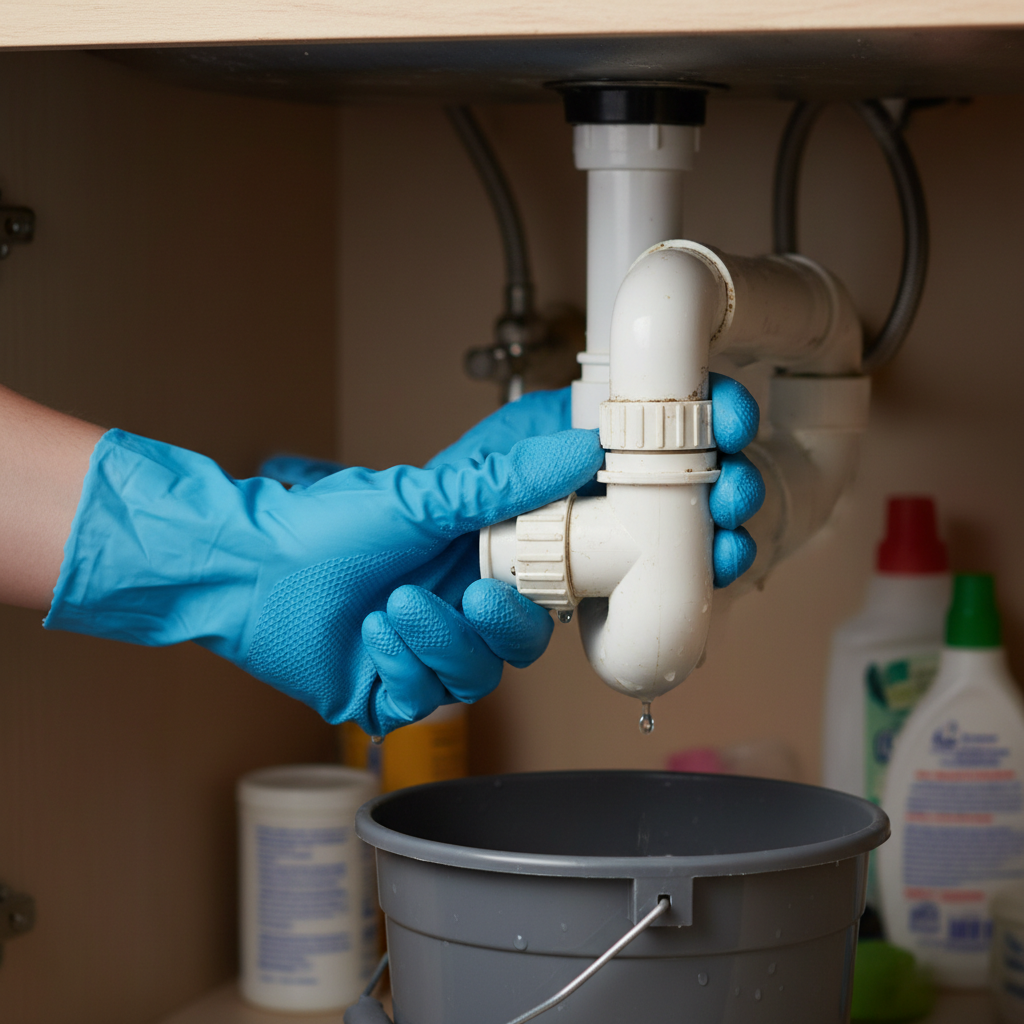
- Place old towels or rags thoroughly under the P-trap area to catch any spilled water or debris.
- Position a bucket or deep basin directly beneath the P-trap. This will collect the standing water and gunk that will come out when you open the trap.
- Wear rubber gloves to protect your hands from grime and potential bacteria.
Plumbing · Leak
| Project category | Plumbing |
|---|---|
| Problem type | Leak |
| Trade required | Plumbing |
| Urgency | Emergency — act now |
| Safety risk | High safety risk |
| DIY suitability | DIY for experienced homeowners |
| Cost category | Low cost |
| Typical timeline | Shut water off now; repair usually same or next day |
| Contractor type | Licensed plumber |
Repair option
Isolate at the shutoff, replace the failed component, and dry the cavity fully.
Replacement option
Repipe the run or the branch when corrosion is widespread.
Common causes
- Failed supply line or shutoff valve
- Worn washers, cartridges, or P-trap connections
- Pinhole corrosion in older copper
Relevant tools:emergency checklistdiy or hire a pro
Published May 18, 2026Last updated August 17, 2026
Tools & materials you'll need
Affiliate linksAs an Amazon Associate FixlyGuide earns from qualifying purchases — at no extra cost to you. Prices and availability are accurate as of publication and subject to change.
Quick Answer
AA slow-draining kitchen sink is almost always caused by a localized clog of grease, food debris, and soap scum that builds up over time. Before calling a plumber or resorting to caustic drain cleaners, you can usually clear this obstruction yourself by inspecting and cleaning the P-trap and the accessible sections of the drainpipe. This DIY approach not only saves money but also protects your plumbing from potential damage caused by chemical solutions.
The Problem
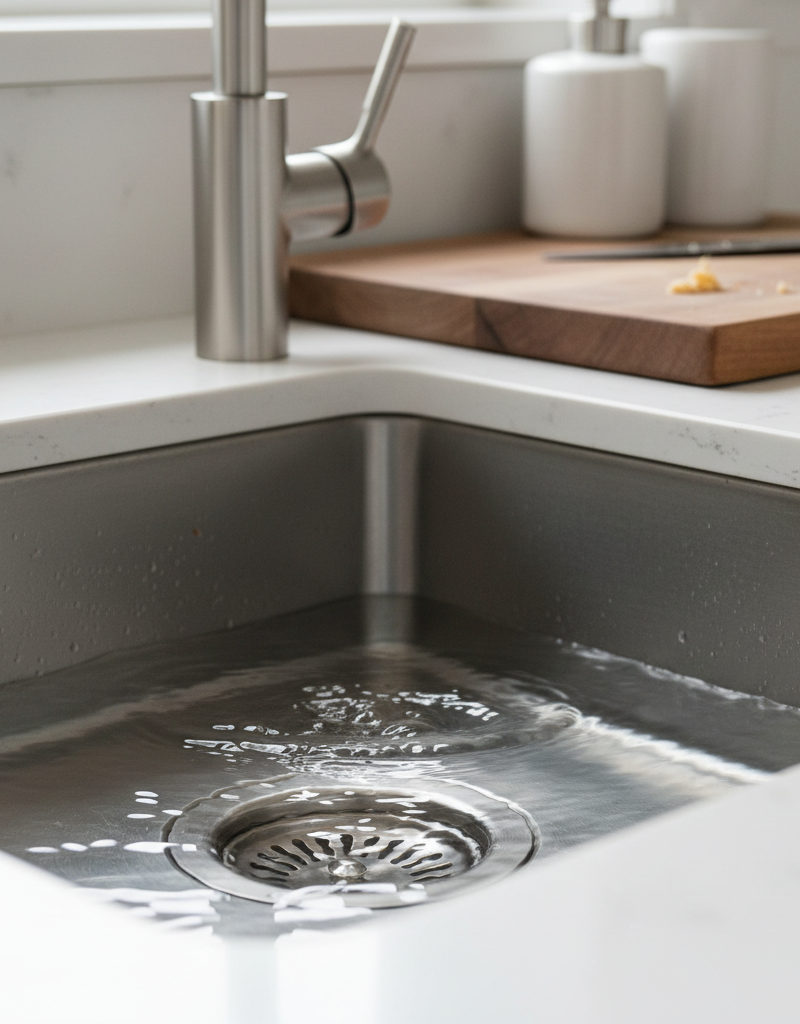
There's nothing more frustrating than a kitchen sink that refuses to drain properly. You wash dishes, and the water just sits there, slowly swirling down, leaving behind food particles and a general sense of dread. This isn't just an annoyance; it can lead to foul odors, bacterial growth, and, if left unaddressed, a complete blockage that could result in costly plumbing repairs. The problem typically isn't a mysterious deep-seated issue within your main sewer line but rather an accumulation of everyday kitchen waste in the first few feet of your drain system.
How It Works
Your kitchen sink's drain system is designed to carry wastewater away quickly and efficiently. Immediately beneath the sink is the basket strainer, which catches larger food particles. Below that, the tailpiece connects to the P-trap, a U-shaped pipe designed to hold a small amount of water. This water acts as a barrier, preventing sewer gases from entering your home. From the P-trap, the drainpipe continues into the wall, connecting to a vent pipe (which equalizes air pressure for smooth draining) and then to the main waste line of your house.
Over time, several substances routinely introduced into your kitchen sink can accumulate and stick to the interior walls of these pipes, especially in the P-trap where water flow changes direction and slows down. Grease and cooking oils, even those poured down in liquid form, cool and solidify as they travel through the drain, adhering to the pipe surfaces. Food particles, coffee grounds, and even soap scum then get trapped in this sticky matrix, building layers that gradually constrict the pipe's diameter. As the opening narrows, water drains more slowly because there's less space for it to flow, and air gets trapped, further impeding the process. Eventually, this accumulation can lead to a complete blockage if not addressed.
Step-by-Step Fix
1. Prepare Your Workspace — Lay towels and a bucket under the P-trap.
- Place old towels or rags thoroughly under the P-trap area to catch any spilled water or debris.
- Position a bucket or deep basin directly beneath the P-trap. This will collect the standing water and gunk that will come out when you open the trap.
- Wear rubber gloves to protect your hands from grime and potential bacteria.
2. Clear the Cabinet — Create space to access the drain.
- Remove all cleaning supplies, garbage cans, and anything else stored beneath your kitchen sink. You'll need ample room to maneuver and see what you're doing.
- Use a flashlight to get a better view of the P-trap and connections.
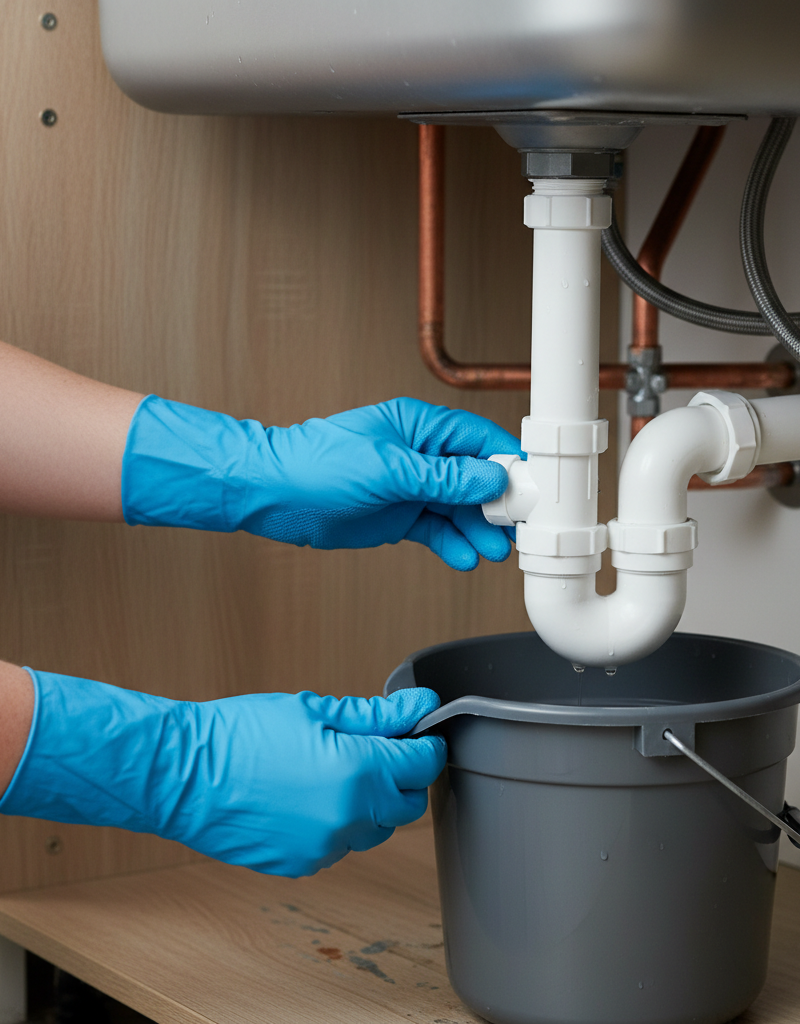
3. Loosen the Slip Nuts — Carefully disconnect the P-trap.
- Locate the two large slip nuts on either side of the P-trap – one connecting to the tailpiece (from the sink basket) and one connecting to the wall drainpipe.
- Using a pair of slip-joint pliers or a basin wrench (if space is tight), turn the slip nuts counter-clockwise to loosen them. They might be stiff if they haven't been opened in a while.
- If they are extremely tight, a brief spray of penetrating oil might help, but avoid excessive force that could crack the plastic pipes.
4. Remove the P-Trap — Gently pull the trap away.
- Once the slip nuts are loose enough, carefully slide them down the pipe sections.
- Gently detach the P-trap from the tailpiece and the wall drain. Be prepared for a gush of dirty water and accumulated sludge to fall into your waiting bucket.
- If the trap resists, gently wiggle it, ensuring all connections are free. Do not force it, as this can damage the pipes.
5. Clean the P-Trap — Remove the clog and inspect for damage.
- Take the removed P-trap to a utility sink or outside with a garden hose.
- Use a stiff brush, coat hanger, or even an old toothbrush to thoroughly scrape and remove all grease, food particles, and debris from the inside of the P-trap. Pay close attention to the curved section where most clogs form.
- Rinse the P-trap thoroughly with hot running water until it's completely clean. Inspect it for any cracks or damage, and replace it if necessary.
6. Inspect and Clear the Drainpipe (Optional but Recommended) — Address clogs beyond the P-trap.
- After cleaning the P-trap, visually inspect the exposed tailpiece (the vertical pipe coming directly from the sink basket) and the stub-out pipe leading into the wall.
- If you see any visible debris or a clog within these sections, use a plumber's snake or a bent coat hanger to gently probe and pull out any further obstructions.
- Feed the snake into the wall drain opening as far as it will go, twisting and maneuvering it to break up or retrieve any clogs. Be gentle to avoid damaging older pipes.
- If you encounter significant resistance or cannot clear a blockage, this might indicate a deeper issue requiring professional help – CALL A PRO. Do not keep forcing the snake.
7. Reassemble the P-Trap — Put everything back together.
- Position the clean P-trap back in place, aligning it with the tailpiece and the wall drainpipe.
- Slide the slip nuts back up and hand-tighten them onto the threaded connections. Ensure the rubber or plastic washers (gaskets) are correctly seated within the slip nuts; these create the watertight seal. Replace old, cracked washers if needed.
- Use the slip-joint pliers to tighten the slip nuts another quarter to half turn, being careful not to overtighten. Overtightening can crack plastic pipes or strip threads.
8. Test for Leaks and Drainage — Confirm your fix.
- Turn on the hot water and let it run at a moderate flow for several minutes. Observe the P-trap and all connections closely for any signs of dripping or leaks.
- If you notice a leak, tighten the corresponding slip nut slightly. If the leak persists, you might need to disassemble and re-seat the washer.
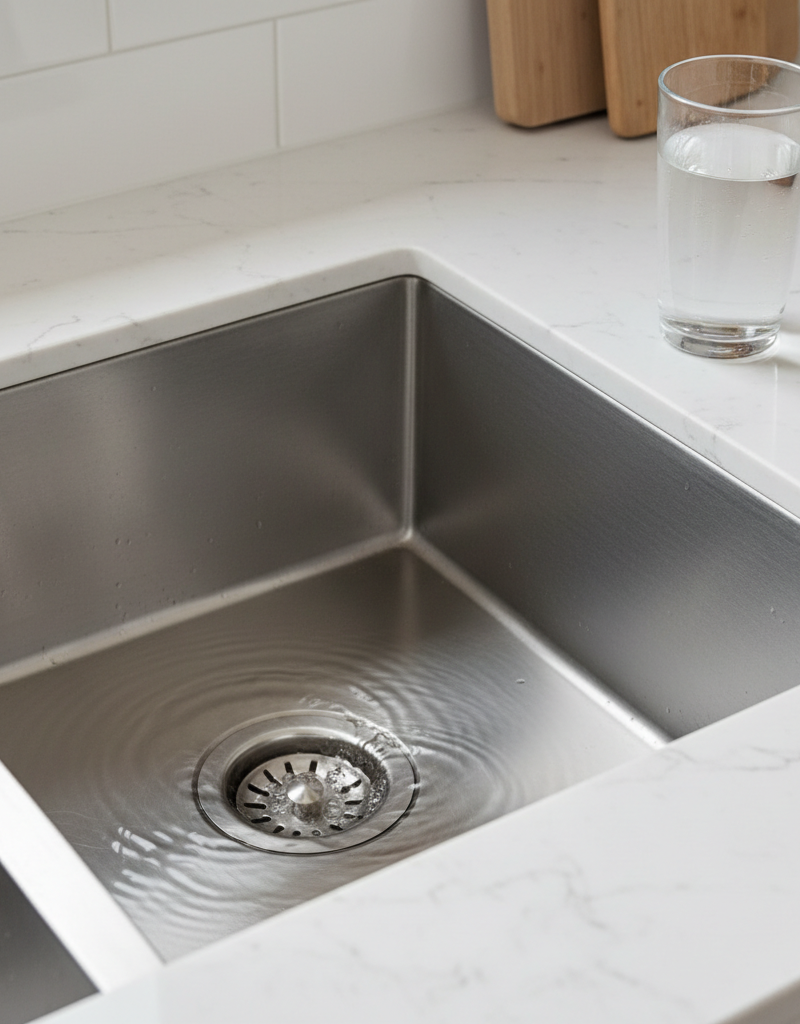
- Fill the sink with water and then pull the stopper to observe how quickly it drains. It should drain much faster and more smoothly now.
Common Causes
- Grease and Oil Buildup: The primary culprit. Grease poured down the drain solidifies as it cools, coating pipe walls and trapping other debris.
- Food Particles: Coffee grounds, rice, pasta bits, vegetable peelings, and other small food scraps often get past the sink strainer and accumulate in the trap.
- Soap Scum: While often associated with bathroom drains, soap scum from dish soap can contribute to blockages, especially when combined with grease.
- Hair and Fibers: Though less common than in bathroom sinks, hair or fibrous materials can occasionally find their way into the kitchen drain and snag on existing clogs.
- Lack of Hot Water Flushes: Regular flushing with very hot water helps to keep grease in a liquid state, allowing it to flow more freely through the pipes.
Common Mistakes
- Using Chemical Drain Cleaners: These often don't fully clear tough grease clogs, can corrode pipes (especially older ones), and pose a significant safety risk during future plumbing work. They are also terrible for the environment.
- Overtightening Slip Nuts: This can crack plastic pipes or strip the threads, leading to leaks and requiring costly pipe replacement.
- Ignoring the Symptoms: A slow drain is a warning sign. Ignoring it allows the clog to worsen, potentially leading to a complete blockage or an overflowing sink.
- Not Protecting the Workspace: Failing to lay down towels and a bucket can result in a messy spill of dirty water and sludge onto your cabinet floor.
- Assuming a Deeper Problem: Many homeowners immediately assume a major blockage in the main line when the issue is often a simple, accessible clog in the P-trap.
- Improper Washer Seating: Rubber or plastic washers (gaskets) must be perfectly seated within the slip nuts to create a watertight seal. If they're twisted or out of place, leaks will occur.
Cost & Time Breakdown
| Task | DIY cost | Pro cost | Time |
|---|---|---|---|
| P-trap cleaning | $0–$10 | $150–$300 | 30–60 minutes |
| New P-trap (if needed) | $10–$25 | Included in service | 5–10 minutes |
| Plumber's snake (rental/purchase) | $0–$30 (if buying) | Included in service | 10–20 minutes |
| Replace slip nuts/washers | $5–$15 | Included in service | 5 minutes |
Tips & Prevention
- Scrape Plates Thoroughly: Before washing, scrape all food scraps, grease, and oil into the trash or compost, not down the drain.
- Use a Sink Strainer: Install a mesh sink strainer to catch any small food particles that might otherwise go down the drain. Clean it out regularly.
- Flush with Hot Water: After washing greasy dishes, run very hot water down the drain for a minute or two. This helps keep grease in a liquid state, flushing it further down the pipes.
- Monthly Vinegar & Baking Soda Flush: Pour 1 cup of baking soda down the drain, followed by 1 cup of white vinegar. Let it sit for 30 minutes, then flush with hot water. This creates a mild effervescent action that can help break down minor buildup.
- Avoid Coffee Grounds: Never put coffee grounds down the drain, as they are a major contributor to clogs.
- Regular P-Trap Inspection: Consider a semi-annual visual inspection of your P-trap, especially if you cook frequently with oils and fats.
When to Call a Professional
While many slow-draining kitchen sinks can be fixed with a simple P-trap cleaning, there are clear indicators when it's time to call a licensed plumber. If you've cleaned the P-trap and the drain is still slow, or if multiple drains in your home (like a bathroom sink or shower) are also draining slowly, it suggests a deeper, more widespread blockage in your main drain line, which is beyond the scope of a simple DIY fix.
Another sign to call a pro is if you've attempted to use a plumber's snake and encountered significant resistance that you can't clear, or if you feel uncomfortable disassembling the pipes. Any signs of water backing up into other fixtures, foul sewage odors emanating from multiple drains, or bubbling toilets when you run the sink are also red flags indicating a more serious problem. A professional plumber has specialized tools and expertise to diagnose and safely clear these complex clogs without damaging your plumbing system.
Related Articles
Keep troubleshooting with these hand-picked guides from FixlyGuide:
- The #1 Mistake Homeowners Make with a Slow Kitchen Drain (And the Simple Fix) — A slow kitchen sink drain is frustrating, but often an easy fix if you avoid common mistakes and know where to look first.
- The #1 Mistake Homeowners Make with a Slow Kitchen Drain (and How to Undo It) — A slow kitchen sink drain is a common and frustrating problem, but often stems from a single preventable mistake that's easily fixed with t…
- The #1 Mistake Homeowners Make with a Slow Kitchen Drain (and the Real Fix) — Before you reach for harsh chemicals, learn the right way to fix a slow kitchen sink drain and prevent future clogs.
- The #1 Mistake When Your Dishwasher Won’t Drain (And How to Fix It in 20 Minutes) — Discover the most common reason your dishwasher isn't draining and how to troubleshoot and fix it yourself in under half an hour.
- The #1 Mistake Homeowners Make Caulking a Bathroom Sink (And How to Fix It) — Discover the most common caulking mistake homeowners make around bathroom sinks and how to achieve a waterproof, professional-looking seal…
- The #1 Mistake Homeowners Make When Their Ice Maker Stops (And the Easy Fix) — Before you call for service, learn the most common and easily fixable reason your refrigerator's ice maker isn't producing ice.
Should you do this yourself?
Answer five quick questions before you start. Safety outranks savings every time.
Your experience with work like this
How high do you have to work?
Does the job involve any of these?
Will it need a permit?
Specialty tools
Free and instant. Educational guidance only — not a quote, inspection, or professional diagnosis.
What should this project cost?
Enter your project details for a realistic cost range before you call anyone.
Common repairs run $150–$650; repipes and water-heater replacements reach $1,500–$4,500.
- Regional adjustment
- National average
- Labor share (typical)
- ~$754
- Quotes to collect
- 3 written estimates
Educational estimate based on national averages — not a binding quote. Always confirm with written local estimates.
Fixly Project Decision Box
- DIY difficulty
- Moderate
- Estimated time
- 30 minutes – half a day
- Cost level
- Moderate
Main tools / materials
- Adjustable wrench
- Plunger or drain auger
- Bucket and towels
- Thread tape
When to stop and call a pro
- Water you cannot shut off at the fixture or main
- Sewage backing up into more than one fixture
- Water near electrical panels or outlets
- Gas water heater work beyond relighting a pilot
Need professional help?
Get a Licensed PlumberFrequently asked questions
How often should I clean my kitchen sink P-trap?+
For most households, cleaning your kitchen sink P-trap every 1-2 years is a good preventative measure. If you frequently cook with a lot of grease or notice consistently slow drainage, you might consider cleaning it more often, perhaps semi-annually.
Can I use boiling water to clear a slow kitchen sink drain?+
While hot water can help melt grease, pouring boiling water directly down a PVC drain can sometimes soften or warp the plastic, potentially leading to leaks. It's safer to use very hot tap water or a mixture of baking soda and vinegar followed by hot tap water.
What if my sink still drains slowly after cleaning the P-trap?+
If your sink still drains slowly after you've thoroughly cleaned the P-trap and checked the immediate tailpiece, the clog is likely further down the drainpipe. At this point, you could try using a plumber's snake, but if that doesn't work or you're uncomfortable, it's best to call a licensed plumber, as the issue might be a deeper blockage or a venting problem.
Discussion
Loading comments…