- Tools: Screwdriver (for hose clamps), bucket (to catch water), pliers, plumber's snake or stiff wire.
- Safety: Wear gloves if dealing with old, potentially brittle hoses.
- Cost Check: If the hose is damaged, a replacement typically costs $15–$30.
Plumbing · Clog
| Project category | Plumbing |
|---|---|
| Problem type | Clog |
| Trade required | Plumbing |
| Urgency | Soon — within weeks |
| Safety risk | Low safety risk |
| DIY suitability | DIY friendly |
| Cost category | Low cost |
| Typical timeline | Same-day DIY attempt; pro visit within a day or two |
| Contractor type | Licensed plumber |
Repair option
Plunger, hand auger, or trap cleanout before chemicals.
Replacement option
Line replacement when clogs return in the same spot repeatedly.
Common causes
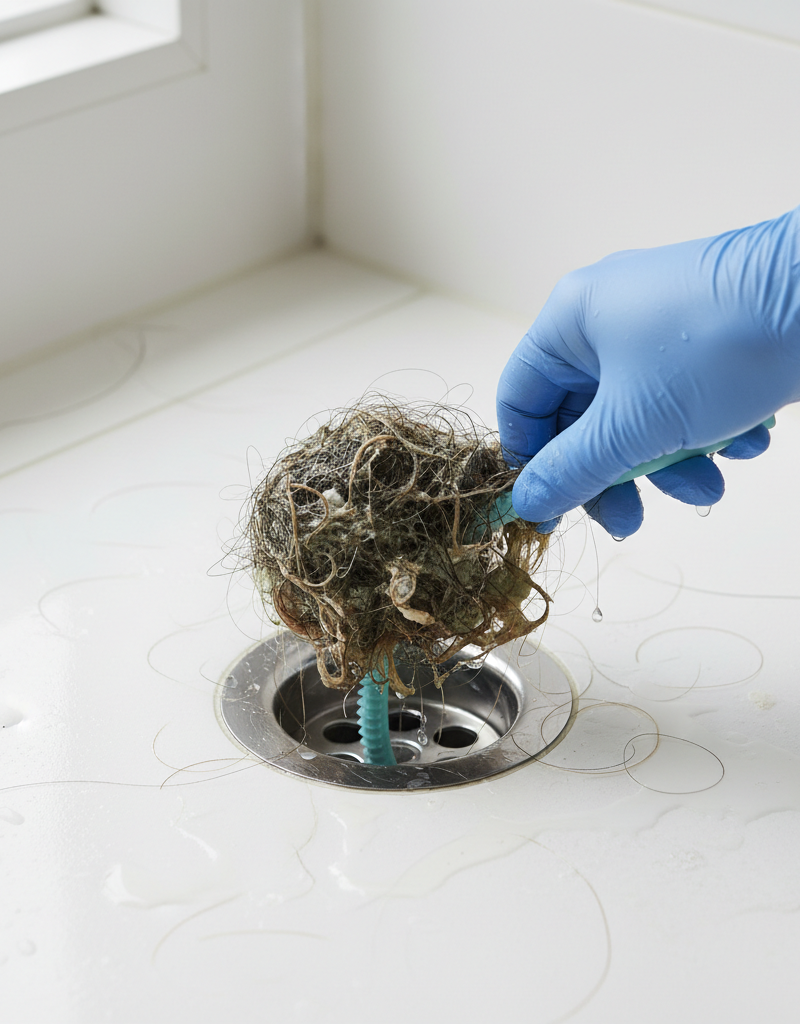
- Hair and soap buildup in the trap
- Grease cooling in the branch line
- Flushed wipes or foreign objects
Relevant tools:diy difficultydiy or hire a pro
Published April 29, 2026Last updated August 17, 2026
Tools & materials you'll need
Affiliate linksAs an Amazon Associate FixlyGuide earns from qualifying purchases — at no extra cost to you. Prices and availability are accurate as of publication and subject to change.
Quick Answer
If your dishwasher isn't draining, the most common culprits are usually a clogged air gap, a kinked or clogged drain hose, or a dirty filter. Start by inspecting these components, as they often require only simple cleaning or repositioning to restore proper drainage. Less common but still possible issues include a malfunctioning drain pump or a problem with the garbage disposal connection, if applicable.
The Problem
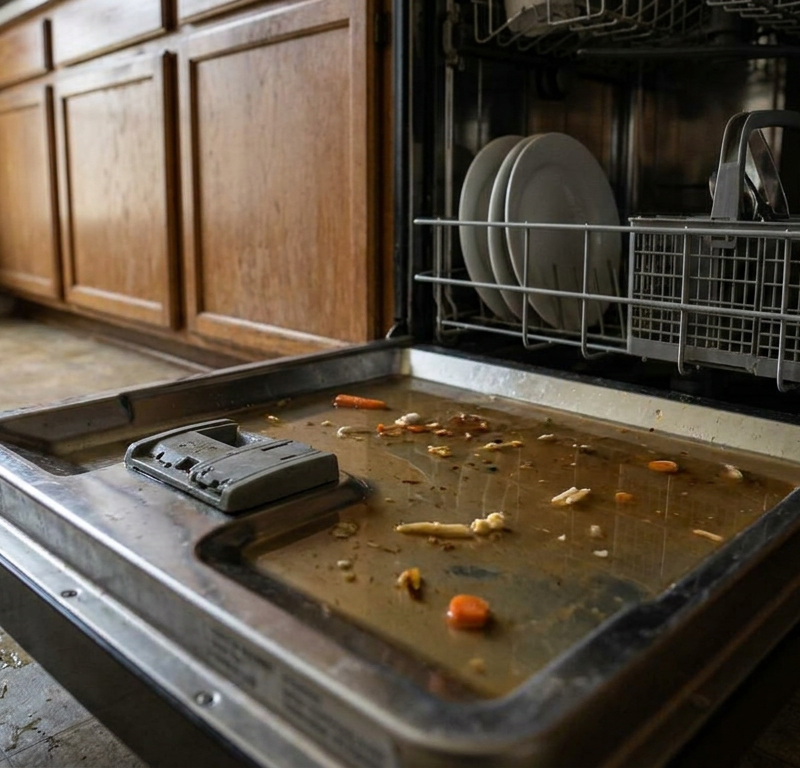
There's nothing more frustrating than opening your dishwasher after a cycle, expecting sparkling clean dishes, only to find them sitting in a pool of murky water. A dishwasher that fails to drain completely isn't just an annoyance; it can lead to foul odors, bacterial growth, and even damage to the appliance over time. While the immediate thought might be a serious plumbing issue, many instances of improper dishwasher drainage stem from surprisingly simple and easily fixable causes that homeowners can tackle themselves.
How It Works
To understand why your dishwasher isn't draining, it helps to know how it should drain. After the wash and rinse cycles, the dishwasher's drain pump activates. This pump forces the dirty water out of the dishwasher tub, through a drain hose, and typically into one of two places: either a dedicated air gap on your sink counter or directly into the garbage disposal or a standpipe.
The air gap, if present, acts as a backflow prevention device. Water flows from the dishwasher, up into one side of the air gap, over a small internal weir, and then down the other side into the garbage disposal or drain. This design prevents contaminated sink water from siphoning back into your dishwasher. The drain hose itself is usually corrugated plastic or rubber and connects from the dishwasher's drain pump to the air gap or direct drain connection. It often has a high loop to prevent backflow and reduce noise. Inside the dishwasher tub, a filter system (usually a basket, fine mesh screen, or both) catches food particles, preventing them from entering the drain pump and plumbing system. If any part of this system—the filter, drain pump, air gap, drain hose, or the connection point—becomes obstructed or fails, water will simply sit in the dishwasher.
Step-by-Step Fix
Remember to always disconnect power to the dishwasher at the circuit breaker before performing any inspections or repairs to prevent electric shock.
1. Clear the Air Gap — The most overlooked cause of draining issues, located on your countertop.
Look for a small, cylindrical chrome or plastic cap on your kitchen counter, typically near the faucet. Remove the cap by twisting and lifting. Then, remove the inner cap. Check for any food debris or slimy buildup clogging the opening. Use a paper towel or a small brush to clean out any obstructions you find. You may also need to clear the hose connecting the air gap to the garbage disposal if it's clogged.
- Tools: Pliers (optional, for stubborn caps), small brush or paper towel.
- If this doesn't work: The clog might be further down the drain hose.
2. Inspect the Drain Hose — A common culprit for incomplete drainage, often hidden behind the dishwasher.
Pull the dishwasher out slightly (if possible and accessible) and inspect the entire length of the corrugated drain hose, which runs from the dishwasher to the sink drain or garbage disposal. Look for any visible kinks or sharp bends that could restrict water flow. Straighten any kinks you find. If you can't see the full length, you might need to detach it from the sink/disposal side and visually inspect or gently snake it with a plumber's snake or stiff wire (like a coat hanger) to dislodge any internal blockages. Ensure the hose has a high loop to prevent backflow.
- Tools: Screwdriver (for hose clamps), bucket (to catch water), pliers, plumber's snake or stiff wire.
- Safety: Wear gloves if dealing with old, potentially brittle hoses.
- Cost Check: If the hose is damaged, a replacement typically costs $15–$30.
3. Clean the Dishwasher Filter — A primary cause of drainage problems, located inside the dishwasher tub.
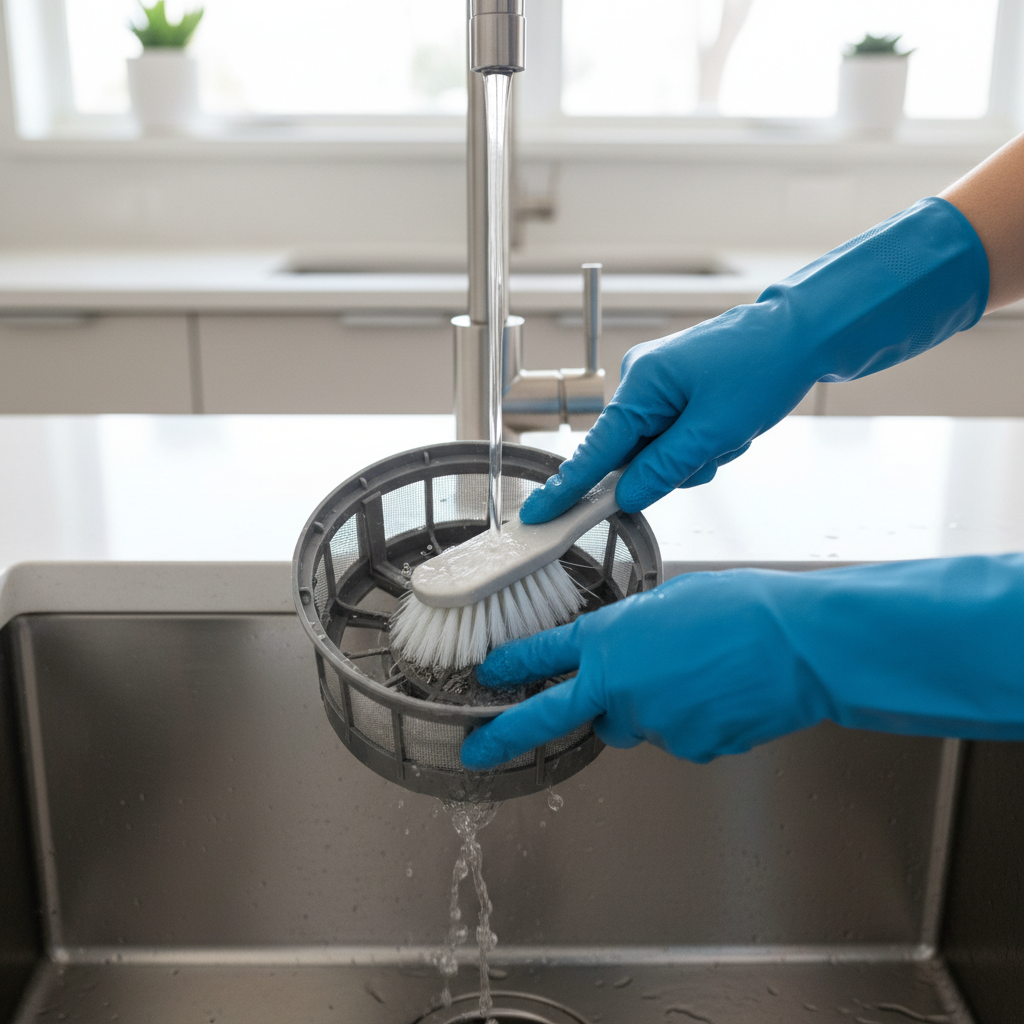
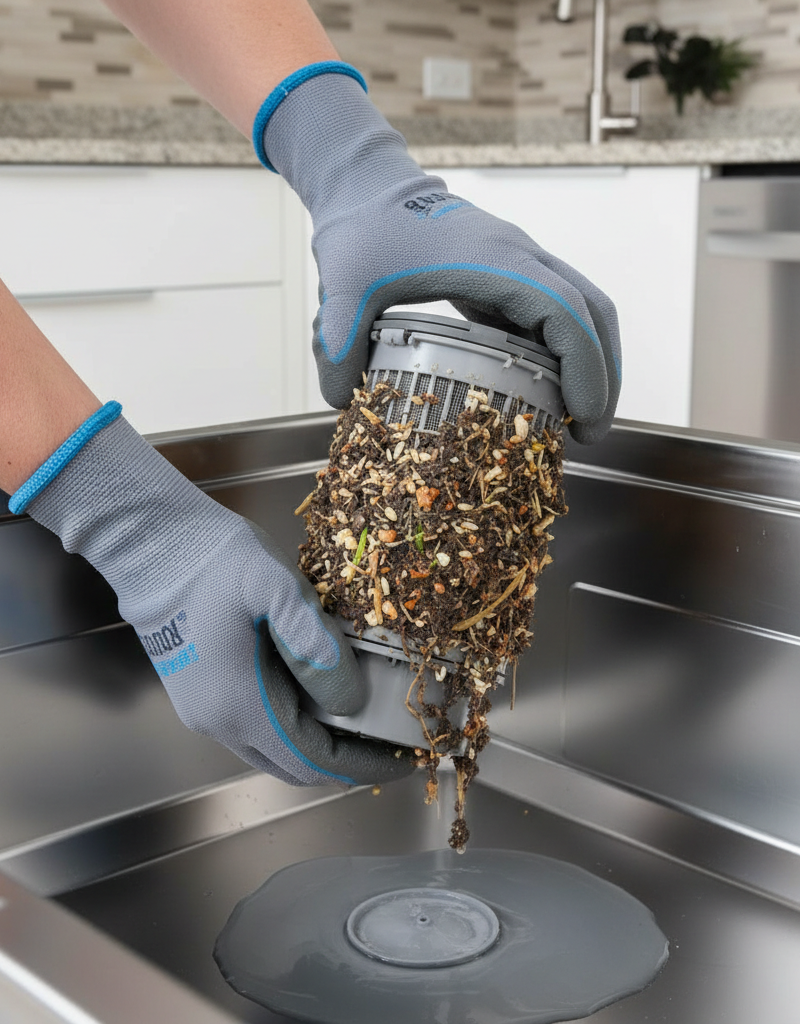
Open your dishwasher door and locate the filter assembly at the bottom of the tub. This usually consists of a coarse filter (which may look like a perforated cylinder or flat screen) and a fine microfilter underneath. Twist or unlatch the components according to your dishwasher's manual to remove them. Rinse both filters thoroughly under running water, scrubbing away any food particles, grease, or gritty buildup with a stiff brush and dish soap. Reassemble them correctly, ensuring they snap securely back into place.
- Tools: Stiff brush, dish soap.
- Frequency: Clean your dishwasher filter every 1–3 months, or more often if you pre-rinse dishes heavily.
4. Check the Garbage Disposal — A frequently overlooked connection if your dishwasher drains into it.
If your dishwasher drains into the garbage disposal, ensure the disposal is clear and functioning. Run the disposal for about 30 seconds with cold water to break up any food waste. If the disposal is new, ensure the knockout plug for the dishwasher drain line has been removed. If it's still draining slowly, the disposal itself may be partially clogged. Never use chemical drain cleaners in your disposal or dishwasher, as they can damage components.
- Tools: Flashlight (to check within the disposal), Allen wrench (for disposal jams).
- Pro Tip: If you just installed a new disposal, you must remove the knockout plug before connecting the dishwasher drain hose.
5. Inspect the Drain Pump — A more advanced step if other fixes fail.
If the above steps don't fix the issue, the drain pump might be obstructed or failing. This is a more involved step and requires accessing the drain pump, which is usually located at the very bottom of the dishwasher. You'll likely need to pull the dishwasher out completely and tip it on its side or back, depending on your model. Disconnect the power and water lines. Remove the pump cover (if accessible) and carefully check for broken glass, food bits, or other debris lodged in the impeller. If the impeller spins freely and there's no visible blockage, the pump motor itself might be failing. This usually requires replacement.
- Tools: Screwdriver, adjustable wrench, towels, bucket.
- Safety: Always wear cut-resistant gloves when reaching into the drain pump area, as broken glass can be present.
- Pro Callout: If you're uncomfortable with this step, or suspect the pump is failing, it's best to call a professional. New drain pumps typically cost $70–$150 for the part.
6. Run a Drain Cycle Test — Verify your fix and flush the system.
After attempting any of these fixes, close the dishwasher door and run a short rinse-only cycle or a drain cycle (if your model has one). Pay close attention to the drainage. You should hear the pump activate and the water disappear. If water still remains, re-evaluate the previous steps or consider calling a professional.
Common Causes
- Clogged Air Gap: Often overlooked, this small device on your countertop can become a bottleneck for draining water if food particles or mineral deposits build up inside it.
- Kinked or Obstructed Drain Hose: The flexible drain hose can become bent, especially if the dishwasher is pushed back too far, or it can accumulate food debris, grease, or even mold over time.
- Dirty Filter Assembly: The dishwasher's filter system (coarse and fine filters) is designed to catch food particles. If it's not cleaned regularly, it becomes clogged, preventing water from reaching the drain pump efficiently.
- Garbage Disposal Issues: If your dishwasher drains into a garbage disposal, an unremoved knockout plug (in new installations) or a clogged/backed-up disposal can prevent proper drainage.
- Failing Drain Pump: Less common than clogs, but the mechanical drain pump can wear out, accumulate debris, or suffer electrical failure, preventing it from expelling water.
- Incorrect High Loop: The drain hose needs a 'high loop' (secured upwards under the sink) to prevent back-siphoning. Without it, water can drain back into the dishwasher.
Common Mistakes
- Ignoring the Air Gap: Many homeowners aren't even aware of the air gap's existence or function, making it an easy place for clogs to go unnoticed. Always check this first.
- Using Chemical Drain Cleaners: Never pour harsh chemical drain cleaners into your dishwasher or its drain line. They can damage rubber seals, plastic components, and even the pump itself. Opt for mechanical removal of clogs.
- Not Regularly Cleaning Filters: Thinking the dishwasher
Related Articles
Keep troubleshooting with these hand-picked guides from FixlyGuide:
- The Secret Culprit Behind Your Dishwasher's Standing Water (It's Not Always a Clog) — Don't assume a clog is the only reason your dishwasher isn't draining; often, the fix is simpler than you think.
- Dishwasher Not Draining? Easy Fixes for a Clogged Drain — A dishwasher that won't drain at the end of a cycle is a common problem, often caused by simple clogs or blockages that homeowners can fix…
- The Secret Culprit Behind Your Leaking Washer (It's Not Always the Hose) — A washing machine leaking water from the bottom can often be traced to common, easily fixable issues like loose hoses or a clogged drain pu…
- The Secret Culprit Behind Your Kitchen Sprayer’s Drab Drizzle (It’s Not Clogging!) — Don't replace that kitchen sink sprayer head just yet! Low pressure often stems from a few hidden, easily fixable issues within your faucet…
- The Secret Culprit Behind Your Leaky Chimney (It’s Not Always the Obvious Fix) — A leaky chimney during rain can indicate several issues, from simple flashing problems to complex crown damage, requiring homeowners to dia…
- The Secret Culprit Behind Your AC Blowing Warm Air (It’s Not What You Think) — Discover the unexpected reason your air conditioner is blowing warm air and how a simple, often overlooked fix can restore your home’s cool…
Should you do this yourself?
Answer five quick questions before you start. Safety outranks savings every time.
Your experience with work like this
How high do you have to work?
Does the job involve any of these?
Will it need a permit?
Specialty tools
Free and instant. Educational guidance only — not a quote, inspection, or professional diagnosis.
What should this project cost?
Enter your project details for a realistic cost range before you call anyone.
Common repairs run $150–$650; repipes and water-heater replacements reach $1,500–$4,500.
- Regional adjustment
- National average
- Labor share (typical)
- ~$754
- Quotes to collect
- 3 written estimates
Educational estimate based on national averages — not a binding quote. Always confirm with written local estimates.
Fixly Project Decision Box
- DIY difficulty
- Moderate
- Estimated time
- 30 minutes – half a day
- Cost level
- Moderate
Main tools / materials
- Adjustable wrench
- Plunger or drain auger
- Bucket and towels
- Thread tape
When to stop and call a pro
- Water you cannot shut off at the fixture or main
- Sewage backing up into more than one fixture
- Water near electrical panels or outlets
- Gas water heater work beyond relighting a pilot
Need professional help?
Get a Licensed PlumberFrequently asked questions
Why is there still water in the bottom of my dishwasher?+
Water remaining in the bottom of your dishwasher typically indicates a drainage issue. Common causes include a clogged air gap, a kinked or obstructed drain hose, or a dirty filter assembly inside the dishwasher tub.
How do I manually drain my dishwasher?+
To manually drain your dishwasher, first disconnect the power. Then, carefully scoop out as much standing water as possible with a cup or sponge. You can then try to clear the drain hose or air gap, which might allow the remaining water to drain naturally once the obstruction is removed.
Can a clogged garbage disposal cause the dishwasher not to drain?+
Yes, absolutely. If your dishwasher drains through your garbage disposal, a clog or even an unremoved knockout plug (in a new disposal installation) will prevent the dishwasher from draining properly. Running the disposal can often clear minor clogs.
Should I call a plumber for a dishwasher that won't drain?+
You should call a plumber if you've tried clearing the air gap, drain hose, and filters, and the dishwasher still isn't draining. If you suspect a failing drain pump or a deeper plumbing issue in your home's drainage system, a professional can diagnose and repair the problem safely and efficiently.
Discussion
Loading comments…