- Lack of Natural Predators: A decline in natural predators such as birds, predatory nematodes, ground beetles, and parasitic wasps can lead to an increase in grub populations.
- Overuse of Broad-Spectrum Pesticides: Indiscriminate use of broad-spectrum insecticides can kill beneficial insects that prey on grubs, inadvertently worsening the problem over time.
- Thatch Buildup: A thick layer of thatch (dead grass material between the green blades and the soil) can protect grubs from some surface-applied treatments and create a more hospitable environment for them.
- Previous Infestations: If your lawn has had grubs in the past, it's highly susceptible to future infestations, as beetles tend to return to familiar breeding grounds.
Landscaping · Deck or fence project
| Project category | Landscaping |
|---|---|
| Problem type | Deck or fence project |
| Trade required | Landscaping |
| Urgency | Planned project |
| Safety risk | Moderate safety risk |
| DIY suitability | DIY for experienced homeowners |
| Cost category | High cost |
| Typical timeline | Most builds 3–10 days depending on size |
| Contractor type | Landscaping contractor |
Repair option
Replace failed boards, posts, and hardware; reseal the surface.
Replacement option
Rebuild when framing or the ledger connection is unsafe.
Common causes
- Rot at posts and ledger
- Storm damage
- Adding outdoor living space
Relevant tools:home improvement material pricesproject cost estimator
Published June 1, 2026Last updated August 17, 2026
Tools & materials you'll need
Affiliate links- AmazonSpade or TrowelFor checking turf
- AmazonBroadcast SpreaderFor even application
- AmazonGarden Hose with SprinklerFor watering in product
- AmazonWork GlovesFor safety during application
- AmazonSafety GogglesIf using powdered or dusty granular products
- AmazonLawn Roller (optional)For overseeding/sodding
As an Amazon Associate FixlyGuide earns from qualifying purchases — at no extra cost to you. Prices and availability are accurate as of publication and subject to change.
Quick Answer
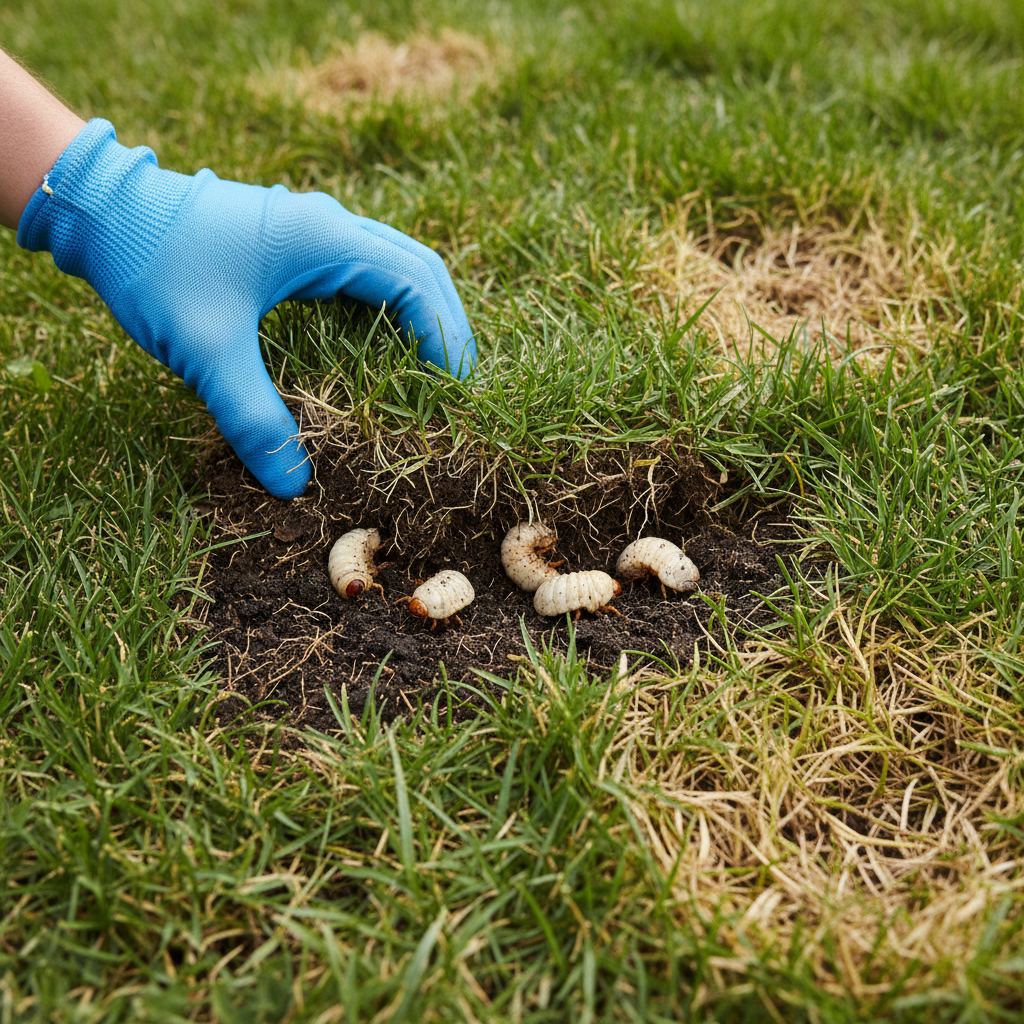
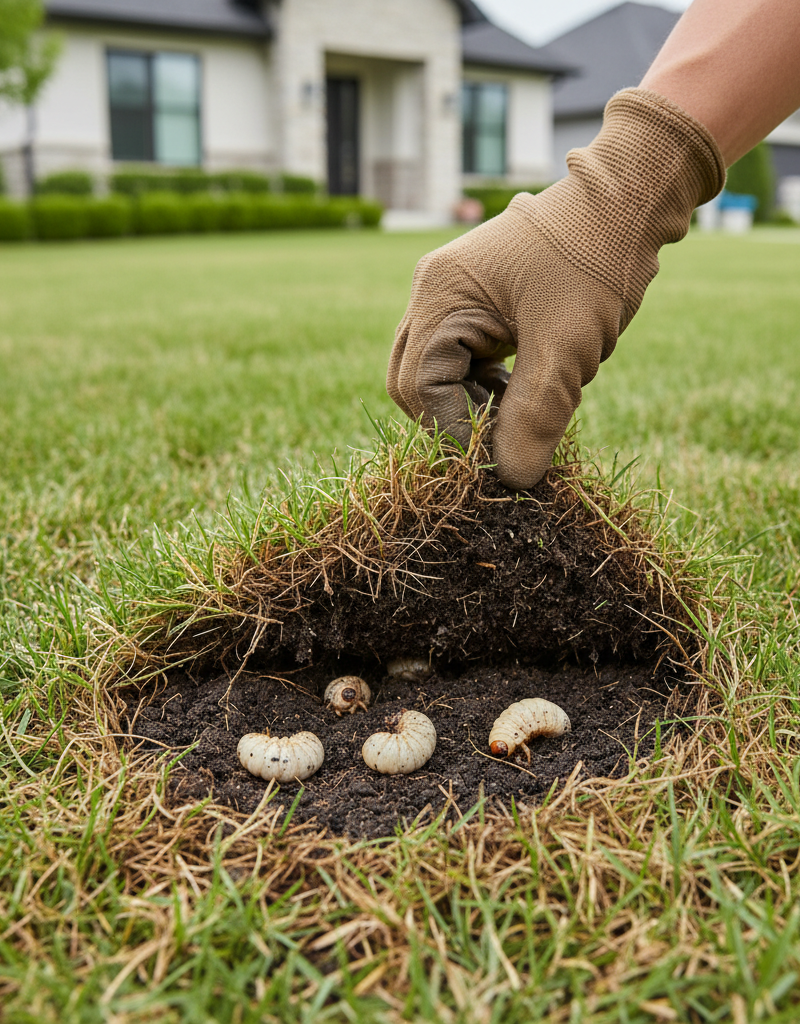
Grubs are the C-shaped larvae of various beetles, including Japanese beetles, May/June beetles, and chafers, that feast on the roots of your lawn grasses. This root damage leads to irregular brown patches, particularly noticeable in late summer and early fall, and a distinct spongy feel when you walk on the affected areas. If you can easily pull back sections of turf as if it were carpet, revealing the white grubs underneath, you have an active infestation. The most effective way to eliminate grubs is to apply a targeted insecticide or a biological control like beneficial nematodes when the grubs are young and actively feeding in late summer to early fall. Addressing the problem quickly can save your lawn from extensive damage and costly resodding.
The Problem
Imagine stepping onto your beautiful green lawn, only to have your foot sink slightly, feeling unusually soft and squishy. Then you notice irregular brown patches, spreading like an unwelcome rash across your yard. These aren't just dry spots; the grass pulls up easily, revealing a disturbing sight: plump, white, C-shaped larvae wriggling in the soil beneath. This is the tell-tale sign of a grub infestation, a common and frustrating problem for many homeowners. Grubs, the immature stage of various beetles, are voracious eaters of grass roots. As they munch away, they sever the vital connection between your grass blades and the soil, preventing water and nutrients from reaching the plant. This leads to wilting, browning, and ultimately, the death of your lawn in affected areas. Left unchecked, grub damage can quickly decimate large sections of your yard, turning lush turf into a patchy, unsightly mess, and even attracting secondary pests like skunks, raccoons, and birds seeking an easy meal.
How It Works
Understanding the life cycle of common lawn grubs is crucial for effective treatment. Most problematic grubs in North America primarily belong to Japanese beetles, May/June beetles (also known as June bugs), and European chafers. While their exact timing can vary slightly by region and species, they generally follow a similar annual pattern.
Adult beetles emerge from the soil in late spring to mid-summer, typically from May to July. They mate and then lay their eggs in the turf, ideally in moist, healthy grass, as these conditions are favorable for egg survival. Each female beetle can lay dozens of eggs, often in cycles over several weeks. These eggs hatch into tiny, first-instar grubs a few weeks later, usually in late July to August. This is a critical period for treatment, as these young grubs are small, actively feeding close to the surface, and most vulnerable to insecticides.
As summer progresses into fall, the grubs grow, molting into second and then third instars. They continue to feed ravenously on grass roots, causing the visible damage described above. As temperatures drop in late fall, the mature third-instar grubs burrow deeper into the soil, often 4 to 8 inches down, to overwinter. They remain dormant through the winter months, protected from the cold.
In early spring, as the soil warms, the grubs become active again and migrate back closer to the surface. They may feed for a short period, causing some minor additional damage, but their primary focus during this time is pupation. By late spring, they transform into pupae, undergoing metamorphosis into adult beetles. This stage takes a few weeks, after which the adults emerge, restarting the entire cycle. Because mature grubs in spring aren't actively feeding heavily, and are larger and more robust, spring treatments are generally less effective than fall treatments. Timing your treatment to target the young, newly hatched grubs in late summer/early fall is the most impactful strategy.
Step-by-Step Fix
1. Confirm the Culprits — Don't spray blindly; verify grubs are the problem.
Before reaching for any treatment, you need to confirm that grubs are indeed the cause of your lawn's distress. Often, brown patches can be due to drought, disease, or other pests. To check for grubs, choose a few affected areas in your lawn. Using a spade or trowel, cut a 12-inch by 12-inch square of turf, about 2-4 inches deep, and peel it back like a carpet. Inspect the soil and the underside of the turf for C-shaped, creamy white grubs with six legs near their head. If you find 6-10 or more grubs per square foot, treatment is warranted.
- Tools: Spade or trowel
- If you don't find grubs: Your lawn problem is likely something else. Consider issues like fungal disease (dollar spot, brown patch), chinch bugs, or simply inadequate watering. Look for other signs or consult a local extension office.
2. Identify the Grub Species (Optional but Recommended) — Knowing your enemy helps choose the right weapon.
While not strictly necessary for all treatments, identifying the specific type of grub can help you fine-tune your approach, especially if considering biological controls. Japanese beetle grubs are often smaller and have a distinct raster pattern (hairs on their underside) that can be seen with a magnifying glass. May/June beetle grubs are larger. Your local cooperative extension office can often help with identification if you bring in a sample.
3. Choose Your Weapon: Curative vs. Preventative — Match the treatment to the timing and severity.
There are two main types of grub control: curative and preventative. Curative treatments are fast-acting and used when you already have an active infestation. Preventative treatments are applied earlier in the season to stop grubs from developing.
- Curative (for existing infestations): Products containing trichlorfon or carbaryl are effective. They work quickly (within days) to kill active grubs. These are best applied in late summer to early fall when grubs are small and actively feeding.
- Preventative (for future infestations): Products containing imidacloprid, chlorantraniliprole, or clothianidin provide season-long control by preventing grub development. These are typically applied in spring to early summer, before eggs hatch. Note: If you have a severe active infestation, a preventative alone won't solve the immediate problem.
4. Time Your Application Precisely — The most critical step for success.
This is where many homeowners go wrong. Apply curative grub control in late summer to early fall (August to early October in many regions) when grubs are young and closest to the surface. Applying too early in spring or too late in fall significantly reduces effectiveness because grubs are either too deep, too large, or not actively feeding. For preventative treatments, apply in late spring to early summer (April to June), well before the beetles lay eggs.
5. Prepare the Lawn — A little moisture goes a long way.
For optimal absorption and effectiveness, mow your lawn to its regular height before application. If the soil is very dry, lightly water the area a day or two before you plan to apply the grub killer. This helps the product penetrate the soil more effectively and makes it easier for the grubs to ingest.
6. Apply the Granules Evenly — Consistency is key for a uniform kill.
Most grub control products come in granular form. Use a broadcast spreader for larger lawns or a drop spreader for more precise application around garden beds. Read the product label carefully for the correct spreader settings and application rates. Over-application can be harmful to your lawn and the environment; under-application will be ineffective. Walk at a steady pace to ensure even coverage, overlapping slightly on each pass.
- Safety: Always wear gloves, long pants, a long-sleeved shirt, and closed-toe shoes when handling and applying pesticides. Avoid inhalation. Keep children and pets off treated areas until the product has been watered in and dried.
7. Water It In Thoroughly — Activate the treatment.
Immediately after applying granular grub control, water your lawn thoroughly. Aim for about 0.5 to 1 inch of water (you can measure this accurately by placing an empty tuna can in the spray path). This watering dissolves the granules and carries the active ingredients down into the thatch layer and soil where the grubs are feeding. Without adequate watering, the product will remain on the surface and be ineffective.
8. Monitor and Re-evaluate — Don't expect overnight miracles.
Grub control isn't instantaneous. It may take a week or two for the grubs to die off and for your lawn to begin its recovery. Continue to water your lawn regularly, especially if conditions are dry, to help the grass recover. In 2-3 weeks, check the treated areas again by peeling back another section of turf. If you still find numerous live grubs, you may need a second application or a different product, or your timing might have been slightly off. Remember, severe damage may require overseeding or patching once the grubs are gone.
Common Causes
- Adult Beetle Activity: The primary cause is adult beetles (Japanese beetles, May/June beetles, European chafers) laying eggs in your lawn. If you notice a high population of these beetles flying around in late spring/early summer, it's a predictor of future grub issues.
- Moist, Healthy Lawns: Paradoxically, female beetles prefer to lay eggs in healthy, well-irrigated lawns because the moist soil provides ideal conditions for egg survival and hatching. Lawns that receive regular watering during dry spells in mid-summer are more attractive to egg-laying beetles.
- Lack of Natural Predators: A decline in natural predators such as birds, predatory nematodes, ground beetles, and parasitic wasps can lead to an increase in grub populations.
- Overuse of Broad-Spectrum Pesticides: Indiscriminate use of broad-spectrum insecticides can kill beneficial insects that prey on grubs, inadvertently worsening the problem over time.
- Thatch Buildup: A thick layer of thatch (dead grass material between the green blades and the soil) can protect grubs from some surface-applied treatments and create a more hospitable environment for them.
- Previous Infestations: If your lawn has had grubs in the past, it's highly susceptible to future infestations, as beetles tend to return to familiar breeding grounds.
Common Mistakes
- Mistaking Grub Damage for Drought: Many homeowners see brown patches and immediately assume it's lack of water. If watering doesn't help and the turf feels spongy or pulls up easily, it's likely grubs. Check for them before just piling on more water.
- Applying Grub Killer at the Wrong Time: This is the most common mistake. Applying curative treatments in spring is largely ineffective because grubs are larger, may be deeper in the soil, and are less actively feeding. Applying preventatives too late (e.g., in fall) also won't work.
- Not Watering In Granular Products: Granular grub killers need to be watered into the soil to become active. Just spreading them on dry grass will result in the product sitting on the surface and eventually breaking down without reaching the grubs.
- Using the Wrong Product Type: Using a preventative product when you have an active infestation won't provide a quick kill. Conversely, using a curative when you just need prevention is an unnecessary application of stronger chemicals.
- Ignoring Grub Signs (Spongy Lawn, Pulling Turf): Waiting until your lawn is severely damaged makes recovery much harder. Early detection and treatment in late summer are key to minimizing damage.
- Over-reliance on Chemical Solutions: While effective, continually using chemical insecticides can harm beneficial soil organisms. Consider integrated pest management, including biological controls and proper lawn maintenance, for long-term health.
Cost & Time Breakdown
| Task | DIY Cost | Pro Cost | Time |
|---|---|---|---|
| Grub Identification | $0 (DIY) | $50–$150 (Inspection) | 15–30 minutes |
| Curative Grub Control (parts) | $30–$70 | N/A | N/A |
| Preventative Grub Control (parts) | $40–$80 | N/A | N/A |
| Apply Grub Killer | $0 (if you own a spreader) | $150–$400 (application service) | 30–60 minutes |
| Post-treatment watering | $5–$20 (water bill) | N/A | 1 hour |
| Lawn repair (seed/sod, if needed) | $50–$300+ | $500–$2000+ | 1–3 hours (active) |
Tips & Prevention
- Mow High: Keep your grass at a height of 2.5-3 inches. Taller grass shades the soil, making it less attractive for adult beetles to lay eggs.
- Smart Watering: Avoid overwatering. Water deeply and infrequently, soaking the soil to encourage deep root growth. Let the lawn dry out slightly between waterings during peak beetle egg-laying season to make it less hospitable.
- Beneficial Nematodes: Consider applying Heterorhabditis bacteriophora or Steinernema carpocapsae nematodes in late summer/early fall. These microscopic roundworms are natural parasites of grubs and can be a good organic control option.
- Milky Spore Disease: For Japanese beetle grubs specifically, milky spore powder (Bacillus popilliae) can provide long-term control after several years of consistent application. It's a slow-acting but persistent biological control.
- Aeration and Dethatching: Regularly aerate and dethatch your lawn to improve air and water penetration, and reduce the harborage for grubs. This also helps any treatments reach the soil better.
- Overseeding Damaged Areas: Once grubs are controlled, overseed damaged areas promptly to help your lawn recover and fill in bare spots, preventing weeds from taking over.
- Fall Lawn Care: Good fall lawn care, including proper fertilization, promotes strong root growth, making your lawn more resilient to minor grub feeding.
When to Call a Professional
You should call a professional if your grub infestation is widespread and severe, covering a significant portion of your lawn that you feel overwhelmed to treat yourself. If you've tried DIY treatments at the correct times and still see persistent grub activity and lawn damage, a licensed pest control specialist or lawn care company can offer stronger, professional-grade products and expertise in diagnosing the specific grub species and optimizing treatment. Additionally, if you prefer not to handle pesticides yourself or notice signs of secondary pest damage (like frantic digging by animals) that indicate a very large grub population, a professional can provide effective and safe solutions.
Related Articles
Keep troubleshooting with these hand-picked guides from FixlyGuide:
- The #1 Mistake Homeowners Make When Fighting Lawn Grubs (And How to Fix It) — Discover the crucial mistake homeowners often make when treating lawn grubs and learn the most effective, timing-sensitive strategies to el…
- The #1 Mistake Homeowners Make When Battling Lawn Grubs (And a Simple Organic Fix) — Discover why most DIY grub treatments fail and how a simple, organic approach can permanently rid your lawn of these destructive pests.
- The Undigested Secret in Your Lawn: Why Grubs Devour Roots (And the Simple Fix) — Grubs are the hidden menace beneath your lawn, turning lush green into patchy brown. Understanding their lifecycle is key to reclaiming you…
- The #1 Pre-Emergent Mistake Wrecking Your Weed Control (And How to Fix It) — Applying pre-emergent at the wrong time is the most common mistake, leading to ineffective weed control and wasted effort for homeowners.
- The #1 Mistake Killing Your Thin Lawn (And How to Fix It in a Weekend) — Overseeding your lawn can transform it from thin and patchy to lush, but many homeowners make a crucial mistake that hinders success. Learn…
- The #1 Mistake Homeowners Make When Caulking a Bathroom Sink (And How to Fix It) — Discover the most common caulk mistake homeowners make around bathroom sinks and follow simple steps to achieve a lasting, watertight seal.
Should you do this yourself?
Answer five quick questions before you start. Safety outranks savings every time.
Your experience with work like this
How high do you have to work?
Does the job involve any of these?
Will it need a permit?
Specialty tools
Free and instant. Educational guidance only — not a quote, inspection, or professional diagnosis.
Questions to ask before you sign
Ask every contractor the same questions and the cheapest bid stops looking cheapest. Check them off as you go — your progress is saved on this device.
Free, no signup. Bring this to every walkthrough so you compare bids on the same terms.
What should this project cost?
Enter your project details for a realistic cost range before you call anyone.
Cost depends heavily on which system turns out to be the source.
- Regional adjustment
- National average
- Labor share (typical)
- ~$1,620
- Quotes to collect
- 3 written estimates
Educational estimate based on national averages — not a binding quote. Always confirm with written local estimates.
Handle this before it gets worse
First steps that limit damage, then a way to reach a qualified pro.
- Emergency repair checklistThe first steps that limit damage before a pro arrives.Open
- Get local estimatesSend one request and compare written estimates from vetted pros.Open
- Estimate this projectGet a cost range for your scope and ZIP before you call anyone.Open
Free, no signup required. Estimates are educational guidance, not a quote or an inspection.
Frequently asked questions
How do I know if I have grubs?+
The most definitive sign is peeling back a section of turf and finding white, C-shaped grubs in the soil underneath. Other signs include irregular brown patches that don't respond to watering, a spongy feel to your lawn, and increased activity from animals (like birds, skunks, or raccoons) digging in your yard looking for grubs.
What time of year is best to treat for grubs?+
The best time for curative grub treatment is late summer to early fall (August to early October in most regions) when grubs are young, small, and actively feeding close to the surface. Preventative treatments are best applied in late spring to early summer (April to June) before eggs hatch.
Can I treat grubs organically?+
Yes, biological controls like beneficial nematodes (Heterorhabditis bacteriophora or Steinernema carpocapsae) can be effective when applied correctly. Milky spore powder is another organic option specifically for Japanese beetle grubs, though it works slower and takes several years for full effectiveness.
Why did my grub treatment not work?+
Common reasons for ineffective treatment include applying the product at the wrong time of year when grubs are not actively feeding or are too deep, not watering granular products in thoroughly, or using a preventative product when a curative was needed for an active infestation. Always read and follow product instructions precisely.
How do I repair a lawn damaged by grubs?+
Once the grubs are eliminated, rake out dead grass and organic debris. Then, you can either overseed the bare or thin areas with new grass seed, or lay down new sod for faster results. Ensure proper watering and fertilization to help the new grass establish and the existing lawn recover.

Discussion
Loading comments…