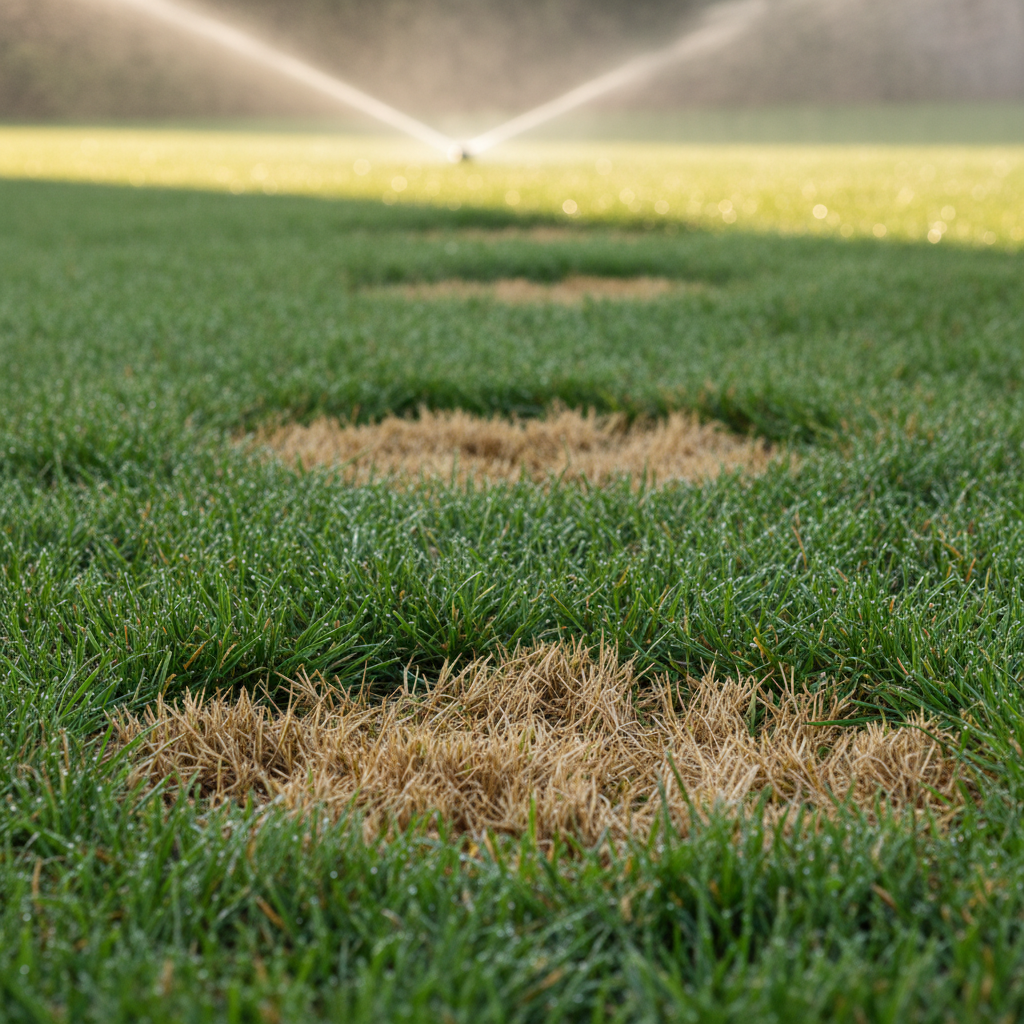
- Compacted Soil: Heavy foot traffic, equipment, or naturally dense clay soils can compact the earth, preventing water, air, and nutrients from reaching grass roots.
- Thatch Buildup: A thick layer of dead grass and organic debris acts as a barrier, preventing water from getting to the soil and roots.
- Uneven Sprinkler Coverage: Malfunctioning or poorly adjusted sprinkler heads leave some areas parched while others are adequately watered.
- Fungal Diseases: Diseases like brown patch, dollar spot, or summer patch are often exacerbated by warm, humid conditions and improper watering, causing brown spots that look like drought stress.
- Insect Infestations: Pests like grubs, chinch bugs, or armyworms feed on grass roots or blades, leading to browning and death of turf sections.
Landscaping · Deck or fence project
| Project category | Landscaping |
|---|---|
| Problem type | Deck or fence project |
| Trade required | Landscaping |
| Urgency | Planned project |
| Safety risk | Moderate safety risk |
| DIY suitability | DIY for experienced homeowners |
| Cost category | High cost |
| Typical timeline | Most builds 3–10 days depending on size |
| Contractor type | Landscaping contractor |
Repair option
Replace failed boards, posts, and hardware; reseal the surface.
Replacement option
Rebuild when framing or the ledger connection is unsafe.
Common causes
- Rot at posts and ledger
- Storm damage
- Adding outdoor living space
Relevant tools:home improvement material pricesproject cost estimator
Published June 1, 2026Last updated August 17, 2026
Tools & materials you'll need
Affiliate links- AmazonScrewdriver or metal rodFor soil compaction test
- AmazonRain gauge or tuna cansTo measure sprinkler output
- AmazonWork gloves1 pair
- AmazonCore aeratorRental often needed for significant compaction
- AmazonDethatching rake (or power dethatcher)If thatch layer is over ½ inch
- AmazonSprinkler head tool/replacement partsIf adjusting or replacing sprinkler heads
- AmazonGarden trowelFor examining soil and thatch
As an Amazon Associate FixlyGuide earns from qualifying purchases — at no extra cost to you. Prices and availability are accurate as of publication and subject to change.
Quick Answer
Brown spots appearing in your lawn even after you’ve watered it can be perplexing, but they typically point to an underlying problem with water distribution, soil health, or lawn disease. It’s a common misconception that more water always equals a healthier lawn. Often, these brown patches are a symptom of improper watering practices, compacted soil, a nutrient imbalance, or fungal activity that only gets worse with surface-level hydration. Identifying the true culprit requires a bit of detective work on your part, from checking your sprinkler system to examining the soil and grass blades themselves.
The Problem
You diligently water your lawn, expecting lush, green growth, only to find frustrating brown spots emerging or worsening shortly after. This counterintuitive problem suggests that the water isn't reaching the roots effectively, or it's creating an environment that encourages disease or stress. These aren’t just dry spots you missed; they’re often circular or irregularly shaped patches that resist your watering efforts. Homeowners frequently assume their lawn is simply thirsty and apply more water, inadvertently making the problem worse, especially if the issue is compacted soil, poor drainage, or a fungal infection that thrives in damp conditions. Understanding why your watering efforts aren't yielding the desired results is the first step to restoring your lawn's health.
How It Works
To understand why brown spots appear post-watering, let's consider how a healthy lawn absorbs and utilizes water. Grass plants take up water primarily through their root systems. This water then travels up to the leaves, carrying dissolved nutrients, and is used in photosynthesis – the process by which plants convert sunlight into energy. Any excess water not used by the plant or held in the soil eventually percolates deeper into the ground or evaporates. A healthy soil structure is crucial here: it needs to be porous enough to allow water and air to penetrate to the roots, yet dense enough to retain moisture. Ideally, soil contains a mix of mineral particles (sand, silt, clay), organic matter, water, and air. The organic matter acts like a sponge, holding onto water and nutrients.
When water is applied, it should ideally soak uniformly into the top 4-6 inches of soil, where the majority of the grass roots reside. If the soil is compacted, water tends to run off, pool on the surface, or only penetrate the first inch or two. This leaves the deeper roots parched, even if the surface appears wet. Similarly, if your sprinkler system has uneven coverage, some areas will receive abundance while others remain dry or barely moistened. Overwatering can also be detrimental: it saturates the soil, displacing essential air, which can suffocate roots and create anaerobic conditions that promote harmful fungal growth like brown patch or dollar spot. These fungi thrive in extended periods of leaf wetness and high humidity, conditions often created by frequent, shallow watering. Nutrient imbalances also play a role; inadequate iron or nitrogen, for example, can manifest as yellowing or browning even when water is present. The interplay of soil structure, water delivery, root health, and microbial activity all contribute to a lawn's ability to stay green and vibrant.
Step-by-Step Fix
1. Assess Your Watering Habits — The most common culprit is often improper watering.
Evaluate how much, how often, and when you water. Deep, infrequent watering (1 inch per week, applied in one or two sessions) encourages deeper root growth and better drought tolerance. Shallow, frequent watering keeps the topsoil moist, promoting shallow roots and making the lawn more susceptible to stress and disease. Water early in the morning (between 4 AM and 9 AM) to minimize evaporation and allow grass blades to dry before nightfall, which prevents fungal growth. Use a rain gauge or tuna cans placed in different areas of your lawn to measure how much water your sprinklers are actually delivering over a set period.
2. Check for Sprinkler System Issues — Uneven water distribution is a silent killer of uniformity.
Turn on your sprinkler system and observe its operation. Look for clogged or broken sprinkler heads, misaligned nozzles spraying onto pavement instead of grass, or areas with poor overlap. A single clogged head can create a perfectly circular brown spot! Clean clogged nozzles with a small wire or needle. Replace any broken heads or components. Adjust the direction and arc of the spray for optimal, head-to-head coverage. Consider upgrading older, less efficient sprinkler heads to modern, water-saving models if uneven coverage is a consistent problem.
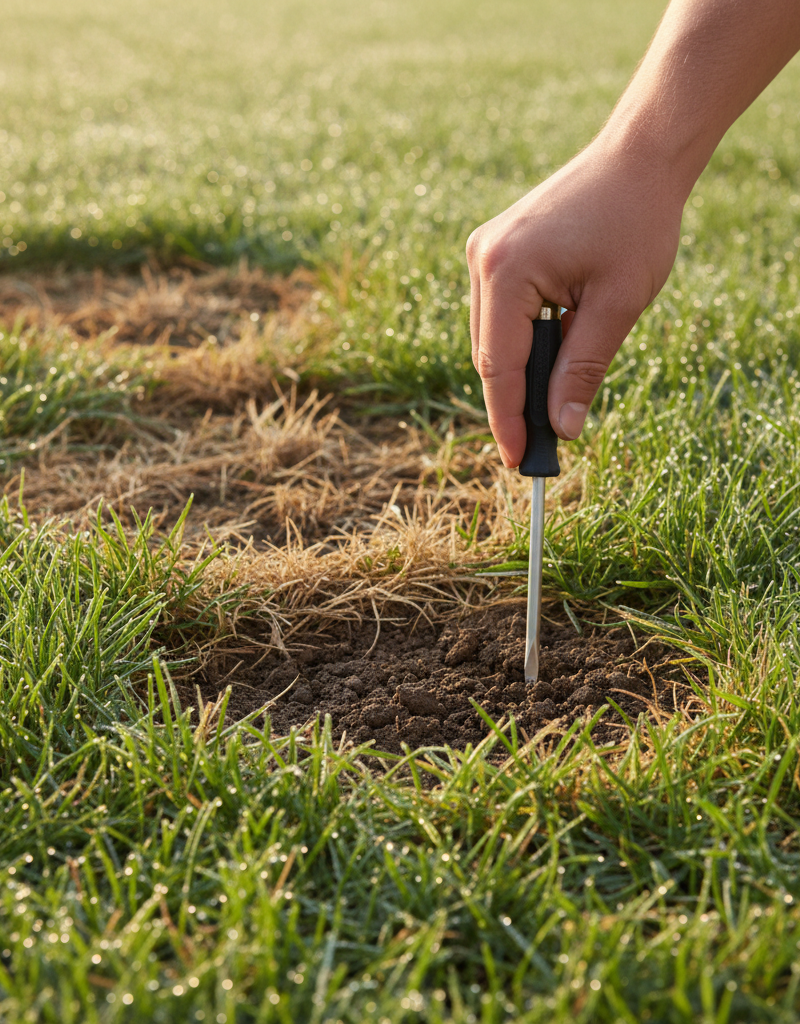
3. Perform a Soil Compaction Test — Hard soil prevents water from reaching roots.
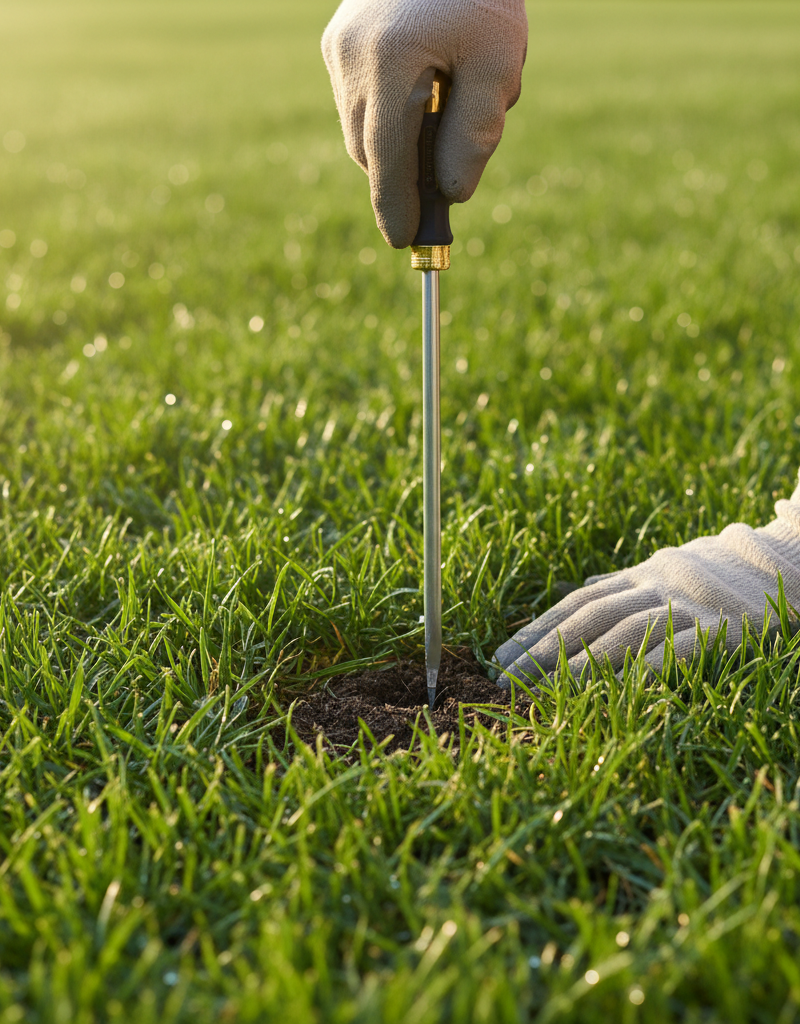
Take a screwdriver or a small metal rod and try to push it into the soil in both a brown spot and a healthy green area. If it's significantly harder to push into the brown spot, you likely have compacted soil. Compacted soil has fewer air pockets, hindering water penetration and root growth. This is especially common in high-traffic areas or lawns with heavy clay content. If compaction is suspected, core aeration is often the solution.
- If soil is compacted: Consider renting a core aerator from a home improvement store. Aerate your lawn when the grass is actively growing (late spring or early fall for cool-season grasses; late spring to early summer for warm-season grasses). Core aeration pulls out small plugs of soil, creating channels for water, air, and nutrients to penetrate deeper.
- Alternatively: Consider liquid aeration products from a garden store, though they are generally less effective than mechanical core aeration for significant compaction.
4. Examine for Thatch Build-up — A thick layer of organic matter can block water.
Thatch is a layer of dead and living organic matter (stems, roots, leaves) that accumulates between the soil surface and the green grass blades. Gently pull back a patch of grass in a brown area. If the thatch layer is thicker than ½ inch, it can prevent water from reaching the soil, effectively waterproofing your lawn. Rake with a hand rake vigorously or use a dethatching machine (power rake) for larger lawns.
- Safety Note: Always wear appropriate gloves and eye protection when using power equipment.
5. Identify Potential Pests or Diseases — Some issues look like drought but are biological.
Inspect the grass blades and soil closely. Look for signs of fungal diseases like brown patch (irregular, circular brown patches with a dark ring) or dollar spot (small, straw-colored spots the size of a silver dollar). Check for insect pests: pull back a small section of turf near a brown spot and look for grubs (C-shaped white larvae that chew roots), chinch bugs (small, black and white insects in hot, sunny areas), or armyworms. Specific signs include chewed blades, tunnels in the soil, or visible critters.
- If disease: Consult with a local extension office or a garden center for specific fungicide recommendations for your grass type and region. Proper watering (deep and infrequent), avoiding late-day watering, and ensuring good air circulation can help prevent many fungal issues.
- If pests: Use appropriate insecticidal soaps or specific insecticides targeting the identified pest. Always read and follow product labels carefully, applying at the recommended rates and times.
6. Test Your Soil's Nutrient Levels — Nutrient deficiencies mimic drought stress.
Purchase a soil test kit from a garden center or send a sample to your local university extension office. This will tell you about your soil's pH and levels of essential nutrients like nitrogen, phosphorus, and potassium, as well as micronutrients. Imbalances can prevent grass from utilizing water effectively even when it's present. An acidic or alkaline pH can 'lock up' nutrients, making them unavailable to the plants.
- If deficiencies: Amend the soil according to the soil test results. This might involve applying specific fertilizers, compost, or lime/sulfur to adjust pH. For instance, a lack of iron can cause yellowing that progresses to browning.
7. Consider Topdressing with Organic Matter — Boost soil health and water retention.
After aeration or dethatching, spread a thin layer (¼ to ½ inch) of high-quality compost over your lawn. Rake it in to allow it to settle into the aeration holes or mix with the existing soil. Organic matter improves soil structure, increases water retention in sandy soils, and improves drainage in clay soils, while also providing a slow release of nutrients. This is a long-term strategy for overall lawn health.
Common Causes
- Improper Watering: Most commonly, shallow, frequent watering that doesn't penetrate deep enough, or overwatering that suffocates roots and promotes disease. Watering in the evening leaves grass blades wet overnight, creating a perfect environment for fungi.
- Compacted Soil: Heavy foot traffic, equipment, or naturally dense clay soils can compact the earth, preventing water, air, and nutrients from reaching grass roots.
- Thatch Buildup: A thick layer of dead grass and organic debris acts as a barrier, preventing water from getting to the soil and roots.
- Uneven Sprinkler Coverage: Malfunctioning or poorly adjusted sprinkler heads leave some areas parched while others are adequately watered.
- Fungal Diseases: Diseases like brown patch, dollar spot, or summer patch are often exacerbated by warm, humid conditions and improper watering, causing brown spots that look like drought stress.
- Insect Infestations: Pests like grubs, chinch bugs, or armyworms feed on grass roots or blades, leading to browning and death of turf sections.
- Nutrient Deficiencies: Lack of essential nutrients, particularly nitrogen or iron, can cause grass to yellow and then brown, even with sufficient water. Incorrect soil pH can also make nutrients unavailable.
- Underlying Obstructions: Debris buried shallowly (old construction materials, rocks) can create localized hot spots, poor drainage, or prevent root penetration, leading to brown patches.
Common Mistakes
- Mistake 1: Assuming Brown Means Thirsty. — Many homeowners see brown spots and immediately apply more water, often making the problem worse if it's due to overwatering, disease, or compaction. Always diagnose before increasing water.
- Mistake 2: Watering at the Wrong Time. — Watering in the late afternoon or evening keeps grass blades wet overnight, promoting fungal growth. Always aim for early morning watering.
- Mistake 3: Shallow, Frequent Watering. — This encourages shallow root systems that are highly susceptible to heat and drought stress. Deep, infrequent watering is always better for long-term lawn health.
- Mistake 4: Ignoring Soil Health. — Without addressing compacted soil or thatch, even perfect watering won't fix brown spots because water can't penetrate to the roots. Soil health is foundational.
- Mistake 5: Applying Chemicals Without Identifying the Problem. — Using a fungicide when the issue is compacted soil or an insecticide when it's a disease is a waste of money and can harm beneficial organisms. Accurate diagnosis is key.
- Mistake 6: Not Calibrating Sprinklers. — Assuming your sprinkler system delivers even coverage is risky. Small adjustments or repairs can make a huge difference in water distribution and prevent brown spots.
Cost & Time Breakdown
| Task | DIY Cost | Pro Cost | Time |
|---|---|---|---|
| Sprinkler head replacement | $5–$30 per head | $75–$150 per head | 10–30 minutes |
| Core aeration (rental) | $80–$150 (rental) | $150–$350 (service) | 2–4 hours (DIY) |
| Dethatching (rental) | $70–$120 (rental) | $100–$300 (service) | 2–5 hours (DIY) |
| Soil test kit | $15–$30 | N/A | 15 minutes to sample |
| Fungicide/Insecticide | $20–$70 | $100–$250 (per application) | 15–30 minutes |
| Organic topdressing (compost) | $50–$150 (yard) | $200–$500 | 1–3 hours |
Tips & Prevention
- Water Deeply and Infrequently: Aim for 1 inch of water per week, applied in one or two sessions, depending on soil type and grass needs. Use a flat-bottomed can to measure output. This encourages deep root growth.
- Water in the Early Morning: This minimizes evaporation and allows the grass blades to dry before evening, significantly reducing the risk of fungal diseases.
- Perform Annual Core Aeration: For lawns with heavy foot traffic or clay soil, annual or biennial core aeration vastly improves water and nutrient penetration. Consider doing it in the fall or spring.
- Dethatch as Needed: If your thatch layer exceeds ½ inch, dethatch your lawn to ensure water reaches the soil. Most lawns benefit from dethatching every 1-3 years.
- Maintain Sharp Mower Blades: Dull blades tear grass, leaving ragged edges that are more susceptible to disease and dehydration. Sharpen your blades annually.
- Fertilize Based on Soil Test: Don't guess with fertilizer. A soil test will tell you exactly what your lawn needs, preventing nutrient imbalances that can cause stress.
- Inspect Sprinklers Regularly: Check your sprinkler heads monthly for clogs, breaks, or misalignments. Quick repairs can save water and prevent dry spots.
When to Call a Professional
You should call a professional lawn care service or landscaper if you've diligently followed the diagnostic and treatment steps outlined above and the brown spots persist or worsen. If you suspect a severe fungal disease that isn't responding to over-the-counter treatments, or if you have a significant insect infestation (like widespread grub damage) that you're uncomfortable treating yourself, a professional can provide targeted solutions. Furthermore, if your lawn's health issues seem deeply rooted in comprehensive soil compaction across a large area, or if your irrigation system requires extensive repairs or re-design for optimal coverage, a professional with specialized equipment and expertise will be more efficient and effective and prevent long-term damage. Dealing with certain persistent broadleaf weeds, complex nutrient deficiencies, or soil-borne diseases also often warrants expert intervention to avoid further damage to your lawn.
Related Articles
Keep troubleshooting with these hand-picked guides from FixlyGuide:
- The #1 Summer Lawn Mistake Turning Your Grass Yellow (It's Not Overwatering) — Discover the most common, often overlooked reason your summer lawn is turning yellow despite your best efforts, and learn how to fix it.
- The 7 Surprising Reasons Your Tree Leaves Turn Brown (It's Not Always Drought!) — Discover the hidden culprits behind browning tree leaves, from common stressors to unexpected issues, and learn actionable steps to revive…
- The 3 Hidden Reasons Your Tree Leaves Turn Brown (and the Easy Fixes) — Discover the often-overlooked environmental stressors and specific diseases that cause tree leaves to brown, and learn simple, actionable s…
- Why Are Your Tree's Leaves Turning Brown? 5 Hidden Culprits You Might Be Missing — Brown leaves on your tree can signal anything from simple thirst to a serious disease, but pinpointing the exact cause is crucial for savin…
- The #1 Mistake Turning Your Healthy Lawn Brown After Watering — Discover the hidden culprit behind brown spots appearing in your lawn immediately after watering and learn how to correct this common mista…
- The 4-Hour — Transform your garden into a self-sufficient oasis with smart strategies for watering, weeding, and pest control, minimizing your effort.
What should this project cost?
Enter your project details for a realistic cost range before you call anyone.
Cost depends heavily on which system turns out to be the source.
- Regional adjustment
- National average
- Labor share (typical)
- ~$1,620
- Quotes to collect
- 3 written estimates
Educational estimate based on national averages — not a binding quote. Always confirm with written local estimates.
Frequently asked questions
Why does my lawn have brown spots after watering?+
Brown spots after watering usually indicate that water isn't reaching the roots effectively due to issues like compacted soil, excessive thatch, uneven sprinkler coverage, or underlying problems such as fungal diseases or insect infestations that are exacerbated by improper moisture conditions.
Can overwatering cause brown spots?+
Yes, overwatering can absolutely cause brown spots. Saturated soil displaces oxygen needed by grass roots, essentially suffocating them. It also creates a consistently damp environment that promotes the growth of harmful fungal diseases like brown patch and dollar spot, leading to discolored and dying grass.
How do I know if my brown spots are from fungus or drought?+
To differentiate, examine the grass blades and pattern. Drought-related brown spots often appear gradually and the blades feel dry and crispy. Fungal diseases, however, often show distinct patterns (e.g., circular patches with dark rings for brown patch, small silver-dollar-sized spots for dollar spot), and individual grass blades may have lesions, slimy textures, or webbing present. A screwdriver test for soil moisture can also help: if the soil is wet under the brown spot, it's less likely to be drought.
How can I improve water penetration in my lawn?+
To improve water penetration, consider core aeration annually or biennially to alleviate soil compaction. Dethatch your lawn if the thatch layer is over ½ inch thick. Incorporating organic matter, like a thin layer of compost, can also significantly improve soil structure and its ability to absorb and retain water effectively.

Discussion
Loading comments…