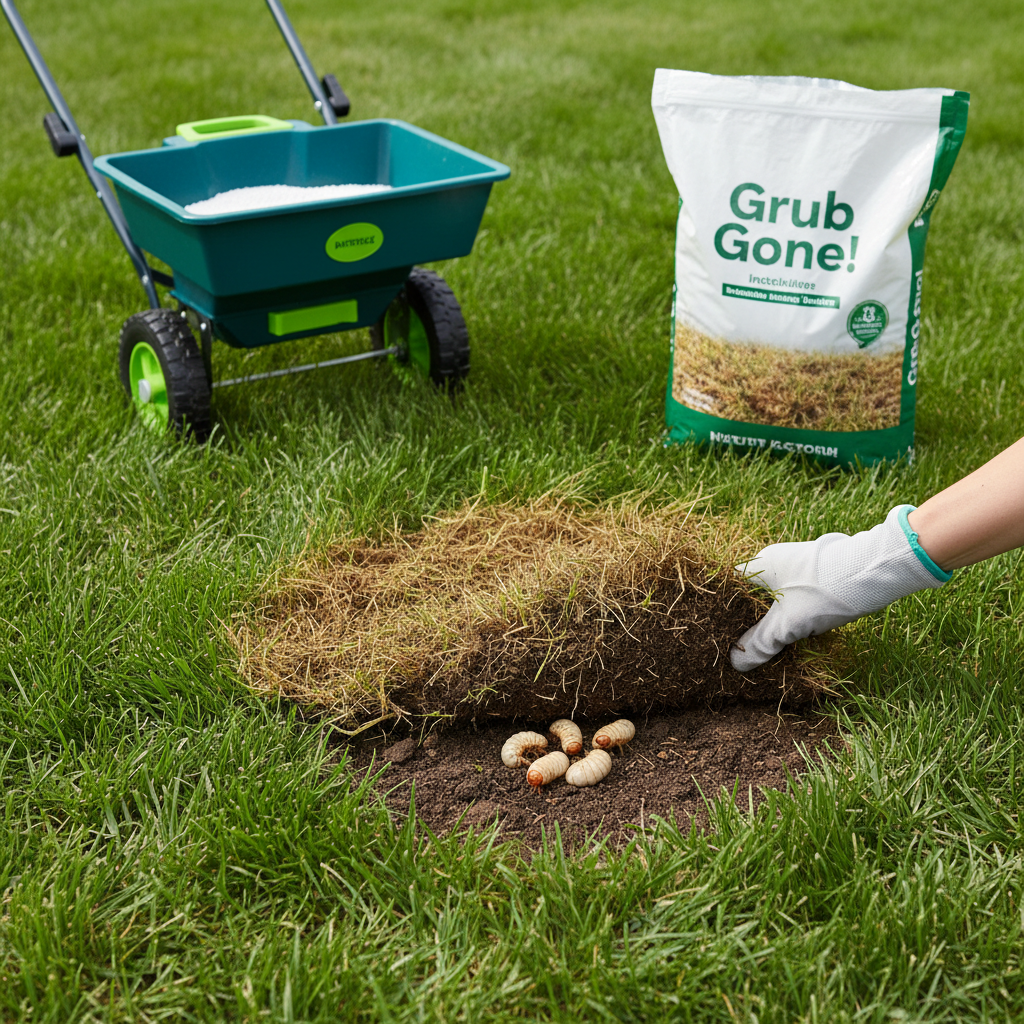
- Look for irregular brown patches of turf that peel back easily like a rug, revealing the C-shaped white grubs underneath. These patches often feel spongy when walked upon.
- Check for increased activity from grub-eating animals like skunks, raccoons, or birds.
- If you're unsure: Dig up a 1-foot by 1-foot section of affected turf to a depth of 2-4 inches. If you find 6 or more grubs per square foot, treatment is generally recommended.
Landscaping · Deck or fence project
| Project category | Landscaping |
|---|---|
| Problem type | Deck or fence project |
| Trade required | Landscaping |
| Urgency | Planned project |
| Safety risk | Moderate safety risk |
| DIY suitability | DIY for experienced homeowners |
| Cost category | High cost |
| Typical timeline | Most builds 3–10 days depending on size |
| Contractor type | Landscaping contractor |
Repair option
Replace failed boards, posts, and hardware; reseal the surface.
Replacement option
Rebuild when framing or the ledger connection is unsafe.
Common causes
- Rot at posts and ledger
- Storm damage
- Adding outdoor living space
Relevant tools:home improvement material pricesproject cost estimator
Published May 31, 2026Last updated August 17, 2026
Tools & materials you'll need
Affiliate linksAs an Amazon Associate FixlyGuide earns from qualifying purchases — at no extra cost to you. Prices and availability are accurate as of publication and subject to change.
Quick Answer
Many homeowners inadvertently make their grub killer treatments ineffective by applying them at the incorrect time of year. For preventative grub control, the optimal window is late spring to early summer (typically May to mid-July) when newly hatched grubs are small, actively feeding close to the surface, and most susceptible to insecticides. For a curative approach to an existing infestation, late summer to early fall (August to September) is best, as the mature grubs are feeding aggressively before burrowing deep for winter, making them vulnerable to contact with the treatment.
The Problem
You've noticed brown, spongy patches appearing in your lawn, perhaps accompanied by an increase in birds, raccoons, or skunks digging up your yard. You suspect grubs, those C-shaped white larvae of scarab beetles, are the culprit. You head to the store, buy a bag of grub killer, spread it across your lawn, and wait. Weeks later, the damage continues, or reappears the following year. What went wrong? The most common and frustrating mistake homeowners make is mistiming their grub control application. Applying a preventative product when grubs are mature, or a curative product when they've already burrowed deep for winter, is like bringing a spoon to a knife fight – utterly ineffective and a waste of time and money. This misapplication not only fails to control the existing population but also leaves your lawn vulnerable to further destruction, perpetuating a cycle of frustration and a perpetually unhealthy lawn.
How It Works
Understanding the grub life cycle is essential for effective control. Most damaging lawn grubs, like those of Japanese beetles, European chafers, and southern mask chafers, have a one-year life cycle. Adult beetles emerge from the soil in late spring to early summer (June-July), mate, and lay their eggs in the turf. These eggs hatch into tiny, first-instar grubs a few weeks later (late July-August). This is a critical window: these young grubs are small, actively feeding on grassroots near the soil surface, and highly vulnerable to preventative insecticides. As they feed, they grow, molting into second-instar and then third-instar grubs by late summer and early fall (September-October). Third-instar grubs are larger, more destructive, and require curative treatments. As temperatures drop in late fall, these mature grubs burrow deeper into the soil (6-12 inches) to overwinter. In spring, as the soil warms (April-May), they migrate back closer to the surface to resume feeding for a short period before pupating into adult beetles, restarting the cycle.
Preventative grub control products, often containing active ingredients like imidacloprid, chlorantraniliprole, or clothianidin, work by being absorbed into the grass roots. When young grubs hatch and begin feeding on these treated roots, they ingest the insecticide and die. These products need to be applied before the eggs hatch, allowing enough time for the active ingredient to be moved into the root zone. Curative products, such as those containing trichlorfon or carbaryl, act as contact insecticides, killing grubs upon direct exposure or ingestion. These are more effective against larger, actively feeding grubs but have a shorter residual effect.
Watering after application is crucial for both types of products. It helps move the insecticide from the grass blades down into the soil where the grubs reside. Without proper watering, the product can sit on the surface, degrade from UV light, and be less effective.
Step-by-Step Fix
1. Identify the Problem — Confirm you have grubs, and assess the damage.
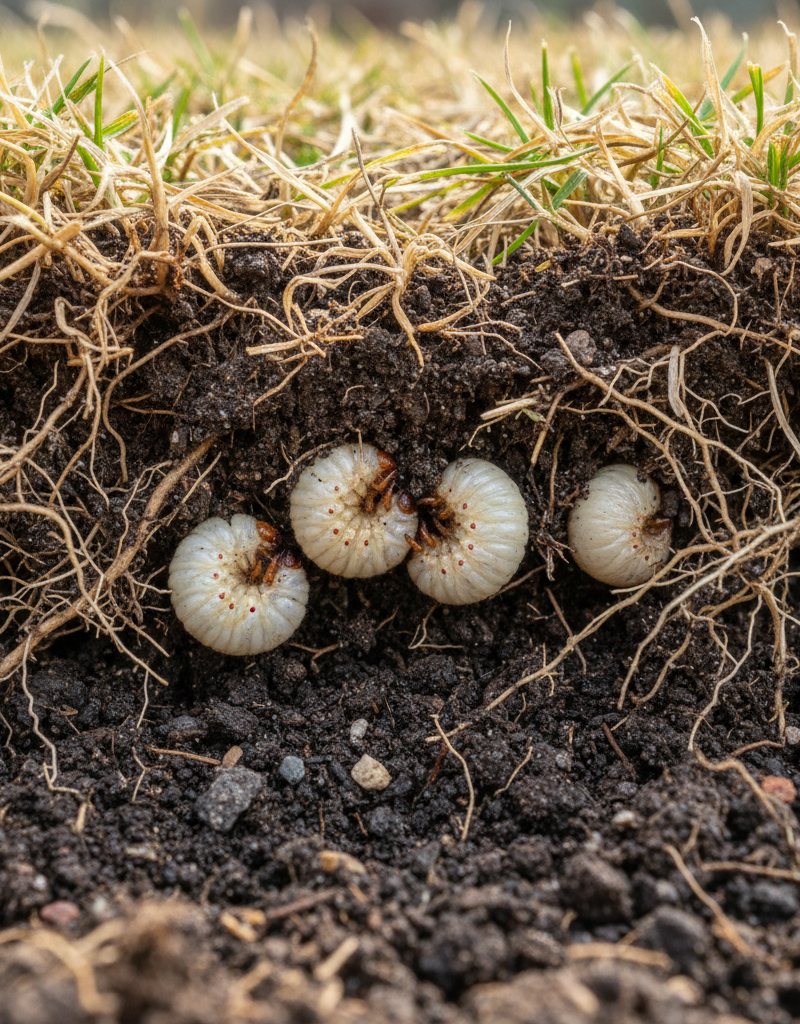
- Look for irregular brown patches of turf that peel back easily like a rug, revealing the C-shaped white grubs underneath. These patches often feel spongy when walked upon.
- Check for increased activity from grub-eating animals like skunks, raccoons, or birds.
- If you're unsure: Dig up a 1-foot by 1-foot section of affected turf to a depth of 2-4 inches. If you find 6 or more grubs per square foot, treatment is generally recommended.
2. Determine the Right Timing — This is the most critical step.
- Preventative Treatment (Late Spring/Early Summer: May-July): This targets newly hatched grubs before significant damage occurs. It's ideal if you've had grub problems in previous years or live in an area prone to infestations.
- Products: Look for active ingredients like imidacloprid, chlorantraniliprole, or clothianidin.
- Application: Apply granular products using a spreader. Ensure even coverage.
- Curative Treatment (Late Summer/Early Fall: August-September): This targets larger, actively feeding grubs. Use if you notice significant damage developing during these months.
- Products: Look for active ingredients like trichlorfon or carbaryl.
- Application: Apply granular products evenly with a spreader, or use liquid formulations according to product instructions.
- If you're buying: Read the product label carefully to ensure it's designed for your intended application (preventative vs. curative).
3. Choose Your Product Wisely — Select the correct grub killer for your timing and needs.
- Synthetic Insecticides:
- Preventative: Imidacloprid (e.g., Merit, GrubEx), Chlorantraniliprole (e.g., Acelepryn, GrubGone), Clothianidin (e.g., Arena). Apply late spring to early summer.
- Curative: Trichlorfon (e.g., Dylox), Carbaryl (e.g., Sevin). Apply late summer to early fall. These have a shorter residual effect and are best for active infestations.
- Biological Controls:
- Beneficial Nematodes (Heterorhabditis bacteriophora): Microscopic worms that naturally parasitize grubs. Best applied when grubs are young and active (late August-September) and soil temperatures are between 60-90°F. Requires consistent moisture.
- Milky Spore (Paenibacillus popilliae): A naturally occurring bacterium effective against Japanese beetle grubs. It can take several years to establish widespread control and is less effective against other grub species. Apply in late summer to early fall.
- Consider your local climate and the specific grub species prevalent in your area, as product effectiveness can vary.
4. Prepare Your Lawn — Set the stage for optimal product absorption.
- Mow your lawn to its regular height. This helps ensure the granules or liquid reach the soil surface.
- Remove any excessive thatch (a layer of dead grass and organic matter) if it's thicker than 1/2 inch. Thatch can prevent grub killer from reaching the soil.
- Safety Note: Always wear appropriate personal protective equipment (PPE) as directed by the product label, which may include gloves, long sleeves, long pants, and eye protection, especially when handling synthetic insecticides.
5. Apply the Grub Killer — Follow label instructions precisely.
- For granular products:
- Use a broadcast spreader for larger lawns or a drop spreader for more precise application around garden beds.
- Calibrate your spreader according to the product label's recommended settings for your specific spreader model.
- Apply evenly across the affected and surrounding areas, avoiding sidewalks, driveways, and waterways.
- For liquid products:
- Attach to a garden hose or mix in a pump sprayer, following precise dilution rates.
- Spray evenly, ensuring full coverage without oversaturating.
- Do not over-apply. More is not better; it can harm your lawn or the environment.
6. Water It In Thoroughly — Activate the treatment.
- Immediately after application, water your lawn using a sprinkler.
- Aim for 0.5 to 1 inch of water (you can use a rain gauge or a tuna can to measure). This is crucial for moving the active ingredient into the soil where the grubs are feeding.
- Do not let the product dry on the grass blades. It will break down faster and be less effective.
7. Monitor and Reassess — Watch for results and further action.
- Keep an eye on your lawn for several weeks. You should see a reduction in damage and animal digging.
- If damage persists: You might have applied too late, used the wrong product, or have a severe infestation requiring professional intervention.
- Repeat applications may be necessary with certain biological controls (like beneficial nematodes) or if the grub pressure is extremely high, but always adhere to label instructions regarding reapplication intervals.
Common Causes
- Abundant Adult Beetles: A high population of adult beetles (Japanese beetles, June bugs, European chafers, etc.) in your area means more eggs will be laid in your lawn.
- Ideal Laying Conditions: Female beetles prefer to lay eggs in healthy, well-irrigated turf, especially during dry spells when other lawns might be less appealing.
- Previous Grub Damage: If you've had grubs before, there's a higher likelihood of them returning unless properly managed.
- Mismatched Treatment: Using a preventative product when a curative one is needed, or vice-versa, leads to ongoing infestations.
- Lack of Proactive Management: Ignoring early signs or not implementing a yearly preventative strategy can lead to severe damage.
- Climate & Geography: Certain regions are naturally more prone to specific grub species due to favorable climate conditions.
Common Mistakes
- Applying at the Wrong Time: This is the biggest mistake. Applying preventative products in fall or curative products in spring (once grubs have matured and burrowed) makes them ineffective.
- Not Watering After Application: Without watering, granular products remain on the surface and liquid sprays don't penetrate the soil, rendering the treatment useless. The active ingredients must reach the root zone.
- Ignoring the Product Label: The label is your guide for everything: correct dosage, application method, safety precautions, and timing. Deviating from it can lead to poor results or harm.
- Failing to Identify the Pest: Assuming all lawn damage is from grubs without confirming can lead to misapplication of treatments for a different issue (e.g., chinch bugs, fungal diseases).
- Over-Application: Thinking
Related Articles
Keep troubleshooting with these hand-picked guides from FixlyGuide:
- The #1 Mistake Homeowners Make When Fighting Lawn Grubs (And How to Fix It) — Discover the crucial mistake homeowners often make when treating lawn grubs and learn the most effective, timing-sensitive strategies to el…
- The #1 Lawn Aeration Mistake Most Homeowners Make (And When to REALLY Do It) — Discover the crucial mistake homeowners make with lawn aeration and learn the optimal timing to ensure a healthy, thriving lawn.
- The #1 Mistake Homeowners Make When Battling Lawn Grubs (And a Simple Organic Fix) — Discover why most DIY grub treatments fail and how a simple, organic approach can permanently rid your lawn of these destructive pests.
- The #1 Mistake Killing Your Lawn's Grass (and 3 Simple Fixes) — Patchy grass can ruin your lawn's appearance, but often the cause is a common mistake that's easy to correct with the right approach.
- The #1 Timing Mistake That Makes Pre-Emergents Useless (And How to Fix It) — Applying pre-emergent weed control at the wrong time is the most common reason for failure, leading to wasted product and persistent weeds.
- The 3 Hidden Mistakes That Make Your Deck Sealer Fail (And How to Fix Them) — Properly sealing your wood deck protects it from the elements, but common mistakes often lead to early failure. Learn how to reseal your de…
Should you do this yourself?
Answer five quick questions before you start. Safety outranks savings every time.
Your experience with work like this
How high do you have to work?
Does the job involve any of these?
Will it need a permit?
Specialty tools
Free and instant. Educational guidance only — not a quote, inspection, or professional diagnosis.
What should this project cost?
Enter your project details for a realistic cost range before you call anyone.
Cost depends heavily on which system turns out to be the source.
- Regional adjustment
- National average
- Labor share (typical)
- ~$1,620
- Quotes to collect
- 3 written estimates
Educational estimate based on national averages — not a binding quote. Always confirm with written local estimates.
Before you start
Check the difficulty, permits, and safety risk — then decide whether to call a pro.
- Estimate this projectGet a cost range for your scope and ZIP before you call anyone.Open
- Get local estimatesSend one request and compare written estimates from vetted pros.Open
Free, no signup required. Estimates are educational guidance, not a quote or an inspection.
Frequently asked questions
When is the best time to apply grub killer for prevention?+
For preventative control, apply grub killer in late spring to early summer (typically May through July). This targets the newly hatched, young grubs when they are most vulnerable and before they can cause significant damage.
When should I apply grub killer if I already see lawn damage?+
If you're seeing active grub damage in your lawn, apply a curative grub killer in late summer to early fall (August to September). At this time, grubs are larger and actively feeding closer to the surface, making them susceptible to curative treatments.
What's the difference between preventative and curative grub control?+
Preventative grub control uses insecticides that work over a longer period to kill grubs as they hatch and begin feeding, ideally before damage occurs. Curative grub control uses fast-acting insecticides designed to kill larger, actively feeding grubs to stop existing damage.
Do I need to water after applying grub killer?+
Yes, watering immediately after applying granular or liquid grub killer is crucial. It helps move the active ingredient down into the soil where the grubs are feeding, ensuring the treatment is effective.
How do I know if I have grubs?+
Look for irregular brown, dying patches of grass that peel back easily like a loose carpet. You might also notice an increase in animals like skunks, raccoons, or birds digging in your lawn. Dig up a 1-foot square of turf; if you find 6 or more C-shaped white grubs, treatment is recommended.

Discussion
Loading comments…