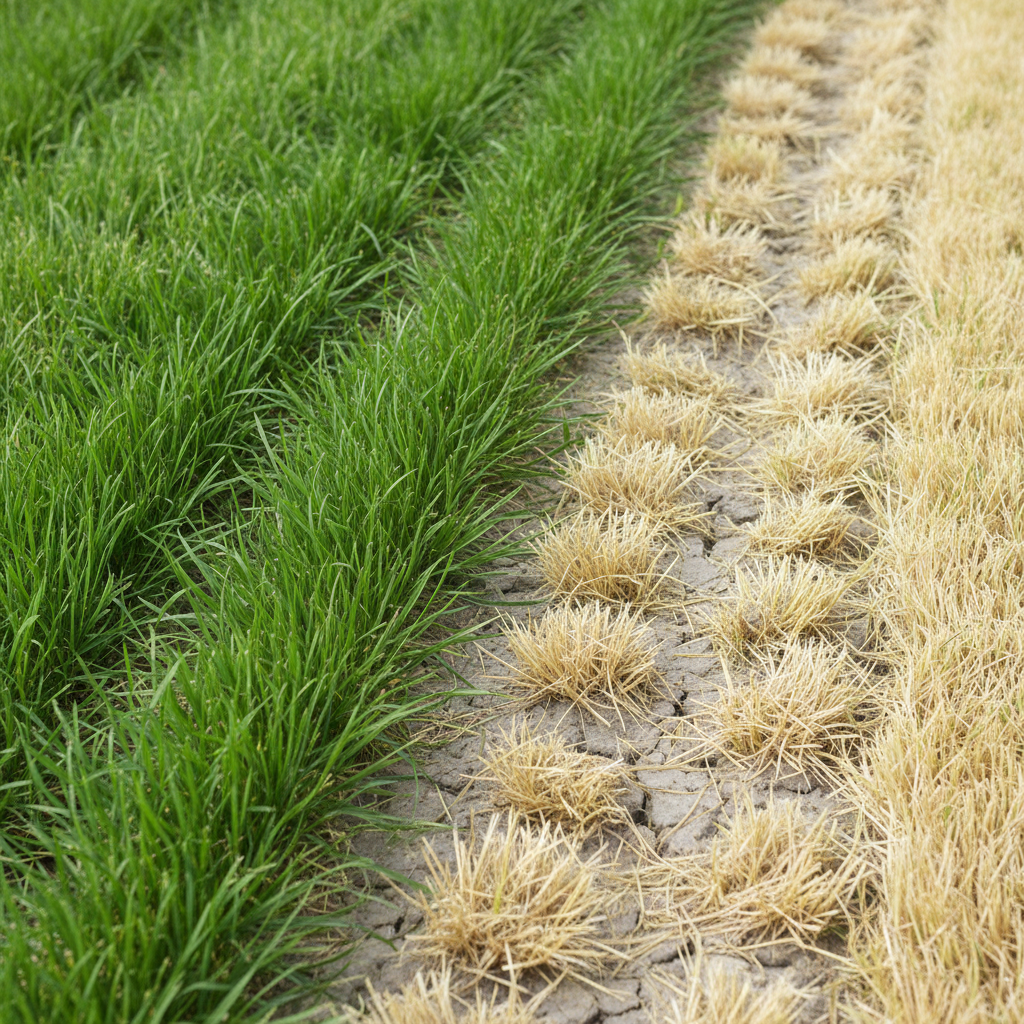
- Improper Mowing Height: Cutting grass too short stresses the plant, reducing its ability to photosynthesize and retain moisture, leading to a pale or yellow appearance.
- Soil Compaction: Dense soil prevents water, air, and nutrients from reaching the grass roots, essentially suffocating and starving the plant.
- Underwatering or Overwatering: Both extremes can cause yellowing. Underwatering leads to drought stress, while overwatering can cause root rot or leach essential nutrients.
- Nutrient Deficiencies: Lack of nitrogen (the most common cause of general yellowing), iron (for specific yellowing between leaf veins), or other micronutrients can impede healthy growth and chlorophyll production.
- Pests or Diseases: Insect infestations (like grubs) or fungal diseases can attack grass roots or blades, leading to patches of yellow or browning.
Landscaping · Deck or fence project
| Project category | Landscaping |
|---|---|
| Problem type | Deck or fence project |
| Trade required | Landscaping |
| Urgency | Planned project |
| Safety risk | Moderate safety risk |
| DIY suitability | DIY for experienced homeowners |
| Cost category | High cost |
| Typical timeline | Most builds 3–10 days depending on size |
| Contractor type | Landscaping contractor |
Repair option
Replace failed boards, posts, and hardware; reseal the surface.
Replacement option
Rebuild when framing or the ledger connection is unsafe.
Common causes
- Rot at posts and ledger
- Storm damage
- Adding outdoor living space
Relevant tools:home improvement material pricesproject cost estimator
Published April 26, 2026Last updated August 17, 2026
Tools & materials you'll need
Affiliate links- AmazonSoil test kitOptional, if nutrient deficiency is suspected
As an Amazon Associate FixlyGuide earns from qualifying purchases — at no extra cost to you. Prices and availability are accurate as of publication and subject to change.
Quick Answer
Your lush green lawn turning an unappealing yellow in the summer heat is a frustrating sight, often blamed solely on drought. However, the most frequent culprit, even when you're watering diligently, isn't just a lack of moisture. It's often a combination of incorrect mowing practices and compacted soil beneath the surface. Mowing your grass too short stresses the plant, forcing it to expend energy recovering rather than growing strong, green blades. This, coupled with soil so dense that water and vital nutrients struggle to penetrate to the roots, starves your grass of what it needs to thrive. Correcting these two issues—raising your mower deck and relieving soil compaction through aeration—are critical steps to restoring your lawn's vibrant green hue.
The Problem
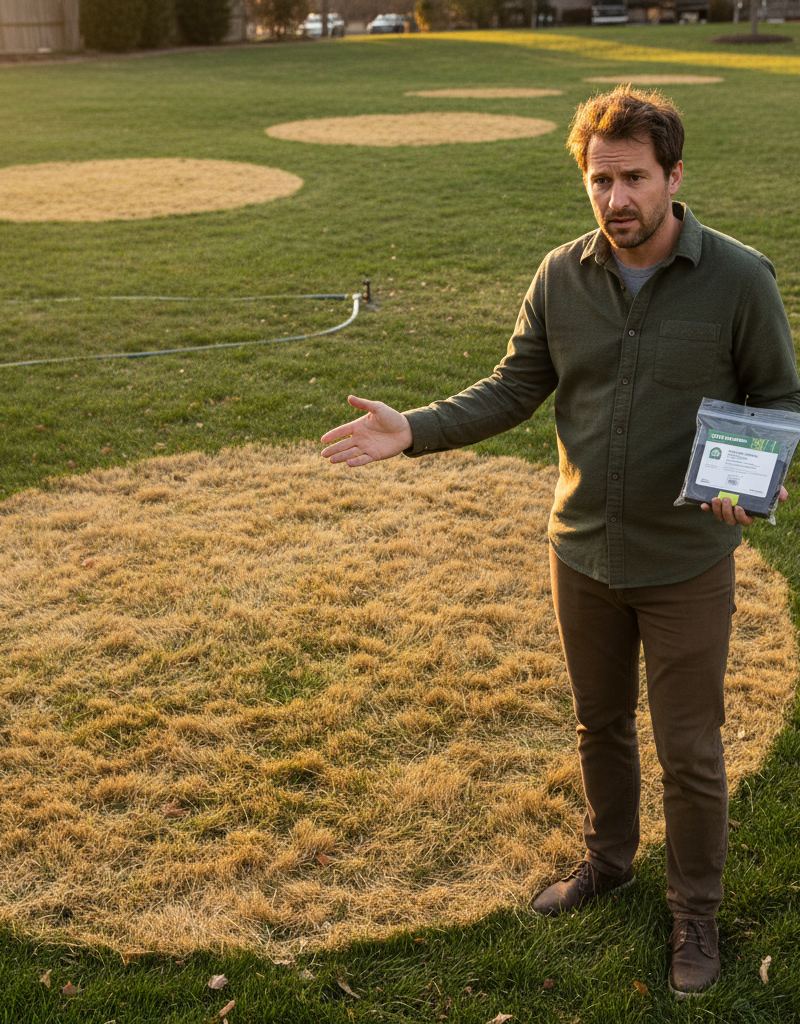
Imagine looking out at your yard, expecting a carpet of emerald, but instead seeing large patches or even the entire lawn fading to a dull, sickly yellow. This isn't just an aesthetic issue; it's a clear signal your grass is struggling to survive. Yellowing can quickly lead to browning, thinning, and ultimately, a dead lawn, inviting weeds and bare spots. The problem isn't always obvious; a casual glance might suggest thirst, leading to overwatering which can exacerbate root rot and fungal issues. The real issue often lies deeper, in the health of the grass plant itself and its ability to access resources from the soil, directly impacted by the cultural practices we impose on it. Identifying and addressing the root cause is crucial for a healthy, green lawn that can withstand summer stress.
How It Works
Grass, like all plants, relies on photosynthesis to create the energy it needs to grow. Chlorophyll, the green pigment in grass blades, is essential for this process, capturing sunlight and converting it into sugars. When grass experiences stress, its production of chlorophyll declines, leading to the yellowing you observe. This stress can be induced by various factors, but in summer, two often overlooked culprits are improper mowing and soil compaction.
Mowing too short removes too much of the grass blade, which stores the plant's food reserves and is crucial for photosynthesis. When more than one-third of the blade is removed in a single cut, the grass goes into shock, diverting energy to regrow lost tissue rather than maintaining its overall health and vibrant color. Shorter blades also mean less shade for the soil, leading to faster evaporation of moisture and increased heat stress on the roots. Essentially, you're starving your grass and baking its roots simultaneously.
Soil compaction, on the other hand, creates a physical barrier. Over time, foot traffic, heavy lawn equipment, and even rain can compress soil particles, reducing the pore spaces between them. These pore spaces are vital for air and water movement, allowing oxygen to reach the roots and water (carrying nutrients) to be absorbed. When soil is compacted, roots struggle to penetrate the dense earth, leading to stunted growth. Water tends to run off rather than soak in, and essential nutrients become unavailable, even if present in the soil. This deprivation of air, water, and nutrients severely weakens the grass, making it susceptible to disease, pests, and, inevitably, yellowing. Both incorrect mowing and compacted soil disrupt the delicate balance grass needs to maintain its green, healthy appearance, especially under the demanding conditions of summer.
Step-by-Step Fix
-
Assess Your Mowing Height – Check your current settings. Before you do anything else, measure how high your mower deck is set. For most common cool-season grasses (like fescue, rye, bluegrass) and warm-season grasses (like Bermuda, zoysia), the ideal summer mowing height is 2.5 to 3.5 inches. Set your mower to the highest recommended setting for your grass type. Blades that are too short stress the plant and reduce its ability to photosynthesize, leading to yellowing.
- Safety Note: Always turn off your mower and disconnect the spark plug wire before making any adjustments to the blades or deck.
-
Adjust Mowing Frequency – Mow more often, but remove less. Instead of letting your grass grow very tall and then cutting a large portion off, aim to remove no more than one-third of the blade length in a single mowing session. This might mean mowing every 4-5 days during peak growth instead of once a week. Removing less grass at a time puts less stress on the plant, allowing it to maintain its energy reserves for healthy growth and color.
-
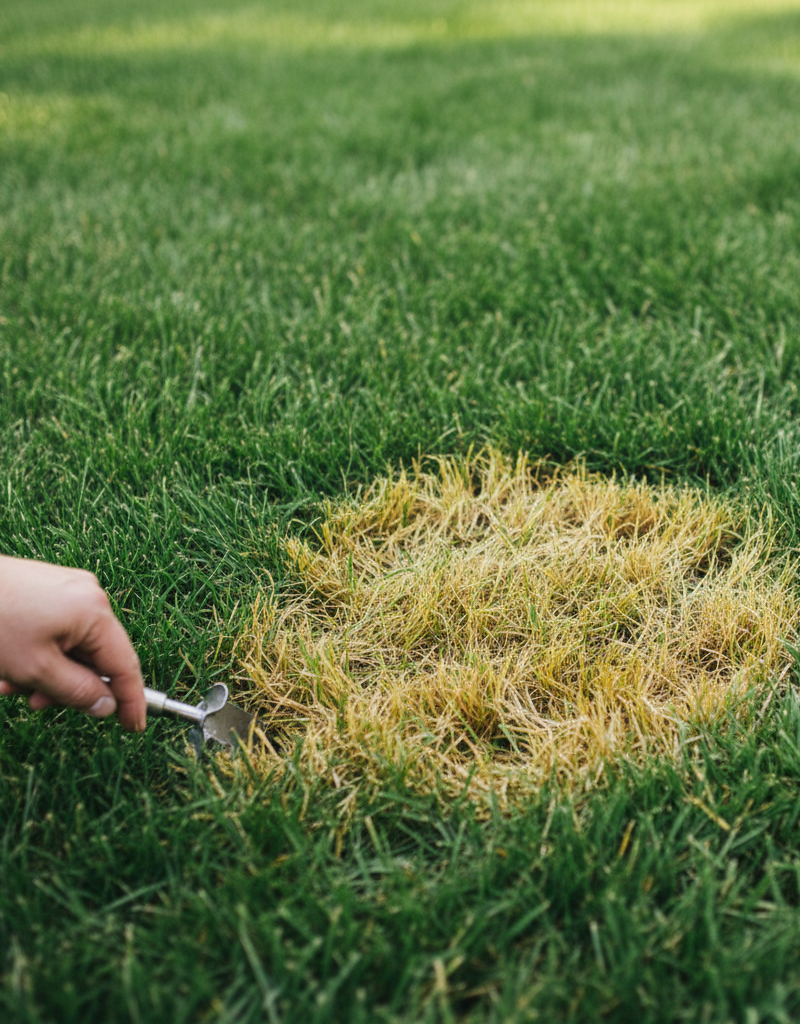
Perform a Screwdriver Soil Test – Determine compaction level. After a good rain or thorough watering, try pushing a long screwdriver or a metal rod into your lawn. If it's difficult to push in more than 2-3 inches, your soil is likely compacted. This indicates that water, air, and nutrients are struggling to reach the roots, contributing to yellowing.
- If it doesn't work: If the screwdriver goes in easily, soil compaction might not be the primary issue. Consider other factors like nutrient deficiencies or pests.
-
Aerate Your Lawn – Relieve soil compaction. Using a core aerator (you can rent one from a home improvement store) will pull small plugs of soil from your lawn, creating channels for air, water, and nutrients to penetrate. For best results, aerate when the grass is actively growing and the soil is moist but not waterlogged. For cool-season grasses, late summer/early fall is ideal; for warm-season grasses, late spring/early summer.
- Tool Tip: A manual core aerator can work for small areas, but a gas-powered one is essential for larger lawns.
- Pattern: Make at least two passes over your lawn, perpendicular to each other, to ensure good coverage.
-
Leave Grass Clippings – Recycle nutrients naturally. Unless your clippings are excessively clumpy or long (meaning you cut too much at once), leave them on the lawn. They act as a natural, slow-release fertilizer, returning nitrogen and other vital nutrients back to the soil as they decompose. This 'grasscycling' can provide up to 25% of your lawn's fertilizer needs.
-
Water Deeply and Infrequently – Promote deep root growth. If you are watering, aim for deep, infrequent watering sessions rather than shallow, frequent ones. This encourages grass roots to grow deeper in search of moisture, making them more resilient to drought and heat stress. Water until the top 6-8 inches of soil are moist. A tuna can can help measure about 1 inch of water, which is typically sufficient per session. Water in the early morning to minimize evaporation and fungal growth.
-
Consider a Soil Test – Identify nutrient deficiencies. If adjusting mowing and aerating doesn't resolve the yellowing, or if you suspect a nutrient problem, a soil test can provide definitive answers. Kits are available from local extension offices or garden centers. The test will reveal pH levels and nutrient deficiencies (like nitrogen, iron, or potassium) that could be causing yellowing, allowing you to apply the correct amendments.
- Actionable: Follow the recommendations precisely for lime/sulfur (for pH) or specific fertilizers.
Common Causes
- Improper Mowing Height: Cutting grass too short stresses the plant, reducing its ability to photosynthesize and retain moisture, leading to a pale or yellow appearance.
- Soil Compaction: Dense soil prevents water, air, and nutrients from reaching the grass roots, essentially suffocating and starving the plant.
- Underwatering or Overwatering: Both extremes can cause yellowing. Underwatering leads to drought stress, while overwatering can cause root rot or leach essential nutrients.
- Nutrient Deficiencies: Lack of nitrogen (the most common cause of general yellowing), iron (for specific yellowing between leaf veins), or other micronutrients can impede healthy growth and chlorophyll production.
- Pests or Diseases: Insect infestations (like grubs) or fungal diseases can attack grass roots or blades, leading to patches of yellow or browning.
- Chemical Application: Improper use of herbicides, pesticides, or even fertilizer can 'burn' the lawn, causing yellow or brown spots.
- Pet Urine: High nitrogen content in pet urine creates concentrated 'hot spots' that can yellow or kill grass in small patches.
Common Mistakes
- Mowing Too Short Too Often: This is perhaps the most common mistake. Scalping the lawn weakens the grass, making it more susceptible to heat stress, pests, and diseases. Always adhere to the
Related Articles
Keep troubleshooting with these hand-picked guides from FixlyGuide:
- Why Is My Lawn Turning Yellow in Summer? A Homeowner's Guide — Your lawn turning yellow in summer is often a sign of improper watering, a common and fixable issue for homeowners.
- The #1 Mistake Killing Your Lawn's Clover—and the Easy fix That Spares Your Grass — Discover the most common mistake homeowners make when trying to eliminate clover, and learn how to remove it effectively without harming yo…
- The #1 Mowing Mistake That Invites Weeds (And How to Fix It in 15 Minutes) — Discover the secret to a thriving lawn and banish weeds by avoiding the most common mowing error homeowners make, improving grass health dr…
- The #1 Lawn Aeration Mistake Most Homeowners Make (And How to Fix It) — Timing is everything when it comes to lawn aeration, and doing it at the wrong time can do more harm than good for your grass.
- The #1 Mistake Killing Your Lawn's Clover—And 3 Secrets to Get Rid of It for Good — Discover the common mistake homeowners make when trying to eliminate clover and learn three effective, grass-safe strategies to remove it p…
- The #1 Mistake Homeowners Make Installing a Smart Thermostat (and How to Avoid It) — Avoid the most common pitfall when installing a smart thermostat yourself and ensure a smooth, functional setup with these expert tips.
Should you do this yourself?
Answer five quick questions before you start. Safety outranks savings every time.
Your experience with work like this
How high do you have to work?
Does the job involve any of these?
Will it need a permit?
Specialty tools
Free and instant. Educational guidance only — not a quote, inspection, or professional diagnosis.
What should this project cost?
Enter your project details for a realistic cost range before you call anyone.
Cost depends heavily on which system turns out to be the source.
- Regional adjustment
- National average
- Labor share (typical)
- ~$1,620
- Quotes to collect
- 3 written estimates
Educational estimate based on national averages — not a binding quote. Always confirm with written local estimates.
Before you start
Check the difficulty, permits, and safety risk — then decide whether to call a pro.
- Estimate this projectGet a cost range for your scope and ZIP before you call anyone.Open
- Get local estimatesSend one request and compare written estimates from vetted pros.Open
Free, no signup required. Estimates are educational guidance, not a quote or an inspection.
Get the print-ready PDF of this guide
A clean, ad-free, printable version you can keep on your phone or pin to the workshop wall. Free with a FixlyGuide account.
- Print-optimized layout
- Tools, materials & every step included
- Saved to your account
Frequently asked questions
Why is my lawn yellow even though I water it?+
Even with regular watering, your lawn can turn yellow due to incorrect mowing height, compacted soil preventing nutrient absorption, or even overwatering which can lead to root rot. Mowing too short stresses the grass, while compacted soil starves it of air and nutrients.

Discussion
Loading comments…