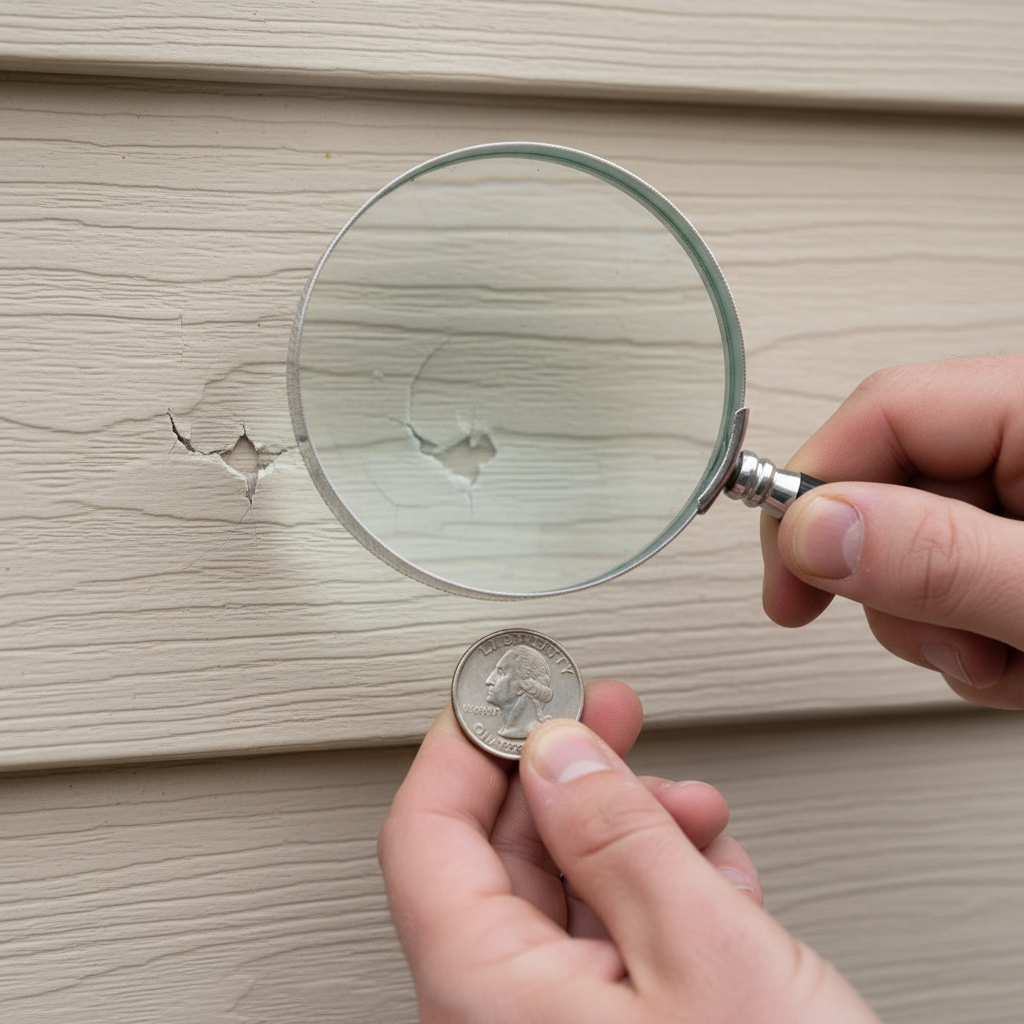
- For vinyl siding: Look for circular or crescent-shaped cracks, especially at the bottom of panels. Also, check for panels that have come unhooked from the interlocking system.
- For aluminum siding: Feel for subtle depressions that might not be immediately visible. Run your hand across the surface; if it feels uneven, it's likely dented.
- For wood siding: Look for splintering along the grain, gouges, or depressions where the wood fibers have been crushed.
- For fiber cement siding: Check for chips at the edges or surface spalling. Small spiderweb cracks can indicate impact.
- For stucco/brick: Note any chips, divots, or cracks in the surface or mortar joints.
Roofing · Hail damage
| Project category | Roofing |
|---|---|
| Problem type | Hail damage |
| Trade required | Roofing |
| Urgency | Urgent — within days |
| Safety risk | Moderate safety risk |
| DIY suitability | Licensed pro only |
| Cost category | High cost |
| Typical timeline | Inspection within days; claim and build often several weeks |
| Contractor type | Licensed roofing contractor |
Repair option
Spot repair for isolated slopes with limited impact marks.
Replacement option
Insurance-scope replacement when impacts exceed the carrier threshold per square.
Common causes
- Impact bruising that knocked granules loose
- Cracked mat under the surface, not visible from the ground
- Damaged soft metals: vents, gutters, flashing
Relevant tools:repair or replace roofcompare quotes
Published May 18, 2026Last updated August 17, 2026
Tools & materials you'll need
Affiliate links- AmazonDigital camera or smartphoneFor documenting damage with photos and video.
- AmazonLaptop or notebook and penFor taking detailed notes of damage locations.
- AmazonTape measure or rulerTo provide scale to damaged areas in photos.
- AmazonBinocularsFor inspecting higher sections safely from the ground.
- AmazonStep ladder (optional)For inspecting lower, hard-to-reach areas of siding.
- AmazonSafety glassesIf you plan to touch or examine damaged siding up close.
- AmazonWork glovesTo protect hands during inspection.
- AmazonVinyl siding zip toolIf performing minor vinyl panel replacement.
As an Amazon Associate FixlyGuide earns from qualifying purchases — at no extra cost to you. Prices and availability are accurate as of publication and subject to change.
Quick Answer
Hail damage to siding can range from cosmetic dimples to significant cracks, compromising your home's protection. Prompt inspection is crucial to assess the extent of the damage, document it thoroughly, and determine if repairs or full replacement are needed. Many homeowners miss subtle signs until it's too late, so a detailed inspection after a storm is key to preventing further issues like moisture intrusion or costly structural damage.
The Problem
Your home's siding is its first line of defense against the elements, and hail can severely compromise that protection. While large hailstones can create obvious impacts, smaller hail, often accompanied by strong winds, can inflict subtle but widespread damage that goes unnoticed for months or even years. This hidden damage can lead to serious problems: cracks allow moisture to penetrate, leading to rot, mold, and even structural compromise. Dents can weaken the siding material, making it more susceptible to future damage. Moreover, insurance companies often have strict time limits for filing claims related to storm damage, meaning a delayed discovery could leave you footing the entire bill. Understanding how hail affects different siding materials and knowing exactly what to look for is critical to safeguarding your investment.
How It Works
When hail impacts your siding, the energy of the impact is absorbed by the material, causing a localized deformation. The specific type of damage depends heavily on several factors: the size and density of the hailstones (which can range from pea-sized to golf-ball sized or larger, and can be solid ice or a mix of ice and water), the velocity of the hail (driven by wind speed), the angle of impact, and most importantly, the type of siding material.
Vinyl siding, being a thermoplastic, tends to dent or crack upon impact. Colder temperatures make vinyl more brittle, increasing the likelihood of cracking even from smaller hailstones. The impact can also cause the siding panels to unclip or shift, creating gaps. Aluminum siding, a softer metal, is prone to dents and indentations, often without paint chipping unless the impact is severe. These dents can range from small pockmarks to significant depressions that are easily visible. Wood siding – including clapboard, shingles, or shakes – might show splintering, gouges, or deep indentations. The grain of the wood determines how it reacts; impacts parallel to the grain might cause splits, while perpendicular impacts could create crushing damage. Fiber cement siding, known for its durability, can still suffer damage. Impacts can cause chipping, spalling (where layers flake off), or cracks, especially if the impact is sharp and localized. Stucco, a rigid material, will typically chip, crack, or even crumble at the point of impact, creating noticeable divots or spiderweb cracks. Brick, while very durable, can show signs of damage if large, heavy hailstones strike with sufficient force, leading to chips, spalling, or mortar damage. The impact creates stress points, and over time, these weaknesses can worsen, allowing water intrusion behind the siding, potentially leading to rot, mold growth, or thermal bridging and energy loss. Understanding these material-specific reactions helps you narrow down what to look for during an inspection.
Step-by-Step Fix
1. Prioritize Safety — Before you start any inspection, ensure the storm has fully passed and it's safe to be outside. Do not climb ladders if it's windy, wet, or icy. If you suspect roof damage, do not attempt to inspect it yourself; contact a professional.
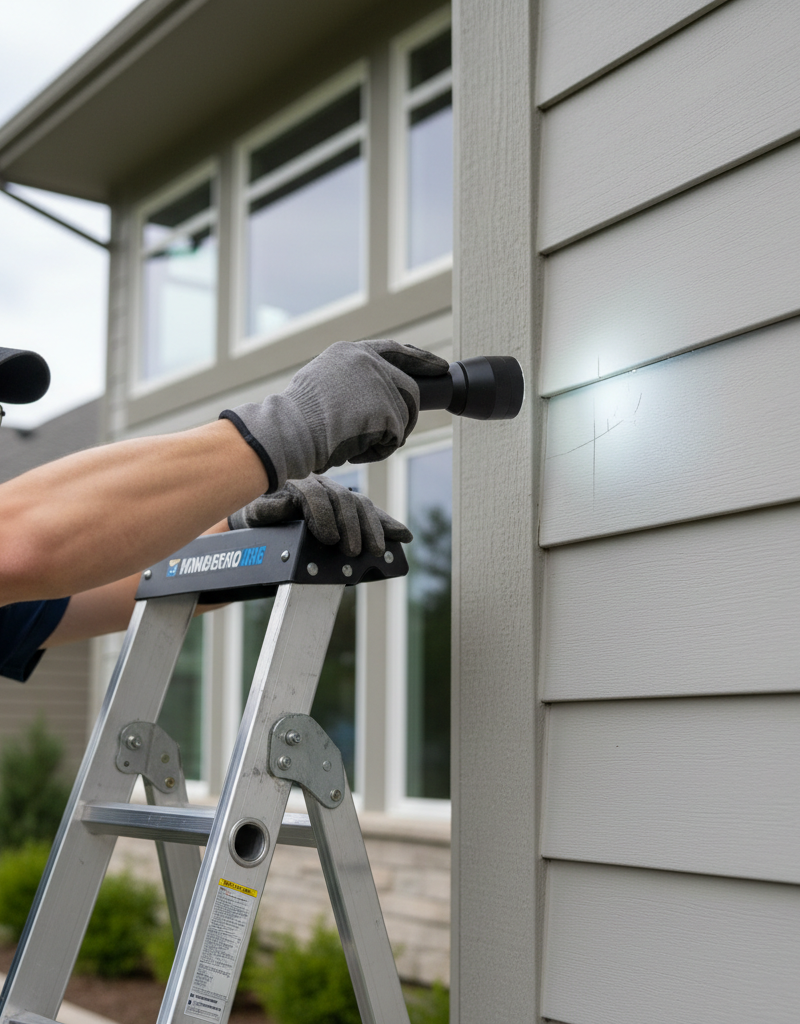
2. Document the Damage (Thoroughly!) — Digital photos and video are your best friends. Capture overall views of your home and then zoom in on specific damaged areas. Take photos from different angles and lighting conditions. Use a common object (like a coin or ruler) for scale next to the damage. Note the date, time, and specific locations of observed damage. This documentation is critical for insurance claims.
- If your phone dies: Bring a portable charger or a dedicated digital camera with extra batteries.
- If it's dark or cloudy: Wait for natural daylight for the best photos.
3. Inspect All Sides of Your Home — Hail damage is often not uniform. Wind direction during the storm plays a huge role in which sides of your home are most affected. Start with the sides generally facing the direction the storm came from. Walk slowly, systematically, and examine every section.
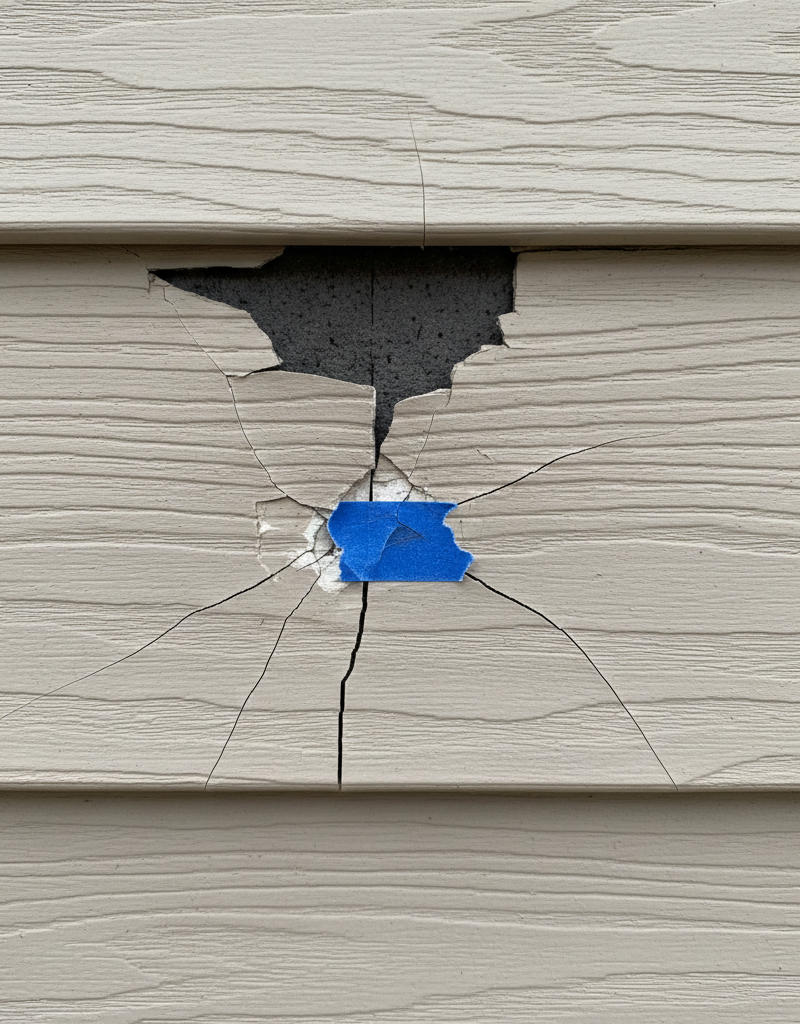
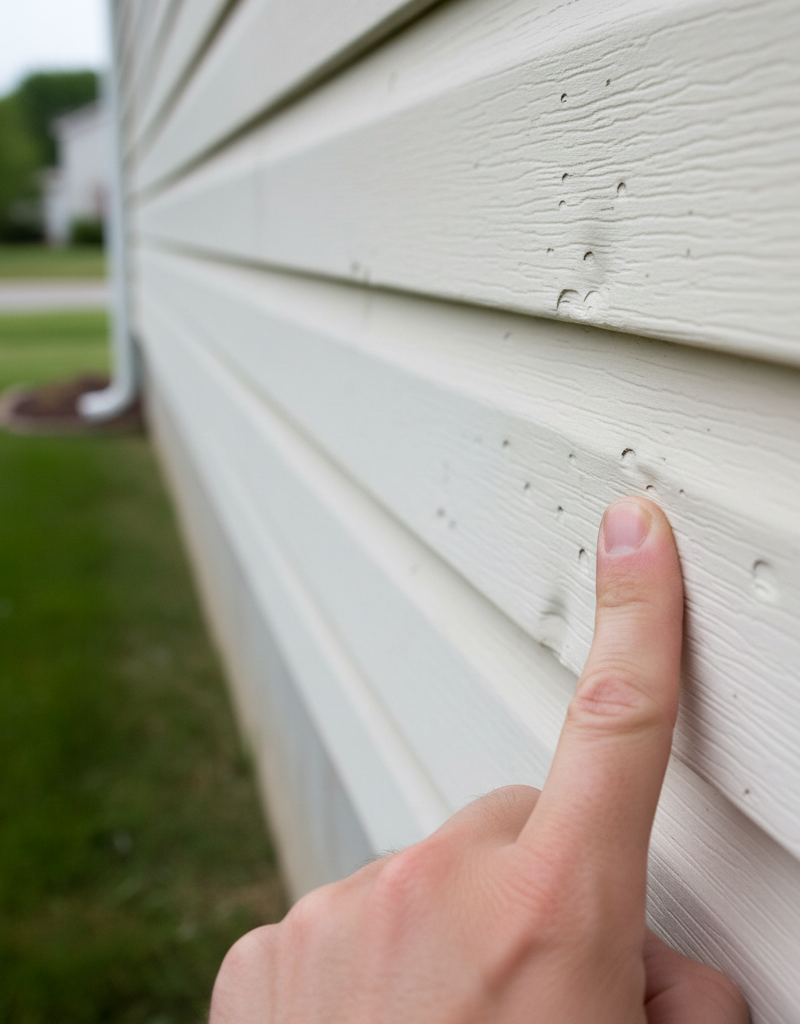
4. Examine Siding Panels Up Close — Look for dents, dings, cracks, chips, or splitting. For vinyl siding, also look for impact marks that might not have broken the surface but caused delamination or weakening. Pay close attention to corners, edges, and areas around windows and doors where siding might be more vulnerable.
- For vinyl siding: Look for circular or crescent-shaped cracks, especially at the bottom of panels. Also, check for panels that have come unhooked from the interlocking system.
- For aluminum siding: Feel for subtle depressions that might not be immediately visible. Run your hand across the surface; if it feels uneven, it's likely dented.
- For wood siding: Look for splintering along the grain, gouges, or depressions where the wood fibers have been crushed.
- For fiber cement siding: Check for chips at the edges or surface spalling. Small spiderweb cracks can indicate impact.
- For stucco/brick: Note any chips, divots, or cracks in the surface or mortar joints.
5. Check Gutters, Downspouts, and Exterior Trim — These are often made of softer metals (aluminum) and can show significant hail damage even if siding damage is minimal. Dents in gutters and downspouts are clear indicators that hail was present and likely impacted other parts of your home, including siding.
- Look for: Dents, dings, or bent sections, especially on the top edges of gutters or the sides of downspouts.
6. Inspect Other Exterior Elements — Don't stop at the siding. Hail can damage window screens, HVAC condenser fins, deck stains, and even outdoor furniture. Documenting damage to these items provides further evidence of a severe hailstorm and can support your siding claim.
- If you see HVAC damage: Call a professional HVAC technician for inspection, as damaged fins can reduce efficiency.
7. Assess Paint & Finish — For painted siding, look for chipped, flaked, or marred paint. On stained wood, checks for areas where the stain has been abraded or removed by impact. This will often occur around the direct impact point of a hailstone.
8. Check for Broken Seals or Gaps — Strong winds accompanying hail can sometimes pull siding panels slightly apart or damage the sealant around windows and doors. Look for any new gaps or compromised caulk that could allow water intrusion.
Common Causes
- Hailstones: The primary and most obvious cause. Size, density, and velocity dictate severity.
- Wind-Driven Debris: Strong winds during a hailstorm can turn small objects into projectiles, causing impact damage that might be mistaken for direct hail damage.
- Existing Siding Weakness: Older siding, siding already compromised by sun exposure, or improperly installed siding can be more susceptible to damage from even moderate hailstorms.
- Temperature: Colder temperatures make many siding materials, especially vinyl, more brittle and prone to cracking rather than simply denting.
- Adjacency to Trees or Structures: Hail can bounce off nearby trees or other buildings, striking your siding at unusual angles or with additional force.
Common Mistakes
- Ignoring Subtle Damage: Many homeowners only look for large, obvious holes. Small dents and cracks can be just as problematic long-term, leading to moisture issues.
- Delaying Inspection: Waiting too long (e.g., months) after a storm can make it harder to attribute damage directly to hail and can jeopardize insurance claims due to time limits.
- Only Inspecting One Side of the House: Hail damage is rarely uniform. The wind direction during the storm means some sides will be hit harder than others.
- Not Documenting Thoroughly: Without clear photos, videos, and notes (date, time, exact location), your insurance claim can be significantly weakened.
- Climbing on the Roof Yourself: Unless you are a trained professional, never get on a wet or damaged roof. This is extremely dangerous. Always call a professional roofing contractor for roof inspections.
- Disposing of Damaged Siding Before Claim Approval: Never remove or dispose of damaged siding until your insurance adjuster has seen it and your claim has been approved.
Cost & Time Breakdown
| Task | DIY Cost | Pro Cost | Time |
|---|---|---|---|
| Initial visual inspection | $0 | $0 (for self-inspection) / $150–$300 (pro assessment) | 30 minutes – 1 hour |
| Documenting damage (photos) | $0 | N/A | 30–60 minutes |
| Minor vinyl panel replacement | $20–$50 per panel | $150–$300 (minimum service fee) | 1–2 hours |
| Patching small stucco/wood | $15–$75 | $200–$500 | 1–3 hours |
| Extensive siding repair/replacement | N/A | $2,000–$25,000+ (depending on material & scope) | Multiple days – weeks |
| Insurance claim filing | $0 | N/A | 1–3 hours |
Tips & Prevention
- Routine Inspection: Periodically (e.g., once or twice a year, and especially after severe storms) walk around your home to check all exterior surfaces. Early detection prevents minor issues from becoming major problems.
- Trim Trees: Keep tree branches trimmed away from your home. Not only can they cause direct damage during storms, but falling leaves and twigs can also obscure hail damage.
- Review Insurance Policy: Understand your homeowner's insurance policy before a storm hits. Know your deductible, what types of storm damage are covered, and the timeline for filing claims.
- High-Impact Siding Options: If you live in a hail-prone area and are considering replacing your siding, research impact-resistant materials like certain fiber cement products or thicker vinyl options.
- Maintain Caulking & Seals: Ensure all caulking around windows, doors, and trim is in good condition. This acts as a secondary barrier against moisture, regardless of siding condition.
- Professional Assessment Post-Storm: After any significant hailstorm (golf ball-sized or larger), consider getting a professional roofing and siding contractor to perform an assessment, even if you don't immediately see damage. They can spot subtle issues you might miss.
When to Call a Professional
If you discover widespread or significant damage that goes beyond a few easily replaceable vinyl panels, it's time to call a professional. This includes large cracks, extensive areas of denting on metal siding, significant splintering or gouging on wood, or substantial chipping on fiber cement or stucco. Additionally, if the damage extends to your roof, windows, or other critical infrastructure, a professional is essential. A reputable contractor can provide a detailed assessment, identify all affected areas, and help you navigate the insurance claim process. They have the expertise to safely inspect elevated areas (like your roofline) and determine the an appropriate repair or replacement strategy, ensuring structural integrity and proper weatherproofing. Do not attempt to repair large sections of damaged siding yourself, especially if it involves multiple story homes or specialized materials, as improper installation can lead to further water intrusion and costly repairs down the line.
Related Articles
Keep troubleshooting with these hand-picked guides from FixlyGuide:
- The #1 Mistake Homeowners Make After Finding Missing Shingles (And How to Fix It Right) — Discover the crucial steps to take after a storm rips shingles from your roof, ensuring a proper, lasting repair and preventing costly futu…
- Is Your Gutter Sagging After Every Storm? The Hidden Flaw Most Homeowners Miss — Discover the overlooked reason your gutters sag after every storm and learn the lasting fix that most homeowners miss.
- The 3 Hidden Reasons Your Gutters Fail in Heavy Rain (It’s Not Just Leaves) — Overflowing gutters during heavy rain often stem from a few common, yet overlooked, issues beyond simple leaf clogs, leading to potential s…
- The 3 Hidden Mistakes That Make Your Deck Sealer Fail (And How to Fix Them) — Properly sealing your wood deck protects it from the elements, but common mistakes often lead to early failure. Learn how to reseal your de…
- The #1 Mistake Homeowners Make When Sealing a Deck (and How to Fix It) — Prevent costly damage and extend your deck's life by avoiding common sealing errors and following a simple, effective resealing process.
- The One Hidden Sign of a Roof Leak Most Homeowners Miss (And the $10 Fix) — Catching a roof leak early can save thousands in repairs. Learn the elusive signs and a simple, effective fix before minor issues become ma…
Should you do this yourself?
Answer five quick questions before you start. Safety outranks savings every time.
Your experience with work like this
How high do you have to work?
Does the job involve any of these?
Will it need a permit?
Specialty tools
Free and instant. Educational guidance only — not a quote, inspection, or professional diagnosis.
Questions to ask before you sign
Ask every contractor the same questions and the cheapest bid stops looking cheapest. Check them off as you go — your progress is saved on this device.
Free, no signup. Bring this to every walkthrough so you compare bids on the same terms.
What should this project cost?
Enter your project details for a realistic cost range before you call anyone.
Spot repairs commonly run $400–$1,800; full replacement typically $9,000–$18,000 for an average home.
- Regional adjustment
- National average
- Labor share (typical)
- ~$2,948
- Quotes to collect
- 3 written estimates
Educational estimate based on national averages — not a binding quote. Always confirm with written local estimates.
Fixly Project Decision Box
- DIY difficulty
- Professional Recommended
- Estimated time
- Inspection 1–2 hours · repairs 1–3 days
- Cost level
- High
Main tools / materials
- Binoculars for a ground-level look
- Flashlight for attic checks
- Moisture meter
- Roofing cement (temporary patch only)
When to stop and call a pro
- Active leak near lights, fans, or any wiring
- Sagging, bulging, or water-filled ceiling
- Steep, wet, or two-story roof — do not climb it
- Storm or hail damage you plan to claim on insurance
Need professional help?
Free roof assessment first — no phone calls until you ask for them.
Get Local Roofing HelpGet help with your roof now
Stay off the roof. These free tools help you protect the house and reach the right professional fast.
- Emergency repair checklistThe first steps that limit damage before a pro arrives.Open
- Repair or replace your roof?Answer 10 questions about age, leaks, and damage to get a clear next step.Open
- Get local estimatesSend one request and compare written estimates from vetted pros.Open
Free, no signup required. Estimates are educational guidance, not a quote or an inspection.
Frequently asked questions
How do you tell if hail damaged your vinyl siding?+
Look for crescent-shaped cracks, small circular depressions, or panels that have come unclipped, often at the bottom edges. Colder temperatures make vinyl more brittle, increasing the likelihood of cracks over simple dents.
Will insurance cover hail damage on my siding?+
Most standard homeowner's insurance policies cover hail damage, but coverage can vary. It's crucial to check your specific policy, understand your deductible, and file a claim within the timeframe specified by your insurer, often within one year of the storm.
What does hail damage to siding look like?+
The appearance varies by material: vinyl may have crescent cracks or small dents, aluminum will show circular indentations, wood might have splinters or gouges, and fiber cement can chip or spall. Always look for inconsistencies in surface texture or finish.
Can small hail damage siding?+
Yes, even small hail, especially when driven by strong winds, can cause significant damage. The cumulative effect of many small impacts can weaken siding, leading to cracks or moisture intrusion over time, even if individual impacts are not immediately obvious.
Should I get a professional inspection after a hailstorm?+
Absolutely. While a homeowner can perform an initial visual check, a professional roofing and siding contractor can identify subtle damage that might be missed, especially on elevated sections or the roof. Their expert assessment can be invaluable for insurance claims and ensuring proper repairs.
Discussion
Loading comments…