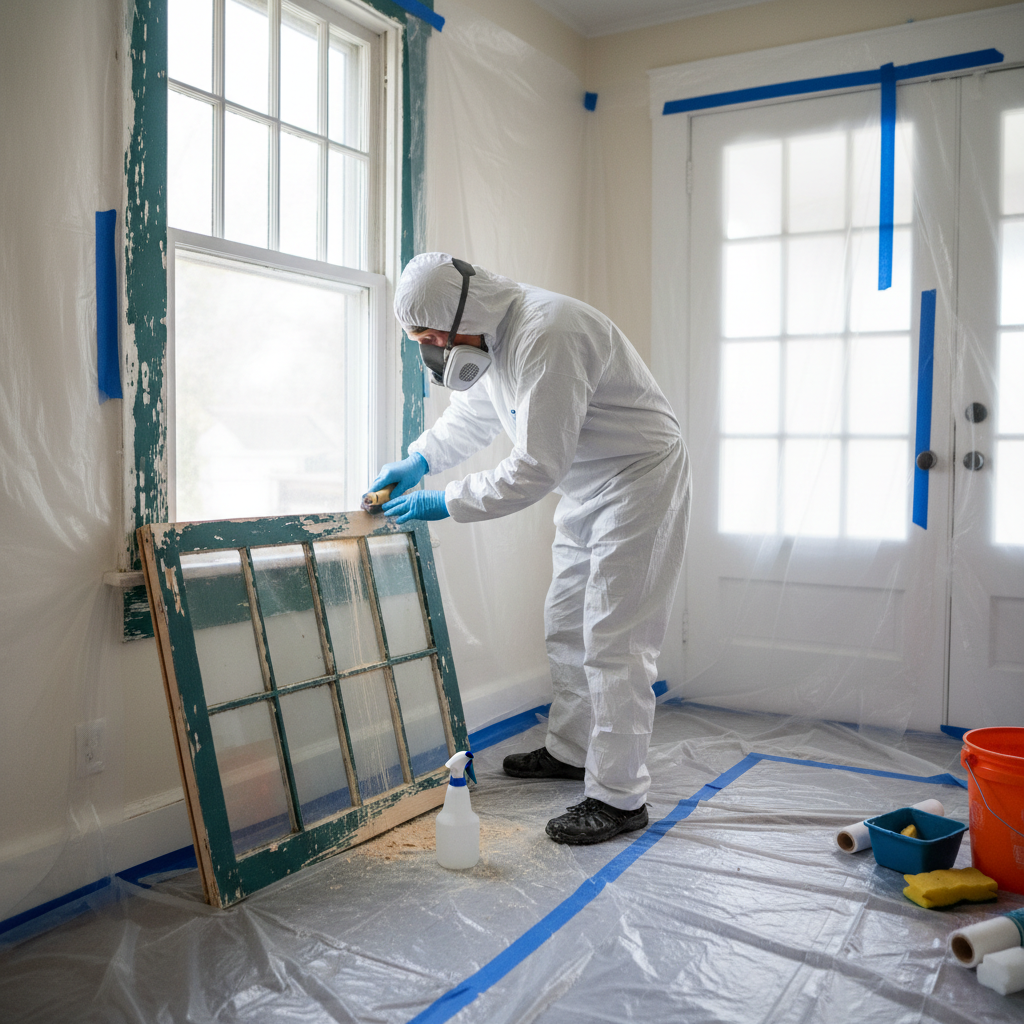
- Safety first: Wear an N100 or P100 respirator, disposable coveralls, disposable gloves, and dedicated work shoes or shoe covers. Eye protection is also essential.
- Remove all furniture, rugs, curtains, and other belongings from the room. If items cannot be removed, cover them completely with 6-mil plastic sheeting and seal with painter's tape.
- Close and seal all windows and doors leading to other parts of the house with 6-mil plastic sheeting and painter's tape. Turn off forced-air heating and air conditioning systems and seal vents in the work area to prevent dust circulation.
- Cover the entire floor of the work area with two layers of 6-mil plastic sheeting, extending at least 6 feet beyond the work surfaces. Tape the seams and edges securely to the baseboards.
Published June 9, 2026Last updated August 17, 2026
Tools & materials you'll need
Affiliate links- AmazonLead test kit (EPA-recognized)1 · For definitive testing before work
- AmazonDisposable coveralls (Tyvek)1 · To protect clothing and skin
- AmazonDisposable glovesmultiple pairs
- Amazon6-mil plastic sheeting1 roll · For containment barriers and floor covering
- AmazonPainter's tape (2-inch)1 roll · Strong adhesion for sealing plastic
- AmazonHeavy-duty 6-mil plastic bagsmultiple · For proper waste disposal
As an Amazon Associate FixlyGuide earns from qualifying purchases — at no extra cost to you. Prices and availability are accurate as of publication and subject to change.
Quick Answer
Around 34 million homes in the U.S. still contain lead-based paint, a significant health hazard, especially during renovations. The danger isn't intact paint, but rather the invisible, microscopic lead dust created when disturbing it through sanding, scraping, or demolition. This dust, even in tiny amounts, can cause severe neurological and developmental damage, particularly in children and pregnant women. Therefore, any DIY project in a pre-1978 home requires careful lead testing, meticulous containment strategies, and specialized cleanup to prevent contamination and safeguard your family's health.
The Problem
Imagine you're finally tackling that kitchen remodel in your charming 1950s bungalow. You start scraping away decades of old paint to reveal the original wood trim, eager to restore its former glory. What you might not realize is that with every stroke of your scraper, you could be releasing an invisible, highly toxic hazard into your home: lead dust. This isn't just a minor irritant; lead poisoning can lead to devastating, irreversible health problems, affecting the brain, kidneys, and nervous system. Children are especially vulnerable, as their developing bodies absorb lead more readily, leading to learning disabilities, behavioral issues, and lower IQs. For adults, lead exposure can cause high blood pressure, joint pain, memory problems, and even reproductive issues. The challenge lies in its invisibility and the fact that symptoms often don't appear until significant damage has occurred. What seems like a simple paint job can quickly turn into a dangerous environmental health crisis if lead safety protocols aren't strictly followed.
How It Works
Lead-based paint was commonly used in homes until it was banned for residential use in 1978 due to its toxicity. It was favored for its durability, moisture resistance, and vibrant colors. However, as this paint ages, it can chip, peel, or chalk, releasing lead particles into the environment. The real danger escalates dramatically when activities like sanding, scraping, drilling, cutting, or even aggressively cleaning painted surfaces occur. These actions pulverize the paint into microscopic dust, often too small to see. This lead dust then settles on surfaces, floors, and even in carpets, where it can be easily ingested by young children through hand-to-mouth contact. It can also become airborne, allowing it to be inhaled by anyone in the vicinity. Once lead enters the body, it mimics calcium and is stored in bones and soft tissues, slowly releasing into the bloodstream over time. There is no safe level of lead exposure; even very low levels can cause health problems. Understanding this mechanism of contamination — from intact paint to hazardous dust — is crucial for homeowners planning any renovation in older properties, emphasizing the need for proactive testing and robust safety measures.
Step-by-Step Fix
Always begin with testing — Before touching any painted surface in a pre-1978 home, assume lead paint is present. Purchase an EPA-recognized lead test kit from a hardware store or, more reliably, hire a certified lead inspector. Testing is inexpensive and will give you a definitive answer, guiding your safety approach.
- If the test is positive: Proceed with extreme caution and specialized lead-safe work practices described below. Consider professional abatement for large projects.
- If the test is negative: You can proceed with standard painting practices, though always be mindful of other potential hazards like asbestos in older homes.
Prepare the work area meticulously — Create a strict containment zone to prevent lead dust from spreading throughout your home. This is arguably the most critical step for DIYers.
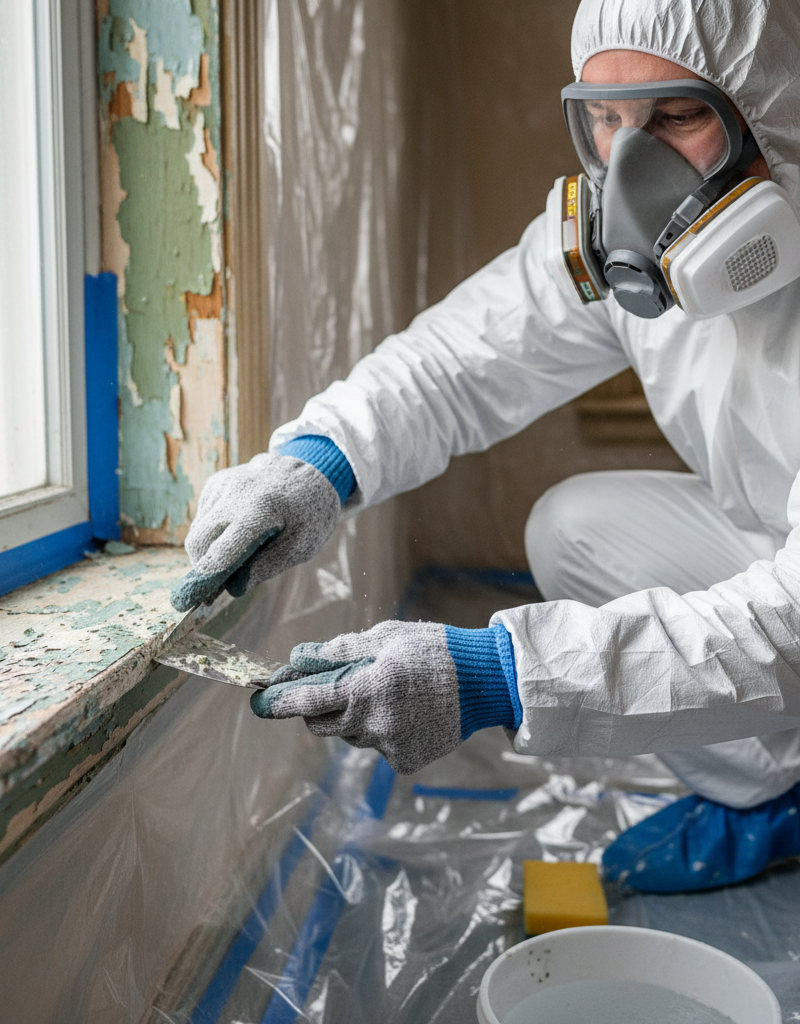
- Safety first: Wear an N100 or P100 respirator, disposable coveralls, disposable gloves, and dedicated work shoes or shoe covers. Eye protection is also essential.
- Remove all furniture, rugs, curtains, and other belongings from the room. If items cannot be removed, cover them completely with 6-mil plastic sheeting and seal with painter's tape.
- Close and seal all windows and doors leading to other parts of the house with 6-mil plastic sheeting and painter's tape. Turn off forced-air heating and air conditioning systems and seal vents in the work area to prevent dust circulation.
- Cover the entire floor of the work area with two layers of 6-mil plastic sheeting, extending at least 6 feet beyond the work surfaces. Tape the seams and edges securely to the baseboards.
Control dust at the source — The goal is to minimize dust creation. Avoid dry scraping, sanding, or using high-heat guns that can vaporize lead.
- Use wet sanding techniques with a spray bottle to keep surfaces damp. This helps bind the dust particles.
- Use chemical paint strippers, but ensure they are lead-safe and follow manufacturer instructions carefully. Always test in an inconspicuous area first.
- When drilling, use a HEPA-filtered vacuum attachment if available. For small holes, tent the area with plastic and capture dust immediately.
Clean as you go with HEPA filtration — Regular cleaning throughout the project is vital to prevent dust accumulation.
- Do not use a regular household vacuum cleaner; it will simply blow microscopic lead dust particles into the air. Only use a vacuum equipped with a HEPA (High-Efficiency Particulate Air) filter, specifically rated for lead dust.
- Use wet disposable wipes or a wet mop with a lead-specific cleaning solution (e.g., TSP equivalent) to clean all surfaces periodically.
Proper waste disposal is non-negotiable — Contaminated materials cannot simply go into your regular trash.
- Collect all plastic sheeting, disposable personal protective equipment (PPE), paint chips, and cleaning wipes in heavy-duty 6-mil plastic bags. Double bag them.
- Seal the bags securely. Contact your local waste management facility or health department for information on proper disposal of lead-contaminated waste in your area.
Post-project final cleanup and testing — Ensure no lead dust remains.
- After removing all gross debris, perform a thorough wet-wipe cleaning of all surfaces, including walls, floors, and window sills. Repeat this process at least twice.
- Consider using lead-specific cleaning products that help sequester lead particles.
- Once thoroughly cleaned, an independent dust wipe test by a certified professional is highly recommended to confirm the absence of lead hazards, especially if children will occupy the space.
Common Causes
- Age of Home: The most common cause is simply the age of the property. Homes built before 1978 almost certainly have lead-based paint on some interior or exterior surfaces. The older the home, the higher the likelihood and concentration of lead paint.
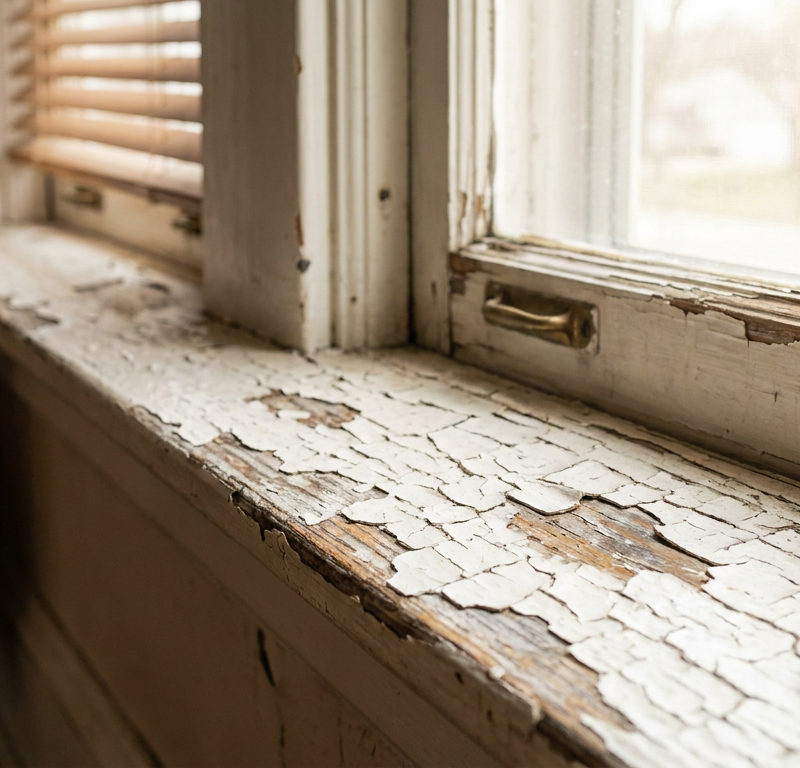
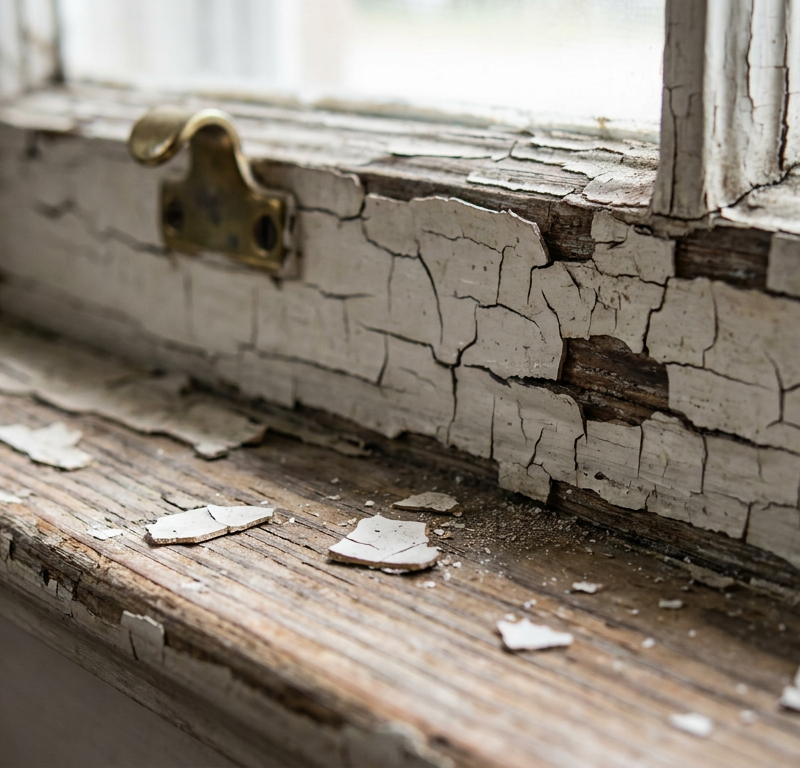
- Deterioration: Chipping, peeling, or chalking paint due to weather exposure, lack of maintenance, or friction (e.g., on windows and doors) naturally releases lead particles into the environment.
- Renovation/Repair Activities: Any invasive work like sanding, scraping, grinding, drilling, or demolition directly disturbs lead paint, creating a significant amount of toxic lead dust and fumes. This is the primary driver of lead exposure during DIY projects.
- Impact or Friction Surfaces: Areas subject to wear and tear, such as window sashes and sills, door frames, stair railings, and floors, often have abraded lead paint that generates dust even without active renovation.
- Improper Previous Remediation: In some cases, past homeowners or contractors may have attempted lead paint removal without proper containment, leaving residual contamination or inadequately encapsulated lead paint that later degrades.
Common Mistakes
- Assuming Paint Isn't Lead-Based: Many homeowners skip testing, falsely believing their home is
Related Articles
Keep troubleshooting with these hand-picked guides from FixlyGuide:
- 7 Inspection Red Flags That Secretly Signal a $20,000 Bill — Don't let your dream home become a money pit. Many buyers and even some inspectors overlook subtle home inspection red flags that lead to f…
- The 12 Checks That Prevent 80% of Costly Home Repairs — Don't wait for a disaster. Our comprehensive monthly home maintenance checklist reveals the surprising, simple tasks that catch small issue…
- The 7 Critical Household Filters You're Forgetting (And What They Cost You) — Neglected household filters are quietly costing you money, diminishing air quality, and paving the way for expensive repairs. Discover the…
- The 4 Critical Power Tools Every New Homeowner FORGETS to Buy (Don't Be One of Them) — New homeowners often overlook essential power tools that make common home repairs and maintenance tasks significantly easier. Learning whic…
- 7 Hidden Equity Drains Costing You Thousands Annually — Your home is an asset, but silent problems like minor leaks, poor insulation, and deferred maintenance can drain its value. Discover the se…
- The 7 Critical Lawn Mistakes You're Making This Fall (And How to Fix Them) — Don't just rake leaves; a proper fall yard cleanup prevents winter damage and ensures a vibrant spring lawn. Learn the seven critical mista…
What should this project cost?
Enter your project details for a realistic cost range before you call anyone.
Cost depends heavily on which system turns out to be the source.
- Regional adjustment
- National average
- Labor share (typical)
- ~$1,620
- Quotes to collect
- 3 written estimates
Educational estimate based on national averages — not a binding quote. Always confirm with written local estimates.
This article was independently written by FixlyGuide based on the source topic.
Frequently asked questions
How do I know if my home has lead paint?+
The only way to definitively know if your home has lead paint is to test it. You can purchase EPA-recognized lead test kits from hardware stores for a quick indication, or for more reliable results, hire a certified lead inspector or risk assessor to conduct professional testing.
Is it safe to paint over lead paint?+
Encapsulation, or painting over intact lead paint, can be a temporary solution if the paint is in good condition and not chipping or peeling. However, it's not a permanent remedy. The lead paint remains underneath, and if the new paint layer degrades or is disturbed in the future, the hazard can reappear. Always test first and ensure proper cleaning before encapsulating.
What are the health effects of lead exposure?+
Lead exposure can cause a wide range of health problems, particularly in children. These include developmental delays, learning difficulties, behavioral problems, lower IQ, nervous system damage, and kidney damage. In adults, it can lead to high blood pressure, joint pain, memory issues, and reproductive problems. There is no safe level of lead exposure.
What type of mask do I need for lead paint work?+
For any work disturbing lead paint, you need at least an N100 or P100 respirator. These respirators are specifically designed to filter out very fine particles, including lead dust. Standard dust masks or surgical masks do not offer adequate protection against lead particles.
Can I use a regular vacuum cleaner for lead dust?+
No, absolutely not. Regular vacuum cleaners are not equipped with the specialized HEPA filters needed to capture microscopic lead dust particles. Using a standard vacuum will simply circulate the lead dust into the air, making the contamination worse and spreading the hazard throughout your home. Only use a HEPA-filtered vacuum specifically rated for lead abatement.
Discussion
Loading comments…