- Excitement and impatience: New grill owners are naturally eager to use their new toy immediately, overlooking crucial setup steps.
- Lack of awareness: Many first-time pellet grill owners don't realize such a step is necessary, assuming the grill is ready to go out of the box.
- Misunderstanding the purpose: Some might think it's just about cleaning, not realizing it also cures components and establishes initial seasoning.
- Conflicting information: Online forums or friends might offer incomplete or incorrect advice, leading new users astray.
Published May 17, 2026Last updated August 17, 2026
Tools & materials you'll need
Affiliate links- AmazonGrill brushoptional, for stubborn residue
As an Amazon Associate FixlyGuide earns from qualifying purchases — at no extra cost to you. Prices and availability are accurate as of publication and subject to change.
Quick Answer
The critical first step for any new pellet grill is a proper 'first burn' or seasoning. This process burns off manufacturing oils and residues, creating a clean cooking environment and ensuring optimal flavor from your very first meal. Skipping this leads to off-flavors and uneven cooking.
The Problem
You've just unboxed your shiny new pellet grill, eager to fire it up and smoke your first masterpiece. The temptation to throw on some ribs immediately is strong, but resisting it is crucial. Many homeowners make the mistake of skipping the initial seasoning process, often called a 'first burn' or 'burn-in.' This oversight can lead to a less-than-stellar inaugural cooking experience. Without proper seasoning, residual manufacturing oils, dust, and other impurities from the factory can contaminate your food, imparting a metallic or chemical taste. Furthermore, skipping this step means the grill's internal components, like the grates and barrel, haven't had a chance to properly cure and seal. This can lead to uneven heat distribution on future cooks and a struggle to maintain consistent temperatures, ultimately impacting the quality and flavor of every meal you prepare.
How It Works
Pellet grills operate by feeding hardwood pellets from a hopper into a fire pot via an auger. An igniter rod then sparks, burning the pellets to create heat and smoke. A fan circulates this heat evenly throughout the cooking chamber, while a drip tray separates the food from direct flame, diffusing heat and collecting grease. The 'first burn' process leverages this system to achieve several important goals. First, running the grill at high temperatures for an extended period vaporizes any light oils, greases, and anti-corrosion coatings applied during manufacturing. These substances, while harmless, can leave an unpleasant residue and taste on food if not purged. Second, the heat allows the metal components, particularly the grates, to expand and contract, settling into their final positions. For some grills, this also allows paint and finishes to properly cure. The high heat also helps to develop an initial layer of seasoning on the grates, much like a cast-iron skillet, which aids in non-stick properties and heat retention over time. This foundational layer creates a barrier that prevents food from sticking and contributes to the grill's overall efficiency and longevity. The process essentially 'cleans' and 'preps' the grill, setting the stage for optimal performance and delicious results from your very first official cook.
Step-by-Step Fix
Performing a proper first burn is a straightforward process that takes about an hour but ensures years of great grilling. Always consult your specific grill's manual for any brand-specific instructions or temperature recommendations.
Step 1: Unpack and Assemble Thoroughly — Carefully remove all packing materials from the grill and inside the cooking chamber. Ensure no cardboard, plastic, or foam is left behind.
- Check for completeness: Verify all parts are present against the manual's list.
- Safety note: Wear gloves if handling sharp metal edges during assembly.
Step 2: Install Internal Components — Place the drip tray, heat baffle, and cooking grates according to your grill's instructions. Ensure they are seated correctly.
- Why it matters: Improper placement can hinder heat distribution and proper air circulation during the burn-in.
Step 3: Load the Hopper — Fill the pellet hopper with high-quality hardwood cooking pellets. Do not use heating pellets, as they contain binders and additives.
- Pellet type: Use a neutral wood like oak or hickory for the first burn, or the type you plan to cook with most often.
- Initial fill: Fill the auger tube by priming the system if your grill has a 'feed' or 'prime' function. This ensures pellets reach the fire pot quickly.
Step 4: Power On and Set Temperature — Plug in the grill, turn it on, and set it to a high temperature, typically 350-400°F (175-200°C), or as specified in your owner's manual for the initial burn.
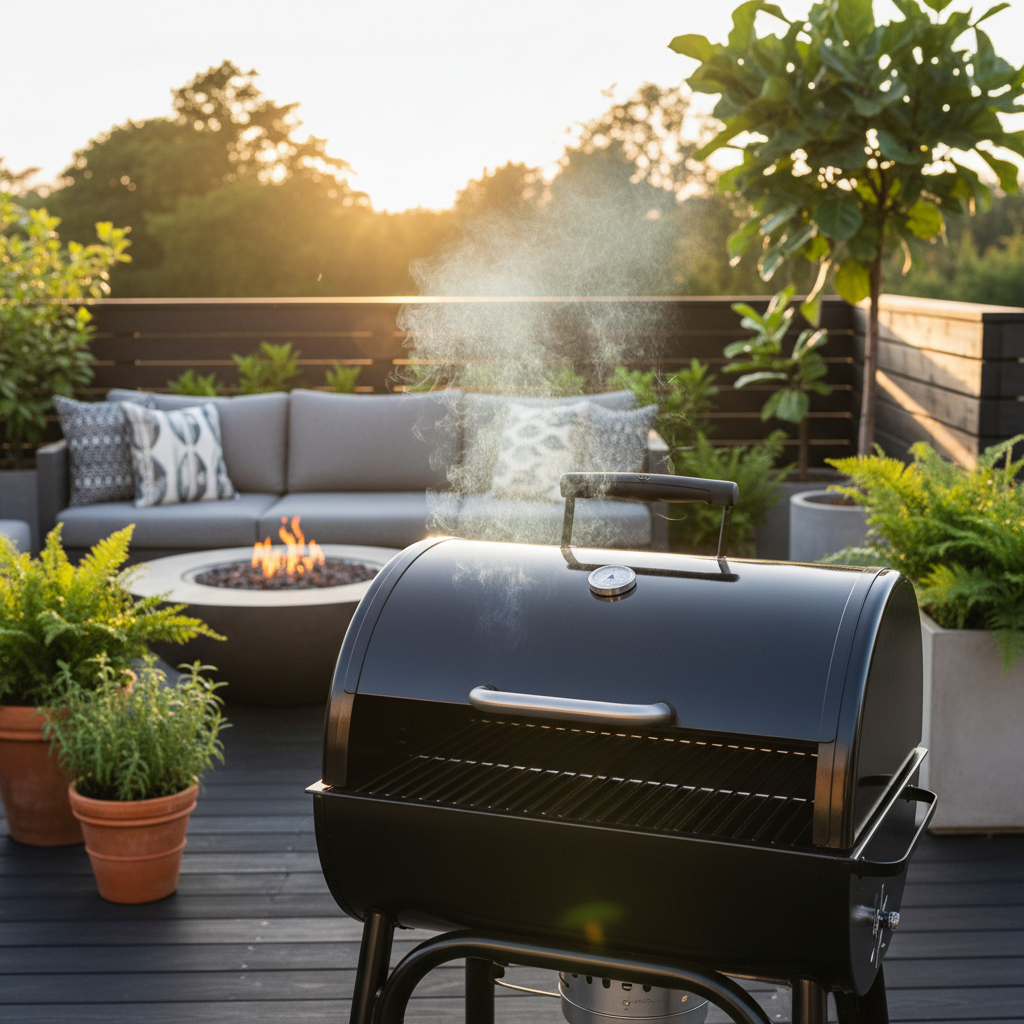
- Initial smoke: Expect a good amount of white smoke initially as the pellets ignite. This is normal.
Step 5: Let It Run (The Burn-In) — Allow the grill to run at the set high temperature for at least 45 minutes to 1 hour, or as recommended by the manufacturer. Keep the lid closed during this period.
- Monitor: Watch for the white smoke to dissipate significantly, indicating the initial residues are burning off.
- After 15 minutes: Briefly open the lid to check for any obvious burning plastic smells, though this is rare with proper unpacking.
Step 6: Cool Down and Wipe Grates — After the burn-in period, turn off the grill and allow it to cool completely. Once cool, use a clean cloth or paper towel to wipe down the cooking grates.
- Cleaning: Some manufacturers recommend a light coating of high-heat cooking oil on the grates after the first burn, especially for cast iron grates, to further enhance seasoning and prevent rust.
- If you see residue: If you notice any stubborn residue after cooling, gently scrub with a grill brush and wipe clean. Repeat the burn-in process if a strong chemical smell persists.
Common Causes
The primary 'cause' of a bad first cook is simply skipping the recommended initial seasoning process. This often stems from:
- Excitement and impatience: New grill owners are naturally eager to use their new toy immediately, overlooking crucial setup steps.
- Lack of awareness: Many first-time pellet grill owners don't realize such a step is necessary, assuming the grill is ready to go out of the box.
- Misunderstanding the purpose: Some might think it's just about cleaning, not realizing it also cures components and establishes initial seasoning.
- Conflicting information: Online forums or friends might offer incomplete or incorrect advice, leading new users astray.
Common Mistakes
- Skipping the burn-in entirely: This is the most significant mistake, leading to off-flavors and potential uneven cooking from the start.
- Not removing all packaging: Forgetting even small pieces of plastic or cardboard inside the grill can cause nasty smells and even fire hazards during the burn-in.
- Using the wrong pellets: Employing heating pellets or cheap, low-quality cooking pellets with fillers can introduce unwanted flavors and excessive ash.
- Not running it hot enough or long enough: A low temperature or short burn-in won't effectively vaporize all manufacturing residues.
- Opening the lid constantly: While tempting, frequently opening the lid during the initial burn can prolong the process and make it less effective by disrupting heat.
- Not wiping down after cooling: A quick wipe catches any lingering ash or fine soot that might settle on the grates during the high-heat burn.
Cost & Time Breakdown
| Task | DIY cost | Pro cost | Time |
|---|---|---|---|
| Assembly | $0 | N/A | 30–60 minutes |
| Pellets for burn-in | $1–$2 | N/A | N/A |
| Burn-in process (active time) | $0 | N/A | 45–60 minutes |
| Post-burn wipe-down | $0 | N/A | 5 minutes |
| Total | $1–$2 | N/A | 1.5–2 hours |
Tips & Prevention
- Read the manual: Your pellet grill's owner's manual is your best friend. It contains specific temperature and time recommendations for the first burn, which can vary by model.
- Storage: Store pellets in a cool, dry place in an airtight container to prevent moisture absorption, which can lead to poor burning and auger jams.
- Regular cleaning: After every few cooks, clean your grates and periodically vacuum out the firepot and ash from the grill interior to maintain optimal performance and prevent flare-ups.
- Seasoning over time: Continuous cooking and proper cleaning will build up a robust seasoning layer on your grates, enhancing flavor and non-stick properties.
- Pay attention to smoke: Thin, blue smoke is what you want for good flavor. Thick, white smoke often indicates a problem or that the grill is just coming up to temperature.
When to Call a Professional
For the vast majority of homeowners, a pellet grill's first burn is a simple, DIY task. However, if you encounter persistent issues that seem beyond a normal setup, a professional might be helpful. This includes situations where the grill consistently fails to ignite after following all troubleshooting steps, the controller displays error codes that aren't addressed in the manual, or if there's a strong, persistent burning plastic smell that doesn't dissipate after two complete burn-in cycles. If the grill completely fails to feed pellets, or there are significant electrical issues like tripping breakers, it's safer to contact the manufacturer's customer service or an authorized service technician. These professionals can diagnose and repair internal component failures, auger motor issues, or electrical faults that are typically not homeowner-serviceable and could void your warranty if attempted.
Related Articles
Keep troubleshooting with these hand-picked guides from FixlyGuide:
- The Secret to Lush Raised Beds? It's Not Just About How You Water — Smart irrigation for raised garden beds isn't just about automation; it's about delivering the right amount of water precisely when your pl…
- The Hidden Reason Your GFCI Trips (It's Not Always a Faulty Outlet) — A continuously tripping GFCI outlet is a critical safety warning, often indicating moisture, a faulty appliance, or a wiring problem that r…
- The 5-Minute Trick to Vacation-Proof Your Garden (Before You Leave Town) — Prevent your garden from wilting while you're away with simple, proactive steps that ensure lush growth and minimal fuss upon your return.
- The Hidden Reason Your GFCI Trips (It’s Not Always a Bad Outlet) — A tripping GFCI outlet is a safety mechanism doing its job, often indicating a problem like moisture, a faulty appliance, or a wiring issue…
- The 6 Cleaning Secrets Hiding in Your Power Drill (Plus Attachments to Master) — Your power drill isn't just for DIY projects; with the right attachments, it's a powerful and efficient cleaning tool for tackling tough gr…
- The 5-Minute Trick to Restore Your Kitchen Sink Sprayer's Lost Pressure — Restore your kitchen sink sprayer's low pressure with a quick, simple trick that often takes less than five minutes and requires no special…
Should you do this yourself?
Answer five quick questions before you start. Safety outranks savings every time.
Your experience with work like this
How high do you have to work?
Does the job involve any of these?
Will it need a permit?
Specialty tools
Free and instant. Educational guidance only — not a quote, inspection, or professional diagnosis.
What should this project cost?
Enter your project details for a realistic cost range before you call anyone.
Cost depends heavily on which system turns out to be the source.
- Regional adjustment
- National average
- Labor share (typical)
- ~$1,620
- Quotes to collect
- 3 written estimates
Educational estimate based on national averages — not a binding quote. Always confirm with written local estimates.
Before you start
Check the difficulty, permits, and safety risk — then decide whether to call a pro.
- Estimate this projectGet a cost range for your scope and ZIP before you call anyone.Open
- Get local estimatesSend one request and compare written estimates from vetted pros.Open
Free, no signup required. Estimates are educational guidance, not a quote or an inspection.
This article was independently written by FixlyGuide based on the source topic.
Frequently asked questions
How long should I burn in my new pellet grill?+
Most manufacturers recommend running your new pellet grill at a high temperature (around 350-400°F or 175-200°C) for 45 minutes to 1 hour. Always check your specific grill's owner's manual for precise recommendations.
What happens if I don't season my new pellet grill?+
If you don't season your new pellet grill, residual manufacturing oils, dust, and impurities can transfer to your food, imparting a metallic or chemical taste. It can also lead to uneven cooking and hinder the development of a protective, non-stick seasoning layer on the grates.
What kind of pellets should I use for the first burn?+
It's best to use a high-quality hardwood cooking pellet, ideally a neutral flavor like oak or hickory, or the type you plan to use most often. Avoid heating pellets or those with fillers, as they can produce unwanted odors and flavors.


Discussion
Loading comments…