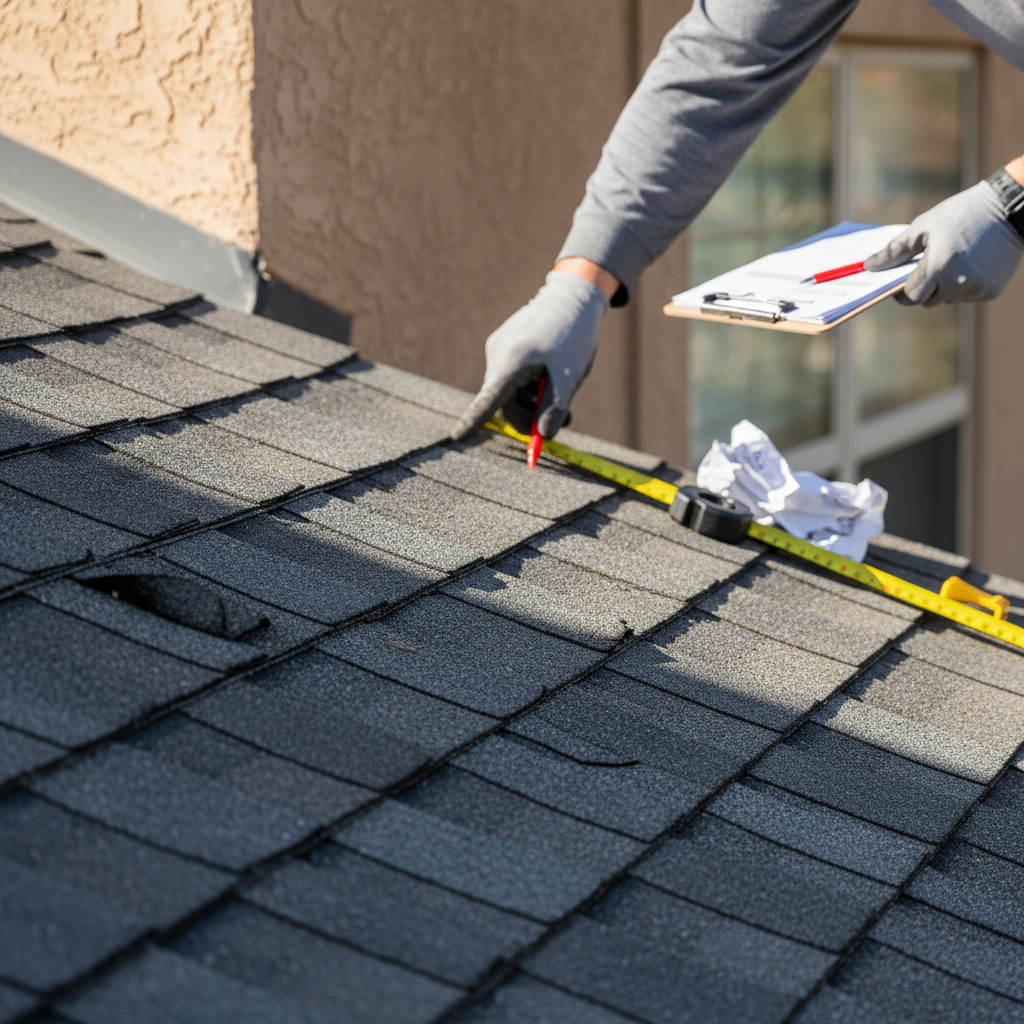
- Wide shots of all four sides of the roof from the ground
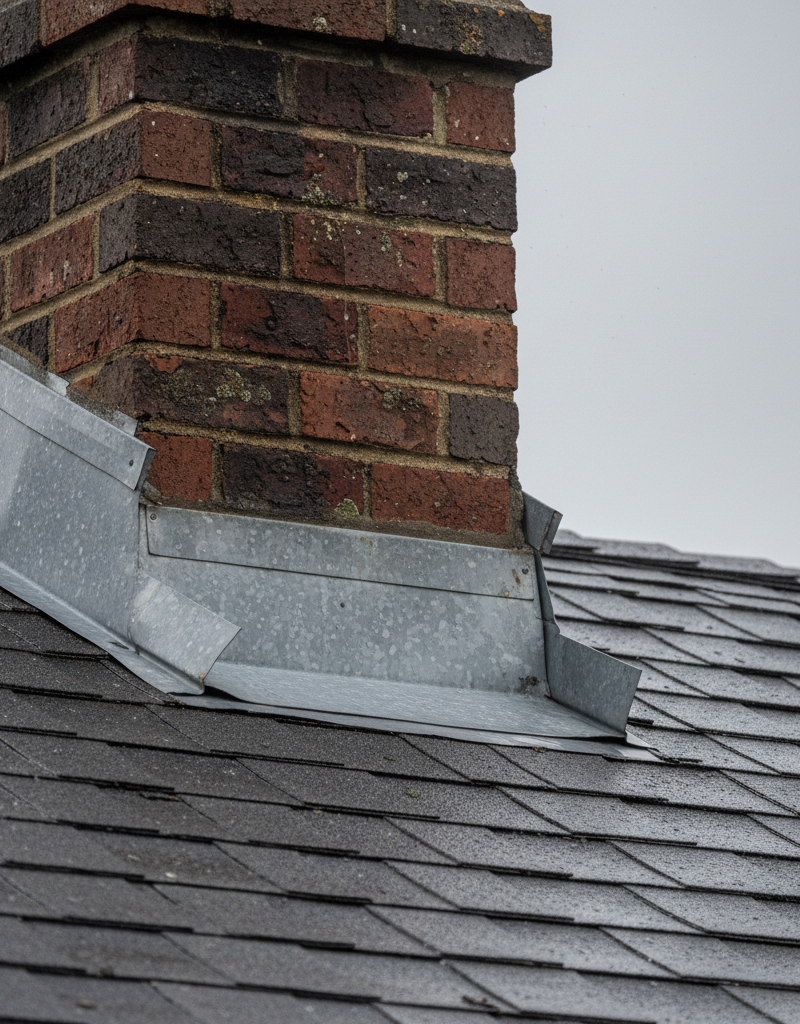
- Close-ups of damaged shingles, vents, flashing
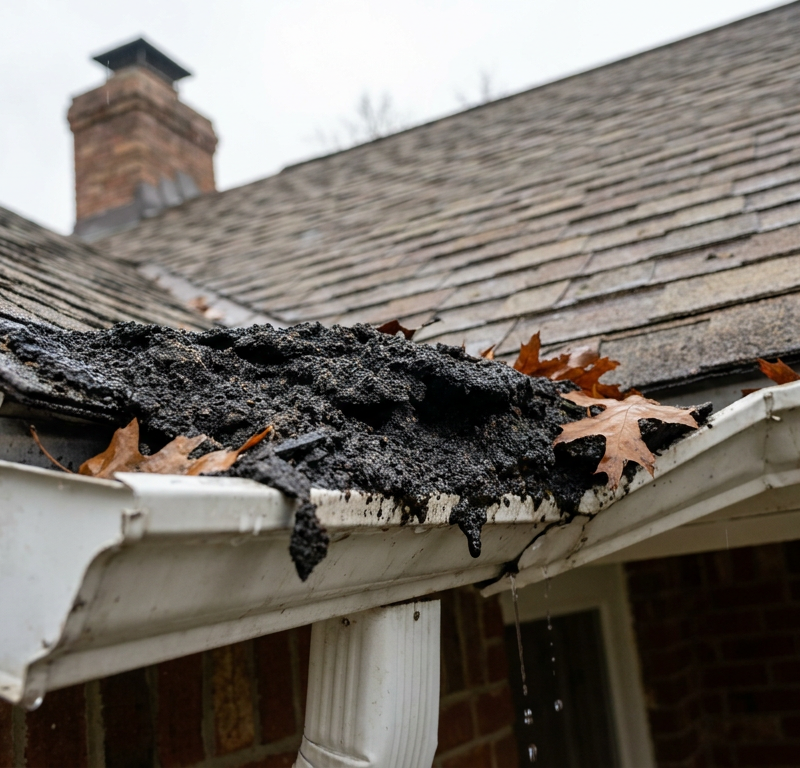
- Gutters and downspouts (dents from hail)
- AC condenser fins (proof of hail size)
- Soft metals: mailbox, patio furniture, grills
Roofing · Aging roof
| Project category | Roofing |
|---|---|
| Problem type | Aging roof |
| Trade required | Roofing |
| Urgency | Planned project |
| Safety risk | Low safety risk |
| DIY suitability | Pro recommended |
| Cost category | High cost |
| Typical timeline | Plan 4–12 weeks ahead for scheduling and material lead time |
| Contractor type | Licensed roofing contractor |
Repair option
Maintenance repairs to buy a season or two while you budget.
Replacement option
Planned replacement, which is almost always cheaper than a leak-driven emergency.
Common causes
- Normal weathering past the shingle service life
- Poor attic ventilation cooking the shingles from below
- Repeated repairs on the same slopes
Relevant tools:repair or replace roofproject cost estimatorhome improvement material prices
Published May 22, 2026Last updated September 4, 2026Last reviewed May 22, 2026 by Marcus Hale, Master Tradesman, 22 yrs
Filing a roof insurance claim in Texas isn't complicated, but it has more pitfalls than most homeowners realize. The difference between a smooth $15,000 settlement and a $3,000 denied claim often comes down to small process details: who you call first, when you file, what you photograph, and who you let near your roof.
This guide walks through the entire Texas claim process from storm to final check, in order.
Before You File: Documentation
Insurance claims live or die on documentation. Before you call your carrier, build your evidence file:
Required Photos
- Wide shots of all four sides of the roof from the ground
- Close-ups of damaged shingles, vents, flashing
- Gutters and downspouts (dents from hail)
- AC condenser fins (proof of hail size)
- Soft metals: mailbox, patio furniture, grills
- Interior water damage and stains
- Attic photos showing wet decking or daylight
- Wide shots of damaged landscaping
The NOAA Storm Report
Download the official report for your ZIP code from ncdc.noaa.gov. This proves the storm happened and shows reported hail size and wind speed. Free and accepted by every carrier.
Your Insurance Policy
Pull your declarations page. You need to know:
- Dwelling coverage amount
- Wind/hail deductible (almost always a percentage, not flat)
- Replacement Cost Value (RCV) or Actual Cash Value (ACV) coverage
- Any roof age restrictions or cosmetic damage exclusions
- Time limit for filing (usually 1 year by Texas law, often shorter in policy)
Step 1: Call Your Insurance Company Directly
Always file with your carrier first. Get the after-hours claims line if it's a major event.
You'll receive:
- A claim number (write it down—you'll use it constantly)
- An assigned adjuster's name and contact info
- An estimated inspection window
- A list of next steps
Do not let a roofer file for you. Texas HB 2102 explicitly prohibits this unless the roofer is also licensed as a public adjuster. Violators can lose their license and you can lose your claim.
Step 2: Get an Independent Roofer Inspection
While you're waiting for the carrier's adjuster, schedule a free inspection from a locally-based, licensed roofer. They will produce a written damage report you can use in two ways:
- As a baseline to verify the adjuster's findings
- As advocacy when shadowing the adjuster during their inspection
Choose a roofer that:
- Has a physical Texas address (not just a PO box)
- Carries workers comp and liability insurance
- Has 5+ years of reviews
- Is not a door-to-door storm chaser
Step 3: Attend the Adjuster Inspection
This is the most important meeting in the entire process. Be present, and have your roofer there with you.
The adjuster will:
- Walk the roof
- Use a "test square"—a 10x10 ft area where they count functional hail hits
- Mark each hit with chalk
- Photograph the marked square
- Determine if the slope qualifies for full replacement (8+ hits per square)
- Inspect related damage (gutters, flashing, vents)
Your roofer's job: point out hits the adjuster missed, especially on back slopes, shaded areas, and steep pitches. A single missed slope can mean $5,000–$8,000 in lost settlement.
Step 4: Receive and Review the Estimate
The adjuster writes the estimate using a standardized tool called Xactimate, which uses local labor and material rates. You'll receive:
- A detailed line-item estimate by slope and item
- The total Replacement Cost Value (RCV)
- The depreciation (if your roof is older)
- Your deductible amount
- The first-check amount
Example settlement on a $17,500 RCV roof, 12 years old, 1.5% deductible on $325K dwelling:
| Line | Amount |
|---|---|
| RCV (total replacement) | $17,500 |
| Depreciation (12/22 years) | -$9,550 |
| Deductible (1.5% of $325K) | -$4,875 |
| First check (ACV) | $3,075 |
| Recoverable depreciation (paid after work) | $9,550 |
| Your out-of-pocket (with RCV policy) | $4,875 (deductible only) |
If you have ACV coverage instead of RCV, you only get the first check—the depreciation isn't recoverable.
Step 5: Verify the Estimate Before You Sign
Common adjuster errors:
- Missed slopes (rear-facing slopes especially)
- Incorrect roof measurements (always less than actual)
- Missing line items (drip edge, ice and water shield, ventilation)
- Outdated pricing (Xactimate is updated quarterly; storm-period costs run higher)
- Cosmetic exclusions misapplied to functional damage
Your roofer can write a "supplement" request to add missing items. Most carriers process supplements without re-inspection.
Step 6: Pick Your Contractor
Now—and only now—pick the roofer to do the work. Verify:
- The contractor's quote matches the insurance estimate (within reason)
- They will accept the insurance pricing without "eating" your deductible
- Written contract with payment schedule
- Workers comp and general liability certificates
- Material brand, color, and warranty in writing
- Permit pulled by the contractor
Step 7: Get the Work Done
A typical Texas roof replacement takes 1–2 days. The contractor:
- Tears off old shingles
- Inspects decking
- Installs new underlayment, flashing, and shingles
- Completes city inspection
- Sends final invoice to insurance
Step 8: Receive the Final Check
The depreciation check (if you have RCV) is released after:
- Final invoice submitted by contractor
- Photos of completed work
- City inspection passed
- Any required supplements processed
Most carriers release within 14–30 days of work completion.
What to Do If Your Claim Is Denied
Denials happen for legitimate and dubious reasons. You have options.
Option 1: Request a Re-Inspection
Most successful when you have your roofer's report documenting damage the adjuster missed. Free.
Option 2: Hire a Public Adjuster
Texas-licensed public adjusters work for you (not the carrier) and typically take 10–20% of any additional settlement. Worth it on claims over $10,000 that have been denied or underpaid.
Option 3: Invoke Appraisal
Your policy includes an appraisal clause. Each side hires an appraiser; the two pick an umpire; the resulting figure is binding. Faster than litigation, usually $500–$2,500 in fees.
Option 4: File a TDI Complaint
The Texas Department of Insurance takes complaints at tdi.texas.gov. Carriers respond faster when TDI is involved.
Option 5: Litigation
Texas allows insurance bad-faith claims. Most reputable attorneys take these on contingency. Save this for clear denial of valid damage.
Mistakes That Get Claims Denied
- Waiting too long to file (over 6 months is risky; over 1 year is barred)
- Letting a roofer file for you (illegal in Texas)
- Signing an "Assignment of Benefits" giving away your check
- Repairing damage before adjuster inspection without documentation
- Paying a deductible "discount" offered by a roofer (illegal kickback)
- Hiring unlicensed crews that won't follow code
- Accepting the first estimate without contractor review
Special Texas Considerations
Wind/Hail Deductible
Texas policies use percentage-based wind/hail deductibles, usually 1–2% of dwelling coverage. On a $400K home, that's $4,000–$8,000—much higher than the "all other perils" deductible.
Cosmetic Damage Exclusions
Newer policies may exclude cosmetic-only damage. Read your "Endorsement WS-30" or similar. If your policy excludes cosmetic damage, dings that haven't broken through aren't covered.
Roof Age Restrictions
Many Texas carriers now refuse RCV coverage on roofs over 15 years and refuse to renew over 20 years. Inspect annually after year 10.
The Bottom Line
A well-filed Texas roof claim pays your full settlement minus just the deductible. A poorly filed one leaves thousands on the table or gets denied entirely. The keys: document fast, file directly with your carrier, get an independent roofer inspection, attend the adjuster meeting with your roofer present, and never sign over your insurance check.
Need help navigating a claim or want an independent inspection? Connect with a vetted Fort Worth roofer →
Should you do this yourself?
Answer five quick questions before you start. Safety outranks savings every time.
Your experience with work like this
How high do you have to work?
Does the job involve any of these?
Will it need a permit?
Specialty tools
Free and instant. Educational guidance only — not a quote, inspection, or professional diagnosis.
Estimate your own project cost
National averages are a starting point. Enter your details for a range that fits your house.
Roof replacement cost
- Per square (installed)$604 – $866
Add $500–$2,500 if decking is rotten and needs replacement. Storm damage may be covered by insurance.
Educational estimate only — always confirm with written local bids.
What should this project cost?
Enter your project details for a realistic cost range before you call anyone.
Spot repairs commonly run $400–$1,800; full replacement typically $9,000–$18,000 for an average home.
- Regional adjustment
- National average
- Labor share (typical)
- ~$2,948
- Quotes to collect
- 3 written estimates
Educational estimate based on national averages — not a binding quote. Always confirm with written local estimates.
Decide what your roof needs
Two minutes of questions turns "something is wrong up there" into a clear next step.
- Repair or replace your roof?Answer 10 questions about age, leaks, and damage to get a clear next step.Open
- Compare contractor quotesScore up to four bids on price, warranty, licensing, and timeline.Open
- Get local estimatesSend one request and compare written estimates from vetted pros.Open
Free, no signup required. Estimates are educational guidance, not a quote or an inspection.
Frequently asked questions
How long does a Texas roof claim take?+
4–8 weeks typically from filing to first check, longer after major storms when adjusters are backed up.
Can a roofer file my claim for me?+
No. Texas HB 2102 prohibits roofers from acting as public adjusters unless separately licensed. You file directly with your carrier.
Will my premium increase after a roof claim?+
Possibly. Most Texas carriers don't penalize for one weather-related claim in a 5-year window, but multiple claims can raise rates 10–25%.
What if my claim is denied?+
Request a re-inspection, file an appraisal demand, hire a public adjuster, or file a TDI complaint. Most denials are reversible with proper documentation.
Discussion
Loading comments…