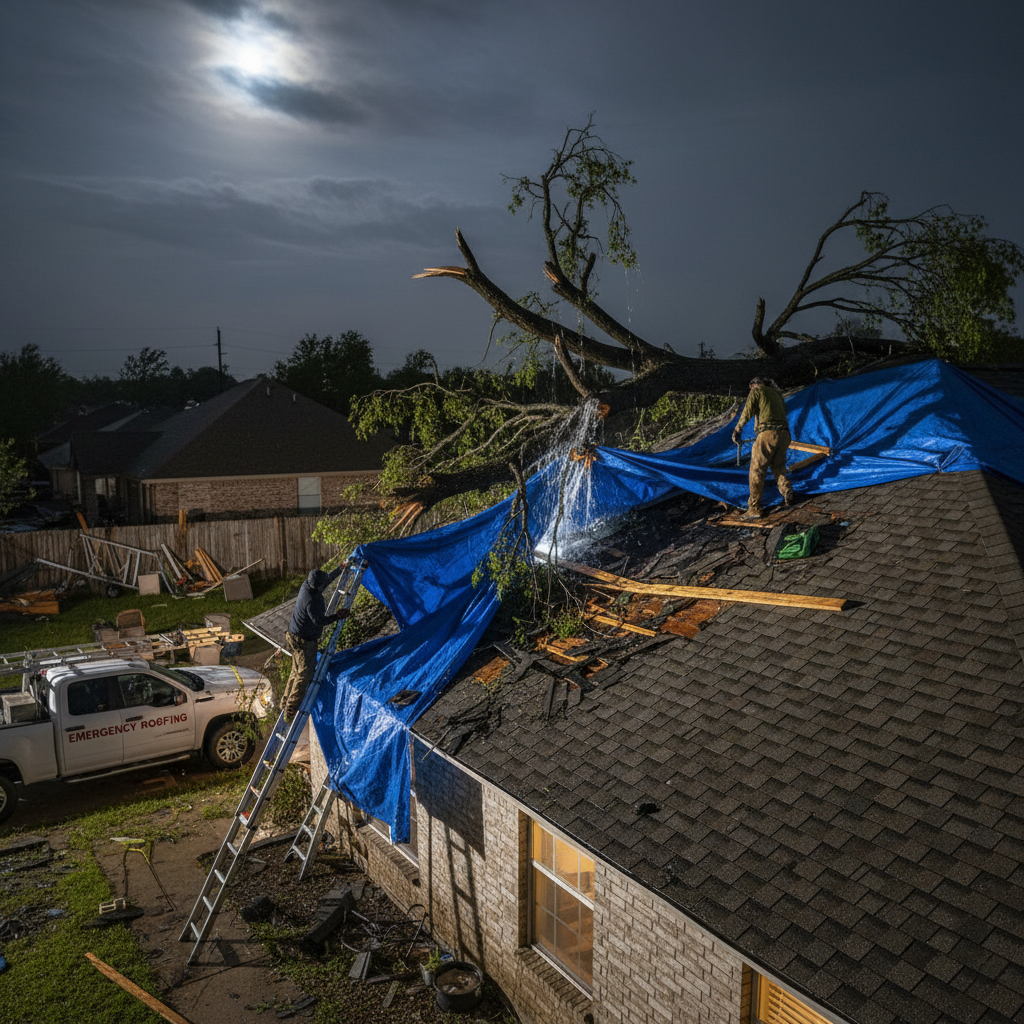
- Active water entering the home
- Tree branch or debris through the roof
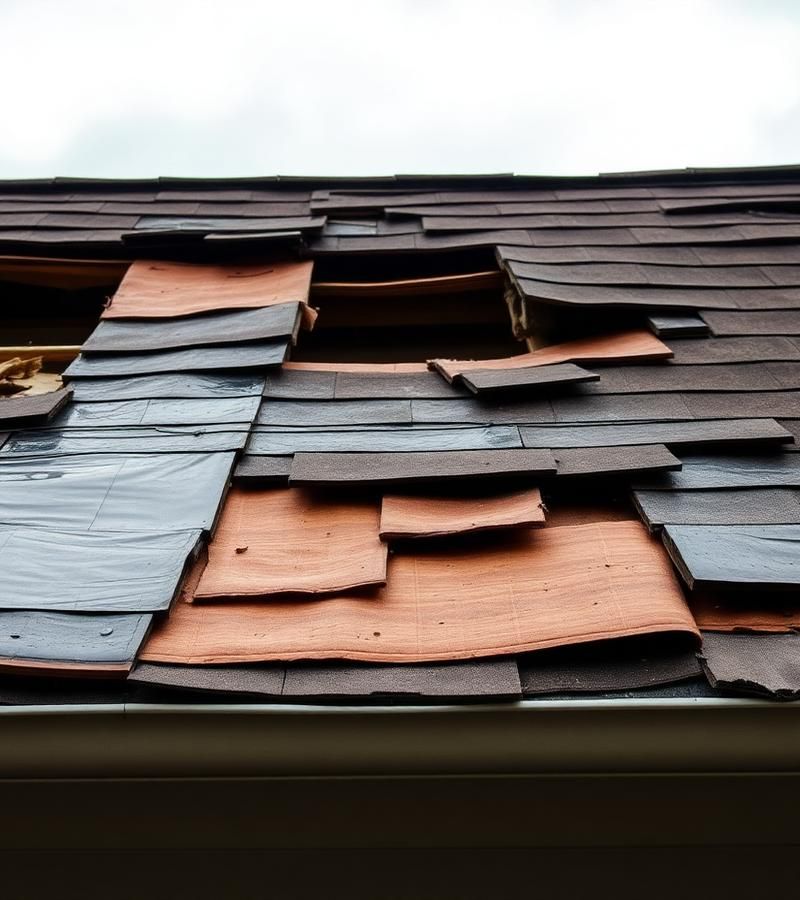
- Major shingle blow-off exposing decking
- Visible structural sagging
- Lightning strike or fire damage
Roofing · Active leak
| Project category | Roofing |
|---|---|
| Problem type | Active leak |
| Trade required | Roofing |
| Urgency | Emergency — act now |
| Safety risk | High safety risk |
| DIY suitability | Pro recommended |
| Cost category | Moderate cost |
| Typical timeline | Emergency tarp same day; permanent repair usually within days |
| Contractor type | Licensed roofing contractor |
Repair option
Targeted flashing or shingle repair once the entry point is traced — water often travels before it drips.
Replacement option
Full replacement when the deck is saturated, the roof is near end of life, or leaks keep reappearing in new spots.
Common causes
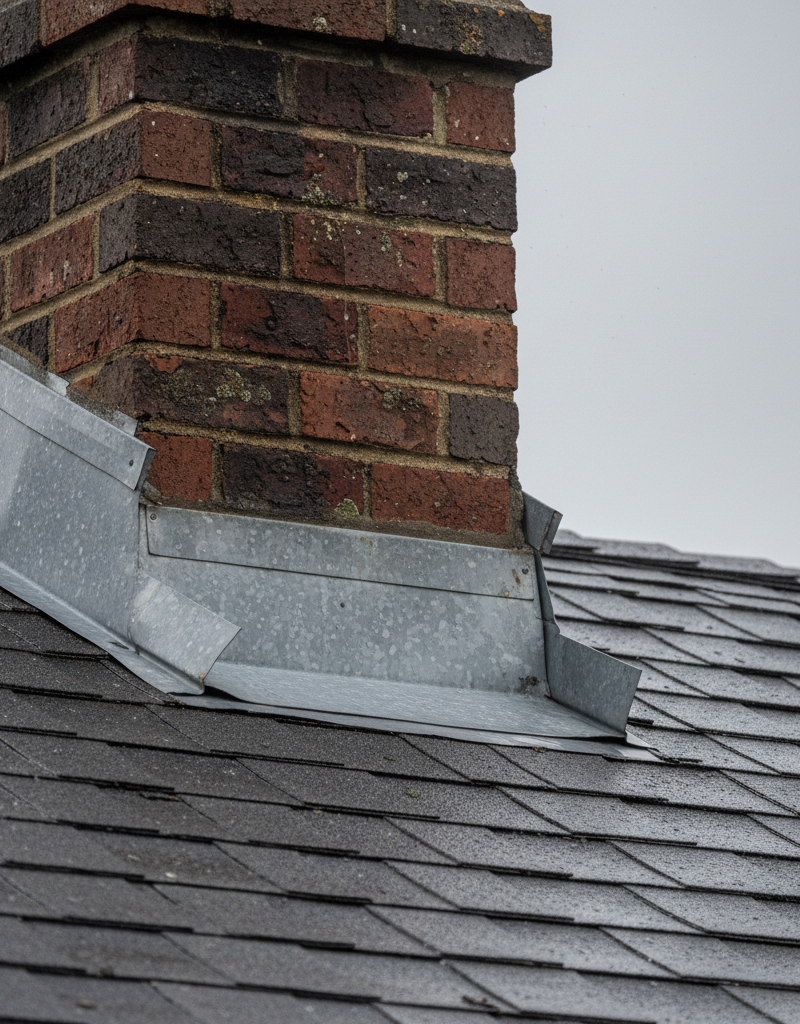
- Failed flashing at a chimney, vent, or valley
- Cracked or lifted shingles over the leak path
- Ice damming or clogged gutters backing water under the edge
- Nail pops that opened a hole in the deck
Relevant tools:repair or replace roofemergency checklist
Published May 22, 2026Last updated September 4, 2026Last reviewed May 22, 2026 by Marcus Hale, Master Tradesman, 22 yrs
Water dripping from the ceiling at 11pm. A tree branch through the kitchen skylight. Wind ripping shingles off in a thunderstorm. Roof emergencies always happen at the worst time, and how you respond in the first few hours decides whether you're dealing with $800 in damage or $80,000.
This is the action plan for any Texas roof emergency, in the order to do it.
First: What's an Actual Emergency?
True emergencies (call same-day or after-hours):
- Active water entering the home
- Tree branch or debris through the roof
- Major shingle blow-off exposing decking
- Visible structural sagging
- Lightning strike or fire damage
- Tornado or major hail event damage
Not emergencies (schedule within 1–2 weeks):
- Missing shingles without active leak
- Ceiling stain from old leak that's dried
- Damaged flashing without water entry
- Cosmetic storm damage waiting for adjuster
True emergencies require immediate response; everything else can wait for normal business hours and get fairer pricing.
The First 30 Minutes
Step 1: Protect Life Safety
- Get everyone away from the affected area
- Avoid wet floors (slip hazard)
- Stay clear of any sagging ceiling (it can collapse)
- Don't touch any wet electrical fixtures
- Cut power to affected rooms at the breaker if water is near outlets or fixtures
Step 2: Stop Interior Damage
- Move furniture and valuables out of the affected area
- Place buckets, trash cans, or storage bins under active drips
- Cover floors with plastic sheeting or towels
- If you have plastic sheeting, drape it over electronics, beds, and dressers
- Open the ceiling drywall directly under a bulging stain (controlled drainage is better than ceiling collapse)
Step 3: Document Everything
Take dated phone photos of:
- All water entry points
- Damaged ceilings and walls
- Wet flooring and contents
- Anything that needs to be discarded later
- The outside of the home (from ground level only, in safe conditions)
This documentation is critical for insurance. Don't move or clean anything until you've photographed it.
The First 4 Hours
Step 1: Call for Emergency Tarping
Call 2–3 locally-based roofers and ask for emergency response. Reputable Texas companies will:
- Respond within 24 hours (often within 4 hours in business hours)
- Charge $200–$600 for tarping a typical area
- Provide a written tarping invoice
- Schedule a follow-up inspection for permanent repair
Avoid anyone who shows up uninvited claiming to have "seen the damage from the road"—those are storm chasers who often charge 3–5x normal rates and disappear before warranty issues arise.
Step 2: Call Your Insurance Carrier
Most insurance companies have 24/7 emergency claims lines. Open a claim immediately for any significant damage. You'll get:
- A claim number
- An adjuster assignment
- Guidance on what's covered for immediate response (tarping, water mitigation, contents)
Save all emergency response receipts—these are reimbursable under most policies.
Step 3: Water Mitigation
If significant water has entered the home:
- Call a water mitigation company (ServPro, Steamatic, etc.)
- They'll dry out walls, floors, and ceilings within 24–72 hours
- Cost: $500–$5,000 depending on scope
- Insurance covers this under most policies if you have an open claim
Mold can start growing in wet drywall within 48 hours. Don't delay mitigation.
The Next 24 Hours
Schedule a Real Roofer Inspection
Even with tarping in place, you need a full damage assessment within a few days. A locally-based licensed roofer will:
- Climb the roof and document all damage
- Produce a written report with photos
- Identify whether you need repair vs. replacement
- Coordinate with your insurance adjuster
- Provide a written estimate for permanent repair
This inspection should be free. If anyone charges for an initial inspection, find someone else.
Coordinate with Insurance
- Schedule the adjuster inspection within 1–2 weeks
- Make sure your roofer can be present during the adjuster visit
- Provide all your documentation photos
- Get the claim number on every invoice and receipt
Tarping vs. Permanent Repair
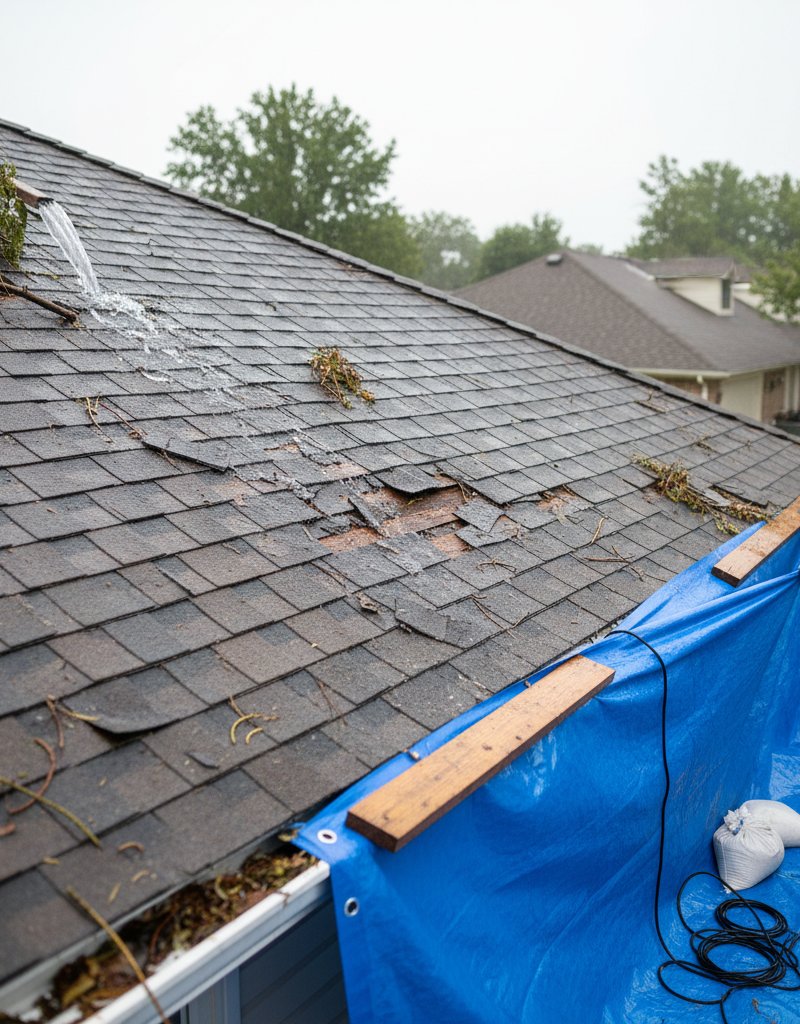
Emergency tarping is meant to last 30–60 days while you arrange permanent repair. It involves:
- Heavy-duty tarps (not consumer-grade)
- Anchored with battens to prevent wind uplift
- Sealed at edges to prevent water seepage
- Often a foam patch under the tarp for slope leak points
Tarps left too long degrade in UV and stop working. Get permanent repair scheduled within the tarp's effective window.
What an Emergency Roof Repair Really Costs
| Scenario | Range |
|---|---|
| Emergency tarping (basic) | $200–$600 |
| Emergency tarping (large area, multiple slopes) | $600–$1,500 |
| Single shingle/boot repair | $300–$800 |
| Section reshingle (small) | $800–$2,500 |
| Tree through roof (decking damage) | $2,500–$15,000+ |
| Full storm replacement | $14,000–$22,000 (typically insurance) |
| Water mitigation/dryout | $500–$5,000 |
| Interior repair (drywall, paint, flooring) | $1,500–$25,000 |
Most of this is insurance-recoverable if the cause is a covered event (hail, wind, storm, tree fall). Your out-of-pocket is usually just the deductible.
How to Spot Storm-Chaser Scams
Within 24 hours of any major Texas storm, dozens of crews flood neighborhoods. Watch for:
- Door-to-door pitches
- Out-of-state license plates
- "We were just in the area and noticed damage"
- Pressure to sign on the spot
- Offers to "cover your deductible" (illegal in Texas)
- Demands to take your insurance check
- No physical Texas address
- Reviews only from the last 30–60 days
These crews charge 2–5x normal rates, do substandard work, and disappear before warranty issues surface.
Stick with locally based roofers with verifiable Texas addresses, 5+ years of reviews, and clear contracts.
What NOT to Do
- Don't climb on a wet or damaged roof—falls are the #1 emergency injury cause
- Don't sign any contract without reading it, even at 2am
- Don't pay full price up front for emergency work—10–30% deposit is standard
- Don't sign over your insurance check
- Don't accept verbal-only estimates
- Don't let unlicensed crews work—insurance won't cover their damage
- Don't ignore active leaks for "another day"—drywall and insulation fail fast
After-Hours Pricing
True emergency response (nights, weekends, holidays) carries premium pricing—usually 1.5–2x daytime rates. This is legitimate. The same job at 3am costs more than at 10am.
If your situation isn't a true emergency, save money by scheduling for next business day with tarping in the meantime.
When the Emergency Becomes a Replacement
Many roof emergencies that look like "just need a repair" turn out to need full replacement once the roof is inspected. If your roof is over 18 years old and has visible storm damage, the carrier will often write a full replacement settlement rather than patch-and-pray.
See our complete roof replacement guide →
The Bottom Line
A Texas roof emergency response in the right order—safety, documentation, professional tarping, insurance call, scheduled permanent repair—keeps total damage minimal and ensures maximum insurance recovery. The wrong response—DIY climbing, unlicensed crews, signing the first contract you're handed—turns a $1,500 problem into a $15,000 one.
Need 24/7 emergency response in the Fort Worth area? Connect with a vetted local roofer →
Should you do this yourself?
Answer five quick questions before you start. Safety outranks savings every time.
Your experience with work like this
How high do you have to work?
Does the job involve any of these?
Will it need a permit?
Specialty tools
Free and instant. Educational guidance only — not a quote, inspection, or professional diagnosis.
Questions to ask before you sign
Ask every contractor the same questions and the cheapest bid stops looking cheapest. Check them off as you go — your progress is saved on this device.
Free, no signup. Bring this to every walkthrough so you compare bids on the same terms.
What should this project cost?
Enter your project details for a realistic cost range before you call anyone.
Spot repairs commonly run $400–$1,800; full replacement typically $9,000–$18,000 for an average home.
- Regional adjustment
- National average
- Labor share (typical)
- ~$2,948
- Quotes to collect
- 3 written estimates
Educational estimate based on national averages — not a binding quote. Always confirm with written local estimates.
Fixly Project Decision Box
- DIY difficulty
- Professional Recommended
- Estimated time
- Inspection 1–2 hours · repairs 1–3 days
- Cost level
- High
Main tools / materials
- Binoculars for a ground-level look
- Flashlight for attic checks
- Moisture meter
- Roofing cement (temporary patch only)
When to stop and call a pro
- Active leak near lights, fans, or any wiring
- Sagging, bulging, or water-filled ceiling
- Steep, wet, or two-story roof — do not climb it
- Storm or hail damage you plan to claim on insurance
Need professional help?
Free roof assessment first — no phone calls until you ask for them.
Get Local Roofing HelpGet help with your roof now
Stay off the roof. These free tools help you protect the house and reach the right professional fast.
- Emergency repair checklistThe first steps that limit damage before a pro arrives.Open
- Repair or replace your roof?Answer 10 questions about age, leaks, and damage to get a clear next step.Open
- Get local estimatesSend one request and compare written estimates from vetted pros.Open
Free, no signup required. Estimates are educational guidance, not a quote or an inspection.
Frequently asked questions
What counts as a roof emergency?+
Active water entering the home, structural damage like a sagging roof, tree or large debris through the roof, exposed decking after wind damage, or any condition that risks immediate further damage.
How much does emergency tarping cost?+
$200–$600 for professional installation in Texas. Most reputable roofers respond within 24 hours and insurance covers it as part of your claim.
Should I climb up to tarp it myself?+
No. Wet roofs are extremely dangerous, especially at night or in active weather. Professional emergency response is worth the cost.
Can I get an emergency repair at night?+
Yes. Many Texas roofers offer 24/7 emergency response, especially during storm seasons. Expect after-hours pricing of 1.5–2x daytime rates.
Discussion
Loading comments…