- Your roof is past 18 years old (asphalt) or showing widespread wear
- You've had 3+ leak repairs in 24 months
- The deck is sagging, soft, or showing water damage
- Shingle granules are filling gutters and patios
- An insurance claim has been approved for full replacement
Roofing · Aging roof
| Project category | Roofing |
|---|---|
| Problem type | Aging roof |
| Trade required | Roofing |
| Urgency | Planned project |
| Safety risk | Low safety risk |
| DIY suitability | Pro recommended |
| Cost category | High cost |
| Typical timeline | Plan 4–12 weeks ahead for scheduling and material lead time |
| Contractor type | Licensed roofing contractor |
Repair option
Maintenance repairs to buy a season or two while you budget.
Replacement option
Planned replacement, which is almost always cheaper than a leak-driven emergency.
Common causes
- Normal weathering past the shingle service life
- Poor attic ventilation cooking the shingles from below
- Repeated repairs on the same slopes
Relevant tools:repair or replace roofproject cost estimatorhome improvement material prices
Published May 22, 2026Last updated September 4, 2026Last reviewed May 22, 2026 by Marcus Hale, Master Tradesman, 22 yrs
Replacing your roof is the single largest exterior investment most Texas homeowners make. Done right, it adds value, lowers energy bills, and protects everything underneath for 20–50 years. Done wrong, you'll be calling a different roofer in 5 years and arguing with insurance after the next leak.
This guide covers everything from when to replace, what materials to choose, what the process looks like day-by-day, and how to avoid the most common (and expensive) mistakes.
When to Replace (Not Just Repair)
Replacement is the right call when:
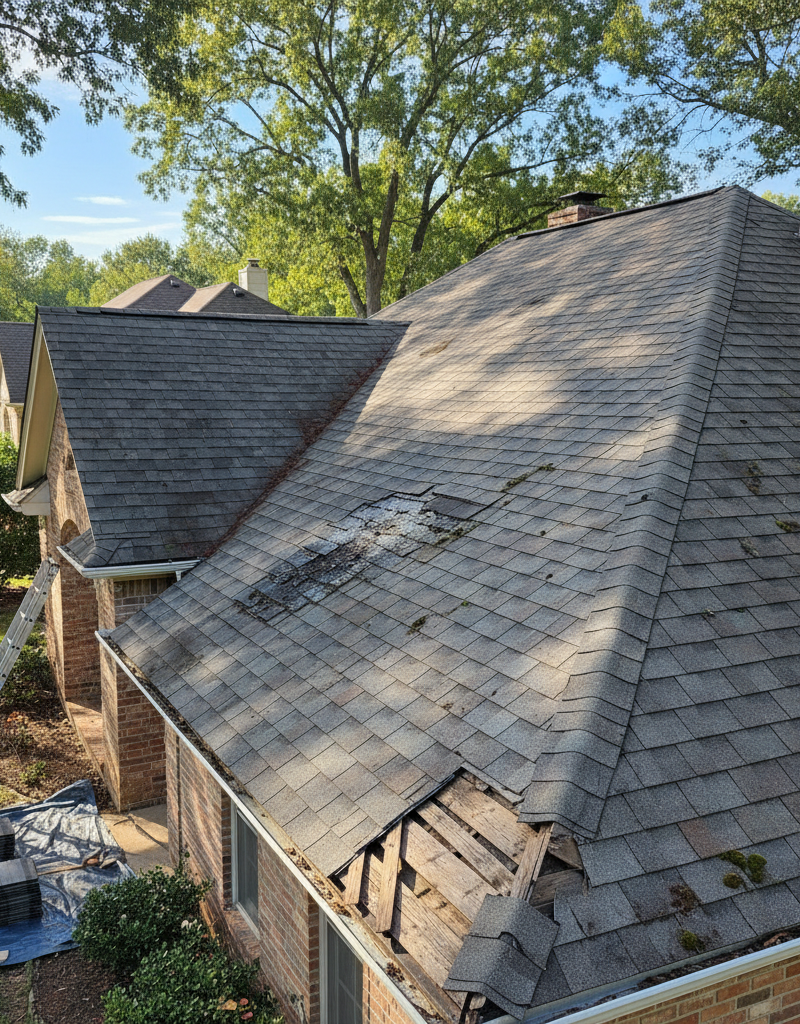
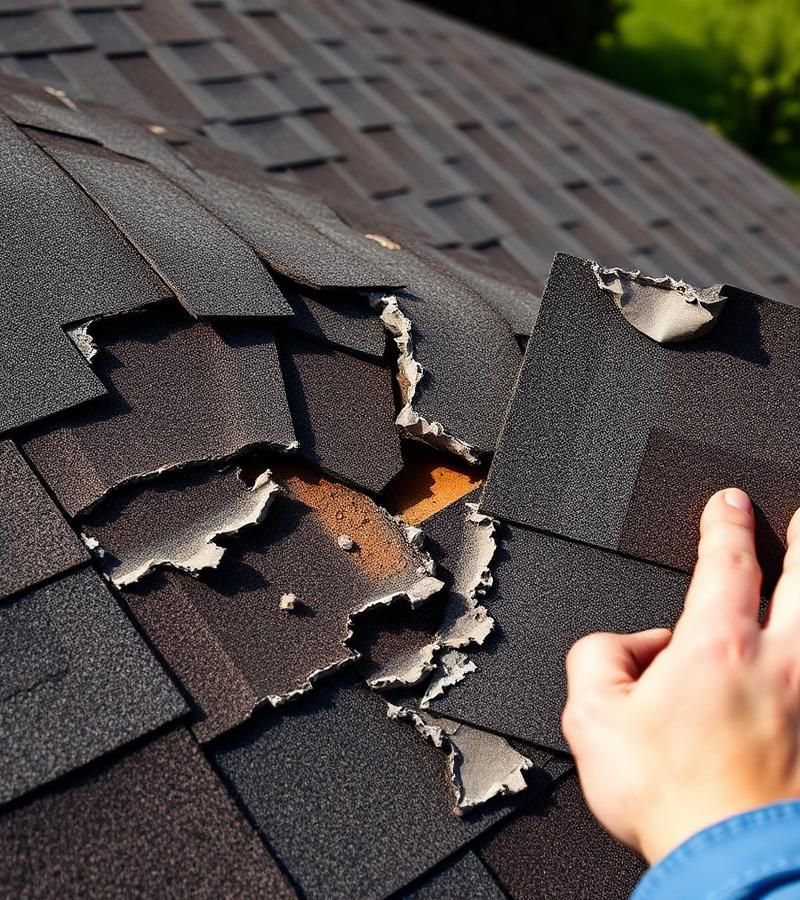
- Your roof is past 18 years old (asphalt) or showing widespread wear
- You've had 3+ leak repairs in 24 months
- The deck is sagging, soft, or showing water damage
- Shingle granules are filling gutters and patios
- An insurance claim has been approved for full replacement
- You're selling within 1–2 years and the roof is flagged
If you're unsure, see our 10 signs you need a new roof checklist.
Material Choice: The Single Biggest Decision
In Texas in 2026, your realistic options are:
| Material | Lifespan | Cost (2,000 sq ft) | Best For |
|---|---|---|---|
| Architectural asphalt | 18–25 yrs | $13,500–$19,000 | Budget-conscious; standard suburban homes |
| Class 4 impact-resistant asphalt | 22–28 yrs | $15,000–$22,000 | Hail zones; insurance discount eligible |
| Standing seam metal | 50–70 yrs | $22,000–$34,000 | Long-term homeowners; energy-conscious |
| Concrete tile | 50+ yrs | $24,000–$38,000 | Spanish/Mediterranean homes |
| Clay tile | 75+ yrs | $30,000–$45,000 | Premium architecture; "forever homes" |
The right material depends on three honest questions:
- How long are you staying? Under 7 years → architectural asphalt. 7–15 years → Class 4. 15+ years → metal or tile.
- What's your insurance situation? Most Texas carriers give 5–25% discounts for Class 4 impact-resistant shingles.
- What style fits your house? A 1990s ranch looks awkward in clay tile. A Spanish revival looks wrong in metal.
See our complete Texas materials comparison →
The Replacement Process, Day by Day
Pre-Day-1: Preparation
- Permit pulled from your city (Fort Worth, Arlington, Dallas, etc.)
- Materials delivered to your driveway (4–7 days before)
- Final color confirmation
- Crew schedule confirmed
You'll want to:
- Move cars out of the driveway
- Cover items in the attic with plastic sheeting
- Take photos of landscaping for reference
- Tell neighbors—dumpsters and trucks will impact their parking
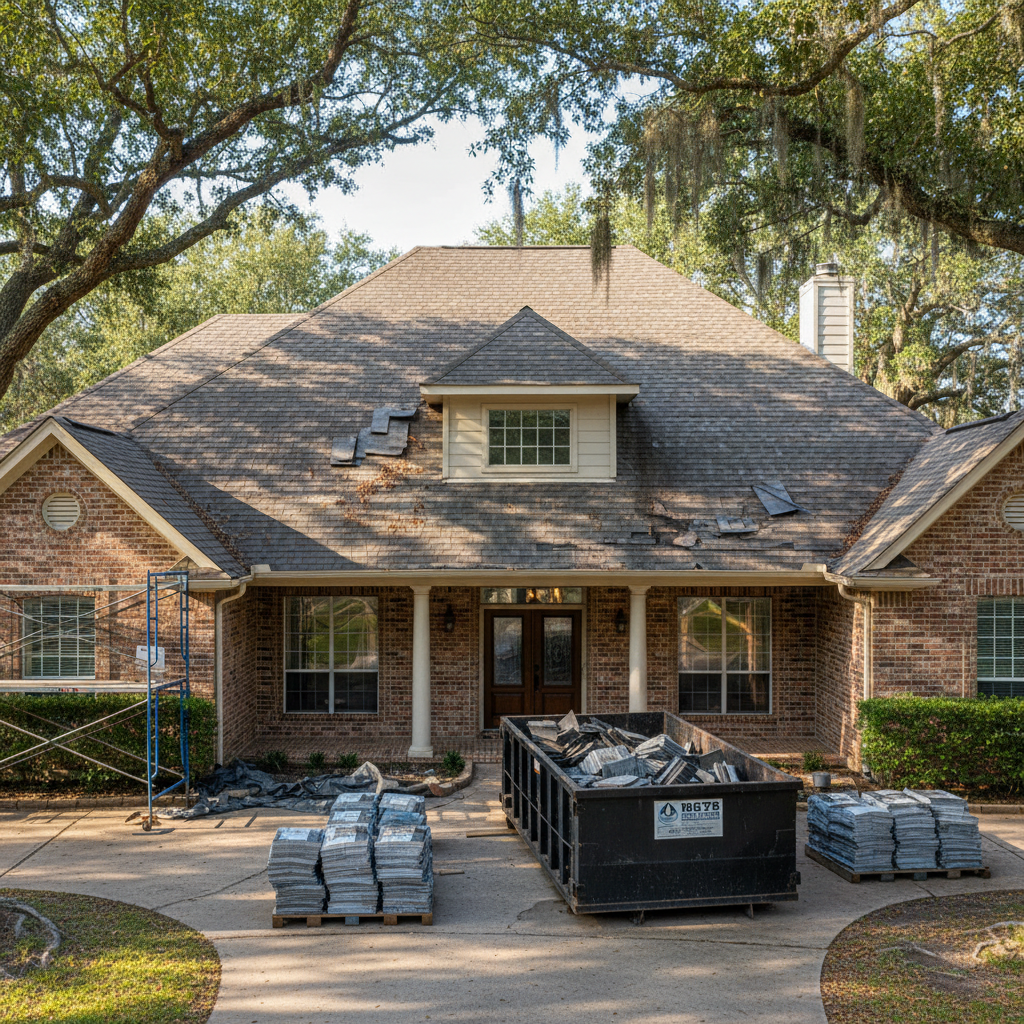
Day 1: Tear-Off and Decking
7am start. The crew tears off all existing shingles, underlayment, and flashing down to bare decking. This is the loudest, dustiest day.
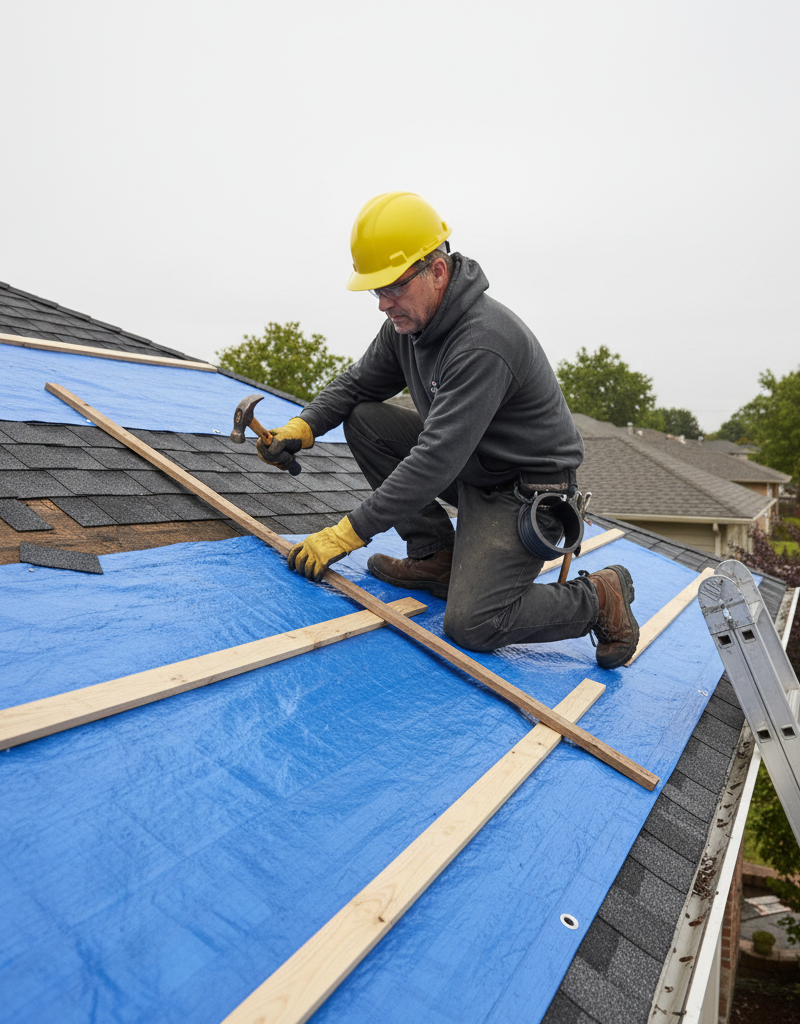
- Tarps go up around the perimeter to catch debris
- Plywood condition is inspected slope-by-slope
- Soft or rotted plywood marked for replacement
- Drip edge and ice/water shield installed in valleys and eaves
- Synthetic underlayment installed before end of day if weather allows
If you're getting a more complex material (tile, metal), Day 1 is just tear-off and the install starts Day 2.
Day 2: Installation
- Shingles installed bottom-up with proper nailing pattern
- All flashing replaced (drip edge, step flashing, valley metal)
- Pipe boots replaced (always upgrade to lead flashing)
- Ridge vent or new ventilation installed
- Final shingles trimmed and capped
- Cleanup: magnetic sweep for nails, debris hauled
By 5pm Day 2, your new roof is installed. Final inspection by the foreman documents completion.
Day 3+: Final Inspection and Permit Close
- City inspector visits (usually 1–7 days later)
- Final payment due upon inspector sign-off
- Manufacturer warranty registered (you should receive paperwork)
- Workmanship warranty documented
What Goes Wrong (and How to Prevent It)
Underlayment Skipped or Downgraded
Cheap roofers install minimum-grade felt instead of synthetic. Felt tears in wind and degrades faster. Insist on synthetic underlayment in the contract.
Wrong Nail Length or Pattern
Manufacturers specify 6 nails per shingle in high-wind areas (all of Texas qualifies). Cheaper installs use 4 nails. Result: shingles fly off in the next storm.
Old Flashing Reused
Old chimney and skylight flashing should always be replaced during full replacement. Reused flashing is a guaranteed future leak.
No Ridge Vent Despite Code Requirement
Texas requires adequate attic ventilation. Box vents alone are insufficient on most homes. Ridge + soffit is the standard.
Pipe Boots Reused
Standard rubber boots crack within 10 years. Replacement with lead-flashed boots adds $50/each but lasts the roof's full life.
Hidden Damage Surprises
"We found rotted decking" is sometimes a real discovery, sometimes a margin grab. Get the per-sheet replacement rate in writing before signing (typically $75–$120 per sheet) and ask for photos of any decking the roofer says needs replacement.
Choosing the Right Contractor
The single biggest predictor of roof quality. Look for:
- Locally based with 5+ years at the same address (avoid PO box only)
- Workers comp + general liability with certificate emailed to you
- Manufacturer certifications (GAF Master Elite, Owens Corning Platinum, CertainTeed Select)
- Texas BBB rating of A or A+
- Itemized written estimate including brand, color, underlayment type, warranty
- 30+ real reviews on Google with responses to negative reviews
- No high-pressure sales tactics or "today only" pricing
Red flags:
- Door-to-door post-storm pitches
- Out-of-state license plates on company trucks
- "We'll cover your deductible" (illegal in Texas)
- More than 30% deposit required
- Cash-only or pressure to pay before completion
Timing Your Replacement
| Season | Pros | Cons |
|---|---|---|
| Winter (Dec–Feb) | 5–10% discount, fast scheduling, cool work conditions | Cold-weather sealing limits on some shingles below 40°F |
| Spring (Mar–May) | Good weather for installation | Peak hail season demand, longer wait |
| Summer (Jun–Aug) | Most weather windows | Slowest scheduling, hottest attic conditions |
| Fall (Sep–Nov) | Excellent install weather | Hurricane season impact in Houston/Gulf Coast |
If you're not under emergency pressure, schedule in November or December. You'll save thousands and get faster crew availability.
Cost-Saving Strategies Without Cutting Corners
- Get 3 quotes—throw out the lowest, pick the median itemized bid
- Bundle adjacent work: gutters, attic insulation, satellite removal
- Schedule in slow season: 5–10% common discount
- Pay by ACH or check: avoid the 2–3% credit card surcharge
- Upgrade to Class 4 for insurance discount: often pays for itself in 3–5 years
- Avoid early-stage upsells: solar attic fans and premium ridge vents can be added later
What Comes Next: Warranty and Maintenance
After replacement:
- Register the manufacturer warranty within 30 days
- Save the workmanship warranty paperwork
- Schedule annual inspections starting year 3
- Clean gutters twice yearly
- Trim back overhanging tree branches
A well-installed roof requires very little maintenance for the first 10 years—but documenting it from day one matters for warranty claims later.
The Bottom Line
Roof replacement in Texas is a major investment, but it's well-understood and predictable when you choose the right material, the right contractor, and the right timing. Budget $14,000–$22,000 for a quality architectural asphalt installation, get three itemized quotes from locally-based companies, and don't let storm chasers pressure you into a quick decision.
Ready to get an itemized roof replacement quote? Get a free Fort Worth assessment →
Repair or replace your roof?
Plug in four numbers and see which choice holds up financially.
Free and instant. Educational guidance only — not a quote, inspection, or professional diagnosis.
Estimate your own project cost
National averages are a starting point. Enter your details for a range that fits your house.
Roof replacement cost
- Per square (installed)$604 – $866
Add $500–$2,500 if decking is rotten and needs replacement. Storm damage may be covered by insurance.
Educational estimate only — always confirm with written local bids.
What should this project cost?
Enter your project details for a realistic cost range before you call anyone.
Spot repairs commonly run $400–$1,800; full replacement typically $9,000–$18,000 for an average home.
- Regional adjustment
- National average
- Labor share (typical)
- ~$2,948
- Quotes to collect
- 3 written estimates
Educational estimate based on national averages — not a binding quote. Always confirm with written local estimates.
Fixly Project Decision Box
- DIY difficulty
- Professional Recommended
- Estimated time
- Inspection 1–2 hours · repairs 1–3 days
- Cost level
- High
Main tools / materials
- Binoculars for a ground-level look
- Flashlight for attic checks
- Moisture meter
- Roofing cement (temporary patch only)
When to stop and call a pro
- Active leak near lights, fans, or any wiring
- Sagging, bulging, or water-filled ceiling
- Steep, wet, or two-story roof — do not climb it
- Storm or hail damage you plan to claim on insurance
Need professional help?
Free roof assessment first — no phone calls until you ask for them.
Get Local Roofing HelpDecide what your roof needs
Two minutes of questions turns "something is wrong up there" into a clear next step.
- Repair or replace your roof?Answer 10 questions about age, leaks, and damage to get a clear next step.Open
- Compare contractor quotesScore up to four bids on price, warranty, licensing, and timeline.Open
- Get local estimatesSend one request and compare written estimates from vetted pros.Open
Free, no signup required. Estimates are educational guidance, not a quote or an inspection.
Frequently asked questions
How long does roof replacement take in Texas?+
Most single-family homes finish in 1–2 days. Larger or more complex roofs (tile, metal, steep pitch) take 3–5 days.
Can I stay in my home during replacement?+
Yes. The work happens entirely outside, though expect significant noise from 7am to 6pm during installation.
When is the best time to replace a roof in Texas?+
Late fall through winter (November–February) offers better pricing and faster scheduling. Summer is the busy season due to hail recovery.
How do I pick a roofing contractor?+
Look for locally-based companies with 5+ years history, written workers comp and liability proof, manufacturer certifications, and detailed itemized bids.
Discussion
Loading comments…