- Gather Materials & Tools — Before climbing onto the roof, ensure you have all necessary items conveniently accessible.
- Roofing Cement: A good quality, all-weather roofing cement in a caulk tube or small tub.
- Galvanized Roofing Nails: 1 to 1.5 inches long, galvanized to resist rust.
- Pry Bar or Flat Bar: For gently lifting adjacent shingles.
- Utility Knife or Hook Blade: For trimming shingles or removing old sealant.
Roofing · Missing shingles
| Project category | Roofing |
|---|---|
| Problem type | Missing shingles |
| Trade required | Roofing |
| Urgency | Urgent — within days |
| Safety risk | High safety risk |
| DIY suitability | Pro recommended |
| Cost category | Low cost |
| Typical timeline | Typically a same-visit repair |
| Contractor type | Licensed roofing contractor |
Repair option
Replace the missing shingles and reseal surrounding courses before the next rain.
Replacement option
Replacement when matching is impossible or loss is widespread across slopes.
Common causes
- High wind lifting the sealant strip
- Improper nailing at install
- Brittle shingles past their service life
Relevant tools:repair or replace roofproject cost estimator
Published June 5, 2026Last updated August 17, 2026
Tools & materials you'll need
Affiliate links- AmazonStep Ladder or Extension LadderEnsure it's sturdy and placed on level ground.
- AmazonNon-slip shoesEssential for roof safety.
- AmazonHammer
- AmazonPry Bar or Flat BarFor lifting shingles gently.
- AmazonUtility Knife or Hook BladeFor trimming shingles.
- AmazonCaulking GunFor applying roofing cement.
As an Amazon Associate FixlyGuide earns from qualifying purchases — at no extra cost to you. Prices and availability are accurate as of publication and subject to change.
Quick Answer
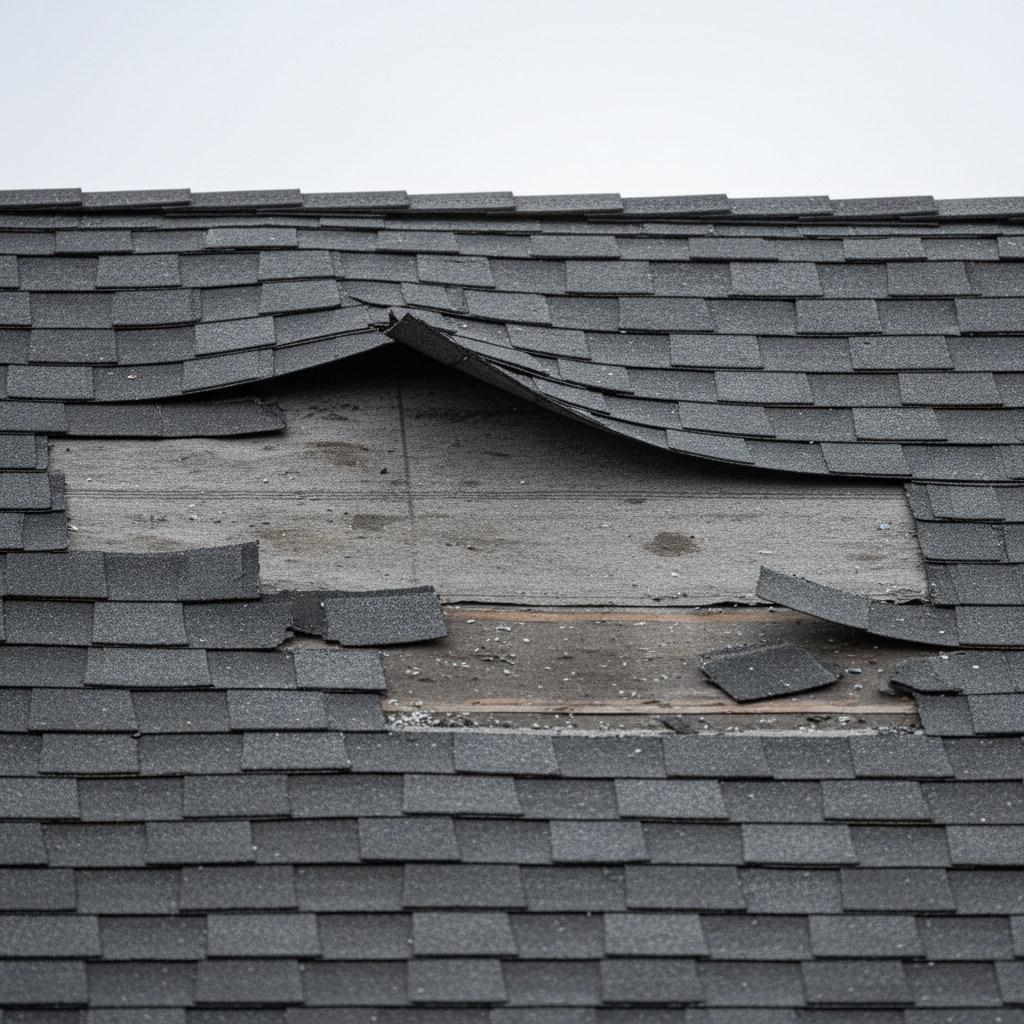
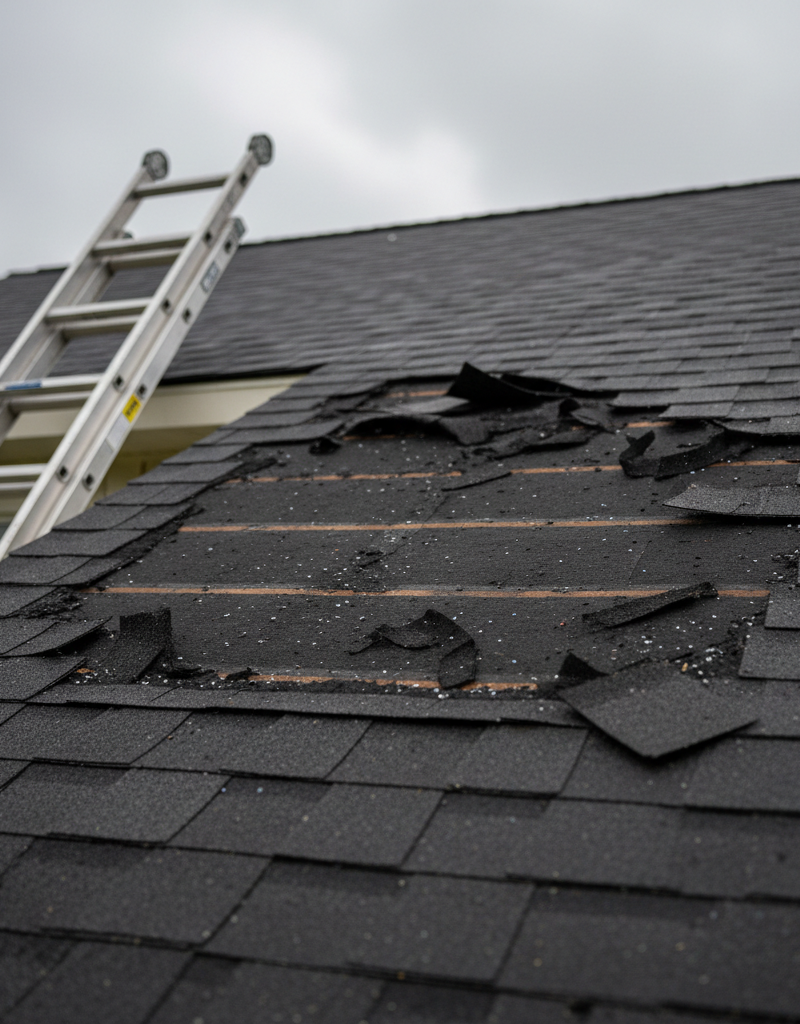
After a storm, missing roof shingles create vulnerabilities that can lead to extensive water damage if not addressed immediately. The quick answer is to safely assess the damage, cover exposed areas with a tarp as a temporary measure, and then either repair a few missing shingles yourself using roofing cement and new shingles or contact a qualified roofing professional for larger areas or complex damage. Prompt action is crucial to prevent minor repairs from escalating into major, expensive structural issues and mold growth.
The Problem
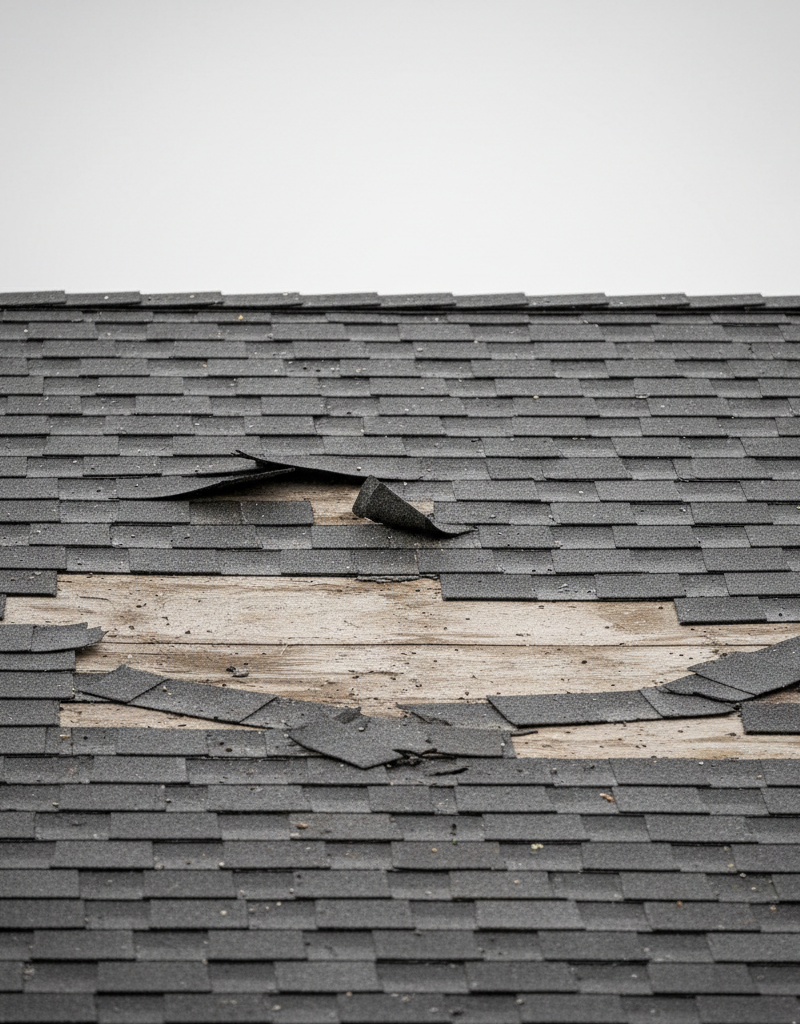
High winds, hail, and heavy rain can wreak havoc on a roof, often leaving behind a tell-tale sign of damage: missing shingles. While a few missing shingles might seem like a cosmetic issue, they represent a significant breach in your home's protective envelope. Every shingle plays a vital role in shedding water and safeguarding the underlying roof deck, underlayment, and eventually, your home's interior. When shingles are gone, these vulnerable layers are exposed to the elements. This exposure quickly leads to water infiltration, which can manifest as leaks in your attic, stained ceilings, damaged insulation, and even structural rot in the roof decking and rafters. Ignoring missing shingles, even for a short period, allows small problems to compound, leading to much more expensive and invasive repairs down the line, not to mention the potential for dangerous mold growth. Homeowners often underestimate the speed at which secondary damage can occur once water finds its way in. It's not just about aesthetics; it's about the integrity and long-term health of your entire home.
How It Works
To understand why missing shingles are so problematic, it helps to understand how your roof system works to keep your home dry. A typical asphalt shingle roof is a multi-layered defense system. The outermost layer consists of asphalt shingles, which are designed to interlock or overlap, creating a continuous, waterproof surface that sheds water off the roof and into the gutters. These shingles are nailed to the roof deck, which is typically plywood or OSB (oriented strand board). Below the shingles, there's usually an underlayment, often a felt paper or synthetic membrane, providing a secondary barrier against water infiltration and protecting the wood deck during shingle installation and if a shingle becomes damaged. In critical areas like eaves and valleys, ice and water shield may be present—a self-adhering, waterproof membrane that offers superior protection against ice dams and heavy rain. When shingles are ripped off by high winds, the underlayment, and sometimes even the bare roof deck, becomes exposed. While underlayment offers some temporary protection, it's not designed for prolonged exposure to UV rays, wind, and direct rainfall. It can tear, degrade, or allow water to seep through nail holes or seams, especially during sustained downpours. Once water penetrates the underlayment, it reaches the roof deck, which will eventually absorb moisture, swell, weaken, and promote rot. From the deck, water can drip into the attic, soak insulation, and ultimately damage ceilings and walls inside your living space. The wind lifting and tearing shingles also stresses adjacent shingles and can even loosen the nails of those that remain, creating hidden vulnerabilities that may lead to more blow-offs in future storms. The granules on asphalt shingles also protect the asphalt from UV degradation; without them, the asphalt becomes brittle and deteriorates rapidly.
Step-by-Step Fix
Safety First! — Before you even think about climbing onto your roof, prioritize safety. Use a sturdy extension ladder placed on firm, level ground. Have someone hold the ladder for you. Wear non-slip shoes with good grip. Avoid working on a wet, icy, or very windy roof. If you're uncomfortable with heights or the roof pitch is steep, call a professional. Never work alone, especially if you're unaccustomed to roof work. Remember that a damaged roof can have weakened spots, so step carefully and distribute your weight.
-
Assess the Damage Safely — Carefully inspect the roof from the ground with binoculars. Note the locations of missing shingles and any other visible damage like lifted edges, cracks, or creased areas. Determine if you're dealing with a few isolated shingles or a larger, widespread problem. This initial assessment helps you decide if it's a DIY job or if you need professional help. Pay attention to the eaves, ridges, and around vents or chimneys, which are often vulnerable points.
-
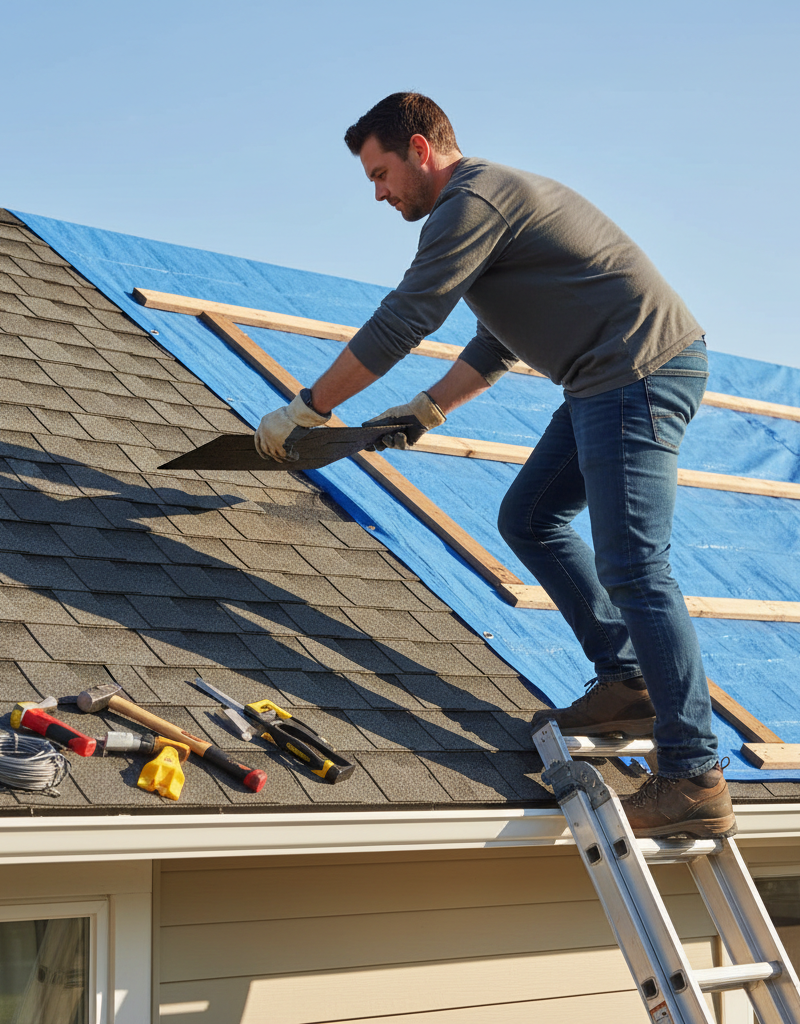
Temporary Tarping (If Needed) — If significant portions of your roof deck are exposed, or if rain is imminent, a temporary tarp is essential.
- Tools: Heavy-duty tarp (larger than the damaged area), 2x4 lumber or similar weighted objects, rope/bungee cords, staple gun, utility knife.
- Process: Lay the tarp over the damaged area, extending well beyond the perimeter of the exposed section. Secure the tarp by rolling the edges around 2x4s and placing them strategically over the tarp, or by stapling the edges to sound roof sections (if you can safely reach without further damage). Use rope to tie down the tarp through grommets to ensure it doesn't blow away. The goal is to create a temporary, watertight seal. This is a temporary solution only and should not be left for extended periods.
-
Gather Materials & Tools — Before climbing onto the roof, ensure you have all necessary items conveniently accessible.
- New Shingles: Ideally, you'll have extra shingles left over from the original installation. If not, try to match the existing shingles in color, style, and brand as closely as possible. Take a picture of your existing shingles to a local roofing supply store.
- Roofing Cement: A good quality, all-weather roofing cement in a caulk tube or small tub.
- Galvanized Roofing Nails: 1 to 1.5 inches long, galvanized to resist rust.
- Pry Bar or Flat Bar: For gently lifting adjacent shingles.
- Hammer: For nailing.
- Utility Knife or Hook Blade: For trimming shingles or removing old sealant.
- Caulking Gun: For applying roofing cement.
- Work Gloves: For protection.
-
Prepare the Area — Carefully remove any loose debris, old nails, or shingle fragments from the exposed area. Ensure the underlying roof deck or underlayment is clean and dry. If there's any visible damage to the underlayment, patch it with roofing cement or a piece of ice and water shield before installing new shingles. For smaller tears in the felt, a generous bead of roofing cement can often suffice as a temporary patch.
-
Lift Adjacent Shingles — The new shingle needs to slide underneath the shingle in the course above it. Gently pry up the bottom edge of the shingle directly above where the new shingle will go. You'll need to work carefully to avoid creasing or tearing the existing shingles. A pry bar or flat bar can help, but sometimes gentle leverage with your hand is all that's needed. The goal is to expose the nail heads holding the shingle above so you can remove them.
-
Remove Old Nails (If Present) — If there are still nails from the previous missing shingle sticking up, use the claw of your hammer or the pry bar to carefully remove them. Any protruding nails will prevent the new shingle from laying flat and can cause future leaks.
-
Apply Roofing Cement & Insert New Shingle — Apply a generous bead of roofing cement to the underside of the top edge of the replacement shingle, and another bead to the exposed roof deck where the shingle will sit. Carefully slide the new shingle into place, ensuring it aligns properly with the other shingles in its course, maintaining the correct reveal (the exposed portion of the shingle). Press firmly to adhere it.
-
Nail the New Shingle — Using galvanized roofing nails, secure the new shingle. Drive nails approximately 1 inch up from the bottom edge of the shingle, just below where the tab cuts are, and make sure the nails pass through the shingle and into the roof deck. Typically, you'll use 4 nails per shingle, spaced evenly across the shingle. Ensure the nail heads are flush with the shingle surface and not overdriven or underdriven. The nails should also be positioned so they are covered by the overlapping shingle above, preventing water penetration.
-
Seal and Finish — Apply a small dab of roofing cement over each nail head you just installed to provide an extra layer of waterproofing. Also, apply a thin bead of roofing cement under the bottom edges and sides of any surrounding shingles that you had to lift or that appear slightly loose to ensure they lay flat and are properly sealed. Press down firmly on the new shingles and any lifted ones to ensure good adhesion.
-
Clean Up and Inspect — Remove any discarded materials, old shingle pieces, or packaging. Do a final visual check from the ground to ensure the new shingles blend in and lie flat. Keep an eye on the repaired area during the next rainstorm to confirm there are no leaks.
Common Causes
- High Winds: This is the most prevalent cause. Strong gusts can get underneath shingle edges, lift them, and eventually tear them off, especially if the shingles are older, brittle, or improperly installed. Wind can also loosen the adhesive seal on shingles.
- Hail Damage: While hail often causes visible pockmarks and granule loss, larger hailstones can weaken the shingle matrix, making them more susceptible to being torn off by subsequent winds.
- Aging Shingles: As asphalt shingles age, they become brittle, lose their protective granules, and the adhesive strip (thermo-bond) that helps seal them together degrades. This makes them significantly more vulnerable to wind uplift.
- Improper Installation: Shingles installed with too few nails, nails placed incorrectly (too high or too low), or without proper sealing of the adhesive strips are much more likely to come off in a storm.
- Foot Traffic/Physical Damage: Walking on shingles, especially older ones, can loosen them or break their adhesive seal, leading to an easier target for wind.
- Debris Impact: Falling branches or other debris carried by wind during a storm can directly strike and dislodge shingles.
Common Mistakes
- Ignoring the Problem: The biggest mistake is assuming a few missing shingles are minor or can wait. Water intrusion happens quickly, leading to much costlier repairs like rotten sheathing, mold, or damaged interior finishes.
- Improper Shingle Matching: Using shingles that don't match in size, style, or color can compromise the roof's effectiveness and visual appeal. Different shingle types have different nailing patterns and wind resistance.
- Nailing Incorrectly: Over-nailing (driving nails too deep, breaking the shingle surface) or under-nailing (nails not flush, causing shingle to lift) are common. Nails placed too high or too low also won't secure the shingle properly and can create pathways for water.
- Not Sealing Properly: Failing to use roofing cement under the new shingle and over nail heads leaves vulnerabilities for water penetration. The adhesive strip on new shingles needs some warmth to seal properly to adjacent shingles, which might not happen in cold weather, necessitating manual sealing.
- Walking Carelessly on the Roof: Stepping on shingle edges, especially in cold weather when they are brittle, can cause further damage. Always walk flat-footed to distribute weight.
- Attempting Complex Repairs: If damage is extensive, involves flashing, or affects a steep pitch, attempting a DIY fix can be dangerous, lead to further damage, or void your roof warranty. Knowing when to call a pro is crucial.
Cost & Time Breakdown
| Task | DIY Cost | Pro Cost | Time |
|---|---|---|---|
| Temporary Tarp Installation | $30–$100 (tarp) | $150–$400 | 1–2 hours |
| Few Shingle Repair (materials) | $10–$50 (per bundle) | Included in labor | 30 mins–1 hour |
| Hiring a Roofing Professional | N/A | $300–$800+ (patch) | 2–4 hours (for small repairs) |
| Tools (one-time purchase) | $50–$150 | N/A | N/A |
| Water Damage Remediation (if neglected) | Thousands | Thousands | Days–Weeks |
Tips & Prevention
- Regular Inspections: Twice a year (spring and fall), inspect your roof from the ground with binoculars. Look for curled, cracked, broken, or missing shingles, and excessive granule loss in gutters.
- Clear Gutters: Keep gutters and downspouts clear of debris. Clogged gutters can cause water to back up under shingles, especially in colder climates during ice dam formation.
- Trim Trees: Trim overhanging tree branches that could fall on the roof during a storm or rub against shingles, causing abrasion.
- Proper Ventilation: Ensure your attic is properly ventilated. Good ventilation helps regulate attic temperature, which prevents early aging of shingles from excessive heat buildup.
- Professional Assessment: Consider a professional roof inspection every 5-10 years, especially for roofs approaching 15-20 years old, to identify subtle damage before it becomes costly.
- Know Your Warranty: Understand your roof's warranty. Some warranties require specific installation methods or prohibit certain repair types by homeowners.
When to Call a Professional
You should always call a licensed roofing professional if the damage is extensive, involves a large area of missing shingles, or if you suspect structural damage to the roof deck. If missing shingles are located on a steep or very high roof pitch, or if you are uncomfortable working at heights, a professional is the safest option. Any damage around complex roof features like chimneys, skylights, or valleys—areas prone to leaks if not repaired perfectly—warrants expert attention. If you observe water staining or leaks inside your home, particularly in the attic, it's a strong indicator of significant water intrusion that requires a thorough professional inspection to find the source and repair it correctly. Professionals can also accurately match shingle styles and colors, ensure proper sealing and nailing techniques, and provide documentation for insurance claims, saving you potential headaches and ensuring the repair meets industry standards. Don't risk further damage or personal injury attempting a repair beyond your skill level.
Related Articles
Keep troubleshooting with these hand-picked guides from FixlyGuide:
- The One Mistake Homeowners Make When Shingles Blow Off (And How to Fix It Right) — After a storm, finding missing roof shingles can be alarming. Learn the critical mistake homeowners often make and how to properly assess a…
- The #1 Mistake Homeowners Make After Finding Missing Shingles (And How to Fix It Right) — Discover the crucial steps to take after a storm rips shingles from your roof, ensuring a proper, lasting repair and preventing costly futu…
- Wind Tore Off Your Shingles? The 7 Critical Steps Most Homeowners Miss — Discover the essential steps to take when roof shingles go missing after a storm, from immediate safety checks to temporary repairs and ins…
- Wind Lifted Your Shingles? The 7 Immediate Steps to Prevent Roof Leaks — Discover the crucial steps to take immediately after a storm rips shingles from your roof to prevent costly water damage and temporary repa…
- The One Spot You MUST Check After a Storm — And How to Fix Missing Shingles FAST — High winds can easily rip shingles from your roof, exposing your home to water damage. Learn how to safely inspect and temporarily repair m…
- The #1 Sprinkler Winterization Mistake That Costs Homeowners Thousands — Discover the crucial mistake many homeowners make winterizing sprinklers and how to avoid costly freeze damage with proper blowout techniqu…
Should you do this yourself?
Answer five quick questions before you start. Safety outranks savings every time.
Your experience with work like this
How high do you have to work?
Does the job involve any of these?
Will it need a permit?
Specialty tools
Free and instant. Educational guidance only — not a quote, inspection, or professional diagnosis.
Questions to ask before you sign
Ask every contractor the same questions and the cheapest bid stops looking cheapest. Check them off as you go — your progress is saved on this device.
Free, no signup. Bring this to every walkthrough so you compare bids on the same terms.
What should this project cost?
Enter your project details for a realistic cost range before you call anyone.
Spot repairs commonly run $400–$1,800; full replacement typically $9,000–$18,000 for an average home.
- Regional adjustment
- National average
- Labor share (typical)
- ~$2,948
- Quotes to collect
- 3 written estimates
Educational estimate based on national averages — not a binding quote. Always confirm with written local estimates.
Fixly Project Decision Box
- DIY difficulty
- Professional Recommended
- Estimated time
- Inspection 1–2 hours · repairs 1–3 days
- Cost level
- High
Main tools / materials
- Binoculars for a ground-level look
- Flashlight for attic checks
- Moisture meter
- Roofing cement (temporary patch only)
When to stop and call a pro
- Active leak near lights, fans, or any wiring
- Sagging, bulging, or water-filled ceiling
- Steep, wet, or two-story roof — do not climb it
- Storm or hail damage you plan to claim on insurance
Need professional help?
Free roof assessment first — no phone calls until you ask for them.
Get Local Roofing HelpGet help with your roof now
Stay off the roof. These free tools help you protect the house and reach the right professional fast.
- Emergency repair checklistThe first steps that limit damage before a pro arrives.Open
- Repair or replace your roof?Answer 10 questions about age, leaks, and damage to get a clear next step.Open
- Get local estimatesSend one request and compare written estimates from vetted pros.Open
Free, no signup required. Estimates are educational guidance, not a quote or an inspection.
Get the print-ready PDF of this guide
A clean, ad-free, printable version you can keep on your phone or pin to the workshop wall. Free with a FixlyGuide account.
- Print-optimized layout
- Tools, materials & every step included
- Saved to your account
Frequently asked questions
How soon do I need to fix missing shingles after a storm?+
You should aim to fix missing shingles as soon as it is safe to do so, ideally within 24-48 hours. Exposed areas can quickly lead to water infiltration, causing extensive and costly secondary damage like rot, mold, and ceiling leaks.
Can I put a tarp on my roof myself?+
Yes, you can temporarily tarp your roof yourself if it's safe to do so and the pitch isn't too steep. Use a heavy-duty tarp, extending it well beyond the damaged area, and secure it with 2x4s, ropes, or staples. This is a temporary measure to prevent further water entry until permanent repairs can be made.
Will my homeowner's insurance cover missing shingles from a storm?+
Most homeowner's insurance policies cover roof damage caused by sudden and accidental events like severe storms, including missing shingles due to wind or hail. It's crucial to document the damage with photos and contact your insurance provider promptly to file a claim.
What tools do I need to replace a few missing shingles?+
For a few missing shingles, you'll need new matching shingles, roofing cement, a caulking gun, galvanized roofing nails, a hammer, a pry bar or flat bar, a utility knife, and safety gear like non-slip shoes and gloves. A sturdy ladder is also essential.
When should I call a professional roofer instead of doing it myself?+
You should call a professional roofer if the damage is extensive, involves a large area of missing shingles, affects a steep roof pitch, or is near complex features like chimneys or skylights. If you're uncomfortable with heights or suspect structural damage, a professional is a safer and more effective choice.
Discussion
Loading comments…