- After any major hail or wind storm (within 30 days)
- Annually if your roof is over 10 years old
- Before listing your home for sale
- Before buying a home (with a separate buyer's inspection)
- If you notice any of the 10 signs you need a new roof
Roofing · Aging roof
| Project category | Roofing |
|---|---|
| Problem type | Aging roof |
| Trade required | Roofing |
| Urgency | Planned project |
| Safety risk | Low safety risk |
| DIY suitability | Pro recommended |
| Cost category | High cost |
| Typical timeline | Plan 4–12 weeks ahead for scheduling and material lead time |
| Contractor type | Licensed roofing contractor |
Repair option
Maintenance repairs to buy a season or two while you budget.
Replacement option
Planned replacement, which is almost always cheaper than a leak-driven emergency.
Common causes
- Normal weathering past the shingle service life
- Poor attic ventilation cooking the shingles from below
- Repeated repairs on the same slopes
Relevant tools:repair or replace roofproject cost estimatorhome improvement material prices
Published May 22, 2026Last updated September 4, 2026Last reviewed May 22, 2026 by Marcus Hale, Master Tradesman, 22 yrs
Most Texas roofers offer free inspections, but "free" can mean anything from a 5-minute glance-from-the-driveway to a thorough 60-minute walkthrough with photos and a detailed written report. Knowing what a real inspection looks like protects you from upsells, scams, and missed damage.
This guide covers what to expect, what to ask for, when to schedule one, and how to use the resulting report.
When You Should Get a Free Inspection
- After any major hail or wind storm (within 30 days)
- Annually if your roof is over 10 years old
- Before listing your home for sale
- Before buying a home (with a separate buyer's inspection)
- If you notice any of the 10 signs you need a new roof
- Before filing an insurance claim
- After a tree falls on or near the roof
- When your insurance company asks for a roof condition report (renewals after year 15)
What a Professional Inspection Includes
A real free inspection covers four areas:
1. Ground-Level Walk-Around
The inspector starts at the curb and walks the entire perimeter, photographing:
- All four sides of the roof
- Gutters and downspouts
- Visible flashing at chimneys and walls
- Any AC unit, mailbox, or fence damage indicating hail
- Yard debris from shingle erosion
- Landscaping that may have impacted the roof
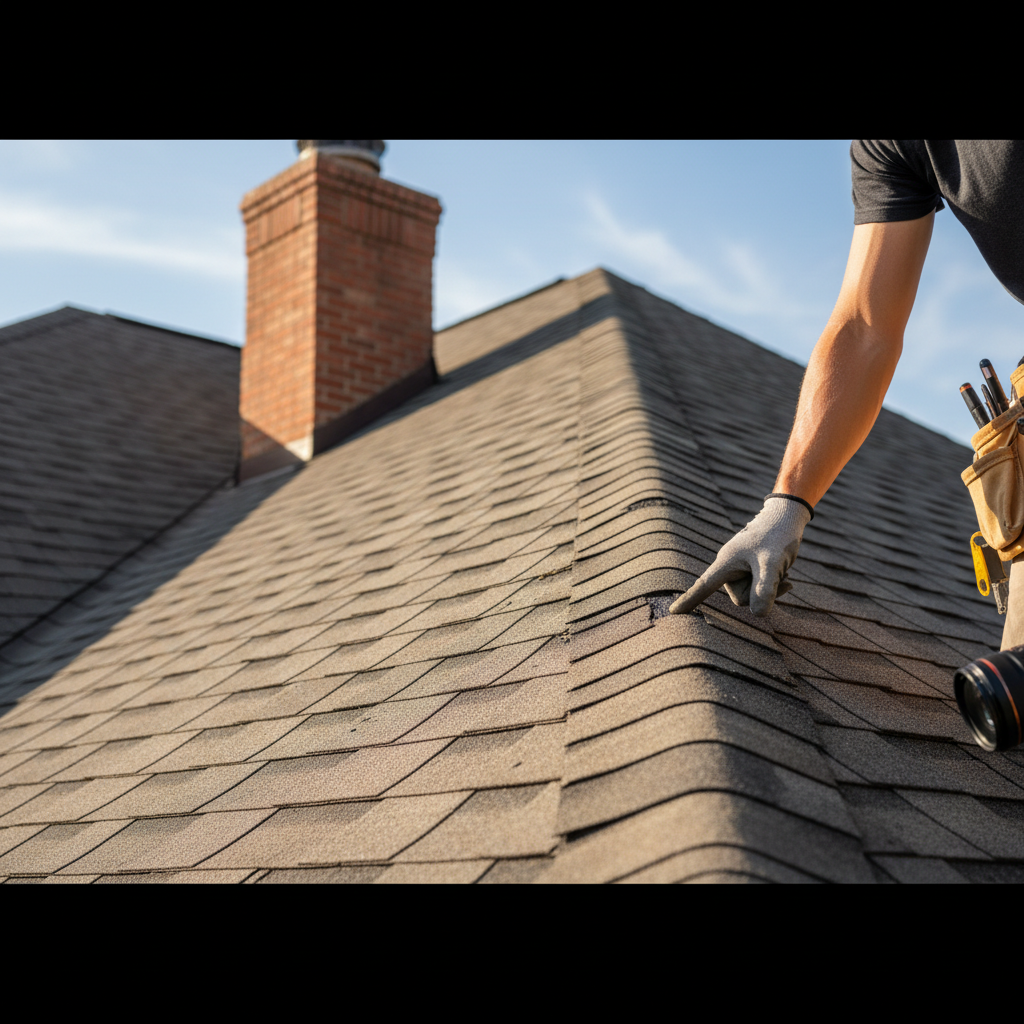
2. Roof Physical Inspection
The inspector climbs the roof (weather permitting) and walks every accessible slope:
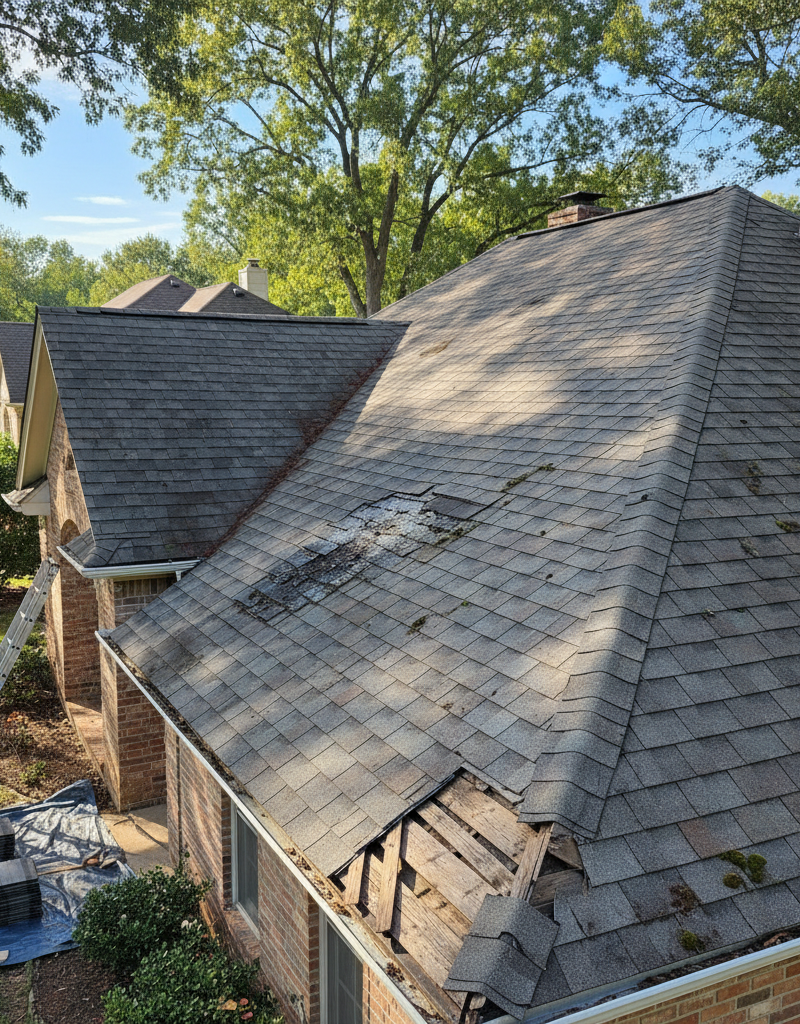
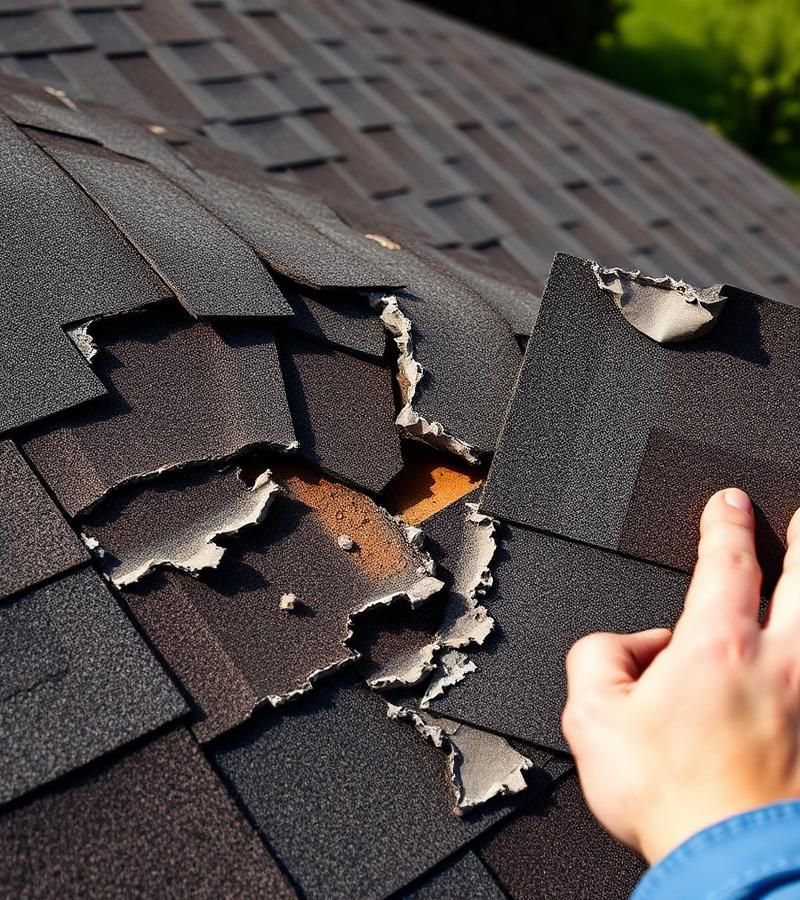
- Shingle condition (curling, cupping, granule loss, missing)
- Ridge cap integrity
- Flashing at chimneys, skylights, walls
- Pipe boot condition
- Valley metal condition
- Penetrations (vents, satellite mounts, solar attachments)
- Visible decking deflection or soft spots
- Drip edge presence and condition
- Roof age indicators (manufacturer date stamps on flashing)
For very steep or fragile roofs, drone inspection is acceptable and often more thorough.
3. Attic Inspection
This is the step many cheap inspections skip. A real inspector:
- Enters the attic with a flashlight
- Looks for daylight through the deck
- Checks for water stains on rafters and decking
- Photographs any active leaks or moisture
- Inspects insulation for compression or staining
- Checks ventilation intake and exhaust
- Notes any mold, mildew, or pest activity
The attic tells the truth about roof condition. Skipping it means missing 30–50% of meaningful findings.
4. Written Report
Within 24–72 hours, you should receive:
- Photos of every roof slope
- Photos of any damage found
- Notes on each finding with severity rating
- Estimated remaining lifespan
- Recommended repairs (if any) with estimated costs
- A clear verdict: roof is in good condition / needs minor repair / needs major repair / needs replacement
If the inspector just sends a sales pitch with no photos, that's not an inspection report—that's a sales document.
What to Watch Out For
Some "free inspections" are designed to manufacture business. Red flags:
- The inspector finds catastrophic damage you can't verify in the photos
- High-pressure sales pitch immediately after
- "This needs to be done today" urgency
- Quotes are missing brand names, warranty terms, and itemized line items
- The inspector chalks damage that isn't visible in photos (some create fake damage to support claims)
- No physical Texas address for the company
- Offers to "include" your insurance deductible (illegal in Texas)
A reputable inspector will tell you when your roof is fine and doesn't need work. That's a sign of integrity.
What to Ask Before Scheduling
Before booking a free inspection, ask:
- How long will it take? (Real inspections: 30–60 minutes)
- Will you go on the roof and into the attic? (Both required)
- Will I get a written report with photos? (Always yes from reputable)
- Are you locally based with a physical Texas office? (Verify)
- Will the inspector also be the salesperson? (Often, but no pressure should follow)
- What's your typical timeline if I do decide to move forward?
How to Use the Inspection Report
If the Roof Is in Good Condition
- Save the report (you'll want it for insurance renewal)
- Note any minor recommended maintenance
- Schedule next inspection in 12 months
If Minor Repairs Are Recommended
- Get a second opinion for repairs over $1,500
- Verify each repair line item
- Schedule within 1–3 months to prevent worsening
If Major Damage Is Found
- Photograph the report findings yourself
- Get 2 more inspections to verify
- File insurance claim if damage is storm-related
- Use the inspection as documentation for the adjuster
If Replacement Is Recommended
- Verify with at least 2 more independent inspections
- File insurance claim if appropriate
- Get 3 itemized quotes before deciding on a contractor
- Don't sign with the inspecting company without comparison shopping
Inspection Before vs After Insurance Claim
A common question: do I get a roofer inspection before or after the insurance adjuster?
Best answer: get the roofer inspection first. Then have the roofer present during the adjuster's inspection to point out damage the adjuster might miss. This single step is worth thousands in many claims.
The adjuster's job is to settle the claim quickly at minimum cost. Your roofer's job is to advocate for you. The combination produces fair settlements.
What a Real Inspection Costs (When It Isn't Free)
Most Texas roofers offer free inspections for residential homes hoping to earn future work. Paid inspections exist in specific scenarios:
- Pre-purchase inspections (often $200–$500) with detailed engineering-style reports
- Insurance dispute inspections for use in appraisal or litigation ($300–$1,500)
- Commercial roof inspections ($500–$3,000 depending on size)
For ordinary residential roof checks, free is standard.
Drone Inspections: Are They Real?
Drone inspections are increasingly common and offer real value:
- Faster than physical inspection
- Safer on steep or fragile roofs
- High-resolution photos for documentation
- Easier to deliver as digital reports
Limitations:
- Can't physically test shingle softness (a real hail bruise has a soft mat under intact granules)
- May miss damage hidden by shadow or angle
- Can't inspect under shingle edges
The best inspections combine physical walking and drone documentation.
Special Cases
Older Tile Roofs
Walking on tile damages it. Ask if the inspector uses walkboards or drone-only.
Steep Roofs (8/12+)
May require harnesses and 2-person crews. Real inspections still happen; cheaper ones get skipped.
Newer Homes (Under 5 Years Old)
Often still under builder warranty. Inspection should focus on installation defects, not age-related wear.
Storm-Damaged Roofs
Inspector should mark each hail hit with chalk, photograph with chalk visible, and count hits per 10x10 test square (insurance industry standard).
The Bottom Line
A free Texas roof inspection done right is one of the highest-value 60 minutes you can spend on home maintenance. It catches problems early, supports insurance claims, and gives you an honest verdict on repair vs replacement. Get one annually after year 10, after every major storm, and always before filing an insurance claim.
Want a no-pressure honest roof inspection? Schedule a free Fort Worth assessment →
Quick DIY Pre-Inspection Checklist
Before your professional inspection arrives, a 10-minute ground walk helps you ask sharper questions. Look for missing or curled shingles visible from the curb, dark streaks suggesting algae or granule loss, sagging rooflines along the ridge, granule piles in gutters or near downspout outlets, rust on exposed flashing, and dented mailboxes, AC fins, or gutters indicating recent hail. Inside the attic, scan for daylight through the deck, water stains on rafters, sagging decking between trusses, and any musty odor. Bring your notes to the inspection. Comparing what you spotted yourself vs what the professional finds is the fastest way to tell whether you have an honest inspector or a salesperson in disguise—and it gives you confidence to push back on findings that don't match what you saw.
Should you do this yourself?
Answer five quick questions before you start. Safety outranks savings every time.
Your experience with work like this
How high do you have to work?
Does the job involve any of these?
Will it need a permit?
Specialty tools
Free and instant. Educational guidance only — not a quote, inspection, or professional diagnosis.
Estimate your own project cost
National averages are a starting point. Enter your details for a range that fits your house.
Roof replacement cost
- Per square (installed)$604 – $866
Add $500–$2,500 if decking is rotten and needs replacement. Storm damage may be covered by insurance.
Educational estimate only — always confirm with written local bids.
What should this project cost?
Enter your project details for a realistic cost range before you call anyone.
Spot repairs commonly run $400–$1,800; full replacement typically $9,000–$18,000 for an average home.
- Regional adjustment
- National average
- Labor share (typical)
- ~$2,948
- Quotes to collect
- 3 written estimates
Educational estimate based on national averages — not a binding quote. Always confirm with written local estimates.
Decide what your roof needs
Two minutes of questions turns "something is wrong up there" into a clear next step.
- Repair or replace your roof?Answer 10 questions about age, leaks, and damage to get a clear next step.Open
- Compare contractor quotesScore up to four bids on price, warranty, licensing, and timeline.Open
- Get local estimatesSend one request and compare written estimates from vetted pros.Open
Free, no signup required. Estimates are educational guidance, not a quote or an inspection.
Frequently asked questions
Is a free roof inspection really free?+
Yes, from reputable Texas roofers. They use inspections to build trust and earn business when work is actually needed. Avoid anyone charging for initial inspection.
How often should I get my roof inspected?+
Annually if your roof is over 10 years old, after every major hail or wind event, and before selling your home.
What's included in a roof inspection report?+
A written report with photos of each slope, condition notes for shingles/flashing/vents, attic findings, estimated remaining lifespan, and any recommended repairs.
Should I get a roof inspection before filing insurance?+
Yes. An independent roofer's report often reveals damage the adjuster will miss and helps you advocate during the inspection.
Discussion
Loading comments…