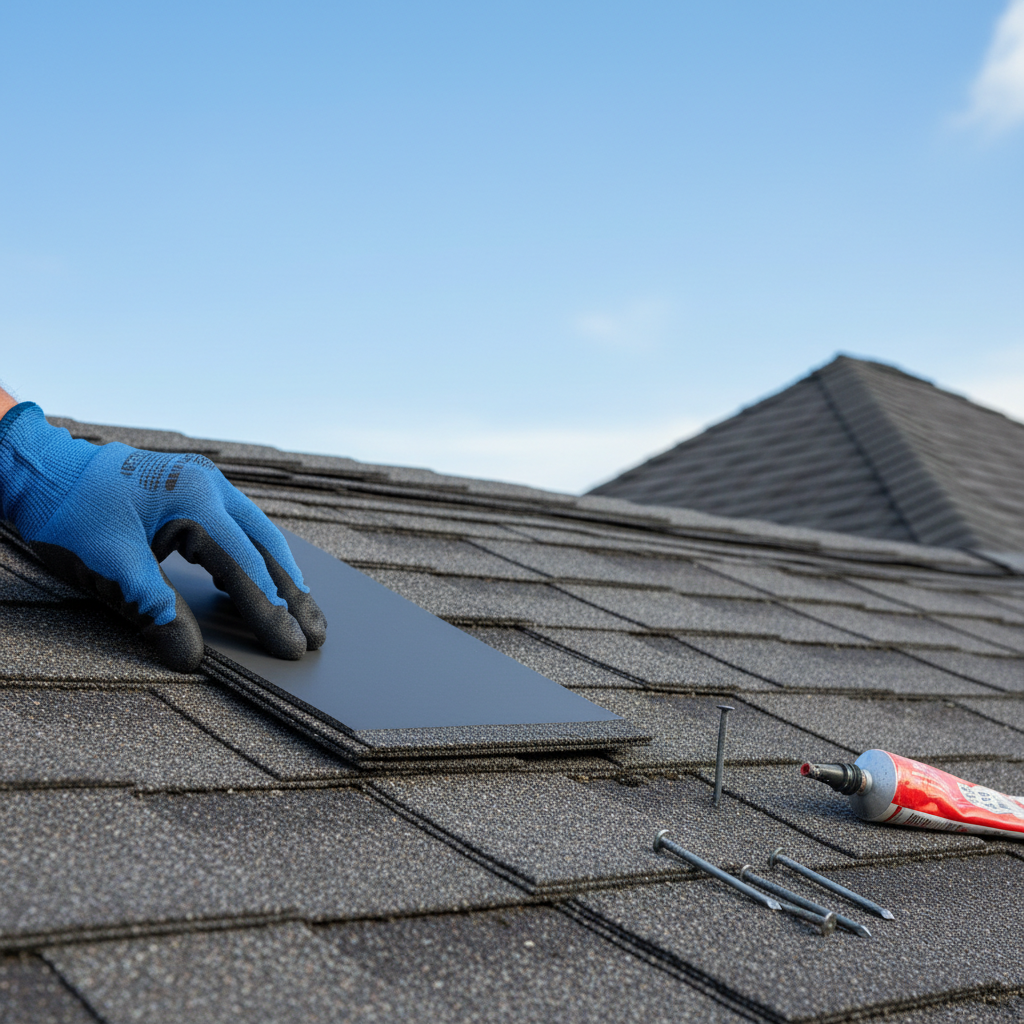
- High Winds: The primary culprit. Strong winds, especially those exceeding 50-60 mph, can create uplift forces that peel shingles off the roof, particularly if they are older, less flexible, or not properly sealed.
- Old, Brittle Shingles: As asphalt shingles age (typically 15-20 years for a 3-tab shingle), they become brittle, lose their flexibility, and the tar sealant strip can degrade. This makes them much more susceptible to wind damage.
- Improper Installation: Shingles nailed too high, too few nails used, or incorrect alignment can significantly reduce their wind resistance. This is why manufacturer warranties are often voided by improper installation.
- Hail Damage: While not directly blowing shingles off, large hail can weaken the shingle matrix, crack the fiberglass mat, or dislodge granules, making them more vulnerable to subsequent wind damage.
- Tree Branches/Debris: Falling branches or wind-blown debris can physically strike and dislodge shingles.
Roofing · Missing shingles
| Project category | Roofing |
|---|---|
| Problem type | Missing shingles |
| Trade required | Roofing |
| Urgency | Urgent — within days |
| Safety risk | High safety risk |
| DIY suitability | Pro recommended |
| Cost category | Low cost |
| Typical timeline | Typically a same-visit repair |
| Contractor type | Licensed roofing contractor |
Repair option
Replace the missing shingles and reseal surrounding courses before the next rain.
Replacement option
Replacement when matching is impossible or loss is widespread across slopes.
Common causes
- High wind lifting the sealant strip
- Improper nailing at install
- Brittle shingles past their service life
Relevant tools:repair or replace roofproject cost estimator
Published April 27, 2026Last updated August 18, 2026
Tools & materials you'll need
Affiliate linksAs an Amazon Associate FixlyGuide earns from qualifying purchases — at no extra cost to you. Prices and availability are accurate as of publication and subject to change.
Quick Answer
After a storm, promptly assess roof damage from the ground. If you spot missing shingles, safely secure a tarp over the exposed area to prevent water intrusion. Document the damage extensively with photos for insurance purposes, then gather the necessary tools and materials to either make a temporary repair or, if comfortable and safe, replace the missing shingles yourself. Always prioritize safety and call a professional for extensive or high-risk damage.
The Problem
Discovering missing shingles after a powerful storm can be a homeowner's nightmare. Beyond the immediate aesthetic damage, the underlying issue is much more serious: compromised roof integrity. When shingles are blown off, the protective layers beneath, such as the underlayment and even the roof decking, are exposed to the elements. This exposure invites water intrusion, which can lead to a cascade of problems, including rotten sheathing, damaged attic insulation, mold growth, and eventually, interior ceiling and wall damage. Ignoring even a few missing shingles can turn a relatively simple repair into a major, expensive-to-fix headache, depreciating your home's value and compromising its structural soundness. The common mistake many homeowners make is either neglecting the issue, thinking it's minor, or attempting a quick, improper fix that doesn't fully seal against water.
How It Works
A typical asphalt shingle roof is a multi-layered defense system designed to shed water. At the very bottom is the roof decking (usually plywood or OSB), forming the structural base. Over this, an underlayment (felt paper or synthetic material) is laid, acting as a secondary waterproof barrier. Starter shingles are installed along the eaves, followed by rows of main field shingles, overlapping each other to create a continuous shedding surface. Each shingle has a granule surface that protects against UV rays and provides aesthetic appeal, and a tar strip on its underside that, once heated by the sun, seals to the shingle below it, creating a wind-resistant bond. Nails secure the shingles to the decking through the upper part of the shingle, which is then covered by the overlapping shingle above. When high winds hit, they can get underneath the shingle edges, especially if the tar seal has weakened over time due to age or temperature fluctuations. If the uplift force exceeds the shingle's adhesive strength and nail hold, it can be ripped free, exposing the underlayment or even the bare decking. A proper repair involves not just replacing the shingle, but ensuring the new shingle seals correctly and integrates seamlessly into this protective layering system.
Step-by-Step Fix
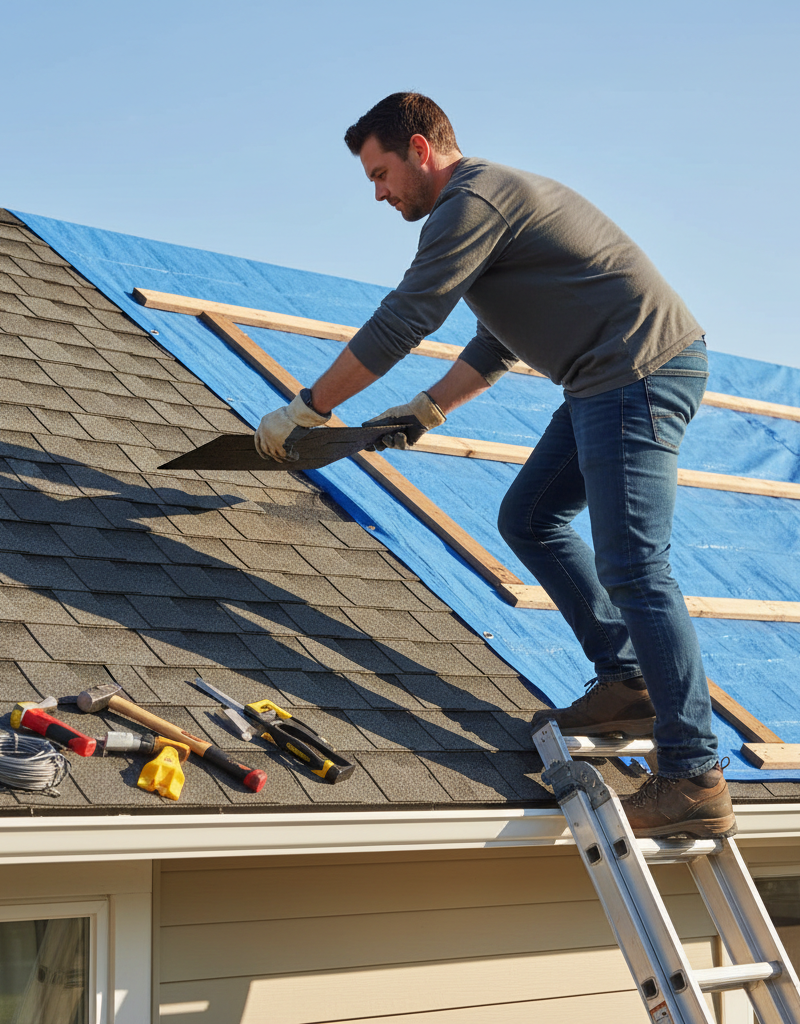
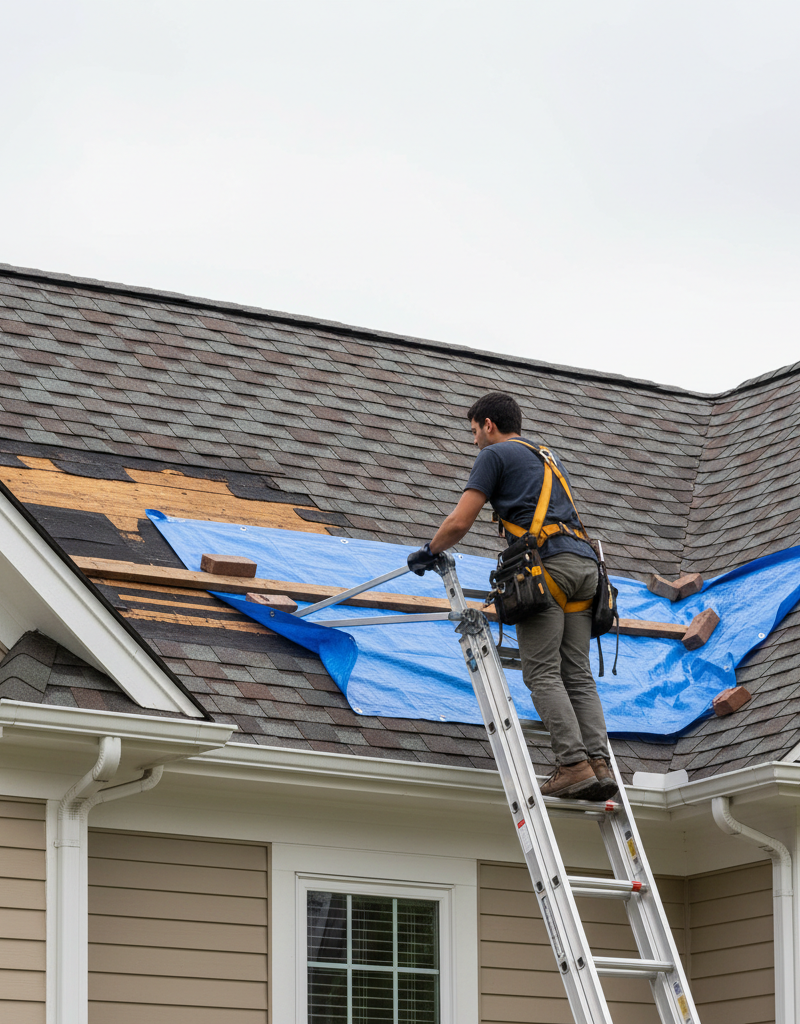
1. Prioritize Safety— Before stepping onto the roof, ensure safe conditions. Avoid working on a wet, icy, or terribly windy roof. Use a sturdy extension ladder placed on firm, level ground, extending at least three feet above the gutter line. Wear non-slip shoes and consider a fall arrest system if you're uncomfortable with heights or working on a steep pitch. A second person to steady the ladder is always a good idea.
* **Safety Note:** Never attempt roof repairs during active inclement weather or if the roof surface is wet or icy. Always use extreme caution when working at heights. If your roof is very steep, high, or you feel unsafe, call a professional.
2. Assess Damage Thoroughly— From the ground, use binoculars to identify all damaged areas. Look for not just completely missing shingles, but also cracked, creased, or loose shingles nearby, as they may be compromised and fail soon. Take numerous photos and videos for your insurance claim.
* **Pro Tip:** Documenting damage immediately after a storm is crucial for insurance. Include wide shots of your house, close-ups of damage, and any downed tree limbs or debris.
3. Measure and Purchase Materials— Determine the type, color, and number of replacement shingles needed. If you can find a spare shingle in your attic or garage, bring it to the store for a perfect match. Asphalt shingles come in bundles, and even if you only need a few, you'll likely buy a whole bundle. Also, pick up a tube of roofing cement or sealant.
* **What to buy:** Matching asphalt shingles, roofing nails (1.5-inch galvanized), roofing cement, tarp (if temporary repair needed).
4. Install a Temporary Tarp (If Needed)— If conditions are too dangerous for immediate repair or if you're waiting for materials, a temporary tarp can prevent further water damage. Spread a durable tarp over the damaged area, extending well beyond the edges. Secure it by nailing 1x4 furring strips over the edges of the tarp, ensuring the nails go into the roof decking, not just the shingles. Use roofing cement under the strips for an extra seal.
5. Prepare the Area— Carefully remove any remaining loose shingle pieces, debris, or old nails from the damaged section. Use a flat bar or pry bar to gently lift the tabs of the shingles in the row above the missing shingle(s) to access the nail heads. Be gentle to avoid damaging surrounding shingles.
6. Remove Old Nails— With the shingle tabs lifted, use the pry bar to carefully remove any exposed nails from the surrounding shingles where the new shingle will be inserted. This step is critical for proper shingle replacement and to allow the new shingle to slide underneath.
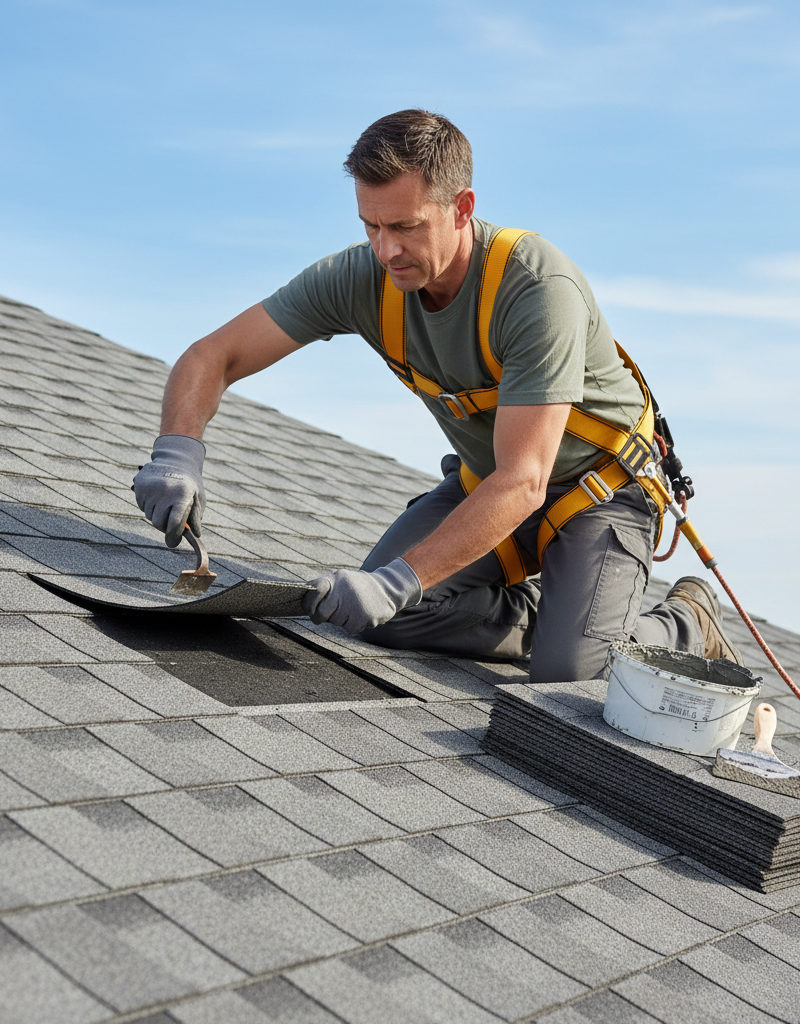
7. Insert the New Shingle— Slide the new shingle into place, aligning it carefully with the exposure of the existing shingles. Ensure it's pushed up firmly so that its top edge is beneath the bottom edge of the shingle in the row above.
8. Nail the New Shingle— Using roofing nails, secure the new shingle with four nails placed approximately 1 inch from each side and 5/8 inch above the shingle's cutout or sealant strip. Drive the nails straight so the heads are flush with the shingle surface, not sunken or bent. The nails should penetrate through the shingle and into the roof decking, covered by the overlapping shingle above.
9. Seal the Shingles— Apply a small dab of roofing cement under the tabs of the newly replaced shingle, and also under the tabs of any surrounding shingles that were lifted during the repair process. This helps to re-seal them and prevents wind uplift. Press firmly to ensure good adhesion.
10. Inspect and Clean Up— Once all new shingles are in place and sealed, step back and inspect your work. Ensure everything looks flush and secure. Collect all old shingle debris, nails, and packaging. Dispose of materials properly.
Common Causes
- High Winds: The primary culprit. Strong winds, especially those exceeding 50-60 mph, can create uplift forces that peel shingles off the roof, particularly if they are older, less flexible, or not properly sealed.
- Old, Brittle Shingles: As asphalt shingles age (typically 15-20 years for a 3-tab shingle), they become brittle, lose their flexibility, and the tar sealant strip can degrade. This makes them much more susceptible to wind damage.
- Improper Installation: Shingles nailed too high, too few nails used, or incorrect alignment can significantly reduce their wind resistance. This is why manufacturer warranties are often voided by improper installation.
- Hail Damage: While not directly blowing shingles off, large hail can weaken the shingle matrix, crack the fiberglass mat, or dislodge granules, making them more vulnerable to subsequent wind damage.
- Tree Branches/Debris: Falling branches or wind-blown debris can physically strike and dislodge shingles.
Common Mistakes
- Ignoring Minor Damage: Thinking a few missing shingles aren't a big deal is a huge mistake. Even small gaps can allow water to penetrate, leading to significant structural damage and mold.
- Improper Nailing: Nailing too high (above the nail line), too low (into the exposure), at an angle, or not using enough nails can cause shingles to detach again easily, or even create new leaks.
- Not Sealing Properly: Failing to use roofing cement under the new shingle tabs and any lifted surrounding tabs leaves them vulnerable to wind uplift and water intrusion.
- Mixing Shingle Types/Colors: Using different types or significantly different colors of shingles for repairs will result in an unprofessional and unsightly patching job that stands out.
- Working Unsafely: Attempting roof repairs without proper safety gear (non-slip shoes, sturdy ladder, fall arrest) is extremely dangerous and can lead to serious injury or worse.
- Failing to Document Damage: Without clear photos and videos before starting repairs, you might struggle to justify the full extent of your claim with your homeowner's insurance.
Cost & Time Breakdown
| Task | DIY Cost | Pro Cost | Time |
|---|---|---|---|
| Shingle Replacement | $20–$50 | $150–$400 | 30 mins – 2 hrs |
| Tarp Installation (Temp) | $30–$80 | $200–$500 | 1–1.5 hrs |
| Ladder/Safety Gear (if renting) | $20–$40/day | Included | N/A |
| Roofing Cement | $5–$15 | Included | N/A |
| Total (DIY) | $75–$185 | $350–$900 | 1–3 hours |
Tips & Prevention
- Regular Inspections: Perform a visual inspection of your roof from the ground with binoculars at least twice a year (spring and fall) and after every major storm. Look for curling, cracking, missing granules, or loose shingles.
- Clear Gutters & Downspouts: Ensure gutters are free of debris to allow proper water drainage. Clogged gutters can cause water to back up under shingles, leading to rot and leaks.
- Trim Overhanging Branches: Keep tree branches trimmed back from your roof to prevent them from rubbing, causing abrasion, or falling on the roof during storms.
- Check Attic Ventilation: Proper attic ventilation helps regulate roof temperature, extending shingle life by preventing premature aging of the asphalt and sealant strips.
- Know Your Roof's Age: Keep records of your roof's installation date. Most asphalt shingles have a lifespan of 20-30 years. Knowing its age helps you anticipate when major replacements might be needed and understand its vulnerability to storms.
- Professional Inspection: Consider a professional roof inspection every 5-7 years, especially as your roof approaches the latter half of its expected lifespan.
When to Call a Professional
While replacing a few missing shingles can be a DIY task for many homeowners, there are clear instances when calling a licensed professional roofer is not just recommended, but essential. If a significant portion of your roof has missing shingles, if you notice widespread damage (more than just a few individual shingles), or if the underlying roof decking appears damaged or wet, professional intervention is necessary to assess the full extent of the issue and ensure structural integrity. Furthermore, if your roof has a very steep pitch, is exceptionally high, or if you simply do not feel comfortable working at heights, a professional can complete the job safely and effectively. Any signs of interior water damage, such as stains on ceilings or walls, indicate a severe leak that warrants immediate expert assessment to prevent extensive and costly secondary damage.
Related Articles
Keep troubleshooting with these hand-picked guides from FixlyGuide:
- Wind Tore Off Your Shingles? The 7 Critical Steps Most Homeowners Miss — Discover the essential steps to take when roof shingles go missing after a storm, from immediate safety checks to temporary repairs and ins…
- The One Overlooked Mistake After Storm Damage: Finding Missing Roof Shingles Fast — Storms can rip off roof shingles, exposing your home to further damage. Learning how to safely assess and temporarily patch your roof is cr…
- The Urgent Truth About Missing Roof Shingles (And Your 3-Step Fix) — High winds can rip shingles off your roof, exposing your home to immediate water damage – here’s how to assess, temporary patch, and plan p…
- The One Mistake Homeowners Make When Shingles Blow Off (And How to Fix It Fast) — When shingles blow off your roof after a storm, the biggest mistake is waiting; quick, decisive action can prevent far more expensive damag…
- The One Shingle Mistake That Creates Roof Leaks (And How to Fix It Fast) — Missing roof shingles after a storm can quickly lead to extensive water damage if not addressed correctly. Learn how to safely inspect and…
- The #1 Sprinkler Winterization Mistake That Costs Homeowners Thousands — Discover the crucial mistake many homeowners make winterizing sprinklers and how to avoid costly freeze damage with proper blowout techniqu…
Should you do this yourself?
Answer five quick questions before you start. Safety outranks savings every time.
Your experience with work like this
How high do you have to work?
Does the job involve any of these?
Will it need a permit?
Specialty tools
Free and instant. Educational guidance only — not a quote, inspection, or professional diagnosis.
Questions to ask before you sign
Ask every contractor the same questions and the cheapest bid stops looking cheapest. Check them off as you go — your progress is saved on this device.
Free, no signup. Bring this to every walkthrough so you compare bids on the same terms.
What should this project cost?
Enter your project details for a realistic cost range before you call anyone.
Spot repairs commonly run $400–$1,800; full replacement typically $9,000–$18,000 for an average home.
- Regional adjustment
- National average
- Labor share (typical)
- ~$2,948
- Quotes to collect
- 3 written estimates
Educational estimate based on national averages — not a binding quote. Always confirm with written local estimates.
Fixly Project Decision Box
- DIY difficulty
- Professional Recommended
- Estimated time
- Inspection 1–2 hours · repairs 1–3 days
- Cost level
- High
Main tools / materials
- Binoculars for a ground-level look
- Flashlight for attic checks
- Moisture meter
- Roofing cement (temporary patch only)
When to stop and call a pro
- Active leak near lights, fans, or any wiring
- Sagging, bulging, or water-filled ceiling
- Steep, wet, or two-story roof — do not climb it
- Storm or hail damage you plan to claim on insurance
Need professional help?
Free roof assessment first — no phone calls until you ask for them.
Get Local Roofing HelpGet help with your roof now
Stay off the roof. These free tools help you protect the house and reach the right professional fast.
- Emergency repair checklistThe first steps that limit damage before a pro arrives.Open
- Repair or replace your roof?Answer 10 questions about age, leaks, and damage to get a clear next step.Open
- Get local estimatesSend one request and compare written estimates from vetted pros.Open
Free, no signup required. Estimates are educational guidance, not a quote or an inspection.
Frequently asked questions
How do you temporarily fix a missing shingle?+
To temporarily fix a missing shingle, you can cover the exposed area with a durable tarp. Secure the tarp by nailing 1x4 furring strips over its edges, ensuring the nails go into the roof decking, not just the shingles. Use roofing cement under the strips for an extra seal. This prevents water intrusion until a permanent repair can be made.
Can I replace a single shingle myself?+
Yes, replacing a single shingle or a few shingles is generally a DIY task for homeowners comfortable working on a roof. You'll need matching shingles, roofing nails, a hammer, and roofing cement. Always prioritize safety, and if the roof is too steep or the damage extensive, call a professional.
What kind of nails do you use for roof shingles?+
For asphalt roof shingles, you should use 1.5-inch galvanized roofing nails with a large head. Galvanized nails are resistant to rust, which is crucial for outdoor exposure. Ensure the nails are driven straight and flush with the shingle surface, not sunken or bent.
How much does it cost to replace a few shingles?+
The DIY cost to replace a few shingles typically ranges from $20 to $50 for materials (a bundle of shingles, roofing cement, nails). If you hire a professional, the cost can range from $150 to $400, depending on the number of shingles, roof pitch, and location.
Discussion
Loading comments…