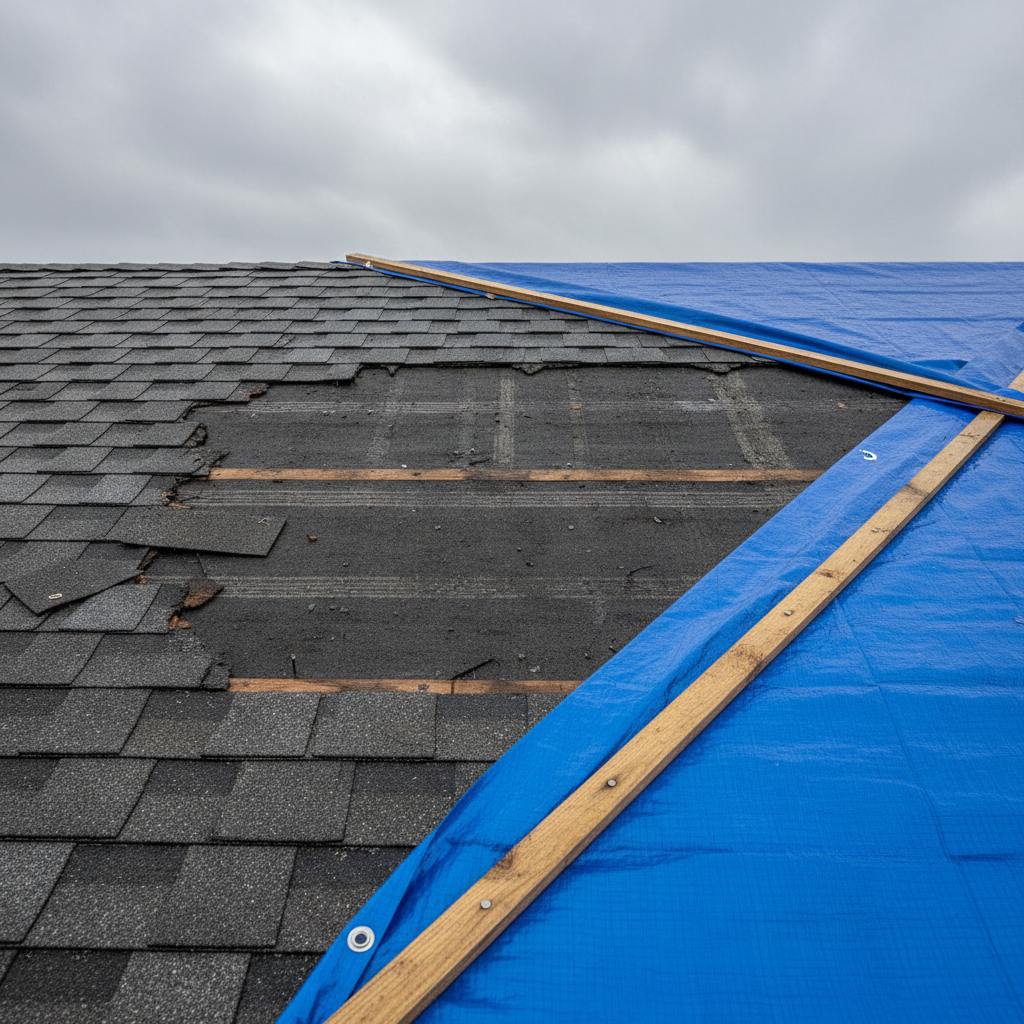
- Measure the exposed area and cut your tarp to generously cover it, extending at least 2-3 feet beyond the damaged section in all directions to ensure any run-off sheds onto intact shingles.
- Carefully unfold the tarp over the damaged area. Ensure it's pulled taut and smooth, with no wrinkles that could collect water.
- Create furring strips by cutting your 1x3 or 2x4 lumber into lengths sufficient to secure the edges of the tarp. Place these strips over the edges of the tarp, pressing down firmly.
Roofing · Aging roof
| Project category | Roofing |
|---|---|
| Problem type | Aging roof |
| Trade required | Roofing |
| Urgency | Planned project |
| Safety risk | Low safety risk |
| DIY suitability | Pro recommended |
| Cost category | High cost |
| Typical timeline | Plan 4–12 weeks ahead for scheduling and material lead time |
| Contractor type | Licensed roofing contractor |
Repair option
Maintenance repairs to buy a season or two while you budget.
Replacement option
Planned replacement, which is almost always cheaper than a leak-driven emergency.
Common causes
- Normal weathering past the shingle service life
- Poor attic ventilation cooking the shingles from below
- Repeated repairs on the same slopes
Relevant tools:repair or replace roofproject cost estimatorhome improvement material prices
Published April 25, 2026Last updated August 17, 2026
Tools & materials you'll need
Affiliate linksAs an Amazon Associate FixlyGuide earns from qualifying purchases — at no extra cost to you. Prices and availability are accurate as of publication and subject to change.
Quick Answer
After a storm, discovering missing roof shingles is a common, urgent problem. Your immediate actions should focus on preventing water intrusion. First, perform a careful visual inspection from the ground or a secure ladder to assess the extent of the damage. For any exposed areas, implement a temporary waterproof patch using materials like a tarp or roofing tar. Document everything with clear photographs for insurance purposes, and then promptly contact a qualified roofing professional for a thorough inspection and permanent repair options to safeguard your home's integrity.
The Problem
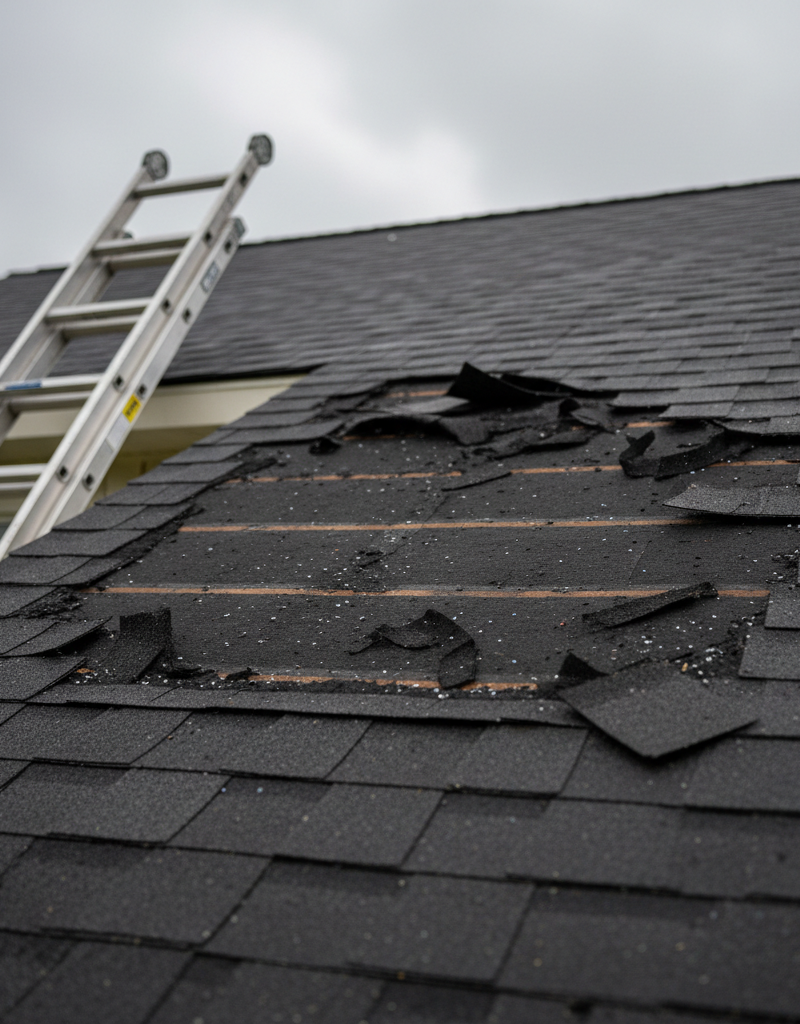
High winds, common in severe storms, exert immense uplift and shear forces on your roof. This can cause the adhesive seals on asphalt shingles to break, leading to shingles being lifted, creased, or completely torn off. While a single missing shingle might seem minor, it leaves the underlying roofing felt and decking exposed to the elements. This exposure creates a direct pathway for water to infiltrate your roof structure, leading to leaks, rot, mold growth, damaged insulation, and compromised ceilings and walls inside your home. The longer the exposure, the more extensive and costly the secondary damage becomes. Understanding this immediate risk is crucial for any homeowner facing post-storm shingle loss. The goal isn't just to replace a shingle; it's to seal the building envelope and protect your home's interior from the elements.
How It Works
Your roof is a complex system designed to shed water. Asphalt shingles are the primary line of defense, layered in an overlapping pattern to prevent water from penetrating. Beneath the shingles is typically a layer of roofing felt or synthetic underlayment, which provides a secondary barrier against moisture and protects the roof deck during installation or if a shingle is damaged. The roof deck, usually plywood or OSB, forms the structural base. When wind lifts or rips off shingles, it first exposes the underlayment. While underlayment offers some temporary protection, it’s not designed for prolonged direct exposure to UV rays and heavy rainfall. Without the shingles, wind-driven rain can get underneath remaining shingles or directly saturate the underlayment, eventually finding its way through nail holes or seams in the decking. Over time, sunlight also degrades exposed underlayment, making it brittle and ineffective. The system relies on every component working together; a breach at the shingle level compromises the entire waterproofing mechanism, allowing gravity and wind to push water deeper into your home.
Step-by-Step Fix
When you discover missing shingles, a quick and effective temporary patch is essential. Remember, this is intended to prevent further damage until a professional can perform permanent repairs.
1. Safety First – Assess from Afar — Before ever setting foot on a ladder, conduct a thorough ground-level inspection of your roof. * Tools: Binoculars, digital camera with zoom. * Safety: Never climb onto a wet, icy, or excessively steep roof. Watch for downed power lines or tree limbs. If the damage appears extensive, or if you're uncomfortable on a ladder, call a professional immediately. Your safety is paramount. Note specific areas where shingles are clearly missing, creased, or uplifted. Take photos from various angles.
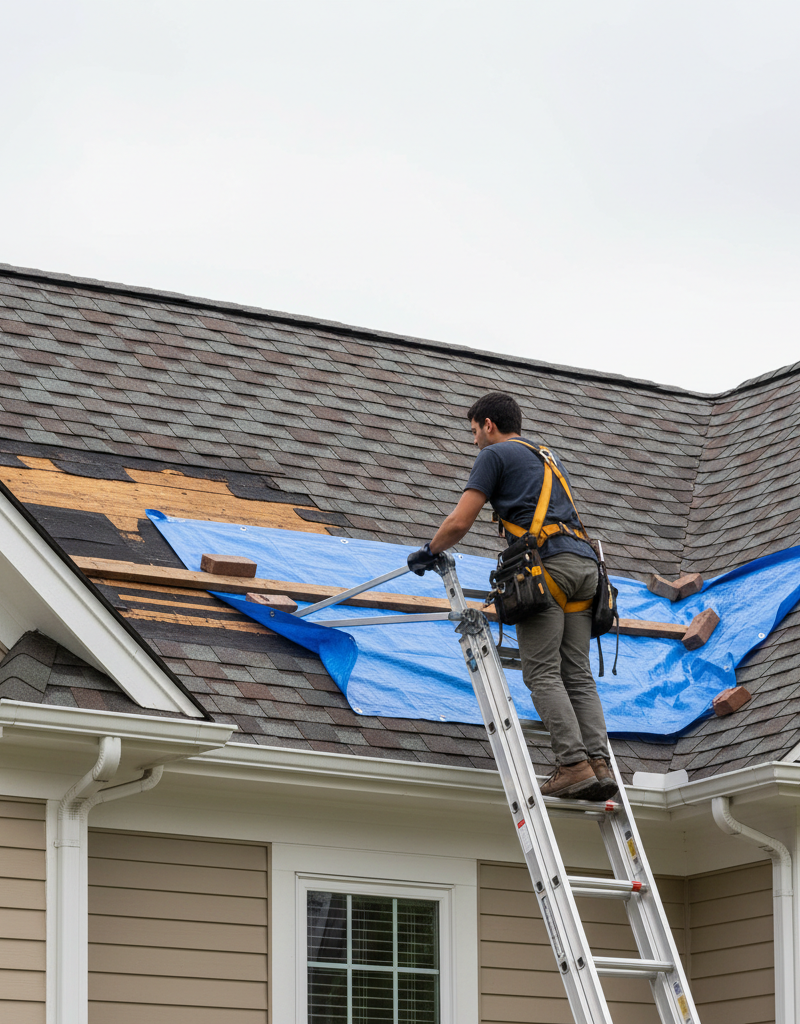
2. Prepare the Area — Once you’ve identified the damaged section and determined it's safe to proceed with temporary patching, gather your materials. * Tools: Sturdy extension ladder, utility knife, heavy-duty scissors, measuring tape, small stiff-bristle brush or broom, hammer. * Materials: Heavy-duty tarp (at least 6 mil thick, larger than the damaged area), 1x3 or 2x4 lumber pieces (enough to frame the tarp), roofing nails (1-1/4 inch with large heads), roofing cement or sealant. * Make sure the ladder is placed on firm, level ground and extends at least three feet above the eave for safe access. Clean any loose debris, granules, or small twigs from around the damaged area using a brush, being careful not to dislodge more shingles. If any shingle tabs are merely lifted but not torn, gently push them back down and apply a small bead of roofing cement underneath for temporary adhesion.
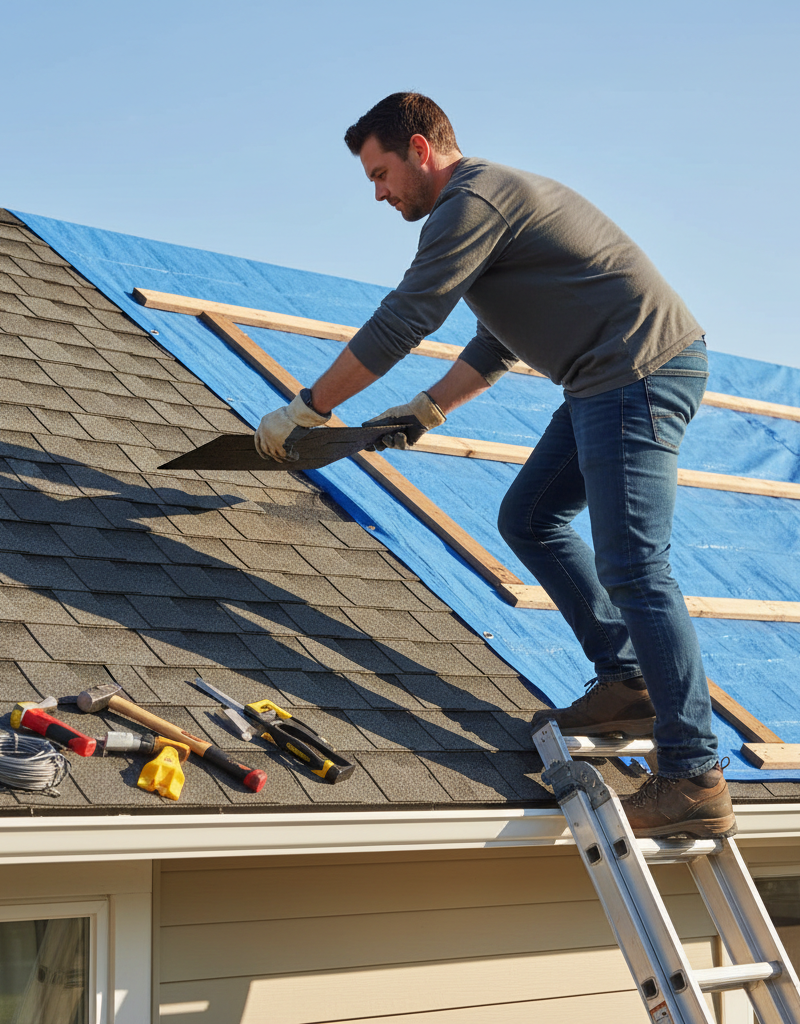
3. Install a Temporary Tarp — This is your best immediate defense against water. * Measure the exposed area and cut your tarp to generously cover it, extending at least 2-3 feet beyond the damaged section in all directions to ensure any run-off sheds onto intact shingles. * Carefully unfold the tarp over the damaged area. Ensure it's pulled taut and smooth, with no wrinkles that could collect water. * Create furring strips by cutting your 1x3 or 2x4 lumber into lengths sufficient to secure the edges of the tarp. Place these strips over the edges of the tarp, pressing down firmly. * Using roofing nails, secure the furring strips through the tarp into the roof decking. Space nails every 6-8 inches. Start from the highest point of the tarp and work your way down the sides, ensuring the tarp is still taut. Overlap the furring strips at corners, ensuring no part of the tarp can lift easily in the wind. Do not nail directly through non-reinforced areas of the tarp without a furring strip, as this can cause the tarp to tear. * If this doesn't work: If the tarp struggles to stay in place in extreme wind, consider using additional furring strips across the middle of the tarp or applying heavy-duty duct tape (designed for outdoor use) along the edges before nailing the furring strips down, as an extra seal against wind uplift. Securely attaching bungee cords to weighted objects on the ground (e.g., sandbags) and attaching them to grommets on the tarp can also provide extra resistance in very high wind conditions, but ensure they don't create new points of water intrusion.
Common Causes
- High Winds: The most frequent culprit. Wind creates uplift pressure under shingles and sheer force across their surface, prying them off, especially along eaves, rakes, and ridges. Old or poorly installed shingles are particularly vulnerable.
- Improper Installation: Shingles installed with too few nails, nails placed incorrectly (too high or too low on the shingle), or without proper adhesive activation can easily detach in a storm.
- Aging Shingles: As asphalt shingles age, they become brittle, and the adhesive strip that seals them to the shingle below can fail, making them more susceptible to wind damage.
- Hail Impact: Large hail can crack, bruise, or loosen the shingle's seal, making it easier for subsequent winds to rip them off.
- Rotten or Damaged Decking: If the underlying roof deck has rot or is saturated with water, it won't hold nails effectively, leading to shingle detachment.
Common Mistakes
- Ignoring the Problem: Thinking a single missing shingle isn't a big deal. Even a small exposed area can lead to significant interior damage over time.
- Delaying Temporary Repair: Waiting for a roofer can mean days or weeks of exposure. A quick temporary patch can save thousands in future repair costs.
- Climbing a Damaged or Wet Roof: This is extremely dangerous. Always prioritize safety and perform inspections from the ground or a stable ladder.
- Using the Wrong Materials for Temporary Fixes: Duct tape or thin plastic sheeting won't provide adequate protection against heavy rain and wind. Invest in a proper heavy-duty tarp and lumber for secure fastening.
- Attempting Permanent DIY Repair Without Experience: While replacing a single shingle might seem easy, matching existing shingles, ensuring proper sealing, and integrating it flawlessly into the existing roof system requires specific knowledge and tools. Poor DIY repairs can lead to leaks and void warranties.
- Failing to Document Damage: Without clear photos and videos, your insurance claim might be denied or undervalued.
Cost & Time Breakdown
| Task | DIY cost | Pro cost | Time |
|---|---|---|---|
| Ground-level inspection | $0 | Included in quote | 10–20 minutes |
| Temporary tarp installation | $50–$150 | $200–$500 | 1–2 hours |
| Professional damage assessment | N/A | Included in quote | 30–60 minutes |
| Shingle repair (minor) | N/A | $300–$800 | 2–4 hours |
| Shingle repair (moderate) | N/A | $800–$1,500 | 4–8 hours |
| Full roof replacement | N/A | $7,000–$25,000+ | 2–5 days |
Tips & Prevention
- Regular Roof Inspections: Visually inspect your roof twice a year (spring and fall) and after every major storm. Look for cracked, curled, buckling, or missing shingles. Catching minor issues early prevents them from becoming major problems.
- Clear Gutters and Downspouts: Ensure gutters are free of debris so water can drain properly. Clogged gutters can cause water to back up under shingles (especially in ice dams) leading to damage.
- Trim Overhanging Branches: Trees close to your roof can cause abrasion, drop leaves that hold moisture, and pose a severe hazard during storms when branches can fall and damage shingles.
- Proper Ventilation: Good attic ventilation helps regulate roof deck temperature, extending shingle life and preventing premature aging and cracking.
- Know Your Shingle Warranty: Understand what your shingle warranty covers, particularly regarding wind damage. Many warranties offer better coverage for higher wind speeds with specific installation methods.
- Consider Impact-Resistant Shingles: If you live in an area prone to severe storms, investing in impact-resistant (Class 3 or 4) shingles can provide superior protection against hail and wind.
When to Call a Professional
While a temporary patch can prevent immediate water intrusion, permanent shingle repair or replacement is usually beyond the scope of a typical DIY enthusiast. You should call a licensed roofing professional immediately if you observe any of the following: multiple missing shingles across different areas of the roof; visible damage to the roof decking; signs of water leaks inside your home (stains on ceilings or walls); your roof is steep or high-pitched, making ladder work unsafe; you're uncomfortable working on a ladder at height; or if you suspect structural damage to the roof. Furthermore, if your shingles are old and brittle, replacing a few might not be a lasting solution, and a professional can advise if a full roof replacement is more cost-effective in the long run. A professional assessment will ensure the correct materials are used, the repair integrates seamlessly with the existing roof, and essential elements like flashing are properly addressed, preserving your roof's warranty and your home's long-term integrity.
Related Articles
Keep troubleshooting with these hand-picked guides from FixlyGuide:
- Missing Roof Shingles After a Storm? Here's What to Do — Discover how to safely assess and address missing roof shingles after a storm, including temporary fixes and when to call a professional.
- Hail-Damaged Siding: A Homeowner's Guide to Inspection & Repair — Discover how to assess and repair hail damage on your home's siding, ensuring your home remains protected and looks its best.
- Why Your Roof Only Leaks in Sideways Rain (It's Not the Shingles) — That maddening leak that only appears during severe, wind-driven rain isn't your shingles—it's a sign that water is being forced sideways b…
- Gutters Full of Shingle Grit? Here's What It Really Means — Finding shingle granules in your gutters can be alarming, signaling everything from normal new-roof shedding to critical roof damage that r…
- Those Gutter Icicles Are a Costly Warning Sign — Discover why the icicles on your gutters are a flashing red light for ice dams, a destructive problem that can lead to costly water damage…
- That melting ice could cost you $20,000 in water damage — Safely removing ice dams protects your roof and prevents costly water damage to your home.
Should you do this yourself?
Answer five quick questions before you start. Safety outranks savings every time.
Your experience with work like this
How high do you have to work?
Does the job involve any of these?
Will it need a permit?
Specialty tools
Free and instant. Educational guidance only — not a quote, inspection, or professional diagnosis.
Questions to ask before you sign
Ask every contractor the same questions and the cheapest bid stops looking cheapest. Check them off as you go — your progress is saved on this device.
Free, no signup. Bring this to every walkthrough so you compare bids on the same terms.
What should this project cost?
Enter your project details for a realistic cost range before you call anyone.
Spot repairs commonly run $400–$1,800; full replacement typically $9,000–$18,000 for an average home.
- Regional adjustment
- National average
- Labor share (typical)
- ~$2,948
- Quotes to collect
- 3 written estimates
Educational estimate based on national averages — not a binding quote. Always confirm with written local estimates.
Fixly Project Decision Box
- DIY difficulty
- Professional Recommended
- Estimated time
- Inspection 1–2 hours · repairs 1–3 days
- Cost level
- High
Main tools / materials
- Binoculars for a ground-level look
- Flashlight for attic checks
- Moisture meter
- Roofing cement (temporary patch only)
When to stop and call a pro
- Active leak near lights, fans, or any wiring
- Sagging, bulging, or water-filled ceiling
- Steep, wet, or two-story roof — do not climb it
- Storm or hail damage you plan to claim on insurance
Need professional help?
Free roof assessment first — no phone calls until you ask for them.
Get Local Roofing HelpGet help with your roof now
Stay off the roof. These free tools help you protect the house and reach the right professional fast.
- Emergency repair checklistThe first steps that limit damage before a pro arrives.Open
- Repair or replace your roof?Answer 10 questions about age, leaks, and damage to get a clear next step.Open
- Get local estimatesSend one request and compare written estimates from vetted pros.Open
Free, no signup required. Estimates are educational guidance, not a quote or an inspection.
Frequently asked questions
How quickly do I need to fix missing shingles after a storm?+
You should address missing shingles immediately – within hours, if possible – to prevent water from entering your home. Even a small exposed area can lead to significant water damage, mold, and rot if left unaddressed, especially with continued rain or wind.
Can I replace missing shingles myself?+
While replacing a single, easily accessible shingle might seem like a simple DIY task, it requires specific techniques to ensure proper weatherproofing and shingle integration. For multiple missing shingles, damage to the underlayment, or any safety concerns regarding ladder work, it's always best to call a licensed roofing professional to ensure a proper and lasting repair.
Will my homeowner's insurance cover missing shingles from a storm?+
Most homeowner's insurance policies cover roof damage from sudden, accidental events like storms, including missing shingles due to high winds or hail. It's crucial to document the damage thoroughly with photos and contact your insurance provider as soon as possible after discovering the damage to start the claims process.
Discussion
Loading comments…