- No organic binder: nothing for UV or heat to break down
- Surface coatings that can be refurbished: standing seam panels can be recoated; tile can be re-sealed
- Higher impact resistance: tile cracks but doesn't degrade; modern metal panels dent but stay watertight
Roofing · Hail damage
| Project category | Roofing |
|---|---|
| Problem type | Hail damage |
| Trade required | Roofing |
| Urgency | Urgent — within days |
| Safety risk | Moderate safety risk |
| DIY suitability | Licensed pro only |
| Cost category | High cost |
| Typical timeline | Inspection within days; claim and build often several weeks |
| Contractor type | Licensed roofing contractor |
Repair option
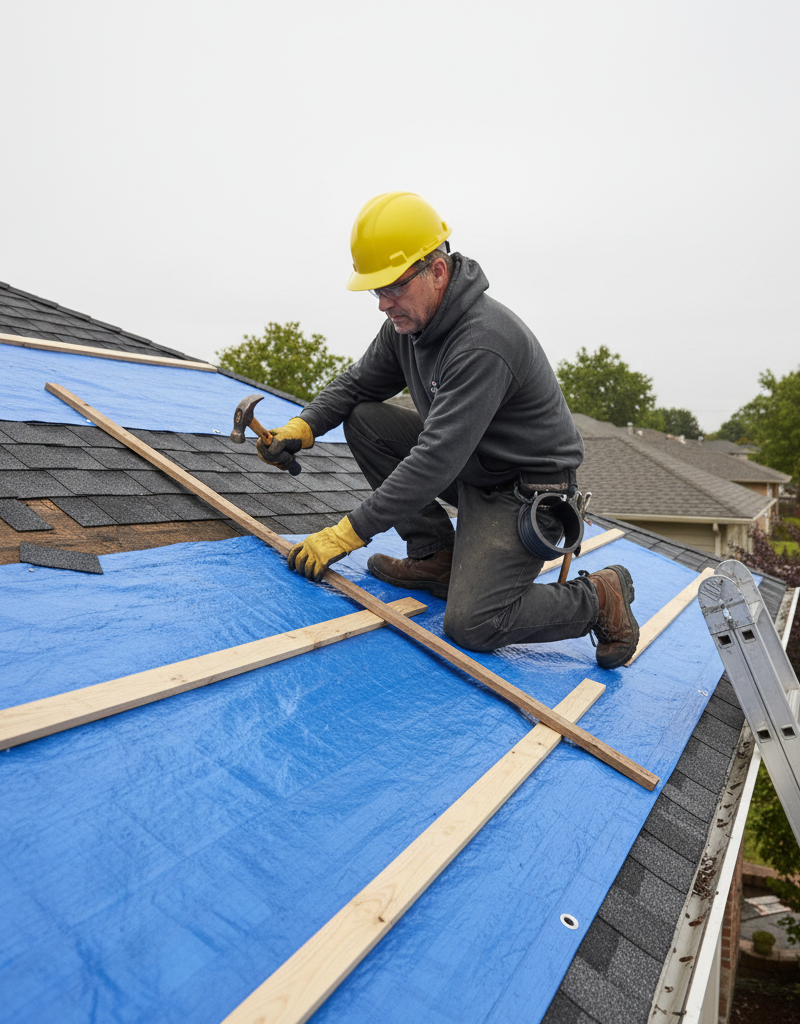
Spot repair for isolated slopes with limited impact marks.
Replacement option
Insurance-scope replacement when impacts exceed the carrier threshold per square.
Common causes
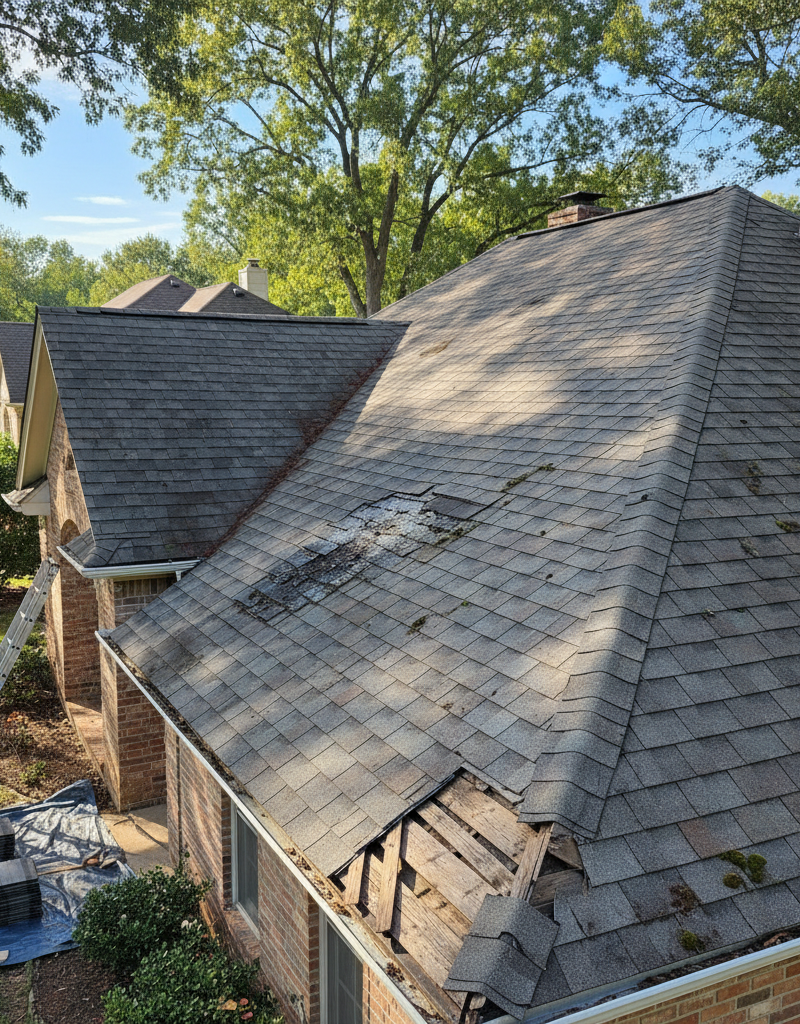
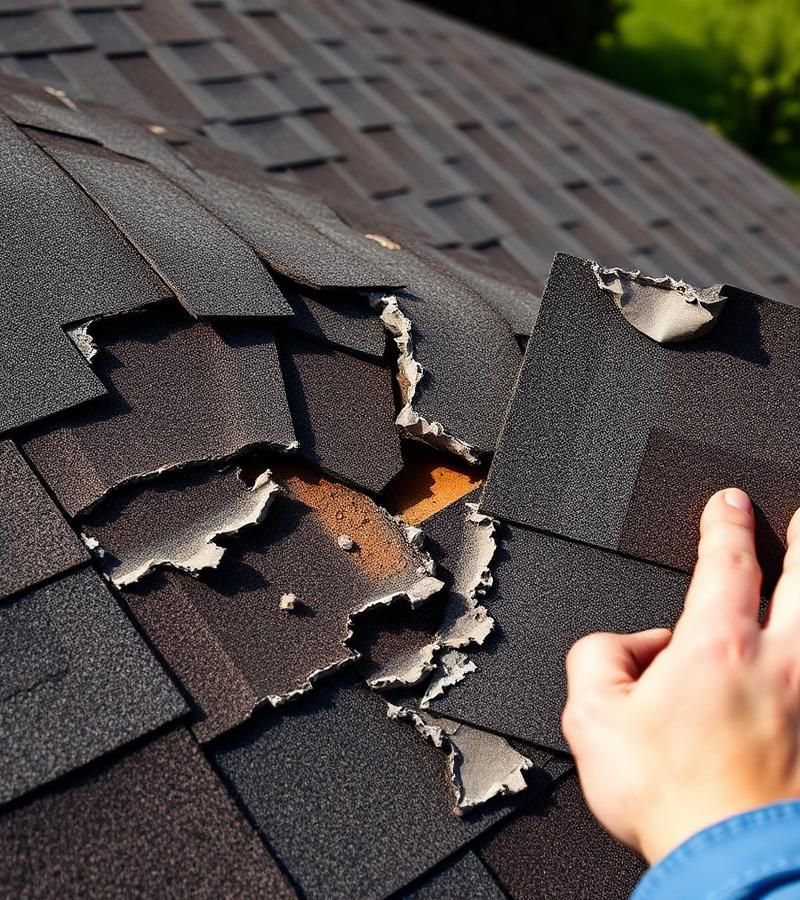
- Impact bruising that knocked granules loose
- Cracked mat under the surface, not visible from the ground
- Damaged soft metals: vents, gutters, flashing
Relevant tools:repair or replace roofcompare quotes
Published May 22, 2026Last updated September 4, 2026Last reviewed May 22, 2026 by Marcus Hale, Master Tradesman, 22 yrs
Manufacturer warranties say "Lifetime" or "50 years." Real Texas roofs often need replacement at 15. The gap isn't dishonesty—it's the difference between lab conditions and the actual Texas climate, which combines extreme summer heat, occasional ice, twice-yearly hail seasons, and UV intensity higher than the national average.
This guide gives the real, field-validated lifespan numbers for every common roof material in Texas, what shortens them most, and when each one is at the end of its useful life.
Real Texas Lifespans by Material
| Material | Manufacturer Warranty | Real Texas Lifespan |
|---|---|---|
| 3-tab asphalt | 20–25 years | 12–18 years |
| Architectural asphalt | 30–40 years | 18–25 years |
| Class 4 impact-resistant asphalt | 30–50 years | 22–28 years |
| Standing seam metal (24-ga) | 30–50 years | 50–70 years |
| Concrete tile | 50+ years | 50+ years |
| Clay tile | 75+ years | 75–100 years |
| Wood shake | 25–30 years | 12–18 years |
| Synthetic slate | 30–50 years | 30–40 years (limited Texas data) |
The pattern: asphalt loses 5–8 years off lab life, metal and tile match or exceed it.
Why Texas Shortens Asphalt Life
Asphalt shingles fail through three mechanisms in Texas:
1. Thermal Cycling
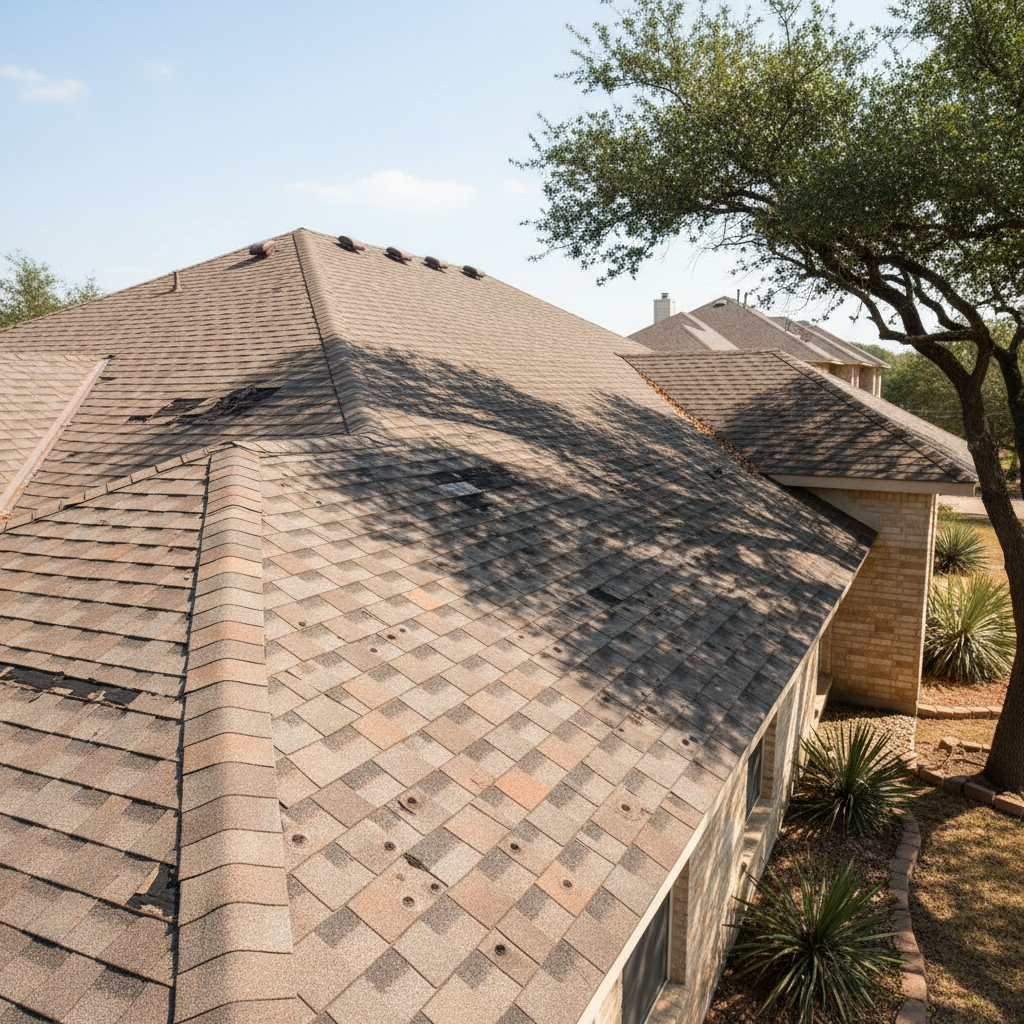
A Texas summer day takes shingles from 70°F at dawn to 165°F by 3 PM. Then a thunderstorm drops them back to 80°F in 20 minutes. That expansion/contraction cycle, repeated hundreds of times per year, breaks down the asphalt binder. By year 12–15 on a standard 3-tab, you'll see curling, cracking, or granule loss across most slopes.
2. UV Degradation
Texas gets roughly 3,500 hours of sunshine per year vs 2,500 in the northern US. UV photons break the molecular bonds in asphalt binder. The granules on top of the shingle are the only UV protection—once those wash off, the asphalt is exposed and the shingle ages dramatically faster.
3. Hail Impact
Even Class 3 impact-resistant shingles take damage from 1.25"+ hail. North Texas averages 2–3 such events per year. Over a 20-year roof life, that's 40–60 hail events absorbing impact energy. Eventually the cumulative damage outpaces the warranty.
Why Metal and Tile Outlast Asphalt
Metal and tile share three advantages:
- No organic binder: nothing for UV or heat to break down
- Surface coatings that can be refurbished: standing seam panels can be recoated; tile can be re-sealed
- Higher impact resistance: tile cracks but doesn't degrade; modern metal panels dent but stay watertight
A 50-year-old metal roof installed properly is often still functional, while a 30-year-old asphalt roof in Texas is always at end of life.
What Cuts Roof Life Short
Regardless of material, these factors shorten Texas roof life:
Poor Attic Ventilation
The single biggest hidden killer of Texas roofs. Without adequate ventilation:
- Attic temperatures push 160°F (vs 130°F properly vented)
- Shingles heat from below as well as above
- Moisture from bathrooms and laundry condenses on the underside of decking
- Decking rots, insulation compresses, mold grows
- Warranty often voided
Texas code requires: 1 sq ft of vent per 150 sq ft of attic, split 50/50 between intake (soffit) and exhaust (ridge or gable).
Dark Roof Colors
Black or dark gray shingles run 15–25°F hotter than light gray or white. That's enough to shave 2–5 years off shingle life in Texas. Cool-color granules retain dark appearance while reflecting more heat.
Improper Installation
Shingles improperly nailed (too high, too low, overdriven) fail in the first major wind event. Always verify your contractor uses the manufacturer's nailing zone and pattern.
Missing Drip Edge or Ice/Water Shield
Water wicks under poorly flashed edges and into the deck. Over 5–10 years, deck rot becomes invisible and structural.
Trees Overhanging the Roof
Constant shade prevents drying; falling branches damage shingles; squirrels and raccoons access the roof. Trim back at least 6 feet.
Skipped Maintenance
Annual or biennial inspection, gutter cleaning, and minor repairs add 3–5 years to any asphalt roof. Most homeowners do none of this.
How to Tell When Your Roof Is Actually at End-of-Life
Use the age + condition test:
- Under 12 years + minor damage: repair
- 12–18 years + multiple signs: plan replacement in next 1–3 years
- 18+ years: replace before next storm season
- Any age + active leaks in multiple locations: replace
- Any age + sagging deck: replace immediately
See 10 signs you need a new roof for the full diagnostic checklist.
Lifespan by Region of Texas
Climate varies enough that lifespan differs across the state.
North Texas (DFW, Wichita Falls)
Hail capital. Asphalt averages 15–18 years; Class 4 hits 22–28 years. Metal and tile virtually unaffected.
Central Texas (Austin, San Antonio, Hill Country)
Long hot summers, moderate hail. Asphalt averages 16–20 years; cool-color asphalt extends to 22–25. Tile common and excellent.
Gulf Coast (Houston, Galveston, Corpus Christi)
Hurricanes and salt air. Asphalt averages 12–16 years; copper and aluminum metal preferred over steel for salt resistance.
West Texas (El Paso, Lubbock, Midland)
Lower humidity, intense UV, occasional severe hail. Asphalt 14–18 years; tile and metal perform very well due to dry climate.
East Texas (Tyler, Longview)
High humidity and pine pollen. Asphalt 16–20 years if kept clean; algae growth accelerates aging if neglected.
How to Get the Maximum Life
If you're installing or replacing now and want the longest service life:
- Choose Class 4 impact-resistant shingles minimum if you stay with asphalt
- Pick cool-color granules (Owens Corning Duration Cool, GAF Reflector Series, etc.)
- Verify proper attic ventilation before installation
- Add a radiant barrier under decking (drops attic temps 15–25°F)
- Install synthetic underlayment, not felt
- Pay for ridge vent + soffit vents, not box vents alone
- Pick a Texas-licensed roofer with workers' comp and 10+ years local
- Schedule annual inspections and document them
These steps push a Texas asphalt roof from 15 years to 22–25 years of real life.
When to Replace Even If It "Still Looks OK"
Three triggers that mean replace now even without visible damage:
- Insurance won't renew at current age: many Texas carriers drop coverage on roofs over 20 years
- Selling the home in 1–2 years: buyers' inspectors flag old roofs and demand price concessions
- Major storm season approaching: replace in winter (5–10% discount) rather than after the next storm hits a marginal roof
The Bottom Line
In Texas, plan on:
- Standard asphalt: 12–18 years
- Architectural asphalt: 18–25 years
- Class 4 cool-roof asphalt: 22–28 years
- Standing seam metal: 50–70 years
- Tile: 50–100 years
If your roof is past 15 years old and you're seeing any signs of wear, get a free professional inspection before the next storm season. Replacement on your timeline costs thousands less than emergency replacement after a leak destroys the interior.
Need an honest local assessment? Connect with a vetted Fort Worth roofer →
How to Extend Your Existing Roof's Life
If you're not ready to replace, these maintenance steps can buy 3–7 more years on an aging Texas roof:
- Clean gutters twice yearly (spring and fall): blocked gutters cause edge rot
- Trim back overhanging branches at least 6 feet from the roof line
- Replace cracked or missing pipe boots ($35–$75 each, prevents 90% of leaks)
- Re-caulk chimney and skylight flashing every 3–5 years
- Apply moss/algae treatment in shaded East Texas climates
- Inspect after every hailstorm (free with most local roofers)
- Replace damaged ridge caps promptly: they protect the most vulnerable seam
A $400 annual maintenance budget on a Texas asphalt roof can push 15-year shingles to year 20+.
When Warranty Actually Helps (and Doesn't)
Shingle warranties sound generous but rarely cover what homeowners expect.
Typically covered: manufacturing defects, premature granule loss in first 5–10 years Typically excluded: storm damage, installation defects, lack of ventilation, walking damage, hail, wind over a certain speed
If a shingle fails at year 12 of a "30-year" warranty, you may get prorated material credit only—usually $300–$800 toward a $15,000 replacement. Don't make purchase decisions based on the warranty length; pick the brand and installer reputation instead.
Repair or replace your roof?
Plug in four numbers and see which choice holds up financially.
Free and instant. Educational guidance only — not a quote, inspection, or professional diagnosis.
Estimate your own project cost
National averages are a starting point. Enter your details for a range that fits your house.
Roof replacement cost
- Per square (installed)$604 – $866
Add $500–$2,500 if decking is rotten and needs replacement. Storm damage may be covered by insurance.
Educational estimate only — always confirm with written local bids.
What should this project cost?
Enter your project details for a realistic cost range before you call anyone.
Spot repairs commonly run $400–$1,800; full replacement typically $9,000–$18,000 for an average home.
- Regional adjustment
- National average
- Labor share (typical)
- ~$2,948
- Quotes to collect
- 3 written estimates
Educational estimate based on national averages — not a binding quote. Always confirm with written local estimates.
Fixly Project Decision Box
- DIY difficulty
- Professional Recommended
- Estimated time
- Inspection 1–2 hours · repairs 1–3 days
- Cost level
- High
Main tools / materials
- Binoculars for a ground-level look
- Flashlight for attic checks
- Moisture meter
- Roofing cement (temporary patch only)
When to stop and call a pro
- Active leak near lights, fans, or any wiring
- Sagging, bulging, or water-filled ceiling
- Steep, wet, or two-story roof — do not climb it
- Storm or hail damage you plan to claim on insurance
Need professional help?
Free roof assessment first — no phone calls until you ask for them.
Get Local Roofing HelpDecide what your roof needs
Two minutes of questions turns "something is wrong up there" into a clear next step.
- Repair or replace your roof?Answer 10 questions about age, leaks, and damage to get a clear next step.Open
- Compare contractor quotesScore up to four bids on price, warranty, licensing, and timeline.Open
- Get local estimatesSend one request and compare written estimates from vetted pros.Open
Free, no signup required. Estimates are educational guidance, not a quote or an inspection.
Frequently asked questions
How long does an asphalt shingle roof really last in Texas?+
12–18 years for 3-tab shingles, 18–25 years for architectural shingles in most Texas climates. Coastal salt air and Hill Country hail can shorten that by 3–5 years.
How long does a metal roof last in Texas?+
Standing seam metal with proper installation lasts 50–70 years. Lifespan depends more on coating quality and installation than climate.
Does Texas heat shorten roof life?+
Yes. Attic temperatures of 140–160°F dry out asphalt 3–5 years faster than in moderate climates. Proper attic ventilation and radiant barrier mitigation can recover much of that lost life.
What's the longest-lasting roof for Texas?+
Clay tile, properly installed, regularly reaches 75–100 years. Many Texas homes have original clay tile from the 1920s still serving.
Discussion
Loading comments…