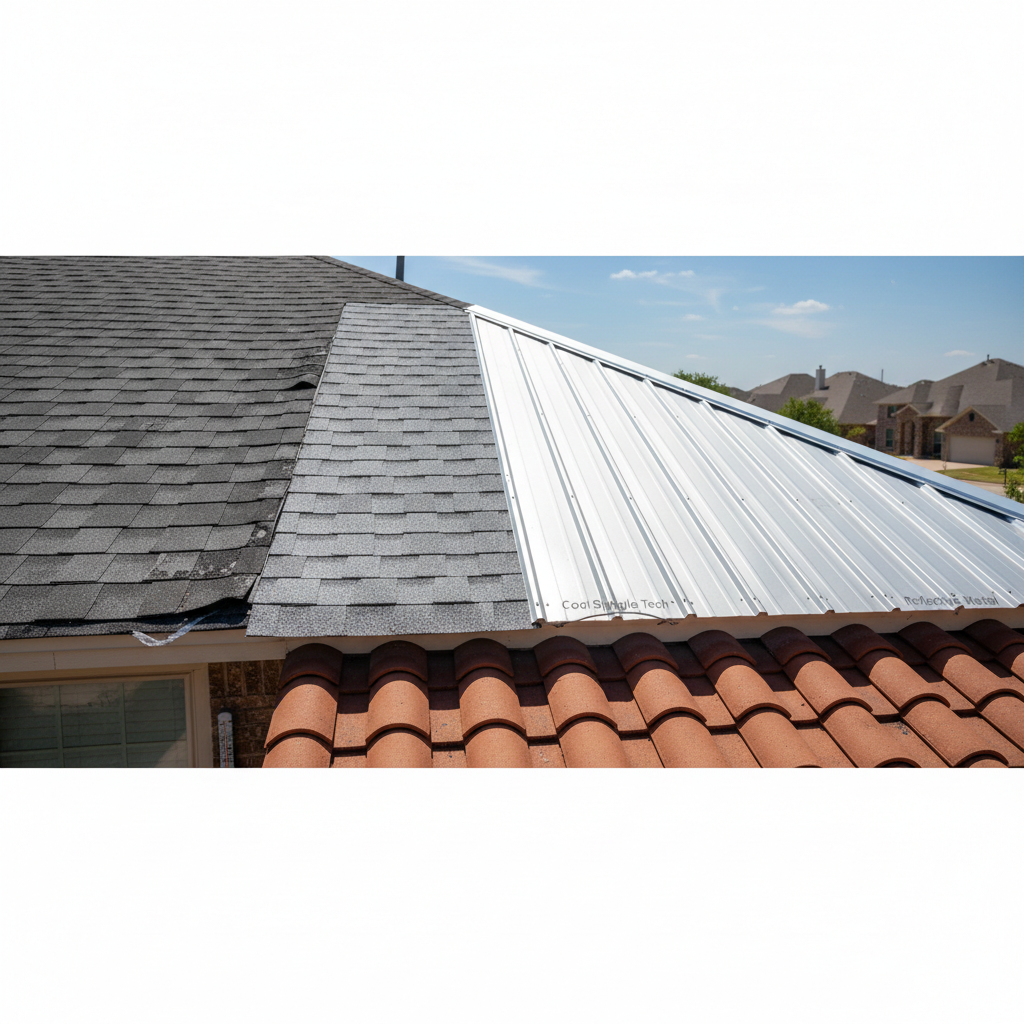
- Solar Reflectance (SR): the percentage of solar energy bounced back into the atmosphere. Higher = cooler
- Thermal emittance: how fast the material releases absorbed heat. Higher = cooler attic
- Service life under thermal cycling: Texas roofs go through extreme expand/contract cycles daily. Materials that can't handle it crack and fail early
Roofing · Aging roof
| Project category | Roofing |
|---|---|
| Problem type | Aging roof |
| Trade required | Roofing |
| Urgency | Planned project |
| Safety risk | Low safety risk |
| DIY suitability | Pro recommended |
| Cost category | High cost |
| Typical timeline | Plan 4–12 weeks ahead for scheduling and material lead time |
| Contractor type | Licensed roofing contractor |
Repair option
Maintenance repairs to buy a season or two while you budget.
Replacement option
Planned replacement, which is almost always cheaper than a leak-driven emergency.
Common causes
- Normal weathering past the shingle service life
- Poor attic ventilation cooking the shingles from below
- Repeated repairs on the same slopes
Relevant tools:repair or replace roofproject cost estimatorhome improvement material prices
Published May 22, 2026Last updated September 4, 2026Last reviewed May 22, 2026 by Marcus Hale, Master Tradesman, 22 yrs
A roof in Texas does two jobs: keep water out and keep heat out. The first one every material can handle. The second one separates the long-lasting, energy-efficient roofs from the ones that need replacing in 15 years and double your summer electric bill in the meantime.
This guide compares the realistic options for Texas heat in 2026, what each one costs installed, and which is the best fit for different homes and budgets.
What "Best for Texas Heat" Actually Means
Three factors matter:
- Solar Reflectance (SR): the percentage of solar energy bounced back into the atmosphere. Higher = cooler
- Thermal emittance: how fast the material releases absorbed heat. Higher = cooler attic
- Service life under thermal cycling: Texas roofs go through extreme expand/contract cycles daily. Materials that can't handle it crack and fail early
The Cool Roof Rating Council (CRRC) tests and rates products on all three. Anything ENERGY STAR-certified meets minimum thresholds for the South.
The 6 Best Options Compared
| Material | Solar Reflectance | Lifespan | Cost (2,000 sq ft Texas home) | Cooling Bill Impact |
|---|---|---|---|---|
| Standard 3-tab asphalt | 0.05–0.15 | 12–18 yrs | $9,500–$13,500 | baseline |
| Architectural asphalt (cool color) | 0.25–0.40 | 20–25 yrs | $13,500–$19,000 | -10% to -15% |
| Class 4 impact-resistant cool asphalt | 0.30–0.45 | 25–30 yrs | $15,000–$22,000 | -15% to -20% |
| Standing seam metal (cool coating) | 0.30–0.70 | 50–70 yrs | $20,000–$34,000 | -20% to -30% |
| Concrete tile | 0.35–0.55 | 50+ yrs | $22,000–$38,000 | -15% to -25% |
| Clay tile | 0.40–0.65 | 75+ yrs | $28,000–$45,000 | -20% to -30% |
1. Class 4 Cool-Roof Asphalt Shingles
The best value play for most Texas homeowners.
Pros:
- 30–50% cheaper than metal or tile
- Most insurance carriers offer 5–25% discounts on Class 4 impact-resistant shingles in hail zones (which is most of Texas)
- 25–30 year warranties are now standard from GAF, Owens Corning, CertainTeed, Malarkey
- Easy local repair—any roofer can match colors
- "Cool" colors with reflective granules cut attic temperatures by 15–25°F
Cons:
- Still asphalt—it ages faster in Texas than in cooler states
- 30-year warranty often becomes 20 years in real-world Texas performance
- Replaceable but not refurbishable—new roof at end of life
Best for: most Texas single-family homes, especially in hail-heavy DFW, Houston suburbs, and Hill Country.
2. Standing Seam Metal Roof
The premium choice that pays back over decades.
Pros:
- Reflects 30–70% of solar energy with modern cool coatings
- 50+ year service life common
- Hail-resistant (most products carry Class 4 ratings)
- Energy bill reductions of 20–30%
- Eligible for federal energy efficiency tax credits in many years
- Adds 1–6% to home resale value in Texas (depending on neighborhood)
- Modern colors are nothing like the corrugated "barn red" of the 1990s
Cons:
- 2–3x cost of asphalt up front
- Requires experienced metal installers (fewer crews available)
- Hail can dent (not damage functionally) lower-gauge panels—pay for 24-gauge minimum in Texas
- Slightly louder during very heavy rain (about 6 dB)
- Penetrations (chimneys, vents) require specialized flashing
Best for: homeowners staying 10+ years, homes with simple roof lines, anyone prioritizing long-term energy savings and durability.
3. Concrete Tile
The Mediterranean look with serious heat performance.
Pros:
- 50+ year lifespan
- Excellent thermal mass—slows heat transfer to attic
- Air gaps under each tile act as insulation
- Naturally non-combustible
- Class A fire rating standard
- Resistant to insects, rot, and mildew
Cons:
- Heavy: 9–12 lbs/sq ft. Older homes may need structural reinforcement (add $3,000–$8,000)
- Tiles can crack if walked on—HVAC techs, painters, satellite installers must use walkboards
- More expensive repair (specialty tiles harder to source)
- Best suited to architectural styles that work with tile
Best for: Spanish, Mediterranean, or Italianate homes; homes already engineered for tile loads; homeowners planning to stay 20+ years.
4. Clay Tile
The longest-lasting roof material available—and the most expensive.
Pros:
- 75+ year service life (many century-old clay roofs still functional)
- Best reflectance and thermal performance of any common roof material
- Naturally fire-resistant
- Premium curb appeal in the right architectural setting
- Most environmentally friendly: low-energy manufacturing, fully recyclable
Cons:
- Highest installed cost of common materials
- Heaviest—almost always requires engineered support
- Brittle: walkable only with care
- Limited color and style range
- Specialized labor required for installation and repair
Best for: Hill Country, San Antonio, El Paso architectural homes; high-end Mediterranean designs; "forever home" investments.
5. Architectural Asphalt with Cool-Color Granules
The minimum smart upgrade from builder-grade 3-tab.
Pros:
- Affordable upgrade ($2,000–$4,000 over basic asphalt)
- 20–25 year service life in Texas
- Cool-color granules cut attic heat 10–20°F vs standard colors
- Wide range of colors and styles
Cons:
- Still asphalt's inherent UV degradation issue
- Doesn't match metal or tile for energy performance
- Often confused at the showroom for higher-grade products—verify the Cool Roof certification
Best for: budget-conscious homeowners who still want better-than-builder performance.
6. Synthetic Slate or Composite
A newer option worth considering.
Pros:
- Recycled rubber and plastic composites can hit Class 4 impact ratings
- 30–50 year warranties
- Lightweight vs real slate
- Some Cool Roof rated
- Looks like premium slate at half the cost
Cons:
- Less proven long-term in Texas heat
- Limited installer experience in Texas markets
- Warranty support varies by manufacturer
Best for: homeowners wanting the slate look without the weight, who can find a certified installer.
What Else Drives Heat Performance
The roof material is half the equation. The other half:
- Attic ventilation: ridge + soffit vents create a chimney effect that exhausts heat. Add a powered attic fan if attic still runs over 130°F
- Radiant barrier under decking: reflects 95% of radiant heat. Add $0.50–$1.00/sq ft, pays back in 3–5 years
- R-38 or higher attic insulation: most Texas homes built before 2010 are under-insulated
- Light-colored roof color: even within the same material, white or light gray beats dark gray by 15–25°F at attic level
A standard asphalt roof with all these upgrades can outperform a basic metal roof with none of them.
How to Choose
Three honest questions:
- How long are you staying? Under 7 years → cool-color architectural asphalt. 7–15 years → Class 4 cool asphalt. 15+ years → metal or tile
- What's your insurance situation? If your carrier offers a Class 4 discount, that alone often justifies upgrading from standard to impact-resistant shingles
- What's your architectural style? A modern farmhouse looks great in standing seam. A 1920s Spanish revival demands tile. Don't fight the house
The Bottom Line
For most Texas homeowners in 2026, Class 4 cool-color architectural asphalt is the smart middle. You get hail protection, insurance discounts, decent heat performance, and a 25–30 year roof for $15,000–$22,000. If you can stretch the budget and you're staying long-term, standing seam metal pays back hard in energy savings and lasts twice as long.
The worst choice is also the most common: builder-grade 3-tab shingles in a dark color. They cook your attic, fail in 15 years, and cost you in cooling bills the entire time.
Ready to compare quotes on the right material for your house? Get a free Texas roofing assessment →
What should this project cost?
Enter your project details for a realistic cost range before you call anyone.
Spot repairs commonly run $400–$1,800; full replacement typically $9,000–$18,000 for an average home.
- Regional adjustment
- National average
- Labor share (typical)
- ~$2,948
- Quotes to collect
- 3 written estimates
Educational estimate based on national averages — not a binding quote. Always confirm with written local estimates.
Decide what your roof needs
Two minutes of questions turns "something is wrong up there" into a clear next step.
- Repair or replace your roof?Answer 10 questions about age, leaks, and damage to get a clear next step.Open
- Compare contractor quotesScore up to four bids on price, warranty, licensing, and timeline.Open
- Get local estimatesSend one request and compare written estimates from vetted pros.Open
Free, no signup required. Estimates are educational guidance, not a quote or an inspection.
Frequently asked questions
What's the coolest roof color for Texas?+
Light gray, white, and reflective tan shingles or metal reflect 40–70% more solar heat than dark colors. Most major manufacturers offer 'Cool Roof' rated colors that meet ENERGY STAR requirements.
Are metal roofs noisy in Texas storms?+
Modern standing seam metal installed over solid decking and underlayment is only marginally louder than asphalt—about 52 dB vs 46 dB during heavy rain. You won't notice the difference inside the house.
Do tile roofs work in Texas?+
Yes—clay and concrete tile are excellent Texas performers, common in hill country and older neighborhoods. They require engineered structure due to weight (10–12 lbs/sq ft for concrete, 8–10 for clay).
What roof lasts longest in Texas?+
Properly installed clay tile (75+ years), standing seam metal (50+ years), and concrete tile (50+ years) all outlast asphalt by decades.
Discussion
Loading comments…