- Curling: edges turn upward like a stale potato chip
- Cupping: the center sinks while the corners rise
- Clawing: the entire shingle pulls away from the deck
Roofing · Aging roof
| Project category | Roofing |
|---|---|
| Problem type | Aging roof |
| Trade required | Roofing |
| Urgency | Planned project |
| Safety risk | Low safety risk |
| DIY suitability | Pro recommended |
| Cost category | High cost |
| Typical timeline | Plan 4–12 weeks ahead for scheduling and material lead time |
| Contractor type | Licensed roofing contractor |
Repair option
Maintenance repairs to buy a season or two while you budget.
Replacement option
Planned replacement, which is almost always cheaper than a leak-driven emergency.
Common causes
- Normal weathering past the shingle service life
- Poor attic ventilation cooking the shingles from below
- Repeated repairs on the same slopes
Relevant tools:repair or replace roofproject cost estimatorhome improvement material prices
Published May 22, 2026Last updated September 4, 2026Last reviewed May 22, 2026 by Marcus Hale, Master Tradesman, 22 yrs
Your roof is the single most expensive system on your house—and the one most homeowners ignore until water is dripping onto the kitchen counter. The good news: roofs almost always give you warning signs months (sometimes years) before they fail. The bad news: those signs are easy to miss if you don't know what to look for.
This guide walks through the 10 clearest signals that your roof is at the end of its life, how to tell repair from replacement, and what to expect when you finally make the call.
1. Your Roof Is Over 20 Years Old
Age is the single best predictor of roof failure. A standard 3-tab asphalt shingle roof is engineered for a 15–20 year service life. Architectural (also called "dimensional") shingles last 22–30 years in mild climates, but in Texas heat and hail, you'll usually see the lower end of that range.
If you don't know how old your roof is, check your closing documents, ask the previous owner, or pull the permit history from your county. Once you're past year 18 on a standard roof, every storm becomes a coin flip.
2. Curling, Cupping, or Clawing Shingles
Walk to the curb and look up. Healthy shingles lie perfectly flat. Failing shingles do one of three things:
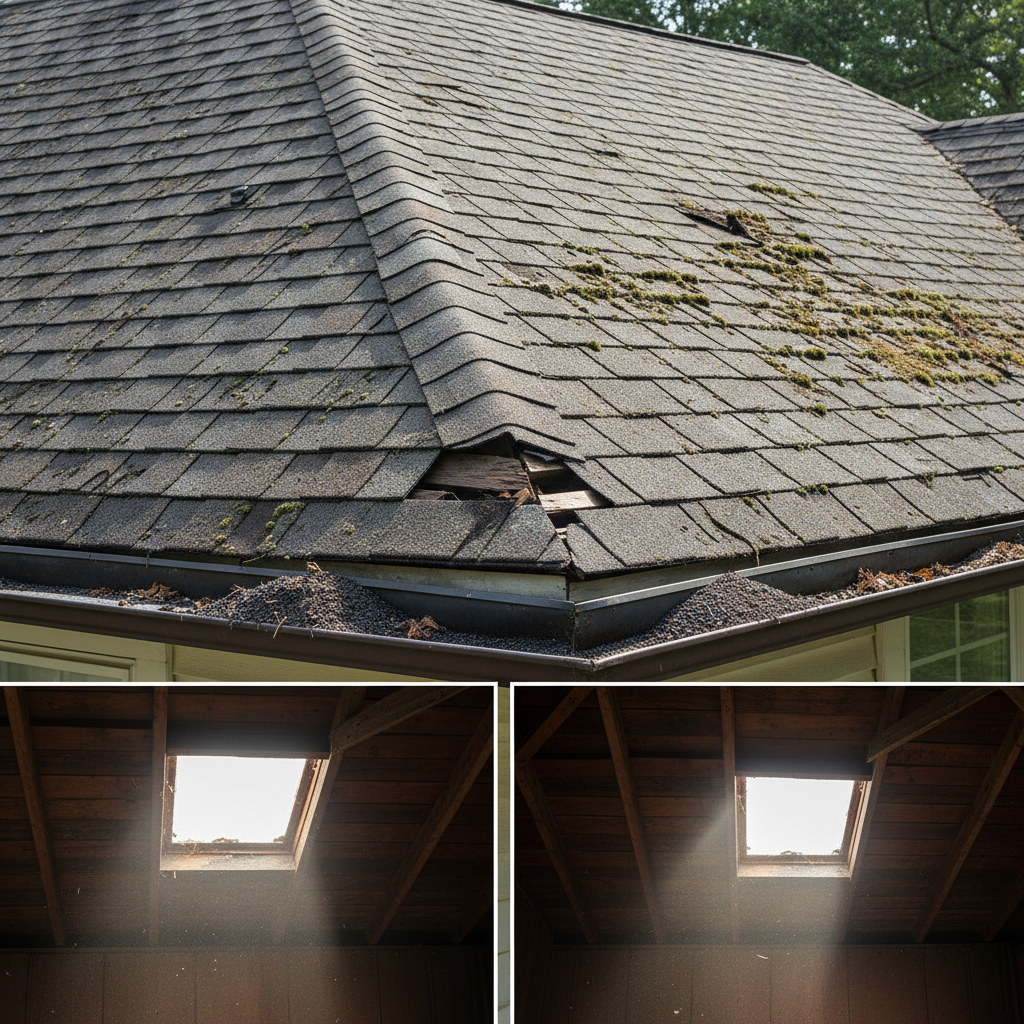
- Curling: edges turn upward like a stale potato chip
- Cupping: the center sinks while the corners rise
- Clawing: the entire shingle pulls away from the deck
All three mean the asphalt has dried out and lost its flexibility. Once curling is widespread, the next strong wind will start ripping shingles off. This is one of the most reliable signs you need a new roof, not just a patch.
3. Missing, Cracked, or Bald Shingles
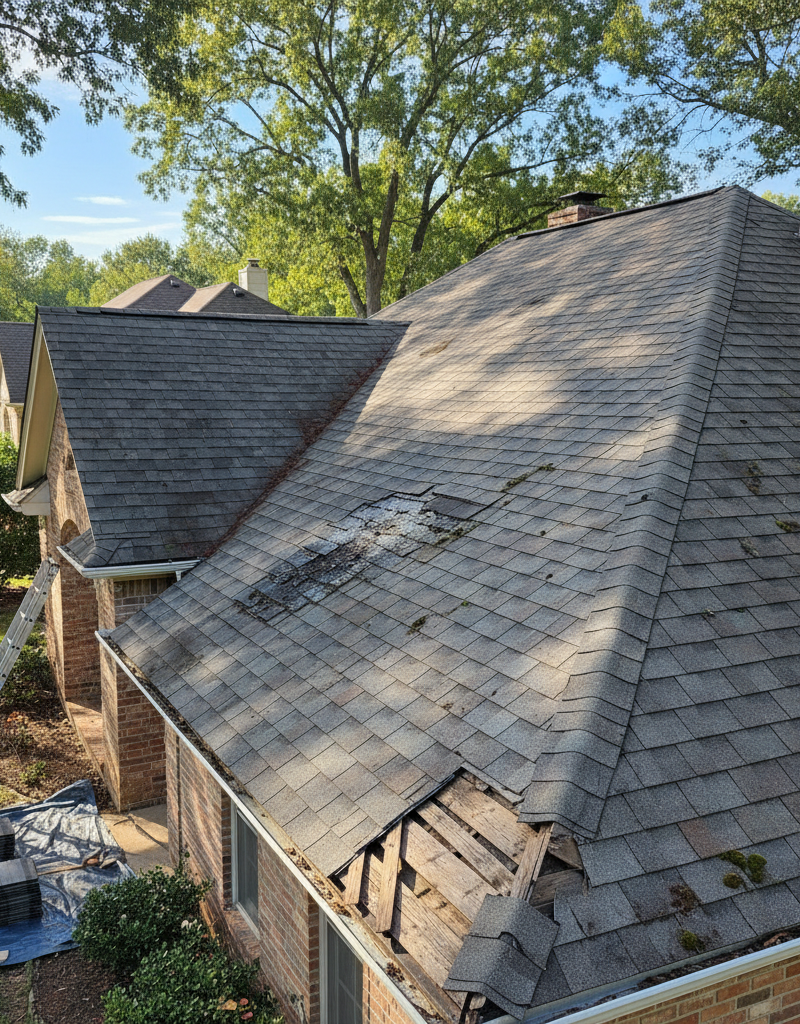
Single missing shingles after a storm are normal—and easily repaired. But if you can count more than 8–10 missing shingles, or you see multiple bald spots where the granules have worn away, the underlying mat is now exposed to UV. Asphalt mat without granules degrades in months, not years.
Cracked shingles, especially in straight horizontal lines, signal thermal cycling damage common in Texas. Hot days followed by cool nights cause the shingles to expand and contract until they split.
4. Granules Filling Your Gutters
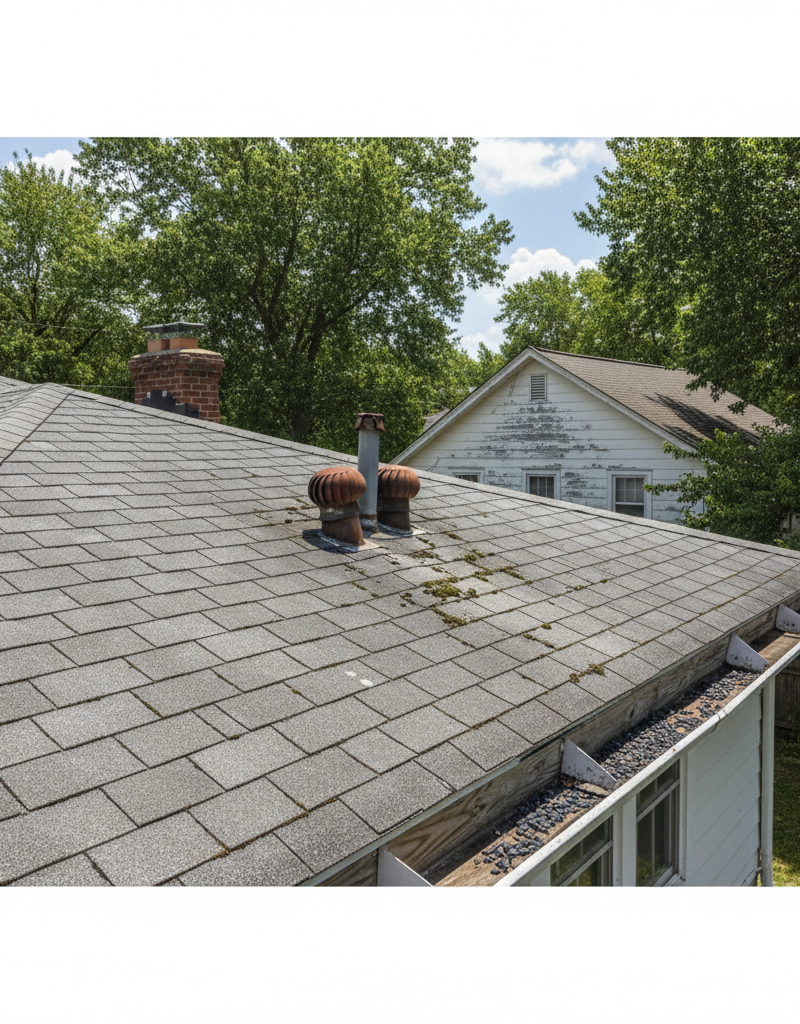
Open your downspout cleanout or look in the gutter trough. A handful of granules from a new roof is normal (excess from manufacturing). But cups of granules—especially black, sandy piles—mean the protective top layer of your shingles is washing away.
Once granules are gone, the asphalt below cooks in the sun and the shingle becomes brittle within one or two summers. This is the #1 sign Texas roofs are within 2 years of needing replacement.
5. Daylight Coming Through the Attic
Go into your attic on a sunny afternoon and turn off the lights. If you can see pinpricks or shafts of daylight through the roof deck, water is also getting through every time it rains. This isn't a "we'll watch it" problem—it's an immediate replacement trigger because the deck itself is rotting.
While you're up there, look for:
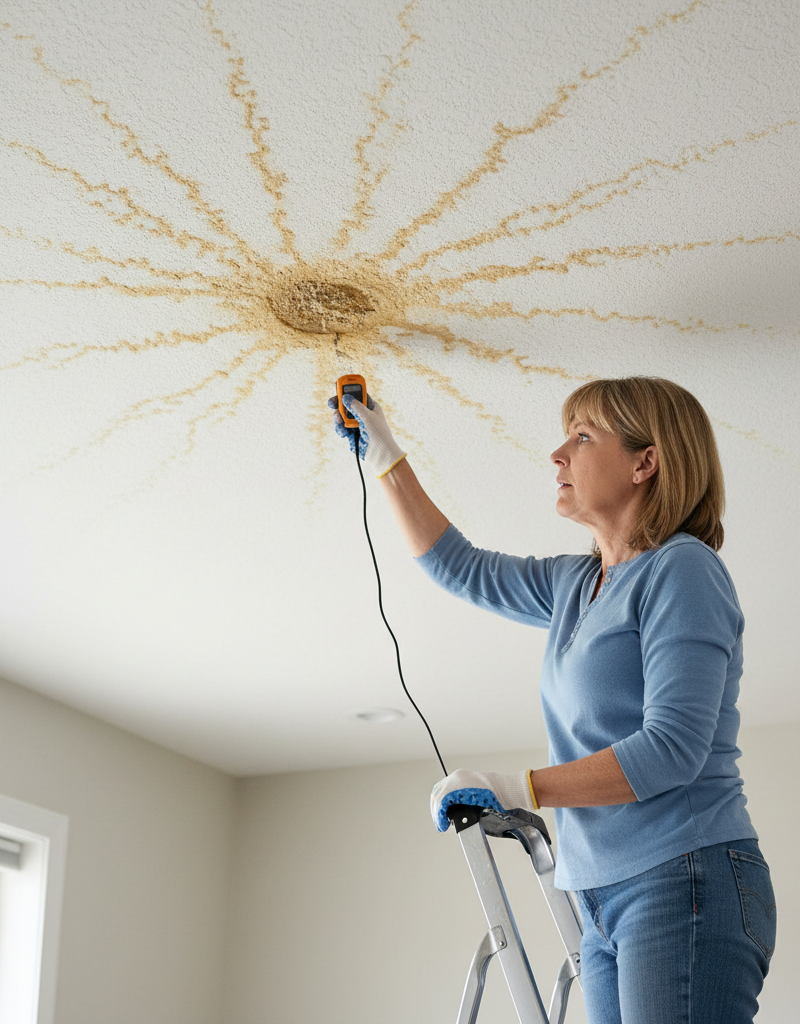
- Water stains on the rafters or insulation
- Dark streaks running down truss webs
- Sagging plywood between rafters
- Mold or mildew smell
6. Sagging Roof Deck
Step back to the street and sight down the ridge line. A healthy roof is straight as a ruler. Any dip, wave, or sag means the decking underneath has absorbed water and lost structural integrity. At that point, even new shingles installed over rotten plywood will fail within a few years. The deck must be replaced too—which is why catching this early matters.
A sagging roof is also a safety issue. In extreme cases the structure can collapse, especially under the weight of a wet snow load or storm debris.
7. Repeated Leaks (Even After Repairs)
One leak after a freak storm? Repair it. A leak that comes back in the same spot every spring, or new leaks popping up in different rooms each year? Your roof has reached the point where the flashing, underlayment, and shingle system are all failing together. Chasing individual leaks becomes throwing money at a problem that needs full replacement.
A useful rule: if you've had three or more leak repairs in the last 24 months, the math has already tipped in favor of replacement.
8. Shingle Granules in Strange Places
Beyond the gutter, granules show up on patios, decks, sidewalks, and around the base of downspouts. If your driveway has a black, sandy stripe after rain, that's your roof eroding in slow motion.
9. Damaged or Missing Flashing
Flashing is the metal that seals around chimneys, skylights, vent pipes, and roof valleys. It's also the #1 source of leaks. Look for:
- Rust stains running down the chimney
- Caulk that's cracked, peeling, or visibly old
- Bent, dented, or missing metal pieces
- Tar patches over flashing (a desperate previous repair)
If the flashing is shot but the shingles look OK, you may get away with re-flashing. If both are aging together, replace.
10. Your Energy Bills Spiked
A failing roof loses heat in winter and lets attic temperatures balloon in summer—which forces your HVAC to work overtime. If your electric bill jumped 20–30% with no other explanation, walk through the attic. Compressed, wet, or missing insulation almost always points to a roof issue.
Repair vs. Replace: The Honest Math
Roofers will always quote replacement because it's the bigger ticket. Here's a fair test:
- Repair makes sense if the damage covers under 30% of the roof, the roof is under 15 years old, and the deck is sound.
- Replace makes sense if the roof is 18+ years old, you're seeing 3+ signs from this list, or you've had repeated leaks.
A reputable inspector will photograph each issue and explain the trade-off honestly. If you get a quote with no photos and high pressure to sign today, get a second opinion.
What to Expect When You Replace
A typical Texas single-family roof replacement runs 1–2 days. Here's the sequence:
- Tear-off: existing shingles, felt, and damaged decking removed
- Deck inspection and repair: any rotted plywood replaced
- Underlayment: synthetic underlayment + ice/water shield in valleys
- Drip edge and flashing: new metal at edges and penetrations
- Shingles: installed bottom-up with proper nailing pattern
- Ridge cap and vents: finish the ridge and ensure proper ventilation
- Cleanup: magnetic sweep for nails, debris hauled
Expect to pay $9,000–$22,000 for a standard 2,000 sq ft Texas home with architectural shingles, more for metal, tile, or premium materials. See current Fort Worth roof replacement costs →
Don't Wait for the Drip
The most expensive roof is the one you put off. A $12,000 replacement done today is much cheaper than $12,000 in roofing plus $8,000 in interior repairs (drywall, insulation, hardwood floors, mold remediation) after a single bad storm hits a roof that was already on borrowed time.
If you spotted 2 or more signs from this list, get a free professional inspection now—not after the next hailstorm. A good roofer will tell you honestly whether you can wait one more season or whether it's time to start planning.
What should this project cost?
Enter your project details for a realistic cost range before you call anyone.
Spot repairs commonly run $400–$1,800; full replacement typically $9,000–$18,000 for an average home.
- Regional adjustment
- National average
- Labor share (typical)
- ~$2,948
- Quotes to collect
- 3 written estimates
Educational estimate based on national averages — not a binding quote. Always confirm with written local estimates.
Fixly Project Decision Box
- DIY difficulty
- Professional Recommended
- Estimated time
- Inspection 1–2 hours · repairs 1–3 days
- Cost level
- High
Main tools / materials
- Binoculars for a ground-level look
- Flashlight for attic checks
- Moisture meter
- Roofing cement (temporary patch only)
When to stop and call a pro
- Active leak near lights, fans, or any wiring
- Sagging, bulging, or water-filled ceiling
- Steep, wet, or two-story roof — do not climb it
- Storm or hail damage you plan to claim on insurance
Need professional help?
Free roof assessment first — no phone calls until you ask for them.
Get Local Roofing HelpDecide what your roof needs
Two minutes of questions turns "something is wrong up there" into a clear next step.
- Repair or replace your roof?Answer 10 questions about age, leaks, and damage to get a clear next step.Open
- Compare contractor quotesScore up to four bids on price, warranty, licensing, and timeline.Open
- Get local estimatesSend one request and compare written estimates from vetted pros.Open
Free, no signup required. Estimates are educational guidance, not a quote or an inspection.
Frequently asked questions
How long should an asphalt shingle roof last?+
A standard 3-tab asphalt roof lasts 15–20 years. Architectural (dimensional) shingles typically last 22–30 years in Texas, less in heavy-hail zones.
Can I just repair instead of replacing?+
If damage is isolated to a small area (under ~30%) and the roof is under 15 years old, repair is usually fine. Widespread damage, multiple leaks, or an aging deck mean replacement is more cost-effective.
Will insurance pay for a new roof?+
Insurance typically covers sudden damage (hail, wind, fallen trees), not wear and tear. File a claim quickly—most carriers require it within 12 months of the storm.
How long does roof replacement take?+
Most single-family homes are completed in 1–2 days once materials are on site.
Discussion
Loading comments…