- The 3 Critical Mistakes Wrecking Your Lawn (And the Liquid Fix) — Unlock the secret to a verdant lawn by learning how to avoid critical fertilization errors and choosing the right liquid solution.
- The Secret Power Tool Hiding in Your Garage for a Speedier Clean — Unlock the hidden potential of your cordless drill to tackle stubborn household grime, soap scum, and dirt with specialized cleaning attach…
- The Secret to Saving 40% on Outdoor Power Tools (Even When There's No Sale) — Unlock deep discounts on outdoor power tools year-round, even without a major holiday sale, by leveraging strategic timing and smart shoppi…
- The Secret to Lush Raised Beds? It's Not Just About How You Water — Smart irrigation for raised garden beds isn't just about automation; it's about delivering the right amount of water precisely when your pl…
- The 6-Minute Secret to a Sparkling Bathroom (It’s Not What You Think) — Unleash the hidden power of your cordless drill to tackle stubborn household grime, from tile grout to dryer vents, with specialized attach…
Published June 2, 2026Last updated August 17, 2026
Tools & materials you'll need
Affiliate links- AmazonCompost bin or pileif composting
As an Amazon Associate FixlyGuide earns from qualifying purchases — at no extra cost to you. Prices and availability are accurate as of publication and subject to change.
Quick Answer
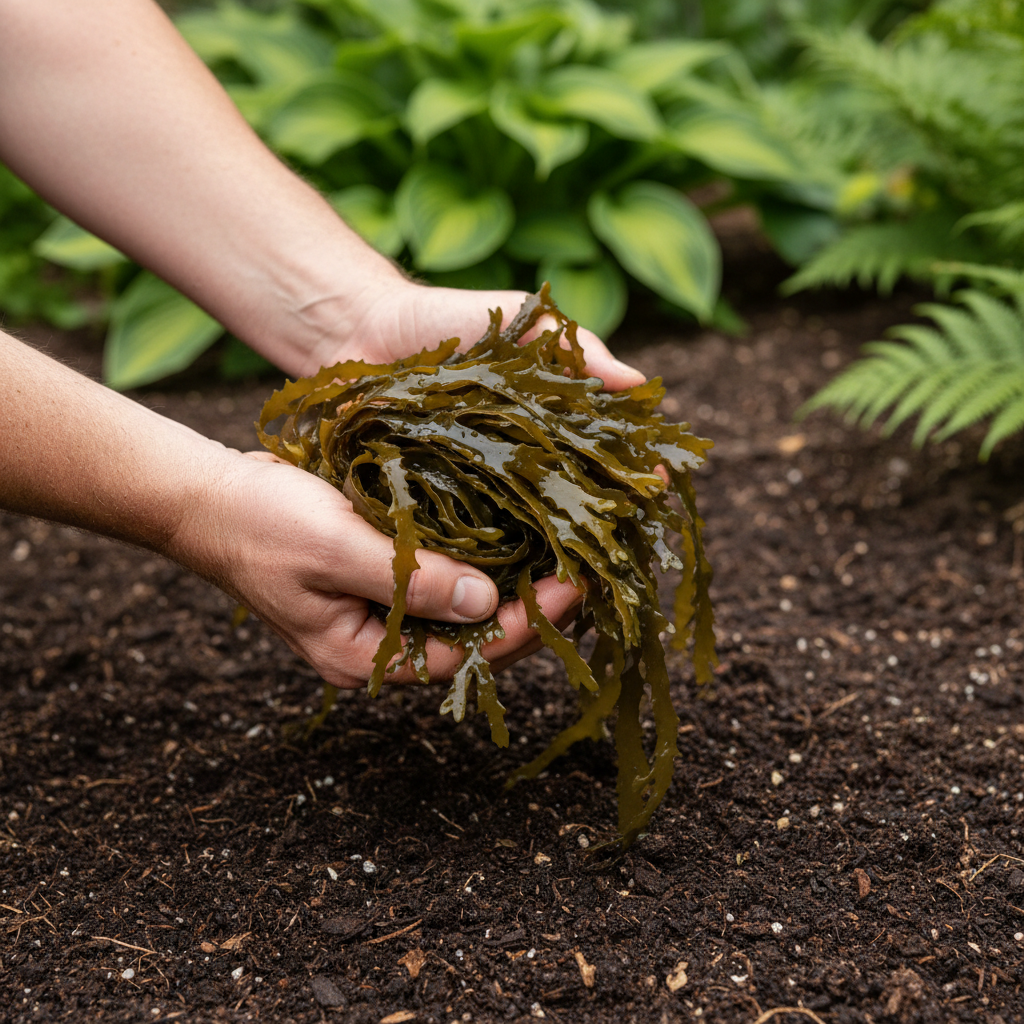
Seaweed is a powerful, free, and sustainable organic fertilizer for your garden, brimming with essential micronutrients, trace elements, and natural growth hormones. Utilizing seaweed can dramatically improve soil structure, boost plant vitality, and enhance disease resistance, all without the cost or chemical concerns of synthetic fertilizers. Proper preparation, primarily rinsing and composting, ensures its beneficial impact on your plants.
The Problem
Gardeners constantly seek ways to improve soil fertility and plant health, often turning to costly synthetic fertilizers or store-bought organic amendments. These solutions can be expensive, and synthetic options may introduce unwanted chemicals into your soil and food. Many gardeners overlook a readily available, nutrient-rich, and completely free resource found along coastlines: seaweed. Without understanding its benefits and proper application, this "ocean treasure" remains untapped, leaving gardens to struggle with nutrient deficiencies, poor soil structure, and susceptibility to pests and diseases.
How It Works
Seaweed, particularly kelp and other marine algae, is a powerhouse of over 60 essential macro- and micronutrients, including nitrogen, phosphorus, potassium, calcium, magnesium, and sulfur, along with a vast array of trace elements like iron, manganese, zinc, copper, and boron. What makes seaweed truly exceptional, however, are the natural plant hormones it contains, such as auxins, gibberellins, and cytokinins. Auxins stimulate root development and cell elongation, leading to stronger, deeper root systems. Gibberellins promote stem growth and seed germination, while cytokinins encourage cell division and differentiation, resulting in more vigorous foliage and flower production.
Beyond its nutrient content, seaweed's unique cellular structure contributes significantly to soil health. As it breaks down, it releases alginates, complex carbohydrates that bind soil particles together, improving soil aggregation. This process enhances soil structure by increasing porosity, which allows for better aeration and water retention. Improved aeration is crucial for root respiration and beneficial microbial activity, while better water retention means plants are less stressed during dry periods, requiring less frequent watering.
Furthermore, seaweed acts as a natural soil conditioner, improving the cation exchange capacity (CEC) of the soil. This refers to the soil's ability to hold onto positively charged ions (like many plant nutrients) and make them available to plant roots. By increasing CEC, seaweed helps prevent nutrient leaching, ensuring that valuable elements remain in the root zone longer. It also introduces beneficial microbes that aid in nutrient cycling and suppress soil-borne diseases. The overall effect is a healthier, more resilient soil ecosystem that supports robust, disease-resistant plants.
Step-by-Step Fix
Improving your garden with free seaweed fertilizer involves a few straightforward steps, from careful collection to proper application.
-
Understand Local Regulations and Tides – Check rules and timing Before you even think about stepping onto a beach with a bucket, research local regulations regarding seaweed harvesting. Some areas, especially protected coastal zones or private beaches, may restrict or prohibit collection. Always respect private property signs. Crucially, plan your collection during low tide. This is when the most seaweed is exposed and accessible on the foreshore. Consult tide charts for your specific location; collecting at high tide is difficult and potentially unsafe. Look for recently washed-up seaweed that is still relatively fresh and not too dried out or sand-encrusted.
- Safety Note: Never harvest seaweed from stagnant pools or areas with visible pollution (oil slicks, chemical spills). Always wear appropriate footwear with good grip on potentially slippery rocks and wet sand.
-
Collect Fresh, Clean Seaweed – Gathering your bounty Focus on collecting seaweed that is loose on the beach, not attached to rocks or the seafloor. Intact, rooted seaweed plays a vital role in marine ecosystems, providing habitat and food for numerous organisms. Use gloves to protect your hands from abrasions and potential marine life. A pitchfork, rake, or sturdy shovel can be helpful for gathering larger quantities, and a large bucket, durable bag, or wheelbarrow will make transport easier. Aim for a mix of different types of seaweed if available, as they offer varying nutrient profiles.
- Pro Tip: If you're transporting a large amount, consider using a tarp in the bed of a truck or wagon to contain it and minimize mess.
-
Rinse Thoroughly to Remove Salt – Crucial desalination step This is perhaps the most critical step. Salt, while a trace mineral, can be detrimental to most garden plants in significant quantities, hindering water absorption (due to osmosis) and potentially causing leaf burn. Place your collected seaweed in a large container or spread it out on a tarp and rinse it thoroughly with fresh water from a garden hose. You may need to do this multiple times, tossing and turning the seaweed to ensure all surfaces are exposed to the fresh water. A good indicator of success is when the rinse water runs clear and doesn't feel noticeably salty to the touch. For large amounts, you can submerge it in a large tub of fresh water for an hour or two, then drain and rinse again.
-
Prepare for Application: Composting or Direct Use – Choose your method You have a few options for utilizing your rinsed seaweed, depending on your immediate needs and preferences:
- Composting: This is the most common and recommended method for sustained soil health. Chop the rinsed seaweed into smaller pieces (2-4 inches) using shears or a shovel. This increases surface area for microbial action and speeds up decomposition. Add it in layers to your compost pile, treating it as a "green" material. The ideal ratio is about 1 part seaweed to 3-4 parts "brown" materials (dry leaves, straw, wood chips). Seaweed will break down over several weeks to months, enriching your compost with a slow-release nutrient boost.
- Direct Application (Soil Amendment): For an immediate, albeit less long-lasting, boost, seaweed can be worked directly into the soil. Again, chop it into small pieces. Dig it into garden beds a few weeks before planting, ensuring it's thoroughly mixed with the soil. This allows it to begin breaking down and releasing nutrients without overwhelming young plants.
- Liquid Feed (Seaweed Tea): For a quick nutrient boost, especially for foliar feeding or transplant shock, create a "seaweed tea." Fill a 5-gallon bucket about one-third full with chopped, rinsed seaweed. Top it with water and let it steep for 2-4 weeks, stirring occasionally. The mixture will ferment and become darker. Strain the liquid, dilute it (typically 1 part tea to 10 parts water), and use it to water plants or as a foliar spray.
-
Apply to Your Garden – Nourishing your plants Once your seaweed is prepared (composted, tilled in, or brewed), apply it carefully.
- Compost: Spread finished seaweed compost thinly (1-2 inches) as a top dressing around established plants or gently work it into the top few inches of soil before planting. This provides a continuous supply of nutrients and improves soil structure over time.
- Direct Amendment: If tilled directly into the soil, ensure it
Related Articles
Keep troubleshooting with these hand-picked guides from FixlyGuide:
- The 3 Critical Mistakes Wrecking Your Lawn (And the Liquid Fix) — Unlock the secret to a verdant lawn by learning how to avoid critical fertilization errors and choosing the right liquid solution.
- The Secret Power Tool Hiding in Your Garage for a Speedier Clean — Unlock the hidden potential of your cordless drill to tackle stubborn household grime, soap scum, and dirt with specialized cleaning attach…
- The Secret to Saving 40% on Outdoor Power Tools (Even When There's No Sale) — Unlock deep discounts on outdoor power tools year-round, even without a major holiday sale, by leveraging strategic timing and smart shoppi…
- The Secret to Lush Raised Beds? It's Not Just About How You Water — Smart irrigation for raised garden beds isn't just about automation; it's about delivering the right amount of water precisely when your pl…
- The 6-Minute Secret to a Sparkling Bathroom (It’s Not What You Think) — Unleash the hidden power of your cordless drill to tackle stubborn household grime, from tile grout to dryer vents, with specialized attach…
- The #1 Mistake Killing Your Garden: Why Weeds Keep Coming Back (And How to Stop Them) — Discover the secret to permanently removing weeds from your garden by understanding their root causes and implementing sustainable solution…
What should this project cost?
Enter your project details for a realistic cost range before you call anyone.
Cost depends heavily on which system turns out to be the source.
- Regional adjustment
- National average
- Labor share (typical)
- ~$1,620
- Quotes to collect
- 3 written estimates
Educational estimate based on national averages — not a binding quote. Always confirm with written local estimates.
Get the print-ready PDF of this guide
A clean, ad-free, printable version you can keep on your phone or pin to the workshop wall. Free with a FixlyGuide account.
- Print-optimized layout
- Tools, materials & every step included
- Saved to your account
This article was independently written by FixlyGuide based on the source topic.
Frequently asked questions
Is seaweed fertilizer safe for all plants?+
Yes, seaweed is generally safe for most plants when properly rinsed to remove excess salt. Its balanced nutrient profile and growth hormones benefit a wide range of vegetables, fruits, flowers, and shrubs. However, always ensure it is well-composted or thoroughly rinsed before direct application to avoid potential salt burn.
How often can I apply seaweed to my garden?+
If using composted seaweed, you can apply it as a soil amendment once or twice a year, typically in spring and fall. For seaweed tea, you can apply it as a liquid feed every 2-4 weeks during the growing season as a regular supplement, especially for plants needing a boost.
Where can I find seaweed for my garden?+
Seaweed can be found along ocean coastlines, particularly after storms or high tides. Look for fresh, unattached seaweed on public beaches. Always check local regulations regarding harvesting and avoid polluted areas or private property.



Discussion
Loading comments…