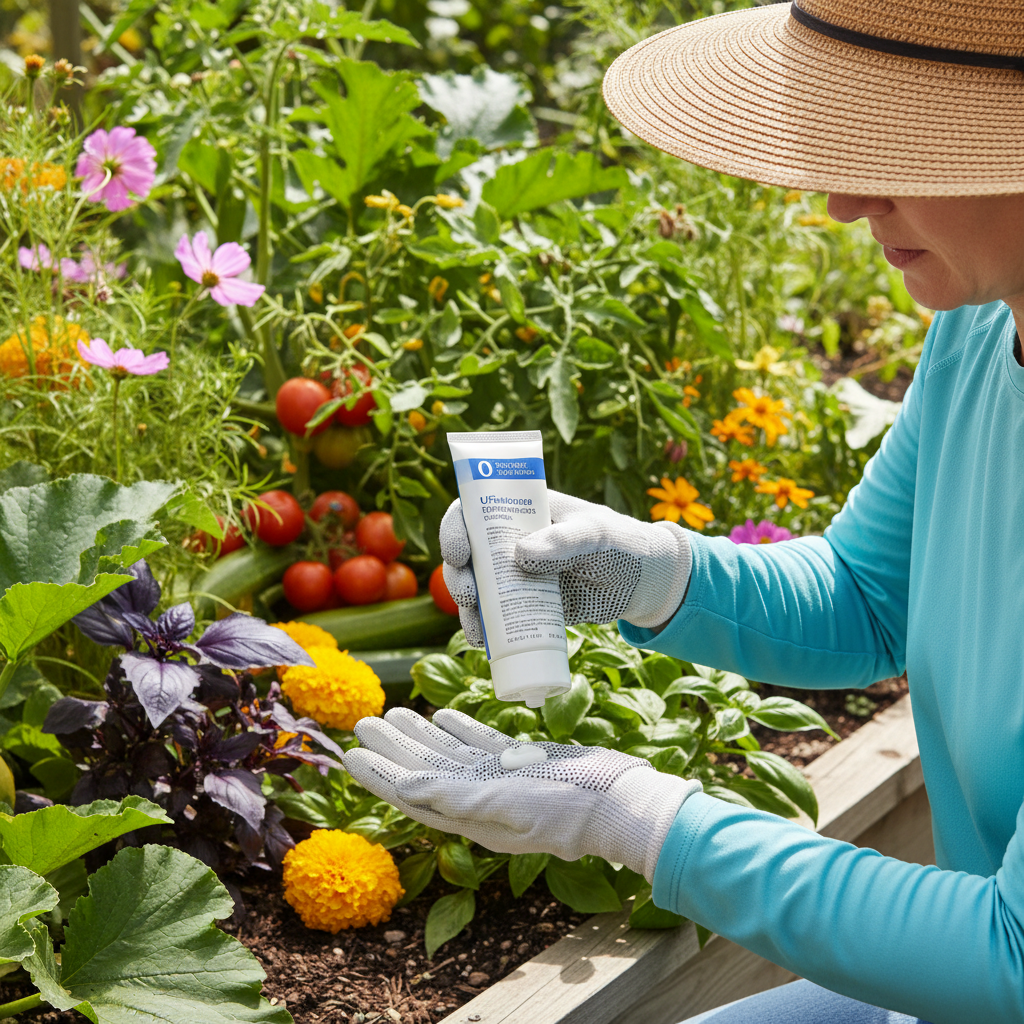
- Under-Application of Sunscreen: Most people use only 25-50% of the recommended amount, drastically reducing the stated SPF.
- Infrequent Reapplication: Forgetting to reapply after sweating or every two hours allows UV rays to penetrate as the sunscreen breaks down.
- Ignoring Cloud Cover: UV rays can penetrate clouds; up to 80% of UV radiation can reach the earth's surface on an overcast day.
- Reliance Solely on Sunscreen: While vital, sunscreen is only one part of a comprehensive sun protection strategy. Over-reliance without other measures (clothing, shade) is a mistake.
- Overlooking Specific Body Parts: Areas like ears, neck, scalp (especially if hair is thinning), lips, and the tops of hands and feet are frequently missed during application.
Published June 2, 2026Last updated August 17, 2026
Tools & materials you'll need
Affiliate linksAs an Amazon Associate FixlyGuide earns from qualifying purchases — at no extra cost to you. Prices and availability are accurate as of publication and subject to change.
Quick Answer
Many gardeners unknowingly compromise their sun protection by applying sunscreen incorrectly, choosing the wrong type, or forgetting crucial reapplication. The fix involves using broad-spectrum SPF 30+, applying generously 15-30 minutes before going outside, reapplying every two hours (or after sweating), and supplementing with UPF clothing and shade.
The Problem
You love your garden, but your skin doesn't always love the sun. Hours spent weeding, planting, and tending to your plants under the open sky expose you to harmful ultraviolet (UV) radiation. This exposure isn't just about a painful sunburn; it significantly increases your risk of premature skin aging, wrinkles, sunspots, and, most critically, skin cancer, including melanoma. While most gardeners understand the need for sun protection, common mistakes in application, product choice, and overall strategy often leave skin vulnerable without them even realizing it. These overlooked details can turn a diligent effort into inadequate defense.
How It Works
Sunlight reaches us in several forms, but when it comes to skin damage, we're primarily concerned with ultraviolet (UV) radiation. There are two main types that impact us: UVA and UVB.
UVA rays penetrate deep into the skin's dermis layer. They are responsible for premature aging, wrinkles, and contributing to skin cancer. UVA rays are present year-round, even on cloudy days, and can pass through glass.
UVB rays primarily affect the skin's outer layer (epidermis). They are the main cause of sunburn and play a significant role in causing most skin cancers. UVB intensity varies by season, time of day, and altitude.
Sunscreen works by creating a protective barrier on your skin. There are two main types:
- Mineral sunscreens (physical blockers) contain zinc oxide and titanium dioxide. These active ingredients sit on the skin's surface and physically block or reflect UV radiation away from the skin. They work immediately upon application.
- Chemical sunscreens absorb UV radiation as it penetrates the skin, converting it into heat, which is then released from the skin. Common active ingredients include oxybenzone, avobenzone, octinoxate, and octisalate. Chemical sunscreens need about 15-30 minutes to be absorbed into the skin before they become effective.
Regardless of type, sunscreens are rated by their Sun Protection Factor (SPF). SPF indicates how much longer it takes for UVB rays to redden skin when using sunscreen compared to going unprotected. For example, SPF 30 means it would theoretically take 30 times longer for your skin to burn than if you had no sunscreen on. A broad-spectrum label indicates that the product protects against both UVA and UVB rays. Understanding these mechanisms is key to selecting and applying sun protection effectively, ensuring your skin remains healthy while you enjoy your gardening.
Step-by-Step Fix
1. Choose the Right Sunscreen — Select a broad-spectrum sunscreen with an SPF of 30 or higher. Make sure it's water-resistant, especially if you anticipate sweating. Both mineral and chemical sunscreens are effective; the best one is the one you will use consistently.
*   **Mineral vs. Chemical:** Mineral sunscreens are often preferred for sensitive skin as they sit on top and reflect rays. Chemical sunscreens absorb into the skin and convert UV radiation to heat.
*   **Broad-Spectrum:** This ensures protection against both UVA (aging) and UVB (burning) rays.
2. Apply Generously and Early — Don't skimp on sunscreen. Most people apply far less than recommended. As a general rule, use about one ounce (a shot glass full) for your entire body, and a nickel-sized dollop for your face. Apply it at least 15-30 minutes before you go outside, especially with chemical sunscreens, to allow it to fully absorb and form a protective barrier.
* **Cover All Exposed Skin:** Pay special attention to often-forgotten areas like ears, neck, the tops of your feet, and the back of your hands.
3. Reapply Religiously — Sunscreen isn't a one-and-done application, particularly when you're active outdoors. Reapply at least every two hours, or more frequently if you've been sweating heavily, swimming, or drying off with a towel. Sweating, even from light gardening, can diminish its effectiveness over time.
* **Sweat-Resistant Isn't Sweat-Proof:** Even water-resistant formulas only maintain their SPF for a limited time (usually 40 or 80 minutes) when exposed to water or sweat.
4. Wear Protective Clothing — Sunscreen is excellent, but clothing provides a physical barrier that can offer superior and more consistent protection. Look for lightweight, long-sleeved shirts, long pants, and wide-brimmed hats made from UPF (Ultraviolet Protection Factor) fabric. If UPF isn't specified, tightly woven fabrics offer better protection than loosely woven ones.
*   **Wide-Brimmed Hat:** A hat with a brim of at least 3 inches all the way around protects your face, ears, and neck, which are highly susceptible to sun damage.
*   **Sunglasses:** Choose sunglasses that block 99-100% of both UVA and UVB rays to protect your eyes and the delicate skin around them.
5. Seek Shade and Plan Your Day — The sun's rays are strongest between 10 AM and 4 PM. If possible, plan your most intensive gardening tasks for early mornings or late afternoons. Utilize natural shade from trees, or create your own with umbrellas or shade cloths for work areas. Even short breaks in the shade can reduce your overall UV exposure.
* **Portable Shade:** Consider a large outdoor umbrella or canopy that you can move to your current gardening spot.
Common Causes
- Under-Application of Sunscreen: Most people use only 25-50% of the recommended amount, drastically reducing the stated SPF.
- Infrequent Reapplication: Forgetting to reapply after sweating or every two hours allows UV rays to penetrate as the sunscreen breaks down.
- Ignoring Cloud Cover: UV rays can penetrate clouds; up to 80% of UV radiation can reach the earth's surface on an overcast day.
- Reliance Solely on Sunscreen: While vital, sunscreen is only one part of a comprehensive sun protection strategy. Over-reliance without other measures (clothing, shade) is a mistake.
- Overlooking Specific Body Parts: Areas like ears, neck, scalp (especially if hair is thinning), lips, and the tops of hands and feet are frequently missed during application.
- Using Expired Sunscreen: Sunscreen loses its effectiveness over time. Always check the expiration date.
Common Mistakes
- Applying Sunscreen as You Walk Out the Door: Chemical sunscreens need 15-30 minutes to activate on your skin. Applying just before sun exposure leaves you vulnerable initially.
- Using Last Year's Leftover Sunscreen: Sunscreens have a shelf life, typically three years. Expired formulations are less effective, offering diminished protection.
- **Thinking
Related Articles
Keep troubleshooting with these hand-picked guides from FixlyGuide:
- The 4-Hour — Transform your garden into a self-sufficient oasis with smart strategies for watering, weeding, and pest control, minimizing your effort.
- The Hidden Reason Your GFCI Trips (It's Not Always a Faulty Outlet) — A continuously tripping GFCI outlet is a critical safety warning, often indicating moisture, a faulty appliance, or a wiring problem that r…
- The Secret to Lush Raised Beds? It's Not Just About How You Water — Smart irrigation for raised garden beds isn't just about automation; it's about delivering the right amount of water precisely when your pl…
- The 5-Minute Trick to Vacation-Proof Your Garden (Before You Leave Town) — Prevent your garden from wilting while you're away with simple, proactive steps that ensure lush growth and minimal fuss upon your return.
- The 5 Essential Tools Every New Gardener Needs (And 3 You Can Skip) — Starting a garden doesn't require a huge investment in tools; savvy new gardeners can thrive with just a few key items and save money by kn…
- The 3 Hidden Mistakes That Make Your Deck Sealer Fail (And How to Fix Them) — Properly sealing your wood deck protects it from the elements, but common mistakes often lead to early failure. Learn how to reseal your de…
Should you do this yourself?
Answer five quick questions before you start. Safety outranks savings every time.
Your experience with work like this
How high do you have to work?
Does the job involve any of these?
Will it need a permit?
Specialty tools
Free and instant. Educational guidance only — not a quote, inspection, or professional diagnosis.
What should this project cost?
Enter your project details for a realistic cost range before you call anyone.
Cost depends heavily on which system turns out to be the source.
- Regional adjustment
- National average
- Labor share (typical)
- ~$1,620
- Quotes to collect
- 3 written estimates
Educational estimate based on national averages — not a binding quote. Always confirm with written local estimates.
Before you start
Check the difficulty, permits, and safety risk — then decide whether to call a pro.
- Estimate this projectGet a cost range for your scope and ZIP before you call anyone.Open
- Get local estimatesSend one request and compare written estimates from vetted pros.Open
Free, no signup required. Estimates are educational guidance, not a quote or an inspection.
This article was independently written by FixlyGuide based on the source topic.
Frequently asked questions
How often should I reapply sunscreen when gardening?+
You should reapply sunscreen every two hours while gardening, or more frequently if you are sweating heavily. Sweat can reduce the effectiveness of even water-resistant sunscreens over time.
Is SPF 30 enough for gardening?+
Yes, SPF 30 is generally recommended as a minimum for gardening. It blocks about 97% of UVB rays. Higher SPFs offer slightly more protection but are not significantly better, and proper application and reapplication are more important than pushing for very high SPF numbers.
Can I get sunburned on a cloudy day while gardening?+
Absolutely. Up to 80% of the sun's UV rays can penetrate clouds and still reach your skin. Therefore, it's crucial to practice sun protection even on overcast days.
What kind of clothing is best for sun protection in the garden?+
Look for clothing with a UPF (Ultraviolet Protection Factor) rating, ideally UPF 30 or higher. Tightly woven fabrics, long sleeves, and long pants provide a physical barrier. A wide-brimmed hat is also essential to protect your face, ears, and neck.
How much sunscreen should I use?+
As a general guideline, use about one ounce (a shot glass full) of sunscreen to cover your entire body. For just your face, a nickel-sized dollop is usually sufficient. Most people apply too little, which reduces the effective SPF.


Discussion
Loading comments…