- Check for Other Issues — If, after a new battery and a reset, the chirping persists, consider these less common but still possible scenarios:
- Dust and Debris: Use a can of compressed air to gently clear any dust or cobwebs from the detector's vents and sensor chamber. Accumulations can sometimes mimic smoke or interfere with internal sensors, causing false alerts or chirps.
- Unit Life Span: Smoke detectors have a finite life, typically 7-10 years from the date of manufacture. Look for a
Electrical · Panel or service upgrade
| Project category | Electrical |
|---|---|
| Problem type | Panel or service upgrade |
| Trade required | Electrical |
| Urgency | Planned project |
| Safety risk | High safety risk |
| DIY suitability | Licensed pro only |
| Cost category | High cost |
| Typical timeline | Permit plus utility scheduling, commonly 2–6 weeks |
| Contractor type | Licensed electrician |
Repair option
Add a subpanel when the main service is adequate.
Replacement option
Full service upgrade with utility coordination and permits.
Common causes
- Obsolete or recalled panel brands
- Service capacity too small for added loads
- No room for required AFCI/GFCI breakers
Relevant tools:project cost estimatorcompare quotes
Published May 25, 2026Last updated August 17, 2026
Tools & materials you'll need
Affiliate links- Amazon9-volt battery1 · Or AA/AAA, depending on your detector model
As an Amazon Associate FixlyGuide earns from qualifying purchases — at no extra cost to you. Prices and availability are accurate as of publication and subject to change.
Quick Answer
A smoke detector chirping every 30 seconds is almost universally a signal for a low or dead battery that needs immediate replacement. While frustrating, this periodic chirp is a crucial warning mechanism designed to alert you before the device completely loses power and fails to provide protection. If changing the battery doesn't stop the chirping, you might need to try resetting the unit, checking its date for expiration, or ensuring it's properly seated in its base. Ignoring the chirp means risking your family's safety.
The Problem
You're trying to relax, sleep, or simply enjoy a quiet moment, and then it starts: a persistent, irritating chirp from your smoke detector, repeating like clockwork every 30 to 60 seconds. This isn't just an annoyance; it's your home's front-line defense system trying to tell you something critical. The most common culprit, by far, is a dying battery. Smoke detectors, whether battery-powered or hardwired with a battery backup, rely on a fresh power source to operate continuously. When that power source dips below a certain voltage, the detector is programmed to emit a low-battery warning chirp. This alert is distinct from a full alarm, which would be a loud, continuous shriek, indicating the presence of smoke or carbon monoxide. The chirping serves as a proactive alert, giving you time to replace the battery before the detector becomes inoperable. Overlooking this warning can leave your home vulnerable to fire hazards without adequate protection.
How It Works
Smoke detectors employ various technologies to detect fire, but their power systems share common traits relevant to the chirping issue. Most residential smoke detectors use either ionization or photoelectric sensing technology, or sometimes a combination of both. Ionization detectors contain a small amount of radioactive material that ionizes the air in a chamber, creating a small, constant electric current. Smoke particles entering this chamber disrupt the current, triggering the alarm. Photoelectric detectors, on the other hand, use a light source and a photosensitive sensor. When smoke enters the chamber, it scatters the light into the sensor, activating the alarm.
Regardless of the sensing method, consistent power is essential. Standalone battery-powered units run solely on disposable batteries (typically 9V, AA, or AAA). Hardwired detectors receive their primary power from your home's electrical system, often from a dedicated circuit. However, almost all hardwired units also contain a backup battery, usually a 9V, which kicks in during a power outage. This backup battery is just as crucial as the primary power source, ensuring continuous protection even when the main power is out.
The chirping mechanism is tied directly to the battery's voltage. A monitoring circuit within the detector constantly assesses the battery's charge. When the voltage drops below a pre-set threshold, indicating that the battery no longer has enough power to guarantee reliable operation for an extended period, the circuit activates the low-battery chirp. This chirp is designed to be loud enough to hear, but distinct from the full alarm, preventing unnecessary panic while still demanding attention. The 30 to 60-second interval is standard across most manufacturers, making the problem easily identifiable. If the detector is hardwired and the chirp persists after replacing the backup battery, it can sometimes indicate an issue with the detector's connection to the main power, an expired unit, or a fault in the internal circuitry that manages power, signaling it's time for a replacement.
Step-by-Step Fix
Safety First — Before handling any electrical device, even a low-voltage one like a smoke detector, it's always wise to exercise caution. If your smoke detector is hardwired, consider turning off the circuit breaker that powers it, particularly if you're uncomfortable working with household electricity. While generally safe, this extra step eliminates any potential for accidental shocks, though the direct current from a 9V battery is harmless.
-
Identify the Chirper — The acoustics in a home can make it surprisingly difficult to pinpoint which detector is chirping. Walk around calmly and listen carefully. Cup your hand behind your ear to better direct sound. It might be helpful to have another person listen from a different location to triangulate the source.
-
Gather Your Tools — Once you've found the chirping culprit, retrieve your materials. You'll need a sturdy stepladder, a new battery (check the existing one for its type – usually 9V, AA, or AAA), and possibly a flathead screwdriver for stubborn battery compartments or if the unit needs to be removed from its base.
-
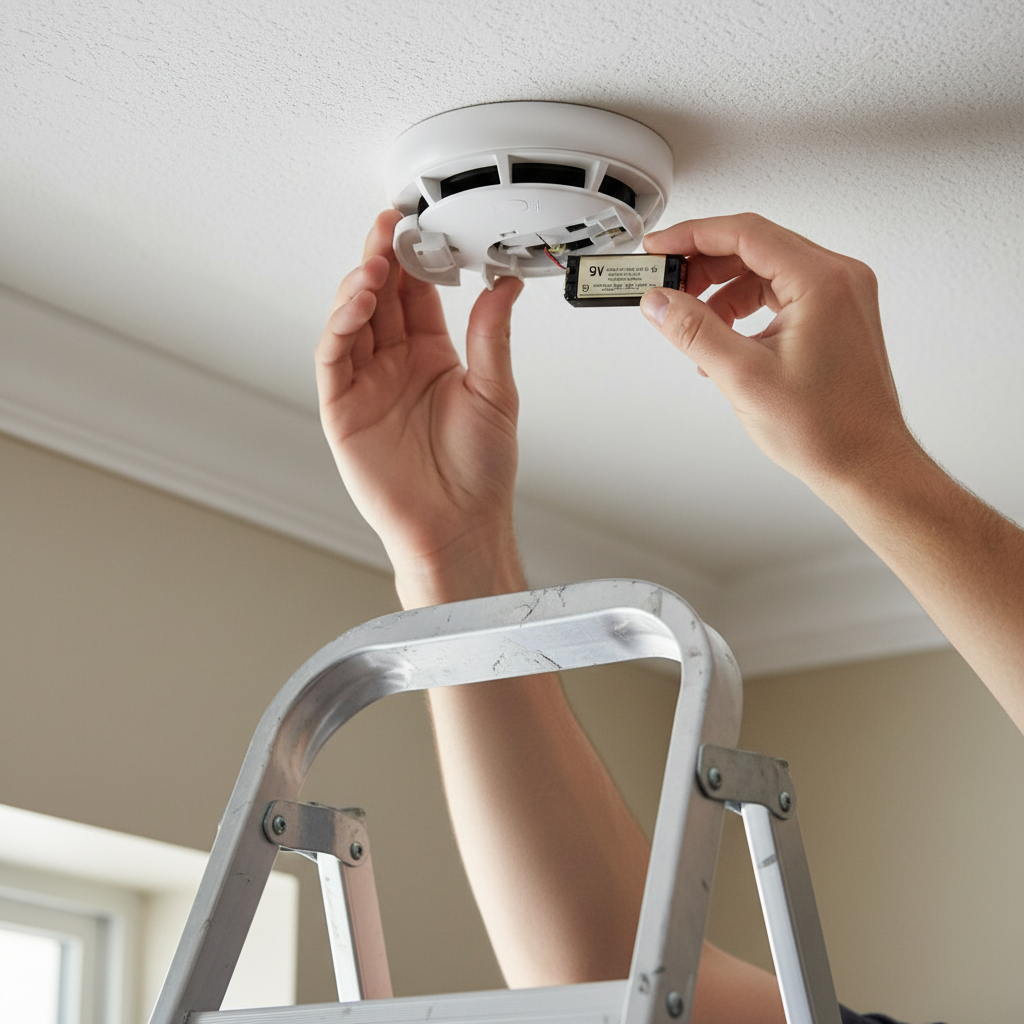
Access the Detector — Carefully climb the stepladder until you can comfortably reach the smoke detector. For battery-only units, you'll typically twist the detector counter-clockwise from its base to remove it, or simply open a battery compartment door on the side or front. For hardwired units, the battery compartment is almost always on the side or front, often secured with a small tab or screw that you'll need to press or loosen.
- If the unit feels stuck: Do not force it. Some older units can be stiff. Gently apply pressure or consult the user manual if you have it. For hardwired units, you may need to disconnect the power harness to access the battery on the back, but try to avoid this unless absolutely necessary.
-
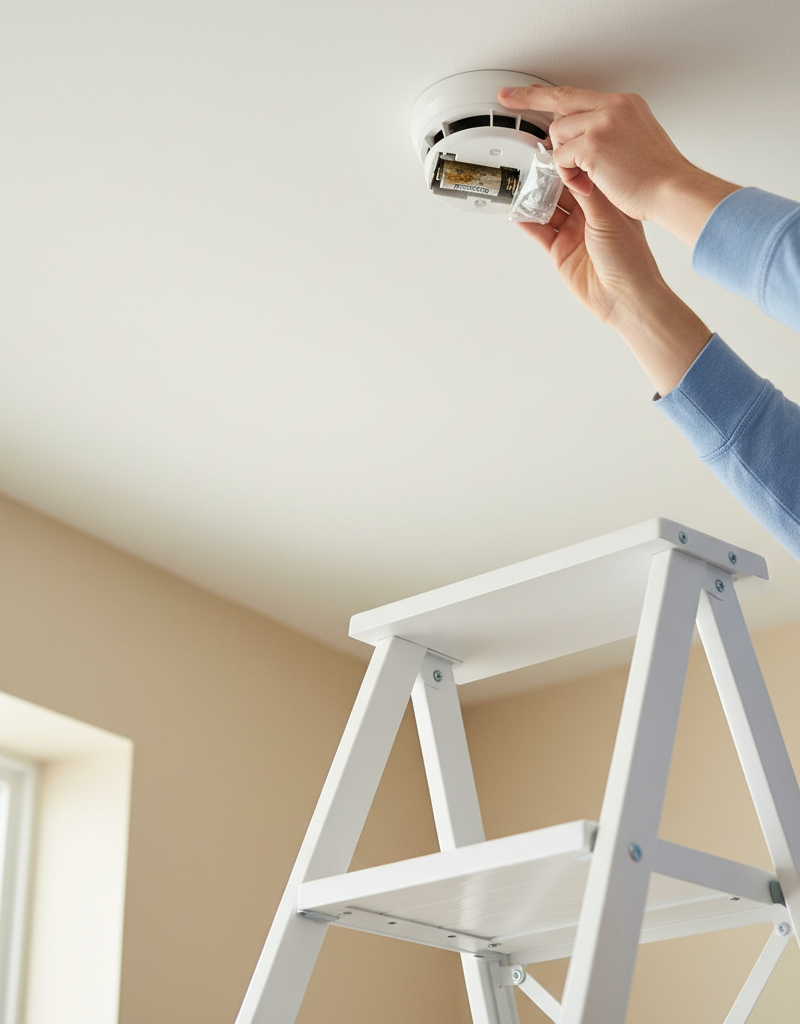
Remove the Old Battery — Open the battery compartment. Most 9V batteries snap in and out. AA or AAA batteries will slide out. Note the orientation of the positive (+) and negative (-) terminals before removing the old battery. This will ensure you install the new one correctly.
-
Install the New Battery — Insert the fresh battery, ensuring it's correctly oriented according to the markings in the compartment. You should feel a firm connection for 9V batteries or see AA/AAA batteries seated snugly. Close the battery compartment door securely. Many detectors have a small sensor that won't allow the compartment to close if the battery isn't fully seated or is inserted backward.
- If the door doesn't close: Double-check the battery's orientation and ensure no wires are pinched. Gently push the battery in until it clicks or fits properly.
-
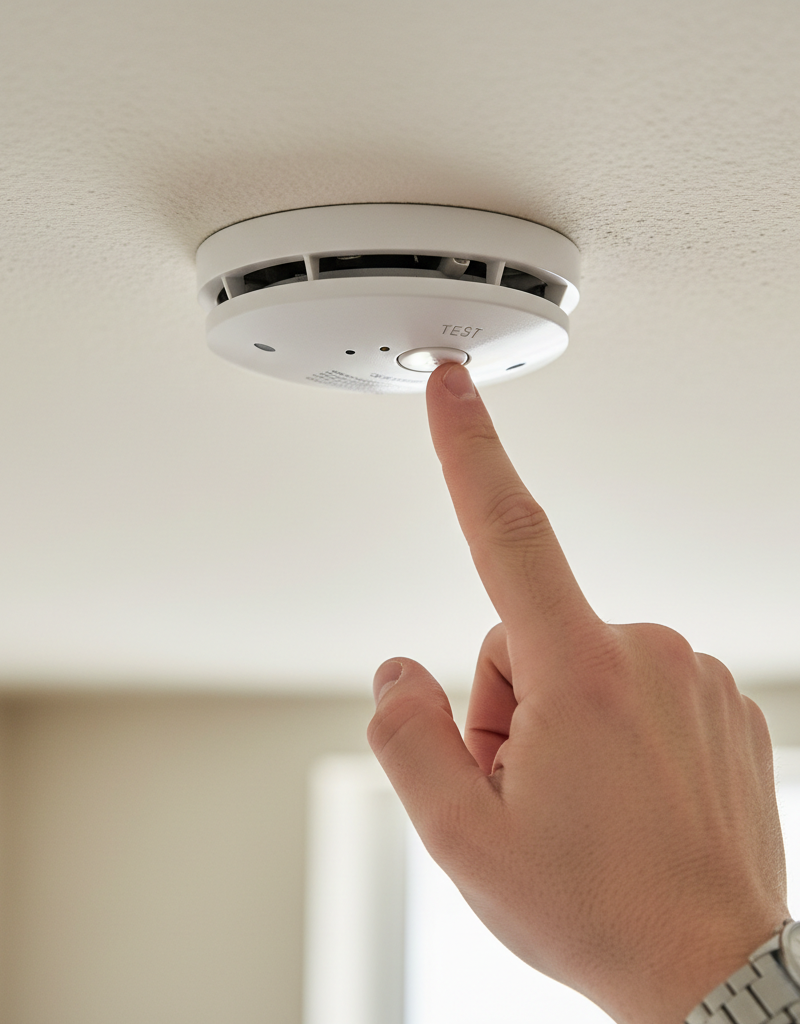
Test the Detector — After installing the new battery and reattaching the detector to its base (if removed), press and hold the 'Test' button. You should hear a loud, piercing alarm. This confirms the new battery is working and the detector is functional. Release the button once you've confirmed the alarm. It's smart to alert anyone else in the house before testing, as the alarm can be quite startling.
-
Reset the Detector (If Chirping Continues) — If the chirping doesn't stop immediately after the battery change and test, the unit may need a hard reset to clear its internal memory. This is especially true for hardwired units. To reset:
- For hardwired units: Turn off the circuit breaker supplying power to the smoke detector(s). Remove the backup battery from the chirping unit. Hold down the 'Test' button for 15-20 seconds to drain any residual charge. Reinstall the backup battery. Turn the circuit breaker back on. The detector may beep once or twice as it powers up, then it should be silent.
- For battery-only units: Remove the battery. Press and hold the 'Test' button for 15-20 seconds. Reinstall the battery. The detector should reset and stop chirping.
-
Check for Other Issues — If, after a new battery and a reset, the chirping persists, consider these less common but still possible scenarios:
- Dust and Debris: Use a can of compressed air to gently clear any dust or cobwebs from the detector's vents and sensor chamber. Accumulations can sometimes mimic smoke or interfere with internal sensors, causing false alerts or chirps.
- Unit Life Span: Smoke detectors have a finite life, typically 7-10 years from the date of manufacture. Look for a
Related Articles
Keep troubleshooting with these hand-picked guides from FixlyGuide:
- The Annoying — A smoke detector chirping every 30 seconds is almost always a low battery warning, but sometimes it signals other issues.
- The 30-Second Chirp: Why Most Homeowners Misdiagnose Their Smoke Detector (And The Real Fix) — A smoke detector chirping every 30 seconds almost always means a dying battery, but it can also signal an expired unit or a buildup of dust.
- The Annoying Chirp: 3 Hidden Reasons Your Smoke Detector Won't Shut Up — A chirping smoke detector every 30-60 seconds usually means a low battery, but other hidden issues like dusty sensors or power interruption…
- Is Your Smoke Detector Lying? The #1 Mistake Homeowners Make — Discover the crucial mistake most homeowners make with their smoke detectors and how to ensure your alarms are always ready to protect your…
- The Hidden Reason Your Circuit Breaker Keeps Tripping (It's Not Always an Overload) — Discover the often-overlooked electrical issues that cause circuit breakers to trip repeatedly, and how to accurately diagnose and fix them.
- The Secret Reason Your Interior Door Sticks (It's Not Always Humidity) — Discover the real reasons your interior door is sticking and how to implement simple, lasting fixes with common household tools.
Should you do this yourself?
Answer five quick questions before you start. Safety outranks savings every time.
Your experience with work like this
How high do you have to work?
Does the job involve any of these?
Will it need a permit?
Specialty tools
Free and instant. Educational guidance only — not a quote, inspection, or professional diagnosis.
What should this project cost?
Enter your project details for a realistic cost range before you call anyone.
Outlet and switch work usually $150–$400; panel upgrades commonly $1,800–$4,200.
- Regional adjustment
- National average
- Labor share (typical)
- ~$709
- Quotes to collect
- 3 written estimates
Educational estimate based on national averages — not a binding quote. Always confirm with written local estimates.
Before you start
Check the difficulty, permits, and safety risk — then decide whether to call a pro.
- Estimate this projectGet a cost range for your scope and ZIP before you call anyone.Open
- Get local estimatesSend one request and compare written estimates from vetted pros.Open
Free, no signup required. Estimates are educational guidance, not a quote or an inspection.
Get the print-ready PDF of this guide
A clean, ad-free, printable version you can keep on your phone or pin to the workshop wall. Free with a FixlyGuide account.
- Print-optimized layout
- Tools, materials & every step included
- Saved to your account
Frequently asked questions
Why does my smoke detector chirp even after changing the battery?+
If your smoke detector continues to chirp after a new battery, it likely needs a reset. Remove the new battery, press and hold the test button for 15-20 seconds to drain residual power, then reinsert the battery. For hardwired units, also briefly turn off the associated circuit breaker.
How often should I change the batteries in my smoke detector?+
You should replace the batteries in all smoke detectors at least once a year, even if they aren't chirping. A good practice is to do it when you change your clocks for Daylight Saving Time. Hardwired units' backup batteries also need annual replacement.
How long do smoke detectors last?+
Smoke detectors have a lifespan of about 7-10 years from the date of manufacture. After this period, their sensors can degrade, making them less effective. Check the 'replace by' date on the back of your unit; if it's expired, replace the entire detector.
Can dust cause a smoke detector to chirp?+
Yes, excessive dust or insects in the sensing chamber can sometimes interfere with the detector's internal mechanisms, leading to false alarms or intermittent chirping. Gently clean your detector with a vacuum attachment or compressed air annually.

Discussion
Loading comments…