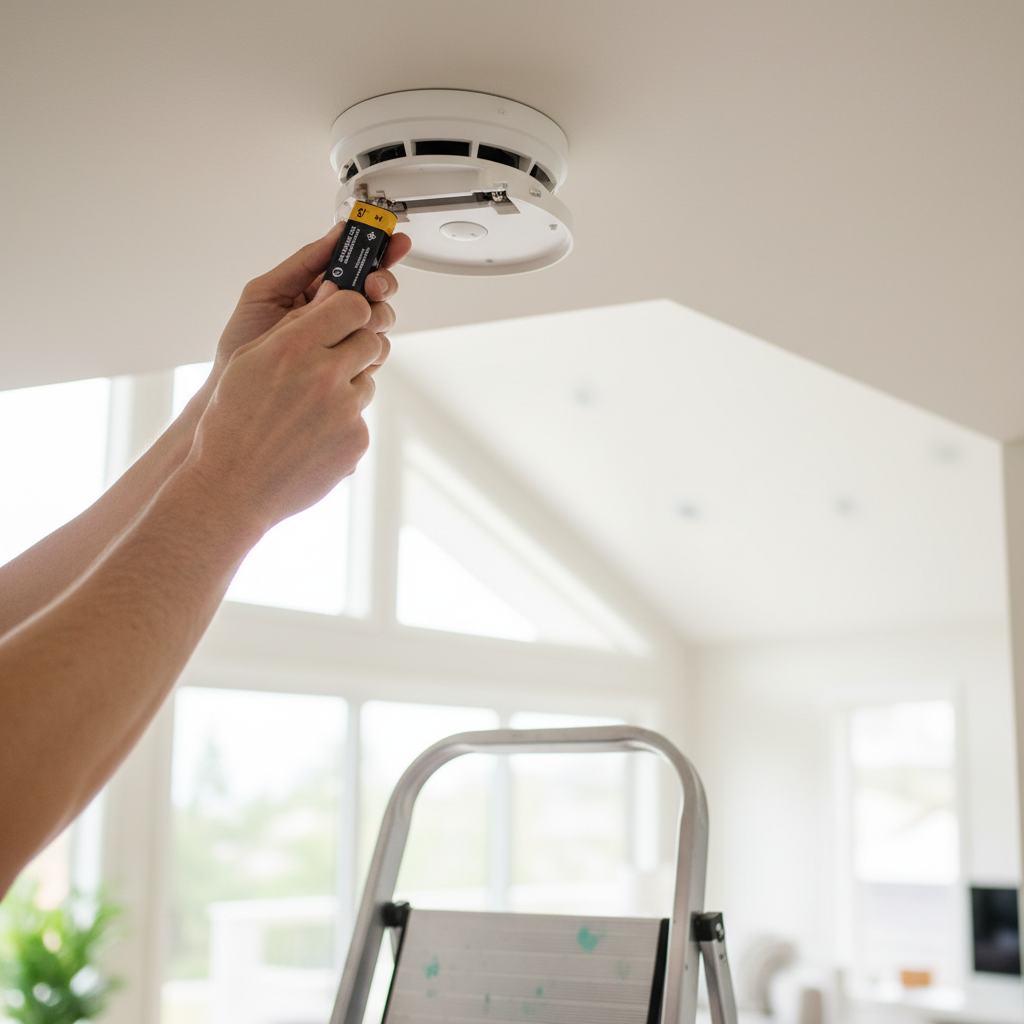
- Low Battery: This is by far the most frequent reason for a chirping smoke detector. The backup battery provides power during outages and is constantly monitored.
- Expired Unit: Smoke detectors have a finite lifespan, typically 7-10 years. Beyond this, their sensing components degrade, leading to unreliable operation and persistent chirping.
- Dust or Debris in Sensor: Accumulation of dust, insects, or other airborne particles within the sensing chamber can cause false alarms or trigger a 'fault' chirp.
- Power Interruption (Hardwired Units): Even a brief power flicker can sometimes confuse a hardwired unit, causing it to chirp as it attempts to diagnose its power source. A reset usually resolves this.
- Humidity or Temperature Extremes: High humidity or rapid temperature changes can occasionally affect sensitive smoke detector electronics, leading to intermittent chirping.
Electrical · Panel or service upgrade
| Project category | Electrical |
|---|---|
| Problem type | Panel or service upgrade |
| Trade required | Electrical |
| Urgency | Planned project |
| Safety risk | High safety risk |
| DIY suitability | Licensed pro only |
| Cost category | High cost |
| Typical timeline | Permit plus utility scheduling, commonly 2–6 weeks |
| Contractor type | Licensed electrician |
Repair option
Add a subpanel when the main service is adequate.
Replacement option
Full service upgrade with utility coordination and permits.
Common causes
- Obsolete or recalled panel brands
- Service capacity too small for added loads
- No room for required AFCI/GFCI breakers
Relevant tools:project cost estimatorcompare quotes
Published July 9, 2026Last updated August 17, 2026
Tools & materials you'll need
Affiliate linksAs an Amazon Associate FixlyGuide earns from qualifying purchases — at no extra cost to you. Prices and availability are accurate as of publication and subject to change.
Quick Answer
A smoke detector chirping approximately every 30-60 seconds almost always indicates a low battery that needs immediate replacement. However, it can also signal a dirty sensor, an expired unit, or a general fault requiring a reset or full replacement. Start by changing the battery, then clean the unit, and check its age.
The Problem
That intermittent, high-pitched chirp from your smoke detector isn't just an annoyance; it's a critical warning signal. Typically, it means the 9-volt or AA backup battery powering the unit is running low and needs to be replaced. Ignoring this sound can leave your home unprotected in the event of a fire. While a low battery is the most common cause, other factors like dust accumulation, an expired unit, or a power interruption can mimic the same symptom, leading to frustration and continued chirping even after a battery change. The key is to systematically troubleshoot to pinpoint the real issue and restore your home's safety.
How It Works
Smoke detectors, whether ionization or photoelectric, are designed to constantly monitor the air for signs of smoke. They accomplish this through different mechanisms. Ionization detectors have two electrically charged plates with a small radioactive source that ionizes the air in the chamber, creating a small, constant electrical current. Smoke particles entering this chamber disrupt the current, triggering the alarm. Photoelectric detectors, on the other hand, contain a light source and a photosensitive sensor. When smoke enters the chamber, it scatters the light from the source into the sensor, activating the alarm.
Both types of detectors are typically hardwired into your home's electrical system, providing continuous power. However, all modern hardwired smoke detectors are also equipped with a backup battery (usually a 9-volt or a set of AA or AAA batteries). This battery is crucial for ensuring the detector remains operational during a power outage. The detector's internal circuitry constantly monitors the voltage of this backup battery. When the voltage drops below a certain threshold, a low-battery alert is triggered, manifesting as the distinctive chirp every 30 to 60 seconds. Some newer models also integrate carbon monoxide (CO) detection, and the chirping mechanism for a low battery or fault is often identical across these combined units. The detector's internal memory also stores error codes and operational information, which a full reset can sometimes clear.
Step-by-Step Fix
1. Identify the Chirping Culprit — Locate the exact smoke detector that is chirping.
- This might sound obvious, but sound can reverberate and make it difficult to pinpoint. Go room by room, listen carefully, and even use a broom handle to gently tap around the base of each detector if it's on a high ceiling to confirm the source. If you have interconnected detectors, only the unit with the low battery will chirp individually.
2. Safety First: Disconnect Power (If Hardwired) — Before working on an electrical device, always ensure power is off.
- Safety Note: For hardwired units, locate your home's electrical service panel. Turn off the circuit breaker labeled for 'Smoke Detectors' or the general 'Lighting' circuit for the area. If you're unsure, turn off the main breaker to the entire house. For battery-only units, simply remove them from their base. Always test the detector by pressing the test button after the battery is out to ensure it's fully depowered before proceeding.
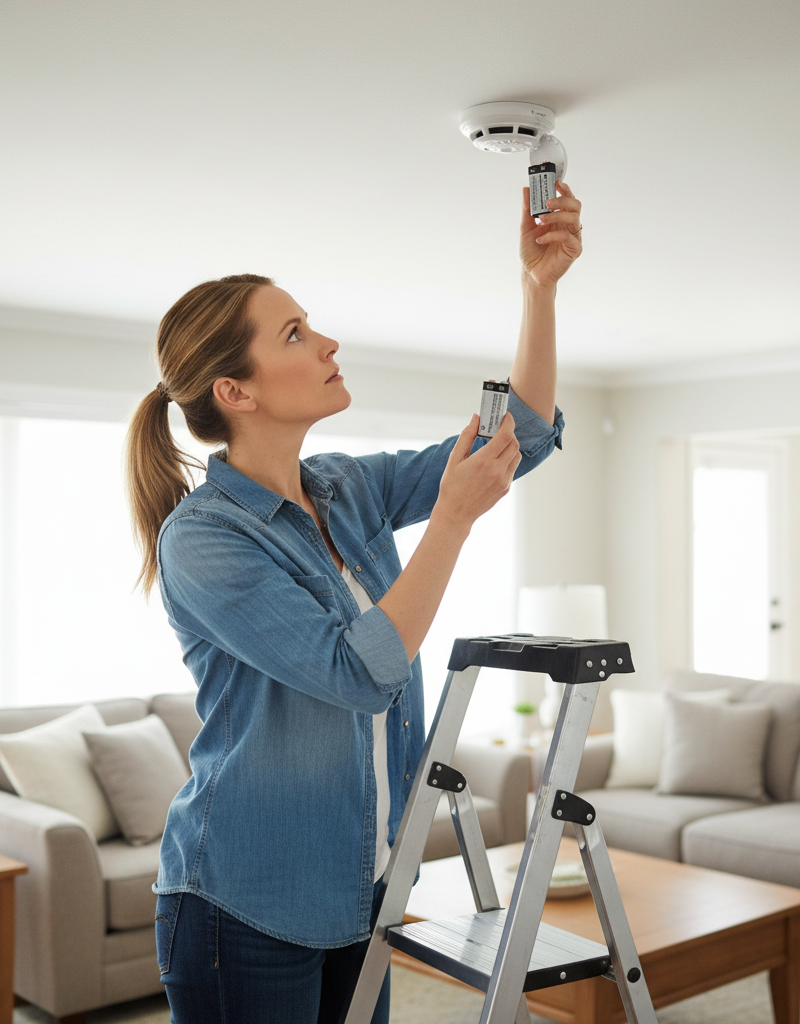
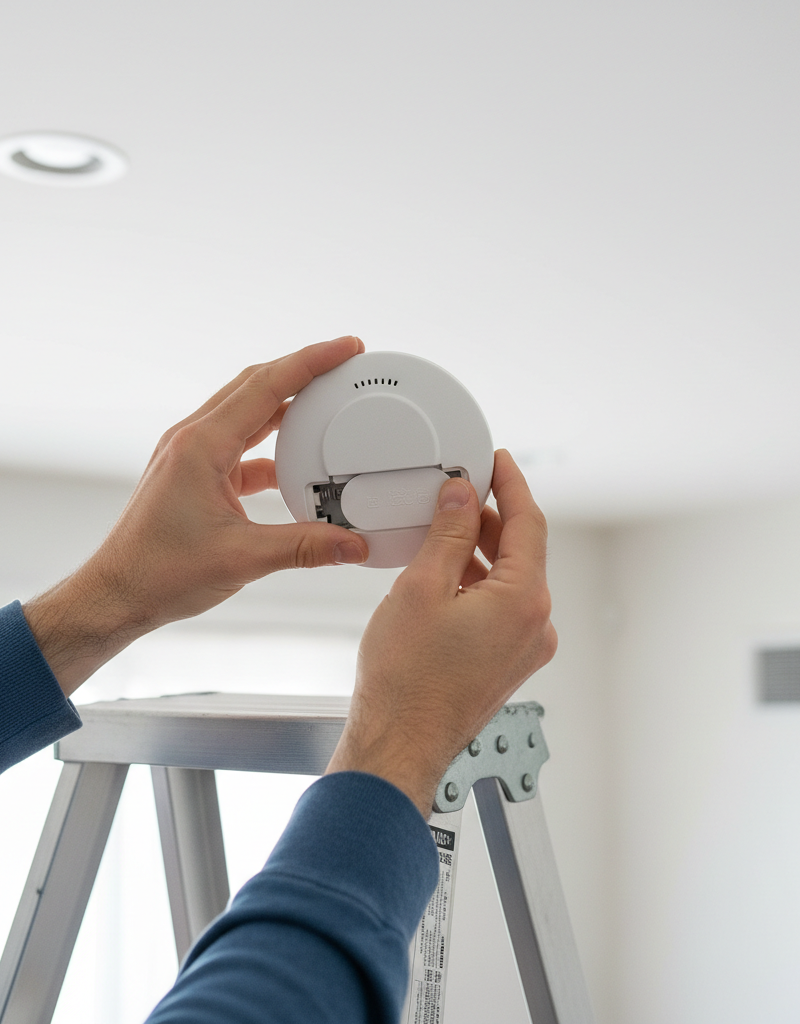
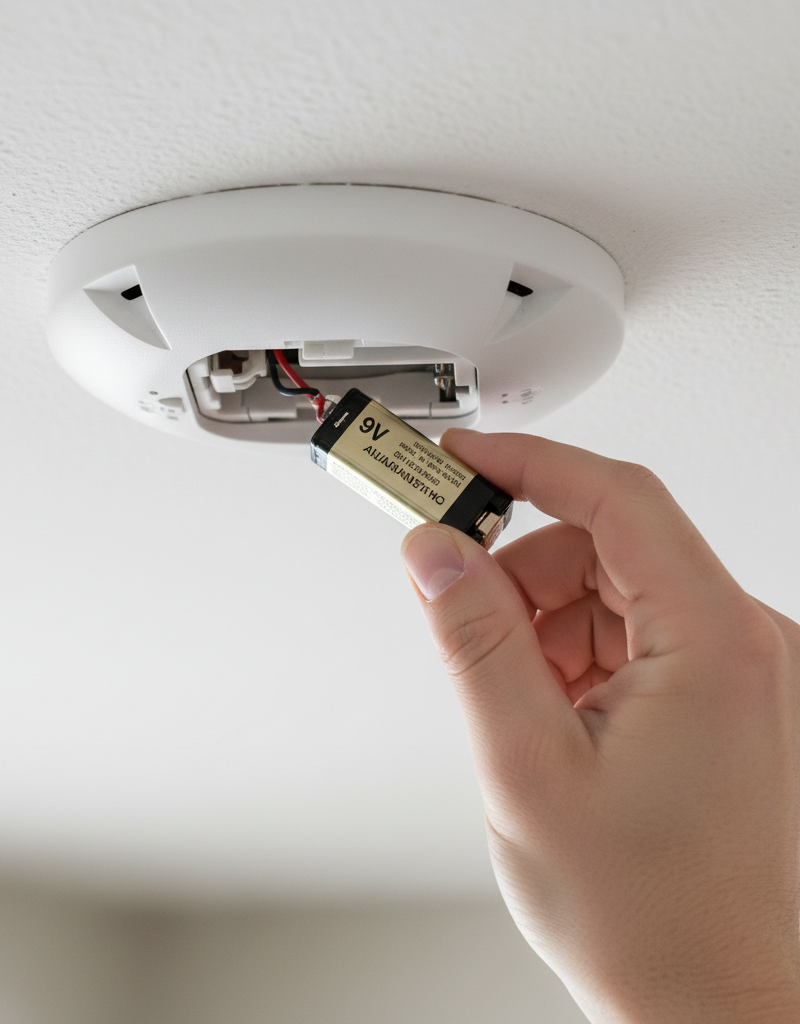
3. Replace the Battery — The most common fix for a chirping smoke detector.
- Twist the detector counter-clockwise from its mounting base to remove it. Open the battery compartment (usually a slide-out drawer or a snap-open cover). Replace the old battery with a new, fresh battery. For 9V batteries, ensure correct polarity. For AA/AAA batteries, check the orientation carefully. Use high-quality alkaline batteries for best results, as they last longer than conventional zinc-carbon batteries (typically 1 year).
- If this doesn't work: If the chirping continues after battery replacement, ensure the battery is seated firmly and the compartment is fully closed. Sometimes a loose connection can mimic a low battery.
4. Reset the Smoke Detector — Clear any lingering error codes or false signals.
- After replacing the battery (and with the unit still off its mounting plate if hardwired), press and hold the 'Test' button for 15-20 seconds. This will drain any residual charge and reset the unit's internal memory. For hardwired units, while holding the test button, restore power at the breaker, then release the test button after a few seconds. If battery-only, just hold the button. This step is critical and often overlooked.
5. Clean the Detector Sensors — Dust and debris can interfere with sensor performance.
- While the detector is off its base, use a can of compressed air to thoroughly blow out any dust, cobwebs, or insects from the vents and sensor chamber. Avoid using liquid cleaners or harsh chemicals, which can damage the internal components. A soft, dry cloth can be used to wipe the exterior.
- If this doesn't work: If the detector continues to chirp even after cleaning and resetting, there might be a more persistent issue with the sensor or internal components.
6. Check the Detector's Age — Smoke detectors don't last forever.
- Look at the back or side of the smoke detector for a manufacture date. Most smoke detectors have a lifespan of 7-10 years. After this period, the sensors degrade, becoming less reliable and prone to false alarms or constant chirping even with fresh batteries. If your detector is older than 7 years, it's time for a replacement.
- How to tell: The manufacture date is often printed directly on the unit, sometimes near the battery compartment or on the main label. If you can't find it, consider the unit expired if you've been in the home for more than 7 years and haven't replaced it.
7. Verify Power Connection (Hardwired Units Only) — Ensure proper electrical connection.
- If your unit is hardwired, ensure it's securely twisted onto its mounting bracket. Check that the wiring harness is properly plugged into the back of the detector. A loose power connection can sometimes mimic a low battery chirp. Restore power at the breaker and listen for any immediate chirping. If it starts chirping immediately after power is restored without a battery, there may be an electrical fault or the unit is defective.
8. Replace the Detector — When all troubleshooting fails, it's time for a new unit.
- If you've gone through all the steps and the chirping persists, or if the unit is past its typical lifespan, replacement is the safest and most reliable solution. Purchase a new smoke detector (or combination smoke/CO detector) that matches your existing type (ionization, photoelectric, or dual-sensor) for optimal safety. Follow the manufacturer's instructions for installation.
Common Causes
- Low Battery: This is by far the most frequent reason for a chirping smoke detector. The backup battery provides power during outages and is constantly monitored.
- Expired Unit: Smoke detectors have a finite lifespan, typically 7-10 years. Beyond this, their sensing components degrade, leading to unreliable operation and persistent chirping.
- Dust or Debris in Sensor: Accumulation of dust, insects, or other airborne particles within the sensing chamber can cause false alarms or trigger a 'fault' chirp.
- Power Interruption (Hardwired Units): Even a brief power flicker can sometimes confuse a hardwired unit, causing it to chirp as it attempts to diagnose its power source. A reset usually resolves this.
- Humidity or Temperature Extremes: High humidity or rapid temperature changes can occasionally affect sensitive smoke detector electronics, leading to intermittent chirping.
- Improper Battery Installation: A battery that isn't fully seated, or one with incorrect polarity, will behave like a low battery and cause chirping.
Common Mistakes
- Ignoring the Chirp: The most dangerous mistake is to simply remove the battery and forget about it. That chirp is a life-saving warning.
- Replacing with an Old Battery: Using a battery that's been sitting in a drawer for a long time might not have a full charge and will lead to quick chirping again.
- Not Resetting the Detector: Many homeowners forget to perform the full reset (holding the test button) after replacing the battery, allowing the old error code to persist.
- Using the Wrong Battery Type: While less common for 9V, some units require specific AA/AAA types. Always check your manual. Improper type or brand can sometimes lead to issues.
- **Attempting to
Related Articles
Keep troubleshooting with these hand-picked guides from FixlyGuide:
- The 7 Head-Scratching Reasons Your Outlet Died (Even With The Breaker On) — Discover the surprising reasons why an electrical outlet might stop working even when its circuit breaker is fully engaged, and how to safe…
- Why Does My Extension Cord Keep Tripping the Breaker? (It's Not Always Overload) — An extension cord repeatedly tripping a circuit breaker indicates a serious electrical issue that homeowners need to diagnose and resolve s…
- The Hidden Reason Your GFCI Won't Reset (And It's Not Always a Short) — When your GFCI outlet refuses to reset, it's often more than a simple tripped circuit, pointing to underlying electrical issues you can saf…
- The Single Most Common Reason Half Your Outlet Dies (and How to Fix It in 15 Minutes) — Before you call an electrician for a half-dead outlet, check this common culprit that's often a simple DIY fix.
- The Hidden Reason Your GFCI Won't Reset – And the One Thing Most Homeowners Forget — Don’t panic when your GFCI outlet won't reset. Most issues are minor and can be resolved with a few simple diagnostic steps before calling…
- The #1 Reason Your AC Blows Warm Air (And It's Not What You Think) — A dirty air filter is often the overlooked culprit behind an air conditioner blowing warm air, hindering its ability to cool your home effi…
What should this project cost?
Enter your project details for a realistic cost range before you call anyone.
Outlet and switch work usually $150–$400; panel upgrades commonly $1,800–$4,200.
- Regional adjustment
- National average
- Labor share (typical)
- ~$709
- Quotes to collect
- 3 written estimates
Educational estimate based on national averages — not a binding quote. Always confirm with written local estimates.
Frequently asked questions
Why does my smoke detector chirp every 30 seconds?+
The most common reason for a smoke detector to chirp every 30-60 seconds is a low backup battery. This signal warns you that the battery needs to be replaced immediately to ensure the detector functions during a power outage.
How do I stop my smoke detector from chirping after changing the battery?+
After replacing the battery, you often need to reset the smoke detector. Hold down the 'Test' button for 15-20 seconds to clear any residual charge and reset its internal memory. For hardwired units, briefly cut power at the breaker while holding the test button.
How do I know if my smoke detector is expired?+
Look for a manufacture date on the back or side of the unit. Most smoke detectors have a lifespan of 7-10 years. If your unit is older than this, its sensors may have degraded, and it should be replaced.
Can dust make a smoke detector chirp?+
Yes, dust, insects, or other debris accumulated in the sensing chamber can interfere with the detector's sensors, causing false alarms or triggering a 'fault' chirp. Cleaning the unit with compressed air can resolve this.
When should I call a professional for a chirping smoke detector?+
If you've systematically tried all troubleshooting steps (battery replacement, reset, cleaning, checking age) and the chirping persists, or if you suspect an electrical issue with a hardwired unit, it's best to call a licensed electrician to inspect or replace the detector for safety.
Discussion
Loading comments…