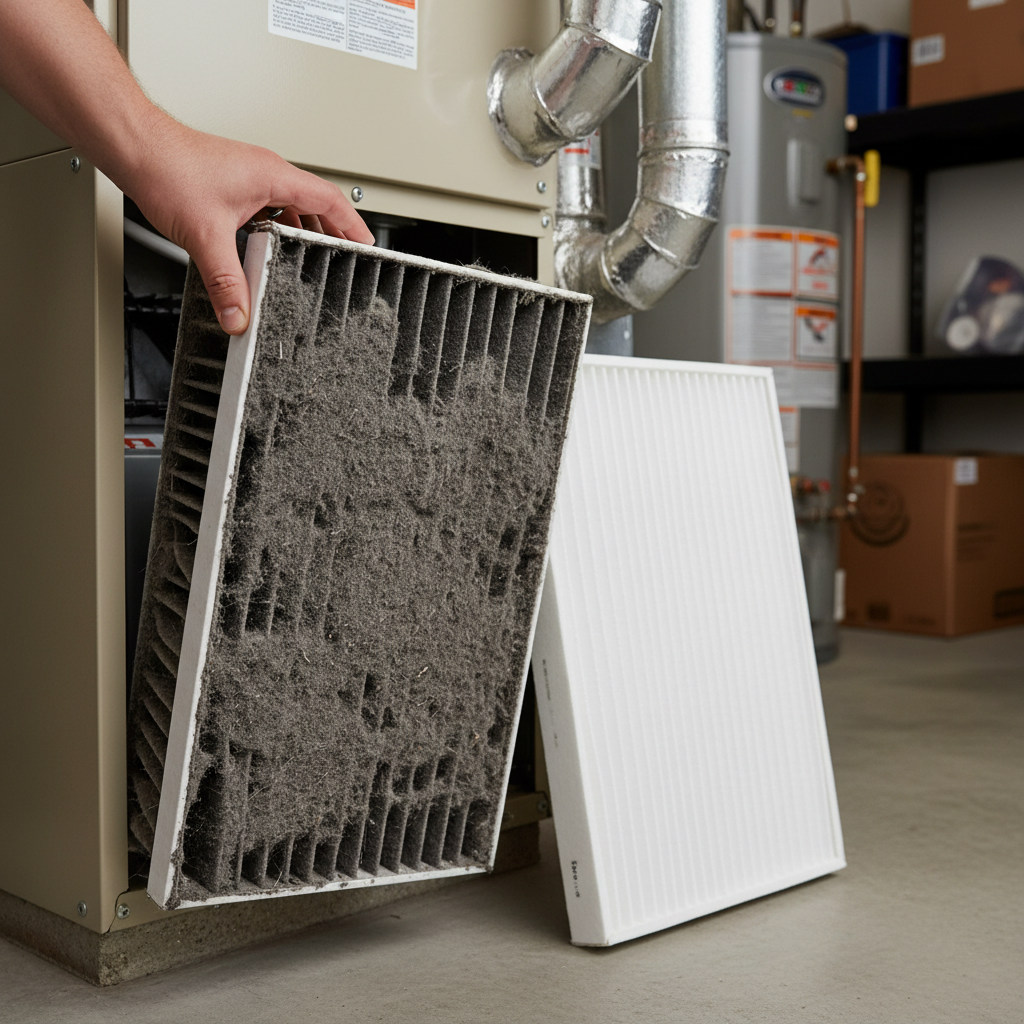
- Severely Clogged Air Filter: The primary culprit. Restricts airflow, leading to coil freeze-up.
- Blocked Condensate Drain Line: If the condensate drain is clogged, water can back up, triggering a float switch that shuts down the cooling cycle. Though less directly related to warm air, it prevents cooling entirely.
- Low Refrigerant Levels: Leaks in the refrigerant lines can cause low pressure, leading to an underperforming and potentially freezing evaporator coil. This is a job for a professional.
- Fan Motor Issues: A malfunctioning blower fan (indoor unit) or condenser fan (outdoor unit) can reduce airflow, impacting heat exchange and overall cooling.
- Thermostat Malfunction: An incorrectly calibrated or faulty thermostat might not be calling for cooling effectively, or it may be reading the temperature incorrectly.
HVAC · No cooling
| Project category | HVAC |
|---|---|
| Problem type | No cooling |
| Trade required | HVAC |
| Urgency | Urgent — within days |
| Safety risk | Moderate safety risk |
| DIY suitability | Pro recommended |
| Cost category | Moderate cost |
| Typical timeline | Same-day diagnosis in season; replacement 1–2 days |
| Contractor type | Licensed HVAC technician |
Repair option
Capacitor, contactor, or leak repair on a system with remaining service life.
Replacement option
Replacement when the compressor fails or the system uses obsolete refrigerant.
Common causes
- Low refrigerant from a leak, not normal consumption
- Failed capacitor or contactor
- Frozen evaporator coil from restricted airflow
- Tripped breaker or failed condensate safety switch
Relevant tools:repair or replaceproject cost estimator
Published May 7, 2026Last updated August 17, 2026
Tools & materials you'll need
Affiliate linksAs an Amazon Associate FixlyGuide earns from qualifying purchases — at no extra cost to you. Prices and availability are accurate as of publication and subject to change.
Quick Answer
Your air conditioner is most often blowing warm air not because it's 'broken' in an expensive way, but because a severely clogged air filter is silently sabotaging its performance. This everyday item, when neglected, starves your AC of the necessary airflow, leading to a cascade of problems including a frozen evaporator coil, reduced cooling, and ultimately, your system pushing out warm, humid air instead of the crisp cool you expect. A simple filter replacement and proper thawing can frequently restore your AC's efficiency.
The Problem
You walk into your home on a scorching summer day, eager for the blast of cool air from your vents, only to be met with a disappointing stream of warm, stale air. The thermostat is set to a frigid 70°F, the outdoor unit is humming, but the house feels as stuffy as ever. This common frustration often points to one of the most frequently overlooked maintenance items: a dirty air filter. When an air filter becomes choked with dust, pet dander, and other airborne particles, it creates a significant barrier to airflow. This isn't just a minor inefficiency; it's a fundamental breakdown in how your AC system operates, leading to symptoms like reduced cooling, increased energy bills, and, paradoxically, warm air coming from the vents.
How It Works
To understand why a dirty air filter leads to warm air, let's quickly review how your AC unit cools your home. It's a closed-loop system working on the principle of heat exchange. Inside your home, the evaporator coil (located in your indoor air handler or furnace) absorbs heat from the indoor air. Refrigerant, a special chemical compound, circulates through this coil, changing from a low-pressure liquid to a low-pressure gas as it absorbs heat. A blower fan draws warm indoor air across this cool coil, and the now-cooled air is then distributed throughout your home via the ductwork.
This heat-laden refrigerant then travels to the compressor in your outdoor unit, which pressurizes it and sends it to the condenser coil. Here, the high-pressure gas releases its heat to the outside air, reverting back to a high-pressure liquid. A large fan in the outdoor unit helps dissipate this heat. Finally, the liquid refrigerant passes through an expansion valve, which drops its pressure and temperature, preparing it to return to the evaporator coil to begin the cycle anew.
Now, imagine that critical airflow across the evaporator coil is severely restricted by a dirty filter. The air cannot properly transfer its heat to the refrigerant. The refrigerant in the evaporator coil gets too cold because it's not absorbing enough heat from the moving air. Without sufficient heat from the air, the refrigerant temperature can drop below freezing, causing condensation (moisture from the air) on the coil to freeze solid. This layer of ice acts as an even more effective insulator, further blocking airflow and making the problem progressively worse. Eventually, the blower fan is attempting to push air across a block of ice, significantly reducing the amount of air that can pass through and be cooled. The air that does manage to get through is not adequately cooled, feeling warm or only slightly cool, and often humid because the ice prevents proper dehumidification.
Step-by-Step Fix
1. Power Down Your AC System — Safety first. Turn off your thermostat and locate the outdoor condenser unit's electrical disconnect switch, usually a small box mounted on the wall near the unit. Flip the switch to the 'OFF' position. For indoor units, switch off the corresponding circuit breaker in your electrical panel. This prevents accidental startup during the process.
* **Safety Note:** Always disconnect power before working on any HVAC equipment to prevent electrical shock or injury from moving parts.
2. Locate the Air Filter Slot — Most residential HVAC systems have a dedicated filter slot either in the return air vent, within the furnace/air handler cabinet, or sometimes in a dedicated filter box in the ductwork. It's typically a rectangular slot with a removable cover or door.
* **Pro Tip:** If you can't find it, check your furnace or air handler manual. It will show the exact location.
3. Remove the Old Air Filter — Slide the old filter out of its slot. Note the direction of the airflow arrow on the filter frame; it should point towards the furnace/air handler. Observe how clogged it is with dust and debris. If it’s black, furry, or simply unrecognizable, you’ve likely found your culprit.
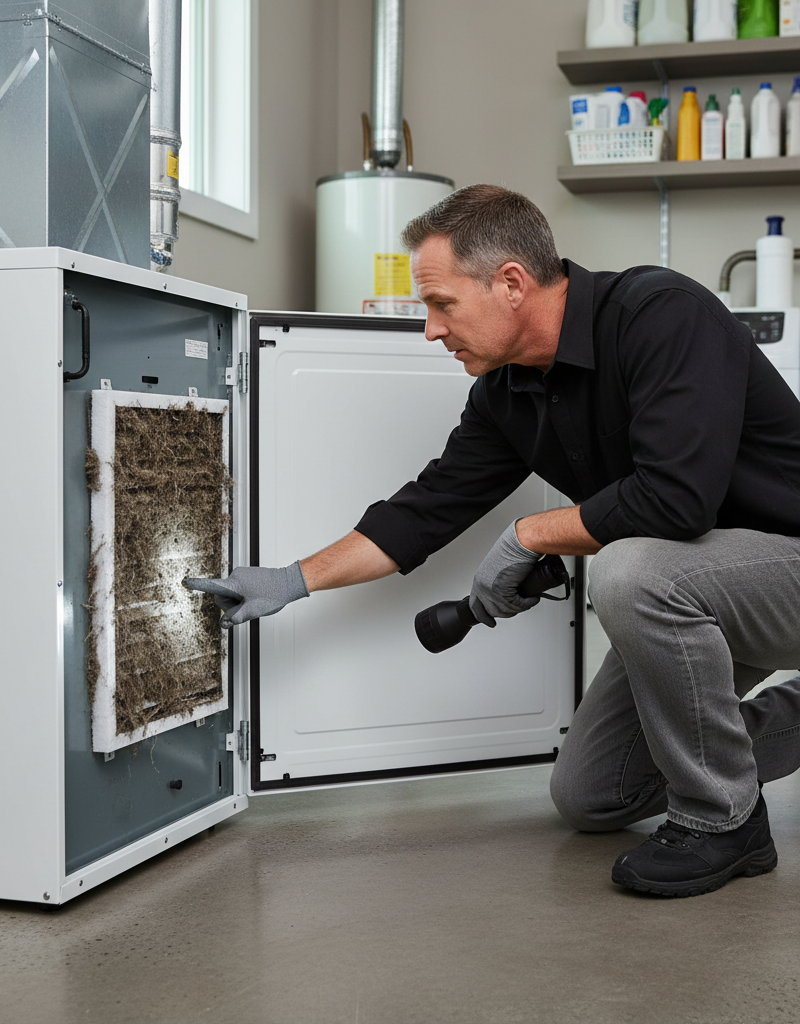
4. Inspect the Evaporator Coil for Ice — Carefully open the access panel to your indoor air handler or furnace (if accessible). Look at the evaporator coil. If it's covered in a thick layer of ice, this confirms the low airflow issue. Resist the urge to chip away at the ice, as this can damage the delicate fins.
*   **If you see ice:** Turn your AC system completely off (thermostat to 'OFF' or 'FAN ONLY' if it has that setting, and keep the circuit breaker off). Allow the unit to thaw completely. This can take several hours, sometimes up to 24 hours, depending on the amount of ice. You can place towels around the unit to catch any dripping water as the ice melts. Use a wet/dry vacuum to extract standing water if necessary.
*   **If no ice:** Proceed to replacing the filter, but be aware that other issues *could* be at play, although a dirty filter is still a major contributor to general inefficiency.
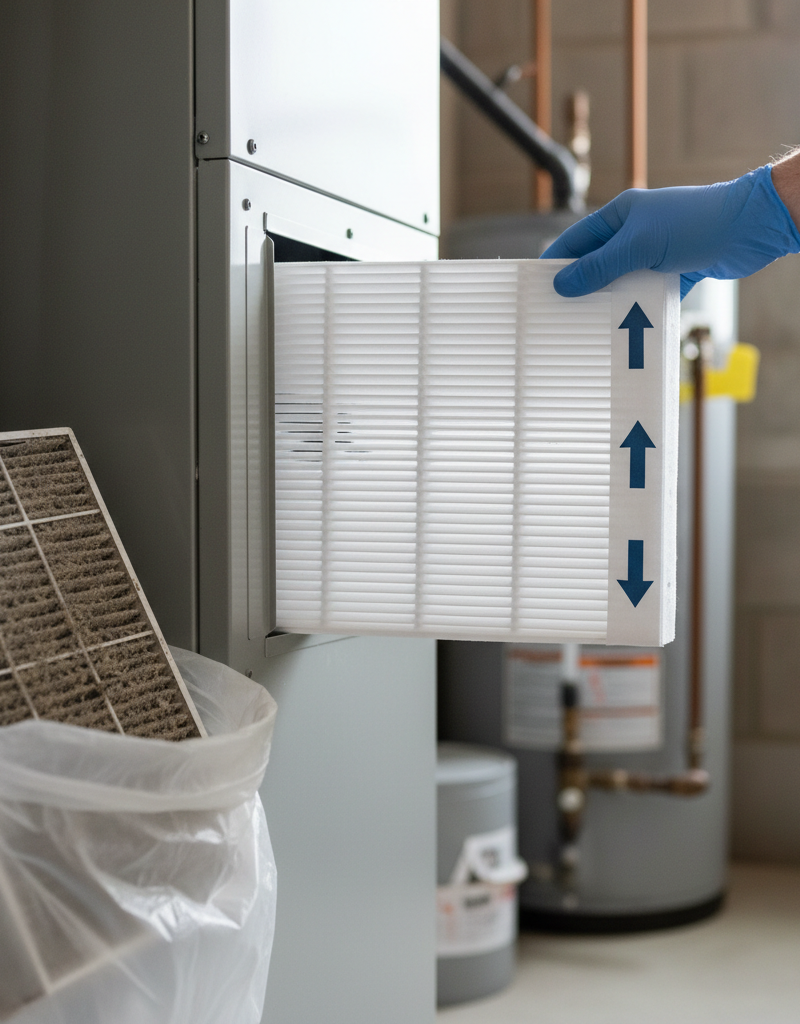
5. Replace with a New Air Filter — Once the coil is thawed (if applicable), install a new air filter. Ensure the new filter is the correct size (dimensions are printed on the filter frame, e.g., 20x25x1) and that the airflow arrow points in the correct direction (towards the furnace/air handler). Consider a filter with a MERV rating between 8 and 11 for a good balance of air quality and airflow.
* **Material Choice:** Pleated synthetic filters offer better filtration than fiberglass. Avoid MERV ratings above 11 unless recommended by your HVAC professional, as higher ratings can restrict airflow too much for some older systems.
6. Restore Power and Test — Replace all access panels and turn the power back on at the electrical disconnect and circuit breaker. Set your thermostat to 'COOL' and lower the temperature setting to initiate a cooling cycle. Listen to the system and feel the air coming from your vents. It should now be significantly cooler.
7. Monitor Performance — Over the next few hours, check your home's temperature and the quality of the air from the vents. A properly functioning AC should cool your home efficiently. If the coil refreezes, or the air remains warm, there may be an underlying issue that requires professional attention.
Common Causes
- Severely Clogged Air Filter: The primary culprit. Restricts airflow, leading to coil freeze-up.
- Blocked Condensate Drain Line: If the condensate drain is clogged, water can back up, triggering a float switch that shuts down the cooling cycle. Though less directly related to warm air, it prevents cooling entirely.
- Low Refrigerant Levels: Leaks in the refrigerant lines can cause low pressure, leading to an underperforming and potentially freezing evaporator coil. This is a job for a professional.
- Dirty Evaporator or Condenser Coils: Beyond the filter, the coils themselves can get caked with dirt and debris, reducing their ability to exchange heat. Dirty condenser coils outdoors mean the system can't efficiently release heat, leading to warmer air inside.
- Fan Motor Issues: A malfunctioning blower fan (indoor unit) or condenser fan (outdoor unit) can reduce airflow, impacting heat exchange and overall cooling.
- Thermostat Malfunction: An incorrectly calibrated or faulty thermostat might not be calling for cooling effectively, or it may be reading the temperature incorrectly.
Common Mistakes
- Ignoring the Air Filter: The most common and most costly mistake. Skipping regular filter changes leads to inefficiency, higher bills, and potential system damage including coil freeze-ups.
- Using the Wrong Filter Size: An ill-fitting filter allows air to bypass the filtration medium, rendering it useless and letting dust directly onto your coils.
- Over-filtering (Too High MERV): While higher MERV ratings filter more, they can also restrict airflow too much for older or less powerful HVAC systems, potentially damaging the blower motor or causing coil freeze.
- Forgetting to Thaw a Frozen Coil: Attempting to run an AC with a frozen coil is like trying to breathe with a pillow over your face. It won't work efficiently and can stress the compressor.
- Chipping Away at Coil Ice: This is a surefire way to damage delicate aluminum fins and potentially puncture refrigerant lines, leading to an expensive repair.
- Neglecting Outdoor Unit Cleaning: The outdoor condenser coil needs to be free of debris (leaves, grass clippings, dirt) to release heat efficiently. A dirty condenser coil means your AC works harder and less effectively.
Cost & Time Breakdown
| Task | DIY Cost | Pro Cost | Time |
|---|---|---|---|
| Replace Air Filter | $15–$40 | $100–$150 (if part of service) | 5–10 minutes |
| Thaw Frozen Coil | $0 | N/A (unless part of larger fix) | 4–24 hours |
| Clean Condenser Coil | $0–$10 | $150–$250 | 30–60 minutes |
| Refrigerant Recharge | DIY not recommended | $200–$600+ | 1–3 hours |
| Full AC Tune-up | N/A | $150–$300+ | 1–2 hours |
Tips & Prevention
- Regular Filter Changes: Change your air filter every 1–3 months, more frequently if you have pets, allergies, or live in a dusty environment. Mark your calendar or set a reminder.
- Annual Professional Tune-Up: Schedule a professional HVAC inspection and tune-up once a year, ideally in the spring before heavy AC use. Pros can catch minor issues before they become major problems.
- Keep Outdoor Unit Clear: Ensure the outdoor condenser unit is free from leaves, grass clippings, shrubs, and other debris. Maintain at least 2 feet of clearance around the unit for optimal airflow.
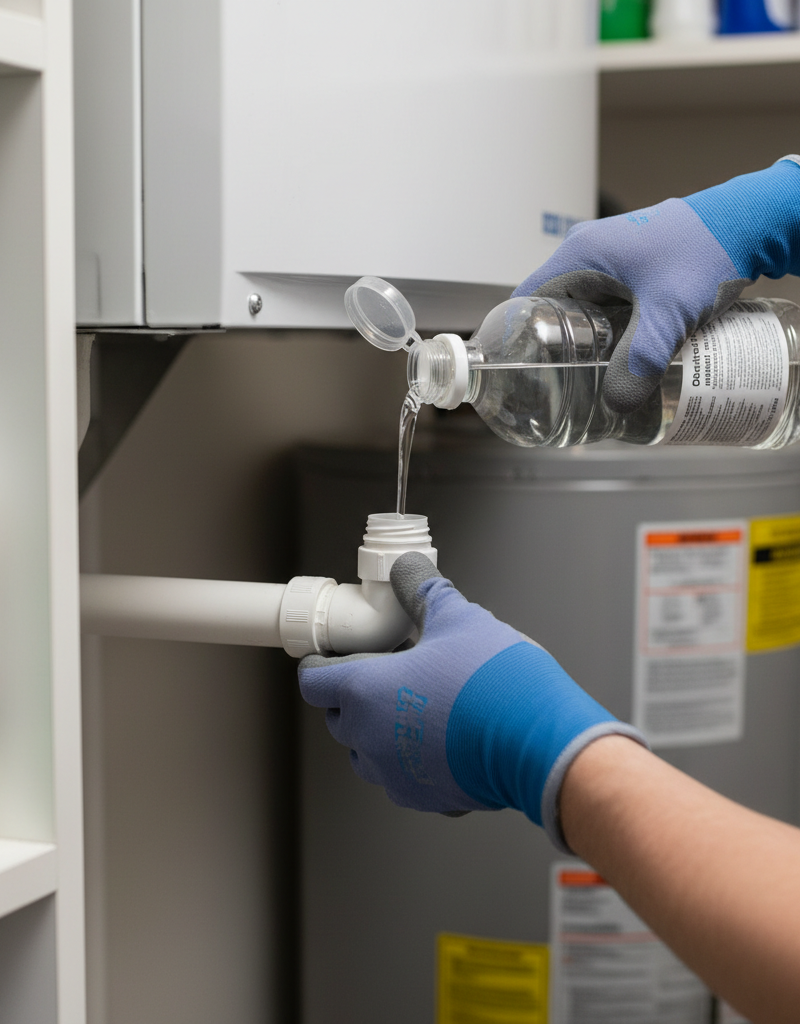
- Check Condensate Drain: Periodically inspect the condensate drain line for algae or clogs. You can flush it with a cup of distilled vinegar and water solution (refer to your AC manual).
- Listen for Warning Signs: Pay attention to unusual noises (grinding, hissing, banging), strange odors, or reduced airflow. These can be early indicators of a problem.
- Seal Ductwork Leaks: Leaky ducts can lose up to 30% of your conditioned air. Seal visible leaks with mastic sealant or metallic-backed tape for improved efficiency.
When to Call a Professional
While a dirty air filter is a common and easy fix, several issues that cause warm air require the expertise of a licensed HVAC professional. If, after changing your filter and thawing a frozen coil, your AC continues to blow warm air, or if you observe any of the following, it’s time to call a pro: you hear a hissing sound indicating a refrigerant leak, there's a strong burning smell, your outdoor unit is completely silent and not running, or you notice water pooling around the indoor unit after the coil has thawed. Professionals have specialized tools to diagnose refrigerant pressure, electrical faults, and complex mechanical failures that are unsafe or impossible for a homeowner to address. Never attempt to work with refrigerant or high-voltage electrical components yourself.
Related Articles
Keep troubleshooting with these hand-picked guides from FixlyGuide:
- The #1 Mistake Homeowners Make When Their AC Won't Turn On (And the Easy Fix) — Learn the most common reason your air conditioner won't turn on and how to diagnose and fix it with simple steps.
- The #1 Mistake Homeowners Make When Heat Pumps Stop Heating in Winter — Discover the crucial mistake most homeowners make when their heat pump struggles in cold weather and how to fix it, potentially saving hund…
- The #1 HVAC Mistake Costing You Hundreds (And How Often to Really Change Your Filter) — Discover the surprising truth about how often you should change your HVAC filter and prevent common problems that can cost you hundreds in…
- The #1 Mistake Homeowners Make Installing a Smart Thermostat (and How to Fix It) — Avoid the most common pitfall when installing a smart thermostat yourself and ensure a smooth, energy-efficient setup.
- The #1 Mistake Homeowners Make When Their AC Won't Turn On (And the Easy Fix) — Learn the most common oversight homeowners make when their AC won't turn on and how to troubleshoot basic issues to restore cooling.
- The Secret to Lush Raised Beds? It's Not Just About How You Water — Smart irrigation for raised garden beds isn't just about automation; it's about delivering the right amount of water precisely when your pl…
Should you do this yourself?
Answer five quick questions before you start. Safety outranks savings every time.
Your experience with work like this
How high do you have to work?
Does the job involve any of these?
Will it need a permit?
Specialty tools
Free and instant. Educational guidance only — not a quote, inspection, or professional diagnosis.
Estimate your own project cost
National averages are a starting point. Enter your details for a range that fits your house.
HVAC replacement cost
- Equipment$2,200 – $3,800
- Installation labor$1,200 – $2,500
Always insist on a Manual J load calculation — sq-ft sizing is only a rough check. Federal heat-pump rebates may reduce cost significantly.
Educational estimate only — always confirm with written local bids.
What should this project cost?
Enter your project details for a realistic cost range before you call anyone.
Service calls and common repairs run $150–$900; full system replacement typically $6,000–$12,000.
- Regional adjustment
- National average
- Labor share (typical)
- ~$1,935
- Quotes to collect
- 3 written estimates
Educational estimate based on national averages — not a binding quote. Always confirm with written local estimates.
Fixly Project Decision Box
- DIY difficulty
- Advanced
- Estimated time
- Homeowner checks 20–30 minutes
- Cost level
- Moderate
Main tools / materials
- Clean air filter
- Garden hose for condenser coils
- Shop vac for the condensate line
When to stop and call a pro
- Burning smell, smoke, or a tripping breaker
- Refrigerant lines iced over or hissing
- Any work inside the sealed refrigerant circuit (EPA-licensed only)
- Gas smell near a furnace — leave and call the utility
Need professional help?
Find an HVAC Pro Near YouBefore you start
Check the difficulty, permits, and safety risk — then decide whether to call a pro.
Free, no signup required. Estimates are educational guidance, not a quote or an inspection.
Frequently asked questions
Why would my AC suddenly stop blowing cold air?+
The most common and immediate cause for an AC suddenly blowing warm air is a severely clogged air filter. This restricts airflow across the evaporator coil, causing it to freeze solid. Once frozen, the coil can't absorb heat from your home's air, leading to warm air from the vents.
How long does it take for an AC coil to unfreeze?+
An AC coil can take anywhere from 4 to 24 hours to completely unfreeze, depending on the severity of the ice buildup and ambient temperatures. It's crucial to turn the AC system completely off (both cooling function and fan) and allow sufficient time for all ice to melt naturally.
Can a dirty filter really make my AC blow warm air?+
Absolutely. A dirty filter dramatically reduces the airflow over your AC's evaporator coil. When airflow is insufficient, the refrigerant inside the coil gets too cold and causes condensation on the coil to freeze. This ice then acts as an insulator, preventing heat transfer and leading to warm air being circulated.
What's the ideal MERV rating for an AC filter?+
For most residential systems, a MERV rating between 8 and 11 strikes an excellent balance between air filtration and maintaining adequate airflow. Filters with higher MERV ratings (12+) can sometimes restrict airflow too much, especially for older systems, potentially causing more harm than good.
When should I call an HVAC professional for warm AC air?+
You should call a professional if, after replacing the air filter and thawing any frozen coils, your AC still blows warm air. Also, call a pro if you hear hissing sounds (indicating a refrigerant leak), smell burning, the outdoor unit isn't running at all, or water is pooling excessively around the indoor unit.
Discussion
Loading comments…