- AC Blowing Warm Air? Easy Fixes for Common AC Problems — Discover the most common reasons your AC is blowing warm air and learn simple, actionable steps to troubleshoot and fix the issue yourself,…
- Why Your AC is Blowing Warm Air: Troubleshooting and Fixes — If your AC is blowing warm air, it's often due to a clogged air filter, dirty condenser coils, or a tripped circuit breaker, all of which y…
- The Secret Reason Your AC Makes Humidity Worse (And How to Fix It) — Discover why your air conditioner might be adding to your home
- The 1 Mistake Homeowners Make When Their AC Won't Turn On (And the Easy Fix) — Learn the most common reason your air conditioner won't turn on and how to diagnose and fix it with simple steps.
- Why Your House is Humid Despite AC & How to Fix It — Even with your AC running, high indoor humidity can make your home uncomfortable. Often, common issues like oversized units or clogged filt…
HVAC · High energy usage
| Project category | HVAC |
|---|---|
| Problem type | High energy usage |
| Trade required | HVAC |
| Urgency | Planned project |
| Safety risk | Low safety risk |
| DIY suitability | DIY for experienced homeowners |
| Cost category | High cost |
| Typical timeline | Assessment within weeks; replacement planned off-season |
| Contractor type | Licensed HVAC technician |
Repair option
Duct sealing, insulation, and a tune-up before touching the equipment.
Replacement option
High-efficiency replacement sized by a load calculation, not a rule of thumb.
Common causes
- Aging, low-efficiency equipment
- Leaking ducts losing conditioned air
- Insufficient attic insulation
- Oversized system short-cycling
Relevant tools:project cost estimatorrepair or replace
Published April 27, 2026Last updated August 17, 2026
Tools & materials you'll need
Affiliate links- AmazonScrewdriver setPhillips and flathead, for panel removal if needed
- AmazonCleaning brush or vacuumFor cleaning around filter housing
- AmazonFlashlightFor inspecting evaporator coil
- AmazonElectrical multi-meter1 · Optional, for safely testing outlet power at the thermostat or condenser, if comfortable
- AmazonNew air filter1 · Match MERV rating and size specified by your AC unit
As an Amazon Associate FixlyGuide earns from qualifying purchases — at no extra cost to you. Prices and availability are accurate as of publication and subject to change.
How it works
Your air conditioning system doesn't create cold air; it moves heat from inside your home to the outside. This process, known as the refrigeration cycle, relies on a closed loop of refrigerant and four key components: the compressor, condenser coil, evaporator coil, and an expansion device.
The cycle begins at the indoor unit, where the evaporator coil is located. A blower fan pulls warm, humid indoor air across this coil, which contains cold, low-pressure liquid refrigerant. The refrigerant absorbs heat from the air, causing it to boil and vaporize into a low-pressure gas. This process cools and dehumidifies the air, which is then circulated back into your home.
This refrigerant gas travels to the outdoor compressor, the heart of the system. The compressor pressurizes the gas, which dramatically increases its temperature. This hot, high-pressure gas then flows into the outdoor condenser coil. A large fan blows ambient outdoor air across the condenser's fins, allowing the hot refrigerant to release its absorbed heat into the atmosphere. As it cools, the refrigerant condenses back into a high-pressure liquid. This liquid then passes through an expansion device, which rapidly lowers its pressure and temperature, preparing it to re-enter the evaporator coil and repeat the cycle. When any part of this process—airflow, refrigerant flow, or electrical function—is compromised, heat exchange fails, and your vents start blowing warm air.
Step-by-Step Fix
Follow these sequential diagnostic steps, moving from the simplest fixes to more complex ones. Do not proceed with any step you are not comfortable or qualified to perform.
-
Verify Thermostat Settings — This basic check resolves a surprising number of service calls. Ensure the thermostat is set to "Cool" and the target temperature is at least 5°F below the current room temperature. Also check the fan setting; if it's set to "On" instead of "Auto," the blower will run continuously, even when the cooling cycle is off, circulating unconditioned air.
- Pro Tip: If you have a programmable thermostat, check that a "hold" or vacation schedule isn't overriding your desired settings.
-
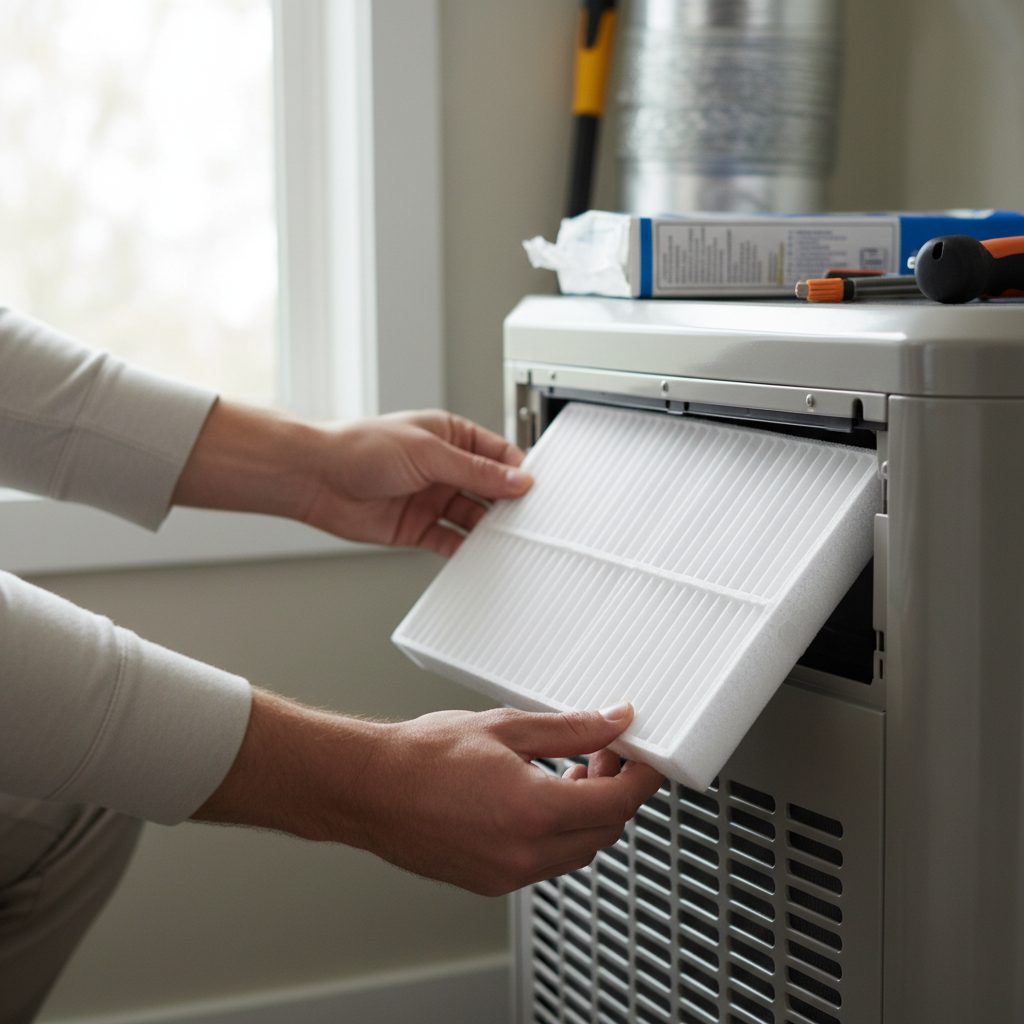
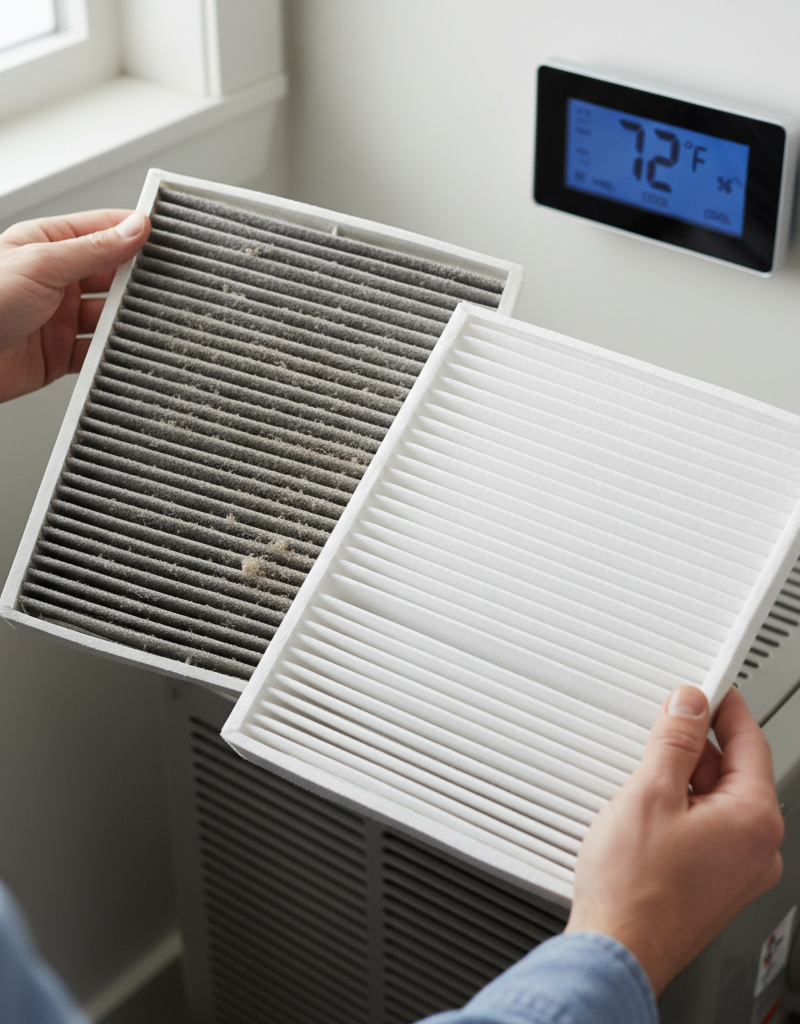
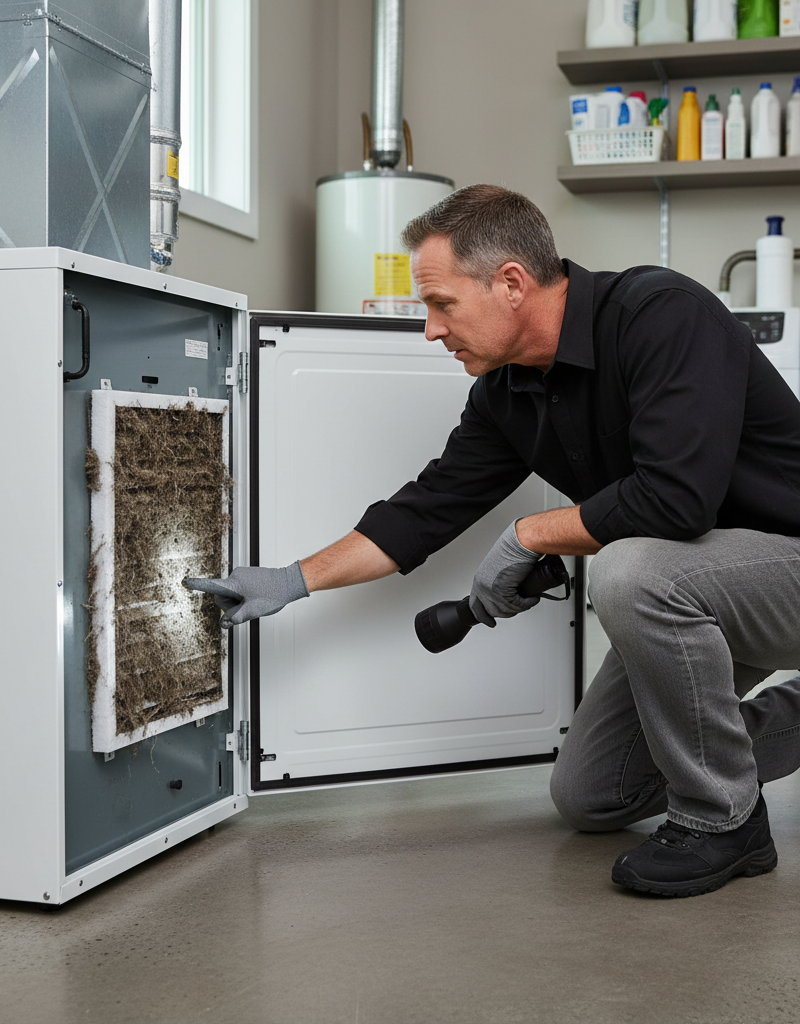
Inspect and Replace the Air Filter — A clogged air filter is the most common cause of AC problems. It restricts airflow over the evaporator coil, reducing the system's ability to absorb heat. This can lead to the coil freezing into a block of ice, which blocks air entirely and results in warm air from the vents.
- Action: Locate the filter, typically a 1-2 inch thick rectangle in the return air duct near your indoor air handler. Slide it out and hold it up to a light. If you can't see light through it, it's dirty. Replace it with a new filter of the exact same size.
-
Check Circuit Breakers — A central AC system has two separate circuit breakers: one for the indoor air handler (furnace/blower) and one for the outdoor condenser unit. It's possible for the outdoor unit's breaker to trip while the indoor unit continues to run, blowing uncooled air.
- Action: Locate your home's main electrical panel. Look for two breakers labeled "AC," "Condenser," "Air Handler," or "HVAC." If one is in the "off" or middle position, flip it completely off and then back on once.
- Safety: If the breaker trips again immediately, do not reset it. This indicates a serious electrical fault that requires a professional.
-
Clear the Outdoor Condenser Unit — The outdoor unit needs to breathe. It releases all the heat pulled from your home, and any obstruction hampers this process. The system will overheat and shut down cooling, but the indoor fan may continue to run.
- Action: Power off the unit at the breaker and the disconnect box. Clear away any leaves, grass clippings, weeds, or debris piled against the unit. Trim back shrubs, trees, and any other vegetation to ensure at least 2 feet of clearance on all sides and a clear path for air to exhaust from the top.
-
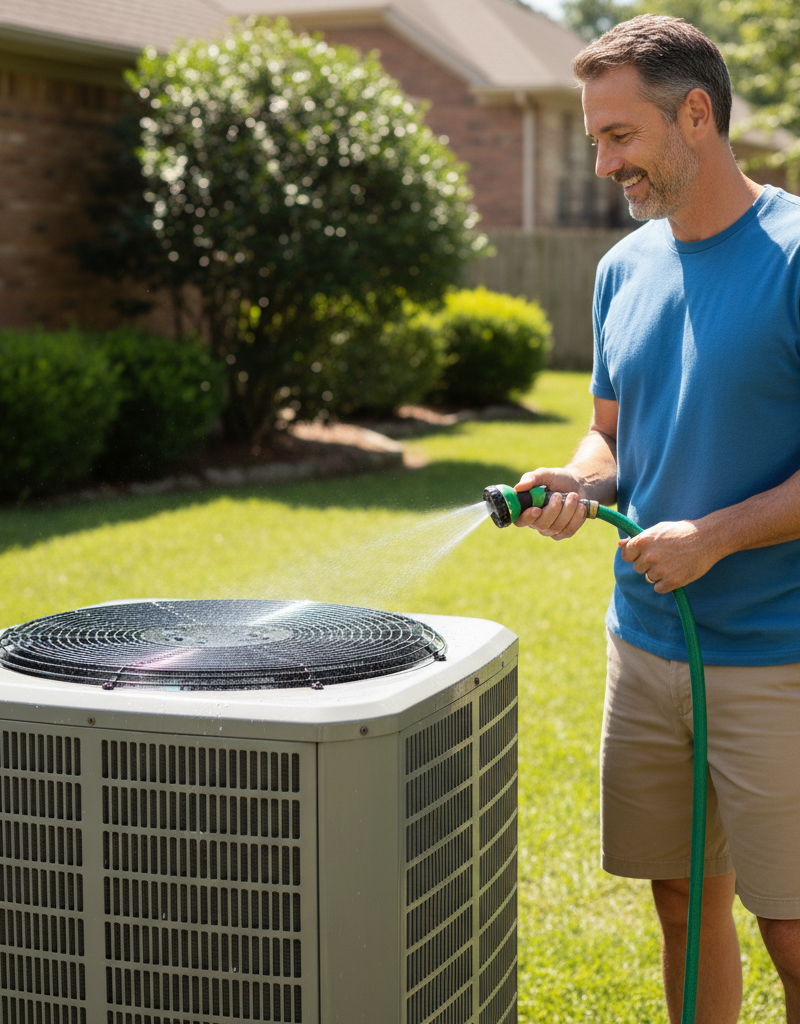
Clean the Condenser Coils — Even with clear surroundings, the condenser's delicate metal fins accumulate a layer of dirt, pollen, and dust over time. This grime acts as an insulator, trapping heat and severely reducing efficiency.
- Tools: Garden hose with a spray nozzle, soft-bristle brush, commercial coil cleaner (optional).
- Action: Ensure power is off at both the breaker and the exterior disconnect switch. Using the garden hose, spray water from the inside of the unit out through the fins to push debris away. Do not use a pressure washer, as it will bend the fins. For heavy buildup, use a commercial foaming coil cleaner according to its directions, then rinse gently.
-
Check for a Frozen Evaporator Coil — If you've corrected an airflow issue (like a dirty filter), the evaporator coil may still be frozen. Until it thaws, air cannot pass through, and you'll still get warm air.
- Action: Go to your thermostat and switch the system from "Cool" to "Off." Turn the fan setting from "Auto" to "On." This shuts down the cooling cycle but keeps the blower running, circulating room-temperature air across the ice to melt it. It can take several hours for a thick block of ice to thaw completely. Do not try to chip ice away.
- Diagnosis: Look for water pooling near the indoor furnace or air handler, which is a sign of recent thawing.
-
Clear the Condensate Drain Line — As your AC dehumidifies the air, it produces water (condensate), which is routed outside through a PVC pipe. If this line clogs with algae and sludge, water backs up. A safety float switch in the drain pan will trip, shutting down the outdoor unit to prevent water damage.
- Action: Locate the PVC drain line near your indoor unit. Use a wet/dry shop vacuum to suction out the clog from the exterior termination of the pipe. You may need to create a seal around the pipe with your hand or a rag. You should hear and feel the blockage get sucked out.
-
Test the Run Capacitor — This is a common and inexpensive point of failure. The run capacitor provides the electrical boost needed to start and run the condenser fan and compressor motors. When it fails, the outdoor unit may hum, but the fan and/or compressor will not run, causing the system to blow warm air.
- Safety: EXTREME DANGER. Capacitors store a powerful electrical charge even when the power is off. You must turn off power at the breaker and disconnect box, then safely discharge the capacitor before touching it. Use an insulated screwdriver to short the terminals together. If you are unfamiliar with this process, stop and call a professional.
- Diagnosis: A failed capacitor often has a bulging or domed top, or it may be leaking an oily substance. To test, set a multimeter with capacitance measurement (μF or MFD) and check if the reading matches the rating printed on the capacitor's label (e.g., 45/5 μF). A reading outside the +/- 6% tolerance indicates failure.
Common mistakes
- Assuming Low Refrigerant Immediately — While low refrigerant causes warm air, it's a symptom of a leak. A system doesn't "use up" refrigerant. Adding more without a professional leak test and repair is a temporary, expensive, and environmentally irresponsible fix. Tackle airflow and electrical issues first.
- Using a Pressure Washer on Coils — The aluminum fins on condenser and evaporator coils are extremely delicate. The high pressure from a power washer will flatten them, creating a massive airflow blockage that is difficult and expensive to repair. Always use a gentle spray from a garden hose.
- Ignoring a Repeatedly Tripping Breaker — A circuit breaker is a safety device. If it trips more than once, it's signaling an overload or short circuit. Continuously resetting it can lead to component burnout or even an electrical fire. Stop and diagnose the underlying electrical fault.
- Replacing Parts without Testing — Don't just start swapping components like the capacitor and contactor hoping to get lucky. This "parts cannon" approach gets expensive quickly. Use a multimeter to confirm a part is faulty before spending money on a replacement.
- Running the AC While it's Frozen — If you discover a frozen evaporator coil, continuing to run the AC in "Cool" mode can cause liquid refrigerant to flood back to the compressor. This can destroy the compressor, requiring a replacement that often costs thousands of dollars. Always thaw the unit completely first.
Cost & time breakdown
| Task | DIY Cost | Pro Cost | Time |
|---|---|---|---|
| Air Filter Replacement | $5 - $30 | $75 - $150 (as part of a call) | 5 minutes |
| Condenser Coil Cleaning | $0 - $20 (for cleaner) | $125 - $250 | 30-60 minutes |
| Clearing Condensate Line | $0 (with shop vac) | $100 - $200 | 20 minutes |
| Run Capacitor Replacement | $15 - $40 | $150 - $400 | 30 minutes |
| Contactor Replacement | $20 - $50 | $150 - $350 | 30 minutes |
| Full HVAC Tune-Up | N/A | $100 - $300 | 60-90 minutes |
When to call a pro
While many causes of warm air are DIY-fixable, certain symptoms are clear indicators to put down the tools and call a licensed HVAC technician. If you have completed all the steps above and the system still blows warm, it's time for professional diagnosis. Call a pro immediately if you encounter major electrical faults, such as a breaker that will not stay reset or the smell of burning plastic or wires. Any mechanical noises from the outdoor unit—grinding, screaming, or loud clanking—suggest a failing compressor or fan motor, which are not homeowner-serviceable parts.
The most critical boundary is refrigerant. This substance is federally regulated and can only be handled by EPA-certified technicians. If you suspect a refrigerant leak (indicated by hissing sounds, oily residue on refrigerant lines, or the formation of ice on the copper lines in summer), you must call for service. Attempting to work with refrigerant without a license is illegal and dangerous. Finally, if you are ever unsure or uncomfortable, especially when dealing with high-voltage components like capacitors, err on the side of caution and call a professional.
Prevention & maintenance
Proactive maintenance is the key to avoiding an AC failure on the hottest day of the year. Following a simple schedule can ensure efficiency, prolong the life of your system, and prevent most common problems.
- Change Your Air Filter Religiously. This is the single most important maintenance task. For standard 1-inch filters, replace them every 30-90 days. For larger 4-5 inch media filters, inspect every 6 months and replace annually.
- Schedule an Annual Professional Tune-Up. Have a qualified technician inspect your system each spring before the cooling season begins. They will perform a comprehensive check, clean both indoor and outdoor coils thoroughly, test electrical components, and verify correct refrigerant levels.
- Keep the Outdoor Unit Clean and Clear. Throughout the spring and summer, make a habit of checking the condenser unit. Ensure a 2-foot radius is clear of plants, leaves, and other debris to maintain proper airflow.
- Maintain the Condensate Drain. Every two to three months during the cooling season, pour a mixture of one cup water and one cup distilled vinegar down the condensate line access port. This helps prevent the buildup of algae and sludge that leads to clogs.
- Listen to Your System. Pay attention to its normal operating sounds. If you notice a new buzz, rattle, or humming that wasn't there before, investigate it. Early detection of a failing capacitor or loose panel can prevent a complete system breakdown.
Related Articles
Keep troubleshooting with these hand-picked guides from FixlyGuide:
- AC Blowing Warm Air? Easy Fixes for Common AC Problems — Discover the most common reasons your AC is blowing warm air and learn simple, actionable steps to troubleshoot and fix the issue yourself,…
- Why Your AC is Blowing Warm Air: Troubleshooting and Fixes — If your AC is blowing warm air, it's often due to a clogged air filter, dirty condenser coils, or a tripped circuit breaker, all of which y…
- The Secret Reason Your AC Makes Humidity Worse (And How to Fix It) — Discover why your air conditioner might be adding to your home
- The #1 Mistake Homeowners Make When Their AC Won't Turn On (And the Easy Fix) — Learn the most common reason your air conditioner won't turn on and how to diagnose and fix it with simple steps.
- Why Your House is Humid Despite AC & How to Fix It — Even with your AC running, high indoor humidity can make your home uncomfortable. Often, common issues like oversized units or clogged filt…
- The Secret Culprit Behind Your Dishwasher's Standing Water (It's Not Always a Clog) — Don't assume a clog is the only reason your dishwasher isn't draining; often, the fix is simpler than you think.
Should you do this yourself?
Answer five quick questions before you start. Safety outranks savings every time.
Your experience with work like this
How high do you have to work?
Does the job involve any of these?
Will it need a permit?
Specialty tools
Free and instant. Educational guidance only — not a quote, inspection, or professional diagnosis.
Estimate your own project cost
National averages are a starting point. Enter your details for a range that fits your house.
HVAC replacement cost
- Equipment$2,200 – $3,800
- Installation labor$1,200 – $2,500
Always insist on a Manual J load calculation — sq-ft sizing is only a rough check. Federal heat-pump rebates may reduce cost significantly.
Educational estimate only — always confirm with written local bids.
What should this project cost?
Enter your project details for a realistic cost range before you call anyone.
Service calls and common repairs run $150–$900; full system replacement typically $6,000–$12,000.
- Regional adjustment
- National average
- Labor share (typical)
- ~$1,935
- Quotes to collect
- 3 written estimates
Educational estimate based on national averages — not a binding quote. Always confirm with written local estimates.
Fixly Project Decision Box
- DIY difficulty
- Advanced
- Estimated time
- Homeowner checks 20–30 minutes
- Cost level
- Moderate
Main tools / materials
- Clean air filter
- Garden hose for condenser coils
- Shop vac for the condensate line
When to stop and call a pro
- Burning smell, smoke, or a tripping breaker
- Refrigerant lines iced over or hissing
- Any work inside the sealed refrigerant circuit (EPA-licensed only)
- Gas smell near a furnace — leave and call the utility
Need professional help?
Find an HVAC Pro Near YouBefore you start
Check the difficulty, permits, and safety risk — then decide whether to call a pro.
Free, no signup required. Estimates are educational guidance, not a quote or an inspection.
Get the print-ready PDF of this guide
A clean, ad-free, printable version you can keep on your phone or pin to the workshop wall. Free with a FixlyGuide account.
- Print-optimized layout
- Tools, materials & every step included
- Saved to your account
Frequently asked questions
Why is my AC running but not cooling?+
If your AC is running but not cooling, the most common reasons are a very dirty air filter restricting airflow, a frozen evaporator coil due to low airflow, or a tripped circuit breaker to the outdoor condenser unit, preventing it from operating.
Can a dirty filter cause AC to blow warm air?+
Yes, absolutely. A severely clogged air filter drastically reduces airflow over the evaporator coil. This can cause the coil to get too cold and freeze over with ice, blocking airflow even further and preventing heat transfer, resulting in warm air from vents.
How long does it take for AC to cool down after a reset?+
After resetting your AC (e.g., flipping a breaker or after a coil thaws), it can take anywhere from 15 minutes to an an hour to start blowing noticeably cool air and begin bringing down the ambient temperature. Be patient and allow the system to equalize.
When should I call a professional for warm AC air?+
You should call a professional if, after checking your filter, thermostat settings, and circuit breakers, your AC is still blowing warm air. This often indicates more complex issues such as a refrigerant leak, a faulty compressor, or a fan motor failure, which require specialized tools and expertise to diagnose and repair safely.
Discussion
Loading comments…