- Check the Thermostat – Start with the basics
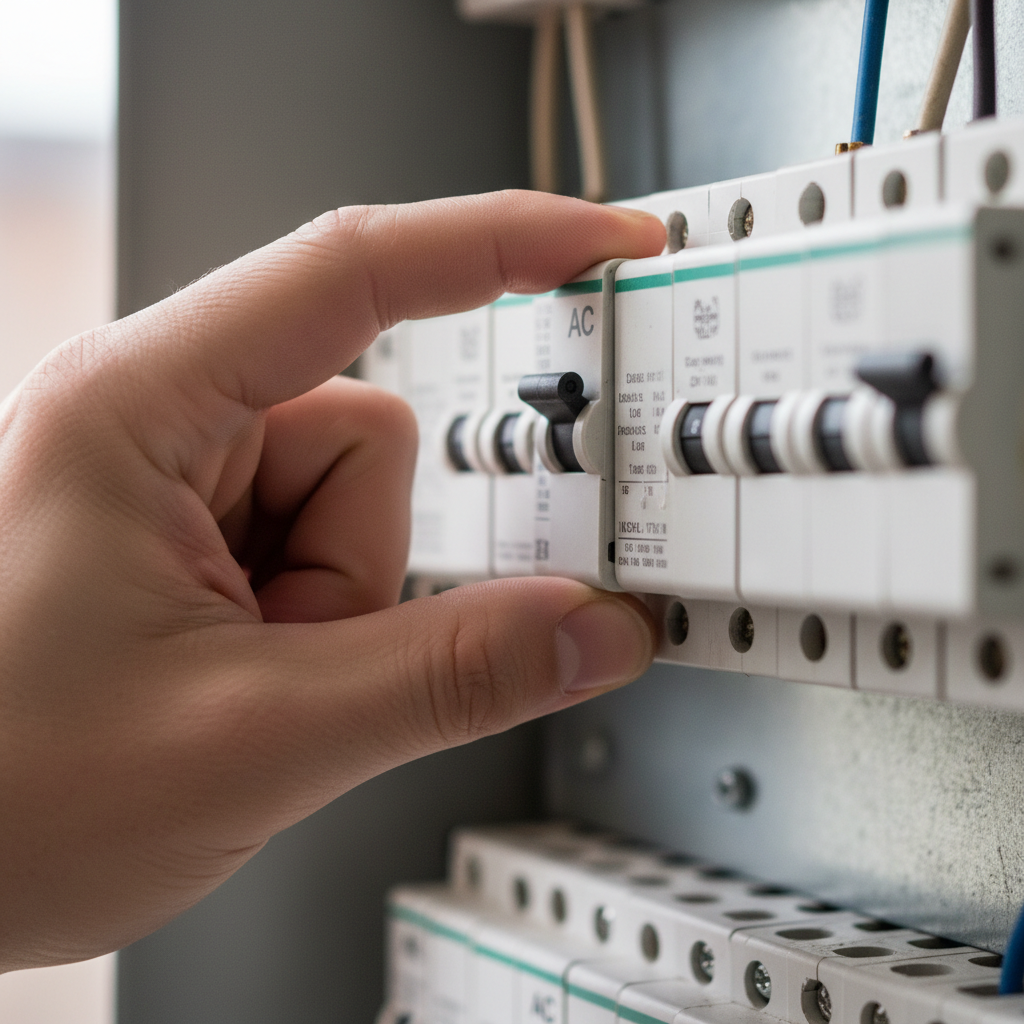
- Inspect the Main Electrical Panel – Look for tripped breakers
- Check the Outdoor Disconnect Box – The forgotten power switch
- Examine Fuses in the Disconnect (if applicable) – A common hidden cause
- Safety Note: Always turn off the main AC breaker at the electrical panel BEFORE opening this disconnect box or handling fuses. This protects you from potentially lethal voltage.
HVAC · High energy usage
| Project category | HVAC |
|---|---|
| Problem type | High energy usage |
| Trade required | HVAC |
| Urgency | Planned project |
| Safety risk | Low safety risk |
| DIY suitability | DIY for experienced homeowners |
| Cost category | High cost |
| Typical timeline | Assessment within weeks; replacement planned off-season |
| Contractor type | Licensed HVAC technician |
Repair option
Duct sealing, insulation, and a tune-up before touching the equipment.
Replacement option
High-efficiency replacement sized by a load calculation, not a rule of thumb.
Common causes
- Aging, low-efficiency equipment
- Leaking ducts losing conditioned air
- Insufficient attic insulation
- Oversized system short-cycling
Relevant tools:project cost estimatorrepair or replace
Published July 24, 2026Last updated August 17, 2026
Tools & materials you'll need
Affiliate links- AmazonNew AC fuses (if applicable)2 · Match amperage and voltage exactly
As an Amazon Associate FixlyGuide earns from qualifying purchases — at no extra cost to you. Prices and availability are accurate as of publication and subject to change.
Quick Answer
When your air conditioner suddenly decides to play dead, it’s usually not a catastrophic failure. I’ve rolled up on hundreds of these calls over the years, and nine times out of ten, it’s something simple: a tripped circuit breaker, a blown fuse, or a power issue that’s cutting juice to the unit. Don’t panic, and definitely don’t jump straight to calling a pro until you’ve checked these basic power sources. Most of the time, it’s a quick fix you can handle yourself in ten minutes flat.
The Problem
There’s nothing worse than flipping on the AC on a scorching summer day and getting… nothing. No hum, no fan, just silence. Your thermostat’s set right, but the outdoor unit isn’t kicking on, and neither is the indoor blower. It’s frustrating, I know. Folks immediately think the compressor’s shot or they need a whole new system. But hold your horses. The vast majority of “AC won’t turn on” calls I get boil down to a lack of power reaching the unit, not a busted component inside it. It’s like trying to start your car without gas in the tank — all the fancy mechanics in the world won’t help if there’s no fuel.
How It Works
To understand why your AC isn’t turning on, you gotta know how it gets its juice. Your central air conditioning system actually has two main parts that need power: the indoor unit (the furnace or air handler that blows air) and the outdoor unit (the condenser and compressor). Both are typically powered by independent circuits from your home’s main electrical panel.
The indoor unit usually runs off a dedicated 15-amp or 20-amp circuit. The outdoor unit, especially for those bigger 3-ton and 4-ton units, demands a lot more juice — we’re talking a dedicated 240-volt circuit, often protected by a 30-amp or 40-amp double-pole breaker. That’s a heavy-duty line, and it’s often the one that trips if there’s a surge or if the compressor has a hard time starting.
Before the power even reaches the outdoor unit, there’s often a service disconnect box mounted on the wall right next to it. Think of it as a big, beefy light switch. Inside that box, you’ll typically find either a pull-out fuse block or a lever-style disconnect. This is a safety measure so techs can completely de-energize the unit when they’re working on it. If that pull-out block is inserted wrong, or if the fuses inside it are blown, your outdoor unit won’t get a lick of power, even if the breaker at the panel is fine. Same goes for the indoor unit — it’ll have its own breaker or sometimes a standard light switch near the furnace that might get flipped off by accident.
Step-by-Step Fix
Fixing a dead AC that’s only suffering from a power issue is generally straightforward. I’ve walked plenty of homeowners through these steps over the phone, and they’re usually surprised how simple it is.
- Check the Thermostat – Start with the basics
- Make sure your thermostat is set to “Cool” and the fan is on “Auto.” The temperature setting should be at least 5-10 degrees LOWER than the current room temperature. If it’s set too high, the AC won’t call for cooling. Also, check the batteries. A dead thermostat won’t send any signals. Many smart thermostats also need a “C” wire or a battery if they’re not fully powered by the system. I once had a guy in Fair Oaks convinced his unit was toast, and it was just dead AA batteries in a fancy Nest thermostat. Live and learn.
- Inspect the Main Electrical Panel – Look for tripped breakers
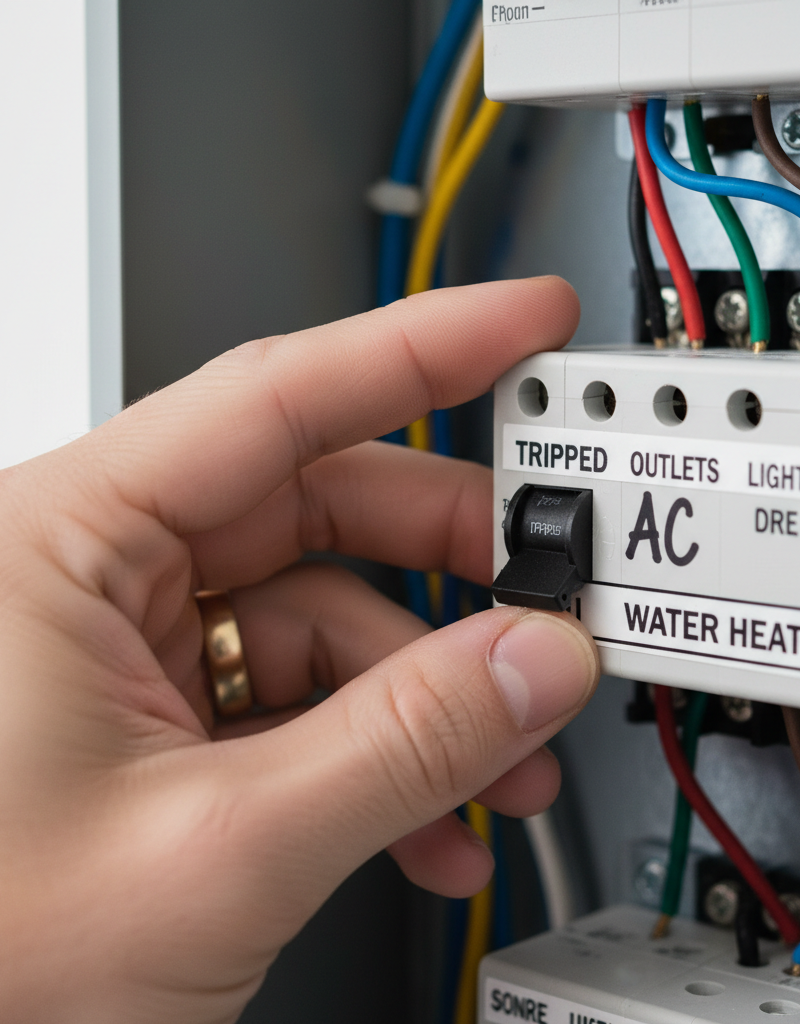
- Go to your main electrical panel, usually in the garage or basement. Look for any breakers that are in the “OFF” position or, more commonly, “tripped” to a middle position. AC units have dedicated breakers, often labeled “AC,” “Furnace,” or “Condenser.” For a 240-volt outdoor unit, it’ll be a double-pole breaker — two switches connected. If you find one tripped, firmly push it completely to the “OFF” position, then back to “ON.” Don’t just try to push it to “ON” from the tripped position; it needs to be fully reset. Wait 5-10 minutes before trying the AC again after resetting.
- Check the Outdoor Disconnect Box – The forgotten power switch
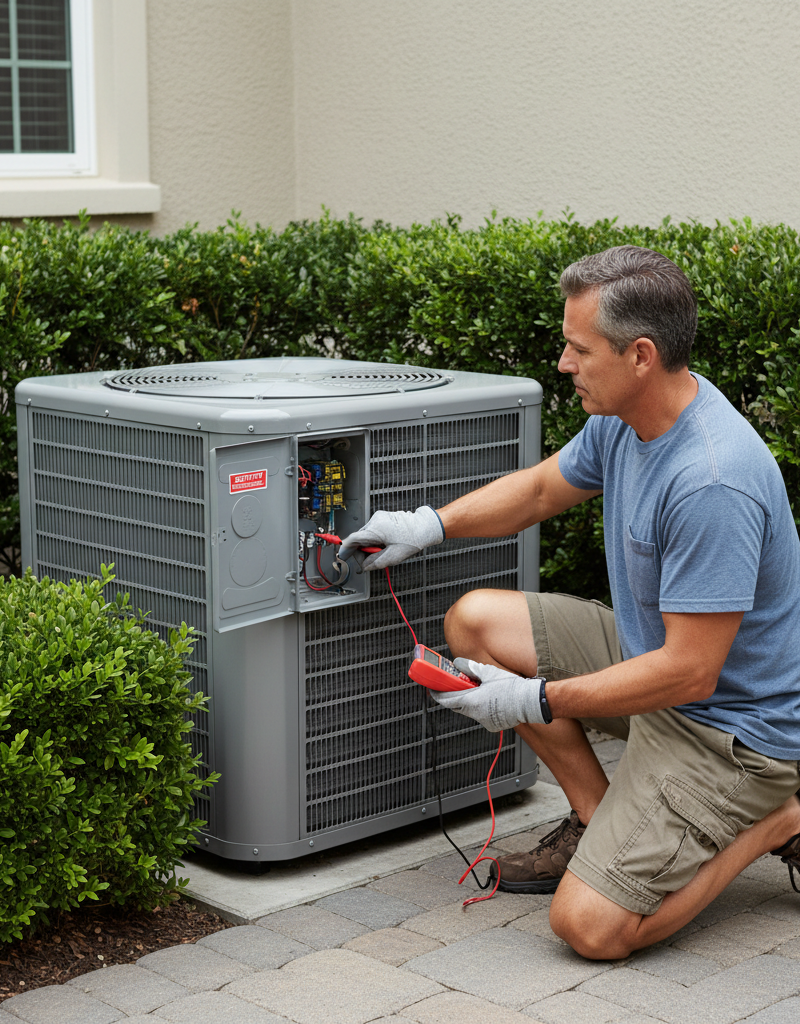
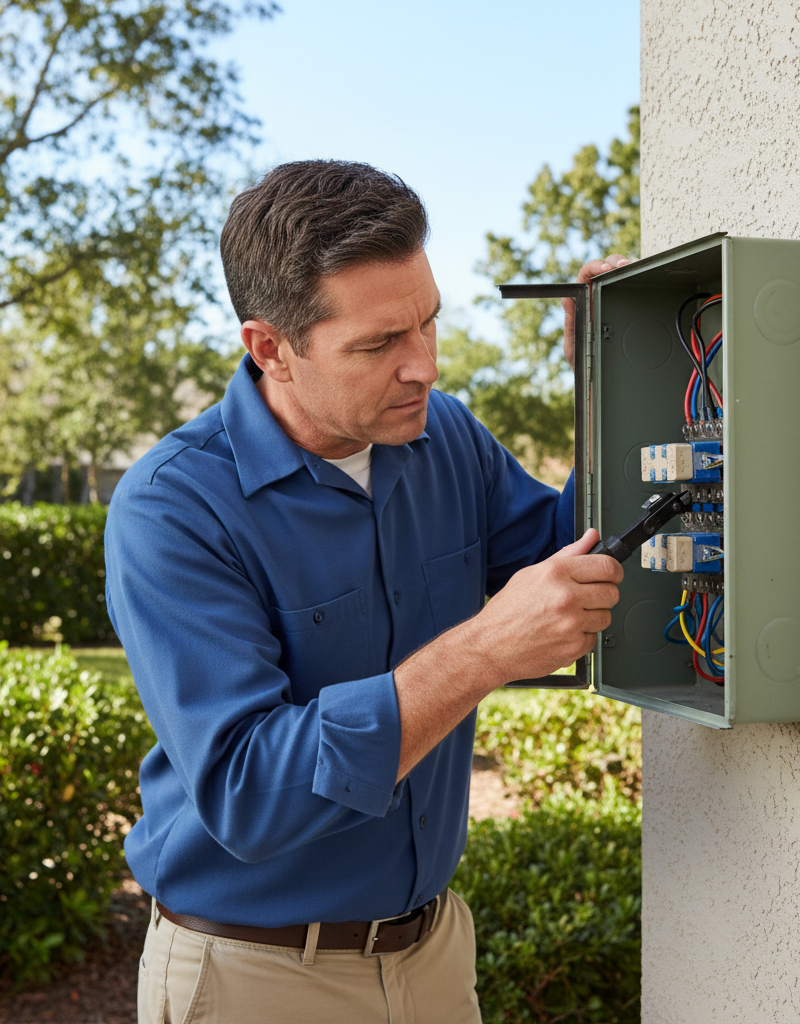
- Walk out to your outdoor AC unit. On the wall nearby, you’ll see a small gray metal box. This is your AC disconnect. Open it up. Inside, you’ll likely find one of two things: a pull-out block or a lever switch. If it’s a pull-out block, pull it straight out, flip it over, and reinsert it completely. Sometimes they’re just loosely seated. If it’s a lever, make sure it’s in the “ON” position. If it was off, flip it on. If it was already on, cycle it off and then back on.
- Examine Fuses in the Disconnect (if applicable) – A common hidden cause
- If your outdoor disconnect has a pull-out block, chances are there are two cartridge-style fuses inside it. These are usually ceramic or fiber-wrapped and can range from 20 to 60 amps. Carefully pull them out (a fuse puller is handy, but sometimes you can wiggle them out by hand). Visually inspect the wire inside. If it’s broken or there’s a scorch mark, the fuse is blown. Replace them with new fuses of the EXACT same amperage and voltage rating. I keep a stack of these in my truck; they’re a frequent culprit.
- Safety Note: Always turn off the main AC breaker at the electrical panel BEFORE opening this disconnect box or handling fuses. This protects you from potentially lethal voltage.
- If your outdoor disconnect has a pull-out block, chances are there are two cartridge-style fuses inside it. These are usually ceramic or fiber-wrapped and can range from 20 to 60 amps. Carefully pull them out (a fuse puller is handy, but sometimes you can wiggle them out by hand). Visually inspect the wire inside. If it’s broken or there’s a scorch mark, the fuse is blown. Replace them with new fuses of the EXACT same amperage and voltage rating. I keep a stack of these in my truck; they’re a frequent culprit.
- Look for Water in the Condensate Pan and Float Switch Trigger – Indoor unit safety trip
- Your indoor unit (furnace/air handler) has a condensate pan that collects water removed from the air. If this pan overflows due to a clogged drain line, a safety float switch will trip, shutting down the whole system to prevent water damage. Go to your indoor unit. Locate the condensate pan (usually under the evaporator coil). If there’s standing water, you’ve found your problem. You’ll need to clear the clog in the drain line first. It’s often a PVC pipe on the side of the unit. You can sometimes clear it with a wet/dry vac or a weak bleach solution.
- Check the Indoor Unit’s Service Switch – Another forgotten power source
- Near your furnace or air handler, there might be a standard light switch mounted on the wall or directly on the unit itself. This is a service switch, sometimes accidentally flipped off by a homeowner or even a kid messing around. Make sure it’s in the “ON” position. This powers the indoor blower and control board.
- Give It Time (Recalibration) – Sometimes the unit just needs a minute
- After checking and resetting breakers or power switches, don’t immediately expect the AC to fire up. Many systems have a built-in delay (often 3-5 minutes) to protect the compressor from short cycling. This is especially true after a power interruption. Set your thermostat to cool, drop the temperature, and just wait. Go grab a cold drink, come back in five minutes, and listen.
Common Causes
- Overloaded Circuit: The AC is a big draw. If other high-power appliances are on the same circuit (unlikely for a dedicated AC circuit, but old homes do weird stuff), or if the unit is struggling, it can trip the breaker.
- Short Cycling: If your AC is turning on and off too frequently, it can overwork the system and trip the breaker. This is often a symptom of another issue, like low refrigerant or a dirty coil.
- Dirty Air Filter: A really dirty air filter restricts airflow, making the indoor blower work harder, which can sometimes lead to overheating and a tripped breaker for the indoor unit.
- Motor Issues: An aging fan motor (either indoor or outdoor) drawing too much current as it tries to start can trip a breaker.
- Storms & Power Surges: Lightning or even just fluctuations in utility power can cause breakers to trip as a protective measure.
- Loose Electrical Connections: Vibration over time can loosen wire connections in the disconnect box or at the unit, leading to intermittent power or tripping. It’s rare but I’ve seen it — mostly due to poor installation.
- Condensate Drain Clog: As mentioned, a clogged drain causing the pan to fill up will activate a safety float switch, cutting power to the thermostat circuit and preventing the AC from turning on.
Common Mistakes
- Ignoring the Thermostat Batteries: Such a simple thing, but I’ve driven 30 minutes to a job just to replace two AA batteries. Check
Related Articles
Keep troubleshooting with these hand-picked guides from FixlyGuide:
- The #1 Mistake Homeowners Make When Their AC Won't Turn On (And the Easy Fix) — Learn the most common reason your AC isn't turning on and how to fix it with simple troubleshooting steps, potentially saving a costly serv…
- The #1 Reason Your AC Won't Turn On (And It's Not the Thermostat) — Discover the most common, overlooked reason your AC won't power on and how a simple reset can get your cool air flowing again.
- The Hidden Reason Your AC Freezes — And Why Most Homeowners Get It Wrong — An AC unit freezing up outside usually points to restricted airflow or low refrigerant, impacting performance and potentially causing syste…
- The #1 Dryer Heating Culprit Homeowners Miss (And the Cheap Fix) — Your dryer's not heating? Often, the culprit is a hidden component that's easy and inexpensive to replace if you know where to look.
- The Secret Reason Your Thermostat Lies (And How to Fix It in Minutes) — Discover why your thermostat isn't hitting its set temperature and learn simple, actionable steps to diagnose and fix the most common culpr…
- The 5-Minute Trick That Often Fixes a Dead Doorbell (No Electrician Needed) — Before you call an electrician for a dead doorbell, learn the surprising common culprit homeowners overlook and how to fix it in minutes.
Should you do this yourself?
Answer five quick questions before you start. Safety outranks savings every time.
Your experience with work like this
How high do you have to work?
Does the job involve any of these?
Will it need a permit?
Specialty tools
Free and instant. Educational guidance only — not a quote, inspection, or professional diagnosis.
Estimate your own project cost
National averages are a starting point. Enter your details for a range that fits your house.
HVAC replacement cost
- Equipment$2,200 – $3,800
- Installation labor$1,200 – $2,500
Always insist on a Manual J load calculation — sq-ft sizing is only a rough check. Federal heat-pump rebates may reduce cost significantly.
Educational estimate only — always confirm with written local bids.
What should this project cost?
Enter your project details for a realistic cost range before you call anyone.
Service calls and common repairs run $150–$900; full system replacement typically $6,000–$12,000.
- Regional adjustment
- National average
- Labor share (typical)
- ~$1,935
- Quotes to collect
- 3 written estimates
Educational estimate based on national averages — not a binding quote. Always confirm with written local estimates.
Fixly Project Decision Box
- DIY difficulty
- Advanced
- Estimated time
- Homeowner checks 20–30 minutes
- Cost level
- Moderate
Main tools / materials
- Clean air filter
- Garden hose for condenser coils
- Shop vac for the condensate line
When to stop and call a pro
- Burning smell, smoke, or a tripping breaker
- Refrigerant lines iced over or hissing
- Any work inside the sealed refrigerant circuit (EPA-licensed only)
- Gas smell near a furnace — leave and call the utility
Need professional help?
Find an HVAC Pro Near YouBefore you start
Check the difficulty, permits, and safety risk — then decide whether to call a pro.
Free, no signup required. Estimates are educational guidance, not a quote or an inspection.
Get the print-ready PDF of this guide
A clean, ad-free, printable version you can keep on your phone or pin to the workshop wall. Free with a FixlyGuide account.
- Print-optimized layout
- Tools, materials & every step included
- Saved to your account
Frequently asked questions
Why would my AC suddenly stop working?+
Most often, sudden AC failure points to a power interruption. This could be a tripped circuit breaker, a blown fuse in the outdoor disconnect box, or even a safety switch tripped due to a clogged condensate drain. It's usually a protection mechanism, not a catastrophic breakdown.
Should I reset my AC breaker multiple times?+
No. While resetting a tripped breaker once is fine, if it trips immediately again or repeatedly, there's an underlying electrical problem. Continuing to reset it can cause further damage to your AC system or create a fire hazard. Call an electrician or HVAC pro.
What does a tripped breaker look like?+
A tripped breaker typically sits in a middle position—neither fully ON nor fully OFF. Some older breakers might just look OFF. To reset it, you must push it firmly all the way to the OFF position, and then back to the ON position. You might hear a small click.
What's the disconnect box outside my AC unit?+
The disconnect box is a safety switch near your outdoor condenser unit. It allows the power to be completely cut off for maintenance. It usually contains a pull-out plug with fuses or a simple lever switch. It's an important stop for troubleshooting power issues.
Can a clogged drain line really stop my AC?+
Absolutely. Your indoor unit has a safety float switch that detects a full condensate pan, signaling a clogged drain. To prevent water damage, this switch will shut down the entire AC system until the clog is cleared and the water drains away.
How long should I wait after resetting power to my AC?+
I recommend waiting at least 5 to 10 minutes after resetting any breakers or power switches. Many AC systems have a built-in time delay to protect the compressor from short-cycling, which can cause significant wear and tear.
What if my thermostat is blank?+
A blank thermostat usually means it's not receiving power. Check the batteries first if it's a battery-powered model. If it's hardwired, check the circuit breaker supplying power to your indoor unit (furnace/air handler).
When should I call an HVAC professional for my AC not turning on?+
If you've checked all the power sources—thermostat, breakers, disconnect fuses, and condensate drain—and your AC still isn't turning on, it's time to call a pro. This suggests a problem with internal components like the control board, contactor, capacitor, or compressor, which require specialized tools and expertise.
Is it safe to check AC fuses myself?+
Yes, if you follow safety precautions. Always turn off the main AC breaker at your electrical panel BEFORE opening the outdoor disconnect box or touching any fuses. Use a fuse puller if you have one, and ensure you replace blown fuses with the exact same amperage and voltage ratings. If you're unsure, or uncomfortable with electrical components, call a professional.
Discussion
Loading comments…