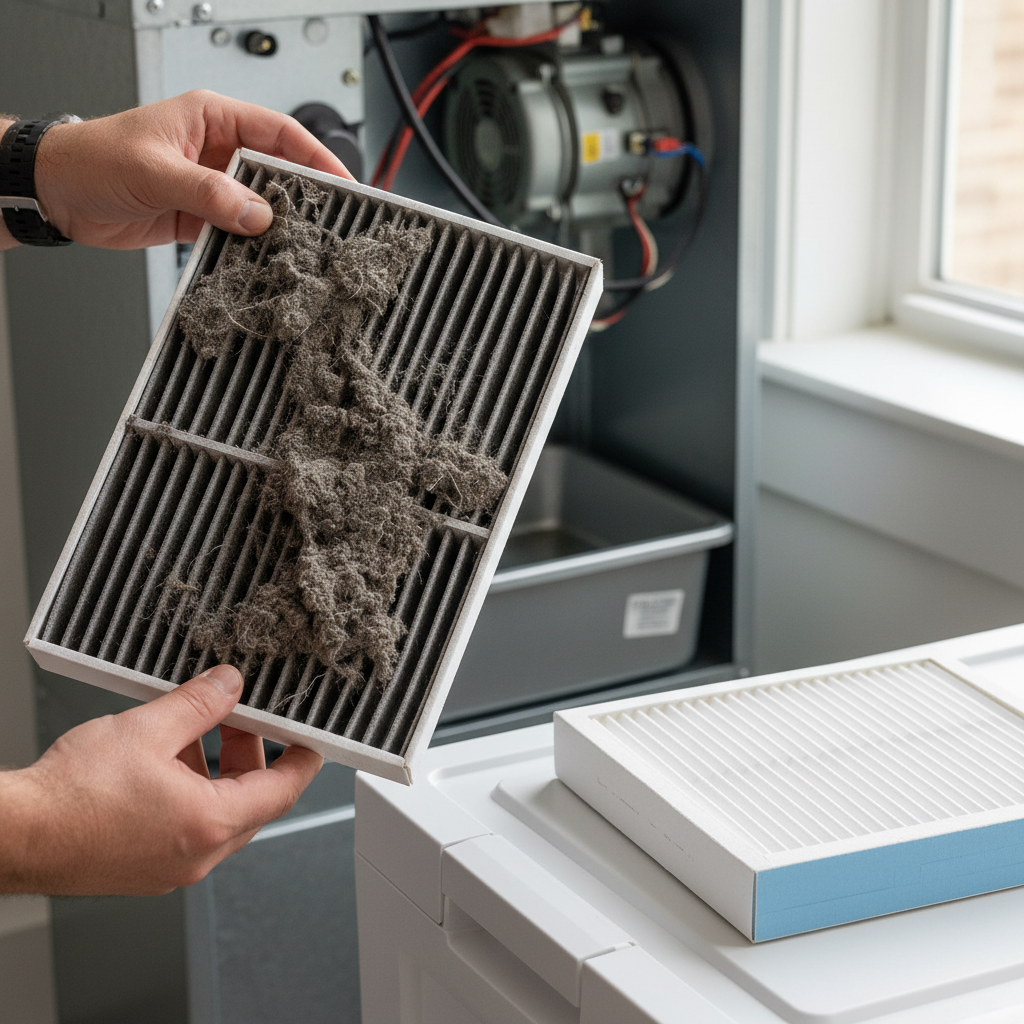
- Check the Air Filter — The first and easiest check.
- Tools: New air filter (check your existing filter for the size).
- Safety: Turn off your AC unit at the thermostat or the breaker before opening the filter slot.
HVAC · High energy usage
| Project category | HVAC |
|---|---|
| Problem type | High energy usage |
| Trade required | HVAC |
| Urgency | Planned project |
| Safety risk | Low safety risk |
| DIY suitability | DIY for experienced homeowners |
| Cost category | High cost |
| Typical timeline | Assessment within weeks; replacement planned off-season |
| Contractor type | Licensed HVAC technician |
Repair option
Duct sealing, insulation, and a tune-up before touching the equipment.
Replacement option
High-efficiency replacement sized by a load calculation, not a rule of thumb.
Common causes
- Aging, low-efficiency equipment
- Leaking ducts losing conditioned air
- Insufficient attic insulation
- Oversized system short-cycling
Relevant tools:project cost estimatorrepair or replace
Published August 1, 2026Last updated August 17, 2026
Tools & materials you'll need
Affiliate linksAs an Amazon Associate FixlyGuide earns from qualifying purchases — at no extra cost to you. Prices and availability are accurate as of publication and subject to change.
Quick Answer
If your air conditioner’s running but your house still feels like a Louisiana summer swamp, something’s off. It’s not just uncomfortable — it usually means your system isn’t doing its whole job. An AC doesn’t only cool the air; a big part of what it does is pull moisture out of it. So if you’re feeling clammy, your AC probably isn’t dehumidifying the way it should. A lot of the time, it’s a simple fix like a clogged air filter or a blocked condensate drain. Sometimes, though, you’re looking at a unit that’s too big for the house or low on refrigerant, and that needs a closer look.
The Problem
I get calls on this one all the time. Folks say, “My AC’s running, the thermostat says 72, but it feels like 85 in here!” And sure enough, when I walk in, that sticky, humid air hits me right away. That’s not just annoying. High humidity — especially above 60% — is mold and mildew territory, and that can stir up allergies and asthma. It can warp wood floors, ruin furniture, and even bring pests around. Your AC should be pulling moisture out of the air as it cools, but when it doesn’t, you’re left with that damp, heavy feeling even when the temperature looks fine on paper. You’re paying good money for that system to run, so you shouldn’t have to live in a house that feels like a sauna.
How It Works
Alright, let’s talk about how your AC is supposed to work and why it’s a dehumidifier as much as it is a cooler. The setup runs on a pretty neat thermodynamics trick. Inside your outdoor unit, there’s a compressor that pressurizes a refrigerant gas. That hot, high-pressure gas then moves to the condenser coils — those big finned coils on the outdoor unit — where it dumps heat to the outside air and condenses into a liquid.
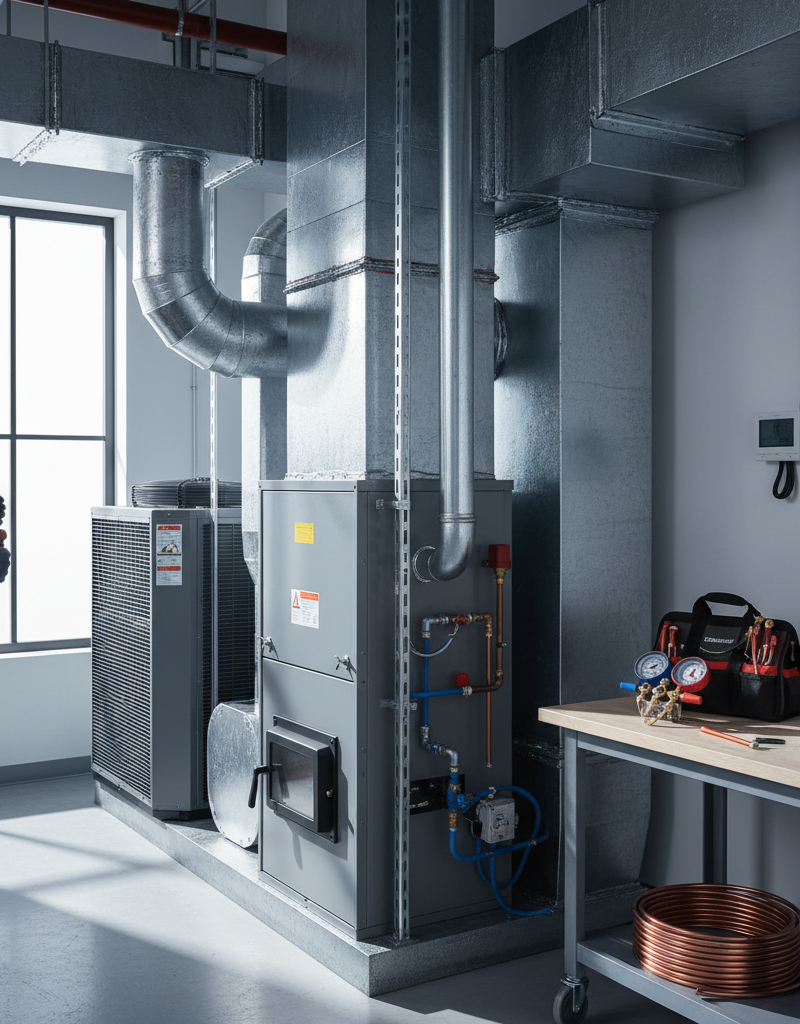
From there, the liquid refrigerant goes through a small metering device — either a thermal expansion valve or a fixed orifice — that drops its pressure. That pressure drop makes the refrigerant expand fast and get very cold. Then that super-cold liquid heads into the evaporator coil, which is in your indoor unit, usually up in the attic or tucked in a utility closet. As warm, humid air from your house passes over those cold coils, two things happen: the air gives up heat to the refrigerant, which cools it down, and the moisture in the air condenses on the coil surface, kind of like water beading up on a cold glass of iced tea on a hot day. That condensed water — the humidity your AC is removing — drips into a condensate pan and runs out through a drain line, usually a PVC pipe that heads outside or to a drain. The cooler, drier air gets blown back into your house through the ductwork. So if your house is humid, that dehumidifying part of the cycle isn’t happening right.
Step-by-Step Fix
Here’s where we roll up our sleeves. A lot of these are simple enough for a homeowner to handle. I’ve seen plenty of folks in Plano, Texas, save a few hundred bucks by doing these themselves instead of calling me out.
-
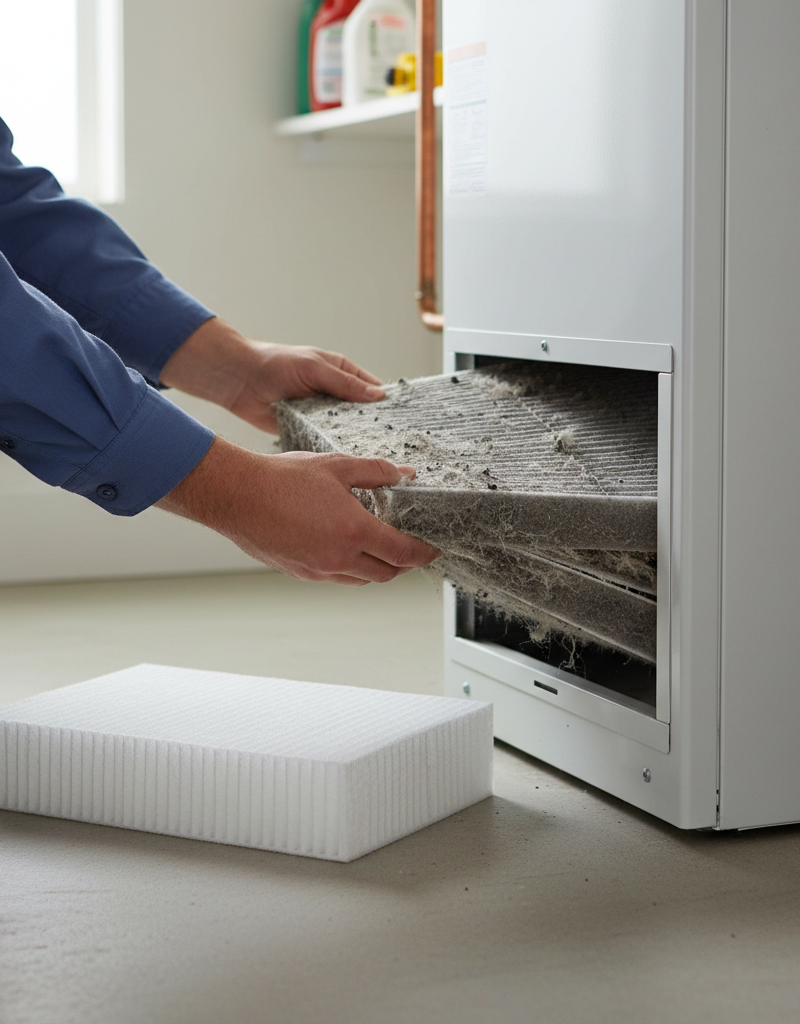
Check the Air Filter — The first and easiest check. A clogged air filter is the number one culprit for poor airflow and inefficient operation, and that hits dehumidification hard. A dirty filter chokes off airflow over the evaporator coil, so it can’t cool and condense moisture the way it should. Pull out your current filter and hold it up to a light. If you can’t see light through it, it’s time for a new one. I tell people to check it monthly and swap it out at least every 90 days, more often if you’ve got pets or allergies.
- Tools: New air filter (check your existing filter for the size).
- Safety: Turn off your AC unit at the thermostat or the breaker before opening the filter slot.
-
Clear the Condensate Drain Line — A common blockage. Like I said, the humidity your AC pulls out turns into water, and that water has to go somewhere. If that drain line gets clogged with algae, sludge, or even an insect nest, the water backs up, and the humidity can hang around inside the system, which cuts down on how much more moisture it can pull. Look for a PVC pipe coming out of your indoor unit; it usually heads outside. If it’s clogged, you might see standing water in the drain pan. Carefully pour a cup of distilled white vinegar down the access port — usually a T-shaped vent in the drain line — to kill algae. Wait about 30 minutes, then flush it with a cup or two of water. If it’s still backed up, you may need a wet/dry vac to suck the clog out from the outdoor end of the pipe.
- Tools: Distilled white vinegar, funnel, wet/dry shop vac (optional).
- If this doesn't work: If water is still backing up, the clog might be deeper, or the pan itself might be cracked, which is a job for a pro.
-
Clean the Evaporator Coils — Dirty coils can't "sweat" effectively. The evaporator coils get cold to condense moisture. If they’re packed with dirt, dust, and grime, that layer acts like insulation, and the coil won’t get cold enough to do its job. You’ll need to get into the indoor unit. After shutting off the power, find the evaporator coil — it’s usually behind an access panel on your furnace or air handler. Use a soft brush or a coil cleaning spray made for AC coils, the kind you can grab at a hardware store, and clean the fins gently. Don’t mash those fins down. They bend easy.
- Tools: Screwdriver (to remove access panel), soft brush, evaporator coil cleaner spray.
- Safety: ALWAYS kill the power to the unit at the breaker before opening anything. Those coils can be sharp, too.
-
Inspect the Condenser Coils — The outdoor part of the equation. The outdoor condenser coils need to stay clean, too. If they’re covered in dirt, leaves, grass clippings, or pet hair, the unit can’t dump heat efficiently, and the whole system works harder than it should. Turn off the power at the outdoor disconnect box — that small box usually mounted on the wall near the unit. Then use a garden hose to gently spray the coils from the inside out so you push debris through. Don’t go at it with a pressure washer. It’ll bend the fins before you can say “call it a day.”
- Tools: Garden hose, screwdriver (to remove protective cage if necessary).
-
Seal Ductwork Leaks — Keeping the conditioned air where it belongs. Leaky ducts can pull unconditioned, humid air from your attic or crawl space and dump it right into your house. That makes your AC run and run, trying to dehumidify air that keeps getting re-humidified by leaks. Check any visible ductwork, especially seams and connections, for gaps or holes. Use mastic sealant or HVAC-grade aluminum foil tape — not regular duct tape! — to seal the leaks you find. I pulled a water heater in Frisco last month and ran into a return duct with a hole big enough to lose a baseball through; the homeowner swore the AC was shot, but that thing was just sucking in hot attic air like a vacuum.
- Tools: Mastic sealant and brush, or HVAC-grade aluminum foil tape, utility knife (for cutting tape).
- Pro Tip: Pay close attention to where the ducts connect to the air handler and where they pass through walls or floors.
-
Check for an Oversized AC Unit — Sometimes bigger isn't better. This isn’t a DIY fix, but it’s a common cause. An AC unit that’s too large for your home will cool the place down too fast, then shut off before it’s had enough time to pull moisture out of the air. It’s like trying to dry clothes with a dryer that only runs for 5 minutes — the clothes get cool, but they’re still damp. If your AC keeps kicking on and off in short bursts (short cycling) and your house still feels muggy, this could be it. You’ll need an HVAC pro to size it properly. They’ll run a “Manual J” load calculation to figure out the right size for your house.
- Pro Call: If you suspect your unit is oversized, you'll need an HVAC pro for a proper assessment.
-
Consider a Whole-House Dehumidifier — A supplementary solution. If your AC is working like it should but your climate is just plain humid — hello, Houston! — or you’ve got certain rooms that stay damp, a whole-house dehumidifier might be the move. These systems tie into your existing HVAC ductwork and work separately to control humidity. This isn’t a simple DIY job, though; installation usually takes an HVAC technician.
- Pro Call: Installation of a whole-house dehumidifier is best left to a professional to ensure proper sizing and integration.
Common Causes
- Dirty Air Filter: Restricts airflow and knocks down cooling and dehumidifying efficiency. This is hands-down the most common issue I run into.
- Clogged Condensate Drain Line: Water backs up, and the system can’t keep pulling moisture out.
- Dirty Evaporator Coils: Grime insulates the coil, so it can’t get cold enough to condense humidity properly.
- Oversized AC Unit: Cools the air too fast and short-cycles before it removes enough moisture.
- Refrigerant Issues: Low refrigerant levels from a leak or an improper charge can wreck cooling and dehumidification.
- Leaky Ductwork: Pulls unconditioned, humid air from attics, crawl spaces, or other unconditioned spaces into the living areas.
- Running the Fan Continuously: Some thermostats have a “fan on” setting. If the fan runs all the time even when the compressor’s off, it can re-evaporate moisture from the coil back into your house.
- Open Windows/Doors: Letting humid outdoor air in while the AC is running defeats the whole purpose.
Common Mistakes
- Ignoring the Air Filter: A lot of homeowners forget to check or change it regularly. I tell clients to put it on the calendar like a doctor’s appointment. A dirty filter costs you comfort and money.
- Using Regular Duct Tape on Ducts: Standard duct tape dries out, cracks, and loses its bite over time. Use mastic sealant or proper HVAC-grade aluminum foil tape for ductwork. That stuff’s built to last for decades in hot attics.
- Blasting the AC on a Super Low Setting to "Dry" the Air: Sure, lower temperatures can remove more moisture, but forcing your AC to run at 65°F when you’re comfortable at 72°F isn’t smart. It wastes energy and can even lead to coil freeze-ups if the airflow’s off. Fix the real humidity problem instead.
- Not Clearing the Condensate Drain Until It Overflows: A little preventive maintenance — like pouring vinegar down the drain line a couple of times a year — can save you a big mess and a water damage claim later.
- Thinking "Bigger is Better" for AC Units: Classic mistake. An oversized AC unit is a terrible dehumidifier. It shuts off too fast and leaves the house feeling clammy.
- Overlooking Crawl Space or Basement Humidity: Sometimes the AC isn’t the problem at all. A damp crawl space or basement can push moisture up into the living areas. You’ve got to handle those foundation issues, too.
Cost & Time Breakdown
| Task | DIY Cost | Pro Cost | Time |
|---|---|---|---|
| Change Air Filter | $10–$40 | Included in service | 5 minutes |
| Clear Condensate Drain | $5–$15 | $75–$150 | 30–60 minutes |
| Clean Evaporator Coils | $15–$30 | $150–$300 | 1–2 hours |
| Clean Condenser Coils | $0 | Included in service | 30 minutes |
| Seal Duct Leaks | $20–$50 | $200–$600+ | 1–4 hours |
| Refrigerant Check/Recharge | Not DIY | $200–$600+ | 1–3 hours |
| AC Unit Sizing Assessment | Not DIY | $150–$300 | 1–2 hours |
Tips & Prevention
- Regular Filter Changes: Seriously, I can’t stress this enough. Set a reminder on your phone. A clean filter is the cheapest and easiest AC maintenance you can do. Every 1-3 months, depending on usage and household conditions.
- Maintain Your Outdoor Unit: Keep the area around your condenser unit clear of debris, leaves, and shrubs. Give it a good rinse with a garden hose once a season to keep those coils clean.
- Don't Oversize Your AC: If you’re replacing your unit, make sure your HVAC contractor performs a proper Manual J load calculation. Don’t let them just swap in the same size without checking. Your house may have different insulation or windows now.
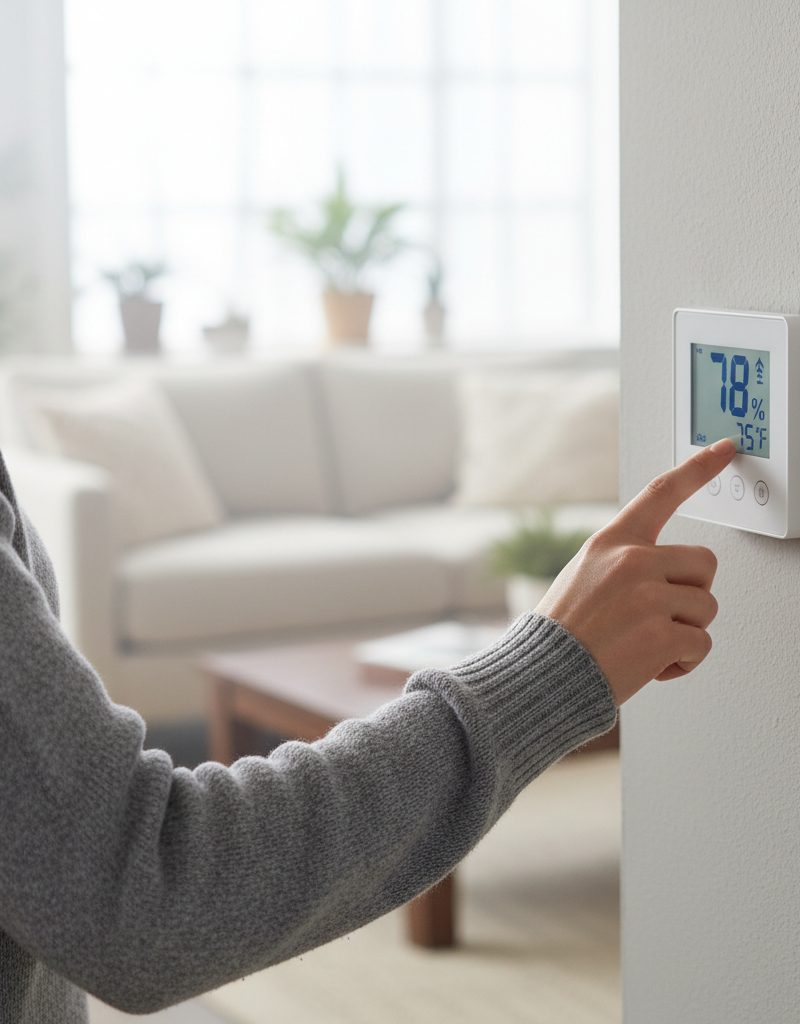
- Consider a Smart Thermostat: A lot of smart thermostats have features that help manage humidity by running the fan longer or nudging the temperature a bit to improve moisture removal.
- Seal Your Home's Envelope: Beyond ducts, seal air leaks around windows, doors, and penetrations in your home’s exterior. That keeps humid outdoor air from sneaking in.
- Use Exhaust Fans: Always run your bathroom exhaust fans when showering and your kitchen exhaust fan when cooking. They pull moisture-laden air straight outside.
When to Call a Professional
A lot of humidity issues can be knocked out with a few DIY steps, but there are definitely times to bring in a licensed HVAC pro. If you’ve changed your filter, cleaned the coils, and cleared the drain line and your house still feels like a sauna, it’s time. Same goes if you suspect your AC unit is oversized, if you see ice on your refrigerant lines or outdoor unit — a classic sign of low refrigerant or restricted airflow — or if your unit is short-cycling like crazy. Refrigerant work takes specialized tools and licensing, and messing with it yourself isn’t just illegal, it can damage the system or get you hurt. And if you’ve got persistent water leaks from your indoor unit or a musty smell that just won’t quit, get somebody out there. A pro can run diagnostics, track down leaks, and charge the system the right way so it cools and dehumidifies like it should.
Related Articles
Keep troubleshooting with these hand-picked guides from FixlyGuide:
- The Secret Reason Your AC Isn't Drying Your Air (And What to Check First) — Your AC should cool and dehumidify, but if your house feels muggy, there's a specific, often overlooked culprit preventing it from doing it…
- The Secret Culprit Behind Your Humid House (Even with the AC On) — If your house feels sticky and damp despite the AC running, a common and often overlooked issue is an oversized air conditioner.
- The #1 Mistake Homeowners Make When Their AC Won't Turn On (And the Easy Fix) — Learn the most common reason your AC isn't turning on and how to fix it with simple troubleshooting steps, potentially saving a costly serv…
- That 'Energy-Saving' HVAC Trick Is Costing You Money — You've heard the advice: close HVAC vents in unused rooms to save on heating and cooling. But this common practice is a myth. It actually h…
- The Secret Reason Your Oven Fails to Heat (It's NOT Always the Element) — Discover why your oven isn't reaching its set temperature, from common part failures to overlooked calibration issues, and how to fix it.
- The Tiny Gap That Wastes Energy: Why Your Baseboards Pull Away (And the Simple, Permanent Fix) — Baseboards separating from walls are a common issue, often indicating underlying problems with moisture or house settling, but are typicall…
Should you do this yourself?
Answer five quick questions before you start. Safety outranks savings every time.
Your experience with work like this
How high do you have to work?
Does the job involve any of these?
Will it need a permit?
Specialty tools
Free and instant. Educational guidance only — not a quote, inspection, or professional diagnosis.
Estimate your own project cost
National averages are a starting point. Enter your details for a range that fits your house.
HVAC replacement cost
- Equipment$2,200 – $3,800
- Installation labor$1,200 – $2,500
Always insist on a Manual J load calculation — sq-ft sizing is only a rough check. Federal heat-pump rebates may reduce cost significantly.
Educational estimate only — always confirm with written local bids.
What should this project cost?
Enter your project details for a realistic cost range before you call anyone.
Service calls and common repairs run $150–$900; full system replacement typically $6,000–$12,000.
- Regional adjustment
- National average
- Labor share (typical)
- ~$1,935
- Quotes to collect
- 3 written estimates
Educational estimate based on national averages — not a binding quote. Always confirm with written local estimates.
Fixly Project Decision Box
- DIY difficulty
- Advanced
- Estimated time
- Homeowner checks 20–30 minutes
- Cost level
- Moderate
Main tools / materials
- Clean air filter
- Garden hose for condenser coils
- Shop vac for the condensate line
When to stop and call a pro
- Burning smell, smoke, or a tripping breaker
- Refrigerant lines iced over or hissing
- Any work inside the sealed refrigerant circuit (EPA-licensed only)
- Gas smell near a furnace — leave and call the utility
Need professional help?
Find an HVAC Pro Near YouBefore you start
Check the difficulty, permits, and safety risk — then decide whether to call a pro.
Free, no signup required. Estimates are educational guidance, not a quote or an inspection.
Get the print-ready PDF of this guide
A clean, ad-free, printable version you can keep on your phone or pin to the workshop wall. Free with a FixlyGuide account.
- Print-optimized layout
- Tools, materials & every step included
- Saved to your account
Frequently asked questions
Why does my house feel humid even though the AC is on?+
Your AC has two main jobs: cooling and dehumidifying. If it's running but your house feels sticky, it's likely not effectively removing moisture. Common culprits include a dirty air filter, clogged condensate drain, dirty coils, or an AC unit that's too large for your home and short-cycling.
How does an AC unit remove humidity?+
As warm, humid air from your house passes over the cold evaporator coil in your indoor unit, the moisture in the air condenses into liquid water, which then drains away. This process removes humidity, leaving cooler, drier air to circulate back into your home.
Can a dirty air filter cause high humidity?+
Absolutely. A dirty air filter restricts airflow over the evaporator coil. This reduces the coil's ability to get cold enough and efficiently condense moisture, leaving more humidity in your indoor air. Changing your filter regularly is a crucial maintenance step.
What is 'short cycling' and how does it affect humidity?+
Short cycling is when your AC unit turns on and off too frequently and in short bursts. An oversized AC unit often short cycles because it cools the house too quickly, shutting off before it has had enough time to adequately remove moisture from the air, leading to a humid feeling.
Should I run my AC fan continuously to help with humidity?+
Generally, no. Running your AC fan continuously (on the 'fan on' setting) can actually re-evaporate moisture from the cold evaporator coil back into your house, especially in humid climates. It's usually best to keep the fan on 'auto' so it only runs when the compressor is actively cooling and dehumidifying.
How often should I clean my AC coils?+
Your indoor evaporator coils should ideally be inspected and cleaned annually by a professional, but you can gently brush away surface dust more often. Your outdoor condenser coils should be rinsed with a garden hose once or twice a year, especially before the cooling season, to remove debris and improve efficiency.
Can leaky ductwork cause my house to be humid?+
Yes, definitely. Leaks in your ductwork can pull in unconditioned, humid air from unconditioned spaces like your attic, crawl space, or even wall cavities. This humid air is then distributed throughout your house, making your AC work harder and leaving you feeling clammy.
When should I call a professional for high humidity?+
Call a pro if you've done the basic DIY checks (filter, drain, coils) and the problem persists. Also, if you see ice on your AC lines, suspect low refrigerant, notice persistent water leaks, or believe your unit might be improperly sized, it's definitely time to bring in a licensed HVAC technician.
Discussion
Loading comments…