- Algae and Slime Buildup: This is the big one. The dark, damp mess inside the drain line and pan is perfect for algae, mold, and mildew. Give it enough time and it’ll grow into a plug.
- Dust and Debris: Even with filters, fine dust sneaks into the condensate pan. Once it gets wet, it turns to sludge and starts building up.
- Insect Intrusion: I’ve pulled wasp nests, spiders, and even a tiny rodent nest out of drain line terminations outside. They love that little hidden spot. Blocks the line up fast.
- Improper Slope: If the drain line wasn’t pitched downward enough during install, water won’t move out like it should, and standing water becomes a regular problem.
- Vortex in the P-Trap: Sometimes the P-trap creates a vortex effect and drags in debris more aggressively if it isn’t vented right, though that’s less common on a plain-Jane clog.
Plumbing · Clog
| Project category | Plumbing |
|---|---|
| Problem type | Clog |
| Trade required | Plumbing |
| Urgency | Soon — within weeks |
| Safety risk | Low safety risk |
| DIY suitability | DIY friendly |
| Cost category | Low cost |
| Typical timeline | Same-day DIY attempt; pro visit within a day or two |
| Contractor type | Licensed plumber |
Repair option
Plunger, hand auger, or trap cleanout before chemicals.
Replacement option
Line replacement when clogs return in the same spot repeatedly.
Common causes
- Hair and soap buildup in the trap
- Grease cooling in the branch line
- Flushed wipes or foreign objects
Relevant tools:diy difficultydiy or hire a pro
Published July 28, 2026Last updated August 17, 2026
Tools & materials you'll need
Affiliate linksAs an Amazon Associate FixlyGuide earns from qualifying purchases — at no extra cost to you. Prices and availability are accurate as of publication and subject to change.
Quick Answer
When your AC starts blowing warm air, I know it’s easy to jump straight to the expensive stuff — bad compressor, low refrigerant, all that scary-sounding nonsense. But I’ll tell you what I see most often, especially in the muggy summer months: it usually isn’t some major component quitting on you. A lot of the time, it’s something plain and stupid-simple, like a clogged condensate drain line. Once that line backs up, it trips the safety switch, your outdoor unit shuts down, and the indoor fan just keeps moving warm, stale air around the house. No magic. No dice. A DIY cleanout can often have you back in cool air in about 15 minutes.
The Problem
Picture it: it’s 90 degrees outside, your AC’s running, and the air at the vents feels less like cool relief and more like a hair dryer on low. You’ve got the thermostat set to 72, but the house just keeps creeping up in temperature. You check the outdoor unit and it’s either dead quiet or it runs a bit, then drops out again. Meanwhile, the blower inside is humming along like nothing’s wrong. That setup usually points to a heat-removal problem, and one of the first things I check is the condensate drain line. When that line clogs, water backs up, fills the pan, and trips a float switch. That switch is there to stop water damage, sure — but the tradeoff is your compressor gets shut down and you’re left with fan-only air. Annoying? You bet.
How It Works
Alright, here’s the short version of how your AC actually cools the house, because that little drain line matters more than most folks think. Your air conditioner isn’t making cold air out of thin air; it’s pulling heat and humidity out of the air already in your house. Here’s the basic chain of events:
First, the indoor coil — the evaporator coil — gets nice and cold. Warm, damp air from your house gets pulled across that coil, and the heat transfers into the refrigerant inside. That cooled air gets blown back into the rooms. Simple enough.
But there’s another job going on at the same time: moisture removal. When warm, humid air hits that cold coil, the water in the air condenses. Same thing you see on a cold glass of sweet tea in July. That water doesn’t vanish. It drips into a sloped drain pan sitting under the coil.
From there, the water runs out through a PVC pipe — that’s your condensate drain line — and usually dumps outside or into a utility sink. Somewhere along that line, usually near the indoor unit, you’ll have a safety float switch. If the pan fills up because the line’s clogged, that float rises and opens the switch. Then the control board shuts down the outdoor compressor so the pan doesn’t overflow and wreck your ceiling, walls, or furnace. Problem is, the indoor fan can still keep running, blowing air across a now-warm coil because the compressor’s off. So what comes out the vents? Warm, sticky air. Real fun.
Step-by-Step Fix
This isn’t hard, but you do have to stay organized. I’ve cleared hundreds of these over the years, from an old bungalow in Elmwood Park last summer where the line was packed solid with algae, to a brand-new house last month that had a paint chip wedged in the trap. Same headache, different house. Take your time and do it right.
-
Safety First — Kill the Power! — Before you touch a thing, shut off power to the whole HVAC system. Go to the electrical panel, find the breaker for the furnace or air conditioner, and flip it OFF. You’ll probably also see a switch near the indoor unit, usually a light-switch style toggle on the side of the furnace or air handler. Flip that off too. This isn’t one of those “probably fine” jobs. You’re around water and electricity.
- Tools: None, unless you count your common sense.
- Why: Some units still have auxiliary power even when the main breaker’s off. Better safe than getting lit up.
-
Locate the Drain Line and Pan — The condensate drain line is usually a 3/4-inch PVC pipe coming out of the indoor furnace or air handler. It should slope downward. Follow it. You’ll usually run into a P-trap, same idea as the one under a sink, and sometimes a vertical vent pipe with a cap. The drain pan sits under the evaporator coil section of the indoor unit.
- Tools: Flashlight, if you’re working in a dark attic or basement.
-
Inspect for Standing Water — Look in the drain pan. Is it full of water? If it is, there’s your problem. If the pan’s dry, the clog isn’t likely the issue — and you might need this article on low refrigerant.
-
Clear the Immediate Clog (if visible) — Sometimes the mess is right at the pan opening. If you can see it, reach in carefully and pull out any obvious sludge, algae, or debris. You may spot a small cylindrical float switch in there too — don’t go yanking on it.
-
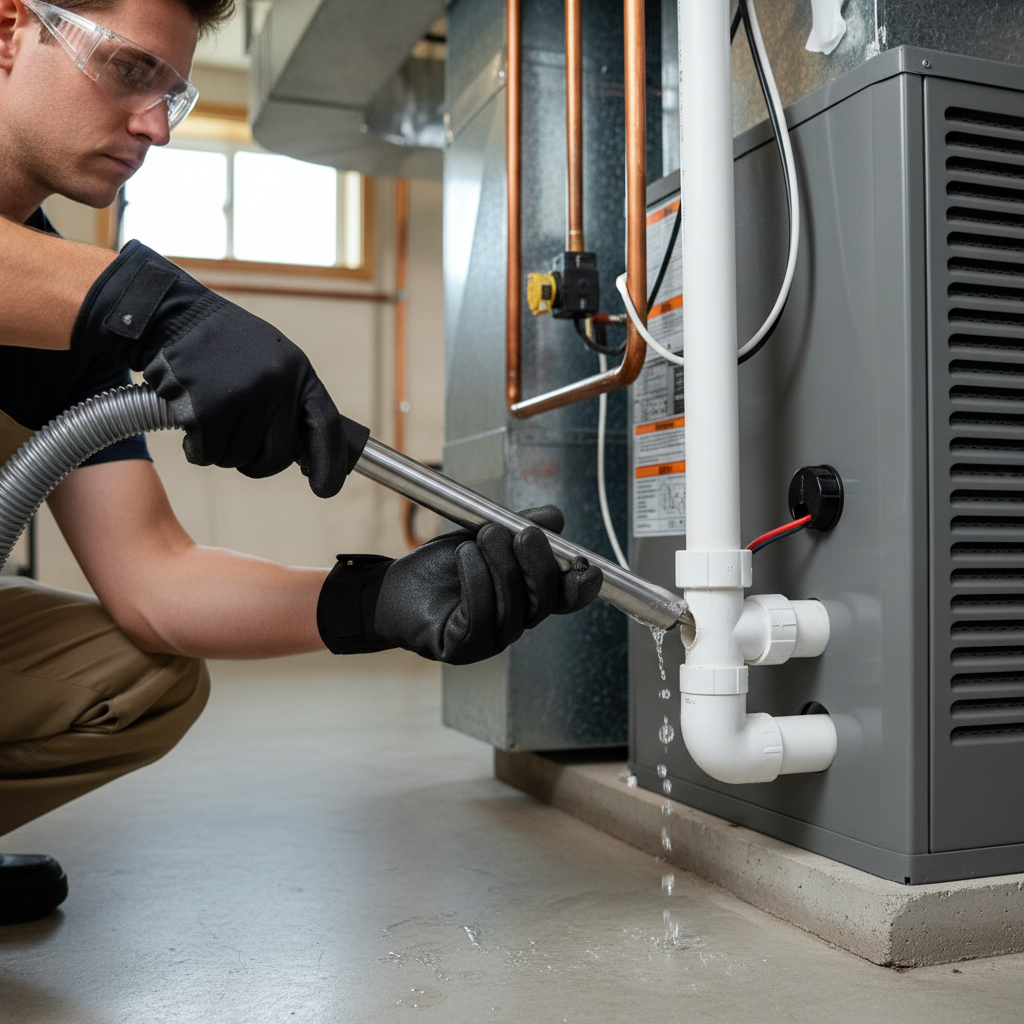
Clean Out the P-Trap — The P-trap is where I find a lot of these clogs. It holds water by design, and that makes it a perfect little swamp for mold and algae. Most AC traps have a cleanout cap on top. Unscrew it. Odds are you’ll find a nasty sludgy mess waiting for you. Use a wet/dry vac to suck out the water and junk from the trap. I usually dump a little warm water in there first to loosen things up before I vacuum it out.
- Tools: Wet/dry vac, adjustable wrench if the cap’s stuck.
- Pro Tip: If there’s no cleanout cap, you might have to cut the P-trap with a hacksaw, clean it, and reconnect it with a PVC coupling and primer/cement — but only if you’re comfortable with basic plumbing.
-
Vacuum the Drain Line — Once the trap is clear, clean the rest of the line. Go to where the drain line ends outside the house, or at your utility sink. Put the wet/dry vac hose tightly over the pipe opening and seal it as best you can with your hand or a rag. Run the vac for a minute or two. You should hear it pulling air, maybe even sucking out water and gunk. That negative pressure helps yank the clog out instead of just shoving it farther along.
- Tools: Wet/dry vac.
- Alternative: Some folks try blowing compressed air into the line from the indoor cleanout, but I’ve had better luck vacuuming from the end. It’s safer, and you’re more likely to remove the clog instead of packing it deeper.
-
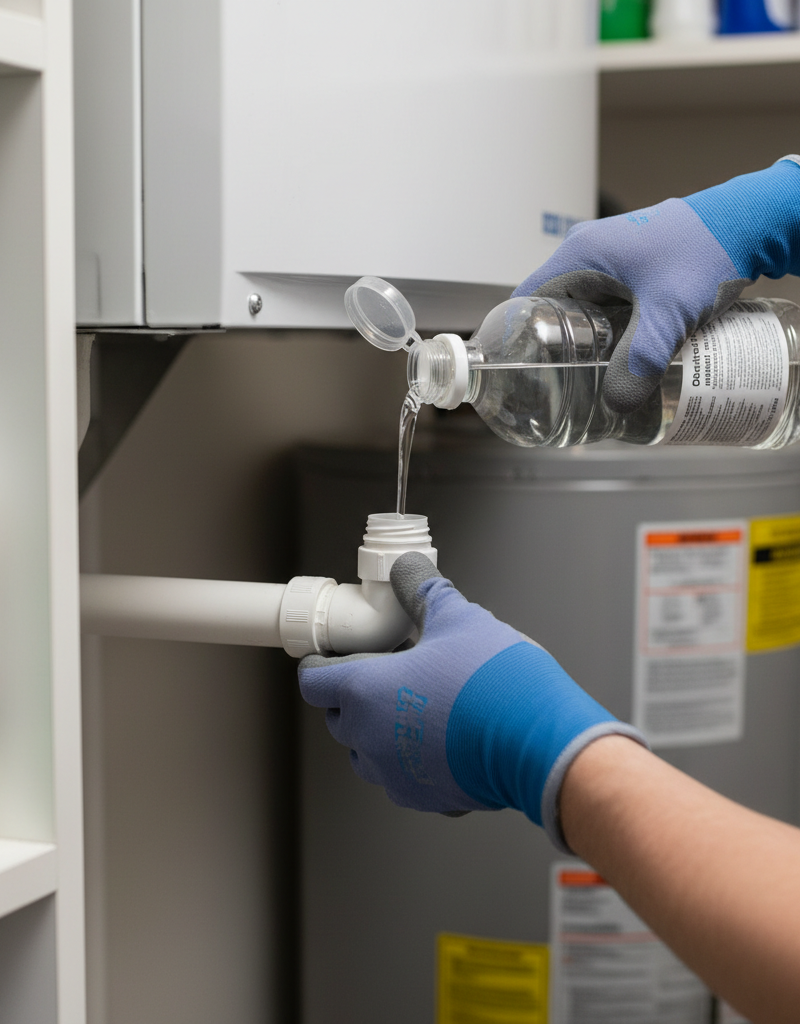
Flush with a Cleaner — After vacuuming, pour a cup of distilled white vinegar or a diluted bleach solution (1 part bleach to 16 parts water – about a quarter cup bleach to a gallon of water) into the P-trap cleanout. Let it sit for 15-20 minutes. That helps kill off any algae, mold, or bacteria still hanging around. Then flush it with a few cups of plain water.
- Materials: Distilled white vinegar OR household bleach.
- Safety: Don’t mix bleach and vinegar. That makes dangerous chlorine gas. Pick one. Wear gloves and eye protection while you’re at it.
-
Reassemble and Restore Power — Put the cleanout cap back on the P-trap. Make sure the connections are snug. Head back to the panel and flip the AC breaker ON. Then turn the local power switch at the indoor unit back ON.
-
Test the System — Set the thermostat to cool and drop it several degrees below the current room temperature. Give it about 10-15 minutes. Then go outside and see if the compressor unit is running again. Check the air coming from the indoor vents — it ought to feel noticeably cooler. And take a look at the drain pan later to make sure water’s moving through the line instead of backing up.
Common Causes
There are a few usual suspects behind a clogged condensate drain. If you know what they are, you’ve got a better shot at keeping it from happening again:
- Algae and Slime Buildup: This is the big one. The dark, damp mess inside the drain line and pan is perfect for algae, mold, and mildew. Give it enough time and it’ll grow into a plug.
- Dust and Debris: Even with filters, fine dust sneaks into the condensate pan. Once it gets wet, it turns to sludge and starts building up.
- Insect Intrusion: I’ve pulled wasp nests, spiders, and even a tiny rodent nest out of drain line terminations outside. They love that little hidden spot. Blocks the line up fast.
- Improper Slope: If the drain line wasn’t pitched downward enough during install, water won’t move out like it should, and standing water becomes a regular problem.
- Vortex in the P-Trap: Sometimes the P-trap creates a vortex effect and drags in debris more aggressively if it isn’t vented right, though that’s less common on a plain-Jane clog.
Common Mistakes
Homeowners, bless ’em, make the same handful of mistakes that turn a simple fix into a headache:
- Forgetting to Kill the Power: This is the big dangerous one. Electricity and water don’t mix. Always shut off the HVAC power at the breaker.
- Blowing into the Line (from inside): It sounds logical, sure, but compressed air or suction from the inside can shove the clog deeper. I always try the vacuum from the outside termination first.
- Ignoring the P-Trap: A lot of folks just glance at the pan and call it good. The trap is usually the real trouble spot. If you don’t clean it out, you’ve only done half the job.
- Using Harsh Chemicals: Don’t dump Drano or some other nasty drain cleaner down your AC condensate line. It can chew up the PVC, corrode the aluminum pan, or ruin the plastic float switch. Stick with vinegar or diluted bleach.
- Not Testing After: Don’t assume it’s fixed just because the water’s gone. After clearing the line, you must run the AC and confirm the outdoor unit comes on and cool air’s coming from the vents. A few cups of water poured into the system’s cleanout (after the initial clearing) as a
Related Articles
Keep troubleshooting with these hand-picked guides from FixlyGuide:
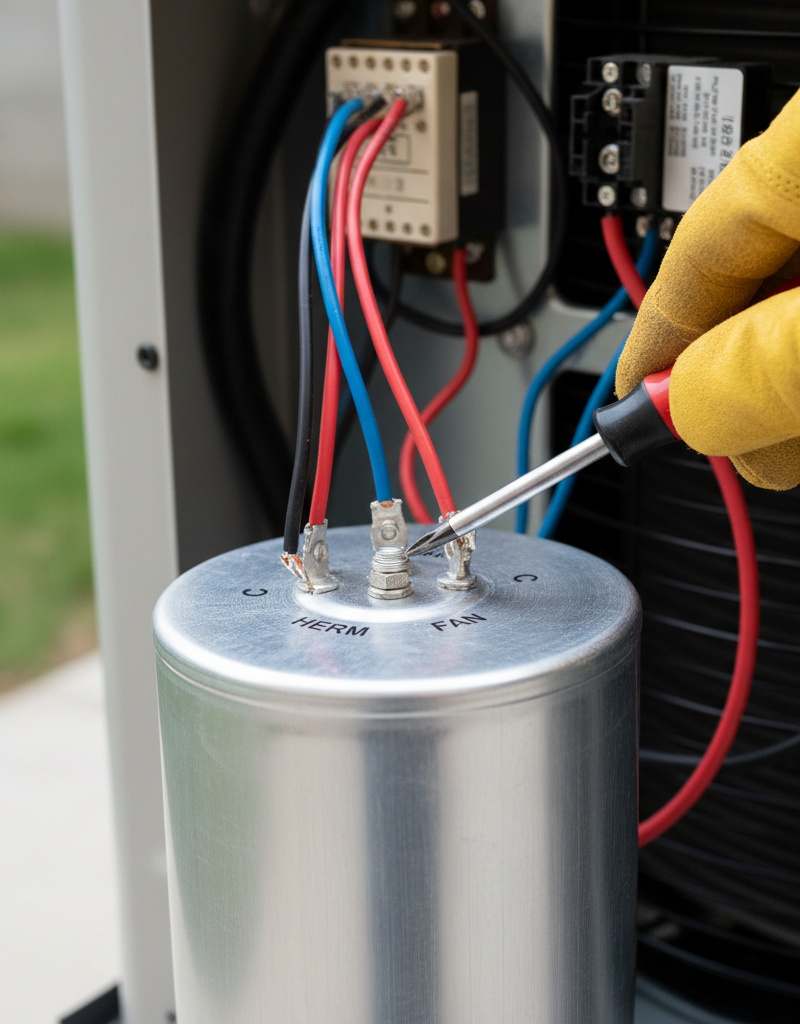
- The #1 Reason Your AC Blows Warm Air (And It's Not What You Think) — Discover the most common and often overlooked reason your AC might be blowing warm air, and how a simple capacitor fix can restore cool air.
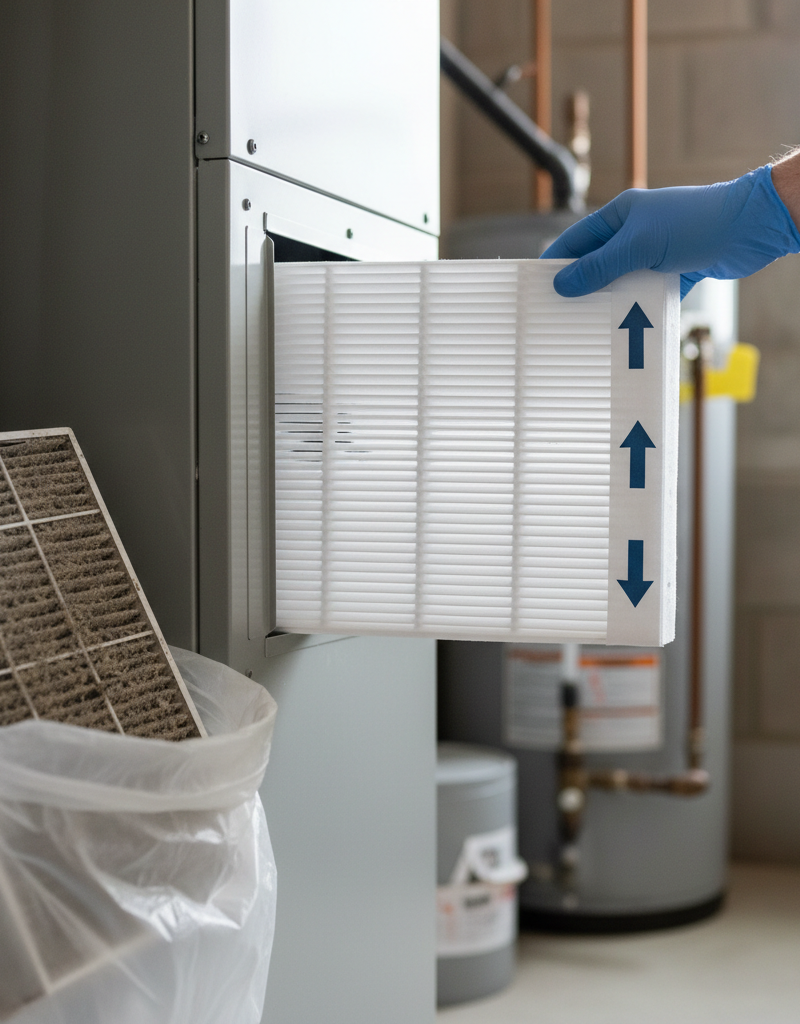
- The #1 Reason Your AC Blows Warm Air (And It's Not What You Think) — A dirty air filter is often the overlooked culprit behind an air conditioner blowing warm air, hindering its ability to cool your home effi…
- That August Chill: Why Your AC Freezes Up & How to Fix It — Is your air conditioner a block of ice in the middle of a heatwave? It seems counterintuitive, but an AC that freezes up is a common August…
- The #1 Dryer Heating Culprit Homeowners Miss (And the Cheap Fix) — Your dryer's not heating? Often, the culprit is a hidden component that's easy and inexpensive to replace if you know where to look.
- The #1 Reason Your AC Won't Turn On (And It's Not the Thermostat) — Discover the most common, overlooked reason your AC won't power on and how a simple reset can get your cool air flowing again.
- The Hidden Reason Your AC Isn't Cooling (And 7 Fixes Homeowners Miss) — If your central AC isn't cooling your home, the culprit often lies in an overlooked issue that's simple to fix, preventing costly professio…
Should you do this yourself?
Answer five quick questions before you start. Safety outranks savings every time.
Your experience with work like this
How high do you have to work?
Does the job involve any of these?
Will it need a permit?
Specialty tools
Free and instant. Educational guidance only — not a quote, inspection, or professional diagnosis.
Estimate your own project cost
National averages are a starting point. Enter your details for a range that fits your house.
HVAC replacement cost
- Equipment$2,200 – $3,800
- Installation labor$1,200 – $2,500
Always insist on a Manual J load calculation — sq-ft sizing is only a rough check. Federal heat-pump rebates may reduce cost significantly.
Educational estimate only — always confirm with written local bids.
What should this project cost?
Enter your project details for a realistic cost range before you call anyone.
Service calls and common repairs run $150–$900; full system replacement typically $6,000–$12,000.
- Regional adjustment
- National average
- Labor share (typical)
- ~$1,935
- Quotes to collect
- 3 written estimates
Educational estimate based on national averages — not a binding quote. Always confirm with written local estimates.
Fixly Project Decision Box
- DIY difficulty
- Advanced
- Estimated time
- Homeowner checks 20–30 minutes
- Cost level
- Moderate
Main tools / materials
- Clean air filter
- Garden hose for condenser coils
- Shop vac for the condensate line
When to stop and call a pro
- Burning smell, smoke, or a tripping breaker
- Refrigerant lines iced over or hissing
- Any work inside the sealed refrigerant circuit (EPA-licensed only)
- Gas smell near a furnace — leave and call the utility
Need professional help?
Find an HVAC Pro Near YouBefore you start
Check the difficulty, permits, and safety risk — then decide whether to call a pro.
Free, no signup required. Estimates are educational guidance, not a quote or an inspection.
Get the print-ready PDF of this guide
A clean, ad-free, printable version you can keep on your phone or pin to the workshop wall. Free with a FixlyGuide account.
- Print-optimized layout
- Tools, materials & every step included
- Saved to your account
Frequently asked questions
Why would my AC suddenly start blowing warm air?+
The most common reason for sudden warm air is a clogged condensate drain line. When water backs up, a safety float switch trips, shutting off the outdoor compressor but leaving the indoor fan running. You get air, but no cooling.
Where is the condensate drain line located?+
It's typically a 3/4-inch PVC pipe that comes out of the side of your indoor furnace or air handler unit, usually sloped downwards towards an outdoor termination or utility sink.
Is it safe to clear the condensate drain line myself?+
Yes, it's generally a safe DIY task, but you *must* turn off the power to your entire HVAC system at the breaker before you start. This prevents electrical shock and unit damage.
What tools do I need to clear a clogged AC drain?+
You'll primarily need a wet/dry vac (shop vac), a flashlight, and potentially some distilled white vinegar or diluted bleach for flushing. Gloves and eye protection are also highly recommended.
How do I know if the drain line is truly clogged?+
The easiest way is to inspect the drain pan beneath your indoor evaporator coil. If it's full of standing water, or if you see water pooling around the base of your indoor unit, it's a strong indicator of a clog.
Can I use harsh chemical drain cleaners in my AC line?+
No, absolutely not. Harsh chemical drain cleaners can corrode the PVC pipe, damage the aluminum drain pan, and ruin the plastic safety float switch. Stick to distilled white vinegar or a very diluted bleach solution.
How often should I clean my AC condensate drain line?+
I recommend cleaning it at least once a year as part of your spring AC maintenance. In very humid climates, twice a year might be better, especially if you've had historical issues with clogs.
What if clearing the drain line doesn't fix the warm air problem?+
If your AC is still blowing warm air after clearing the drain, the issue is likely something else. It could be low refrigerant, a faulty capacitor, a failing compressor, or an electrical problem. At that point, it's definitely time to call a professional HVAC technician.
Discussion
Loading comments…