- Thermostat Issues: Wrong settings, dead batteries, or bad wiring. It’s usually the first place I look, because nine times out of ten, that’s where the trouble starts.
- Electrical Problems: Tripped breakers, blown fuses in the outdoor disconnect, or loose wiring at the unit itself. Any of those can shut off power cold.
- Contactor Failure: The contactor wears out. Over time, the contacts can burn or pit, and then it won’t close right or send power to the compressor and fan.
- Fan Motor Issues: If the outdoor fan motor seizes up or the capacitor fails, the compressor might try to run, but without proper heat removal, it won’t last long before another safety trips. Same story with the indoor blower motor.
HVAC · High energy usage
| Project category | HVAC |
|---|---|
| Problem type | High energy usage |
| Trade required | HVAC |
| Urgency | Planned project |
| Safety risk | Low safety risk |
| DIY suitability | DIY for experienced homeowners |
| Cost category | High cost |
| Typical timeline | Assessment within weeks; replacement planned off-season |
| Contractor type | Licensed HVAC technician |
Repair option
Duct sealing, insulation, and a tune-up before touching the equipment.
Replacement option
High-efficiency replacement sized by a load calculation, not a rule of thumb.
Common causes
- Aging, low-efficiency equipment
- Leaking ducts losing conditioned air
- Insufficient attic insulation
- Oversized system short-cycling
Relevant tools:project cost estimatorrepair or replace
Published July 28, 2026Last updated August 17, 2026
Tools & materials you'll need
Affiliate linksAs an Amazon Associate FixlyGuide earns from qualifying purchases — at no extra cost to you. Prices and availability are accurate as of publication and subject to change.
Quick Answer
Sweating it out because your AC won’t kick on? Most times, it’s not a catastrophe. I’ve rolled up on hundreds of these calls over the years, and nine times out of ten, it’s something simple a homeowner can spot and sometimes fix themselves. We’re talking a tripped breaker, a thermostat acting goofy, or an outdoor unit choked off with junk. Before you hand over a few hundred bucks for a service call, run these checks. You’d be amazed how often it’s a five-minute fix that saves you a couple hundred bucks.
The Problem
There’s nothing worse than hitting the AC on a hot summer day and getting… nothing. No hum from the condenser, no cool air from the vents, just dead silence. Whether your unit died overnight or quit right in the middle of the afternoon, a non-responsive air conditioner usually has a short list of suspects. It’s frustrating, I know, especially when the house keeps heating up by the minute. A lot of homeowners jump straight to “major breakdown,” but that’s often not the deal. We’ll start with the easy stuff first, because I’ve seen too many people pay for repairs they didn’t need when the real problem was a tripped breaker.
How It Works
If you really want to troubleshoot your AC, you’ve got to know how the whole thing is supposed to work when you hit that “cool” button. Think of the system as two main halves: the indoor unit — evaporator coil and blower fan — and the outdoor unit, which has the condenser coil, compressor, and fan. They’re tied together with refrigerant lines and electrical wiring.
When you set the thermostat to cool, it acts like a smart switch. It tells the furnace or air handler control board, “Hey, I need cold air.” That board sends a low-voltage (24-volt) signal out to the outdoor unit’s contactor. The contactor is basically a heavy-duty relay — when it gets that 24V signal, it pulls in and completes a high-voltage (240V) circuit to the compressor and condenser fan motor. The compressor starts moving refrigerant, and the outdoor fan spins to dump heat.
At the same time, the indoor blower fan comes on and pulls warm house air over the cold evaporator coil. The refrigerant grabs the heat from your house, carries it outside, dumps it through the condenser, then heads back in to pick up more heat. Round and round it goes. If any link in that chain breaks — the thermostat doesn’t send the signal, the contactor doesn’t pull in, or a safety switch trips — your AC won’t turn on. Once you understand that flow, it gets a lot easier to figure out where the break is.
Step-by-Step Fix
Alright, let’s get your AC humming again. Start with the simplest checks first.
-
Check Your Thermostat Settings — The most common "fix."
- Make sure your thermostat is set to "Cool" and the temperature setting is at least 5-10 degrees below the current room temperature. If it’s set to 75°F and your house is 72°F, it won’t turn on. Also, check the fan setting. It should be on "Auto," not "On." If it’s on "On," the fan might run all the time, but the compressor won’t kick in for cooling. I’ve had new homeowners call me over this more times than I can count.
- If this doesn't work: Check the battery (if applicable). Some digital thermostats use batteries even if they’re hardwired, and weak batteries can make the thing act up.
-
Inspect the Circuit Breaker — Safely check power to the unit.
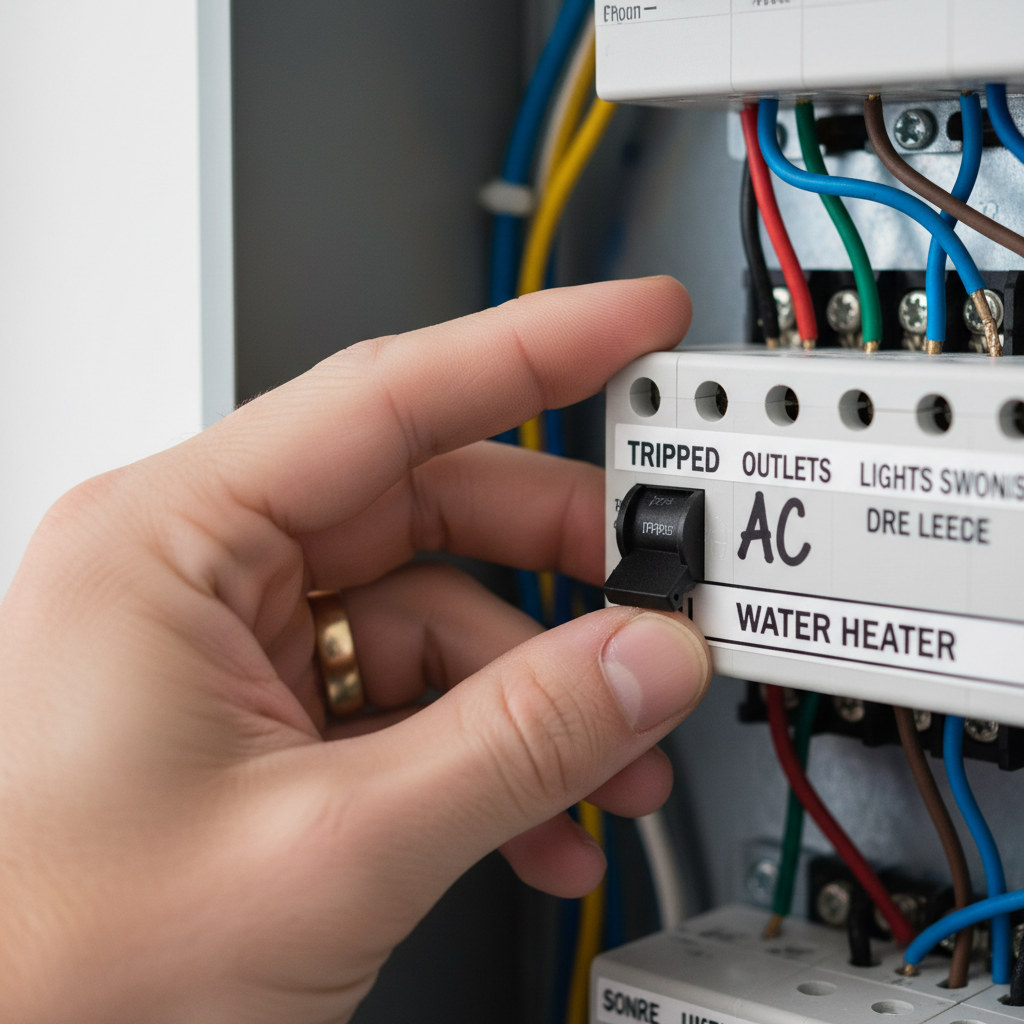
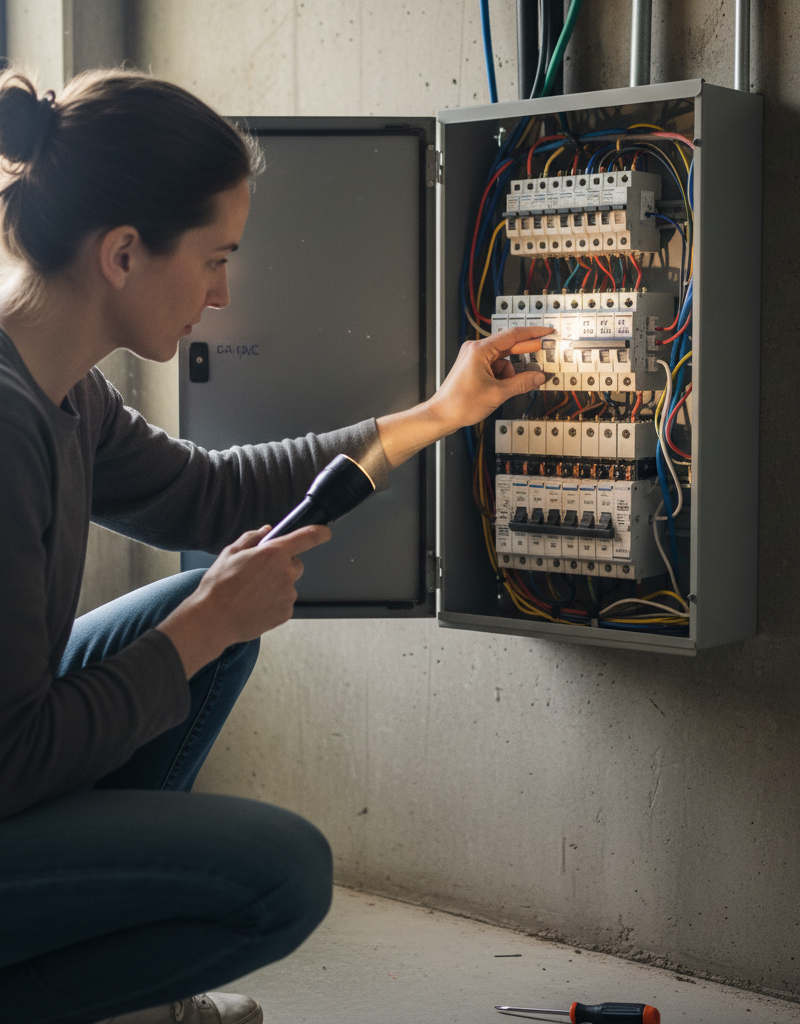
- Head to your electrical panel. Look for the breakers labeled "AC," "Furnace," "Air Handler," or "Condenser." You’re looking for a breaker that’s tripped, meaning it’s usually sitting halfway between "On" and "Off," or sometimes all the way "Off." If you find one, push it firmly all the way to "Off" and then back to "On." Don’t just try to snap it from the middle position to "On" — you’ve got to fully reset it. Most outdoor condensers run on a dedicated 240-volt circuit, so that’ll usually be a double-pole breaker with two handles tied together. The indoor air handler might be on a 120-volt circuit.
- Safety Note: Always stand clear of the panel and don’t touch live wires. If a breaker keeps tripping, you’ve got more going on than a simple reset — it could be an overloaded circuit or a short, and you’ll need an electrician.
-
Check the Outdoor Disconnect (Service Panel) — Power cut at the unit.
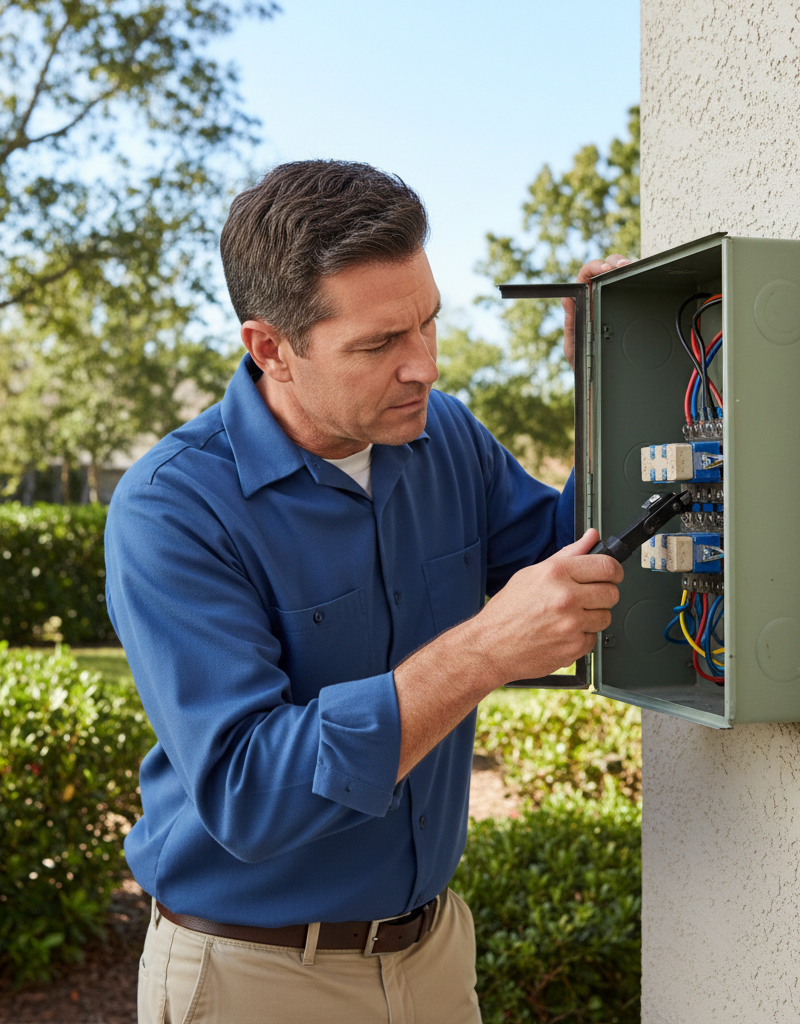
- Go to your outdoor AC unit. Usually mounted nearby on the wall, there’s a small gray metal box — that’s your disconnect switch or service panel. Carefully pull the handle straight out. Inside, you’ll usually find two large cartridge-style fuses or sometimes just a solid block. Check whether the block is turned to "Off" or if the fuses look blown, though blown fuses aren’t always obvious. Sometimes the block just vibrates loose. Push it back in firmly and make sure it’s in the "On" position. If you’ve got fuses and you think they’re blown — darkened glass, broken filament — replace them with new ones of the exact same amperage rating.
- Tools: Screwdriver (Phillips or flathead, depending on cover screws). Multi-meter (optional, to test fuses).
-
Clear Debris from Outdoor Unit — Obstructions can cause overheating.
- Take a look at the outdoor condenser unit. Is it packed with leaves, grass clippings, or overgrown bushes? Anything blocking airflow can make the unit overheat and trip a safety switch, which shuts the whole thing down. Use a soft brush or a garden hose on a gentle setting — not a pressure washer! — to clean the fins. You want at least 2 feet of clear space around all sides of the unit for good airflow. I pulled a raccoon's nest out of a unit in Westerville, Ohio, last spring that was causing a homeowner nothing but grief.
- Don’t forget the little stuff. Weeds, mulch, and even a grill cover flapping around nearby can cause problems.
-
Inspect the Contactor in the Outdoor Unit — The "switch" that turns on the compressor.
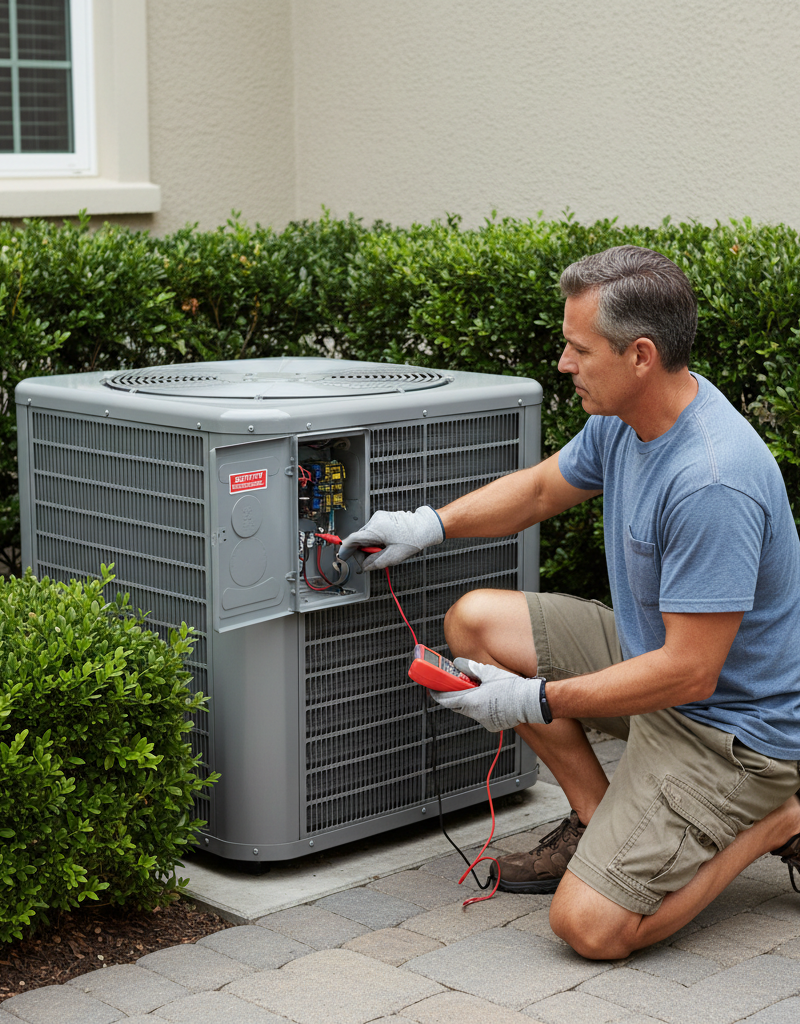
- Safety First: Turn off power at both the main electrical panel AND the outdoor disconnect switch before opening the panel of the outdoor unit. Seriously, this is where you can get zapped if you’re not careful. Once the power’s off, remove the service panel cover (usually a few screws). You’ll see a component with a small copper plunger — that’s the contactor. When the AC calls for cool, that plunger should pull in and close the circuit. If it’s stuck open, dirty, or damaged, the compressor won’t get power. You can try gently pushing it in with an insulated screwdriver — if it feels sticky or doesn’t spring back, it might be bad. Look for burning or pitting on the contacts.
- When to Call a Pro: If you’re not comfortable working around high voltage or the contactor looks burnt, call an HVAC technician. Replacing a contactor is doable for experienced folks, but it’s not a starter job.
-
Check the Condensate Drain Pan and Float Switch — Overflow protection
- Your indoor unit makes condensation, and that water drains away through a PVC pipe. If that pipe gets clogged — often by algae — the drain pan can fill up. Most modern systems have a float switch in the pan that senses high water levels and shuts off the AC to keep you from flooding the place. Find the indoor unit, usually in the attic, basement, or a utility closet. Look for the drain pan and the PVC line. If the pan’s full of water, the switch has probably tripped. You can try clearing the clog with a wet/dry vac or a weak bleach solution (1 cup bleach to 1 gallon water, poured slowly down the line).
- Note: Some float switches are in line with the drain, not in the pan. Follow the small PVC pipe from the unit to find it.
-
Briefly Check Refrigerant Lines — Visible signs of a leak.
- Walk outside and look at the copper lines running into your house from the outdoor unit. One should be thicker and insulated; the other, thinner. If the thick, insulated line is frozen solid, or if you see ice forming on the outdoor unit, you might have a refrigerant leak or some serious airflow restriction. This isn’t a DIY fix. Low refrigerant charge will keep the system from cooling right and can make it short cycle or stop working altogether.
- Pro Call: Refrigerant is dangerous to handle and needs specialized tools and licensing. If you suspect a leak, call an professional right away. Don’t try to “top it off” yourself.
Common Causes
- Thermostat Issues: Wrong settings, dead batteries, or bad wiring. It’s usually the first place I look, because nine times out of ten, that’s where the trouble starts.
- Electrical Problems: Tripped breakers, blown fuses in the outdoor disconnect, or loose wiring at the unit itself. Any of those can shut off power cold.
- Safety Switch Activations: Your AC’s got a few built-in safeties. A full condensate pan tripping a float switch is common. Overheating from a dirty coil or blocked airflow can trip a high-pressure switch. Low refrigerant can trip a low-pressure switch.
- Contactor Failure: The contactor wears out. Over time, the contacts can burn or pit, and then it won’t close right or send power to the compressor and fan.
- Fan Motor Issues: If the outdoor fan motor seizes up or the capacitor fails, the compressor might try to run, but without proper heat removal, it won’t last long before another safety trips. Same story with the indoor blower motor.
Common Mistakes
- Ignoring the Thermostat First: Folks head straight to the outdoor unit and later find out the thermostat was set wrong or the batteries were toast. Start simple.
- Flipping a Breaker ON Without Resetting: Just pushing a tripped breaker back to "On" without first pushing it fully "Off" won’t reset it. Full reset, every time.
- Using the Wrong Fuses: If you’re replacing fuses in the outdoor disconnect, the wrong amperage can do more damage or even create a fire hazard. Match the rating exactly.
- Touching Electrical Components Without Disconnecting Power: Big safety risk. Always, always cut power at both the main panel and the outdoor disconnect before you touch anything inside the outdoor unit.\
- Skipping Regular Maintenance: Dirty coils, clogged filters, and blocked drains are all common causes of AC failure that simple maintenance could’ve prevented.
Cost & Time Breakdown
Here’s a look at what you can expect if you’re tackling these troubleshooting steps versus calling in a pro.
| Task | DIY Cost | Pro Cost | Time (DIY) |
|---|---|---|---|
| Check/Reset Breaker | $0 | $75–$150 (service call) | 5 minutes |
| Thermostat Batteries | $5–$15 | $75–$150 (service call) | 5 minutes |
| Clear Debris from Unit | $0 | $75–$150 (part of tune-up) | 15–30 minutes |
| Clear Condensate Drain | $0–$10 (bleach) | $100–$250 | 30–60 minutes |
| Replace Outdoor Fuses | $10–$30 | $75–$150 (plus parts) | 10–20 minutes |
| Contactor Replacement (parts) | $20–$50 | $200–$400 | 45–90 minutes |
Tips & Prevention
- Annual Tune-Up: Schedule a professional AC tune-up every spring. They’ll clean coils, check refrigerant levels, test electrical components, and catch trouble before it turns into a breakdown. That’s the best prevention there is.
- Change Air Filters Regularly: A clogged air filter strangles airflow, makes your AC work harder, drops efficiency, and can even make it freeze up or trip safety switches. Change disposable filters every 1-3 months, especially during heavy use or if you’ve got pets.
- Keep Outdoor Unit Clear: Trim bushes and clear away leaves, grass clippings, and other debris at least 2 feet around your outdoor condenser unit. That keeps airflow moving like it should.
- Pour Bleach Down Drain Line: Once or twice a year, pour a cup of diluted bleach (10% bleach, 90% water) down your condensate drain line to help keep algae from building up and clogging the line, which can trip your float switch.
- Monitor for Warning Signs: Listen for strange noises — grinding, banging, squealing — or catch a burning smell early. Watch for weak airflow or a house that feels more humid than it should. Those are usually early warning signs, plain and simple.
When to Call a Professional
If you’ve gone through all these steps and your AC still won’t turn on, or if you run into anything that makes you uneasy, it’s time to call a licensed HVAC pro. Specifically, if a circuit breaker keeps tripping over and over, if you see burning or damaged wiring, or if you suspect a refrigerant leak — ice on the lines or a sweet, chemical smell are dead giveaways — you need somebody with the right tools and training. These problems can be dangerous or require specialized tools and EPA certification to handle safely. Don’t mess with high-voltage electricity or refrigerants — it’s not worth the risk. A good tech can sort out capacitor issues, compressor problems, tricky electrical faults, or refrigerant leaks fast and safely.
FAQ
Q: Why isn't my AC turning on after a power outage?
A: After a power outage, your AC’s circuit breaker might’ve tripped. Go to your electrical panel and reset the breaker for your AC unit by pushing it firmly to "Off" and then back to "On." Sometimes there’s a small delay, so give it 5-10 minutes after resetting before you expect it to kick on.
Q: My outdoor unit isn't turning on, but the indoor fan is running. What does that mean?
A: That usually means your indoor unit, or air handler, has power and the fan’s running, but the signal isn’t reaching or activating the outdoor unit — the condenser. The usual suspects are a tripped outdoor electrical disconnect, a bad contactor, or a control board issue that’s keeping the low-voltage signal from reaching the condenser.
Q: Can a dirty air filter prevent my AC from turning on?
A: A badly clogged air filter can restrict airflow so much that it makes the indoor coil freeze over. When that happens, safety switches might trip to protect the compressor, which effectively shuts down the cooling cycle. It won’t usually stop the unit from getting power, but it can stop the cooling process.
Q: How do I know if my AC fuse is blown?
A: Fuses in the outdoor disconnect box can blow from power surges or component failures. Sometimes you can spot a broken filament or dark discoloration inside the fuse. For a sure check, you’d need a multimeter to test continuity, but a visual inspection can still give you a pretty good clue if you’re swapping them out.
Q: Why would my AC run for a short time and then shut off?
A: That’s called "short cycling" and it can come from a few different problems. Common causes include an oversized unit, low refrigerant charge, a clogged air filter or dirty coils causing overheating, or a bad thermostat. The unit is probably hitting a safety limit and shutting down to protect itself. It needs a look, because that kind of cycling is hard on the compressor.
Q: Is it safe to push in the contactor on my outdoor unit?
A: You can gently push in the contactor with an insulated screwdriver to see if it’s stuck, but only after you’ve made sure all power to the outdoor unit is completely off at both the main breaker and the outdoor disconnect. If it clicks and springs back freely, it’s probably fine. If it feels sticky or won’t move right, it’s likely bad and should be replaced by a pro if you’re not experienced.
Q: What is the normal operating temperature difference for AC air?
A: A properly working AC system should make air that’s about 15-20°F cooler than the air going into the return vent. You can check that with a thermometer at the return grille and another at a supply vent. If the difference is a lot less than 15°F, you’ve got a problem like low refrigerant or airflow issues.
Q: How often should I check my AC's circuit breaker?
A: You don’t need to check it on a schedule unless your AC isn’t working. If the system stops, checking the breaker should be one of your first moves. If it trips repeatedly, though, that’s a sign of a bigger electrical problem and you need an electrician or HVAC tech on it right away.
Related Articles
Keep troubleshooting with these hand-picked guides from FixlyGuide:
- The #1 Reason Your AC Blows Warm Air (And It's Not What You Think) — A dirty air filter is often the overlooked culprit behind an air conditioner blowing warm air, hindering its ability to cool your home effi…
- The #1 Mistake Homeowners Make When Heat Pumps Stop Heating in Winter — Discover the crucial mistake most homeowners make when their heat pump struggles in cold weather and how to fix it, potentially saving hund…
- The #1 Mistake Homeowners Make When Their AC Won't Turn On (And the Easy Fix) — Learn the most common reason your air conditioner won't turn on and how to diagnose and fix it with simple steps.
- The #1 Mistake Homeowners Make When Their AC Won't Turn On (And the Easy Fix) — Learn the most common oversight homeowners make when their AC won't turn on and how to troubleshoot basic issues to restore cooling.
- The Hidden Reason Your AC Freezes — And Why Most Homeowners Get It Wrong — Your outdoor AC unit freezing solid is a common, frustrating problem often caused by airflow issues or low refrigerant, leading to system i…
- The Hidden Reason Your AC Isn't Cooling (And Why Most Homeowners Get It Wrong) — Is your central AC blowing warm air or struggling to cool your home? The culprit is often a silent but serious issue many homeowners overlo…
What should this project cost?
Enter your project details for a realistic cost range before you call anyone.
Service calls and common repairs run $150–$900; full system replacement typically $6,000–$12,000.
- Regional adjustment
- National average
- Labor share (typical)
- ~$1,935
- Quotes to collect
- 3 written estimates
Educational estimate based on national averages — not a binding quote. Always confirm with written local estimates.
Fixly Project Decision Box
- DIY difficulty
- Advanced
- Estimated time
- Homeowner checks 20–30 minutes
- Cost level
- Moderate
Main tools / materials
- Clean air filter
- Garden hose for condenser coils
- Shop vac for the condensate line
When to stop and call a pro
- Burning smell, smoke, or a tripping breaker
- Refrigerant lines iced over or hissing
- Any work inside the sealed refrigerant circuit (EPA-licensed only)
- Gas smell near a furnace — leave and call the utility
Need professional help?
Find an HVAC Pro Near YouGet the print-ready PDF of this guide
A clean, ad-free, printable version you can keep on your phone or pin to the workshop wall. Free with a FixlyGuide account.
- Print-optimized layout
- Tools, materials & every step included
- Saved to your account
Frequently asked questions
Why isn't my AC turning on after a power outage?+
After a power outage, your AC's circuit breaker might have tripped. Go to your electrical panel and reset the breaker for your AC unit by firmly pushing it to "Off" and then back to "On." Sometimes, there's a slight delay, so give it 5-10 minutes after resetting before expecting it to kick on.
My outdoor unit isn't turning on, but the indoor fan is running. What does that mean?+
This usually indicates that your indoor unit (air handler) is receiving power and its fan is working, but the signal isn't reaching or activating the outdoor unit (condenser). The most common culprits are a tripped outdoor electrical disconnect, a faulty contactor, or a control board issue preventing the low-voltage signal from reaching the condenser.
Can a dirty air filter prevent my AC from turning on?+
A severely clogged air filter can restrict airflow so much that it causes the indoor coil to freeze over. When this happens, safety switches might trip to prevent compressor damage, effectively shutting down the cooling cycle. While it won't directly prevent the unit from receiving power, it can stop the cooling process.
How do I know if my AC fuse is blown?+
Fuses in the outdoor disconnect box can blow due to power surges or component failures. Sometimes you can see a visible break in the filament or a dark discoloration inside the fuse. For a definitive check, you'd need a multimeter to test for continuity, but often a visual inspection can give you a clue if you're replacing them.
Why would my AC run for a short time and then shut off?+
This is called "short cycling" and can be caused by several issues. Common reasons include an oversized unit, low refrigerant charge, a clogged air filter or dirty coils causing overheating, or a faulty thermostat. Your unit is likely hitting a safety limit and shutting down to prevent damage. This needs investigation, as it's hard on the compressor.
Is it safe to push in the contactor on my outdoor unit?+
You can *gently* push in the contactor with an *insulated* screwdriver to see if it's stuck, but only *after* ensuring all power to the outdoor unit is completely off at both the main breaker and the outdoor disconnect. If it clicks and springs back freely, it's probably okay. If it feels sticky or doesn't move, it's likely faulty and needs replacement by a professional if you're not experienced.
What is the normal operating temperature difference for AC air?+
A properly functioning AC system should produce air that is about 15-20°F cooler than the air going into the return vent. You can test this by placing a thermometer at the return grille and another at a supply vent. If the difference is much less than 15°F, it indicates a problem, such as low refrigerant or airflow issues.
How often should I check my AC's circuit breaker?+
You don't need to check it regularly unless your AC isn't working. If your AC stops, checking the breaker should be one of your first troubleshooting steps. If it trips repeatedly, however, that's a sign of a more serious electrical problem that requires immediate professional attention from an electrician or HVAC technician.
Discussion
Loading comments…