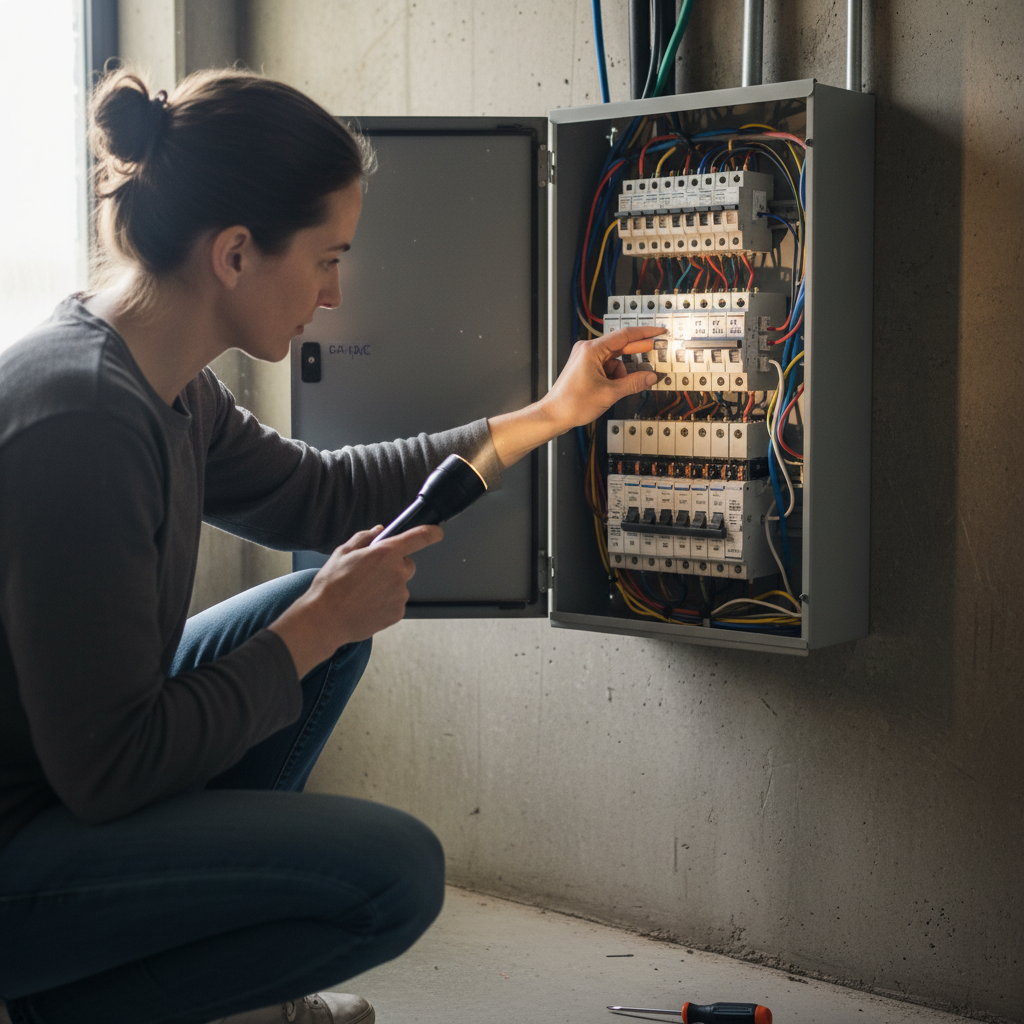
- Tripped Breaker (Main Panel or Disconnect Box): This is the one I see most often. Overloads trip them, and older breakers just get tired.
- Blown Fuses (in Outdoor Disconnect Box): Same idea. Fuses pop when there’s a surge or fault. They’re meant to fail first.
- Condensate Drain Clog / Tripped Float Switch: Super common in humid climates. Algae builds up, water backs up, and the safety switch shuts everything down.
- Thermostat Issues: Dead batteries, bad settings, or a failing thermostat can stop the signal cold.
- Loose or Damaged Low-Voltage Wiring: Rodents chew them, vibration loosens them, and then nothing works right.
HVAC · High energy usage
| Project category | HVAC |
|---|---|
| Problem type | High energy usage |
| Trade required | HVAC |
| Urgency | Planned project |
| Safety risk | Low safety risk |
| DIY suitability | DIY for experienced homeowners |
| Cost category | High cost |
| Typical timeline | Assessment within weeks; replacement planned off-season |
| Contractor type | Licensed HVAC technician |
Repair option
Duct sealing, insulation, and a tune-up before touching the equipment.
Replacement option
High-efficiency replacement sized by a load calculation, not a rule of thumb.
Common causes
- Aging, low-efficiency equipment
- Leaking ducts losing conditioned air
- Insufficient attic insulation
- Oversized system short-cycling
Relevant tools:project cost estimatorrepair or replace
Published July 26, 2026Last updated August 17, 2026
Tools & materials you'll need
Affiliate linksAs an Amazon Associate FixlyGuide earns from qualifying purchases — at no extra cost to you. Prices and availability are accurate as of publication and subject to change.
Quick Answer
When your air conditioner decides to take an unannounced vacation, it’s usually an electrical issue, not some big mechanical meltdown. The most common culprit I see—and the easiest one to fix—is a tripped circuit breaker in your main electrical panel or, even more often, a blown fuse or tripped breaker right beside your outdoor condenser unit. Don’t rush to call a pro until you’ve checked both spots; you might get cool air back in minutes with nothing more than a flick of a switch.
The Problem
Picture this: it’s 95 degrees outside, you crank the thermostat way down, and… nothing. No hum. No fan. Just dead silence. That’s the problem we’re dealing with here: an AC that flat-out won’t turn on. It’s not limping along with warm air or acting flaky. It’s stone dead.
And that usually points to power loss, not a catastrophic failure inside the unit. I’ve seen folks spend good money on a service call only to find out the system was fine—it just needed a reset. Happens more than you’d think. We’re going to walk through the same checks I’d do on a service call, one by one, so you can figure out whether this is a simple fix or a bigger fish.
How It Works
To really get why your AC won’t start, you’ve got to know how it gets power. Your air conditioner has two main parts that need electricity: the indoor unit (the air handler or furnace, which runs the blower fan) and the outdoor unit (the condenser, which houses the compressor and condensing fan). Each one usually has its own dedicated circuit.
Power comes out of your main electrical panel, runs through a circuit breaker, and heads to your thermostat. The thermostat is basically the traffic cop—it tells the indoor unit to start the fan and tells the outdoor unit to kick on the compressor and condenser fan when cooling’s needed. The indoor unit usually runs on a 15-amp or 20-amp, 120-volt circuit. The outdoor condenser is a different animal. That thing draws a lot more juice. It usually needs a dedicated 240-volt circuit protected by a double-pole breaker—that means two breakers tied together, usually 30-60 amps depending on the size of the unit.
Out by the condenser, there’s almost always a disconnect box or service switch. That’s just a safety shutoff, plain and simple, so a tech can kill power right at the unit without running back to the panel every time. If any link in that chain—the breaker in the main panel, the disconnect switch, or the fuses in the disconnect box—fails or trips, your AC won’t get enough power to even make a peep. We’ll check each one in order.
Step-by-Step Fix
1. Check the Thermostat – Start with the simplest potential issue.
Set your thermostat to "Cool" and drop the temperature at least 5-10 degrees below the current room temp. Make sure the fan setting is on "Auto," not "Off." If it’s a battery-powered thermostat, toss in fresh batteries. A dead battery can stop the whole show. I once chased a “dead” AC in the West Hills neighborhood of Portland for 20 minutes before I realized the thermostat battery was dying. Felt pretty silly, but hey—no shame in that.
2. Inspect the Main Electrical Panel – This is your first stop for power issues.
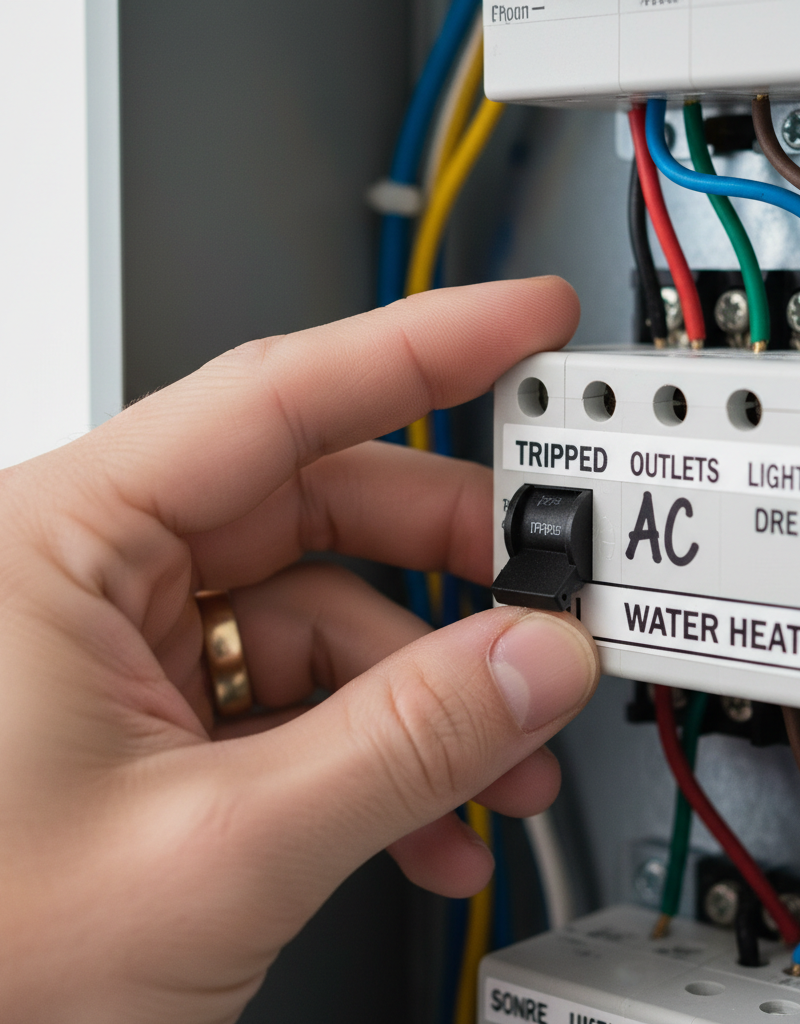
Find your main electrical panel. It’s usually in a basement, garage, or utility closet. Look for the breaker(s) labeled for your air conditioner. The indoor unit might be marked "Furnace" or "Air Handler," usually a single 15A or 20A breaker. The outdoor unit will be a bigger double-pole breaker—two switches tied together—often labeled "AC" or "Condenser," usually 30A to 60A. If a breaker is in the "OFF" position or "TRIPPED" (often sitting halfway between ON and OFF), flip it firmly all the way to "OFF" and then back to "ON." If it trips again right away, do not keep resetting it. That’s a sign there’s a real electrical problem, and you’ll need a pro.
3. Examine the Outdoor Disconnect Box – The forgotten disconnect.
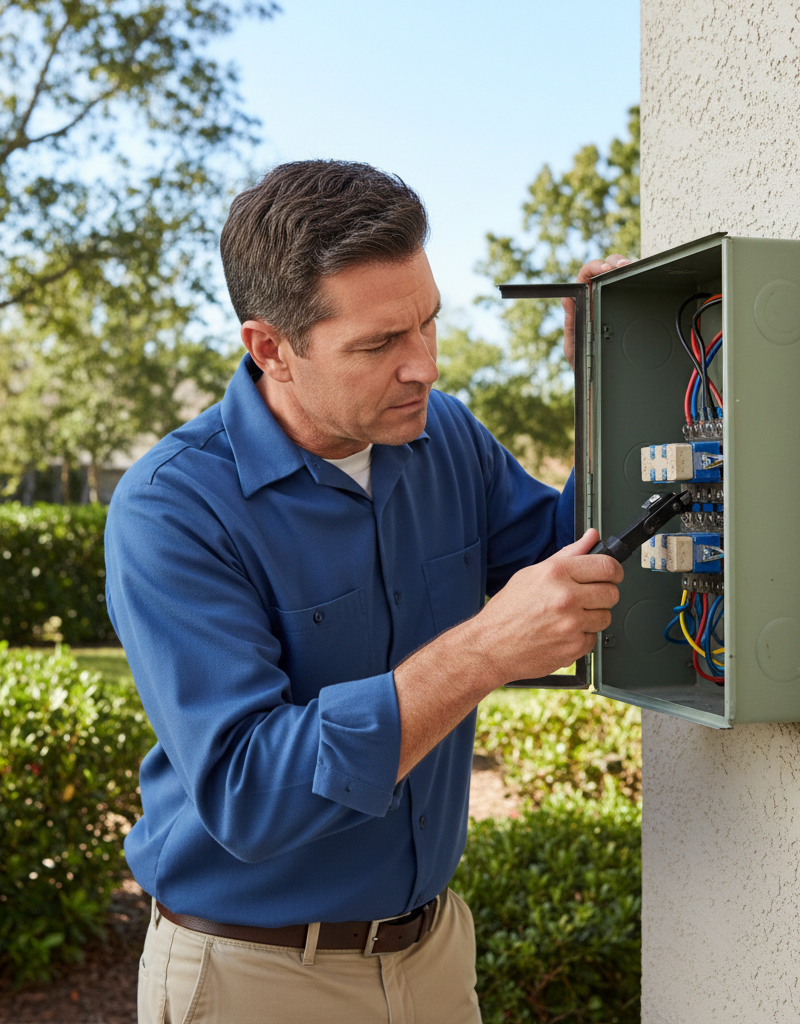
Out by the condenser, you’ll see a small gray metal box on the wall. Open the cover carefully. Inside, you’ll usually find a pull-out block with fuses, a circuit breaker, or a simple on/off switch. If it’s a switch, make sure it’s in the "ON" position. If it’s a breaker, check whether it’s tripped and reset it the same way you would at the main panel. If it’s a pull-out block with fuses, pull the block out gently. You’ll see two cartridge fuses. Check them for broken filaments or dark discoloration—those are dead giveaways that the fuse blew. Fuses are meant to sacrifice themselves so the equipment doesn’t take the hit.
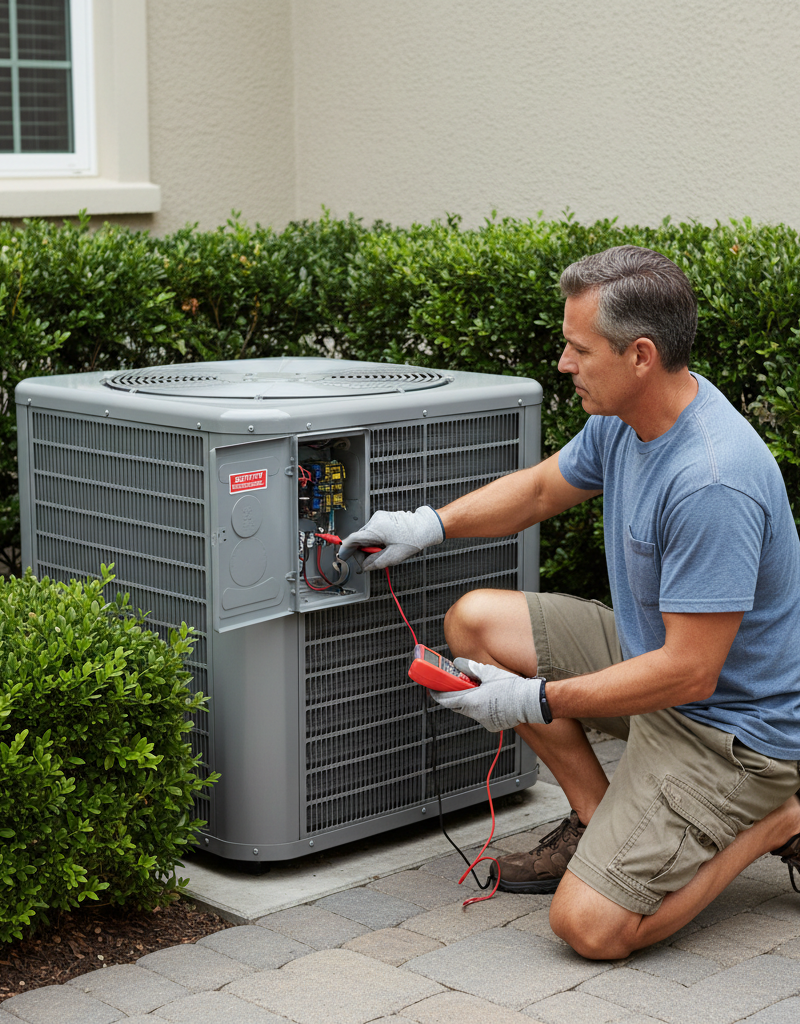
- To check fuses: You’ll need a multimeter set to continuity or ohms. With the fuses removed from the block, touch the probes to each end of a fuse. A good fuse will show continuity. If there’s no continuity, that fuse is toast. Replace blown fuses with new ones of the exact same amperage and type (for example, 30-amp time-delay fuses). Don’t guess. Don’t “go a little higher.” That’s how you buy yourself a fire hazard.
4. Reset the Condensate Drain Safety Switch – A common, hidden culprit.
Your indoor unit’s evaporator coil makes condensation, and that water drains through a PVC pipe. Most systems have a safety float switch in the condensate pan or drain line. If the drain clogs and the pan fills up, that float switch trips and shuts the AC down to keep water from flooding the place. Find the condensate pan—usually under the indoor unit—and follow the PVC drain line. Look for a small plastic or metal float switch in the pan or wired into the drain line. If there’s standing water, clear the clog. A wet/dry vac can sometimes pull the blockage right out from the end of the drain line outside. Once the water drains, the float switch should reset on its own, and your AC may come back to life. You can often clear these by sucking on the end of the drain pipe outside, but be ready for a mouthful of nasty water—wear gloves! Or use a wet vac at the exterior end of the drain.
5. Check the Low-Voltage Wiring – An often overlooked connection.
Your thermostat talks to the AC through low-voltage (24-volt) wiring. If those wires are damaged, chewed through by rodents, or just loose, the system won’t get the signal to start. Check the wiring at the thermostat, at the indoor air handler/furnace control board, and at the outdoor condenser unit. Look for loose wires, corrosion, or obvious damage. Always turn off power to both units at the main panel before touching any wiring. If you find loose wires, reattach them carefully using the wiring diagram, which is usually stuck to the inside of a service panel cover. This is the kind of job where a flashlight and a little patience go a long way.
6. Listen for the Contactor – A tell-tale click.
With power back on and the thermostat calling for cooling, go outside to the condenser. Listen closely. When the thermostat tells the compressor to start, you should hear a clear "click" from inside the unit. That click is the contactor engaging—it’s a relay that sends high-voltage power to the compressor and fan. If you hear the click but nothing else happens, the contactor might be bad or the compressor may be stuck. If you don’t hear a click at all, the problem usually goes back to the control side: thermostat, low-voltage wiring, or a control board issue. Do NOT try to diagnose or replace a contactor unless you really know high-voltage work and you’ve fully shut off power.
Common Causes
- Tripped Breaker (Main Panel or Disconnect Box): This is the one I see most often. Overloads trip them, and older breakers just get tired.
- Blown Fuses (in Outdoor Disconnect Box): Same idea. Fuses pop when there’s a surge or fault. They’re meant to fail first.
- Condensate Drain Clog / Tripped Float Switch: Super common in humid climates. Algae builds up, water backs up, and the safety switch shuts everything down.
- Thermostat Issues: Dead batteries, bad settings, or a failing thermostat can stop the signal cold.
- Loose or Damaged Low-Voltage Wiring: Rodents chew them, vibration loosens them, and then nothing works right.
- Broken Contactor: The coil can burn out, or the contacts can pit and fail, so the compressor and fan never get power.
- Overheated Compressor: If the compressor’s been working too hard, its internal thermal overload can trip. It usually resets after an hour or so once it cools down.
Common Mistakes
- Ignoring the Outdoor Disconnect: Lots of homeowners check the main panel and never look at the disconnect right by the condenser. That’s a miss.
- Resetting a Tripped Breaker Repeatedly: If it trips again right after you reset it, stop. There’s probably a short or a serious overload. Keep resetting it and you can make things worse—or worse than worse, start a fire.
- Using the Wrong Fuses: Putting in the wrong amperage or type, like a fast-blow instead of a time-delay, is asking for trouble.
- Touching Wires Without Disconnecting Power: Don’t do it. Even low-voltage stuff can bite you if you get careless.
- Overlooking the Condensate Drain: It’s out of sight, so people forget it. Then the “dead” AC turns out to be a backed-up drain line.
- Assuming the Worst Immediately: Don’t panic and order an expensive repair before you check the easy stuff. Most “dead” AC calls end up being something simple.
Cost & Time Breakdown
| Task | DIY Cost | Pro Cost | Time |
|---|---|---|---|
| Check/Reset Breakers | $0 | $0–$150 (service call) | 5–10 min |
| Replace Fuses (Disconnect Box) | $10–$20 | $100–$250 | 15–20 min |
| Clear Condensate Drain | $0–$5 (bleach/vinegar) | $150–$300 | 30–60 min |
| Replace Thermostat Batteries | $5–$10 | $100–$150 | 2 min |
| Inspect Low-Voltage Wiring | $0 | $150–$350 | 15–30 min |
| Contactor Replacement | $25–$80 (part only) | $200–$400 | 45–90 min (pro) |
Tips & Prevention
- Regular Drain Cleaning: Pour a cup of distilled vinegar mixed with a cup of water down your condensate drain line every 3-4 months during cooling season. That keeps algae from building up and causing clogs. Follow it with clear water after 30 minutes.
- Annual Professional Tune-up: Have a qualified HVAC tech look at the system every spring. They’ll catch electrical issues, clean coils, and make sure everything’s running right. It’s money well spent if it keeps you out of a no-cool mess later.
- Check Electrical Connections: During your yearly inspection—or if you’re comfortable with the power off—make sure all low-voltage and high-voltage connections are tight and free of corrosion. Loose connections can cause intermittent problems or flat-out failure.
- Know Your Breakers: Label your panel clearly. Knowing which breaker runs your AC can save you a lot of time and cussing when something acts up.
- Monitor for Warning Signs: Watch for lights dimming when the AC kicks on, weird buzzing at the electrical panel, or breakers that trip more than once. Those are early warning signs, and they usually mean there’s an electrical issue brewing. It might be a compressor pulling too many amps, or loose wiring. Catch it early and you’ll save yourself a bundle.
- Proper Fuse Sizing: If you ever replace the fuses in the outdoor disconnect, double-check that you’re using the exact amperage and "time-delay" type listed on the unit’s wiring diagram or printed on the old fuses. The wrong fuse can hurt the equipment or start a fire.
When to Call a Professional
A lot of AC "won’t turn on" problems are DIY-friendly, but there are clear red flags that mean it’s time to call a licensed HVAC technician. If you’ve reset all the breakers, replaced the fuses, checked the thermostat, and the unit still won’t start, or if the breaker trips the second you reset it, you’re past the easy stuff. Anything involving internal electrical parts—like a failing contactor, a seized compressor, or a control board issue—takes the right tools and the right know-how. Don’t mess with high-voltage wiring or refrigerant lines; it’s dangerous, and it can trash an expensive system in a hurry or hurt somebody. If you’re not 100% comfortable, or if the basic checks don’t solve it, calling an experienced pro is the smart play. They’ve got the diagnostic gear to find the problem fast and do it safely.
FAQ
Q: Why did my AC suddenly stop working on a hot day?
A: On really hot days, your AC has to work harder and draw more current. That extra load can trip a breaker, especially if it’s older or other stuff is sharing the circuit. Usually it’s just the system protecting itself from overheating.
Q: Can a bad thermostat prevent my AC from turning on?
A: Absolutely. If the thermostat’s batteries are dead, the settings are wrong, or the thermostat itself is bad, it won’t send the low-voltage signal your indoor and outdoor units need to start. Check batteries and settings first. Always.
Q: My outdoor unit hums but the fan doesn't spin. What's wrong?
A: If you hear a hum but the fan won’t move, that usually points to a seized fan motor or a bad run capacitor. When the capacitor goes bad, the motor doesn’t get the kick it needs to start spinning. That’s not really a DIY fix and usually needs a pro.
Q: Is it safe to replace fuses in the outdoor disconnect box myself?
A: Yes, if you’re careful and shut off power to the outdoor unit first. Wear insulated gloves and safety glasses. Use new fuses of the exact same amperage and type—never bump the rating up. That’s a fire hazard.
Q: What should I do if my AC breaker keeps tripping immediately?
A: If it trips right after you reset it, don’t keep trying. That usually means there’s a serious electrical issue like a short or a failing component—often the compressor—pulling too much current. Call a licensed electrician or HVAC tech right away.
Q: How do I know if my condensate drain line is clogged?
A: Standing water in the indoor drain pan is the obvious clue. You might also see water leaking from the indoor unit, or the AC may simply refuse to turn on because the safety float switch has tripped from backed-up water.
Q: Can a power surge cause my AC not to turn on?
A: Yes. A surge can blow fuses, trip breakers, or damage sensitive parts like the control board or thermostat. That kind of hit is exactly what those protective devices are there for.
Q: My AC makes a clicking sound but won't start. What's that mean?
A: That click is usually the contactor trying to pull in. If you hear it but nothing else happens—no fan, no compressor—it often means the contactor’s trying but not making it, or something downstream like the compressor or fan motor is locked up or bad. That points to a deeper electrical or mechanical problem.
Q: How often should I clean my condensate drain line?
A: I’d clean it every three to four months during cooling season, especially if you live somewhere humid. A cup of distilled vinegar followed by a water flush helps keep algae and mold from clogging it up. Stay on it, and you’ll dodge a lot of nuisance shutdowns.
Q: Can my AC stop working if the outdoor unit is dirty and covered in debris?
A: A dirty outdoor unit usually just hurts performance or causes freezing [link to /AC-freezing-up-causes-and-fixes], but it usually won’t keep the system from turning on completely unless the debris is bad enough to jam the fan or overheat the compressor so much that it trips internal overload protection. Still, keeping the condenser coils clean matters for efficiency. [link to /how-to-clean-ac-coils] [link to /common-ac-problems-and-solutions]
Related Articles
Keep troubleshooting with these hand-picked guides from FixlyGuide:
- The #1 Mistake Homeowners Make When Their AC Won't Turn On (And the Easy Fix) — Learn the most common oversight homeowners make when their AC won't turn on and how to troubleshoot basic issues to restore cooling.
- The Secret Reason Your AC Isn't Drying Your Air (And What to Check First) — Your AC should cool and dehumidify, but if your house feels muggy, there's a specific, often overlooked culprit preventing it from doing it…
- The #1 Reason Your AC Blows Warm Air (And It's Not What You Think) — A dirty air filter is often the overlooked culprit behind an air conditioner blowing warm air, hindering its ability to cool your home effi…
- The #1 Mistake Homeowners Make With Their AC (and the $50 Fix) — Discover the most common and costly mistake homeowners make with their AC system and how a simple, affordable fix can prevent expensive rep…
- The #1 Mistake Homeowners Make When Heat Pumps Stop Heating in Winter — Discover the crucial mistake most homeowners make when their heat pump struggles in cold weather and how to fix it, potentially saving hund…
- The Hidden Reason Your AC Isn't Cooling (And Why Most Homeowners Get It Wrong) — Is your central AC blowing warm air or struggling to cool your home? The culprit is often a silent but serious issue many homeowners overlo…
What should this project cost?
Enter your project details for a realistic cost range before you call anyone.
Service calls and common repairs run $150–$900; full system replacement typically $6,000–$12,000.
- Regional adjustment
- National average
- Labor share (typical)
- ~$1,935
- Quotes to collect
- 3 written estimates
Educational estimate based on national averages — not a binding quote. Always confirm with written local estimates.
Fixly Project Decision Box
- DIY difficulty
- Advanced
- Estimated time
- Homeowner checks 20–30 minutes
- Cost level
- Moderate
Main tools / materials
- Clean air filter
- Garden hose for condenser coils
- Shop vac for the condensate line
When to stop and call a pro
- Burning smell, smoke, or a tripping breaker
- Refrigerant lines iced over or hissing
- Any work inside the sealed refrigerant circuit (EPA-licensed only)
- Gas smell near a furnace — leave and call the utility
Need professional help?
Find an HVAC Pro Near YouFrequently asked questions
Why did my AC suddenly stop working on a hot day?+
On very hot days, your AC system works harder and pulls more electrical current. This increased demand can sometimes cause a circuit breaker to trip, especially if it's older or there are other appliances on the same circuit. It's often a protective measure to prevent overheating.
Can a bad thermostat prevent my AC from turning on?+
Absolutely. If your thermostat has dead batteries, incorrect settings, or an internal fault, it won't send the necessary low-voltage signals to your indoor and outdoor units, preventing them from starting up. Always check thermostat batteries and settings first.
My outdoor unit hums but the fan doesn't spin. What's wrong?+
If you hear a hum but a fan isn't moving, it often indicates a seized fan motor or a bad run capacitor. When the capacitor fails, it can't provide the necessary electrical "kick" to get the motor spinning. This isn't a DIY fix and usually requires professional replacement.
Is it safe to replace fuses in the outdoor disconnect box myself?+
Yes, if you're careful and turn off the main breaker to the outdoor unit first. Always use insulated gloves and safety glasses. Ensure you replace blown fuses with new ones of the *exact same amperage and type*—never put in a higher-rated fuse, as this creates a fire hazard.
What should I do if my AC breaker keeps tripping immediately?+
If your AC breaker trips right after you reset it, do not try to reset it again. This indicates a serious electrical problem like a short circuit or a failing component (often the compressor) that is drawing excessive current. Call a licensed electrician or HVAC technician immediately.
How do I know if my condensate drain line is clogged?+
Visible standing water in the indoor unit's drain pan is the most obvious sign. You might also see water leaking from the indoor unit, or your AC may simply not turn on because a safety float switch has been activated due to the backed-up water.
Can a power surge cause my AC not to turn on?+
Yes, a power surge can definitely blow fuses, trip breakers, or even damage sensitive electronic components like the control board or thermostat. These surges act like short, intense overcurrents that protective devices are designed to respond to.
My AC makes a clicking sound but won't start. What's that mean?+
That clicking sound is usually the contactor attempting to engage. If you hear it but nothing else happens (no fan, no compressor), it often means the contactor is trying to pull power but failing, or a component downstream like the compressor or fan motor is seized or faulty. This points to a deeper electrical or mechanical issue.
Discussion
Loading comments…