- Tool: Screwdriver set, coil cleaner, soft brush
- Safety: Absolutely make sure power to the entire HVAC system is off before you open the air handler.
- If this doesn't work: If the indoor coil is clean and you’re still having trouble, it’s time for a pro diagnosis. That points to a deeper issue like low refrigerant.
HVAC · High energy usage
| Project category | HVAC |
|---|---|
| Problem type | High energy usage |
| Trade required | HVAC |
| Urgency | Planned project |
| Safety risk | Low safety risk |
| DIY suitability | DIY for experienced homeowners |
| Cost category | High cost |
| Typical timeline | Assessment within weeks; replacement planned off-season |
| Contractor type | Licensed HVAC technician |
Repair option
Duct sealing, insulation, and a tune-up before touching the equipment.
Replacement option
High-efficiency replacement sized by a load calculation, not a rule of thumb.
Common causes
- Aging, low-efficiency equipment
- Leaking ducts losing conditioned air
- Insufficient attic insulation
- Oversized system short-cycling
Relevant tools:project cost estimatorrepair or replace
Published August 1, 2026Last updated August 17, 2026
Tools & materials you'll need
Affiliate linksAs an Amazon Associate FixlyGuide earns from qualifying purchases — at no extra cost to you. Prices and availability are accurate as of publication and subject to change.
Quick Answer
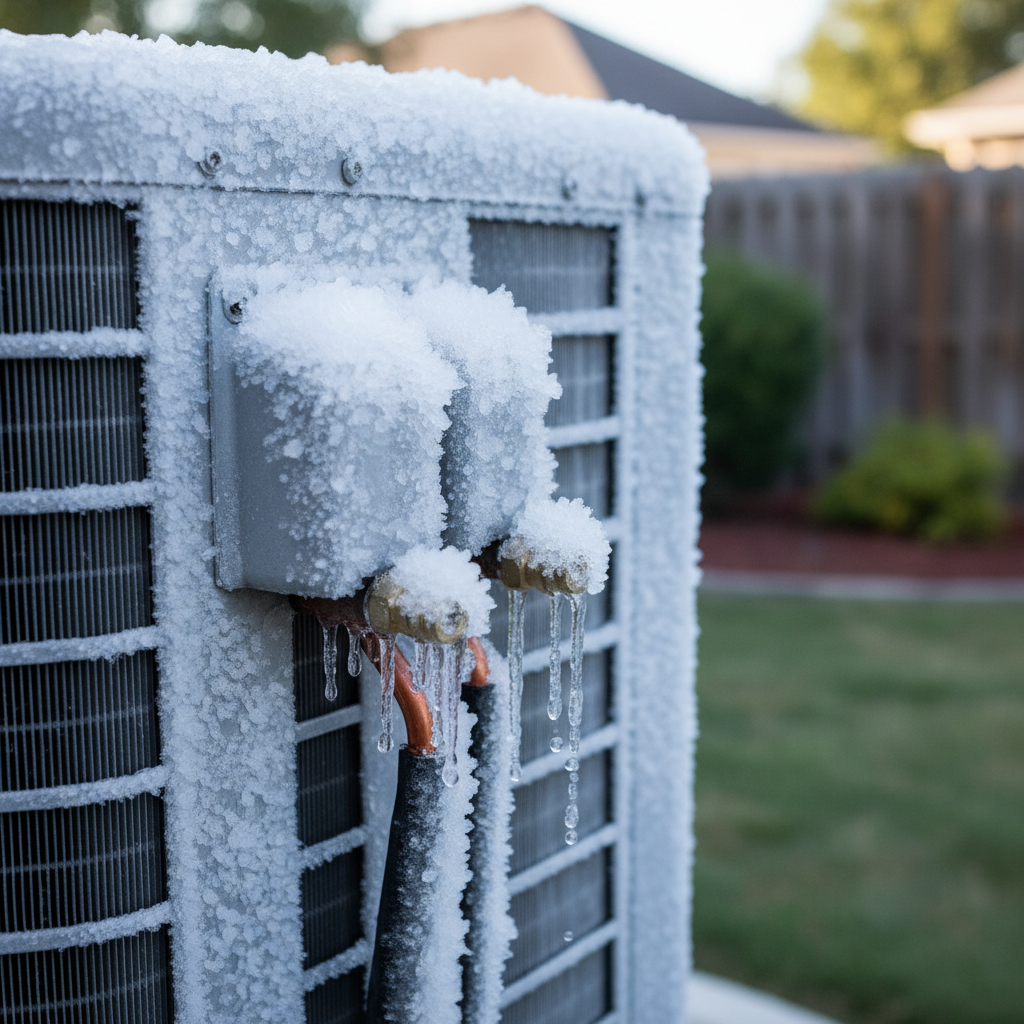
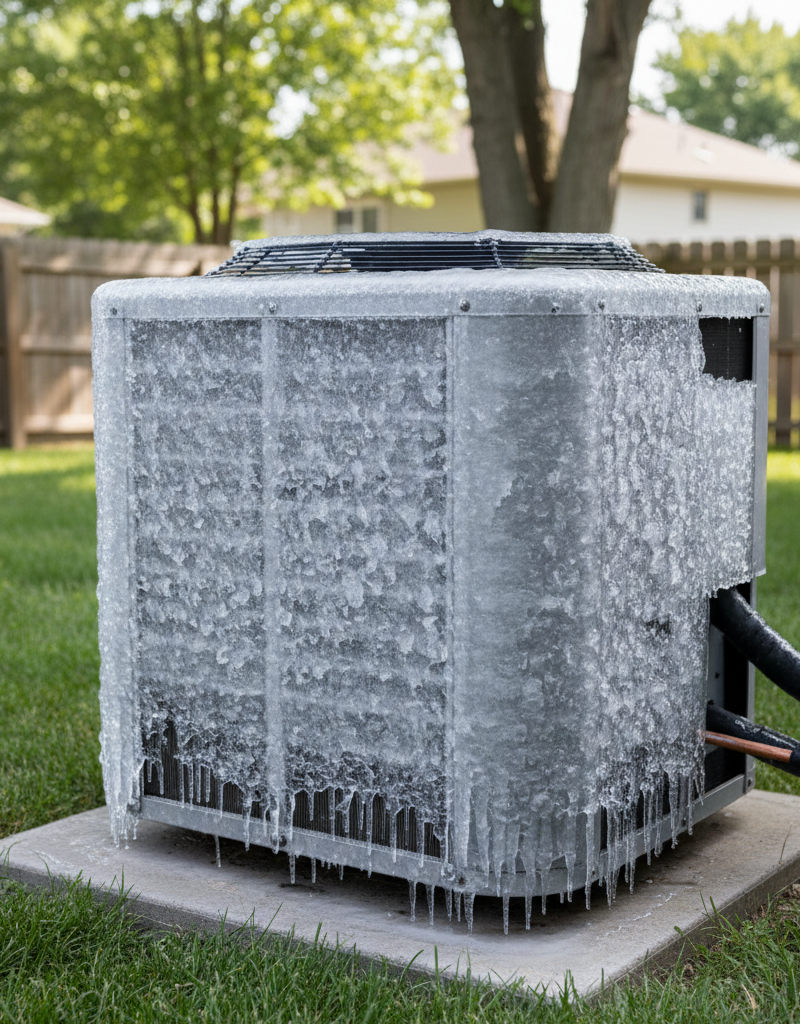
When your air conditioner starts looking like an arctic sculpture outside, you’re probably dealing with a pretty common issue that gets folks jumping to big conclusions. Nine times out of ten, though, it comes down to restricted airflow or a refrigerant problem that’s making the system work too hard and dropping temperatures below freezing inside the coils. That ice shows up on the outside unit’s lines. The good news? A lot of the time, it’s a DIY fix.
The Problem
I’ve seen it plenty – a homeowner calls me, sounding half-panicked, saying their AC is frozen solid outside. They’re already picturing a giant compressor bill, but usually, it’s not that dramatic. When your AC unit freezes up outside, what you’re really seeing is ice forming on the refrigerant lines, especially the larger, insulated ‘suction line’ that runs from your indoor evaporator coil to the outdoor condenser. Sometimes the whole coil on the outdoor unit gets coated in frost or ice. That’s a pretty clear sign your system isn’t moving heat the way it should, and it’s not something you want to shrug off. Leave it alone too long, and a frozen AC can turn into compressor damage, water leaks in the house, and even a dead system. I remember one August in Milton, a customer called me out to his place on Crabapple Road. His AC had been freezing up for weeks, and he just kept flipping it off and back on like that would somehow fix it. By the time I got there, the compressor was toast. Cost him over three grand, all for a problem that probably started with a five-dollar air filter.
How It Works
To understand why your AC is freezing, you’ve gotta have a basic grip on how it cools the house. Your air conditioner isn’t actually creating cold air; it’s moving heat from inside your home to the outside. It does that with a closed loop of refrigerant, and that refrigerant changes between a liquid and a gas as it moves through the system.
Here’s the simple version:
- Evaporator Coil (Indoors): Warm, humid air from your house gets pulled in by the indoor fan and blows over a cold coil called the evaporator. The liquid refrigerant inside that coil absorbs heat from your home’s air and turns into a low-pressure gas. That’s where your house air gets cooled and dehumidified before it gets blown back into the rooms.
- Compressor (Outdoors): That warm, low-pressure refrigerant gas heads to the outdoor unit. The compressor’s job is to squeeze that gas into a high-pressure state, and that bumps its temperature up quite a bit too.
- Condenser Coil (Outdoors): The hot, high-pressure refrigerant gas then moves into the condenser coil, which is that big finned coil wrapped around your outdoor unit. The outdoor fan pulls air across that hot coil and dumps the heat into the outside air. As the refrigerant gives up its heat, it turns back into a high-pressure liquid.
- Expansion Valve/Metering Device: The high-pressure liquid refrigerant then runs through a metering device (like an expansion valve), which drops its pressure fast. That pressure drop cools the refrigerant down a lot, getting it ready to absorb more heat in the evaporator coil, and the whole cycle starts again.
So why the ice? If any part of that heat exchange process gets fouled up, especially at the evaporator coil, the refrigerant inside can get too cold. If the surface temperature of the coil or the refrigerant lines drops below 32°F (0°C), moisture in the air condenses and freezes on those cold surfaces. That usually happens because there isn’t enough warm air flowing over the coil to pick up the refrigerant’s chill, or there isn’t enough refrigerant to absorb heat properly, which makes the existing refrigerant over-cool. Once the ice starts building, it acts like insulation, and the problem snowballs until the whole system can literally lock up with ice.
Step-by-Step Fix
When you see your AC unit outside looking like a winter wonderland, don’t panic. Here’s how I’d walk a homeowner through it.
-
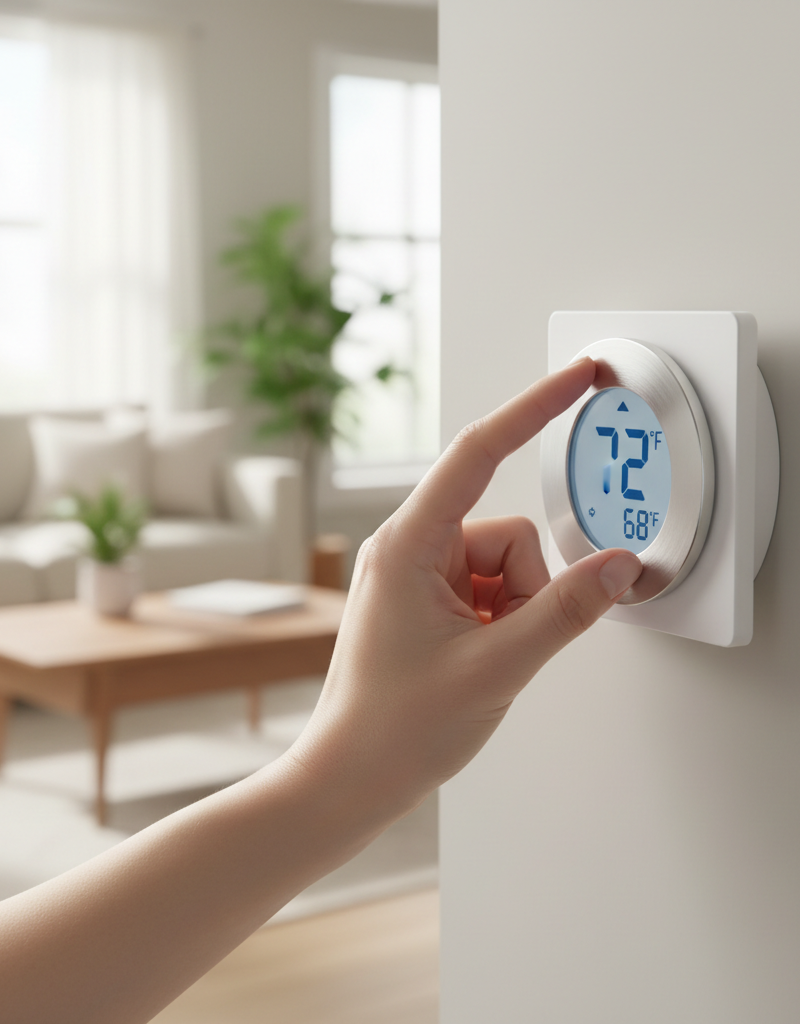
Turn Off the AC and Let It Thaw – Don’t run a frozen unit! First thing, shut the air conditioner off at the thermostat. Set it to ‘OFF’ and the fan to ‘AUTO.’ If you’ve got a separate shut-off switch near the outdoor unit, flip that too for good measure. Running a frozen unit can wreck the compressor. You need to let all that ice melt completely, and that can take anywhere from 2 to 6 hours depending on how much ice there is and how warm it is outside. You can speed it up a little by setting your thermostat to ‘FAN ON’ (not ‘COOL’) so air moves over the indoor coil, but don’t go chipping or scraping ice off the lines – you’ll bend fins or damage something.
-
Check and Change Your Air Filter – The most common culprit. Go inside and find your air filter, usually in the return air vent or inside the air handler/furnace. Pull it out and take a look. Is it packed with dust, pet hair, and the usual house grime? A dirty filter chokes off airflow hard. That means less warm air passes over your indoor evaporator coil, and the refrigerant gets too cold and freezes. I tell folks to check it every month and change it every 1 to 3 months, depending on pets and allergies. Pop in a clean one. Cost you about $15 and 5 minutes.
- Tool: New air filter (check size on old filter, e.g., 20x25x1 inch MERV 8)
- Safety: Make sure the system’s off before you open any panels.
-
Inspect Your Return Air Vents – Are they blocked? While you’re on airflow duty, walk through the house. Any return air vents blocked by furniture, curtains, or the kids’ latest masterpiece? If air can’t get back into the system easily, you’ll get restricted airflow, and that leads to the same freezing mess. Keep all those vents clear.
-
Clean the Outdoor Condenser Coils – Dirt is an insulator. Once the outdoor unit is fully thawed, take a look at the condenser coils – those metal fins around the outside of the unit. Are they packed with dirt, leaves, grass clippings, or cottonwood fluff? All that junk acts like an insulating blanket and keeps the unit from dumping heat properly. It also chokes airflow through the coil. With power still off at the outdoor disconnect, use a garden hose (gentle pressure, no power washer!) to spray the coils from the inside out if you can, so debris gets pushed out. You can also use a soft brush or a coil cleaning spray from the home center. Don’t bend the fins. If they’re bent, straighten them carefully with a fin comb.
- Tool: Garden hose, soft brush, fin comb (optional)
- Safety: Always make sure the outdoor unit’s power is off.
-
Check Your Indoor Evaporator Coil (Advanced DIY) – This one’s trickier. If you’ve done all that and it’s still freezing, the indoor evaporator coil may be dirty. This gets more involved because it’s usually tucked inside your furnace or air handler. You’ll need to pull off access panels. If you spot dirt, grime, or even mold on the coil fins, it’s killing heat transfer. You can try cleaning it gently with a soft brush and an indoor-coil cleaner, following the product directions closely. I’ve seen plenty of homeowners overlook this, and it’s a big part of the problem. If you’re not comfortable opening up the air handler, this is usually where I’d tell you to call a pro. They’ve got the right tools and cleaners for the job.
- Tool: Screwdriver set, coil cleaner, soft brush
- Safety: Absolutely make sure power to the entire HVAC system is off before you open the air handler.
- If this doesn't work: If the indoor coil is clean and you’re still having trouble, it’s time for a pro diagnosis. That points to a deeper issue like low refrigerant.
-
Ensure Proper Fan Operation (Indoor and Outdoor) – Are the fans spinning freely? After the unit’s thawed and cleaned, turn the system back on briefly. Does the outdoor fan spin strong? Does the indoor blower run without weird noises? A weak or dead fan, inside or outside, means no air movement, and no air movement means freezing. If either fan isn’t working right, shut it down right away. That’s usually a capacitor problem or a motor failure, and while some DIYers will tackle a capacitor replacement, motor work is definitely pro territory. Make sure the fan blades aren’t bent or getting hung up on anything.
Common Causes
From my years in the field, here’s what usually leads to a frozen AC unit:
- Restricted Airflow (Most Common): This is the big one. A dirty air filter, blocked return vents, closed supply registers (don’t close more than 20% of your registers!), or a bad indoor blower fan can all cut down the amount of warm air flowing over the evaporator coil. Less airflow means the coil gets too cold, and ice forms. I once got a call out to a newer subdivision, a house in Johns Creek built in 2018. The homeowner had shoved a giant bookshelf right in front of the main return air vent. Totally choked the system off.
- Low Refrigerant (Undercharge): If your system is low on refrigerant, it can’t pull enough heat out of your home. The remaining refrigerant expands too much, drops in pressure and temperature too far, and the evaporator coil ends up too cold and freezes. This isn’t something you can just
Related Articles
Keep troubleshooting with these hand-picked guides from FixlyGuide:
- The Hidden Reason Your AC Freezes — And Why Most Homeowners Get It Wrong — Your AC freezing up outside isn't just about low refrigerant; restricted airflow is often the true culprit, leading to inefficient cooling…
- The #1 Reason Your AC Freezes Solid (It's Not What You Think) — A frozen AC unit often points to poor airflow, which can be a simple fix if you know where to look.
- The Hidden Reason Your AC Freezes — And Why Most Homeowners Get It Wrong — An AC unit freezing up outside usually points to restricted airflow or low refrigerant, impacting performance and potentially causing syste…
- The Hidden Reason Your AC Freezes — And Why Most Homeowners Get It Wrong — Discover the surprising truth behind why your outdoor AC unit is freezing up and the common mistake homeowners make when trying to fix it.
- That August Chill: Why Your AC Freezes Up & How to Fix It — Is your air conditioner a block of ice in the middle of a heatwave? It seems counterintuitive, but an AC that freezes up is a common August…
- The 3 Hidden Reasons Your Ceiling Fan Wobbles (And the Easy Fixes) — A wobbling ceiling fan isn't just annoying; it can be a sign of underlying issues that are simple to fix with the right approach.
Should you do this yourself?
Answer five quick questions before you start. Safety outranks savings every time.
Your experience with work like this
How high do you have to work?
Does the job involve any of these?
Will it need a permit?
Specialty tools
Free and instant. Educational guidance only — not a quote, inspection, or professional diagnosis.
Estimate your own project cost
National averages are a starting point. Enter your details for a range that fits your house.
HVAC replacement cost
- Equipment$2,200 – $3,800
- Installation labor$1,200 – $2,500
Always insist on a Manual J load calculation — sq-ft sizing is only a rough check. Federal heat-pump rebates may reduce cost significantly.
Educational estimate only — always confirm with written local bids.
What should this project cost?
Enter your project details for a realistic cost range before you call anyone.
Service calls and common repairs run $150–$900; full system replacement typically $6,000–$12,000.
- Regional adjustment
- National average
- Labor share (typical)
- ~$1,935
- Quotes to collect
- 3 written estimates
Educational estimate based on national averages — not a binding quote. Always confirm with written local estimates.
Fixly Project Decision Box
- DIY difficulty
- Advanced
- Estimated time
- Homeowner checks 20–30 minutes
- Cost level
- Moderate
Main tools / materials
- Clean air filter
- Garden hose for condenser coils
- Shop vac for the condensate line
When to stop and call a pro
- Burning smell, smoke, or a tripping breaker
- Refrigerant lines iced over or hissing
- Any work inside the sealed refrigerant circuit (EPA-licensed only)
- Gas smell near a furnace — leave and call the utility
Need professional help?
Find an HVAC Pro Near YouBefore you start
Check the difficulty, permits, and safety risk — then decide whether to call a pro.
Free, no signup required. Estimates are educational guidance, not a quote or an inspection.
Get the print-ready PDF of this guide
A clean, ad-free, printable version you can keep on your phone or pin to the workshop wall. Free with a FixlyGuide account.
- Print-optimized layout
- Tools, materials & every step included
- Saved to your account
Frequently asked questions
Why is my AC unit freezing up outside?+
Your AC unit freezes up outside primarily due to insufficient airflow across the indoor evaporator coil or low refrigerant levels. Restricted airflow, often from a dirty air filter or blocked vents, prevents the coil from absorbing enough heat, causing it to get too cold and accumulate ice. Low refrigerant has a similar effect, leading to excessively low pressures and temperatures within the system.
Can I just chip the ice off my AC unit?+
No, you should never chip or scrape ice off your AC unit. The refrigerant coils and fins are very delicate and can be easily damaged, leading to costly leaks or system damage. Instead, turn off your AC at the thermostat and let the unit thaw naturally, which can take several hours depending on the amount of ice.
How long does it take for a frozen AC unit to thaw?+
The time it takes for a frozen AC unit to thaw completely can vary widely, typically ranging from 2 to 6 hours. Factors include the amount of ice buildup, the ambient outdoor temperature, and whether you've set your indoor fan to run (without cooling) to help circulate air over the indoor coil.
How often should I change my AC air filter?+
You should check your AC air filter at least once a month and plan to change it every 1 to 3 months. Households with pets, allergies, or higher dust levels may need to change filters more frequently to maintain optimal airflow and system efficiency.
What happens if I keep running a frozen AC?+
Continuing to run a frozen AC unit can lead to serious and costly damage. The most common consequence is damage to the compressor, which is the heart of your AC system. It can also lead to water leaks from the indoor unit as the ice melts, potentially causing water damage to your home.
Can a dirty outdoor unit cause freezing?+
Yes, a dirty outdoor condenser unit can contribute to freezing, although it's less common than a dirty indoor evaporator coil or air filter. When the condenser coils are caked with dirt and debris, it impairs the unit's ability to dissipate heat effectively, making the entire system work harder and potentially leading to imbalances that can cause the indoor coil to get too cold and freeze.
Is low refrigerant something I can fix myself?+
No, if your AC unit is low on refrigerant, it indicates a leak in the sealed system. Refrigerant is a hazardous substance that requires specialized equipment and training to handle. Adding refrigerant without addressing the leak is only a temporary fix and can actually harm the environment and your system. This is a job for a licensed HVAC professional.
How can I prevent my AC from freezing in the future?+
To prevent your AC from freezing, regularly change your air filter (monthly check, change every 1-3 months), keep all supply and return vents clear of obstructions, ensure your outdoor condenser coils are clean, and schedule annual professional maintenance to catch issues like low refrigerant or dirty indoor coils early.
Discussion
Loading comments…