- Maintain the Condensate Drain Line. Every two to three months during the cooling season, pour a cup of distilled white vinegar down the condensate line's access port. This helps prevent the growth of algae and sludge that can cause clogs.
- Control Interior Moisture Sources. Use exhaust fans in bathrooms during and after showers, and use the range hood fan when cooking. Ensure your clothes dryer vents directly outside and that the vent line is clean and unobstructed.
- Invest in and Monitor a Hygrometer. For around $15, a digital hygrometer gives you real-time data on your home's relative humidity. This allows you to spot trends and identify a problem long before your home starts to feel like a swamp.
HVAC · High energy usage
| Project category | HVAC |
|---|---|
| Problem type | High energy usage |
| Trade required | HVAC |
| Urgency | Planned project |
| Safety risk | Low safety risk |
| DIY suitability | DIY for experienced homeowners |
| Cost category | High cost |
| Typical timeline | Assessment within weeks; replacement planned off-season |
| Contractor type | Licensed HVAC technician |
Repair option
Duct sealing, insulation, and a tune-up before touching the equipment.
Replacement option
High-efficiency replacement sized by a load calculation, not a rule of thumb.
Common causes
- Aging, low-efficiency equipment
- Leaking ducts losing conditioned air
- Insufficient attic insulation
- Oversized system short-cycling
Relevant tools:project cost estimatorrepair or replace
Published April 26, 2026Last updated August 17, 2026
Tools & materials you'll need
Affiliate linksAs an Amazon Associate FixlyGuide earns from qualifying purchases — at no extra cost to you. Prices and availability are accurate as of publication and subject to change.
How it works
An air conditioner's primary job is to cool your home, but a crucial secondary function is dehumidification. These two processes are intrinsically linked. Your central AC system operates by circulating a refrigerant through a closed loop that connects an indoor unit (the evaporator coil) and an outdoor unit (the condenser).
Warm, humid air from inside your home is pulled by the air handler's blower fan across the frigid evaporator coil. As the air passes over the coil's cold surfaces, its temperature plummets. When the air temperature drops below its dew point, the water vapor it holds can no longer remain a gas. It condenses into liquid water, clinging to the fins of the coil, much like how water beads on a cold glass of iced tea on a summer day.
This collected water, or condensate, drips from the coil into a drain pan below. From there, it flows through a condensate line, exiting your home. The result is air that is both cooler and drier. For this dehumidification process to be effective, the AC system must run for a sustained period—typically at least 15-20 minutes per cycle. This allows the evaporator coil to get cold enough and stay cold long enough to condense a significant amount of moisture from the air. If the system runs in short, frequent bursts, it may cool the air slightly but shuts off before substantial dehumidification can occur.
Step-by-Step Fix
Follow these diagnostic steps to identify and resolve the cause of high indoor humidity when your AC is running. Begin with the simplest and most common issues first.
-
Quantify the Problem with a Hygrometer — Before making changes, get an objective measurement of your indoor relative humidity (RH). A simple digital hygrometer is an inexpensive and essential tool. Place it in a central area of your home, away from vents, windows, and the kitchen or bathrooms.
- Guideline: An ideal indoor RH is typically between 40% and 50%. Readings consistently above 55-60% while the AC is operating indicate a problem. This baseline reading will help you verify if your fixes are effective.
-
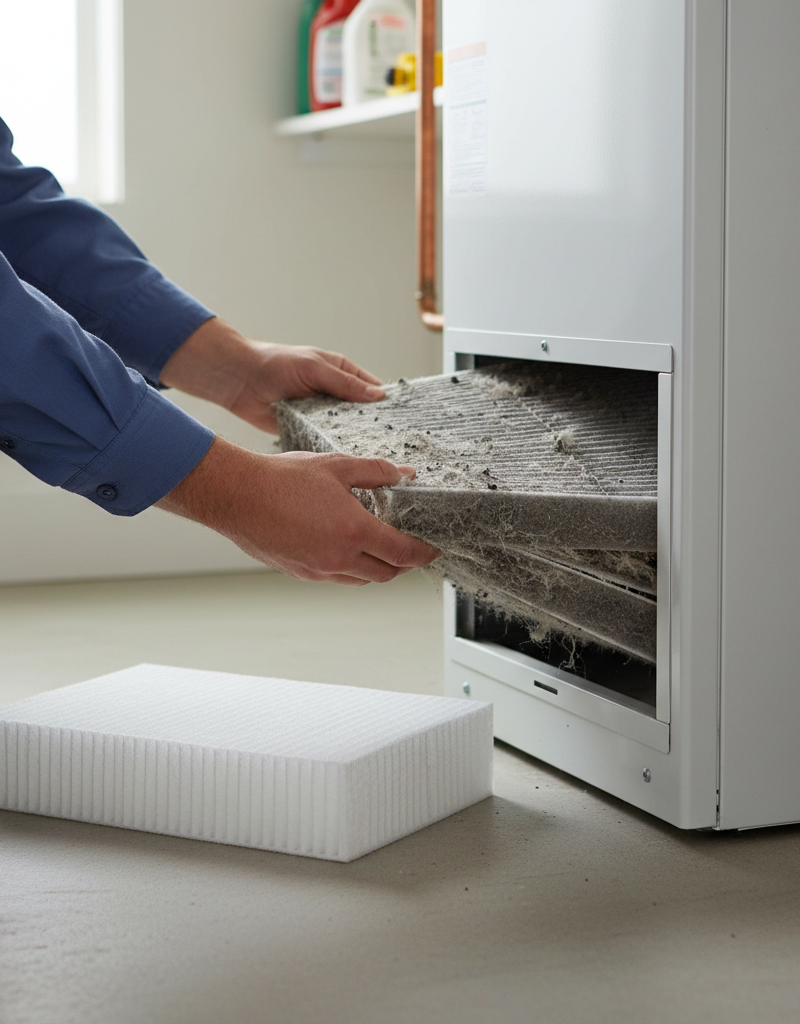
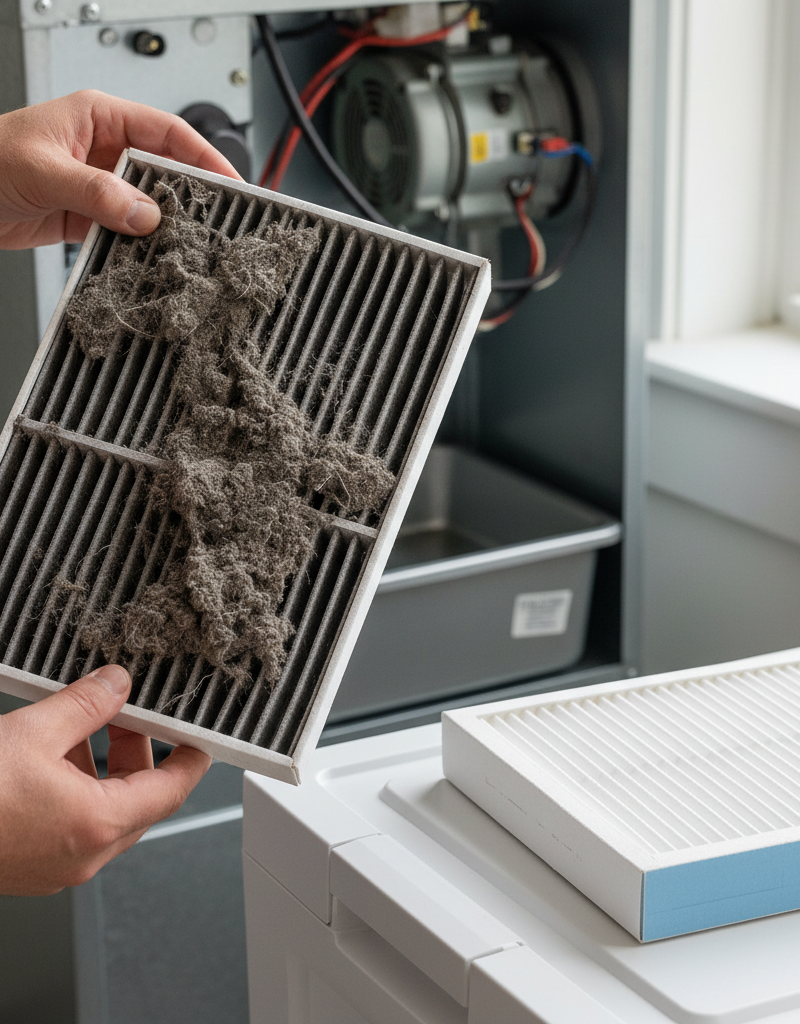
Inspect and Replace the Air Filter — A clogged air filter is a primary cause of poor AC performance, including inadequate dehumidification. It severely restricts the volume of air moving across the evaporator coil.
- Action: Turn off your HVAC system at the thermostat. Locate the filter access panel on your indoor air handler or in a return air grille in a wall or ceiling. Slide the old filter out and check it for dirt. If it's visibly gray, coated in dust, or you can't see light through it, replace it with a new one of the exact same dimensions. Ensure the airflow arrow on the new filter points toward the air handler.
-
Check the Evaporator Coil for Dirt or Ice — If a dirty filter has been in place for too long, the coil itself may have become clogged. Even worse, severe airflow restriction can cause the coil to freeze into a solid block of ice.
- Safety First: Shut off the power to the indoor air handler at your circuit breaker panel.
- Inspection: Open the access panel for the evaporator coil (this may require removing a few screws). Using a flashlight, inspect the fins. They should be clean aluminum. If you see a thick blanket of dust or grime, it needs cleaning (see Step 4). If you see ice, do not proceed. Turn the thermostat to "Off" and the fan to "On" to melt the ice, which can take several hours. An iced-over coil is a symptom of a deeper problem, often severe airflow blockage or low refrigerant.
-
Clean a Dirty Evaporator Coil — A dirty coil insulates itself, preventing moisture from condensing on it effectively. Cleaning it restores its ability to dehumidify.
- Tools: Soft-bristled brush, commercial no-rinse evaporator coil cleaner spray, shop vacuum, pump sprayer with water (optional).
- Procedure: With the power still off, gently brush any loose debris off the coil fins in the direction the fins run (usually vertical) to avoid bending them. Next, thoroughly spray the coil with the no-rinse foaming cleaner, starting at the top and working your way down. The foam will expand, pushing dirt out from between the fins. The cleaner is designed to condense and drip into the drain pan along with normal condensation once the AC is running again.
-
Clear the Condensate Drain Line — A blocked drain line causes water to back up in the pan. Many systems have a float switch that will shut down the AC to prevent water damage. This can cause short-cycling or prevent the AC from running at all.
- Location: Find the PVC pipe exiting your indoor air handler. Look for a vertical pipe with a cap or plug; this is the access tee.
- Action: Use a wet/dry shop vacuum to suction the clog out from the termination point of the drain line outside your house. Hold the vacuum hose tightly over the pipe for 1-2 minutes. Alternatively, you can pour a solution of one part distilled vinegar and three parts water into the access tee to dissolve algae and sludge buildup.
-
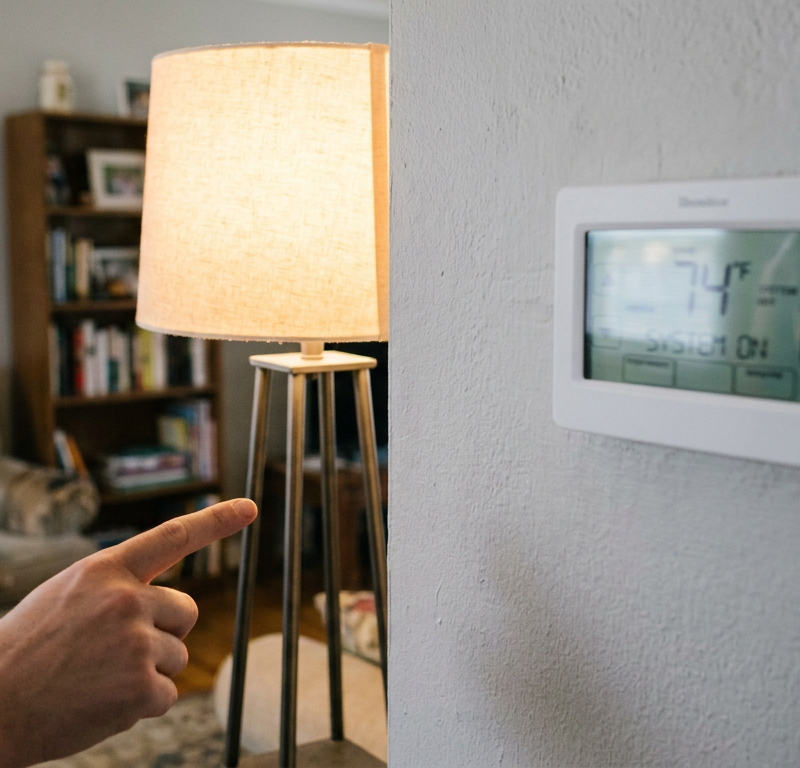
Verify Thermostat Fan Settings — A simple setting mistake can be the entire source of your humidity problem.
- Action: Check your thermostat. The fan setting should be on "Auto," not "On." The "Auto" setting runs the blower fan only when the cooling cycle is active. The "On" setting runs the fan continuously. When the fan runs after the compressor has shut off, it blows air across the still-wet evaporator coil, re-evaporating that collected moisture right back into your house.
-
Time Your AC's Run Cycles — This is the key diagnostic step for determining if your AC unit is oversized, which is the most common "secret" reason for high humidity.
- Procedure: On a hot afternoon, use a stopwatch to time how long the compressor runs and how long it stays off between cycles. Write down several readings to find an average.
- Analysis: Your AC should run for at least 15-20 minutes per cycle on a hot day. If it’s running for 10 minutes or less, cooling the house to the set temperature, and then shutting off, it is almost certainly oversized. This is called short-cycling. The system satisfies the temperature demand so quickly that it doesn't have time to perform the lengthy process of dehumidification.
-
Adjust the Blower Fan Speed — (Advanced Step) Air handlers often have multi-speed motors. A fan speed that is too high moves air across the coil too quickly for effective heat and moisture exchange.
- Warning: This involves working inside the air handler with electrical components. If you are not comfortable, skip this and call a pro.
- Procedure: Turn off power at the breaker. Open the air handler's control panel and locate the control board. You will see several wires connected to terminals marked "COOL," "HEAT," "FAN," etc., and a set of speed taps often labeled "HI," "MED-HI," "MED-LO," and "LO." The wire on the "COOL" terminal determines the cooling speed. Typically, these are set to high from the factory. Moving the "COOL" wire to a lower speed tap (e.g., from "HI" to "MED-HI") will slow the blower, increasing the air's "dwell time" on the coil and improving moisture removal. Consult your unit's manual before making any changes.
-
Seal Air Leaks in Your Home — Your AC may be working perfectly, but it can't keep up if humid, unconditioned air is constantly infiltrating your home.
- Action: Use caulk to seal gaps around window and door frames. Apply weatherstripping to the bottoms of doors. Use expanding foam sealant for larger gaps around pipes and wires that penetrate exterior walls. Pay special attention to air leaks into attics and crawlspaces, which are often sources of extreme humidity.
Common mistakes
- Setting the Fan to "On." Many homeowners believe running the fan constantly improves circulation. For humidity control, this is counterproductive. The fan blows air across the wet evaporator coil between cooling cycles, reintroducing moisture into your home. Always use the "Auto" setting during humid weather.
- Ignoring a Frozen Evaporator Coil. Seeing ice on the indoor coil and simply waiting for it to melt without finding the cause is a major error. A frozen coil is a symptom of a critical problem—usually a clogged filter, blocked ductwork, or a refrigerant leak. The problem will recur and can destroy your compressor if not properly diagnosed and fixed.
- -Using a Highly Restrictive Air Filter. While a high-MERV or HEPA filter is great for air purification, it can severely restrict airflow if your HVAC system isn't designed for it. This choked airflow reduces dehumidification and can lead to a frozen coil. Stick to the filter MERV rating recommended by your unit's manufacturer (typically MERV 8-11).
- Over-Lowering the Thermostat. Cranking the thermostat down to 68°F won't necessarily fix a humidity problem caused by an oversized unit. The system will just cool the space even faster, short-cycle more aggressively, and remove even less humidity before shutting off, leaving you feeling cold and clammy.
- Cleaning Coils with the Wrong Tools. Using a power washer or a stiff-bristled brush on evaporator or condenser coils is a recipe for disaster. The delicate aluminum fins will bend easily, blocking airflow and permanently damaging the coil. Always use a soft brush and an approved, non-acidic coil cleaner.
- Attempting to Add Refrigerant. If you suspect low refrigerant (e.g., the system runs constantly but doesn't cool well, you hear hissing, or see ice on the lines), the solution is not a DIY refrigerant top-off. This is illegal without EPA certification, dangerous, and ignores the underlying leak that must be found and repaired by a professional.
Cost & time breakdown
The cost and time for fixing a humid home can vary widely, from simple maintenance to major system modifications.
| Task | DIY Cost | Pro Cost | Time |
|---|---|---|---|
| Air Filter Replacement | $5 - $30 | $75 - $150 (as part of a service call) | 5 minutes |
| Clearing Condensate Line | $5 (for vinegar) - $50 (for a shop vac) | $80 - $200 | 30 minutes |
| DIY Evaporator Coil Cleaning | $15 - $25 (for cleaner & brush) | $150 - $400 | 1-2 hours |
| Air Sealing (Caulk, Weatherstrip) | $50 - $150 | $400 - $1,200+ | 4-16 hours |
| Professional HVAC Diagnostic/Tune-Up | N/A | $100 - $250 | 1-2 hours |
| Whole-Home Dehumidifier Installation | N/A | $2,000 - $4,000 | 4-8 hours |
When to call a pro
While many causes of high humidity are manageable for a DIYer, several scenarios require the expertise and certification of an HVAC professional.
Call a technician immediately if you suspect a refrigerant leak. Signs include visible frost or ice on the refrigerant lines or evaporator coil, a hissing sound near the unit, or an AC that runs continuously but blows cool, not cold, air. Handling refrigerant is legally restricted to EPA-certified technicians and involves specialized recovery machines and gauges.
You should also call a pro for any electrical issues. If you test components like a capacitor or contactor and find they are faulty, or if you suspect a problem with the main control board, a professional should perform the replacement. Working with high-voltage components is extremely dangerous.
The most definitive reason to call a professional is if you've done your homework and determined your AC unit is oversized and short-cycling. A technician can perform a proper Manual J load calculation to confirm this. They can then present solutions, which might include replacing the system with a correctly sized unit, installing a two-stage or variable-speed system that runs longer at lower capacity, or integrating a whole-home dehumidifier to work in tandem with your existing AC.
Prevention & maintenance
Proactive maintenance is the best way to ensure your air conditioner effectively controls both temperature and humidity.
- Change Air Filters on Schedule. This is the single most important maintenance task. For standard 1-inch filters, replace them every 1-3 months. For larger 4-5 inch media filters, replace them every 6-12 months. Set a recurring calendar reminder.
- Schedule Annual Professional Tune-Ups. Once a year, preferably in the spring before the cooling season begins, have an HVAC technician service your system. They will perform a comprehensive check that includes cleaning the coils, testing electrical components, measuring refrigerant levels, and ensuring the entire system runs at peak efficiency.
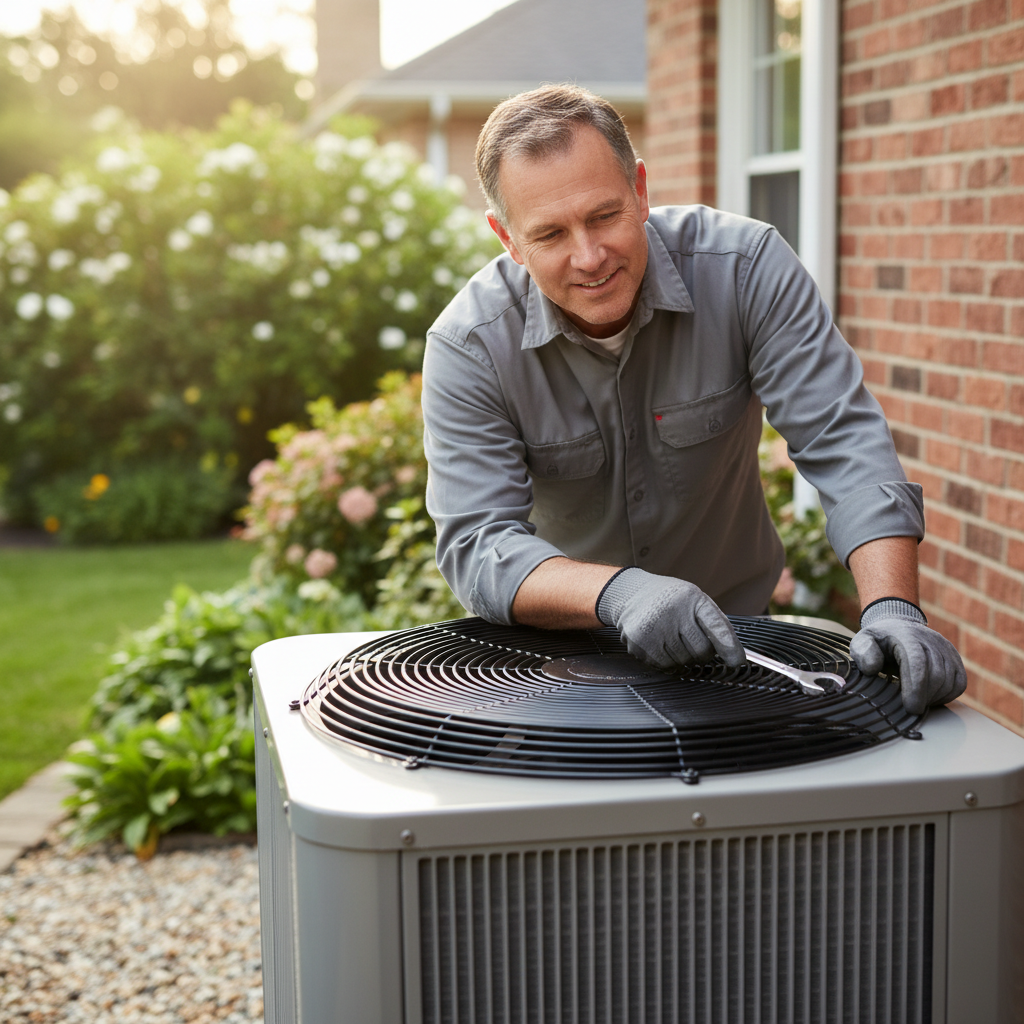
- Keep the Outdoor Condenser Unit Clean. Ensure at least a 2-foot clearance of shrubs and debris around the outdoor unit. At the beginning and middle of summer, turn off the power to the unit via the outdoor disconnect switch and gently hose down the fins from the outside to remove accumulated cottonwood, dust, and grass clippings.
- Maintain the Condensate Drain Line. Every two to three months during the cooling season, pour a cup of distilled white vinegar down the condensate line's access port. This helps prevent the growth of algae and sludge that can cause clogs.
- Control Interior Moisture Sources. Use exhaust fans in bathrooms during and after showers, and use the range hood fan when cooking. Ensure your clothes dryer vents directly outside and that the vent line is clean and unobstructed.
- Invest in and Monitor a Hygrometer. For around $15, a digital hygrometer gives you real-time data on your home's relative humidity. This allows you to spot trends and identify a problem long before your home starts to feel like a swamp.
Related Articles
Keep troubleshooting with these hand-picked guides from FixlyGuide:
- The Secret Culprit Behind Your AC Blowing Warm Air (It’s Not What You Think) — Discover the unexpected reason your air conditioner is blowing warm air and how a simple, often overlooked fix can restore your home’s cool…
- Why Your House is Humid Despite AC & How to Fix It — Even with your AC running, high indoor humidity can make your home uncomfortable. Often, common issues like oversized units or clogged filt…
- The #1 Mistake Homeowners Make When Their AC Won't Turn On (And the Easy Fix) — Learn the most common reason your air conditioner won't turn on and how to diagnose and fix it with simple steps.
- AC Blowing Warm Air? Easy Fixes for Common AC Problems — Discover the most common reasons your AC is blowing warm air and learn simple, actionable steps to troubleshoot and fix the issue yourself,…
- Your Thermostat Isn't Broken — It's These 3 Culprits — If your thermostat isn't hitting the mark, it could be a simple fix. Learn how to troubleshoot common issues and get your home comfortable…
- One Shower, No Hot Water? The Hidden Mixing Valve Trick Plumbers Use — Discover why only one shower in your home might lack hot water and the simple internal fix for a common mixing valve issue, saving you a pl…
Should you do this yourself?
Answer five quick questions before you start. Safety outranks savings every time.
Your experience with work like this
How high do you have to work?
Does the job involve any of these?
Will it need a permit?
Specialty tools
Free and instant. Educational guidance only — not a quote, inspection, or professional diagnosis.
Estimate your own project cost
National averages are a starting point. Enter your details for a range that fits your house.
HVAC replacement cost
- Equipment$2,200 – $3,800
- Installation labor$1,200 – $2,500
Always insist on a Manual J load calculation — sq-ft sizing is only a rough check. Federal heat-pump rebates may reduce cost significantly.
Educational estimate only — always confirm with written local bids.
What should this project cost?
Enter your project details for a realistic cost range before you call anyone.
Service calls and common repairs run $150–$900; full system replacement typically $6,000–$12,000.
- Regional adjustment
- National average
- Labor share (typical)
- ~$1,935
- Quotes to collect
- 3 written estimates
Educational estimate based on national averages — not a binding quote. Always confirm with written local estimates.
Fixly Project Decision Box
- DIY difficulty
- Advanced
- Estimated time
- Homeowner checks 20–30 minutes
- Cost level
- Moderate
Main tools / materials
- Clean air filter
- Garden hose for condenser coils
- Shop vac for the condensate line
When to stop and call a pro
- Burning smell, smoke, or a tripping breaker
- Refrigerant lines iced over or hissing
- Any work inside the sealed refrigerant circuit (EPA-licensed only)
- Gas smell near a furnace — leave and call the utility
Need professional help?
Find an HVAC Pro Near YouBefore you start
Check the difficulty, permits, and safety risk — then decide whether to call a pro.
Free, no signup required. Estimates are educational guidance, not a quote or an inspection.
Get the print-ready PDF of this guide
A clean, ad-free, printable version you can keep on your phone or pin to the workshop wall. Free with a FixlyGuide account.
- Print-optimized layout
- Tools, materials & every step included
- Saved to your account
Frequently asked questions
How do I know if my AC is oversized?+
An oversized AC unit cools your home very quickly but doesn't run long
What temperature should my AC be set to for optimal dehumidification?+
Setting your AC to a comfortable temperature, typically between 72-78°F
Can a dirty air filter cause high humidity?+
Yes, a very dirty air filter can restrict airflow, causing your AC
Should I run a dehumidifier and my AC at the same time?+
In some cases, yes. If your AC is properly sized and functioning but
Discussion
Loading comments…