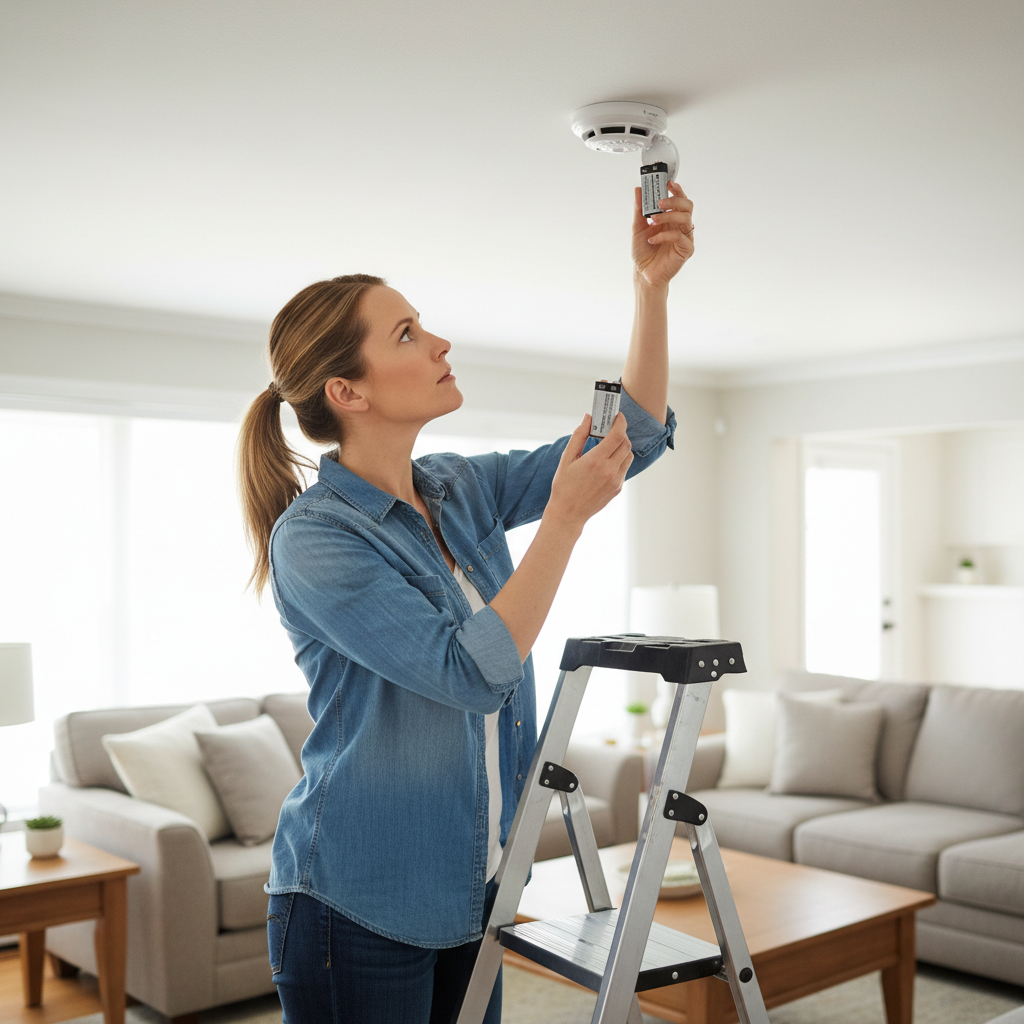
- Low Battery: This is the big one, hands down. The battery’s old, weak, or wasn’t installed right. Even hardwired units still have a backup battery that’ll chirp when it gets low.
- Dirty Sensor Chamber: Dust, bugs, paint, and random debris can pile up in there and fool the detector into thinking there’s a problem. Sometimes you get an intermittent chirp; sometimes you get nuisance alarms.
- Installation Issues: If the detector isn’t seated right on its mounting bracket, it may not be getting full contact with power. That can cause random chirping and power hiccups.
Electrical · Panel or service upgrade
| Project category | Electrical |
|---|---|
| Problem type | Panel or service upgrade |
| Trade required | Electrical |
| Urgency | Planned project |
| Safety risk | High safety risk |
| DIY suitability | Licensed pro only |
| Cost category | High cost |
| Typical timeline | Permit plus utility scheduling, commonly 2–6 weeks |
| Contractor type | Licensed electrician |
Repair option
Add a subpanel when the main service is adequate.
Replacement option
Full service upgrade with utility coordination and permits.
Common causes
- Obsolete or recalled panel brands
- Service capacity too small for added loads
- No room for required AFCI/GFCI breakers
Relevant tools:project cost estimatorcompare quotes
Published July 26, 2026Last updated August 17, 2026
Tools & materials you'll need
Affiliate linksAs an Amazon Associate FixlyGuide earns from qualifying purchases — at no extra cost to you. Prices and availability are accurate as of publication and subject to change.
Quick Answer
When your smoke detector starts chirping every 30 to 60 seconds, nine times out of ten it’s begging for a fresh battery. I’ve heard that same little racket in a pile of houses, and 95% of the time, swapping in new batteries fixes it right up. But if new batteries don’t shut it up, no dice — you may be dealing with a dusty sensor or a detector that’s simply worn out.
The Problem
There’s nothing like that awful “chirp... chirp... chirp” every half minute to make you want to climb the walls. And of course it likes to kick off at 2 AM, right? The upside is, as maddening as it is, that chirp usually means the detector’s doing its job and warning you that something’s off with the power or the guts inside. It’s the little warning light on your truck dash. Ignore it too long and you’re not just risking your sanity, you’re risking your family’s safety.
I’ve been doing this for over 25 years, and I’ve watched homeowners get downright frantic over that sound. I had a call in the Northgate neighborhood of Seattle, in this old Craftsman that still had all the original quirks, where the guy taped over the detector because he thought that’d quiet it down. Yeah, no. That just made it unsafe. We popped in fresh batteries, cleaned the unit, and the chirping stopped. Don’t be that homeowner. Crack it open and fix it the right way.
How It Works
If you want to understand why the thing’s chirping, it helps to know what’s going on inside. Most residential smoke detectors use one of two main technologies, and sometimes both:
-
Ionization Smoke Detectors: These use a tiny amount of radioactive material (Americium-241, usually less than 1 microcurie) between two electrically charged plates. That ionizes the air so a small current can flow. When smoke gets in there, it disrupts that current and trips the alarm. They’re usually quicker on fast-flaming fires with smaller, invisible combustion particles.
-
Photoelectric Smoke Detectors: These have a chamber with a light source (usually an LED) and a photosensor. Under normal conditions, the light goes straight across and misses the sensor. When smoke enters, it scatters the light and some of it hits the sensor, which sets the alarm off. These tend to do a better job on slow, smoldering fires with bigger, visible smoke particles.
-
Combination Units (Smoke and CO): A lot of newer detectors do both smoke and carbon monoxide. CO sensors work differently, usually with electrochemical tech that reacts to carbon monoxide gas. A chirping CO alarm can mean a low battery too, or an end-of-life warning for the CO sensor itself, which usually doesn’t last as long as the smoke side.
No matter which type you’ve got, they all need power — either hardwired into your home’s electrical system with a battery backup, or battery-only. That chirp is built in to holler when the battery backup, or the main battery on a battery-only unit, starts running low. It’s a low-voltage warning that kicks in when the battery drops below a certain threshold, typically around 80% of its full charge. Annoying on purpose. That’s the point.
Step-by-Step Fix
Here’s how I handle a chirping smoke detector. Work through it in order, and you’ll probably shut that thing up.
-
Identify the Culprit — Find the right detector
This one sounds simple, but if you’ve got a bunch of detectors — especially in a bigger house — that chirp can bounce around and fool you. If the alarms are interconnected, one low battery in one unit can make all of them chirp weirdly, though the actual problem unit is usually the loudest. Walk the house and listen for the strongest chirp. If you’re not sure, silence or pull the battery from one unit, then move to the next until the noise quits. I’ve even told homeowners to stand on a chair and cup their hands around each detector; it’s funny, but it works. -
Safety First! — Always disconnect power if hardwired
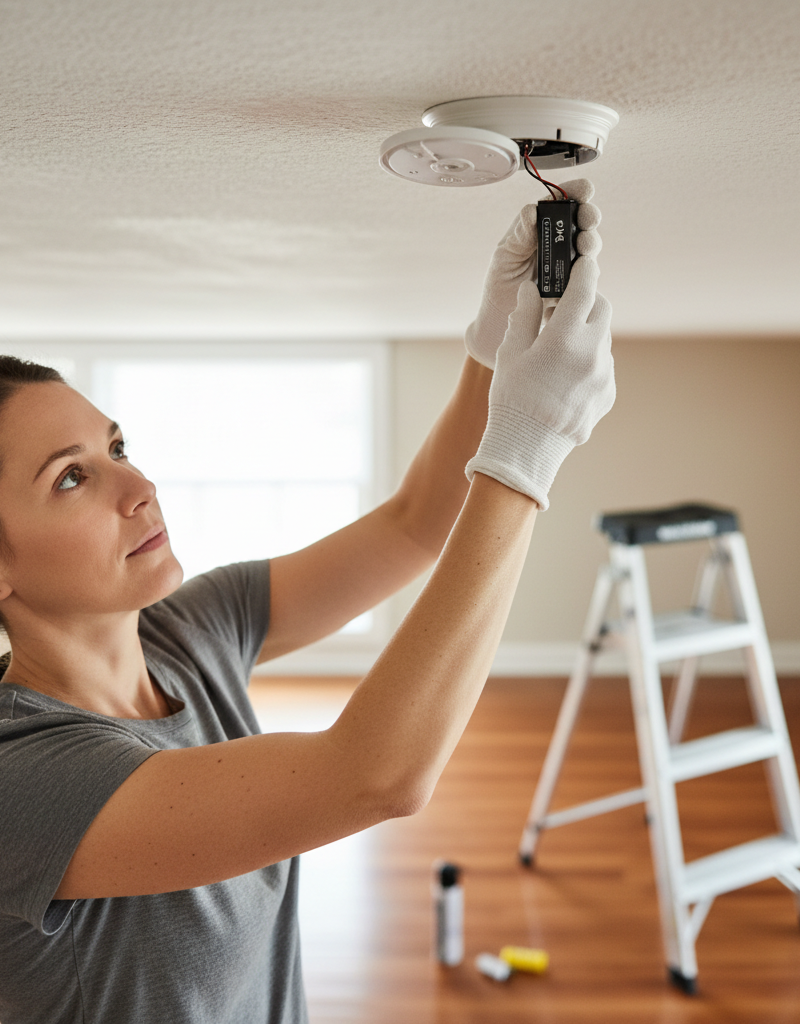
If your smoke detector is hardwired into the electrical system, you’ve got to shut the power off before you mess with it. Go to the breaker box and flip the breaker feeding the smoke detectors. It’s often labeled “Smoke Detectors,” “Alarms,” or tied into a general lighting circuit. Once it’s off, you’re good to go. If it’s battery-only, you can skip this step.\- Safety Note: Never work on electrical devices without confirming the power is off. Use a non-contact voltage tester if you’re unsure.
-
Twist & Remove — Take the detector off its base
Most smoke detectors lock onto a ceiling or wall bracket with a simple twist. Grab it firmly and turn it counter-clockwise about a quarter turn. Then it should drop straight down off the mounting plate. If it’s stuck, give it a little more persuasion — they’re meant to be snug. On hardwired units, you’ll see a wiring harness tied into your home’s electrical wires. Squeeze the tabs on that connector and unplug it. -
Battery Swap — Install fresh, new batteries
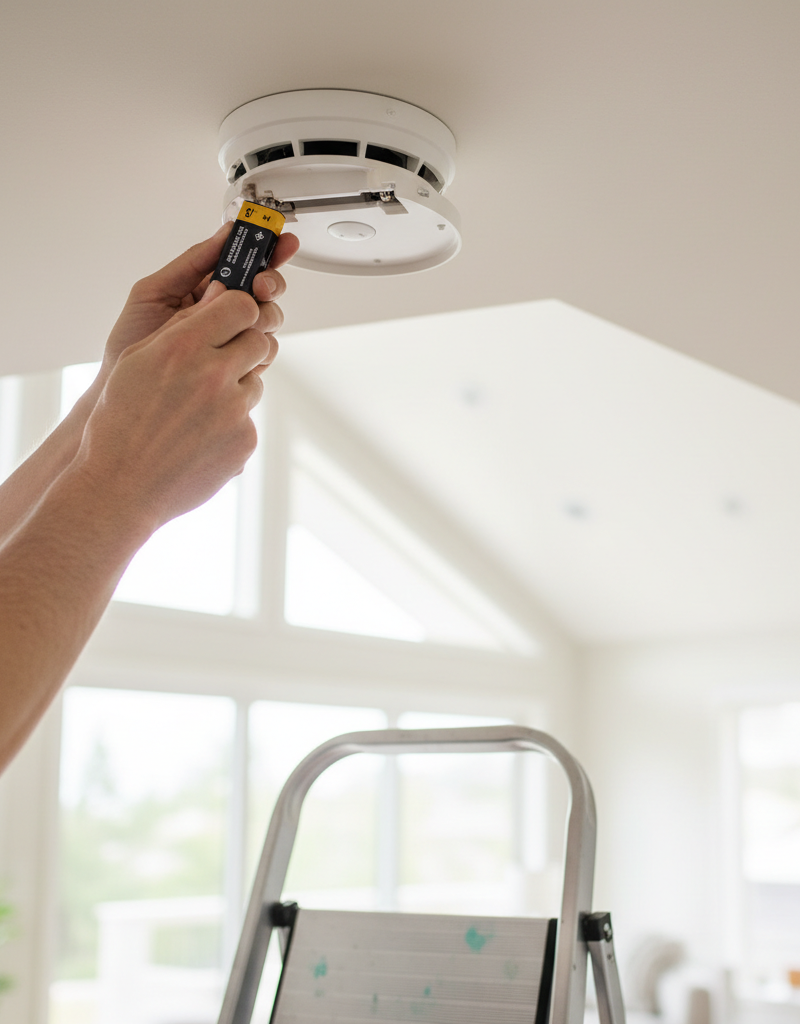
Open the battery compartment. Usually there’s a small tab or slide cover. Check the battery type and how the old ones are sitting. Most residential smoke detectors take 9-volt batteries, but some newer ones use AA or AAA batteries. Always put in new, fresh alkaline batteries. Don’t raid another gadget for old batteries; they might hush the chirp for a little while and then start right back up. Set the new batteries in the right way, matching the positive (+) and negative (-) ends. If it’s a hardwired unit with a backup battery, change that one too.- Pro Tip: Write the battery change date inside the compartment with a permanent marker. Saves you guessing later.
-
Clean the Sensor — Dust can cause false alarms (or chirps)
While it’s open, go ahead and clean it out. Dust, cobwebs, and even tiny bugs can build up inside the sensing chamber and act like smoke, or just mess with the sensor enough to cause trouble. Use compressed air — the kind you’d use on a keyboard — and blow out the inside and the vents gently. Don’t grab a vacuum; it can create static and fry sensitive parts. Wipe the outside with a soft, dry cloth. -
Check the Expiration Date — Detectors don't last forever
Every smoke detector has a shelf life. Look on the back or side for a “manufacture date” or “replace by” date. Most manufacturers say to replace smoke detectors every 10 years for smoke alarms and every 7-10 years for combo smoke/CO alarms. If yours is past that, fresh batteries won’t save it. You need a new unit. I’ve pulled units from the 1990s still chirping away — that thing’s toast, replace it! \- If your unit is expired: Purchase a new smoke detector. Look for one with both ionization and photoelectric sensors, or a combination smoke/CO alarm.
-
Reconnect and Test — Put it all back together
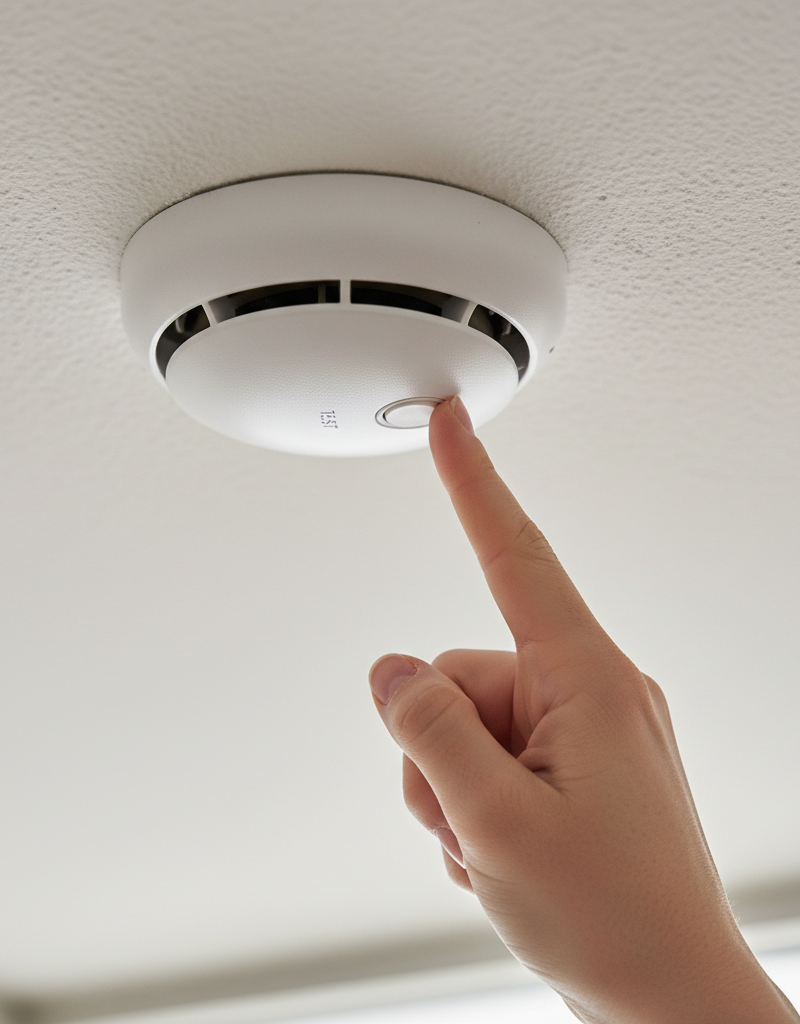
If it’s hardwired, plug the wiring harness back in. Then line the detector up with the mounting bracket and twist it clockwise until it locks down tight. Once it’s back together, turn the breaker back on. Now hit and hold the “Test” button on the front for a few seconds. You should get a loud, piercing alarm. That tells you the unit’s working. If the alarms are interconnected, they should all sound. -
Silence and Monitor — Listen for a few hours
After all that, the chirping ought to be gone. Keep an ear out for the next few hours — or even a full day — just to make sure the problem’s really fixed and the chirp doesn’t come back. If it does, you’ve probably got a bad unit or missed another one somewhere. Sometimes a hardwired detector needs a few minutes to recharge its internal capacitor after power’s been off, so don’t panic if it takes a minute to quiet down.
Common Causes
I’ve found that most chirping problems come down to a handful of usual suspects:
- Low Battery: This is the big one, hands down. The battery’s old, weak, or wasn’t installed right. Even hardwired units still have a backup battery that’ll chirp when it gets low.
- Dirty Sensor Chamber: Dust, bugs, paint, and random debris can pile up in there and fool the detector into thinking there’s a problem. Sometimes you get an intermittent chirp; sometimes you get nuisance alarms.
- End-of-Life: Smoke detectors don’t last forever, usually 10 years from the manufacture date. After that, parts wear out and the unit may start its own little “I’m done” chirp, which sounds a lot like a low battery. Combo CO/smoke detectors usually have a shorter CO sensor life, often 7 years, and that can set it off too.
- Installation Issues: If the detector isn’t seated right on its mounting bracket, it may not be getting full contact with power. That can cause random chirping and power hiccups.
- Extreme Temperatures/Humidity: Less common, but wild swings in temperature or too much humidity can mess with sensor performance and battery life. I saw that in an uninsulated garage in Bend, Oregon, where the winter cold was giving the unit fits.
Common Mistakes
Over the years, I’ve seen folks make the same mistakes over and over trying to fix a chirping detector. Don’t do these:
- Ignoring the Chirp: Big mistake. It’s not just noise; it’s a warning. A compromised smoke detector can’t protect you like it should.
- Only Replacing One Battery: If you’ve got multiple units or a hardwired detector with a backup, change all the batteries that matter. Don’t guess.
- Using Old or Rechargeable Batteries: Stick with fresh alkaline batteries in the right size. Rechargeables often run at a lower nominal voltage (1.2V vs 1.5V for alkalines) and can read low even when they’re charged, which can trip the chirp early. They may also not last as long in an alarm.
- Forgetting the Expiration Date: A lot of people don’t realize these things expire. If a detector is over 10 years old (7 for some CO units), it’s a liability even if it seems fine. Don’t just swap the battery; swap the unit.
- Painting Over the Detector: Never paint a smoke detector. Paint can clog the sensing chamber and keep it from working right. If you’re painting, take it down first and put it back after the paint dries.
- Removing the Battery Permanently: That’s a dangerous move. If the chirp’s driving you nuts, the fix is to repair or replace the unit, not disable a life-saving device.
Cost & Time Breakdown
| Task | DIY Cost | Pro Cost | Time |
|---|---|---|---|
| Replace batteries | $5–$15 | $50–$100 (service call) | 5–10 minutes |
| Clean sensor | $0–$10 (compressed air) | $50–$100 (with service) | 10–15 minutes |
| Replace expired smoke detector | $15–$50 per unit | $100–$250 per unit installed | 15–30 minutes per unit |
| Replace combi smoke/CO detector | $30–$80 per unit | $120–$300 per unit installed | 15–30 minutes per unit |
| Troubleshoot interconnected system | $0 | $150–$350+ (diagnostic) | 30–60 minutes per unit |
Tips & Prevention
Keep your smoke detectors in good shape and you’ll cut way down on chirping. A few habits go a long way:
- Test Monthly: Push the test button on each detector once a month to make sure it’s alive. Takes a few seconds per unit.
- Replace Batteries Annually: Even if your hardwired units have a 10-year battery, I still tell homeowners to swap standard 9V or AA/AAA backup batteries once a year. A handy reminder is when you change your clocks for Daylight Saving Time. That’s what I do at my place.
- Clean Regularly: Dust them off and hit the vents with compressed air every 6-12 months. Keeps buildup out of the sensing chamber.
- Know the Expiration Date: Mark the replacement date right on the unit or on a calendar. Plan on replacing all your detectors every 10 years, or whatever the manufacturer says.
- Strategic Placement: Put smoke detectors on every floor, and inside and outside sleeping areas. Don’t mount them too close to kitchens or bathrooms where steam and cooking fumes can set them off.
- Hardwired with Battery Backup: If you’re upgrading, hardwired detectors with battery backup are worth a look. They’re more reliable, and interconnected alarms give you more warning — if one goes off, they all go off.
When to Call a Professional
Most of the time, a chirping smoke detector is a DIY fix. But if you’ve swapped the batteries, cleaned the unit, checked the date, and it’s still chirping — especially on a hardwired, interconnected system — you may be dealing with a wiring problem. Loose harness connections, a bad junction box connection, or a faulty circuit can all sound a lot like a low battery. Don’t go poking around home wiring unless you’re qualified. And if you think the chirping is coming from a carbon monoxide alarm and you’ve got symptoms of CO poisoning — headache, dizziness, nausea — get outside for fresh air right away and call 911, then your fire department and a professional HVAC technician to track down the source of the CO. Your family
Related Articles
Keep troubleshooting with these hand-picked guides from FixlyGuide:
- The 30-Second Chirp: Why Most Homeowners Misdiagnose Their Smoke Detector (And The Real Fix) — A smoke detector chirping every 30 seconds almost always means a dying battery, but it can also signal an expired unit or a buildup of dust.
- The Annoying Chirp: 3 Hidden Reasons Your Smoke Detector Won't Shut Up — A chirping smoke detector every 30-60 seconds usually means a low battery, but other hidden issues like dusty sensors or power interruption…
- The Secret Cause of Ceiling Fan Wobble (It's Not Always What You Think) — A wobbling ceiling fan isn't just annoying; it can be a sign of a deeper issue. Learn the common culprits and how to restore balance safely.
- The Surprising Culprit Behind Your Wobbling Ceiling Fan (It's Not Always Loose Screws) — A wobbling ceiling fan is annoying and potentially dangerous. Learn how to diagnose and fix the most common causes, from imbalanced blades…
- That One Warm Breaker Is Trying to Tell You Something — A single warm circuit breaker is not normal; it's a critical warning sign of an electrical issue, often an overload or a dangerous loose co…
- Your Dishwasher Dishes Come Out Cloudy? It's This, Not Soap — Tired of cloudy glasses and spotty plates? The unsightly white residue from your dishwasher is almost always caused by hard water mineral d…
Should you do this yourself?
Answer five quick questions before you start. Safety outranks savings every time.
Your experience with work like this
How high do you have to work?
Does the job involve any of these?
Will it need a permit?
Specialty tools
Free and instant. Educational guidance only — not a quote, inspection, or professional diagnosis.
What should this project cost?
Enter your project details for a realistic cost range before you call anyone.
Outlet and switch work usually $150–$400; panel upgrades commonly $1,800–$4,200.
- Regional adjustment
- National average
- Labor share (typical)
- ~$709
- Quotes to collect
- 3 written estimates
Educational estimate based on national averages — not a binding quote. Always confirm with written local estimates.
Before you start
Check the difficulty, permits, and safety risk — then decide whether to call a pro.
- Estimate this projectGet a cost range for your scope and ZIP before you call anyone.Open
- Get local estimatesSend one request and compare written estimates from vetted pros.Open
Free, no signup required. Estimates are educational guidance, not a quote or an inspection.
Get the print-ready PDF of this guide
A clean, ad-free, printable version you can keep on your phone or pin to the workshop wall. Free with a FixlyGuide account.
- Print-optimized layout
- Tools, materials & every step included
- Saved to your account
Frequently asked questions
Why does my smoke detector chirp every 30 seconds?+
The most common reason for a smoke detector to chirp every 30 to 60 seconds is a low battery. This alert system is designed to let you know the battery needs replacement before it fully dies.
How do I know which smoke detector is chirping?+
Walk around your house and listen closely. The chirping will be loudest near the offending unit. You can also try cup your hands around each detector to help pinpoint the sound. If you have interconnected units, a chirping sound may emanate from all detectors, but one will be pronouncedly louder.
Can a dirty smoke detector cause it to chirp?+
Yes, dust, cobwebs, or insects accumulating in the sensing chamber can interfere with the detector's operation, causing it to chirp erratically or even trigger false alarms. Cleaning with compressed air can often resolve this.
How long do smoke detectors last?+
Most smoke detectors have a lifespan of 10 years from the date of manufacture. Combination smoke/carbon monoxide detectors often have a shorter lifespan for the CO sensor, typically 7 years. Check the 'replace by' date on the unit.
What kind of batteries do smoke detectors use?+
Most residential smoke detectors use 9-volt alkaline batteries for backup power. Some newer models might use AA or AAA batteries. Always check your specific unit's requirements and use fresh alkaline batteries.
My smoke detector is hardwired; why is it still chirping?+
Hardwired smoke detectors still have a battery backup that will chirp when it's low. This backup ensures the detector works even during a power outage. You need to replace this backup battery.
What if my smoke detector still chirps after changing the battery?+
If new batteries don't stop the chirp, check the expiration date on the unit. If it's over 10 years old (or 7 for CO), it needs replacement. You should also try cleaning the sensor with compressed air. If it's a hardwired unit, ensure it's properly seated on its base and receiving adequate power.
Is it safe to remove the battery from a chirping smoke detector?+
No, it's not safe to permanently remove the battery from a smoke detector. The chirp is a warning, and removing the battery disables a critical safety device. Address the cause of the chirp by replacing the battery, cleaning the unit, or replacing an expired detector.
Discussion
Loading comments…