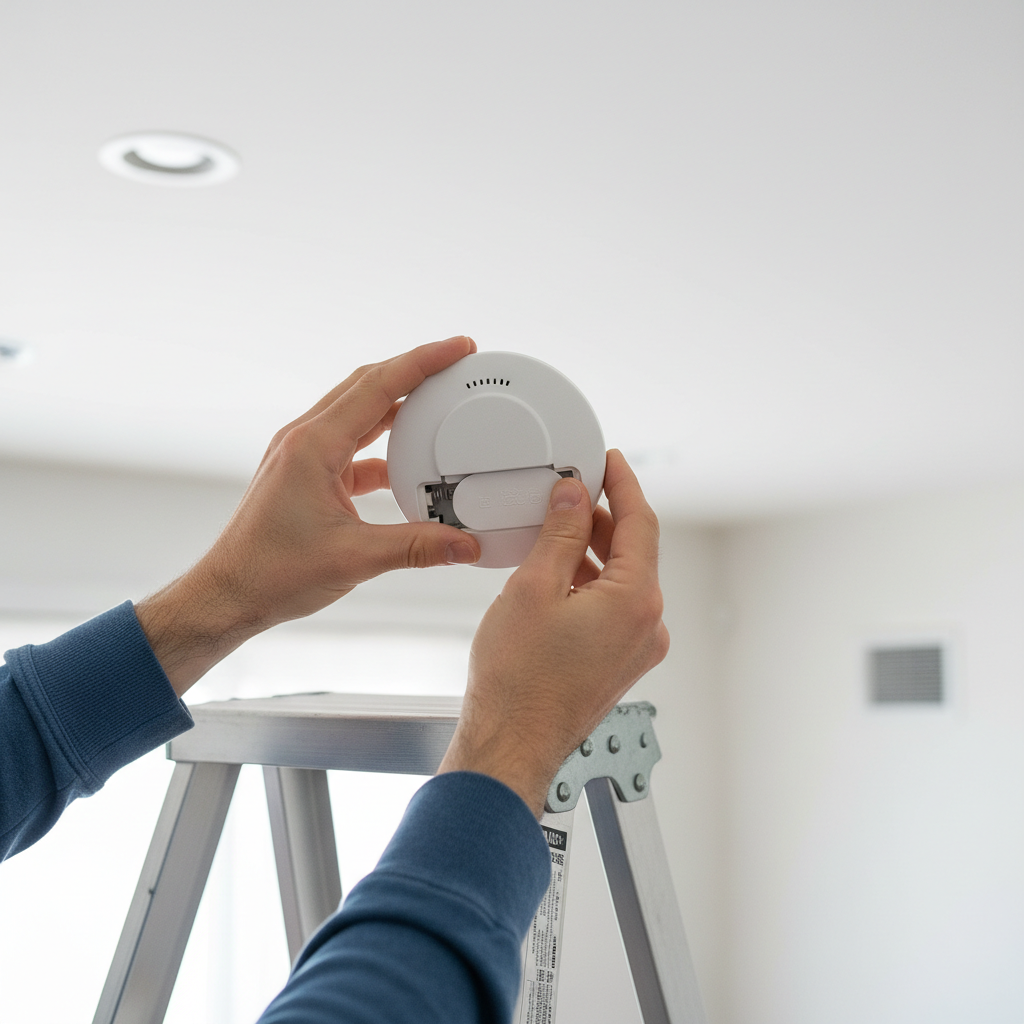
- Open the battery compartment: This is usually a slide-out drawer or a hinged cover on the back of the unit.
- Note the battery type: Most common are 9-volt, AA, or AAA. Some newer units use CR123A lithium batteries. Always replace with the exact type recommended by the manufacturer. Check the inside of the battery compartment or the unit's label.
- Remove the old battery: Disconnect it from its terminals.
- Insert the new battery: Ensure correct polarity (+ to + and - to -). Double-check the connections. A common mistake is not fully seating the battery, causing intermittent contact.
- Close the compartment: Make sure it clicks securely into place.
Electrical · Panel or service upgrade
| Project category | Electrical |
|---|---|
| Problem type | Panel or service upgrade |
| Trade required | Electrical |
| Urgency | Planned project |
| Safety risk | High safety risk |
| DIY suitability | Licensed pro only |
| Cost category | High cost |
| Typical timeline | Permit plus utility scheduling, commonly 2–6 weeks |
| Contractor type | Licensed electrician |
Repair option
Add a subpanel when the main service is adequate.
Replacement option
Full service upgrade with utility coordination and permits.
Common causes
- Obsolete or recalled panel brands
- Service capacity too small for added loads
- No room for required AFCI/GFCI breakers
Relevant tools:project cost estimatorcompare quotes
Published July 23, 2026Last updated August 17, 2026
Tools & materials you'll need
Affiliate linksAs an Amazon Associate FixlyGuide earns from qualifying purchases — at no extra cost to you. Prices and availability are accurate as of publication and subject to change.
Quick Answer
A smoke detector chirping every 30 seconds is almost universally a warning that its battery is running low. The simplest and most common fix is to replace the battery immediately with a new one. If the chirping persists after a battery change, the unit might need a thorough cleaning, be incorrectly installed, or have reached the end of its operational life, typically 7-10 years.
The Problem
That persistent, irritating chirp every 30 to 60 seconds from your smoke detector isn't a random malfunction; it's a deliberate, albeit annoying, design feature. It's the unit's way of telling you it needs attention, specifically that its power source is dwindling. Ignoring this warning isn't just irritating; it leaves your home vulnerable in the event of a fire. A dead or dying battery means a silent alarm when you need it most. While a low battery is the overwhelming culprit, sometimes the issue can be more subtle, like an accumulation of dust interfering with sensitive sensors, improper reseating after a battery change, or the unit signaling its own retirement.
How It Works
Modern smoke detectors, whether photoelectric, ionization or dual-sensor, rely on a constant power supply to monitor their environment. Most residential models are either battery-powered, hardwired with a battery backup, or use a sealed 10-year battery.
Battery-Powered Units: These run entirely on disposable batteries (usually 9-volt, AA, or AAA). When the battery voltage drops below a certain threshold, the internal circuitry triggers the low-battery chirp. This threshold is specifically designed to provide a warning period, often weeks to months, before the battery completely dies. The chirp sounds periodically to draw attention without being a constant, ear-splitting alarm.
Hardwired Units with Battery Backup: These detectors draw their primary power from your home's electrical system (typically 120V AC, often on a dedicated circuit). However, they require a backup battery (usually a 9-volt) to ensure they remain operational during power outages. If the AC power fails, the unit switches to battery power. The low-battery chirp in a hardwired unit indicates that its backup battery is low, regardless of whether the AC power is currently active. The AC power indicator light (usually green) confirms household current is flowing, but a flashing red light or chirp alongside indicates a battery or unit fault.
Sealed 10-Year Battery Units: These detectors come with a non-replaceable lithium battery designed to last the entire lifespan of the unit. The chirp from these models signifies that the detector itself, along with its sealed battery, is reaching its end-of-life and needs complete replacement. There's no battery to change; the whole unit is designed to be swapped out.
All smoke detectors use a sensing chamber. Ionization alarms have a small amount of radioactive material that ionizes the air between two electrodes, creating a small, constant current. Smoke particles disrupt this current, triggering the alarm. Photoelectric alarms use a light source and a photosensor. When smoke enters the chamber, it scatters the light into the sensor, triggering the alarm. Dust, insects, or even high humidity can sometimes falsely trigger or interfere with these sensors, leading to chirping or false alarms that aren't battery-related.
Step-by-Step Fix
1. Identify the Chirping Culprit — _Find the exact smoke detector making the noise.
It sounds obvious, but in homes with multiple detectors, the chirp can echo, making it hard to pinpoint. Stand directly under each detector to listen. If you have interconnected alarms, only the unit with the low battery will chirp; the other alarms will remain silent or flash their indicator light differently. Don't start removing random units.
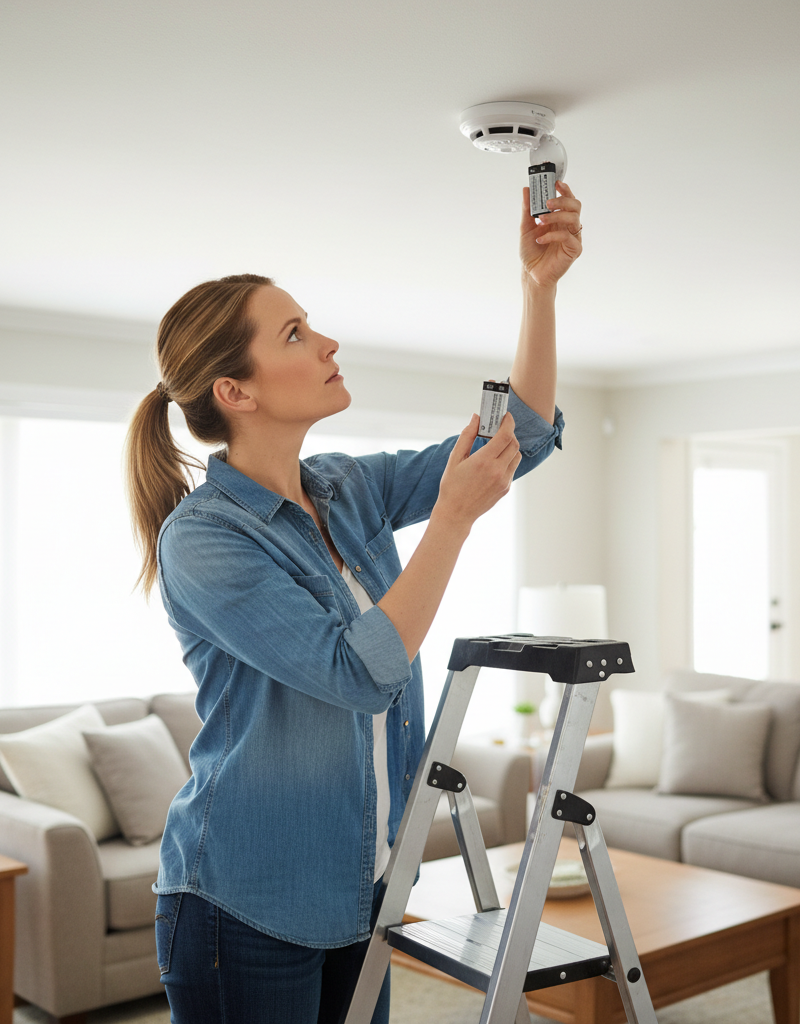
2. Safely Access the Detector — _Use a sturdy ladder or step stool.
Safety First: Choose a stable, secure ladder appropriate for the height. Never stand on chairs or wobbly objects. Have someone spot you if possible. For ceiling-mounted detectors, an A-frame ladder is usually best. If the detector is high on a vaulted ceiling, consider if you feel comfortable reaching it safely. If not, this might be a task for a professional, especially if you're not accustomed to working at heights. The goal is to reach the unit comfortably and securely without overstretching.
3. Remove the Detector from its Base — _Twist or unclip the unit.
Most smoke detectors are removed by gently twisting counter-clockwise about a quarter turn from their mounting bracket. Some older models might have small clips or tabs that need to be pressed or slid. Take careful note of how it's attached so you can reattach it correctly. For hardwired units, this will reveal the wiring harness connecting it to the ceiling box. Do NOT disconnect the wires unless you are changing the entire unit.
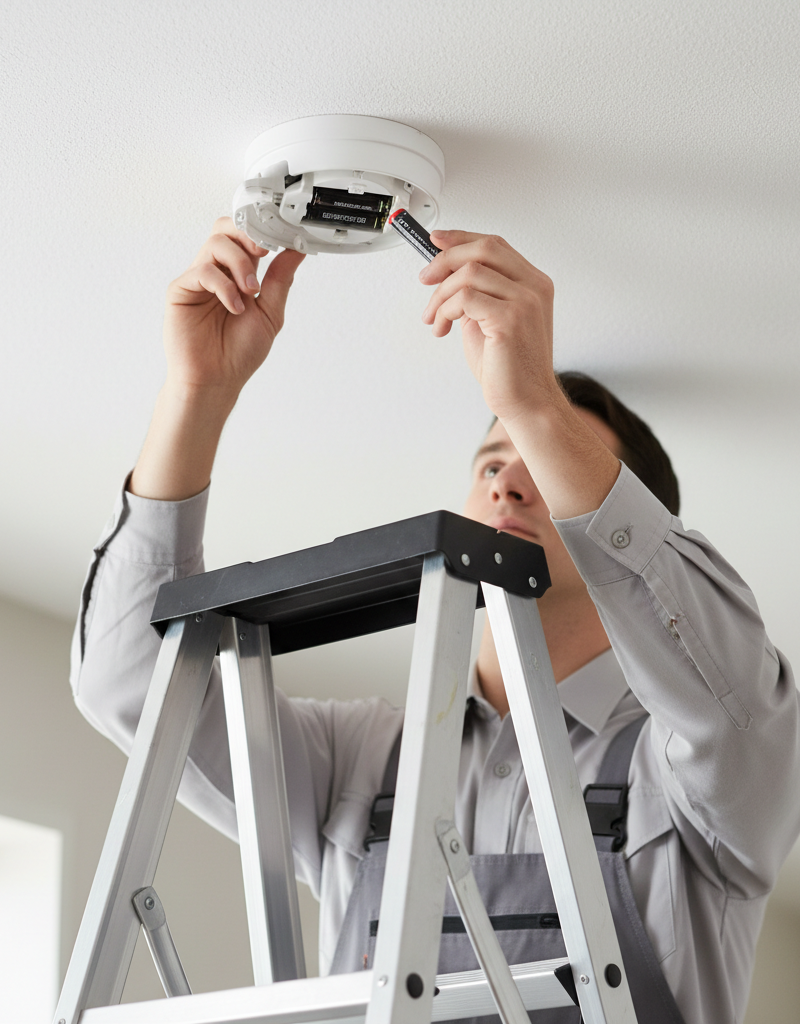
4. Change the Battery (If Applicable) — _Replace with a fresh, reputable brand battery.
- Open the battery compartment: This is usually a slide-out drawer or a hinged cover on the back of the unit.
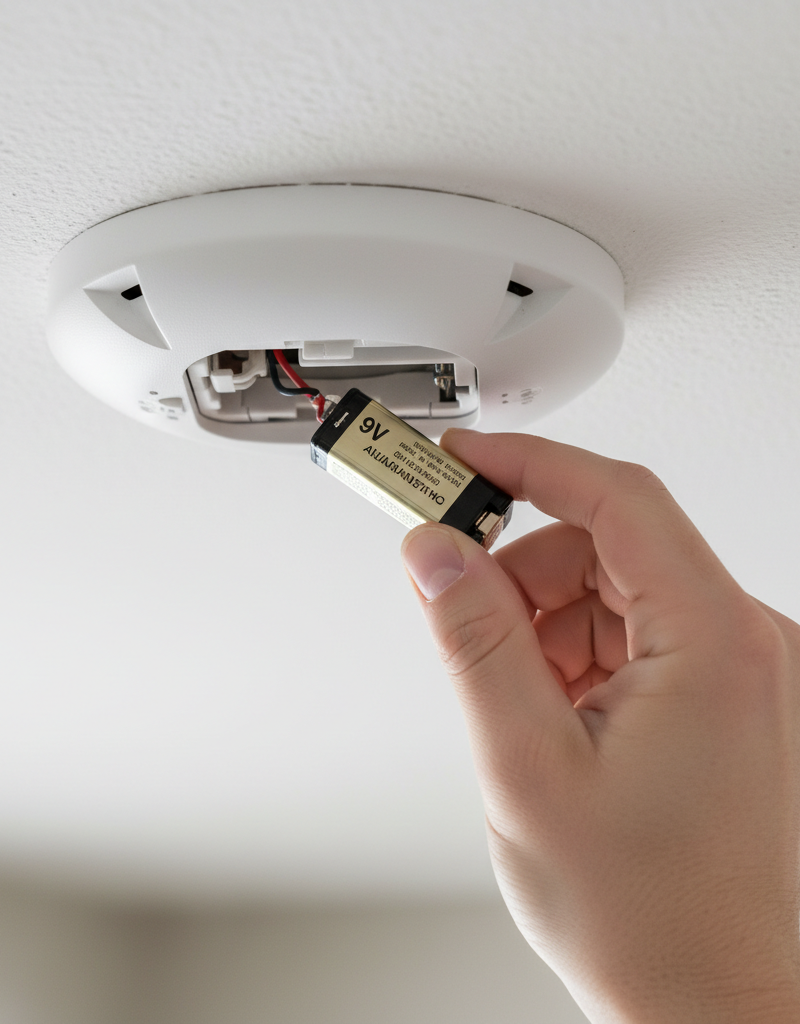
- Note the battery type: Most common are 9-volt, AA, or AAA. Some newer units use CR123A lithium batteries. Always replace with the exact type recommended by the manufacturer. Check the inside of the battery compartment or the unit's label.
- Remove the old battery: Disconnect it from its terminals.
- Insert the new battery: Ensure correct polarity (+ to + and - to -). Double-check the connections. A common mistake is not fully seating the battery, causing intermittent contact.
- Close the compartment: Make sure it clicks securely into place.
- Important: Even if a battery tests
Related Articles
Keep troubleshooting with these hand-picked guides from FixlyGuide:
- The Annoying — A smoke detector chirping every 30 seconds is almost always a low battery warning, but sometimes it signals other issues.
- The 30-Second Chirp: Why Most Homeowners Misdiagnose Their Smoke Detector (And The Real Fix) — A smoke detector chirping every 30 seconds almost always means a dying battery, but it can also signal an expired unit or a buildup of dust.
- The Annoying Chirp: 3 Hidden Reasons Your Smoke Detector Won't Shut Up — A chirping smoke detector every 30-60 seconds usually means a low battery, but other hidden issues like dusty sensors or power interruption…
- Is Your Smoke Detector Lying? The #1 Mistake Homeowners Make — Discover the crucial mistake most homeowners make with their smoke detectors and how to ensure your alarms are always ready to protect your…
- The Secret Reason Half Your Wall Outlet Dies (And It's Not What You Think) — Discover why only half of your electrical outlet might be working and how to diagnose and fix the common culprit, saving you from a costly…
- The 3 Missing Shingles: Why Ignoring Them Costs You $10,000 — Ignoring even a few missing roof shingles after a storm can lead to thousands in water damage and rot – here’s how to safely fix them yours…
Should you do this yourself?
Answer five quick questions before you start. Safety outranks savings every time.
Your experience with work like this
How high do you have to work?
Does the job involve any of these?
Will it need a permit?
Specialty tools
Free and instant. Educational guidance only — not a quote, inspection, or professional diagnosis.
What should this project cost?
Enter your project details for a realistic cost range before you call anyone.
Outlet and switch work usually $150–$400; panel upgrades commonly $1,800–$4,200.
- Regional adjustment
- National average
- Labor share (typical)
- ~$709
- Quotes to collect
- 3 written estimates
Educational estimate based on national averages — not a binding quote. Always confirm with written local estimates.
Frequently asked questions
Why is my smoke detector chirping every 30 seconds even after I changed the battery?+
If your smoke detector continues to chirp every 30 seconds after a battery change, the most common reasons are: the new battery isn't fully seated, the battery is dead or the wrong type, the detector needs cleaning, or the unit has reached its end-of-life (typically 7-10 years) and needs full replacement.
How do I stop my hardwired smoke detector from chirping?+
For a hardwired smoke detector, the chirp indicates a low backup battery. You'll need to replace the 9-volt or AA backup battery. Disconnect the unit from its mounting base by twisting it counter-clockwise, open the battery compartment, swap the battery, and reattach. If it still chirps, check the circuit breaker or clean the unit.
How often should I change the batteries in my smoke detector?+
For battery-powered and hardwired smoke detectors with backup batteries, you should replace the batteries at least once a year, even if they haven't chirped yet. A good practice is to do it when you change your clocks for daylight saving time. Test your alarms monthly.
How do I know if my smoke detector needs to be replaced completely?+
Most smoke detectors have a lifespan of 7-10 years from the date of manufacture. Look for a 'replace by' date on the back or side of the unit. If your detector is chirping, failing to test, or constantly giving false alarms beyond this age, it's time for a full replacement.
Can dust cause a smoke detector to chirp?+
Yes, dust or small insects can accumulate inside the sensing chamber of a smoke detector, interfering with its ability to detect smoke properly. This can sometimes lead to intermittent chirping or false alarms. Gently vacuuming or using compressed air to clean the vents and sensor is a good troubleshooting step after a battery change.
Discussion
Loading comments…