- If your system uses PVC: Max 50 PSI
- If your system uses poly pipe: Max 80 PSI
- Compressor requirement: Minimum 5 CFM @ 90 PSI, 20-gallon tank recommended.
Landscaping · Deck or fence project
| Project category | Landscaping |
|---|---|
| Problem type | Deck or fence project |
| Trade required | Landscaping |
| Urgency | Planned project |
| Safety risk | Moderate safety risk |
| DIY suitability | DIY for experienced homeowners |
| Cost category | High cost |
| Typical timeline | Most builds 3–10 days depending on size |
| Contractor type | Landscaping contractor |
Repair option
Replace failed boards, posts, and hardware; reseal the surface.
Replacement option
Rebuild when framing or the ledger connection is unsafe.
Common causes
- Rot at posts and ledger
- Storm damage
- Adding outdoor living space
Relevant tools:home improvement material pricesproject cost estimator
Published May 17, 2026Last updated May 17, 2026
Tools & materials you'll need
Affiliate linksAs an Amazon Associate FixlyGuide earns from qualifying purchases — at no extra cost to you. Prices and availability are accurate as of publication and subject to change.
Quick Answer
Many homeowners believe simply shutting off the water supply and draining visible lines is enough to winterize their sprinkler system. The critical oversight is often the backflow preventer and ensuring every drop of water is expelled from the entire system. Residual water in pipes, valves, and particularly the backflow assembly, will freeze, expand, and inevitably cause cracks and burst components, leading to expensive repairs come spring.
The Problem
Winterizing a sprinkler system isn't just about preventing your pipes from bursting; it's about safeguarding your entire irrigation investment against the destructive power of freezing water. Each autumn, as temperatures drop, any water left within the intricate network of your sprinkler system – from the main supply line to the smallest sprinkler head – becomes a ticking time bomb. When water freezes, it expands by approximately 9%. This seemingly small expansion generates immense pressure, easily exceeding the structural integrity of most plumbing components, including PVC pipes, brass valves, and particularly the sensitive internal mechanisms of backflow preventers. The result? Cracked pipes, shattered sprinkler heads, compromised valves, and a backflow preventer that could cost hundreds to thousands to replace. The problem isn't just inconvenience; it's significant financial outlay and potential water damage if a compromised system goes unnoticed upon spring startup.
How It Works
An irrigation system is essentially a network of pipes, valves, and sprinkler heads designed to deliver water efficiently to your lawn and garden. Water typically enters the system from your main household supply line, passing through a backflow preventer. This crucial device stops contaminated irrigation water from flowing back into your drinking water supply. From there, the water branches off through various zones, controlled by automatic valves, eventually reaching the sprinkler heads.
During winterization, the goal is to evacuate all water from this entire system. There are typically three methods: manual drain, automatic drain, and sprinkler blowouts using compressed air. Manual drain systems have drain valves at the lowest points that are opened to allow gravity to remove water. Automatic drain systems incorporate check valves that open when the pressure drops, allowing water to drain. However, neither gravity-based method is foolproof, as subtle dips in lines or persistent water pockets can remain. This is where the compressed air 'blowout' method excels. A large volume of air pushed through the system forces water out of every pipe, valve, and sprinkler head, ensuring complete dryness. The backflow preventer, being a complex assembly of check valves and relief valves, is particularly susceptible to freeze damage and requires specific manipulation to drain fully, even with a blowout.
Step-by-Step Fix
Safety Note: Working with compressed air can be dangerous. Always wear ANSI-approved eye protection. Never stand over sprinkler heads during a blowout, as flying debris or components can cause injury. Ensure your air compressor's pressure regulator is working correctly and set to the recommended PSI. If you're unsure, or prefer not to use compressed air, a professional can perform this service safely.
1. Shut Off the Main Water Supply – Locate and disable the system's water source
Your sprinkler system has a dedicated shut-off valve, usually located near your main water meter or where the irrigation line branches off from your house's main water supply. Turn this valve clockwise until it is completely closed. This prevents any more water from entering the system during the winterization process. Confirm the shut-off by briefly opening a drain valve further down the line to ensure no water flows.
2. Drain All Water from the Backflow Preventer – The most critical step to avoid thousands in repairs
Your backflow preventer is the most vulnerable component. Most residential systems use either a Pressure Vacuum Breaker (PVB) or a Reduced Pressure Zone (RPZ) device. Consult your system's manual if unsure. First, close the shut-off valve on the supply side of the backflow preventer (before the backflow device). Then, open the small test cocks (tiny valves, usually with a flathead slot) on the backflow preventer by turning them 90 degrees until they face upward or downward, allowing water to drain. Fully open the main shut-off valve on the discharge side (after the backflow device) as well. Leave all valves and test cocks open at a 45-degree angle for the winter to allow any condensation to escape. If using the blowout method, ensure the backflow still drains initially, then open its test cocks just before starting the air compressor to assist in expelling all water.
3. Connect the Air Compressor (Blowout Method Only) – Prepare for a complete water evacuation
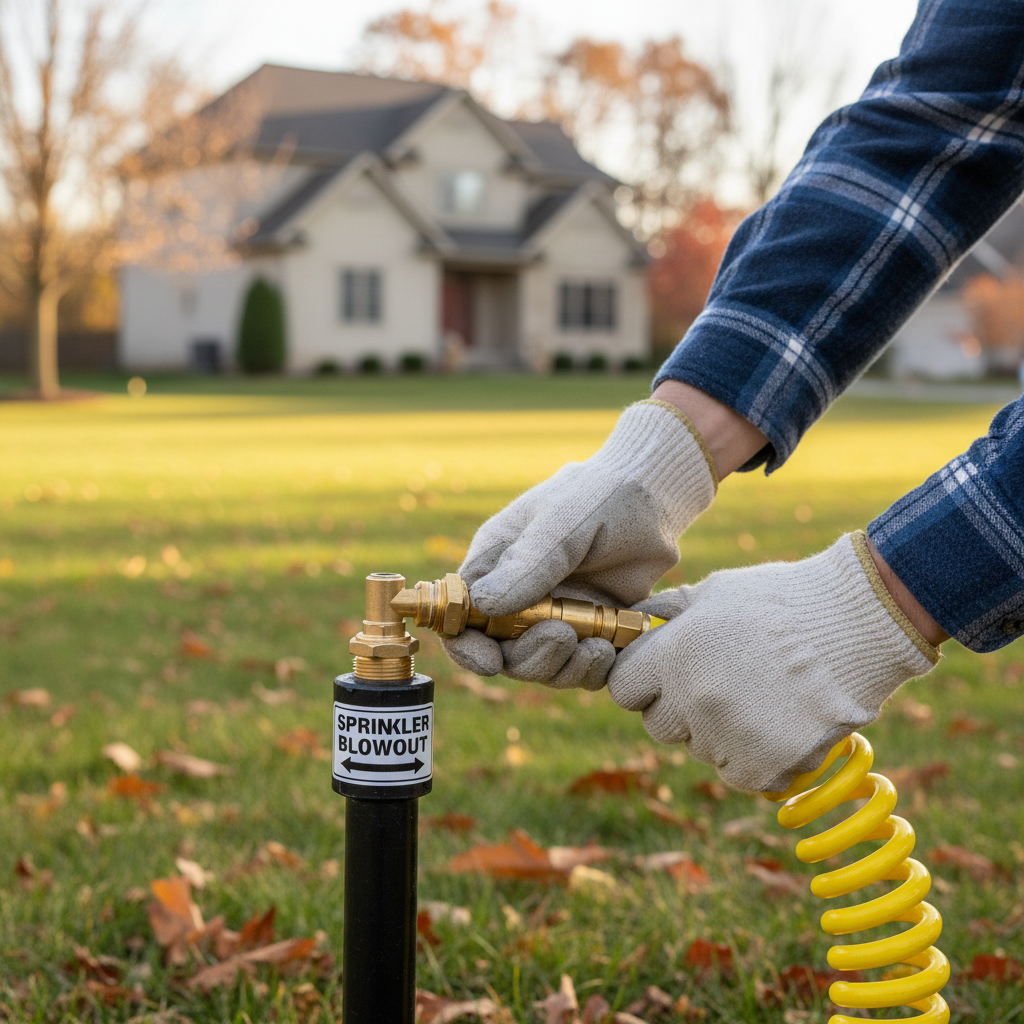
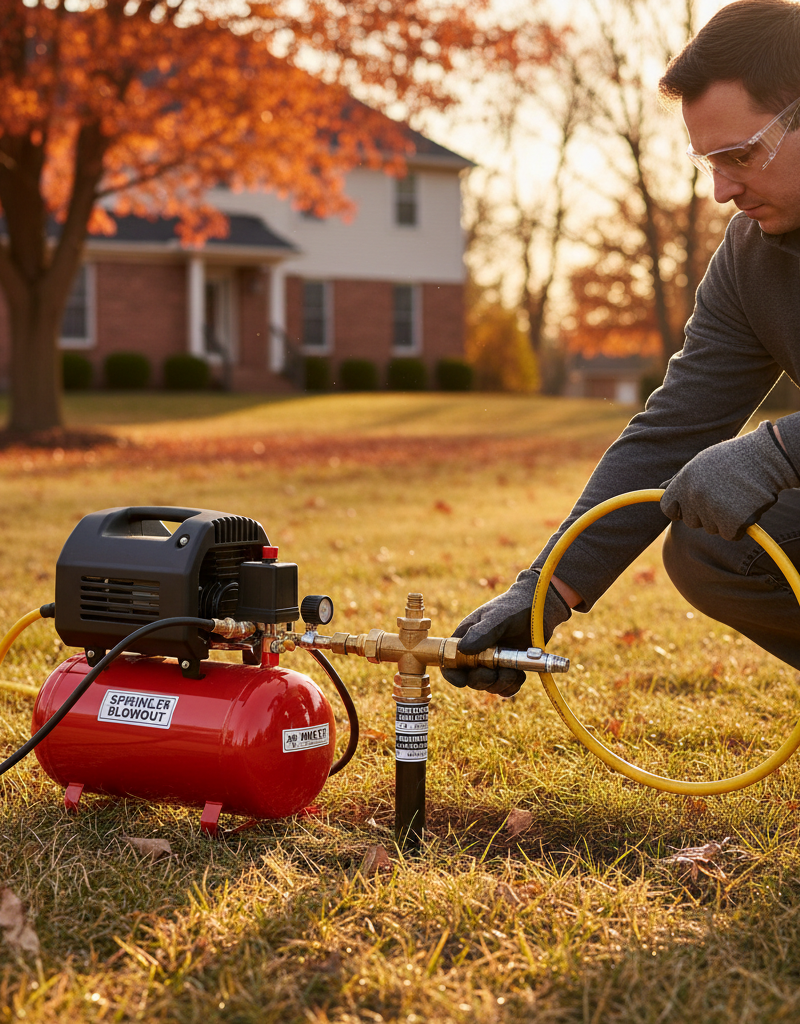
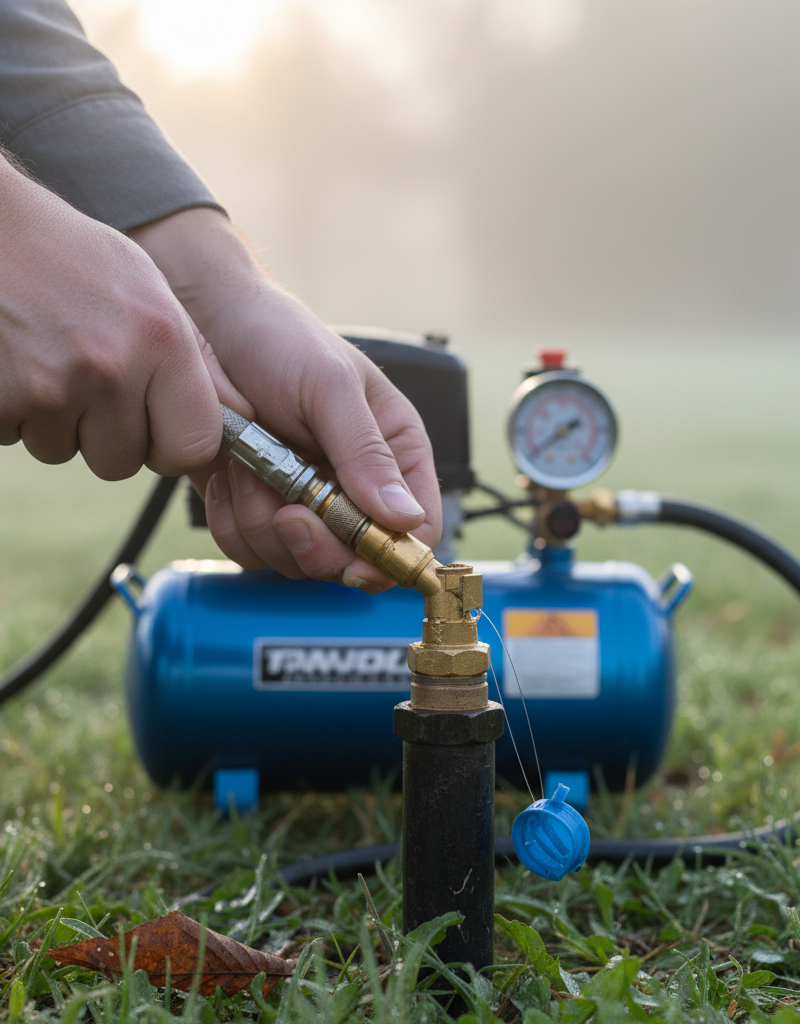
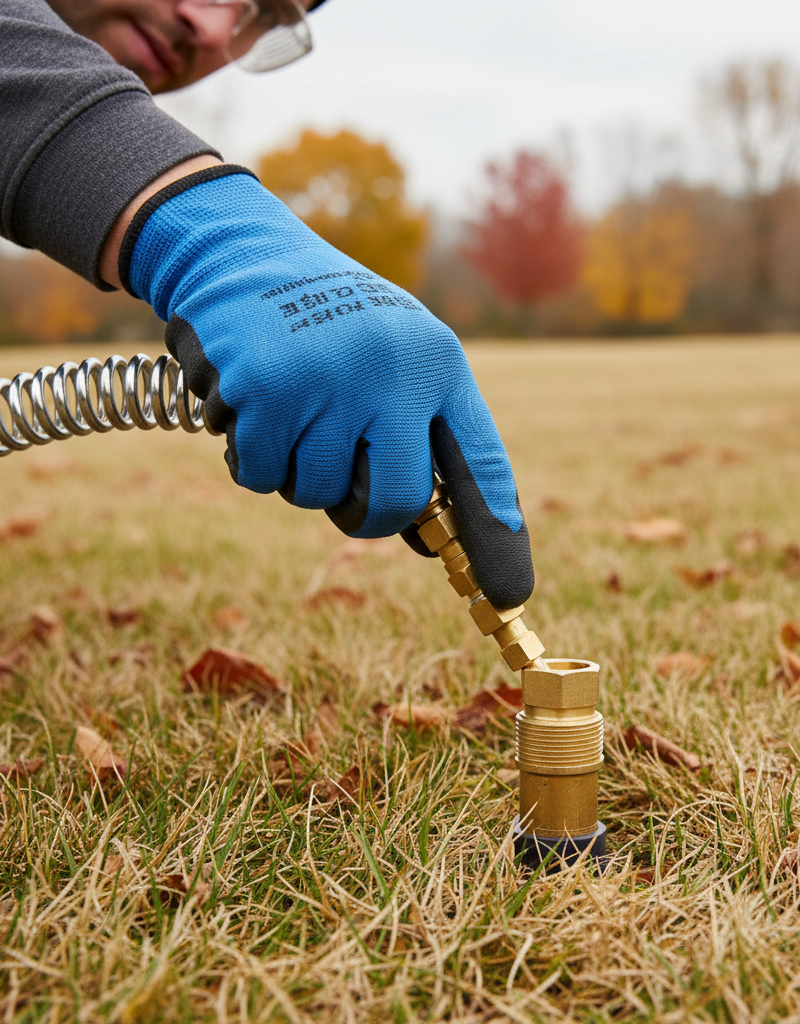
If you're using an air compressor (highly recommended for complete drainage), locate the blow-out port on your sprinkler system. This is typically a threaded cap or plug near the main shut-off valve or backflow preventer. Remove the cap. Attach your quick-connect air compressor fitting to this port. Use a high-volume, oil-lubricated compressor (minimum 5 CFM at 90 PSI) with an air tank of at least 20 gallons. Never exceed 50 PSI for PVC systems or 80 PSI for poly pipe systems. Start at a lower PSI (20-30) and gradually increase if needed, never exceeding the pipe's rated pressure. Too much pressure can damage pipes and components.
- If your system uses PVC: Max 50 PSI
- If your system uses poly pipe: Max 80 PSI
- Compressor requirement: Minimum 5 CFM @ 90 PSI, 20-gallon tank recommended.
4. Open the Zone Valves, One by One – Systematic purge of all pipe segments
Assuming you have a multi-zone system, activate one zone at a time from your irrigation controller. This will open the solenoid valve for that specific zone, allowing compressed air to flow through it. Start with the zone furthest from the compressor connection. Allow the air to blow until only mist or air emerges from the sprinkler heads in that zone, indicating all water has been expelled. This typically takes 1-3 minutes per zone. Watch for debris or large bursts of water at the beginning, then for the steady stream of mist.
- Pro Tip: If water continues to stream, check for a lower-elevation drain or a partially open valve elsewhere.
5. Repeat for All Zones – Thorough drainage for every part of the system
Once the first zone is clear, close it on the controller, then move to the next zone, repeating the process. Continue this systematic purging for every single zone in your system. It's crucial not to rush this step. If a zone still has standing water, even a small amount, it's vulnerable to freezing. After cycling through all zones, go back and cycle through them one more time to ensure any residual water or condensation is removed. This double-check is inexpensive insurance.
6. Bleed Compressor and Disconnect – Safely remove equipment
Turn off your air compressor. Before disconnecting, gently release any remaining air pressure from the system and the compressor hose. Carefully disconnect the air compressor from the blow-out port. Replace the blow-out port cap or plug securely. Ensure it's hand-tight, then a quarter turn with a wrench to prevent leaks in spring.
7. Power Down the Controller – Protect electronics during the off-season
Switch your irrigation controller to the
Related Articles
Keep troubleshooting with these hand-picked guides from FixlyGuide:
- The #1 Sprinkler Winterization Mistake That Leads to $1,000s in Damage — Discover the crucial mistake many homeowners make when winterizing sprinklers and how to properly blow out your system to prevent costly fr…
- The #1 Sprinkler Winterizing Mistake That Leads to $1,000s in Damage — Learn how to properly winterize your sprinkler system and avoid costly damage from freezing temperatures with this comprehensive guide.
- The #1 Sprinkler Winterization Mistake That Leads to $1,000s in Damage — Learn the critical step most homeowners miss when winterizing their sprinkler system to avoid costly freeze damage and burst pipes.
- The #1 Sprinkler Winterizing Mistake That Leads to $1,000s in Damage — Discover the crucial mistake homeowners make when winterizing sprinkler systems and how to avoid costly freeze damage with a simple, effect…
- The #1 Mistake Homeowners Make Winterizing Sprinklers (And How to Avoid Burst Pipes) — Discover the crucial mistake homeowners make when winterizing sprinkler systems and learn the correct way to prevent costly burst pipes thi…
- The 5-Minute Trick to Restore Your Kitchen Sink Sprayer's Lost Pressure — Restore your kitchen sink sprayer's low pressure with a quick, simple trick that often takes less than five minutes and requires no special…
Should you do this yourself?
Answer five quick questions before you start. Safety outranks savings every time.
Your experience with work like this
How high do you have to work?
Does the job involve any of these?
Will it need a permit?
Specialty tools
Free and instant. Educational guidance only — not a quote, inspection, or professional diagnosis.
Questions to ask before you sign
Ask every contractor the same questions and the cheapest bid stops looking cheapest. Check them off as you go — your progress is saved on this device.
Free, no signup. Bring this to every walkthrough so you compare bids on the same terms.
Handle this before it gets worse
First steps that limit damage, then a way to reach a qualified pro.
- Emergency repair checklistThe first steps that limit damage before a pro arrives.Open
- Get local estimatesSend one request and compare written estimates from vetted pros.Open
- Estimate this projectGet a cost range for your scope and ZIP before you call anyone.Open
Free, no signup required. Estimates are educational guidance, not a quote or an inspection.
Frequently asked questions
How do plumbers winterize irrigation systems?+
Professional plumbers typically use a large air compressor to perform a 'blowout' method, forcing all water out of the system with compressed air. They also ensure the backflow preventer is completely drained and left in a proper configuration to prevent freeze damage.
Can I winterize my sprinkler system without an air compressor?+
Yes, if your system has manual or automatic drain valves. However, gravity drainage is often incomplete, leaving residual water that can freeze. The blowout method with an air compressor offers the most thorough drainage and is highly recommended where freezing temperatures occur.
How cold does it have to be to burst sprinkler pipes?+
Sprinkler pipes can burst as soon as temperatures consistently fall below 32°F (0°C) for several hours. Sustained freezing temperatures allow water inside the pipes to turn to ice, expand, and fracture the pipe material.
Do I need to turn off the water to my backflow preventer?+
Yes, absolutely. The backflow preventer itself must be drained of all water and left with its test cocks and main valves open (at 45-degree angles) to prevent freeze damage. This is a critical step often missed by DIYers.
What happens if I don't winterize my sprinkler system?+
If you don't winterize your sprinkler system, any water remaining in the pipes, valves, and sprinkler heads will freeze and expand when temperatures drop below freezing. This expansion will likely cause pipes to crack, valves to fail, and sprinkler heads to break, leading to extensive and costly repairs in the spring.
Discussion
Loading comments…