- The 1 Sprinkler Winterization Mistake That Leads to $1,000s in Damage — Learn the critical step most homeowners miss when winterizing their sprinkler system to avoid costly freeze damage and burst pipes.
- The 1 Sprinkler Winterization Mistake That Leads to $1,000s in Damage — Discover the crucial mistake many homeowners make when winterizing sprinklers and how to properly blow out your system to prevent costly fr…
- The 1 Sprinkler Winterization Mistake That Leads to $1,000s in Damage — Avoid costly repairs by learning the most common oversight homeowners make when winterizing their sprinkler system.
- The 1 Mistake Homeowners Make Winterizing Sprinklers (And How to Avoid Burst Pipes) — Discover the crucial mistake homeowners make when winterizing sprinkler systems and learn the correct way to prevent costly burst pipes thi…
- The 1 Sprinkler Winterizing Mistake That Leads to $1,000s in Damage — Learn how to properly winterize your sprinkler system and avoid costly damage from freezing temperatures with this comprehensive guide.
Landscaping · Deck or fence project
| Project category | Landscaping |
|---|---|
| Problem type | Deck or fence project |
| Trade required | Landscaping |
| Urgency | Planned project |
| Safety risk | Moderate safety risk |
| DIY suitability | DIY for experienced homeowners |
| Cost category | High cost |
| Typical timeline | Most builds 3–10 days depending on size |
| Contractor type | Landscaping contractor |
Repair option
Replace failed boards, posts, and hardware; reseal the surface.
Replacement option
Rebuild when framing or the ledger connection is unsafe.
Common causes
- Rot at posts and ledger
- Storm damage
- Adding outdoor living space
Relevant tools:home improvement material pricesproject cost estimator
Published May 25, 2026Last updated August 18, 2026
Tools & materials you'll need
Affiliate links- AmazonBlowout Adaptor1 · To connect compressor to sprinkler system winterization port
As an Amazon Associate FixlyGuide earns from qualifying purchases — at no extra cost to you. Prices and availability are accurate as of publication and subject to change.
Quick Answer
The quick answer to avoiding thousands in sprinkler damage is to ensure all water is completely purged from your system using an air compressor. Even a small amount of residual water can freeze, expand, and crack pipes, sprinkler heads, and backflow preventers, leading to expensive repairs come spring. The primary mistake homeowners make is not using adequate air pressure, not purging zones long enough, or neglecting the backflow preventer, leaving sensitive components vulnerable to frost.
The Problem
As temperatures drop below freezing, any water remaining in your sprinkler system's pipes, valves, and sprinkler heads will turn to ice. Water expands by about 9% when it freezes, and this seemingly small expansion generates enormous pressure—enough force to easily crack PVC pipes, brass valves, and sensitive backflow prevention devices. The damage isn't immediately visible; it lurks beneath the ground until spring, when you reactivate your system only to discover leaks, geysers, and non-functional zones. Repairing a compromised sprinkler system can involve extensive digging, part replacement (which often requires professional-grade specialty tools), and landscaping restoration, easily costing hundreds to thousands of dollars, depending on the extent of the damage.
The critical problem isn't just if you winterize, but how effectively. Many homeowners attempt to drain their systems by simply opening drain valves or relying on manual draining, which rarely removes all the water. The most effective and safest method for most residential systems is the 'blowout' method, using an air compressor to force all water out. The mistake is often in the details: insufficient air pressure, improper compressor setup, or not understanding the specific sequence and duration for each zone.
How It Works
An automatic sprinkler system is a network of pipes, valves, and spray heads designed to deliver water to your lawn and garden. Water from your home's main supply line is routed through a backflow preventer—a critical device that stops irrigation water from siphoning back into your potable drinking water. From there, the water flows to manifold valves, which control individual watering zones. Each zone consists of underground PVC or polyethylene (PEX) pipes leading to a series of sprinkler heads.
When you winterize via the blowout method, the goal is to introduce compressed air into the main line of the irrigation system, past the backflow preventer, to push all standing water out through the sprinkler heads. The process relies on the principle of air pressure being greater than the static water pressure in the pipes, effectively 'blowing' the water out. The air compressor is connected to a designated point in the system, usually a winterization port or a removed drain plug on the backflow preventer. Once connected, each zone is systematically opened, allowing compressed air to travel through the zone's pipes and expel water from all attached sprinkler heads. This systematic approach ensures that even low spots and residual water trapped by gravity or pipe bends are cleared. The air movement creates a turbulent flow that efficiently pushes the water forward and out. It's crucial to use the correct air pressure; too little won't clear the system, while too much can damage components.
Step-by-Step Fix
Before you begin, check your local forecasts. You'll want to winterize your system before the first hard freeze (typically when temperatures consistently drop below 32°F / 0°C at night). Aim for a day when the temperature is above 40°F (5°C) to make the job more comfortable and minimize risk to plastic components.
Safety Note: Always wear eye protection when working with compressed air. High-pressure air can cause serious injury if directed improperly or if a component unexpectedly fails. Never stand directly over a sprinkler head when blowing out a zone.
1. Shut Off the Main Water Supply—Preventing continuous flow
Locate the main shut-off valve for your irrigation system. This is typically found near your main water meter or where the irrigation line branches off from your house's water supply. Turn it completely off. Leaving it on would continuously feed water into the system, making the blowout ineffective.
- If your valve is old or difficult to turn: Apply a penetrating oil and let it sit for a few minutes. If it's still stuck, do not force it, as you might break the valve. In this scenario, you may need a plumber.
2. Drain the Backflow Preventer—Protecting a critical component
Most residential systems have a backflow preventer located above ground. This device is highly susceptible to freeze damage. Find the two test cocks on the backflow preventer. Using a flathead screwdriver, open them slowly. Water will drain out. Then, open the main shut-off valves on the backflow preventer itself (usually a quarter-turn ball valve) and leave them at a 45-degree angle to allow for drainage and expansion space. If your backflow preventer has a dedicated drain port, open that as well.
- Never leave backflow preventer valves fully open or fully closed after draining. The 45-degree angle ensures no water can pool and provides room for any remaining moisture to expand without causing damage.
3. Connect the Air Compressor—Setting up for the blowout
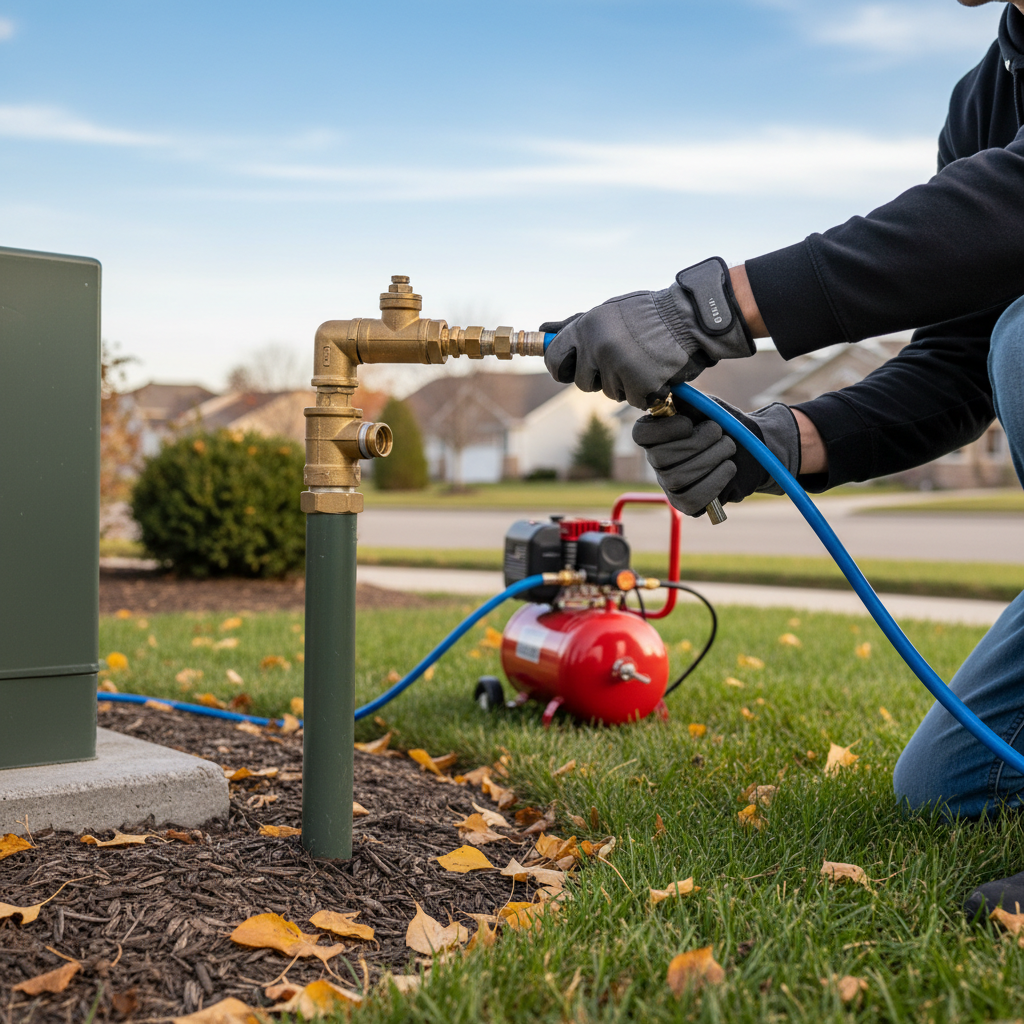
Your system should have a dedicated winterization port (often a brass fitting with a cap) located after the backflow preventer. Remove the cap and attach your air compressor's hose adapter to this port. Ensure a tight, secure connection. If you don't have a dedicated port, you may need to attach the adapter to a drain valve or remove a sprinkler head at the highest point of your system, though a dedicated port is always preferred.
- Regarding compressor size: Use an air compressor with a CFM (cubic feet per minute) rating of 8-10 CFM and a tank size of at least 8-10 gallons for most residential systems. A smaller compressor may not provide enough sustained airflow.
- Regarding air pressure: Set your compressor's regulator to no more than 50 PSI for PVC systems and no more than 80 PSI for polyethylene (black flexible pipe) systems. Exceeding these pressures can damage pipes and components, especially older systems.
4. Systematically Blow Out Each Zone—The core of the process
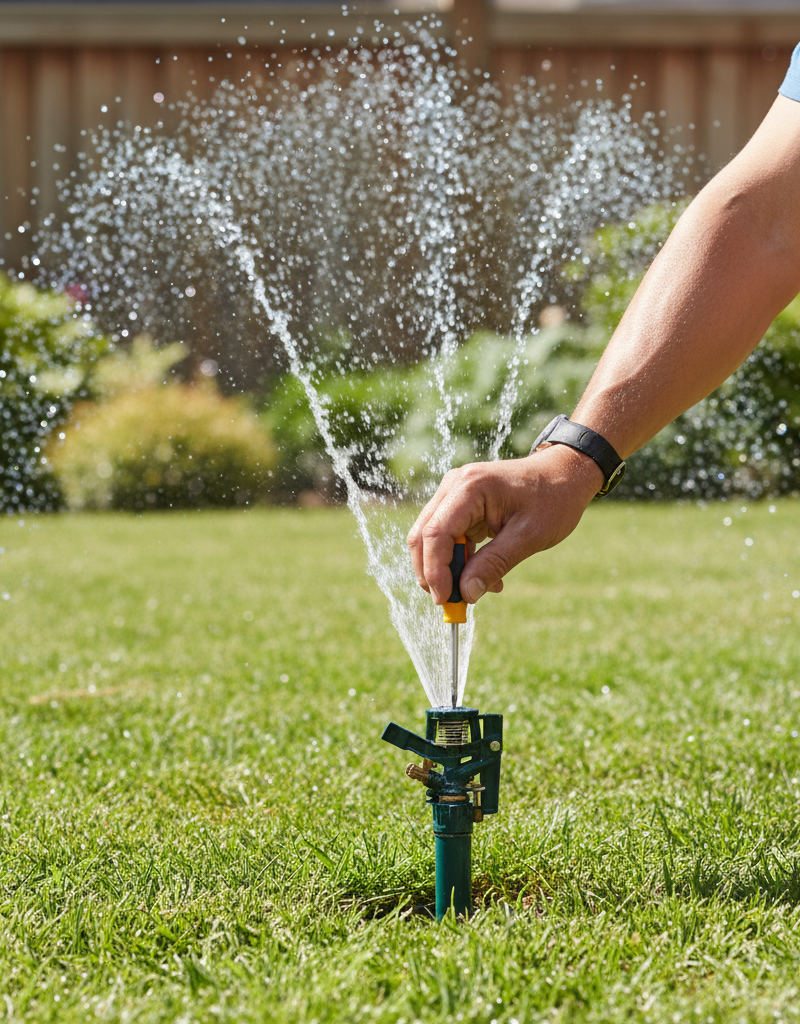
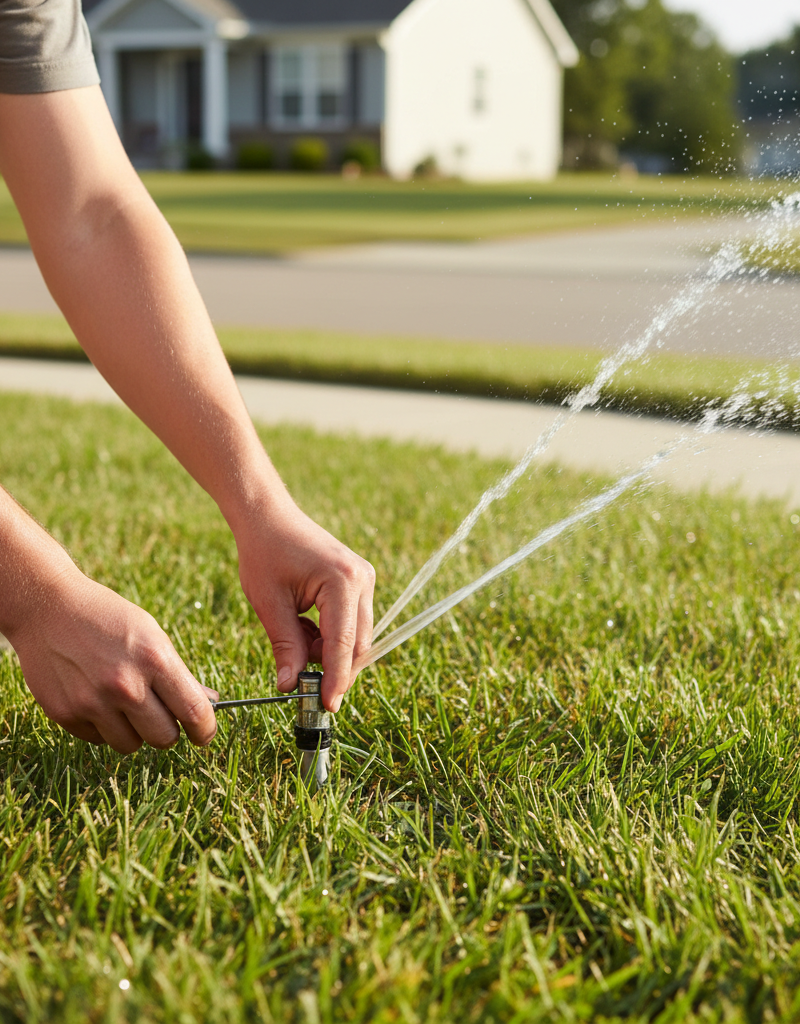
Go to your sprinkler system's controller and manually activate the zone furthest from the compressor connection point first. This helps air push water through the maximum length of pipe. Stand near the active zone, observing the sprinkler heads. Initially, you'll see a mix of water and air spraying out. Continue blowing air until only a fine mist or clear air comes out of all heads in that zone for approximately 1-2 minutes. Once a zone is clear, turn it off at the controller before moving to the next zone.
- Important: Never blow out a zone for too long after water stops coming out. Running dry air through the system for extended periods can generate heat and damage plastic components and seals within the sprinkler heads.
- If a few drops of water persist: It's generally acceptable. The goal is to remove the bulk of the water to prevent catastrophic freezing. A few lingering drops in a large pipe won't cause significant damage.
5. Repeat for All Zones—Thoroughness is key
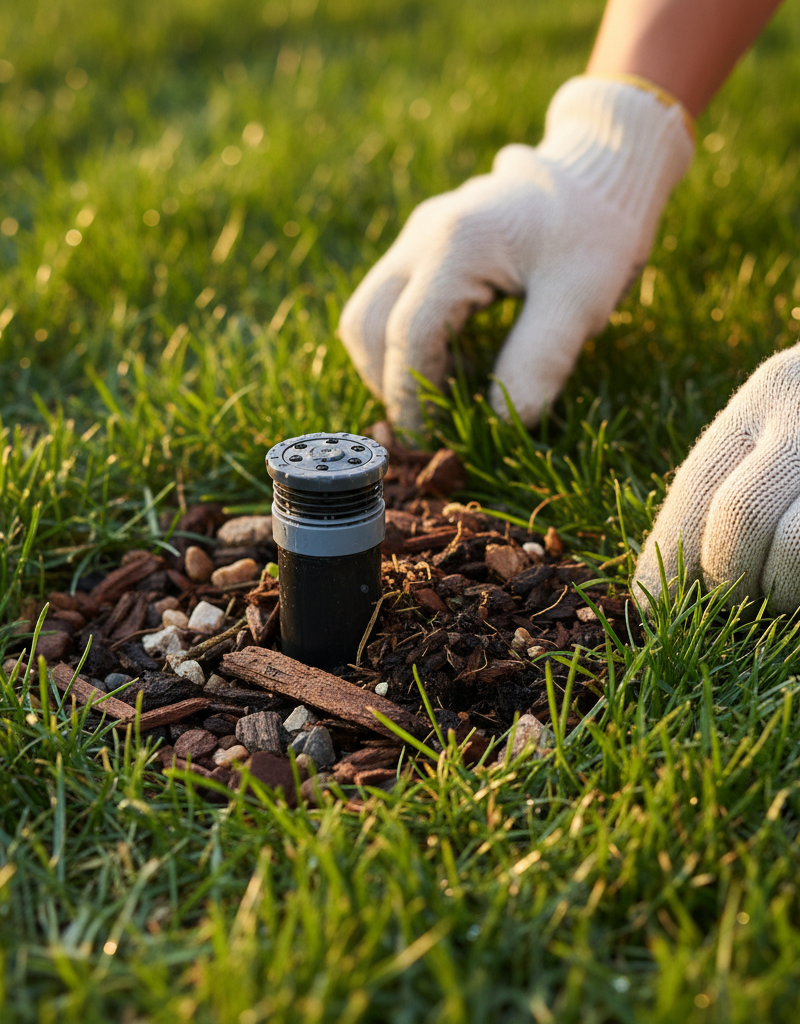
Continue the process, activating and blowing out each remaining zone one by one. Always fully clear one zone before moving to the next. Pay close attention to rotary heads or pop-up sprayers, extending fully and retracting cleanly, ensuring they are clear of water.
- Don't rush. Take your time with each zone to ensure thorough clearing. Rushing is a common mistake that leads to incomplete winterization.
6. Disconnect the Compressor and De-Pressurize—Finishing up the blowout
Once all zones are blown out, turn off the air compressor and disconnect the hose from the winterization port. Slowly open a test cock or drain valve on your backflow preventer again to release any residual air pressure in the main line. Replace any caps or plugs you removed.
7. Power Down the Controller—Preventing accidental activation
Go back to your sprinkler system's main controller. Turn it off or put it in
Related Articles
Keep troubleshooting with these hand-picked guides from FixlyGuide:
- The #1 Sprinkler Winterization Mistake That Leads to $1,000s in Damage — Learn the critical step most homeowners miss when winterizing their sprinkler system to avoid costly freeze damage and burst pipes.
- The #1 Sprinkler Winterization Mistake That Leads to $1,000s in Damage — Discover the crucial mistake many homeowners make when winterizing sprinklers and how to properly blow out your system to prevent costly fr…
- The #1 Sprinkler Winterization Mistake That Leads to $1,000s in Damage — Avoid costly repairs by learning the most common oversight homeowners make when winterizing their sprinkler system.
- The #1 Mistake Homeowners Make Winterizing Sprinklers (And How to Avoid Burst Pipes) — Discover the crucial mistake homeowners make when winterizing sprinkler systems and learn the correct way to prevent costly burst pipes thi…
- The #1 Sprinkler Winterizing Mistake That Leads to $1,000s in Damage — Learn how to properly winterize your sprinkler system and avoid costly damage from freezing temperatures with this comprehensive guide.
- The $5 Secret to Silencing That Annoying Dripping Faucet (Single-Handle Fix) — Stop a dripping single-handle faucet with a simple and inexpensive DIY fix by replacing a worn-out o-ring or washer.
Should you do this yourself?
Answer five quick questions before you start. Safety outranks savings every time.
Your experience with work like this
How high do you have to work?
Does the job involve any of these?
Will it need a permit?
Specialty tools
Free and instant. Educational guidance only — not a quote, inspection, or professional diagnosis.
Questions to ask before you sign
Ask every contractor the same questions and the cheapest bid stops looking cheapest. Check them off as you go — your progress is saved on this device.
Free, no signup. Bring this to every walkthrough so you compare bids on the same terms.
What should this project cost?
Enter your project details for a realistic cost range before you call anyone.
Cost depends heavily on which system turns out to be the source.
- Regional adjustment
- National average
- Labor share (typical)
- ~$1,620
- Quotes to collect
- 3 written estimates
Educational estimate based on national averages — not a binding quote. Always confirm with written local estimates.
Handle this before it gets worse
First steps that limit damage, then a way to reach a qualified pro.
- Emergency repair checklistThe first steps that limit damage before a pro arrives.Open
- Get local estimatesSend one request and compare written estimates from vetted pros.Open
- Estimate this projectGet a cost range for your scope and ZIP before you call anyone.Open
Free, no signup required. Estimates are educational guidance, not a quote or an inspection.
Frequently asked questions
How much PSI should I use to blow out my sprinkler system?+
For PVC piping, set your air compressor to no more than 50 PSI. If your system uses polyethylene (PEX) piping, you can go up to 80 PSI. Always avoid exceeding these pressures to prevent damage to your system components.
Discussion
Loading comments…