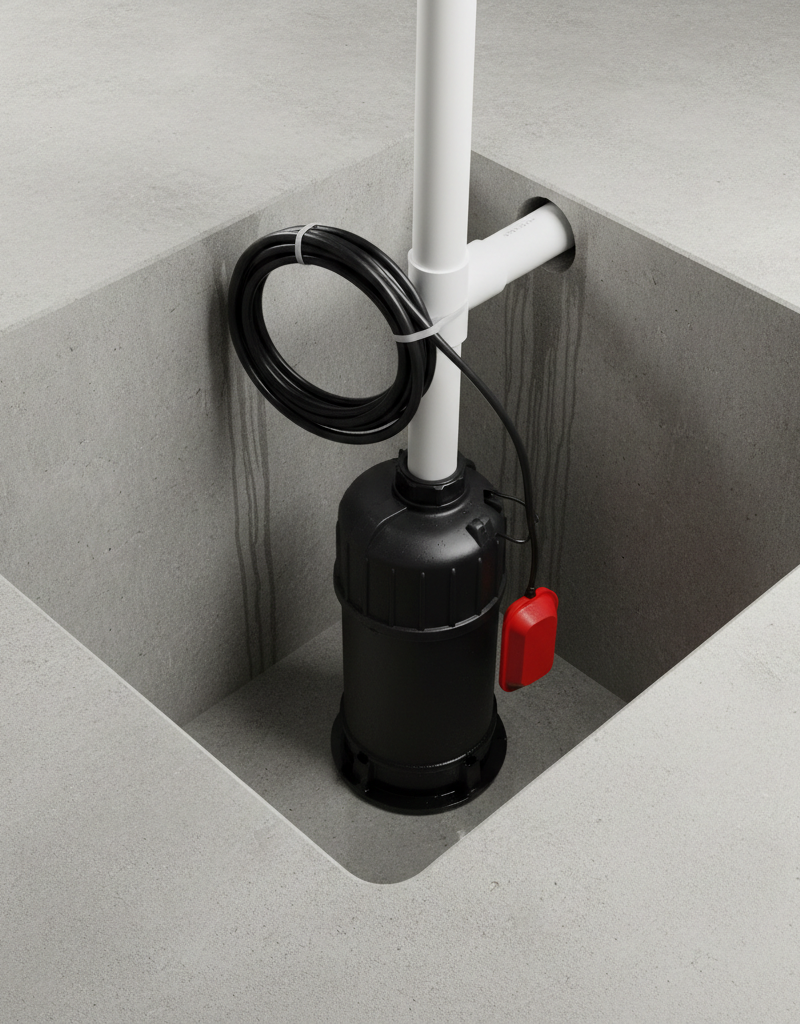
- Stuck Float Switch: Debris, corrosion, or old age can cause the float to get stuck, preventing the pump from activating. This is the most common cause of failure.
- Clogged Intake/Impeller: Sediment, leaves, or other debris can block the pump's intake screen or clog the impeller, reducing its ability to move water.
- Faulty Check Valve: If the check valve fails to close, water can flow back into the pit, causing the pump to short-cycle and wear out prematurely.
- Power Failure: Obviously, if there's no power, the pump won't run. This is why battery backups are so important.
- Motor Burnout: Old age, continuous short-cycling, or running dry can cause the pump's motor to overheat and fail.
General remodeling · Renovation planning
| Project category | General remodeling |
|---|---|
| Problem type | Renovation planning |
| Trade required | General contracting |
| Urgency | Planned project |
| Safety risk | Low safety risk |
| DIY suitability | Pro recommended |
| Cost category | Major investment |
| Typical timeline | Design and permitting often 2–4 months before work starts |
| Contractor type | General contractor |
Repair option
Phase the work and fix the building envelope first.
Replacement option
Full renovation with permits, design, and a general contractor.
Common causes
- Space no longer fits how the household lives
- Resale preparation
- Deferred maintenance stacking up
Relevant tools:project cost estimatorcompare quoteshome improvement material prices
Published June 30, 2026Last updated August 17, 2026
Tools & materials you'll need
Affiliate links- AmazonClean water3-5 gallons
As an Amazon Associate FixlyGuide earns from qualifying purchases — at no extra cost to you. Prices and availability are accurate as of publication and subject to change.
Quick Answer
Before the rainy season hits, the fastest and most effective way to test your sump pump is a simple pour test. Introduce 3-5 gallons of water into the sump pit, simulating a sudden influx. Observe closely to ensure the float switch activates the pump promptly, the pump efficiently discharges the water, and the check valve closes to prevent any backflow into the pit. This 30-second check can prevent thousands in flood damage.
The Problem
Few things are more disheartening for a homeowner than discovering a flooded basement after a heavy rain. Oftentimes, this disaster could have been prevented by a few minutes of proactive maintenance. A sump pump, while quietly doing its job most of the year, is a critical defense against water damage, especially during periods of heavy precipitation or rapid snowmelt. The "problem" isn't just a failed pump; it's the unseen failure, the lack of a simple pre-season check that leads to catastrophic consequences. Without regular testing, you won't know if the float switch is stuck, the discharge pipe is clogged, or the pump motor has seized until it's too late and your basement is already taking on water.
How It Works
To really understand how to test your sump pump, it helps to know how it operates. At its core, a sump pump is an automatic system designed to remove excess water from your basement or crawl space. It sits in a "sump pit," a hole dug into the lowest part of your basement floor, which collects water from weeping tiles around your foundation or from general groundwater seepage.
Inside the pit, the pump is equipped with a "float switch." Think of this as a water-level sensor. As water fills the pit, the float rises. Once it reaches a predetermined level, the float activates the switch, which in turn switches on the pump's motor. The motor then powers an impeller, which draws water into the pump and forces it up through a "discharge pipe." This pipe carries the water outside your home, typically away from the foundation.
A crucial component in the discharge line is the "check valve." This is a one-way valve installed just above the pump on the discharge pipe. Its purpose is simple but vital: once the pump shuts off, the check valve closes to prevent the column of water still in the discharge pipe from flowing back down into the sump pit. Without a functioning check valve, the pump would short-cycle, constantly turning on and off to pump the same water, which can lead to premature wear and failure. Understanding these basic components—the pit, float switch, pump, discharge pipe, and check valve—is key to effective troubleshooting and maintenance.
Step-by-Step Fix
1. Safety First — Before touching anything, ensure the area around the sump pump is clear and dry, and consider wearing gloves for hygiene.
- Safety Note: Always unplug the sump pump before performing any hands-on maintenance or inspection inside the pit to prevent accidental activation. If you have a battery backup, disconnect its power as well.
2. Clear the Pit — Remove any debris from the sump pit that might obstruct the float switch or pump intake.
- Debris like dirt, gravel, small toys, or even spiderwebs can accumulate over time and prevent the float from moving freely. Use a shop vac if necessary to dry out and clean the bottom of the pit.
3. Inspect the Float Switch — Manually lift and lower the float to check for free movement.
- The float should move smoothly up and down without sticking to the sides of the pit or getting tangled in wires or other components. Any resistance indicates a potential problem that could prevent the pump from activating.
- Trouble Spot: If the float is stiff or catching, gently clean it and the pit walls. If it's physically damaged or bent, it likely needs replacement – a DIY job for those comfortable with basic electrical work, or a job for a professional.
4. Check the Discharge Pipe — Visually inspect the discharge pipe for any obvious cracks or blockages.
- Look for signs of damage or clogs. Ensure the pipe outside your house is clear and directs water away from your foundation. A common mistake is having the discharge point too close to the house.
- If Clogged: For minor clogs near the exit, you might be able to clear them with a snake or strong water pressure. For clogs deep within the pipe or unknown blockages, a professional might be needed.
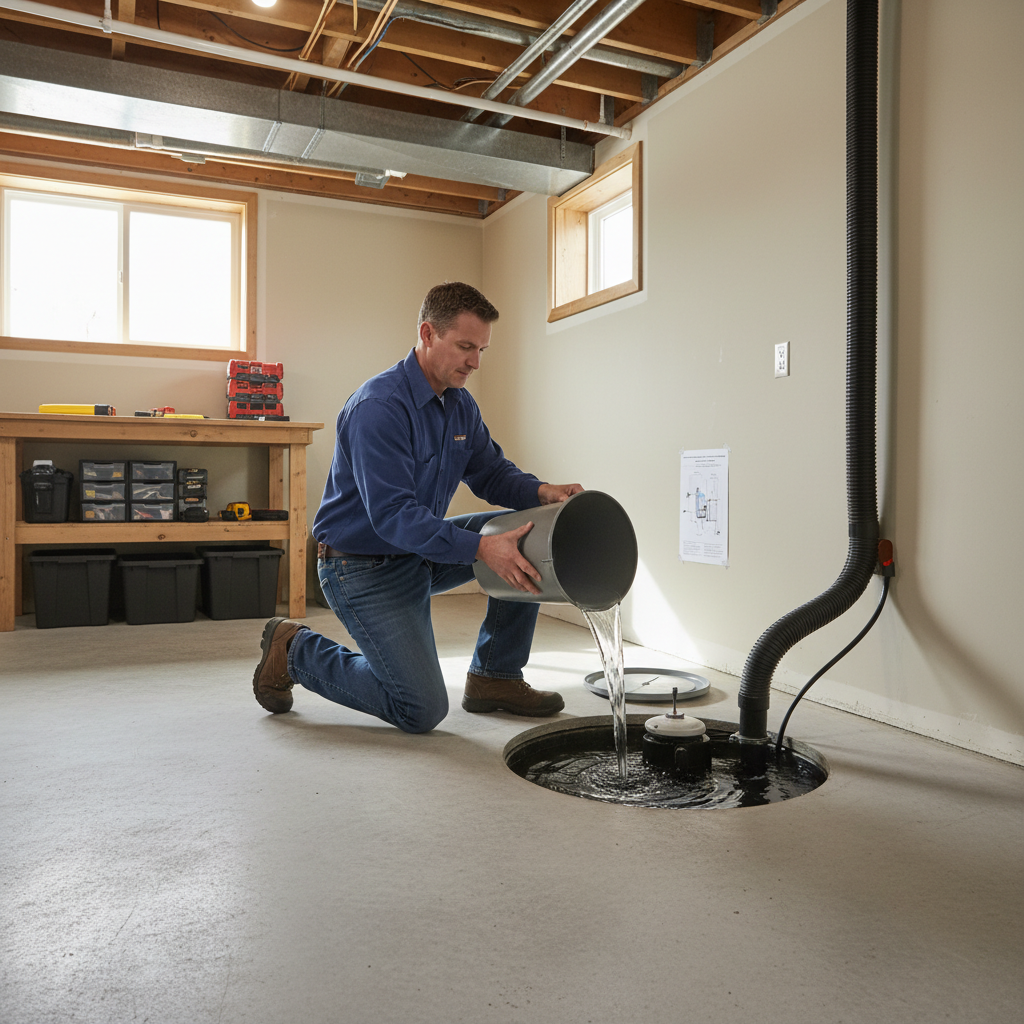
5. The Pour Test (The Main Event) — Plug the pump back in and carefully pour 3-5 gallons of water into the sump pit.
- The Goal: Watch for these three crucial actions: the float rising and activating the pump, the water quickly discharging out of the pit, and the check valve closing after the pump shuts off.
- Amount of Water: Use enough water to activate the float switch, typically 3-5 gallons. You can use two 2-gallon buckets or a large pitcher.
6. Observe Pump Activation — Note how quickly and smoothly the pump turns on once the water level rises.
- The pump should kick on shortly after the float reaches its activation point. If it hesitates, makes grinding noises, or doesn't turn on at all, there's a problem.
7. Monitor Water Discharge — Ensure the water is discharged efficiently and completely from the pit.
- The pump should empty the pit quickly and completely. If it struggles, runs for a long time without emptying, or only partially empties the pit, its pumping power may be compromised.
8. Check the Check Valve — Listen for the subtle "clunk" as the check valve closes when the pump shuts off.
- This sound indicates the valve has closed, preventing backflow. If you don't hear it, or if you see water flowing back into the pit from the discharge pipe, the check valve is likely faulty and needs replacement.
- DIY Replacement: Replacing a check valve is a straightforward task, usually involving unscrewing a few clamps and installing a new valve in the correct direction (an arrow on the valve indicates water flow).
9. Test the Manual Override (if applicable) — If your pump has a manual override lever, lift it to ensure the pump activates.
- Some sump pumps have a lever that allows you to manually raise the float. This is a good secondary check for the pump's motor function, independent of the float switch mechanism.
10. Inspect the Battery Backup (if applicable) — Ensure your battery backup unit is charged and functioning.
- For pumps with battery backups, check the unit's indicator lights to ensure it's charged and ready. Some units have a "test" button—follow your manufacturer's instructions to verify it works.
Common Causes
- Stuck Float Switch: Debris, corrosion, or old age can cause the float to get stuck, preventing the pump from activating. This is the most common cause of failure.
- Clogged Intake/Impeller: Sediment, leaves, or other debris can block the pump's intake screen or clog the impeller, reducing its ability to move water.
- Faulty Check Valve: If the check valve fails to close, water can flow back into the pit, causing the pump to short-cycle and wear out prematurely.
- Power Failure: Obviously, if there's no power, the pump won't run. This is why battery backups are so important.
- Motor Burnout: Old age, continuous short-cycling, or running dry can cause the pump's motor to overheat and fail.
- Improper Installation: If the pump was not installed correctly (e.g., wrong size for the pit, discharge pipe problems), it can lead to inefficient operation or failure.
Common Mistakes
- Ignoring the Check Valve: Many homeowners only test if the pump turns on, neglecting to verify the check valve's function. A faulty check valve leads to continuous short-cycling and premature pump failure.
- Not Cleaning the Pit: Leaving leaves, dirt, and debris in the sump pit can easily foul the float switch or clog the pump
Related Articles
Keep troubleshooting with these hand-picked guides from FixlyGuide:
- The 30-Second Sump Pump Test That Prevents Flooding (Most Homeowners Skip It) — Discover how a simple 30-second test can prevent catastrophic basement flooding by ensuring your sump pump is ready for the rainy season.
- The 30-Second Sump Pump Trick Most Homeowners Forget Before Rain Hits — Discover surprising reasons your sump pump might fail and how a simple 30-second test prevents costly flood damage before the rainy season…
- The 7 Critical Spring Home Tasks Most Homeowners Forget (And Why You Shouldn't) — Don’t just prune bushes; tackle these often-overlooked spring maintenance items to protect your home’s value and prevent costly repairs.
- Is Your Roofline Hiding a $10,000 Secret? 7 Warnings Your Soffit & Fascia Are Failing — Discover the critical signs of soffit and fascia damage that could indicate widespread problems and how to properly address them before the…
- The #1 Hidden Culprit Behind Your Whole-House Low Water Pressure (It's Not Your City!) — Discover the most common, often overlooked cause of low water pressure throughout your entire home and how to fix it yourself.
- The #1 Reason Your AC Blows Warm Air (And It's Not What You Think) — A dirty air filter is often the overlooked culprit behind an air conditioner blowing warm air, hindering its ability to cool your home effi…
What should this project cost?
Enter your project details for a realistic cost range before you call anyone.
Cost depends heavily on which system turns out to be the source.
- Regional adjustment
- National average
- Labor share (typical)
- ~$1,620
- Quotes to collect
- 3 written estimates
Educational estimate based on national averages — not a binding quote. Always confirm with written local estimates.
Recommended for DIYers & woodworkers
Sponsored
The Top 20 Tools for Workshops of Any Budget
No stationary machines or power tools required — plus 3 fundamental tools that can't be bought at any price.
Get the free guide
Ted's Woodworking — The #1 Woodworking Resource
Detailed instructions, dimensioned drawings, materials & cutting lists, and 3D schematics for every skill level.
See the plansSponsored: links above are affiliate links. FixlyGuide may earn a commission on qualifying purchases — at no extra cost to you.
Frequently asked questions
How often should I test my sump pump?+
You should test your sump pump at least twice a year, ideally before the heavy rain seasons in spring and fall. If your basement is prone to water, or you've experienced power outages recently, consider testing more frequently, perhaps monthly.
What if my sump pump turns on but doesn't pump water?+
If your sump pump is running but not expelling water, the most likely culprits are a clogged intake screen, a blocked discharge pipe (possibly frozen outside), or a damaged impeller. Unplug the pump, clear any visible blockages, and check the discharge pipe for obstructions.
How do I know if my sump pump's check valve is working?+
After the pump discharges water and shuts off, listen for a distinct 'clunk' sound from the check valve. This indicates it has closed. If you notice water flowing back into the pit from the discharge pipe after the pump stops, the check valve is likely faulty and needs replacement.
Can I test my sump pump without a battery backup?+
Yes, you can test your primary sump pump without a battery backup by simply pouring water into the pit and observing its operation. However, if your pump is designed with a backup, you should test that system separately according to the manufacturer's instructions to ensure it functions during a power outage.
What's the average lifespan of a sump pump?+
The average lifespan of a sump pump is typically 7 to 10 years. However, this can vary greatly depending on usage, maintenance, and the quality of the unit. Pumps that run frequently due to high groundwater levels may have a shorter lifespan
Discussion
Loading comments…