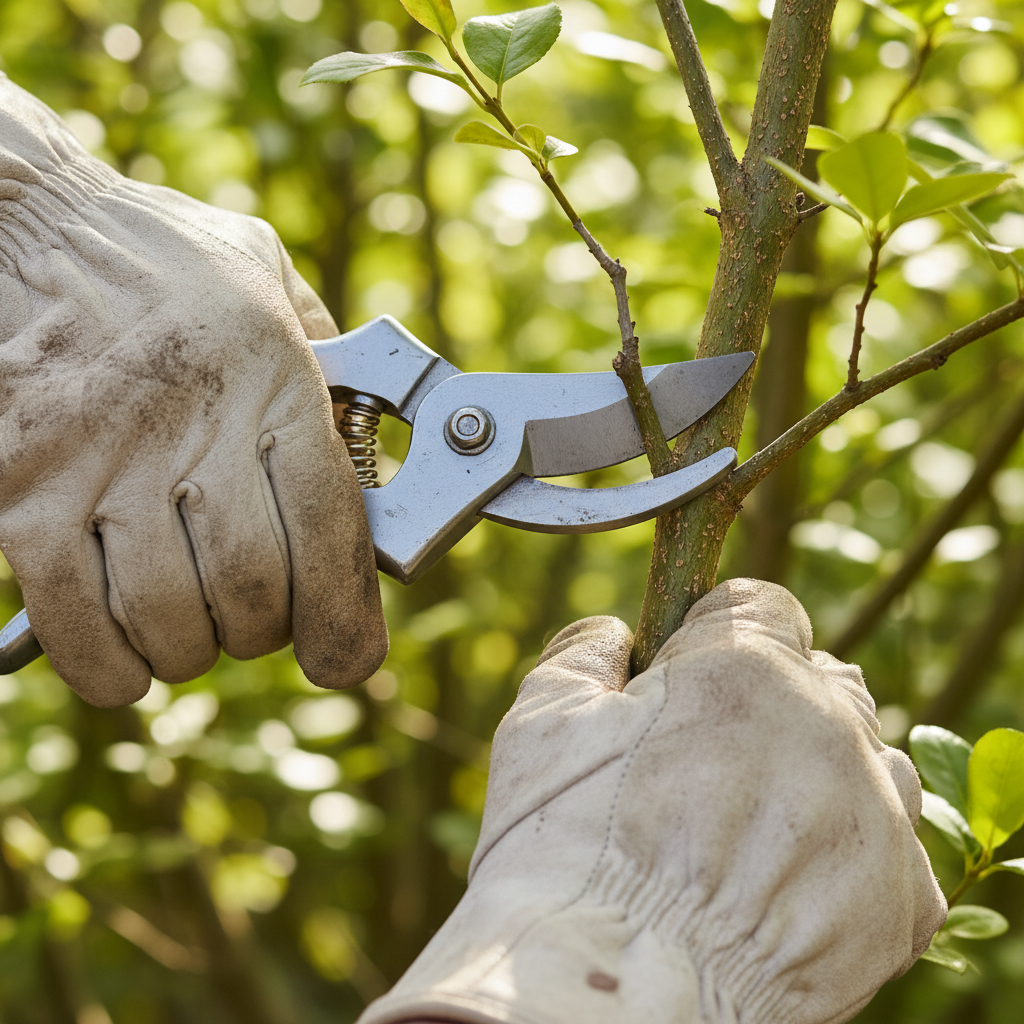
- Dead branches: Look for brittle, discolored branches that have no leaves or buds when they should. Cut these back to healthy wood or to the main stem.
- Damaged branches: Remove any broken or split branches. Cut just below the damage or back to a healthy side branch.
- Diseased branches: Look for cankers, unusual growths, or discoloration. Cut these well into healthy wood, sterilizing your tools after each cut to avoid spreading pathogens.
- If you're unsure if a branch is dead: Nick the bark with your fingernail. Green cambium underneath indicates it's alive; brown and dry means it's dead.
Landscaping · Deck or fence project
| Project category | Landscaping |
|---|---|
| Problem type | Deck or fence project |
| Trade required | Landscaping |
| Urgency | Planned project |
| Safety risk | Moderate safety risk |
| DIY suitability | DIY for experienced homeowners |
| Cost category | High cost |
| Typical timeline | Most builds 3–10 days depending on size |
| Contractor type | Landscaping contractor |
Repair option
Replace failed boards, posts, and hardware; reseal the surface.
Replacement option
Rebuild when framing or the ledger connection is unsafe.
Common causes
- Rot at posts and ledger
- Storm damage
- Adding outdoor living space
Relevant tools:home improvement material pricesproject cost estimator
Published May 9, 2026Last updated August 17, 2026
Tools & materials you'll need
Affiliate linksAs an Amazon Associate FixlyGuide earns from qualifying purchases — at no extra cost to you. Prices and availability are accurate as of publication and subject to change.
Quick Answer
Many homeowners inadvertently harm their shrubs by shearing them into rigid, unnatural shapes, believing this promotes tidiness. This practice, however, often leads to a dense outer layer of foliage that chokes out inner growth, reduces flowering, and creates weak, disease-prone plants over time. The correct approach, known as renewal or structural pruning, involves strategic cuts to remove dead, diseased, or crossing branches, thin out congested areas, and encourage a shrub's natural growth habit for long-term health and vitality.
The Problem
Imagine a shrub that looks like it's wearing a helmet of leaves. This is the classic result of improper shearing – a dense outer layer of foliage with a hollow, woody interior. While it might look neat for a few weeks, this practice creates a host of problems. The inner branches are starved of light and air, leading to sparse growth, reduced flowering, and an increased susceptibility to fungal diseases. The outer layer becomes a thick, impenetrable shell, making the shrub top-heavy and prone to snapping in high winds or under snow load. Furthermore, constant shearing stimulates rampant, weak new growth right at the surface, creating a cycle of endless, unproductive pruning. This method often ignores the plant's natural form and growth patterns, essentially fighting against its biology rather than working with it. The result is a stressed, unhealthy shrub that produces fewer flowers or berries and has a significantly shortened lifespan.
How It Works
To understand proper pruning, it helps to understand how a shrub grows. Shrubs, like most plants, produce hormones that dictate their growth. Auxins, produced at the tips of branches, inhibit the growth of lateral buds further down the stem – a phenomenon called 'apical dominance.' When you shear a shrub, you remove all the tips uniformly. This momentarily releases apical dominance, causing a flush of new growth just below the cut. However, because you've removed all the tips at the same height, all the new growth emerges at the same level, creating that dense, unnatural outer shell. The inner parts of the plant, still shaded and deprived of light, remain dormant or die back.
Proper pruning, on the other hand, works with the plant's natural growth. When you make a cut just above a bud or a lateral branch (a 'heading cut'), you direct the plant's energy into that specific bud or branch, encouraging it to grow in a desired direction. When you remove an entire branch back to its origin or to the main stem (a 'thinning cut'), you open up the canopy, allowing light and air to penetrate the interior. This stimulates dormant buds deeper within the plant to sprout, leading to more vigorous, well-distributed growth. Different types of shrubs have different flowering habits – some bloom on old wood (last year's growth) and some on new wood (this year's growth). Knowing this is crucial because pruning at the wrong time can remove developing flower buds, resulting in a year without blooms. For instance, hydrangeas, lilacs, and azaleas that bloom in spring or early summer on old wood should be pruned immediately after they finish flowering. Shrubs that bloom in late summer or fall on new wood, like panicle hydrangeas or rose of Sharon, should be pruned in late winter or early spring before new growth begins. Understanding these basic principles allows you to shape a shrub for health, beauty, and abundant flowering without fighting its fundamental biology.
Step-by-Step Fix
1. Gear Up and Assess — Before making any cuts, gather your tools and take a good look at your shrub.
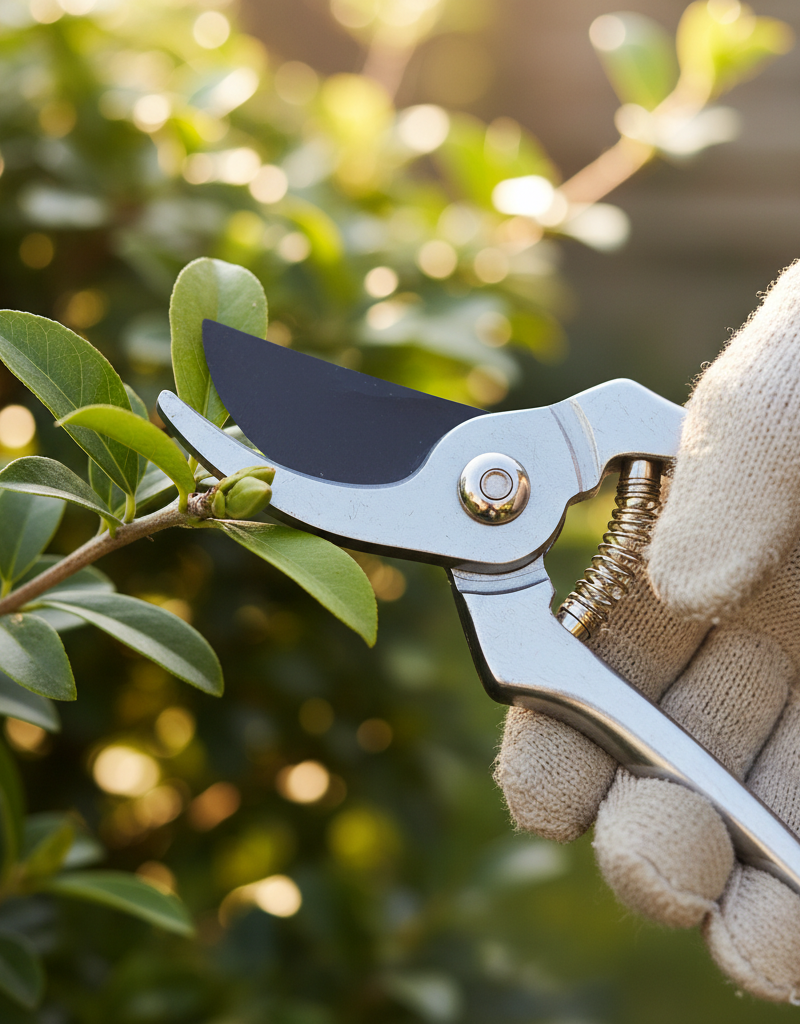
- Tools: Wear thick gardening gloves and safety glasses. Ensure your pruners are clean and sharp. Dull tools can crush stems, making plants vulnerable to disease. Sterilize blades with a 70% isopropyl alcohol solution between plants to prevent disease spread.
- Assessment: Step back and observe the shrub's natural shape. Identify any obviously dead, diseased, or damaged branches that need to be removed first. Look for branches crossing or rubbing against each other.
2. Remove the Dead, Damaged, and Diseased — This is the universal first step for almost all pruning.
- Dead branches: Look for brittle, discolored branches that have no leaves or buds when they should. Cut these back to healthy wood or to the main stem.
- Damaged branches: Remove any broken or split branches. Cut just below the damage or back to a healthy side branch.
- Diseased branches: Look for cankers, unusual growths, or discoloration. Cut these well into healthy wood, sterilizing your tools after each cut to avoid spreading pathogens.
- If you're unsure if a branch is dead: Nick the bark with your fingernail. Green cambium underneath indicates it's alive; brown and dry means it's dead.
3. Eliminate Crossing and Rubbing Branches — Prevent future damage and improve air circulation.
- Choose the strongest: Identify branches that are growing into each other or rubbing. Select the healthier, better-placed branch and remove the weaker or awkwardly growing one.
- Aim for outward growth: When making thinning cuts, always choose the branch that is growing outwards from the center of the plant.
4. Thin Out Congested Areas — Improve light penetration and air circulation to the shrub's interior.
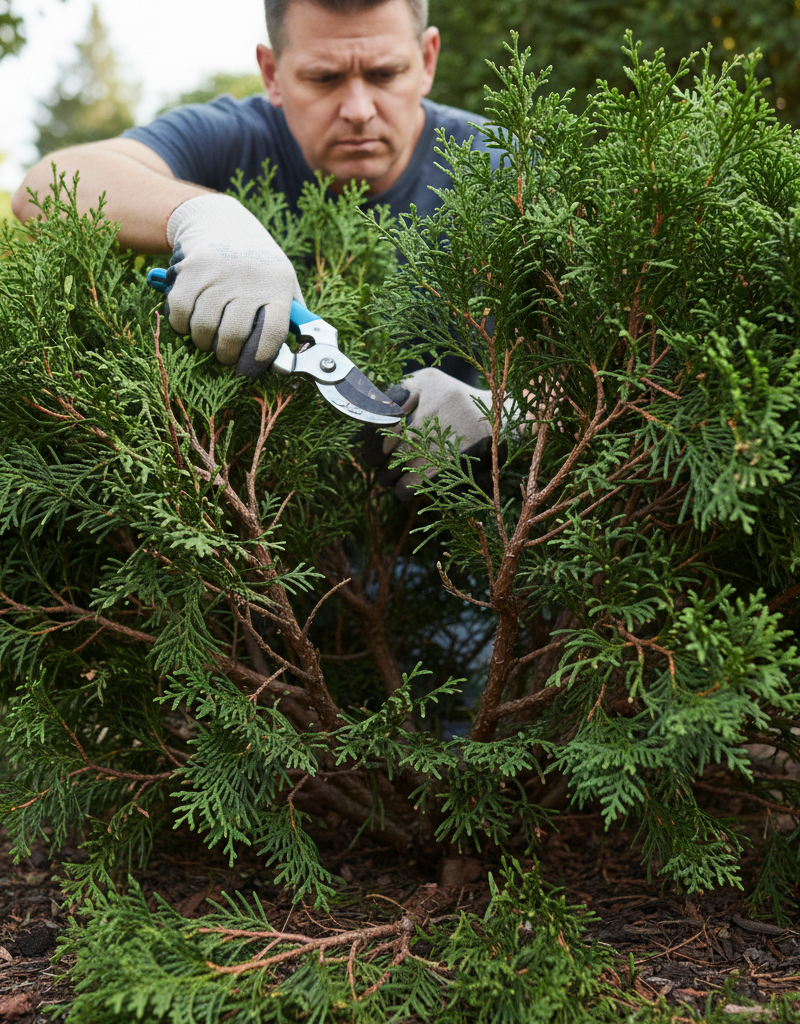
- Look inside: Gently spread branches apart and look for areas with many small twigs or branches growing too closely together.
- Remove up to 1/3: As a general rule, you can remove up to one-third of the shrub's total volume in a single season. Focus on the oldest, thickest stems coming from the base, or smaller, weaker stems within dense clusters.
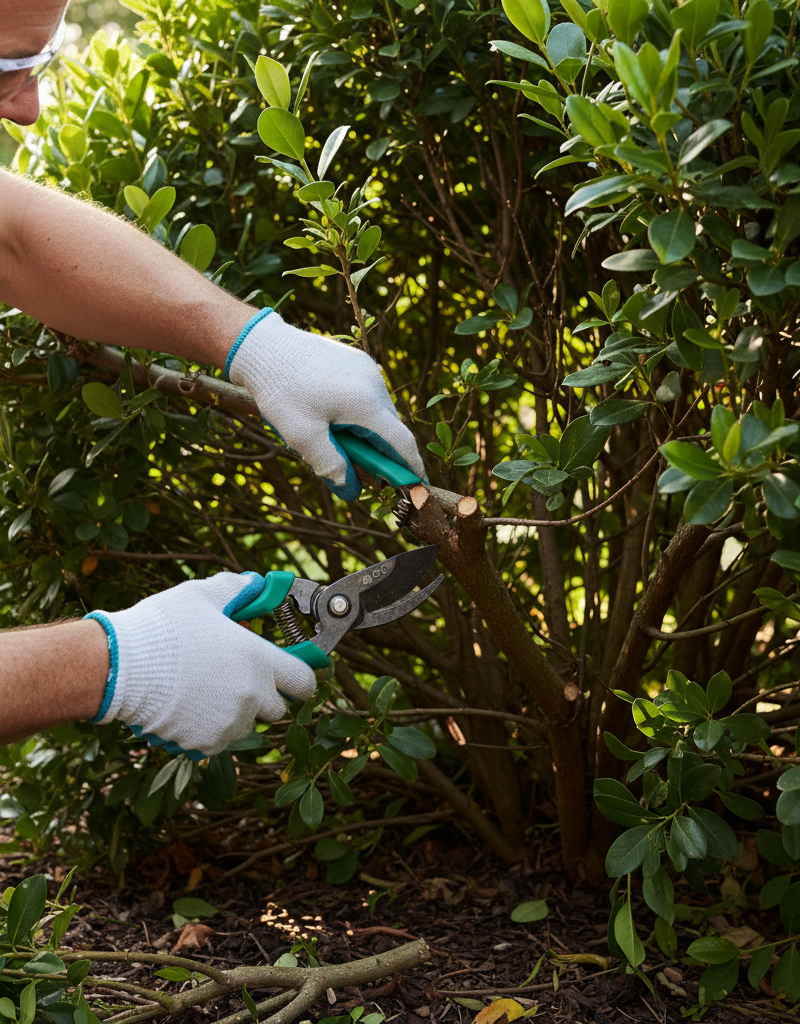
- Make cuts just above a bud or side branch: This is a 'heading cut' and helps direct new growth. For larger stems you are removing completely, cut back to the main stem or ground level, ensuring you don't leave a stub.
5. Prune for Shape and Size (Selectively) — Enhance the natural form, don't force an unnatural one.
- Step back frequently: As you prune, keep stepping back to assess the overall shape.
- Reduce height/width: If the shrub is too tall or wide, identify a strong lateral branch that's growing in the direction you want the plant to go. Make a cut just above that lateral branch. This is called a 'reduction cut.'
- Avoid uniform shearing: Resist the urge to create a perfect ball or box. Think about thinning and shaping, not sculpting.
6. Address Suckers and Watersprouts — Remove these vigorous, often undesirable growths.
- Suckers: These are shoots that emerge from the base of the plant or from the roots. Cut them flush with the main stem or ground immediately.
- Watersprouts: These are typically fast-growing, vertical shoots that emerge from established branches. Remove them unless you want to encourage growth in that specific area.
7. Consider Flowering Time (Crucial!) — Prune at the right time to ensure blooms.
- Spring/early summer bloomers (on old wood): Prune immediately after they finish flowering. Examples: Lilac, Forsythia, Azalea, some Hydrangeas (e.g., macrophylla).
- Late summer/fall bloomers (on new wood): Prune in late winter or early spring before new growth begins. Examples: Rose of Sharon, Panicle Hydrangea (paniculata), Smooth Hydrangea (arborescens), Spiraea.
8. Clean Up — Remove all pruned material to prevent disease and pest harborage.
- Dispose: Rake up all branches and leaves and dispose of them. Do not compost diseased material.
- Sterilize again: Clean and sterilize your tools one last time before storage.
Common Causes
- Ignoring the Plant's Natural Habit: Many homeowners attempt to impose a formal, unnatural shape on a shrub that naturally wants to grow loosely or irregularly, leading to constant, unproductive pruning to maintain that shape.
- Using Shears Indiscriminately: Reliance on hedge shears for all shrubs, even those that benefit from selective hand pruning, creates a dense outer layer and prevents interior growth.
- Pruning at the Wrong Time: Removing flower buds by pruning spring-flowering shrubs in late winter or early spring, or pruning fall-flowering shrubs too late, eliminates potential blooms for the season.
- Fear of Pruning: Some homeowners avoid pruning altogether, leading to overgrown, leggy, and unproductive shrubs that eventually become unhealthy.
- Lack of Understanding of Plant Biology: Not knowing how different plants respond to cuts (e.g., where new growth will emerge, or how wounds heal) leads to ineffective or damaging pruning practices.
Common Mistakes
- Topping Shrubs: Drastically cutting back all main branches to a uniform height without regard for side branches or natural form. This creates an explosion of weak, vertical watersprouts and a stressed plant.
- Leaving Stubs: Making cuts too far from a bud or main stem, leaving a dead 'stub' that can act as an entry point for disease and pests. Always cut just above a bud or flush with the main branch.
- Cutting Off the 'Collar': The branch collar is the swollen area at the base of a branch where it joins a larger stem. Cutting into or removing this collar impairs the tree's natural wound-healing process. Make cuts just outside the collar.
- Ignoring Deadwood: Allowing dead or diseased branches to remain in the shrub. These are not only unsightly but also harbor pests and diseases that can spread to healthy parts of the plant.
- Over-Pruning: Removing too much of the shrub at once (more than 25-30% of its total foliage). This can shock the plant, reduce its energy reserves, and make it more susceptible to stress or death.
- Using Dull or Dirty Tools: Dull tools tear and crush plant tissues, creating ragged wounds that are slow to heal and prone to infection. Dirty tools can transfer diseases from one plant to another.
Cost & Time Breakdown
| Task | DIY Cost | Pro Cost | Time |
|---|---|---|---|
| Basic Hand Pruners | $20–$50 | Included | N/A |
| Loppers | $30–$70 | Included | N/A |
| Pruning Saw | $25–$60 | Included | N/A |
| Safety Glasses | $5–$15 | Included | N/A |
| Gloves | $10–$25 | Included | N/A |
| Shrubs (Initial Pruning) | $0 | $75–$250/shrub* | 30 mins – 2 hrs |
| Shrubs (Annual Maintenance) | $0 | $50–$150/shrub* | 15 mins – 1 hr |
*Pro costs are highly variable based on shrub size, type, and regional labor rates.
Tips & Prevention
- Right Plant, Right Place: Choose shrubs that are appropriate for your climate and will mature to a size that fits your space, minimizing the need for drastic pruning.
- Start Small, Prune Often: Regular, light pruning is far better than infrequent, severe cuts. Aim for annual maintenance to remove small problems before they become big ones.
- Know Your Shrub: Identify the specific type of shrub you have. Research its natural growth habit, mature size, and, most importantly, when and on what wood it flowers. This knowledge is your best pruning tool.
- Maintain Sharp, Clean Tools: Always use sharp, sterilized tools. Keep a sharpening stone and rubbing alcohol handy. This not only makes pruning easier but also prevents disease spread and promotes faster healing.
- Prioritize Health: When in doubt, prioritize removing dead, diseased, or crossing branches. These cuts almost always benefit the plant, regardless of timing.
- Consider Renewal Pruning: For extremely overgrown or unproductive deciduous shrubs, consider a more aggressive 'renewal pruning' over 1-3 years, removing a third of the oldest, thickest stems each year to rejuvenate the plant from the base.
When to Call a Professional
While most basic shrub pruning is manageable for a DIYer, there are times when calling a professional arborist or landscaper is the wisest choice. If you have very large, mature shrubs that require ladders or specialized equipment for safe access, a pro has the expertise and gear to handle the job safely and effectively. Similarly, if your shrubs are heavily diseased and you're unsure how to proceed without risking the plant's health or spreading the disease, a professional can diagnose the issue and implement appropriate corrective measures. For valuable or rare specimen shrubs where improper pruning could cause irreparable damage, the investment in a certified arborist ensures the plant's long-term health and aesthetic appeal. Lastly, if the pruning involves proximity to power lines or requires extensive removal of heavy branches, a professional can ensure the work is done safely and adheres to local regulations, protecting both your property and personal safety. Do not attempt to prune near power lines yourself.
Related Articles
Keep troubleshooting with these hand-picked guides from FixlyGuide:
- The #1 Pruning Mistake Homeowners Make (and the Secret to Stronger Trees) — Discover the most common pruning error homeowners make and how to avoid it, ensuring healthier, more resilient trees in your yard.
- The #1 Mistake Killing Your Lawn's Grass (and How to Fix Patchy Spots) — Discover the most common reason for patchy grass and learn how to revive your lawn with targeted, easy-to-follow steps.
- How to Prune Overgrown Shrubs Without Killing Them: A Complete Guide — Learn how to properly prune overgrown shrubs, restore their health, and improve their appearance without causing damage, ensuring vibrant g…
- The #1 Dandelion Mistake Almost Every Homeowner Makes (and How to Fix It) — Many homeowners accidentally make dandelions worse. Learn the most common mistake and how to truly eliminate these persistent weeds for goo…
- The #1 Watering Mistake That Kills Lawns (And How to Fix Yours in 10 Minutes) — Discover the most common watering mistake homeowners make and how to adjust your watering routine for a healthier, more resilient lawn.
- Is Your Gutter Sagging After Every Storm? The Hidden Flaw Most Homeowners Miss — Discover the overlooked reason your gutters sag after every storm and learn the lasting fix that most homeowners miss.
Should you do this yourself?
Answer five quick questions before you start. Safety outranks savings every time.
Your experience with work like this
How high do you have to work?
Does the job involve any of these?
Will it need a permit?
Specialty tools
Free and instant. Educational guidance only — not a quote, inspection, or professional diagnosis.
What should this project cost?
Enter your project details for a realistic cost range before you call anyone.
Cost depends heavily on which system turns out to be the source.
- Regional adjustment
- National average
- Labor share (typical)
- ~$1,620
- Quotes to collect
- 3 written estimates
Educational estimate based on national averages — not a binding quote. Always confirm with written local estimates.
Before you start
Check the difficulty, permits, and safety risk — then decide whether to call a pro.
- Estimate this projectGet a cost range for your scope and ZIP before you call anyone.Open
- Get local estimatesSend one request and compare written estimates from vetted pros.Open
Free, no signup required. Estimates are educational guidance, not a quote or an inspection.
Frequently asked questions
What is the best time of year to prune shrubs?+
The best time to prune depends on the shrub's flowering habit. For spring/early summer bloomers (on old wood), prune immediately after they finish flowering. For late summer/fall bloomers (on new wood), prune in late winter or early spring before new growth begins. Removing dead or diseased branches can be done at any time of year.
How much of a shrub can I prune at one time?+
As a general rule, you should aim to remove no more than 25-30% of a shrub's total foliage in a single pruning season. Removing too much can shock the plant and hinder its recovery. For very overgrown shrubs, spread rejuvenation pruning over 2-3 years.
What is the difference between heading cuts and thinning cuts?+
Heading cuts involve shortening a branch back to a bud or side branch, which encourages denser growth in that area. Thinning cuts involve removing an entire branch back to its point of origin or the main stem, which opens up the canopy for better air circulation and light penetration and promotes more natural growth.
Why is it important to use sharp, clean pruning tools?+
Sharp tools make clean cuts that heal quickly, minimizing stress on the plant and reducing the risk of disease entry. Clean tools prevent the transfer of pathogens from diseased plants to healthy ones. Always sterilize your tools with rubbing alcohol, especially after pruning diseased material.
Discussion
Loading comments…