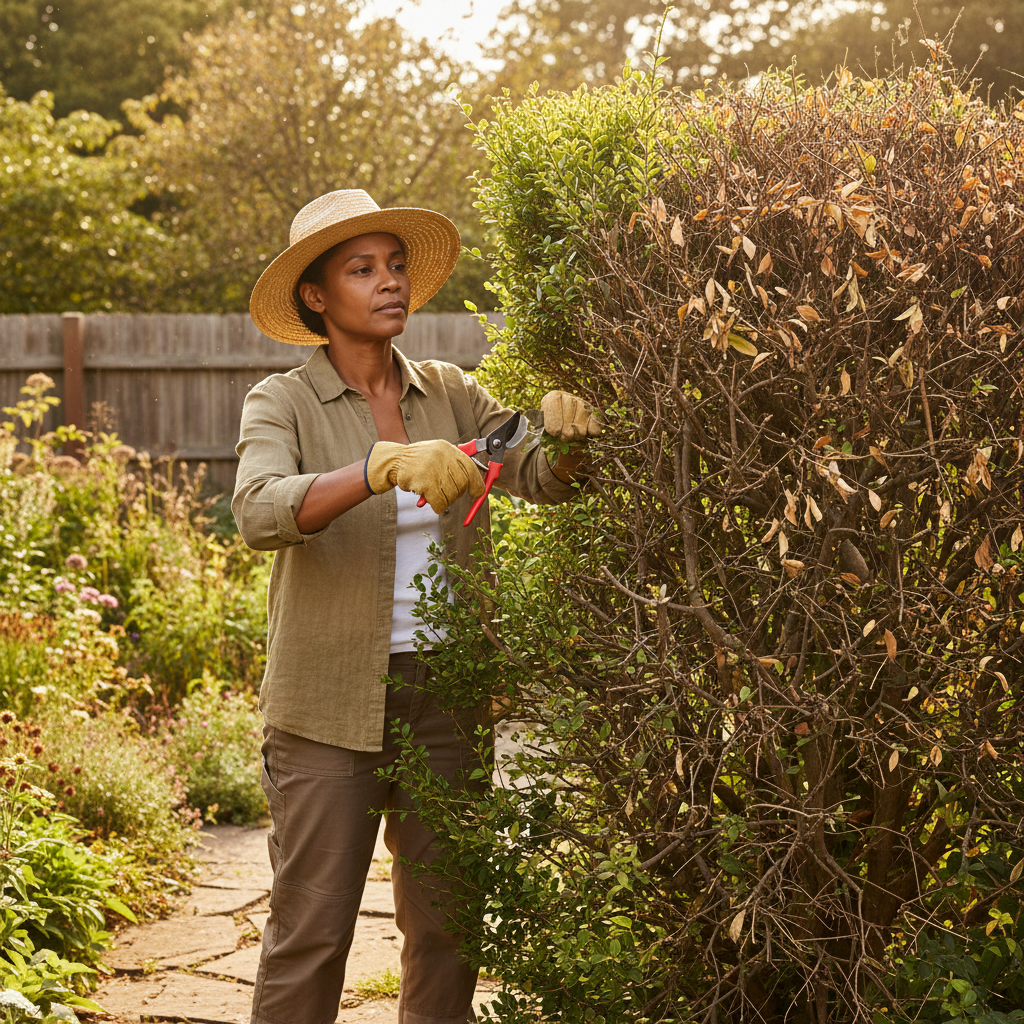
- A shrub’s health and structure are governed by fundamental biological processes.
- This table outlines the typical costs and time commitment for pruning a moderately overgrown, 6-foot deciduous shrub.
- While pruning is an achievable DIY task, certain situations warrant calling a certified arborist or a professional horticulturalist.
- Keep troubleshooting with these hand-picked guides from FixlyGuide:
Landscaping · Deck or fence project
| Project category | Landscaping |
|---|---|
| Problem type | Deck or fence project |
| Trade required | Landscaping |
| Urgency | Planned project |
| Safety risk | Moderate safety risk |
| DIY suitability | DIY for experienced homeowners |
| Cost category | High cost |
| Typical timeline | Most builds 3–10 days depending on size |
| Contractor type | Landscaping contractor |
Repair option
Replace failed boards, posts, and hardware; reseal the surface.
Replacement option
Rebuild when framing or the ledger connection is unsafe.
Common causes
- Rot at posts and ledger
- Storm damage
- Adding outdoor living space
Relevant tools:home improvement material pricesproject cost estimator
Published April 21, 2026Last updated August 17, 2026
Tools & materials you'll need
Affiliate linksAs an Amazon Associate FixlyGuide earns from qualifying purchases — at no extra cost to you. Prices and availability are accurate as of publication and subject to change.
How it works
A shrub’s health and structure are governed by fundamental biological processes. Pruning is the practice of manipulating these processes to achieve a desired outcome. The primary principle at play is apical dominance, where the main, central stem of a plant (the apical bud) grows more strongly than its lateral (side) stems. When you make a pruning cut, you remove this dominant bud, which releases hormones that stimulate the growth of nearby lateral buds. This is how pruning encourages a plant to become fuller and denser.
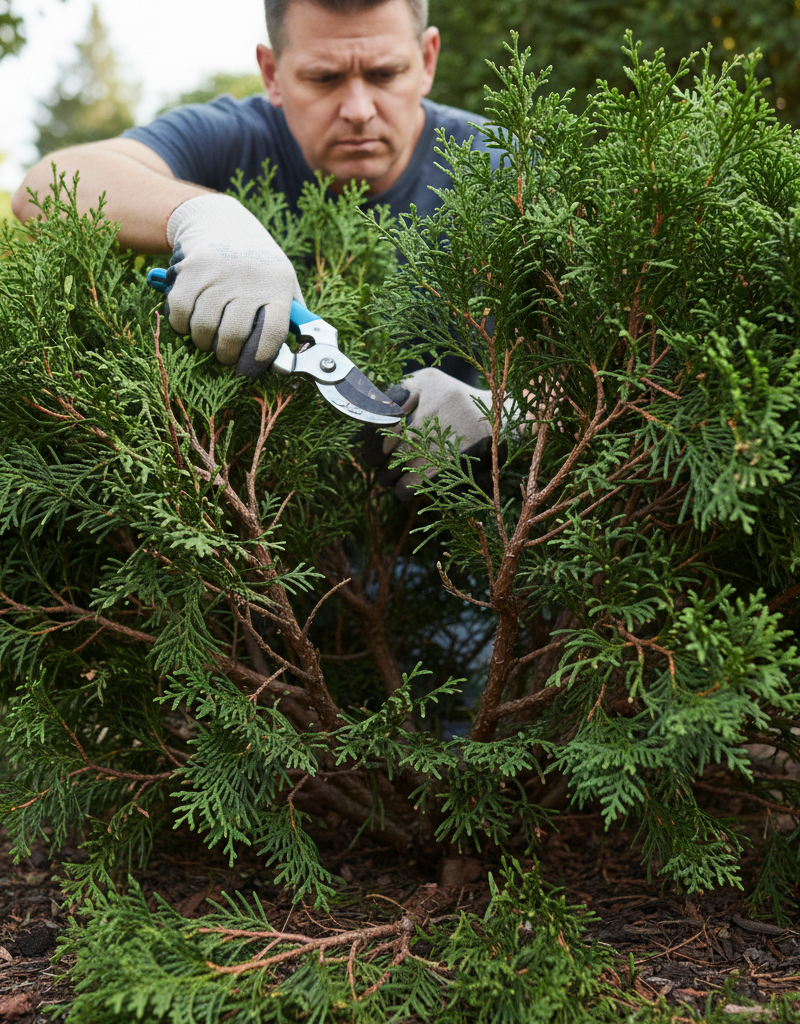
There are two main types of pruning cuts, each with a different physiological effect. A heading cut shortens a branch, removing the apical bud and stimulating growth in the buds just below the cut. This is used to increase density. An ost thinning cut removes an entire branch back to its point of origin on a main stem, another branch, or the ground. This type of cut opens up the plant, improving air circulation and light penetration to the interior. It does not stimulate a flush of new growth at the cut point but instead redirects the plant's energy to other existing branches and roots.
Overgrown shrubs suffer from an excess of old, woody, unproductive growth. The dense outer canopy blocks sunlight from reaching the interior, causing inner leaves and branches to die off. This creates a "hollow" plant with a non-productive core. Proper pruning reverses this by systematically thinning out old wood and making strategic heading cuts, redirecting the plant's resources to create new, vigorous, and productive growth from the base and throughout its structure.
Step-by-Step Fix
1. Assess the Plant and Determine Timing
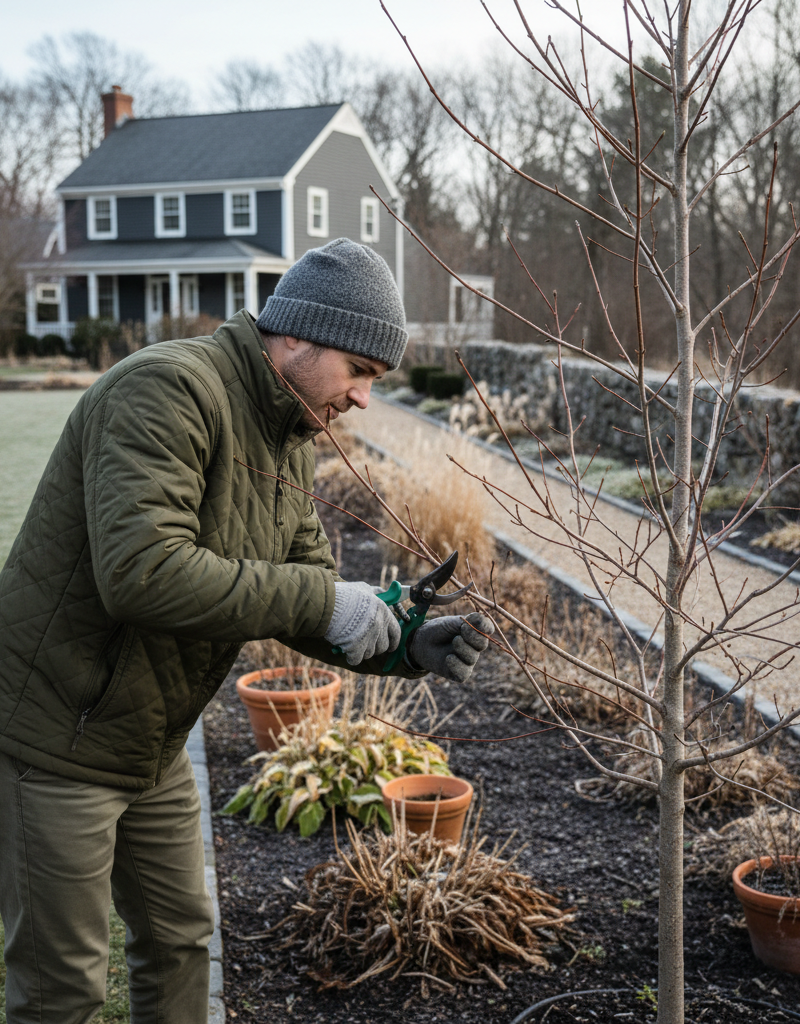
Action: Stand back and analyze the shrub’s overall shape, density, and health. Identify its species if possible, as this dictates the best time to prune. Spring-flowering shrubs (e.g., forsythia, lilac, weigela) bloom on "old wood" from the previous season and should be pruned immediately after flowering. Summer-flowering shrubs (e.g., potentilla, spirea, panicle hydrangeas) bloom on "new wood" and are best pruned in late winter or early spring while dormant.
2. Gather and Sanitize Your Tools
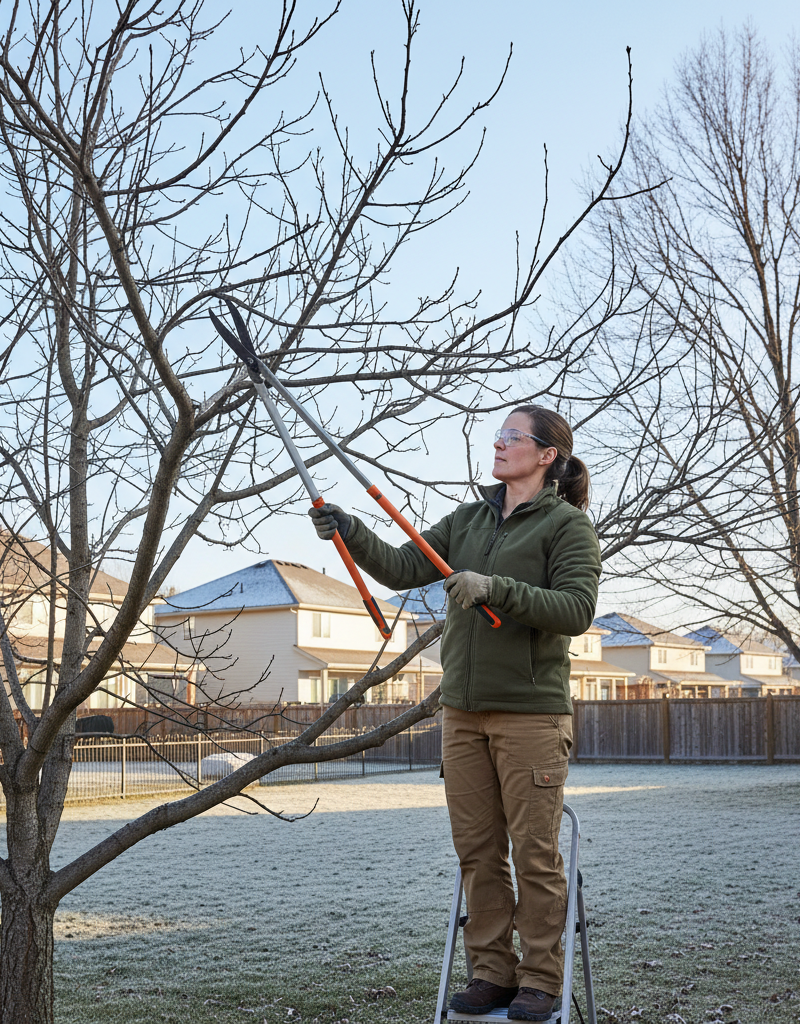
Action: Select the right tool for the job to ensure clean cuts. Use bypass pruners for branches up to 3/4 inch, loppers for branches up to 1.5 inches, and a pruning saw for anything larger. Avoid anvil-style pruners, which can crush stems. Before starting and between plants, sanitize your tools to prevent the spread of disease.
- Tool List: Bypass hand pruners, bypass loppers, a curved pruning saw, gardening gloves, safety glasses.
- Sanitation: Prepare a solution of one part household bleach to nine parts water, or use a spray bottle with 70% isopropyl alcohol. Dip or spray the blades, then wipe them dry.
3. Make Initial "Cleanup" Cuts
Action: Begin by removing the "three D's": any wood that is clearly Dead, Damaged, or Diseased. Dead wood is typically brittle, discolored, and has no green cambium layer if you scratch the bark. Cut these branches back to a point of healthy, living tissue or remove them at their base. Damaged or broken branches should be cut back cleanly behind the break.
4. Remove Crossing Branches and Suckers
Action: Inspect the interior of the shrub for branches that cross over and rub against each other. This rubbing creates wounds that are entry points for pests and disease. Choose the healthier or better-placed branch and remove the other at its origin. At the same time, remove any suckers (vigorous shoots growing from the roots) and water sprouts (weak, vertical shoots from main branches) by cutting them flush with the base or trunk.
5. Thin the Oldest Stems (Renewal Pruning)
Action: This is the most critical step for rejuvenating an overgrown shrub. Identify the oldest, thickest, woodiest stems, which are often darker in color and less productive. Using loppers or a pruning saw, remove up to one-third of these old stems, cutting them as close to the ground as possible. This thinning allows sunlight and air to penetrate the center of the plant, encouraging new, vigorous shoots to grow from the base.
- Strategy: For multi-stemmed, cane-growing shrubs, this is the primary method. For single-trunk, tree-like shrubs, thin out major competing branches to establish a clear structure.
6. Reduce Overall Height and Width
Action: After thinning the interior, reduce the overall size of the remaining stems to shape the plant. Follow a branch down from its tip until you find a healthy, outward-facing side branch or bud. Make your cut about 1/4 inch above this point, angled away from the bud. This directs new growth outwards, preventing it from growing back into the center of the plant.
- If This Doesn't Work: If a branch has no viable side branches to cut back to, you may need to remove it entirely as part of your thinning cuts in Step 5.
7. Shape for Light Penetration
Action: As you reduce the height and width, aim to create a shape that is wider at the bottom than at the top. This natural-looking form allows sunlight to reach the lower branches, preventing them from dying off and becoming bare. Avoid shearing the shrub into a formal ball or box, as this only encourages dense growth on the exterior and exacerbates the problem of a dead interior.
8. Final Evaluation and Cleanup
Action: Step back frequently to assess your progress. Make small, final adjustments to achieve a balanced, natural form. Once pruning is complete, rake up all cuttings and debris from around the base of the shrub. Diseased material should be bagged and thrown away, not composted, to prevent the pathogens from spreading. A clean area below the plant improves air circulation and discourages fungal growth.
Common mistakes
- Shearing with Hedge Trimmers. Many homeowners use powered hedge trimmers to give an overgrown shrub a "haircut." This only removes the outer layer of growth, creating a dense shell of foliage that blocks light and air from the plant's interior, leading to a dead, woody center. Instead: Use hand pruners, loppers, and a saw to make selective thinning and heading cuts inside the plant.
- Leaving Stubs. Cutting a branch too far from its point of origin leaves a stub that the plant cannot heal over. This dead stub often becomes an entry point for rot and insects that can then move into the main body of the plant. Instead: Make thinning cuts just outside the slightly raised "branch collar," the area of tissue where the branch joins the stem.
- Making Flush Cuts. The opposite of leaving a stub is cutting flush against the trunk or main stem, which removes the branch collar. The collar contains specialized cells that seal the wound. Removing it creates a larger wound that the plant struggles to close, leaving it vulnerable to disease. Instead: Always locate the branch collar and cut just to the outside of it, leaving this natural healing mechanism intact.
- Pruning at the Wrong Time of Year. Pruning a forsythia or lilac in the winter removes the flower buds that formed the previous summer, resulting in no spring blooms. Pruning any shrub heavily in late summer can encourage a flush of tender new growth that will be killed by the first hard frost, stressing the plant. Instead: Identify your shrub and prune it during the correct season—after flowering for spring bloomers, and in late winter/early spring for summer bloomers.
- Removing Too Much at Once. In an effort to quickly tame a huge shrub, it's tempting to remove more than one-third of the plant's total mass. This severe pruning can put the plant into shock, leading to weak recovery or even death. It can also trigger a panic response, causing a massive flush of undesirable water sprouts. Instead: For severely overgrown shrubs, use the three-year rule. Remove one-third of the old stems the first year, half of the remaining old stems the second year, and the rest of the old stems the third year.
Cost & time breakdown
This table outlines the typical costs and time commitment for pruning a moderately overgrown, 6-foot deciduous shrub. Costs for professional services can vary significantly based on location, shrub size, and accessibility.
| Task | DIY Cost | Pro Cost | Time |
|---|---|---|---|
| Tool Acquisition & Sanitation | $50 - $150 (one-time) | Included in service | 30 minutes |
| Assessment & Planning | $0 | Included in service | 15 minutes |
| Renewal Pruning (Thinning) | $0 | $75 - $150 | 1 - 2 hours |
| Shaping & Height Reduction | $0 | $50 - $100 | 45 minutes - 1.5 hours |
| Debris Cleanup & Disposal | $0 - $20 (for bags/disposal fee) | $25 - $75 | 30 - 60 minutes |
| Total | $50 - $170 | $150 - $375 | 2.5 - 5 hours |
When to call a pro
While pruning is an achievable DIY task, certain situations warrant calling a certified arborist or a professional horticulturalist. If a shrub is taller than what can be safely reached from a stepladder (approximately 10-12 feet), professionals have the proper safety gear and equipment, like pole saws and bucket trucks, to do the job without risk. Any pruning that needs to be done near power lines is unequivocally a job for a professional. For very old, valuable, or specimen shrubs that form a key part of your landscape, an arborist can perform structural pruning that goes beyond simple rejuvenation, ensuring the plant's long-term health and aesthetic integrity. Furthermore, if you suspect the shrub's decline is due to a serious disease or pest infestation, a professional can provide an accurate diagnosis and treatment plan, which may involve more than just pruning. If the plant is so severely overgrown that it requires aggressive rejuvenation over multiple years, hiring a pro to establish the initial structure can set you up for easier DIY maintenance in the future.
Prevention & maintenance
- Right Plant, Right Place. The most effective way to prevent overgrown shrubs is to select plants appropriate for the space. Research a shrub's mature height and spread before you buy it, and ensure your planting location can accommodate its full size without it crowding walkways, windows, or other plants.
- Perform Annual Maintenance Pruning. Avoid the need for drastic rejuvenation by performing a light pruning each year. This typically involves removing any dead, damaged, or crossing branches and thinning out a few of the oldest canes (on cane-growth shrubs) to continually encourage new growth. This small annual investment of time prevents major problems later.
- Time Your Pruning Correctly. Adhere to the proper pruning calendar for your specific plants. For most spring-flowering shrubs, prune within a few weeks after the last flower fades. For summer-flowering shrubs and non-flowering shrubs, prune in late winter or early spring before new growth begins. Incorrect timing can sacrifice flowers or stress the plant.
- Maintain Sharp, Clean Tools. Sharp tools make clean cuts that heal quickly. Dull tools tear and crush plant tissue, creating ragged wounds susceptible to disease. Before storing your pruners and loppers, wipe them clean and dry. Sharpen the blades at least once a season with a file or sharpening stone.
- Monitor Plant Health. Regularly inspect your shrubs during the growing season. Catching issues like dead branches, early signs of disease (leaf spots, cankers), or pest infestations early makes them much easier to manage. Promptly remove any problematic branches as they appear.
Related Articles
Keep troubleshooting with these hand-picked guides from FixlyGuide:
Should you do this yourself?
Answer five quick questions before you start. Safety outranks savings every time.
Your experience with work like this
How high do you have to work?
Does the job involve any of these?
Will it need a permit?
Specialty tools
Free and instant. Educational guidance only — not a quote, inspection, or professional diagnosis.
What should this project cost?
Enter your project details for a realistic cost range before you call anyone.
Cost depends heavily on which system turns out to be the source.
- Regional adjustment
- National average
- Labor share (typical)
- ~$1,620
- Quotes to collect
- 3 written estimates
Educational estimate based on national averages — not a binding quote. Always confirm with written local estimates.
Before you start
Check the difficulty, permits, and safety risk — then decide whether to call a pro.
- Estimate this projectGet a cost range for your scope and ZIP before you call anyone.Open
- Get local estimatesSend one request and compare written estimates from vetted pros.Open
Free, no signup required. Estimates are educational guidance, not a quote or an inspection.
Frequently asked questions
When is the best time to prune overgrown shrubs?+
The best time depends on the shrub type. For most flowering shrubs, prune after they flower. For non-flowering or evergreen shrubs, late winter or early spring during dormancy is often ideal. Always research your specific shrub.
How much of an overgrown shrub can I remove at once?+
A general rule is to never remove more than one-third of the shrub's total volume in a single pruning session. Removing too much can stress the plant and inhibit recovery.
What tools do I need for pruning shrubs?+
You'll typically need sharp hand pruning shears for smaller branches, loppers for branches up to about 1.5 inches thick, and possibly a pruning saw for larger, older stems. Always sanitize your tools before use.
Can I prune my shrubs any way I want?+
No, proper pruning involves strategic cuts. Avoid 'shearing' if you want a healthy plant, as this only encourages surface growth. Instead, make cuts just above a bud or an outward-facing branch to direct new growth.
Discussion
Loading comments…