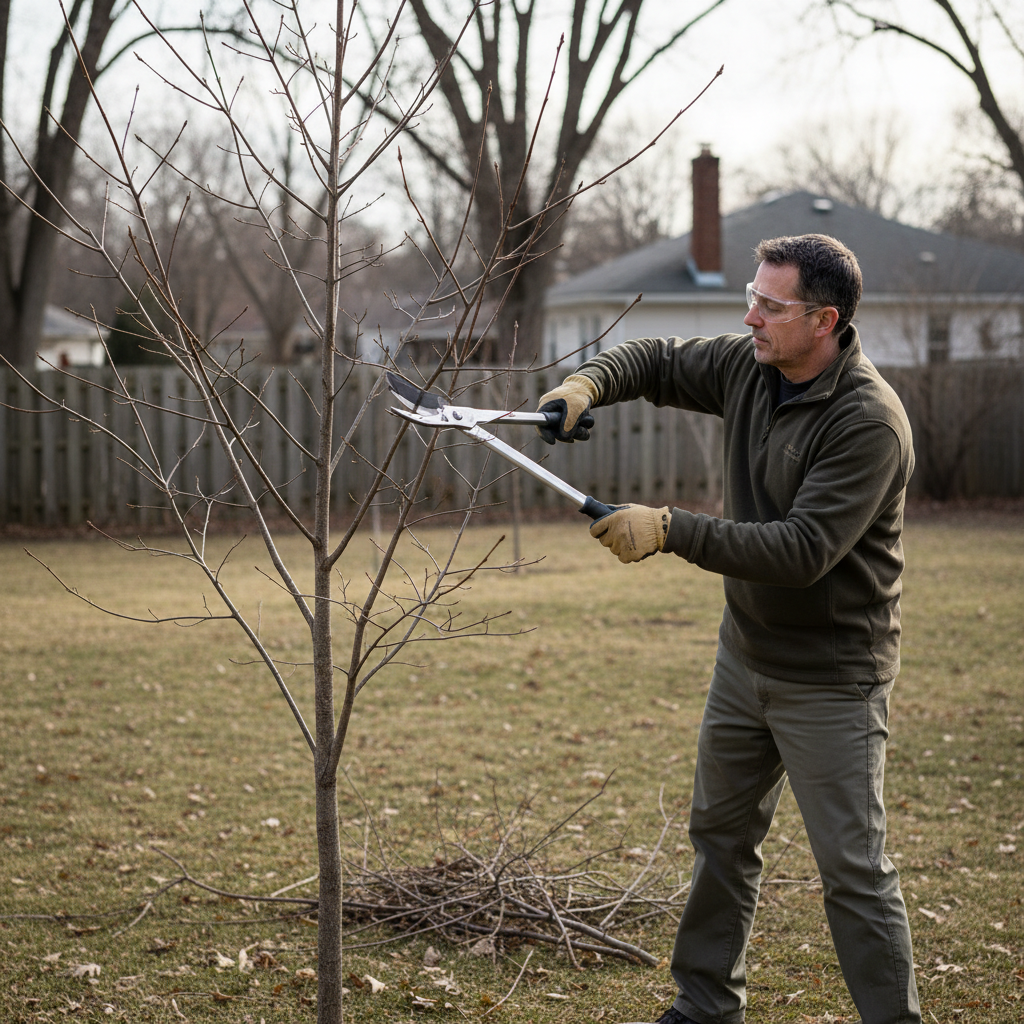
- Monitor Local Climate and Weather Conditions – Timing within the season
- Avoid pruning during extreme heat, drought, or immediately before a hard freeze. These conditions stress the tree and can hinder wound closure and recovery.
- For post-flowering pruning: Ensure the risk of late frosts has passed, and the tree is actively recovering from flowering. Dry conditions are generally preferable to wet, as moisture can spread disease.
Landscaping · Deck or fence project
| Project category | Landscaping |
|---|---|
| Problem type | Deck or fence project |
| Trade required | Landscaping |
| Urgency | Planned project |
| Safety risk | Moderate safety risk |
| DIY suitability | DIY for experienced homeowners |
| Cost category | High cost |
| Typical timeline | Most builds 3–10 days depending on size |
| Contractor type | Landscaping contractor |
Repair option
Replace failed boards, posts, and hardware; reseal the surface.
Replacement option
Rebuild when framing or the ledger connection is unsafe.
Common causes
- Rot at posts and ledger
- Storm damage
- Adding outdoor living space
Relevant tools:home improvement material pricesproject cost estimator
Published May 27, 2026Last updated August 17, 2026
Tools & materials you'll need
Affiliate linksAs an Amazon Associate FixlyGuide earns from qualifying purchases — at no extra cost to you. Prices and availability are accurate as of publication and subject to change.
Quick Answer
Pruning at the wrong time of year is the single most significant mistake homeowners make, often leading to stressed trees, reduced flowering, increased susceptibility to pests and diseases, and even structural damage. While a general rule of thumb suggests late winter for many deciduous trees, the truly 'right' time is highly specific, depending on the tree species, its flowering habits, the climate, and your pruning goals (e.g., shape, size, fruit production, or disease removal). Ignoring these factors can set your trees back years in growth and health.
The Problem
Many homeowners, eager to maintain their yards, grab their pruners whenever they have a free afternoon, without considering the biological rhythms of their trees. This indiscriminate pruning often backfires. Pruning a spring-flowering tree in late winter, for example, removes the very buds that would produce flowers, leaving you with a barren display. Pruning susceptible trees in late spring or summer can expose fresh wounds to rapidly spreading diseases or intense heat, hindering recovery. Improper timing can also stimulate unwanted growth, known as 'water sprouts' or 'suckers,' which are weak and drain the tree's energy. The core problem is a lack of understanding regarding how a tree's internal processes – dormancy, sap flow, bud formation, and healing – are affected by seasonal changes and, consequently, when pruning will be most beneficial or detrimental.
How It Works
Trees, much like all living organisms, operate on a seasonal schedule. Understanding this schedule is fundamental to effective pruning. In winter dormancy, deciduous trees shed their leaves, growth slows dramatically, and sap flow is minimal. This is often an ideal time for structural pruning because the absence of leaves allows for a clear view of the tree's framework. The dormant state also means the tree is less stressed by the wounds, as pests and diseases are less active, and the tree has an entire spring and summer to seal off cuts before the next dormant period.
As spring approaches, sap begins to rise, and buds swell and burst, signaling a period of rapid growth. Spring-flowering trees form their flower buds on old wood (the growth from the previous season), meaning if you prune them in late winter or early spring, you're essentially cutting off next year's blooms. These trees are best pruned immediately after they finish flowering, allowing new growth to form and set buds for the following year.
Summer is a time of active growth, photosynthesis, and fruit development. Pruning during this period, often called 'summer pruning,' is typically used for specific purposes: to slow growth on an overly vigorous branch, to maintain size, to remove diseased or damaged limbs that become apparent with foliage, or to thin fruit. However, extensive summer pruning can stress a tree, as it removes photosynthesizing leaves essential for energy production. Wounds created in summer are also more susceptible to sun scald, disease, and insect infestation due to higher temperatures and increased pest activity.
Autumn sees trees preparing for dormancy. Leaves change color and drop, and the tree starts to store energy in its roots. Pruning heavily in the fall is generally discouraged. Fresh pruning cuts don't have enough time to heal properly before winter, making the tree vulnerable to cold damage, frost cracking, and providing easy entry points for disease pathogens and overwintering pests.
Knowing these cycles—dormancy, active growth, flowering, and energy storage—is the secret to timing your pruning cuts for maximum benefit and minimal stress to your trees.
Step-by-Step Fix
Here’s how to pinpoint the ideal pruning time for your specific trees and achieve healthy, attractive results.
-
Identify Your Tree Species and Flowering Habit – Crucial First Step
- Before touching any branch, know what type of tree you have. Is it a deciduous tree (loses leaves in winter) or an evergreen? Does it flower in spring, summer, or not at all? This information dictates your timing. If you're unsure, take photos of leaves, bark, and any flowers/fruits, and use a plant identification app or consult a local arborist or nursery.
- If your tree is a spring bloomer (e.g., Azalea, Forsythia, Cherry, Dogwood, Lilac): These trees set flower buds on old wood from the previous season. Prune immediately after the flowers fade. This allows the tree to produce new wood that will bear next year's flowers.
- If your tree is a summer floomer (e.g., Crape Myrtle, Rose of Sharon, certain Hydrangeas, some evergreens): These trees primarily bloom on new wood (growth produced in the current season). Prune in late winter or early spring, before new growth begins. This encourages vigorous new shoots that will produce flowers.
- If your tree is a non-flowering deciduous tree (e.g., Oak, Maple, Elm, Ash): The best time for major structural pruning is during late winter, typically January to early March in temperate climates. The tree is dormant, leaves are off for better visibility, and pests/diseases are less active. Also, sap flow is minimal, preventing 'bleeding' (though bleeding isn't usually harmful, it can be messy).
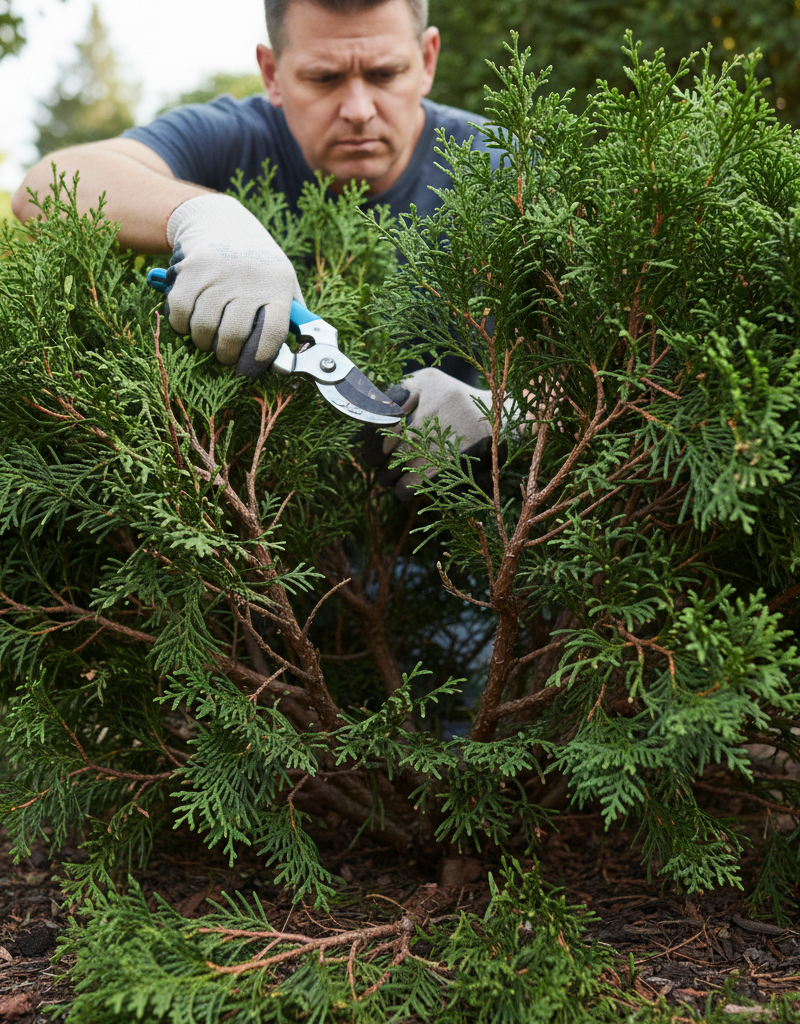
- If your tree is an evergreen (e.g., Pine, Spruce, Fir, Arborvitae, Holly): These generally require less pruning. Light shaping and removal of dead or damaged branches can be done in late winter or early spring, before new growth flushes. For conifer evergreens (pines, spruces), candle pruning (removing part of the new growth 'candles') occurs in spring after candles have elongated but before needles fully emerge. Broadleaf evergreens (holly, magnolia) can tolerate light pruning after flowering if they are spring bloomers, or in late winter/early spring if they are grown primarily for foliage.
-
Evaluate Your Pruning Goals – What do you want to achieve?
- Removing dead, damaged, or diseased wood: This can (and should) be done any time of year it is noticed. Prioritize removing these branches immediately to prevent spread of disease or further damage. Always sterilize your tools between cuts when dealing with diseased wood (e.g., with a 10% bleach solution or rubbing alcohol).
- Improving tree structure and health (structural pruning): This includes removing crossing branches, weak V-crotches, or branches growing inward. Best done in late winter for deciduous trees, when the tree is dormant and its structure is clearly visible. This promotes strong framework.
- Enhancing flowering or fruiting: Follow the species-specific timing described in Step 1. For fruit trees, dormant pruning in late winter is crucial for promoting fruit production, along with targeted summer pruning for thinning.
- Reducing size or controlling growth: This is often done with 'reduction cuts' which shorten a branch back to a strong lateral branch. Heavy reduction is best performed in late winter when the tree is dormant. Light tip pruning to control shape or vigor can sometimes be done in summer, but be cautious not to remove too much photosynthetic material.
- Safety considerations: Remove hazardous branches (cracked, hanging, or interfering with power lines) immediately, regardless of the season. For power line issues, always call your utility company; never attempt to prune near power lines yourself.
-
Monitor Local Climate and Weather Conditions – Timing within the season
- Avoid pruning during extreme heat, drought, or immediately before a hard freeze. These conditions stress the tree and can hinder wound closure and recovery.
- For dormant pruning: Aim for a period of several days where temperatures are consistently above freezing, ideally without strong winds. Avoid pruning when temperatures are expected to drop significantly shortly after, as fresh wounds can be susceptible to frost damage.
- For post-flowering pruning: Ensure the risk of late frosts has passed, and the tree is actively recovering from flowering. Dry conditions are generally preferable to wet, as moisture can spread disease.
-
Use the Right Tools for Clean Cuts – Sharpness is key
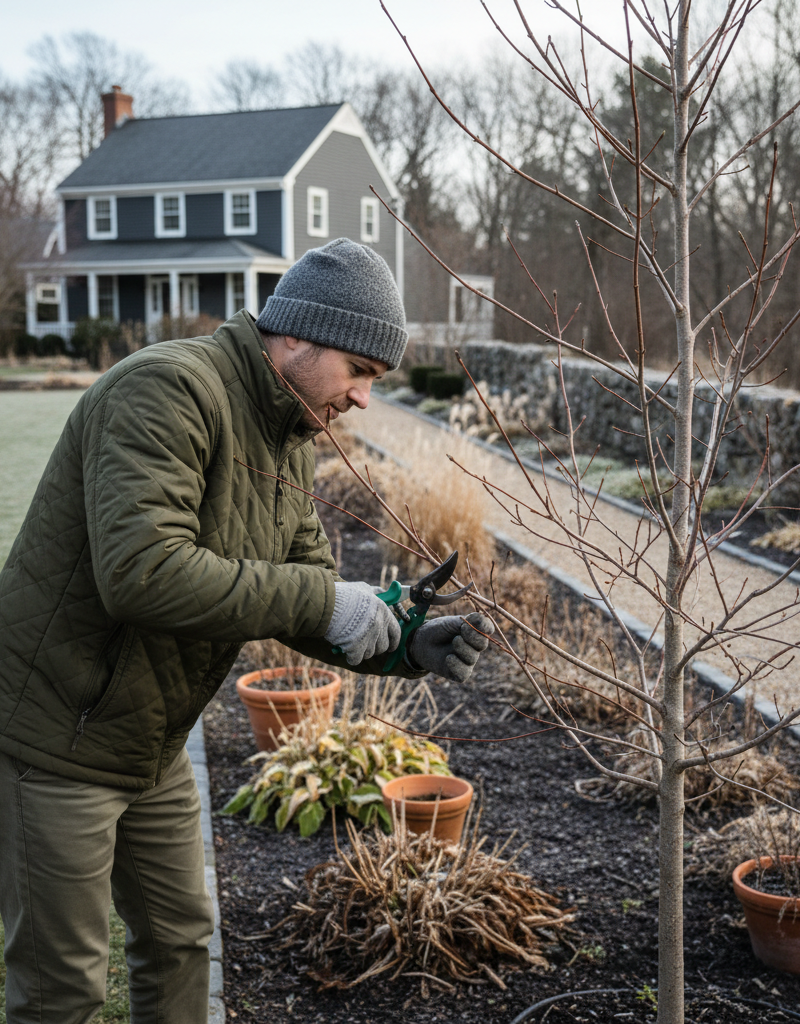
- Hand pruners (bypass type): For branches up to 3/4 inch thick. Keep them sharp.
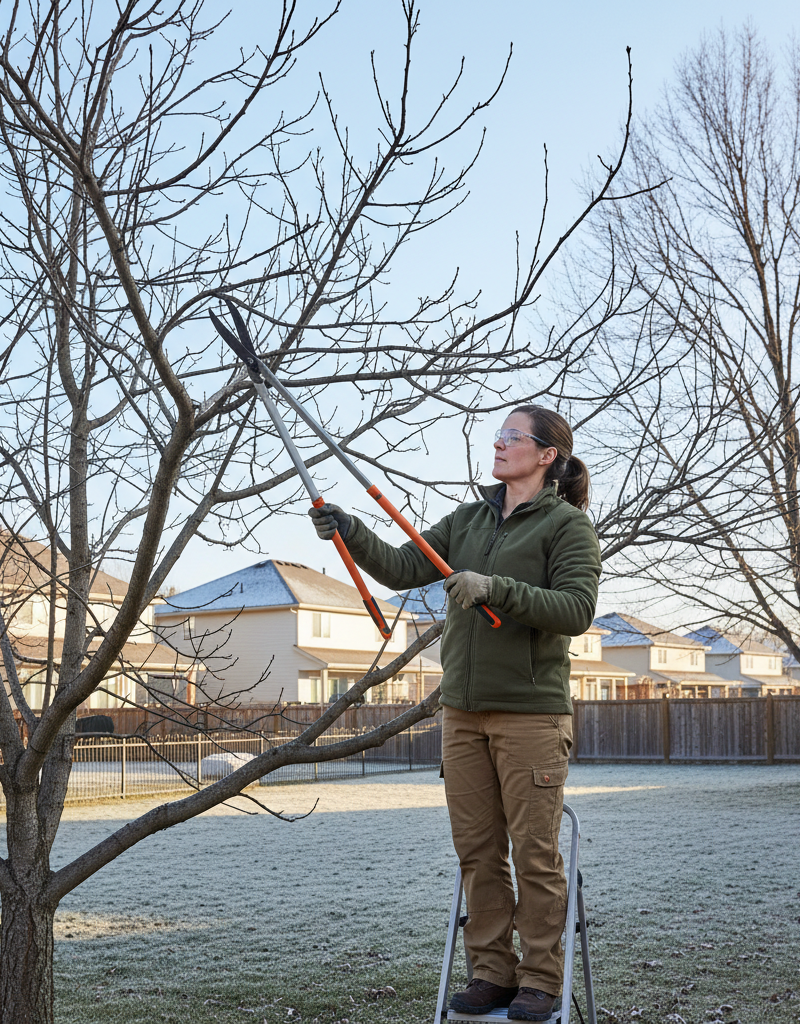
- Loppers: For branches 3/4 inch to 1 1/2 inches thick. Provide more leverage.
- Pruning saw: For branches thicker than 1 1/2 inches. Ensure it's specifically designed for pruning (curved blade often preferred).
- Safety Gear: Always wear sturdy gloves and eye protection.
- Safety Note: Never use hedging shears on trees for anything beyond very fine, aesthetic shaping of small shrubs, as they make improper cuts for tree health.
-
Make Proper Pruning Cuts – Preventing damage and disease
- Don't leave stubs: Cut branches just outside the 'branch collar'—the slightly swollen area at the base of the branch where it connects to the main stem or another larger branch. The branch collar contains cells that help the tree heal over the wound.
- Don't cut into the branch collar: This removes the tree's natural healing tissue.
- Three-cut method for larger branches: To prevent bark tearing, make an undercut first, then a top cut further out on the branch, allowing the branch to fall cleanly. Finally, make your finishing cut just outside the branch collar.
- Safety Note: Always maintain a stable ladder position or work from the ground. If branches are large or high, or near power lines, call a professional arborist.
-
**
Related Articles
Keep troubleshooting with these hand-picked guides from FixlyGuide:
- The #1 Pruning Mistake Homeowners Make (and How to Fix It) — Many homeowners prune their trees at the wrong time, leading to weak growth, disease, or fewer flowers. Learn the right time to prune to en…
- The #1 Pruning Mistake Homeowners Make (and the Secret to Stronger Trees) — Discover the most common pruning error homeowners make and how to avoid it, ensuring healthier, more resilient trees in your yard.
- The #1 Pruning Mistake Homeowners Make (It Harms Your Trees!) — Don't guess when to prune trees! Discover the crucial timing mistake most homeowners make that can severely damage their yard's health.
- The #1 Pruning Mistake Homeowners Make (It Harms Your Trees!) — Discover the most common pruning mistake homeowners make and how bad timing can permanently damage your trees. Learn the optimal windows fo…
- The #1 Pruning Mistake Homeowners Make (and How to Fix It) — Many homeowners prune their trees at the wrong time, leading to weak growth, disease, and reduced flowering. Learn the correct timing for h…
- The #1 Mistake Homeowners Make When Their AC Drain Clogs (And The $5 Fix) — Discover the most common error homeowners make when tackling a clogged AC drain line and learn a simple, inexpensive solution to prevent co…
Should you do this yourself?
Answer five quick questions before you start. Safety outranks savings every time.
Your experience with work like this
How high do you have to work?
Does the job involve any of these?
Will it need a permit?
Specialty tools
Free and instant. Educational guidance only — not a quote, inspection, or professional diagnosis.
What should this project cost?
Enter your project details for a realistic cost range before you call anyone.
Cost depends heavily on which system turns out to be the source.
- Regional adjustment
- National average
- Labor share (typical)
- ~$1,620
- Quotes to collect
- 3 written estimates
Educational estimate based on national averages — not a binding quote. Always confirm with written local estimates.
Before you start
Check the difficulty, permits, and safety risk — then decide whether to call a pro.
- Estimate this projectGet a cost range for your scope and ZIP before you call anyone.Open
- Get local estimatesSend one request and compare written estimates from vetted pros.Open
Free, no signup required. Estimates are educational guidance, not a quote or an inspection.
Get the print-ready PDF of this guide
A clean, ad-free, printable version you can keep on your phone or pin to the workshop wall. Free with a FixlyGuide account.
- Print-optimized layout
- Tools, materials & every step included
- Saved to your account
Frequently asked questions
What happens if I prune a tree at the wrong time?+
Pruning at the wrong time can lead to reduced flowering, stressed trees, susceptibility to pests and diseases, excessive watersprout growth, and overall diminished health and vigor. It disrupts the tree's natural growth cycle and healing process.
Can I prune dead branches any time of year?+
Yes, dead, damaged, or diseased branches should be removed immediately, regardless of the season. Prompt removal prevents disease spread and eliminates safety hazards. Always sterilize your tools after cutting diseased wood.
How do I know if my tree is a spring or summer bloomer?+
Spring bloomers typically form flower buds on 'old wood' (from the previous year's growth) and flower before their leaves fully emerge. Summer bloomers form buds on 'new wood' (growth from the current season) and flower later in the season, often after leaves have fully developed. If unsure, a quick search for your specific tree species will provide this information.
Is it ever okay to prune in the fall?+
Generally, heavy pruning in the fall is discouraged because fresh wounds may not heal before winter, making the tree vulnerable to cold damage and disease. Light trimming of dead or very small branches might be acceptable, but it's best to wait for late winter dormancy.
Should I use pruning seal or wound dressing?+
Most arborists do not recommend using pruning seal or wound dressing on tree cuts. Modern research indicates these products don't help the tree heal and can even trap moisture and pathogens, hindering the tree's natural compartmentalization process.
Discussion
Loading comments…