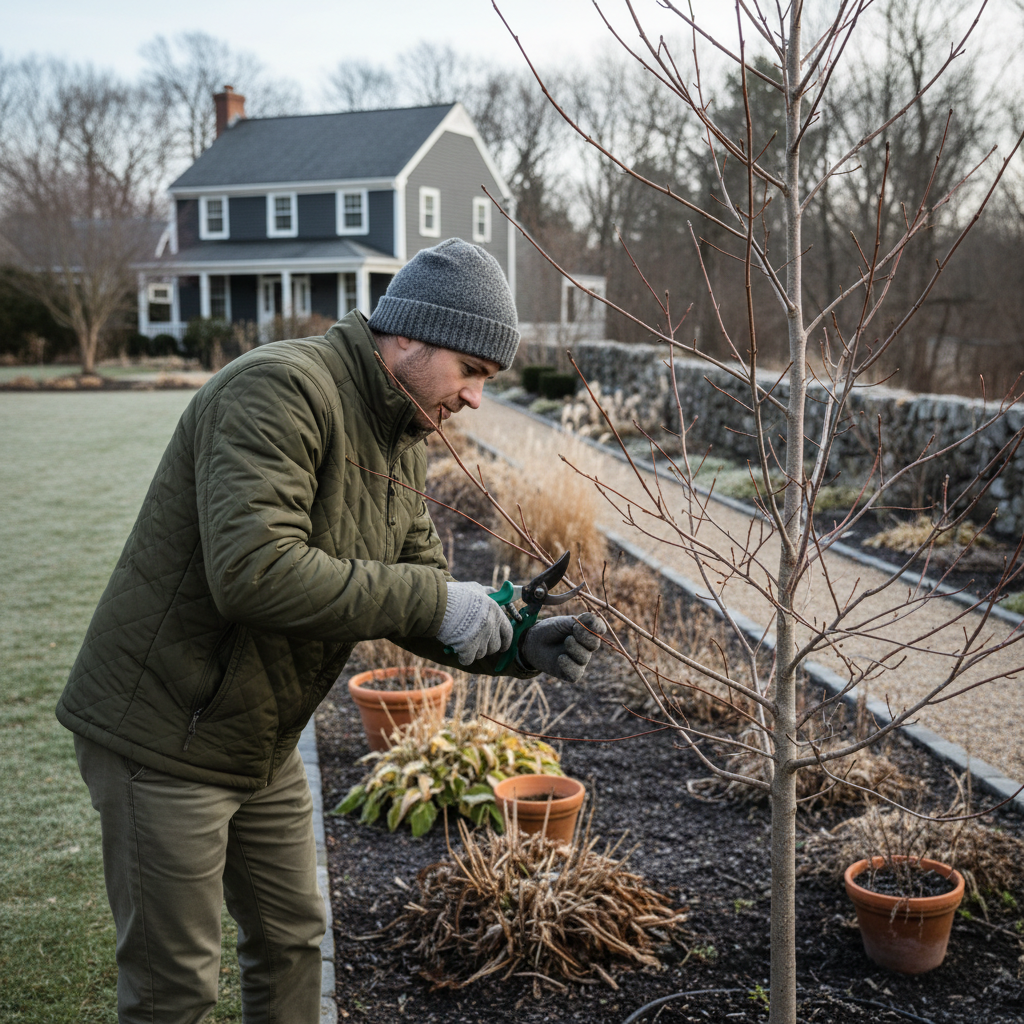
- Are you removing dead, diseased, or damaged branches? (This can be done any time.)
- Are you shaping the tree, promoting structural integrity, or reducing overall size?
- Are you encouraging more flowers or fruit?
- Are you correcting rubbing or crossing branches?
Landscaping · Deck or fence project
| Project category | Landscaping |
|---|---|
| Problem type | Deck or fence project |
| Trade required | Landscaping |
| Urgency | Planned project |
| Safety risk | Moderate safety risk |
| DIY suitability | DIY for experienced homeowners |
| Cost category | High cost |
| Typical timeline | Most builds 3–10 days depending on size |
| Contractor type | Landscaping contractor |
Repair option
Replace failed boards, posts, and hardware; reseal the surface.
Replacement option
Rebuild when framing or the ledger connection is unsafe.
Common causes
- Rot at posts and ledger
- Storm damage
- Adding outdoor living space
Relevant tools:home improvement material pricesproject cost estimator
Published June 7, 2026Last updated August 17, 2026
Tools & materials you'll need
Affiliate links- AmazonBypass PrunersFor branches up to 3/4 inch (about finger thickness)
- AmazonLoppersFor branches up to 1 3/4 inches (about wrist thickness)
- AmazonPruning SawFor branches larger than 1 3/4 inches
- AmazonLadderOptional, for reaching higher branches, but use with extreme caution and only for small branches. For large branches, use a pro.
As an Amazon Associate FixlyGuide earns from qualifying purchases — at no extra cost to you. Prices and availability are accurate as of publication and subject to change.
Quick Answer
Pruning at the wrong time of year is the most common and damaging mistake homeowners make. The ideal pruning time largely depends on the specific tree species, its growth cycle, and your goals (e.g., promoting growth, maximizing flowering, or removing dead branches). For most deciduous trees, the dormant season (late winter to early spring) is generally safe and beneficial. However, flowering trees a specific needs depending on if they bloom on old or new wood, and evergreens have different timing considerations. Understanding your tree’s unique needs is crucial to avoid stress, disease, or reduced blooms.
The Problem
Many homeowners view tree pruning as a simple, straightforward task, something that can be done whenever a branch looks out of place or overgrown. This casual approach often leads to significant problems: weakened trees, susceptibility to pests and diseases, reduced flowering or fruiting, and even eventual tree death. The timing of a prune is not just a suggestion; it's a critical factor in a tree's health and vitality. Pruning at the wrong time can stimulate a flush of vulnerable new growth right before a frost, remove developing flower buds, or open wounds when disease spores are most active. Without understanding the specific needs of different tree types, homeowners risk turning a beneficial maintenance task into a detrimental act.
How It Works
Trees, like all living organisms, operate on biological cycles, and these cycles dictate the best times for intervention. Pruning is essentially a controlled wounding of the tree. When you cut a branch, the tree responds by allocating energy to seal off the wound and typically stimulates growth in nearby buds. This energy allocation and growth response are heavily influenced by the season.
During the dormant season (late fall to late winter), deciduous trees have shed their leaves, and their metabolic activity significantly slows down. Sap flow is minimal, reducing the risk of bleeding (the oozing of sap from cuts) which can attract pests. Without leaves, the tree's structure is fully visible, making it easier to identify dead, diseased, or crossing branches. Most importantly, dormant pruning minimizes stress on the tree because it isn't actively expending energy on leaf production or extensive growth. The wounds have time to begin healing before the intense spring growth spurt.
Conversely, pruning during the active growing season (spring and summer) removes a significant portion of the tree's leaves, which are its food-producing factories through photosynthesis. This can shock the tree, force it to expend valuable energy reconstructing lost foliage, and potentially stunt its growth. Wounds created during this period are also more susceptible to fungal spores and bacterial infections, as many pathogens are active in warmer, humid conditions. However, there are exceptions: some trees, especially those that bloom on old wood, benefit from pruning immediately after flowering to preserve the next year's blooms. Others, like certain evergreens, tolerate light summer pruning for shaping.
Understanding a tree's carbohydrate reserves is also key. Trees store energy (carbohydrates) in their roots and woody tissues. Pruning at the wrong time can deplete these reserves, especially if significant amounts of foliage are removed during the growing season, leaving the tree vulnerable. Proper timing ensures that pruning either occurs when reserves are high (dormant season) or when the removal of energy-producing leaves is strategically planned for specific outcomes (e.g., thinning fruit for larger yields).
Step-by-Step Fix
Step 1: Identify Your Tree Species — This is the absolute first critical step.
- Different trees have different pruning needs. Is it a deciduous tree (loses leaves in winter), an evergreen (keeps leaves year-round), a flowering tree, or a fruit tree?
- If this doesn't work: If you're unsure, take clear photos of the leaves, bark, and overall tree shape. Use a plant identification app or consult with a local arboretum or nursery expert. Misidentification can lead to improper pruning and harm.
Step 2: Understand Your Pruning Goal — Pruning isn't just cutting; it's purposeful.
- Are you removing dead, diseased, or damaged branches? (This can be done any time.)
- Are you shaping the tree, promoting structural integrity, or reducing overall size?
- Are you encouraging more flowers or fruit?
- Are you correcting rubbing or crossing branches?
Step 3: General Dormant Season Pruning for Deciduous Trees — The safest bet for most.
- Timing: Late winter to early spring, typically January through March, before buds break.
- Why: The tree is dormant, sap flow is low, diseases are less active, and the tree's structure is clear. Wounds begin healing before the spring growth spurt.
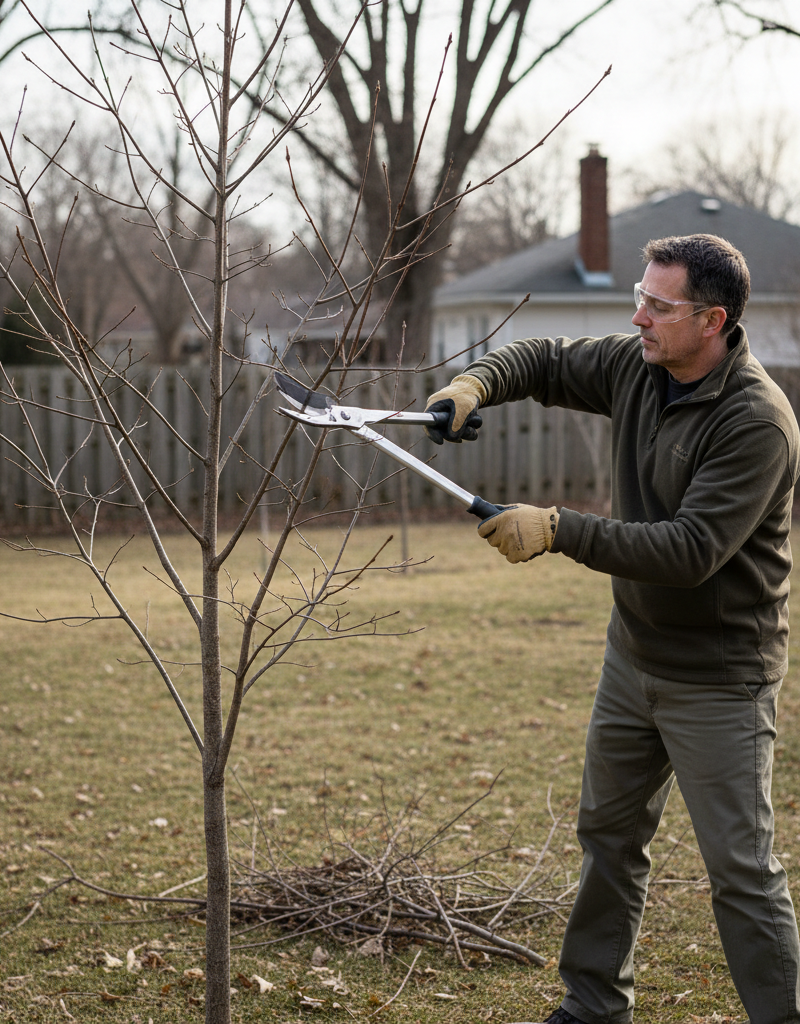
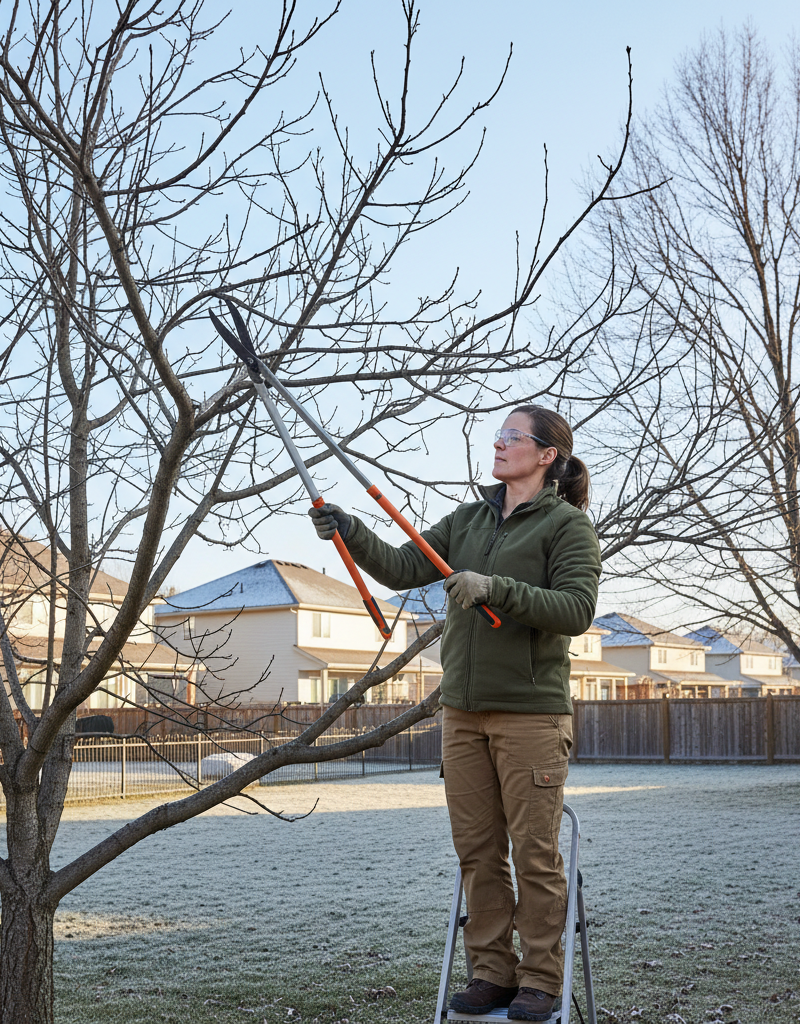
- Tools: Clean, sharp bypass pruners for branches up to 3/4 inch, loppers for branches up to 1 3/4 inches, and a pruning saw for larger limbs.
- Safety: Wear thick gloves, safety glasses, and a long-sleeved shirt. Ensure ladders are stable if working at height. Never cut near power lines.
Step 4: Pruning Flowering Trees (Old Wood Bloomers) — Don't miss next year's blooms.
- Identify: These trees produce flowers on buds formed the previous year (old wood). Examples include azaleas, rhododendrons, forsythia, dogwood, and lilacs.
- Timing: Immediately after they finish flowering in spring or early summer.
- Why: Pruning after flowering allows the tree to set new buds for the next year without sacrificing current blooms. Pruning in late winter would remove these developing flower buds.
Step 5: Pruning Flowering Trees (New Wood Bloomers) — Encourage abundant blooms.
- Identify: These trees produce flowers on growth from the current season (new wood). Examples include crape myrtle, roses, panicle hydrangeas, and some clematis.
- Timing: Late winter to early spring, during the dormant season.
- Why: Pruning during dormancy encourages vigorous new growth, which is where the flowers will form. Pruning too late in the spring might remove tender new shoots and reduce flowering.
Step 6: Pruning Evergreen Trees and Shrubs — More flexible, but still considerations.
- Conifers (pines, spruces, firs): Generally require minimal pruning. Remove dead, diseased, or damaged branches any time. For shaping, lightly prune new growth ('candles') in early to mid-summer after new needles have fully emerged. Never cut back into old wood devoid of needles, as it often won't regrow.
- Broadleaf Evergreens (holly, magnolia, rhododendron): Best pruned in late winter to early spring, similar to deciduous trees, or lightly in summer for shaping. Avoid heavy pruning in late summer/early fall as it can stimulate new growth vulnerable to winter frost.
Step 7: Pruning Fruit Trees — Specialized timing for yield.
- Apples, Pears, Cherries, Plums: Best pruned in late winter during dormancy. This encourages structure and fruit production.
- Peaches, Nectarines: Also pruned in late winter. They often require more vigorous pruning for optimal fruiting.
- Citrus: Light pruning for shape and deadwood can be done in late winter/early spring, but generally, they require less extensive pruning than deciduous fruit trees.
Step 8: Emergency Pruning (Dead, Diseased, or Damaged Branches) — When safety is paramount.
- Timing: Immediately, regardless of season.
- Why: These branches pose a hazard (falling limbs) or can spread disease to healthy parts of the tree. Make clean cuts to healthy wood.
- Safety: If large branches are involved or near structures/power lines, call a certified arborist.
Common Causes
- Lack of Knowledge: Many homeowners are simply unaware that pruning time matters as much as the cut itself.
- Aesthetic Impatience: Seeing an overgrown or unsightly branch and wanting to address it immediately, without considering the biological consequences.
- Misinformation: Relying on general advice that doesn't account for specific tree species or regional climate differences.
- Fear of Pruning: Delaying pruning until problems are severe, then attempting a drastic cut at an inappropriate time.
- Ignoring Tree Cycles: Not observing when a tree flowers, leafs out, or goes dormant, which are key indicators for optimal pruning windows.
Common Mistakes
- Topping Trees: Severely cutting back main branches to stubs. This is incredibly harmful, weakens the tree, encourages weak watersprouts, and makes it more susceptible to disease. Always prune to a lateral branch or bud.
- Ignoring Tree Species: Treating all trees the same. Pruning a lilac in the fall will mean no flowers next spring. Pruning an oak in summer leaves it highly vulnerable to oak wilt.
- Poor Tool Hygiene: Using dull or dirty tools. This creates jagged cuts that heal poorly and can spread diseases from one tree to another (or one part of a tree to another).
- Pruning Too Much At Once: Removing more than 25% (or even 15-20% for mature trees) of a tree's total canopy in a single season. This shocks the tree, stresses it, and can lead to its decline.
- Making Improper Cuts: Not understanding the 'branch collar' and 'branch bark ridge.' Cuts that are too close to the trunk (flush cuts) or too far out (stub cuts) inhibit proper wound healing. Aim for just outside the branch collar.
- Pruning in Late Summer/Early Fall: This can stimulate a flush of new growth that won't have time to harden off before winter frosts, leading to cold damage and vulnerability.
Cost & Time Breakdown
| Task | DIY cost | Pro cost | Time |
|---|---|---|---|
| Basic Shrub/Small Tree Pruning | $0-$50 | $100-$300 | 30 mins – 2 hrs |
| Medium Tree (>15 ft) Pruning | $50-$150 | $300-$800 | 2-4 hours |
| Large Tree (Tall/Complex) | Not Recommended | $800-$2000+ | 4+ hours |
| Tool Sharpening/Maintenance | $10-$30 | N/A | 15-30 mins |
| Disease Diagnosis | $0-$50 (DIY research) | $75-$150 (Arborist) | Varies |
Tips & Prevention
- Observe Your Trees Annually: Pay attention to when they leaf out, flower, and go dormant. This helps reinforce the correct pruning windows for your specific trees.
- Start Early: Begin formative pruning on young trees to establish strong structure. This minimizes the need for drastic cuts later.
- Sanitize Tools: Always wipe down pruning tools with a 70% isopropyl alcohol solution or a 10% bleach solution between trees (and even between major cuts on a diseased tree) to prevent disease spread.
- Learn Your Zone: While general rules apply, local climate variations can slightly shift ideal timing. Consult local university extension offices for region-specific advice.
- Stay Sharp: Keep your pruning tools sharp. Sharp tools make clean cuts that heal faster and minimize damage to the tree.
- Don't Rush: Pruning is not a race. Take your time, step back frequently to assess the tree's shape, and make thoughtful cuts.
When to Call a Professional
While knowing when to prune is crucial, knowing when to step away is equally important for safety and tree health. You should call a professional arborist if the tree requiring pruning is large, requires climbing, or is located near power lines or structures where falling branches could cause damage or injury. Any job involving a chainsaw above shoulder height or necessitating a ladder taller than 6 feet for stability should be handled by an insured professional. If you suspect a tree has a disease you can't identify, or if its structural integrity seems compromised, a certified arborist can provide an accurate diagnosis and treatment plan, ensuring the long-term health and safety of your trees and property. Professionals also have the specialized equipment and knowledge to remove large limbs safely and efficiently without damaging the tree or surrounding landscape. Never attempt to prune branches near power lines; always contact your utility company first.
Related Articles
Keep troubleshooting with these hand-picked guides from FixlyGuide:
- The #1 Pruning Mistake Homeowners Make (and How to Fix It) — Many homeowners prune their trees at the wrong time, leading to weak growth, disease, or fewer flowers. Learn the right time to prune to en…
- The #1 Pruning Mistake Homeowners Make (And How to Fix It) — Learn the most common pruning mistake homeowners make and how to properly prune shrubs for healthier growth and more abundant blooms.
- The #1 Mowing Mistake That Leaves Your Lawn Brown and Patchy — Discover the most common mowing mistake homeowners make that leads to unhealthy, patchy grass and how to fix it for a vibrant lawn.
- The #1 Mistake Killing Your Tree's Leaves (It's Not Pests) — Discover why your tree's leaves are turning brown and how to reliably diagnose and solve the most common causes of tree leaf discoloration.
- The #1 Pruning Mistake Homeowners Make (It Harms Your Trees!) — Don't guess when to prune trees! Discover the crucial timing mistake most homeowners make that can severely damage their yard's health.
- Is Your Gutter Sagging After Every Storm? The Hidden Flaw Most Homeowners Miss — Discover the overlooked reason your gutters sag after every storm and learn the lasting fix that most homeowners miss.
Should you do this yourself?
Answer five quick questions before you start. Safety outranks savings every time.
Your experience with work like this
How high do you have to work?
Does the job involve any of these?
Will it need a permit?
Specialty tools
Free and instant. Educational guidance only — not a quote, inspection, or professional diagnosis.
What should this project cost?
Enter your project details for a realistic cost range before you call anyone.
Cost depends heavily on which system turns out to be the source.
- Regional adjustment
- National average
- Labor share (typical)
- ~$1,620
- Quotes to collect
- 3 written estimates
Educational estimate based on national averages — not a binding quote. Always confirm with written local estimates.
Before you start
Check the difficulty, permits, and safety risk — then decide whether to call a pro.
- Estimate this projectGet a cost range for your scope and ZIP before you call anyone.Open
- Get local estimatesSend one request and compare written estimates from vetted pros.Open
Free, no signup required. Estimates are educational guidance, not a quote or an inspection.
Frequently asked questions
What is the best time of year to prune most trees?+
For most deciduous trees, the best time is during their dormant season, typically late winter to early spring (January through March) before new growth begins. This minimizes stress, allows for good visibility of the tree's structure, and reduces the risk of disease.
Can I prune a tree in the summer?+
Generally, heavy pruning in summer should be avoided as it can stress the tree by removing too much foliage (its food production system). However, light shaping or removing dead/diseased branches can be done. For flowering trees that bloom on old wood, pruning immediately after flowering in late spring/early summer is recommended.
How do I know if my tree blooms on 'old wood' or 'new wood'?+
Trees that bloom on old wood (like lilacs, dogwood, forsythia) set their flower buds the previous year. You should prune them right after they finish flowering. Trees that bloom on new wood (like crape myrtles, many roses, panicle hydrangeas) produce flowers on growth that develops in the current season, so they are best pruned in late winter or early spring.
What happens if I prune a tree at the wrong time?+
Pruning at the wrong time can stress the tree, make it more susceptible to pests and diseases, reduce or eliminate flowering/fruiting for the next season, or stimulate weak growth that is vulnerable to frost damage. In severe cases, it can even lead to the tree's decline or death.
When should I *never* prune a tree?+
Avoid heavy pruning in late summer or early fall, as this can stimulate new growth that won't have time to harden off before winter, making it vulnerable to cold damage. Also, avoid pruning during extreme heat or drought, as this can add significant stress to the tree.
Should I prune a tree that has just been planted?+
Newly planted trees generally only need minimal pruning to remove any broken or crossing branches. Focus on establishing a strong root system and good leader branch. Heavy pruning can hinder establishment.
Discussion
Loading comments…