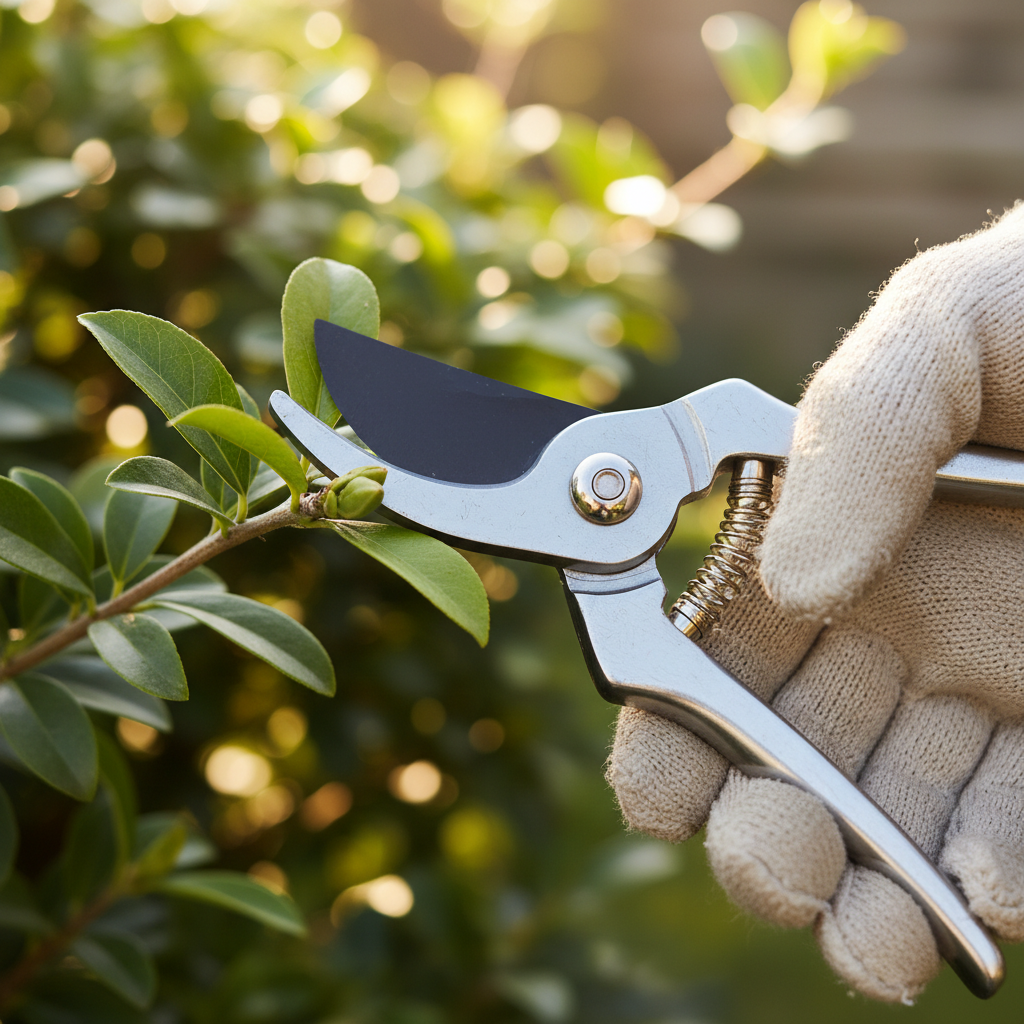
- Dead Wood: Look for branches that are brittle, discolored, or lack leaves when other parts of the plant are thriving. Scratch the bark – if it's brown underneath, it's likely dead. Cut back to healthy wood or to the main stem.
- Damaged Wood: Remove any broken, cracked, or split branches. These are entry points for pests and diseases.
- Diseased Wood: Identify branches with unusual spots, cankers, or growths. Cut back well into healthy wood, at least 6-12 inches below the visible disease, and sterilize your pruners after each cut with a disinfectant wipe or alcohol spray.
Landscaping · Deck or fence project
| Project category | Landscaping |
|---|---|
| Problem type | Deck or fence project |
| Trade required | Landscaping |
| Urgency | Planned project |
| Safety risk | Moderate safety risk |
| DIY suitability | DIY for experienced homeowners |
| Cost category | High cost |
| Typical timeline | Most builds 3–10 days depending on size |
| Contractor type | Landscaping contractor |
Repair option
Replace failed boards, posts, and hardware; reseal the surface.
Replacement option
Rebuild when framing or the ledger connection is unsafe.
Common causes
- Rot at posts and ledger
- Storm damage
- Adding outdoor living space
Relevant tools:home improvement material pricesproject cost estimator
Published May 27, 2026Last updated August 17, 2026
Tools & materials you'll need
Affiliate linksAs an Amazon Associate FixlyGuide earns from qualifying purchases — at no extra cost to you. Prices and availability are accurate as of publication and subject to change.
Quick Answer
Many homeowners inadvertently sabotage their shrubs' health and vigor by making improper pruning cuts, often called 'topping.' This technique, characterized by indiscriminately chopping off the tops or sides of a shrub, leads to an unsightly, unhealthy plant with weak, rapidly growing shoots that are prone to breakage and disease. The correct approach involves purposeful cuts that remove dead, diseased, or crossing branches, open up the canopy for better air circulation, and maintain the shrub's natural shape, promoting strong, healthy growth from the inside out.
The Problem
You've pruned your shrubs, expecting lush, vibrant growth, but instead, they look sparse, leggy, or even sickly. Perhaps new growth is weak and spindly, or the shrub seems to be struggling more than ever. This common scenario often stems from a fundamental misunderstanding of how shrubs respond to pruning. Instead of encouraging healthy development, incorrect cuts stress the plant, divert energy to opportunistic but weak growth, and leave it vulnerable to pests and diseases. The visual cues are typically obvious: an unnatural, boxy or ball-like shape, an abundance of thin, upright 'water sprouts,' or a general decline in the shrub's overall vitality. This isn't just an aesthetic issue; it's a direct threat to the long-term health and lifespan of your landscape investments.
How It Works
To understand proper pruning, you must first grasp how a shrub grows. Plants have a complex system of hormones that regulate growth. Auxins, produced in the apical (terminal) buds at the tips of branches, typically inhibit the growth of lateral (side) buds, a phenomenon called apical dominance. When you 'top' a shrub, you remove these apical buds, releasing the lateral buds from inhibition. This triggers a flurry of rapid, often disorganized growth just below the cut – these are the weak 'water sprouts' often seen after incorrect pruning. Because these new shoots emerge from dormant buds, they are often poorly attached and lack the structural integrity of naturally developed branches.
Conversely, strategic pruning encourages robust growth. When you make a cut just above a healthy bud or a branch union, you direct the plant's energy to activate that specific bud or lateral branch. This promotes outward and upward growth in a controlled manner, leading to a denser, stronger plant framework. Air circulation and light penetration are also critical for shrub health. A dense, overgrown shrub creates a dark, humid environment inside, favoring fungal diseases and insect infestations. Proper thinning opens up the canopy, allowing light to reach inner leaves and air to circulate, reducing disease pressure and promoting overall vigor. Understanding these fundamental principles allows you to manipulate the shrub's natural growth processes to achieve both beauty and health.
Step-by-Step Fix
1. Assess Your Shrub's Needs – Identify the type of shrub and its blooming schedule.
- Before making any cut, know what you're working with. Is it a spring-flowering shrub (like a lilac or azalea) that blooms on old wood, or a summer-flowering shrub (like a 'Limelight' hydrangea or rose of Sharon) that blooms on new wood? Prune spring bloomers after they flower to avoid cutting off buds for the current year. Prune summer bloomers in late winter or early spring before new growth begins.
- Observe its natural shape. What's the goal? To thin for air, reduce size, or remove dead wood?
2. Gather Your Tools and Safety Gear – Prepare for a clean, efficient, and safe job.
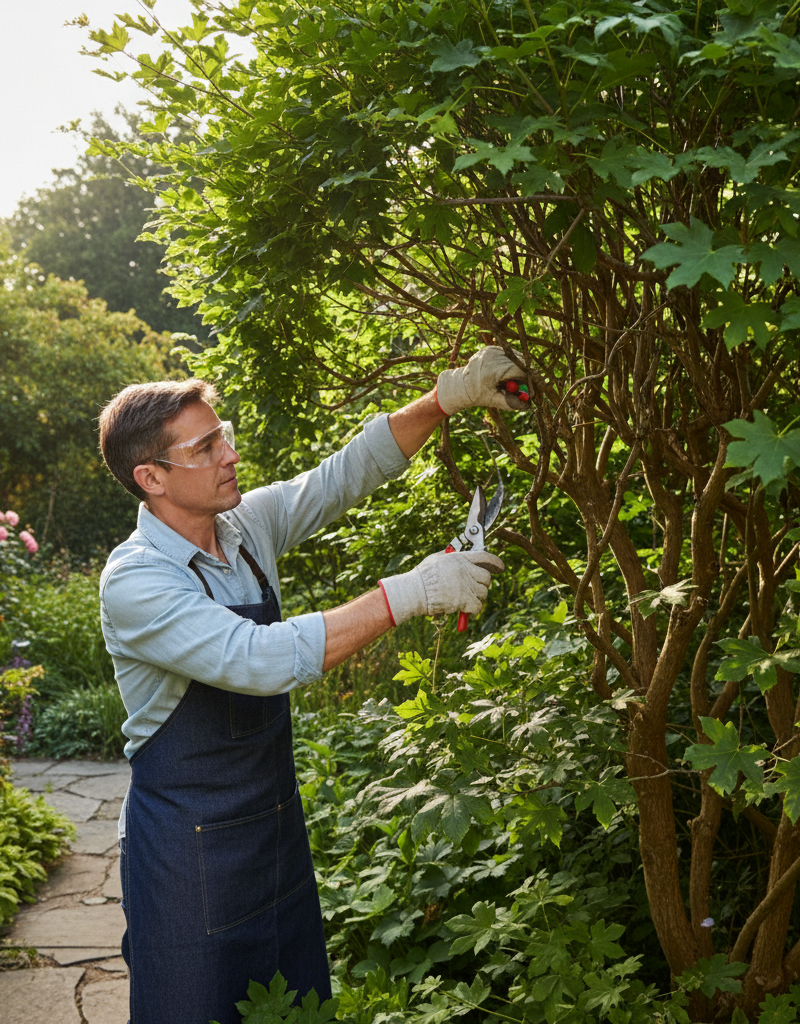
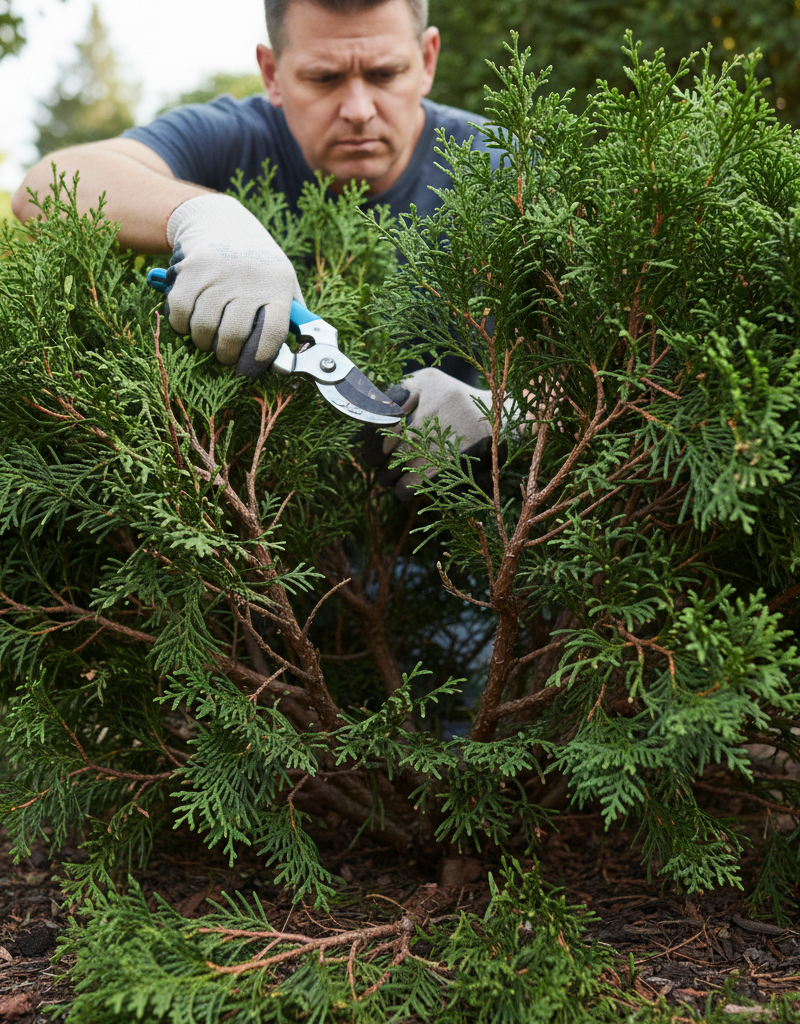
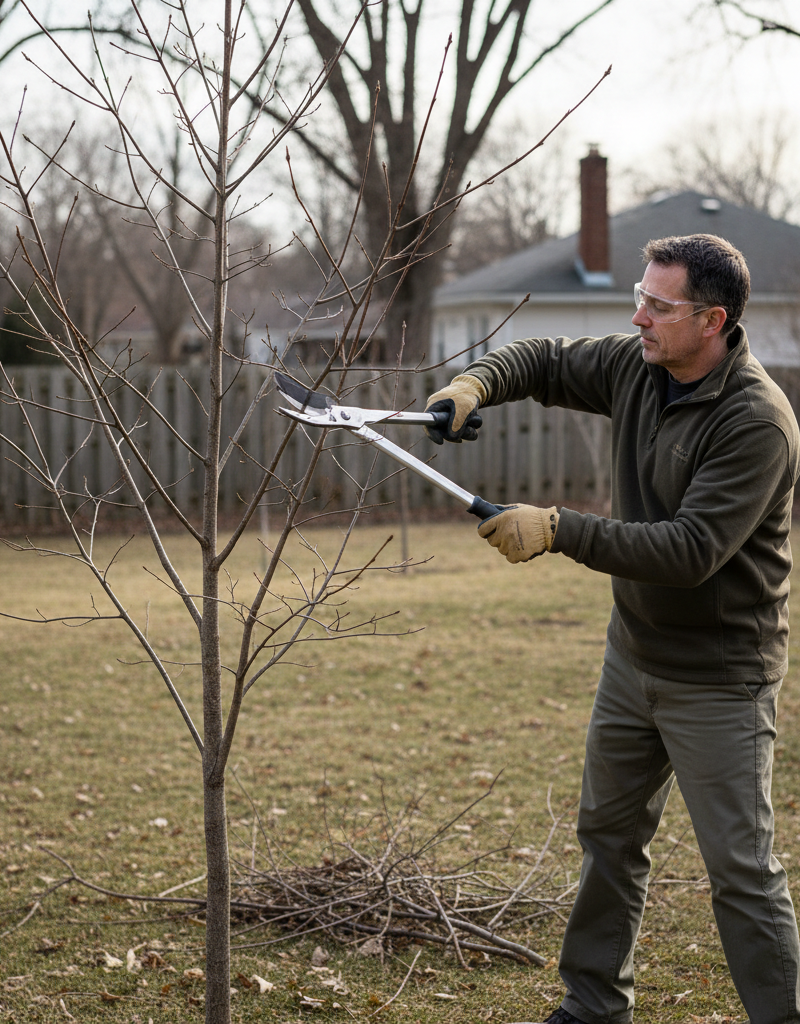
- Use sharp, clean bypass pruners for branches up to 3/4 inch thick. For thicker branches (1-1.5 inches), use loppers. A pruning saw will be needed for anything larger than 1.5 inches.
- Wear sturdy gardening gloves to protect your hands and safety glasses to shield your eyes from snapping branches or debris.
- Safety Note: Always ensure your tools are sharp. Dull tools tear branches, creating jagged wounds that are difficult for the plant to heal and invite disease. Clean tools with rubbing alcohol or a bleach solution between plants to prevent spreading diseases.
3. 'The Three D's' - Remove Dead, Damaged, and Diseased Wood – Prioritize cuts that improve health.
- Dead Wood: Look for branches that are brittle, discolored, or lack leaves when other parts of the plant are thriving. Scratch the bark – if it's brown underneath, it's likely dead. Cut back to healthy wood or to the main stem.
- Damaged Wood: Remove any broken, cracked, or split branches. These are entry points for pests and diseases.
- Diseased Wood: Identify branches with unusual spots, cankers, or growths. Cut back well into healthy wood, at least 6-12 inches below the visible disease, and sterilize your pruners after each cut with a disinfectant wipe or alcohol spray.
4. Prune Crossing or Rubbing Branches – Prevent future damage and promote open growth.
- Locate branches that are growing into each other or rubbing together. When branches rub, they create wounds that can become infected. Choose the stronger, better-positioned branch to keep and remove the weaker or poorly placed one. Make your cut just outside the branch collar (the slightly swollen area at the base of the branch).
5. Thin for Air Circulation and Light Penetration – Open up the shrub's canopy.
- Step back and look at the shrub. Does it look too dense in the middle? Remove some interior branches that are growing inward or straight up, especially if they are thin or weak. Aim to create an open structure that allows light and air to penetrate to the center of the plant. Don't remove more than 25-30% of the shrub's total live foliage in a single season.
6. Address Suckers and Water Sprouts – Remove unwanted, weak growth.
- Suckers: These are shoots that emerge from the base of the plant or from the roots, often below the graft union if your shrub is grafted. Dig them out or cut them as close to their point of origin as possible. If left, they can drain energy from the main plant.
- Water Sprouts: These are fast-growing, upright shoots that often appear after aggressive pruning. They are typically weak and should be removed by cutting them back flush to the branch or trunk they originate from.
7. Make Proper Pruning Cuts – Ensure clean cuts that heal quickly.
- When cutting a branch back to a main stem or larger branch, cut just outside the 'branch collar.' The branch collar is a slightly swollen area where the branch meets the main stem and contains cells that help the wound heal.
- When cutting back to a bud, make a diagonal cut about 1/4 inch above an outward-facing bud. The cut should slope away from the bud. This directs new growth outward, preventing the shrub from becoming too dense in the center.
8. Step Back and Evaluate – Review your work and make minor adjustments.
- Periodically step away from the shrub to get a full perspective. You can always remove more, but you can't put branches back. Avoid making small, indiscriminate cuts (shearing) unless you are intentionally shaping a formal hedge.
- If your shrub is severely overgrown, it may require renewal pruning (cutting back aggressively to rejuvenate), which should be spread over 1-3 years to avoid shocking the plant.
Common Causes
- Lack of Knowledge: Many homeowners simply don't know the best techniques for their specific shrubs, leading to generic, harmful cuts.
- Fear of Pruning: Hesitation to prune can lead to overgrown, leggy shrubs, and then an aggressive, incorrect attempt to 'fix' them all at once.
- Over-Shearing: The misconception that all shrubs should be shaped into perfect geometric forms, often done with hedge trimmers, which indiscriminately cuts leaves and branches, promoting weak outer growth and bare interiors.
- Incorrect Timing: Pruning spring-flowering shrubs in late winter or early spring removes their flower buds, leading to a lack of blooms. Pruning too late in the season (e.g., late summer/fall) can stimulate new growth that won't harden off before winter, leading to frost damage.
- Dull or Dirty Tools: Using dull tools tears plant tissue, making wounds harder to heal and susceptible to disease. Dirty tools can spread pathogens from one plant to another.
- Ignoring the 'Three D's': Failing to regularly remove dead, damaged, or diseased wood allows problems to persist and spread, weakening the entire plant.
Common Mistakes
- Topping Shrubs: The biggest mistake. Cutting across branches without regard to lateral buds or branch collars creates an abundance of weak, unsightly water sprouts and often leads to a decline in plant health. Instead, use thinning cuts back to a main branch or an outward-facing bud.
- Pruning at the Wrong Time: Pruning all shrubs in late winter can eliminate blooms on spring-flowering varieties. Always research your specific shrub's bloom time and prune accordingly (after flowering for spring bloomers, during dormancy for summer/fall bloomers).
- Removing Too Much at Once: Never remove more than 25-30% of a shrub's total live foliage in a single season. Aggressive pruning stresses the plant and can lead to shock or death. If a shrub needs significant reduction, spread it out over 2-3 years.
- Shearing Instead of Thinning: Using hedge trimmers to create a
Related Articles
Keep troubleshooting with these hand-picked guides from FixlyGuide:
- The #1 Pruning Mistake That Chokes Your Shrubs (And How to Fix It) — Discover the most common pruning error homeowners make that hinders shrub health and how to correct it for vibrant growth.
- The #1 Pruning Mistake Homeowners Make (And How to Fix It) — Learn the most common pruning mistake homeowners make and how to properly prune shrubs for healthier growth and more abundant blooms.
- The #1 Pruning Mistake Homeowners Make (and the Secret to Stronger Trees) — Discover the most common pruning error homeowners make and how to avoid it, ensuring healthier, more resilient trees in your yard.
- The #1 Pruning Mistake Homeowners Make (And How to Fix It for Thriving Shrubs) — Avoid the most common pruning error to ensure your shrubs grow strong, healthy, and beautiful, year after year.
- How to Prune Overgrown Shrubs Without Killing Them: A Complete Guide — Learn how to properly prune overgrown shrubs, restore their health, and improve their appearance without causing damage, ensuring vibrant g…
- The #1 Mistake Homeowners Make After Finding Missing Shingles (And How to Fix It Right) — Discover the crucial steps to take after a storm rips shingles from your roof, ensuring a proper, lasting repair and preventing costly futu…
Should you do this yourself?
Answer five quick questions before you start. Safety outranks savings every time.
Your experience with work like this
How high do you have to work?
Does the job involve any of these?
Will it need a permit?
Specialty tools
Free and instant. Educational guidance only — not a quote, inspection, or professional diagnosis.
What should this project cost?
Enter your project details for a realistic cost range before you call anyone.
Cost depends heavily on which system turns out to be the source.
- Regional adjustment
- National average
- Labor share (typical)
- ~$1,620
- Quotes to collect
- 3 written estimates
Educational estimate based on national averages — not a binding quote. Always confirm with written local estimates.
Frequently asked questions
What is the single worst pruning mistake?+
The single worst pruning mistake is 'topping' or indiscriminately cutting across branches without regard for the plant's natural growth habit or internal structure. This leads to weak, rapid growth, an unnatural shape, and increased susceptibility to disease and pest infestation.
When is the best time to prune my shrubs?+
The best time to prune depends on the shrub type. For spring-flowering shrubs (e.g., lilacs, azaleas), prune *after* they finish blooming. For summer or fall-flowering shrubs (e.g., hydrangeas, roses of Sharon), prune in late winter or early spring before new growth begins. Dead, damaged, or diseased wood can be removed at any time.
How much of a shrub can I remove when pruning?+
As a general rule, never remove more than 25-30% of a shrub's total live foliage in a single season. More aggressive pruning can shock the plant and lead to stress or even death. If a shrub is severely overgrown, it's best to rejuvenate it over 2-3 years.
Why are my newly pruned shrubs growing spindly, weak shoots?+
If your shrubs are growing spindly, weak shoots (often called 'water sprouts') after pruning, it's a sign of improper cuts, usually 'topping.' This removes the strong apical buds and stimulates many weak, poorly attached buds below the cut. To correct this, remove these weak shoots and focus future pruning on making clean cuts just above strong, outward-facing buds or branch collars.
Should I use pruning seal or wound dressing on cuts?+
No, generally, pruning seal or wound dressing is not recommended for most pruning cuts. Plants are designed to heal their own wounds. Applying dressings can actually trap moisture and pathogens, hindering the natural healing process. Focus on making clean, proper cuts that allow the plant to heal efficiently on its own.
Discussion
Loading comments…