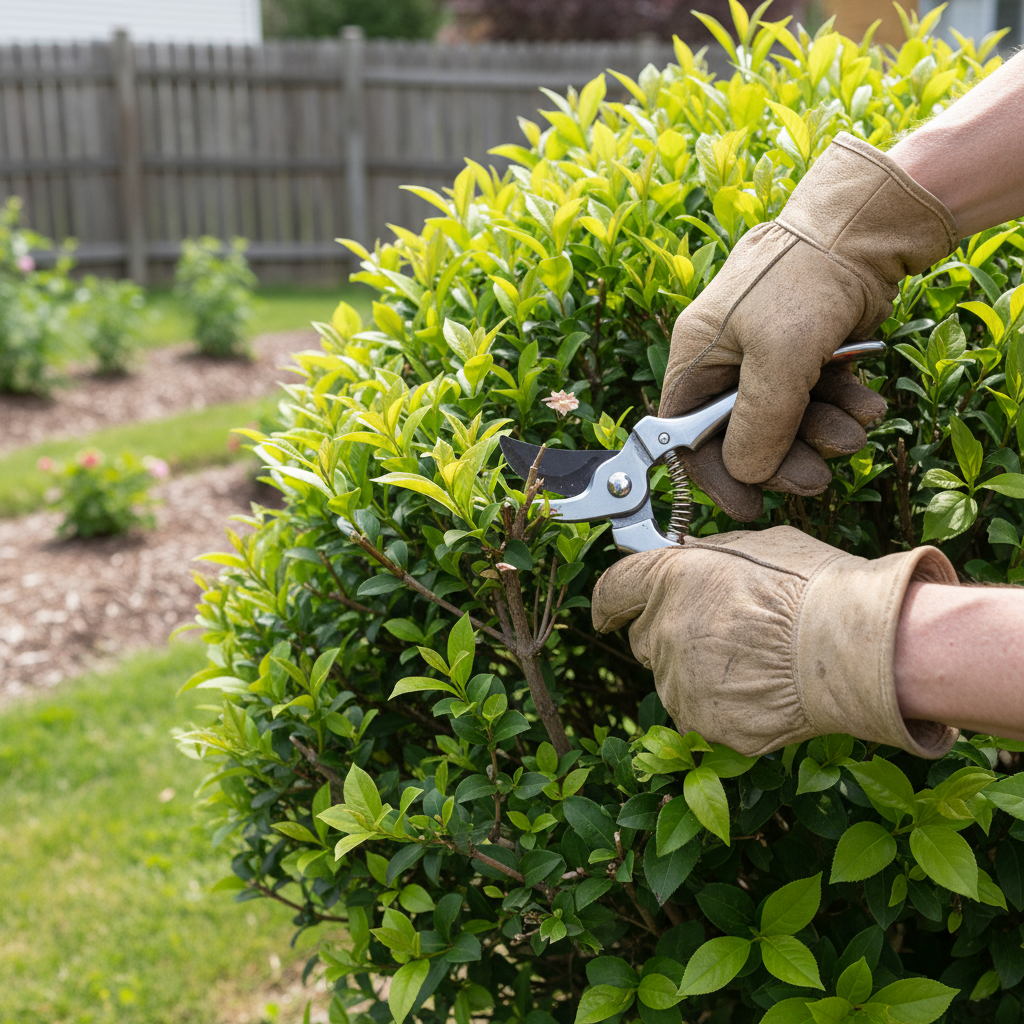
- Lack of Knowledge: Many homeowners learn to prune by observation, often copying improper techniques or simply not understanding the biological responses of plants to cuts.
- Overzealous Size Control: Trying to drastically reduce a shrub's size in a single session, rather than over several years, often leads to severe topping or shearing that removes too much foliage.
- Shear-Happy Tendencies: Using hedge shears for all shrubs, even those that prefer selective pruning, results in an outer shell of dense growth and a hollow, bare interior.
- Ignoring Natural Form: Forcing a shrub into an unnatural geometric shape (like a perfect cube) often requires cutting across stems, leading to stubs and adventitious growth.
- Fear of Pruning: Neglecting pruning for too long can lead to overgrown, leggy shrubs, prompting more drastic, often incorrect, interventions when homeowners finally decide to prune.
Landscaping · Deck or fence project
| Project category | Landscaping |
|---|---|
| Problem type | Deck or fence project |
| Trade required | Landscaping |
| Urgency | Planned project |
| Safety risk | Moderate safety risk |
| DIY suitability | DIY for experienced homeowners |
| Cost category | High cost |
| Typical timeline | Most builds 3–10 days depending on size |
| Contractor type | Landscaping contractor |
Repair option
Replace failed boards, posts, and hardware; reseal the surface.
Replacement option
Rebuild when framing or the ledger connection is unsafe.
Common causes
- Rot at posts and ledger
- Storm damage
- Adding outdoor living space
Relevant tools:home improvement material pricesproject cost estimator
Published May 4, 2026Last updated August 17, 2026
Tools & materials you'll need
Affiliate linksAs an Amazon Associate FixlyGuide earns from qualifying purchases — at no extra cost to you. Prices and availability are accurate as of publication and subject to change.
Quick Answer
Many homeowners inadvertently harm their shrubs by committing a major pruning error: removing too much of the shrub's outer canopy while leaving long, bare inner branches, a practice often called 'topping' or 'lion-tailing'. This stress induces weak, excessive new growth and leaves the plant vulnerable. To correct this, focus on a multi-season approach of strategic thinning, removing dead or crossing branches, and safely reducing the shrub's size to promote a robust, natural structure.
The Problem
You've pruned your shrubs, aiming for neatness or size reduction, but instead of thriving, they look unhealthy, leggy, or are producing a burst of weak, twiggy growth at the ends of long, bare branches. Perhaps the interior is sparse, or the plant seems to struggle against pests and diseases more than before. This isn't just an aesthetic issue; it's a structural problem stemming from improper pruning techniques, specifically over-thinning the interior or 'topping' the shrub. These methods strip the plant of its essential photosynthetic factory, leaving it stressed, susceptible, and less vigorous. The shrub expends immense energy trying to recover, often producing an unsightly, unsustainable flush of growth that's prone to breakage and further decline.
How It Works
Shrubs, like all plants, operate on a delicate balance of energy production and distribution. Leaves are the primary sites of photosynthesis, converting sunlight into sugars that fuel growth, root development, and defense mechanisms. When a shrub is properly pruned, a small percentage of older or unproductive branches are removed, encouraging the plant to redirect energy to younger, more vigorous stems and maintaining an open structure that allows light and air to penetrate. This selective removal stimulates healthy branching and promotes flowering or fruiting without overwhelming the plant's resources.
However, when a shrub is 'topped' (cutting main stems back to stubs) or 'lion-tailed' (removing all lower branches and interior foliage, leaving only a tuft at the top), the plant's energy reserves are severely depleted. The vast majority of its photosynthetic capacity is removed. In a desperate attempt to survive and regain its lost foliage, the shrub reacts by sending out a profusion of weak, rapidly growing shoots from adventitious buds just below the cuts. These shoots, often called 'water sprouts' (on trees) or 'suckers' (from the base or roots), are poorly attached to the main stem, making them prone to breaking in wind or under heavy snow. The density of this new, weak growth can also create a dense canopy that restricts air circulation, leading to fungal diseases. Furthermore, the large, open wounds left by topping act as entry points for pests and diseases, further compromising the shrub's health and longevity. Proper pruning aims to work with the plant's natural growth habit, not against it, ensuring a balance between foliage and structural integrity.
Step-by-Step Fix
1. Assess the Damage — Examine your shrub's overall health and the extent of the improper pruning. Note areas with sparse growth, excessive weak shoots, dead branches, or an unnatural shape. This assessment will guide your corrective pruning strategy.
- If your shrub looks severely damaged with widespread dead branches, consider consulting an arborist. It might be beyond simple DIY correction.
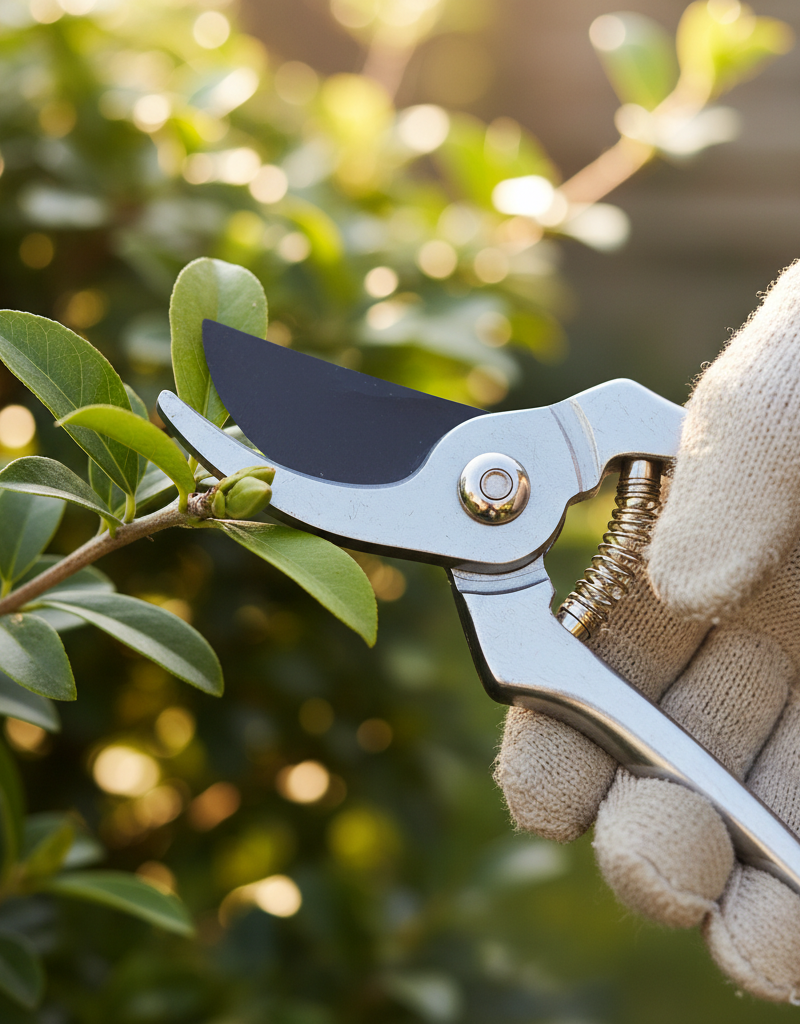
2. Gather Your Tools — Ensure your bypass pruners, loppers, and pruning saw are clean and sharp. Dull tools can tear branches, creating entry points for disease.
- Safety Note: Always wear sturdy gloves and eye protection when pruning to guard against cuts, scrapes, and flying debris.
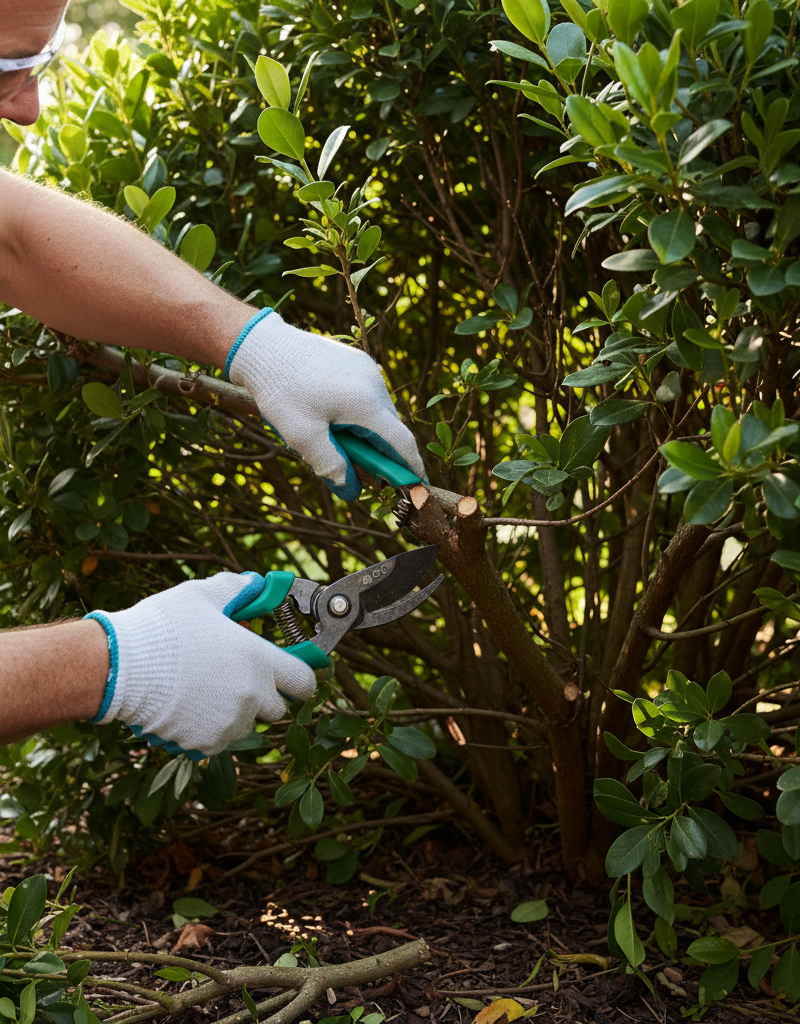
3. Remove Dead, Damaged, or Diseased Wood — This is the first and most crucial step. Cut back to healthy wood, making your cuts just outside the branch collar (the slightly swollen area where a branch joins a larger one). This prevents decay from spreading.
- Look for discolored, brittle, or leafless branches.
- Make clean cuts. If you see signs of disease, disinfect your tools with a 10% bleach solution or rubbing alcohol between cuts.
4. Address Crossing or Rubbing Branches — Identify any branches that are rubbing against each other, as this creates wounds and potential entry points for pests. Choose the stronger, better-positioned branch and remove the weaker or less ideally placed one.
- Aim to create an open structure that allows light and air to penetrate the shrub's interior.
5. Tackle Inward-Growing Branches — Remove branches that are growing directly into the center of the shrub. This further improves air circulation and light penetration, essential for healthy inner growth.
6. Cautiously Reduce Overgrown Shoots (Water Sprouts/Suckers) — If your shrub has produced a dense flush of weak, upright shoots as a reaction to topping, begin to selectively thin these out. Do not remove them all at once, as the shrub still relies on some of this foliage for photosynthesis. Over one to three seasons, gradually remove about one-third of the weakest or worst-positioned regrowth each year, cutting back to an outward-facing bud or a healthier side branch.
- The goal is to encourage stronger, better-distributed branches over time.
- If new shoots appear at the base of the shrub, remove them flush with the ground to prevent competition with the main plant.
7. Reduce Overall Height and Width (Gradually) — If the shrub is still too tall or wide, reduce its size by following main branches back to a strong side branch that's at least one-third the diameter of the branch you're removing. Avoid making heading cuts (cutting branches back to an arbitrary length, leaving stubs). This process should be spread over several years for severely overgrown plants.
- Never remove more than 25-30% of the shrub's total foliage in a single growing season. This prevents further stress.
8. Shape for Natural Growth — Step back frequently to assess the shrub's overall shape. Aim for a natural, slightly rounded or informal look, rather than a rigid, geometric form. Continue to remove any small, weak, or spindly growth that detracts from the plant's health and appearance.
9. Post-Pruning Care — After corrective pruning, water the shrub thoroughly, especially during dry periods, to aid in recovery. A light application of a balanced slow-release fertilizer can also help, but avoid over-fertilizing, which can promote more weak, rapid growth.
Common Causes
- Lack of Knowledge: Many homeowners learn to prune by observation, often copying improper techniques or simply not understanding the biological responses of plants to cuts.
- Overzealous Size Control: Trying to drastically reduce a shrub's size in a single session, rather than over several years, often leads to severe topping or shearing that removes too much foliage.
- Shear-Happy Tendencies: Using hedge shears for all shrubs, even those that prefer selective pruning, results in an outer shell of dense growth and a hollow, bare interior.
- Ignoring Natural Form: Forcing a shrub into an unnatural geometric shape (like a perfect cube) often requires cutting across stems, leading to stubs and adventitious growth.
- Fear of Pruning: Neglecting pruning for too long can lead to overgrown, leggy shrubs, prompting more drastic, often incorrect, interventions when homeowners finally decide to prune.
Common Mistakes
- Topping (Heading Cuts): Cutting large branches back to a stub or an arbitrary point between nodes. This stresses the plant and encourages a flush of weak, poorly attached vertical shoots.
- Lion-Tailing: Removing all internal and lower branches, leaving only foliage at the ends of long, bare branches. This weakens the plant's structure and makes it susceptible to breakage.
- Removing Too Much at Once: Taking off more than 25-30% of the living foliage in a single season. This severely stresses the plant and can lead to decline or death.
- Pruning at the Wrong Time: Pruning shrubs that flower on old wood (e.g., lilacs, forsythia) in late winter or early spring can remove all of the season's blossoms. Pruning too late in the fall can stimulate new growth that won't harden off before winter.
- Using Dull or Dirty Tools: Dull tools crush and tear branches, creating jagged wounds that are slow to heal and invite pests and diseases. Dirty tools can spread pathogens from one plant to another.
- Ignoring the Three D's: Failing to prioritize the removal of Dead, Diseased, and Damaged wood first. This should always be the starting point for any pruning job.
Cost & Time Breakdown
| Task | DIY cost | Pro cost | Time |
|---|---|---|---|
| Basic Tool Set (Pruners, Loppers) | $40–$100 | N/A | N/A |
| Corrective Pruning (1 Shrub) | $0 (if tools owned) | $150–$400 | 1–3 hours |
| Larger Shrub/Multiple Shrubs | $0 (if tools owned) | $300–$800+ | 3–8 hours |
| Arborist Consultation | N/A | $75–$150 | 0.5–1 hour |
| Disposal of Cuttings | $0–$50 | Included in Pro cost | 0.5–1 hour |
Tips & Prevention
- Know Your Shrub: Research the specific pruning needs and natural growth habit of each shrub in your landscape. Some flower on old wood, some on new, and some tolerate hard pruning better than others.
- Prune for Health, Then Form: Always prioritize removing dead, damaged, or diseased wood first. Then, focus on opening up the canopy for air and light. Finally, refine the shape.
- Little and Often: Instead of one drastic pruning, aim for lighter, more frequent pruning over the growing season (for most shrubs). This helps maintain shape and size without stressing the plant.
- Renew Pruning: For extremely overgrown, neglected deciduous shrubs, consider 'renewal pruning' over 2-3 years. Each year, remove a few of the oldest, thickest stems at ground level to encourage new, vigorous growth from the base.
- Cut to a Bud or Branch: Always make cuts just above an outward-facing bud or to a healthy side branch. This directs new growth in a desirable direction and prevents stubs.
- Clean and Sharpen Tools: Keep your pruning tools sharp and clean. Sharpen blades regularly and wipe them down with rubbing alcohol or a bleach solution after each use, especially when moving between different plants.
When to Call a Professional
While many pruning tasks are manageable for homeowners, certain situations warrant calling a certified arborist or professional landscaper. If your shrubs are exceptionally large, requiring ladders and specialized equipment, or if they are situated near power lines or structures, it's best to hire an expert for safety and to ensure proper technique. If a shrub appears severely diseased, has extensive deadwood that could pose a hazard, or if you're unsure about the long-term health prospects after improper pruning, a professional can assess the plant's condition, identify diseases, and recommend the most effective corrective actions, including removal if necessary. Arborists have the knowledge to diagnose complex plant health issues and execute large-scale or high-risk pruning safely and correctly, potentially saving valuable plants and preventing further damage or injury.
Related Articles
Keep troubleshooting with these hand-picked guides from FixlyGuide:
- How to Prune Overgrown Shrubs Without Killing Them: A Complete Guide — Learn how to properly prune overgrown shrubs, restore their health, and improve their appearance without causing damage, ensuring vibrant g…
- The #1 Pruning Mistake Homeowners Make (and How to Fix It) — Many homeowners prune their trees at the wrong time, leading to weak growth, disease, or fewer flowers. Learn the right time to prune to en…
- The #1 Mowing Mistake That Invites Weeds (And How to Fix It in 15 Minutes) — Discover the secret to a thriving lawn and banish weeds by avoiding the most common mowing error homeowners make, improving grass health dr…
- The 3 Lawn Mowing Mistakes Killing Your Grass (and How to Fix Them) — Discover the three most common lawn mowing mistakes homeowners make that damage their grass, and learn simple, actionable steps to correct…
- The #1 Mistake Killing Your Lawn's Clover—and the Easy fix That Spares Your Grass — Discover the most common mistake homeowners make when trying to eliminate clover, and learn how to remove it effectively without harming yo…
- The #1 Deck Sealing Mistake Most Homeowners Make (And How to Fix It) — Discover the most common error in deck sealing that leads to premature wear and how to correct it for lasting protection.
Should you do this yourself?
Answer five quick questions before you start. Safety outranks savings every time.
Your experience with work like this
How high do you have to work?
Does the job involve any of these?
Will it need a permit?
Specialty tools
Free and instant. Educational guidance only — not a quote, inspection, or professional diagnosis.
What should this project cost?
Enter your project details for a realistic cost range before you call anyone.
Cost depends heavily on which system turns out to be the source.
- Regional adjustment
- National average
- Labor share (typical)
- ~$1,620
- Quotes to collect
- 3 written estimates
Educational estimate based on national averages — not a binding quote. Always confirm with written local estimates.
Before you start
Check the difficulty, permits, and safety risk — then decide whether to call a pro.
- Estimate this projectGet a cost range for your scope and ZIP before you call anyone.Open
- Get local estimatesSend one request and compare written estimates from vetted pros.Open
Free, no signup required. Estimates are educational guidance, not a quote or an inspection.
Frequently asked questions
What is the biggest pruning mistake people make?+
The biggest mistake is 'topping' or 'lion-tailing' shrubs, which involves cutting main stems back to stubs or removing all interior branches, leaving only outer foliage. This severely stresses the plant and leads to weak, excessive new growth.
Can a badly pruned shrub recover?+
Yes, many badly pruned shrubs can recover with correct 'corrective pruning' over several seasons. This involves gradually removing weak growth, deadwood, and reshaping the plant to encourage healthy, strong branches. Patience is key.
When is the best time to prune a shrub?+
The best time depends on the shrub type. For most deciduous shrubs, prune in late winter to early spring while dormant. For shrubs that flower on old wood (like lilacs), prune immediately after flowering. Always research your specific shrub's needs.
How much of a shrub can I prune at one time?+
A general rule is never to remove more than 25-30% of a shrub's total living foliage in a single growing season. Exceeding this can severely stress the plant and hinder its recovery.
What's the difference between 'heading cuts' and 'thinning cuts'?+
'Heading cuts' involve cutting a branch back to an arbitrary length or a stub, which often stimulates weak, bushy growth. 'Thinning cuts' involve removing an entire branch back to its point of origin or a larger side branch, opening up the plant and promoting stronger, more natural growth.
Discussion
Loading comments…