- Generalizing Pruning Timing: Assuming all trees can be pruned at the same time, without differentiating between deciduous and evergreen, or spring-flowering versus summer-flowering species.
- Reacting to Problems Rather Than Proactively Planning: Waiting until a branch is dangerously overgrown or diseased before pruning, often leading to large, stressful cuts outside the optimal window.
- Misunderstanding Dormancy: Not recognizing that late winter dormancy provides the best conditions for most major pruning work.
- Lack of Species-Specific Knowledge: Homeowners often don't know the specific needs of each tree in their yard, leading to generic pruning practices.
- Aesthetic Over Practicality: Pruning solely for a desired shape or size without considering the tree's health and natural growth habit or the impact on flowering/fruiting.
Landscaping · Deck or fence project
| Project category | Landscaping |
|---|---|
| Problem type | Deck or fence project |
| Trade required | Landscaping |
| Urgency | Planned project |
| Safety risk | Moderate safety risk |
| DIY suitability | DIY for experienced homeowners |
| Cost category | High cost |
| Typical timeline | Most builds 3–10 days depending on size |
| Contractor type | Landscaping contractor |
Repair option
Replace failed boards, posts, and hardware; reseal the surface.
Replacement option
Rebuild when framing or the ledger connection is unsafe.
Common causes
- Rot at posts and ledger
- Storm damage
- Adding outdoor living space
Relevant tools:home improvement material pricesproject cost estimator
Published May 12, 2026Last updated August 17, 2026
Tools & materials you'll need
Affiliate linksAs an Amazon Associate FixlyGuide earns from qualifying purchases — at no extra cost to you. Prices and availability are accurate as of publication and subject to change.
Quick Answer
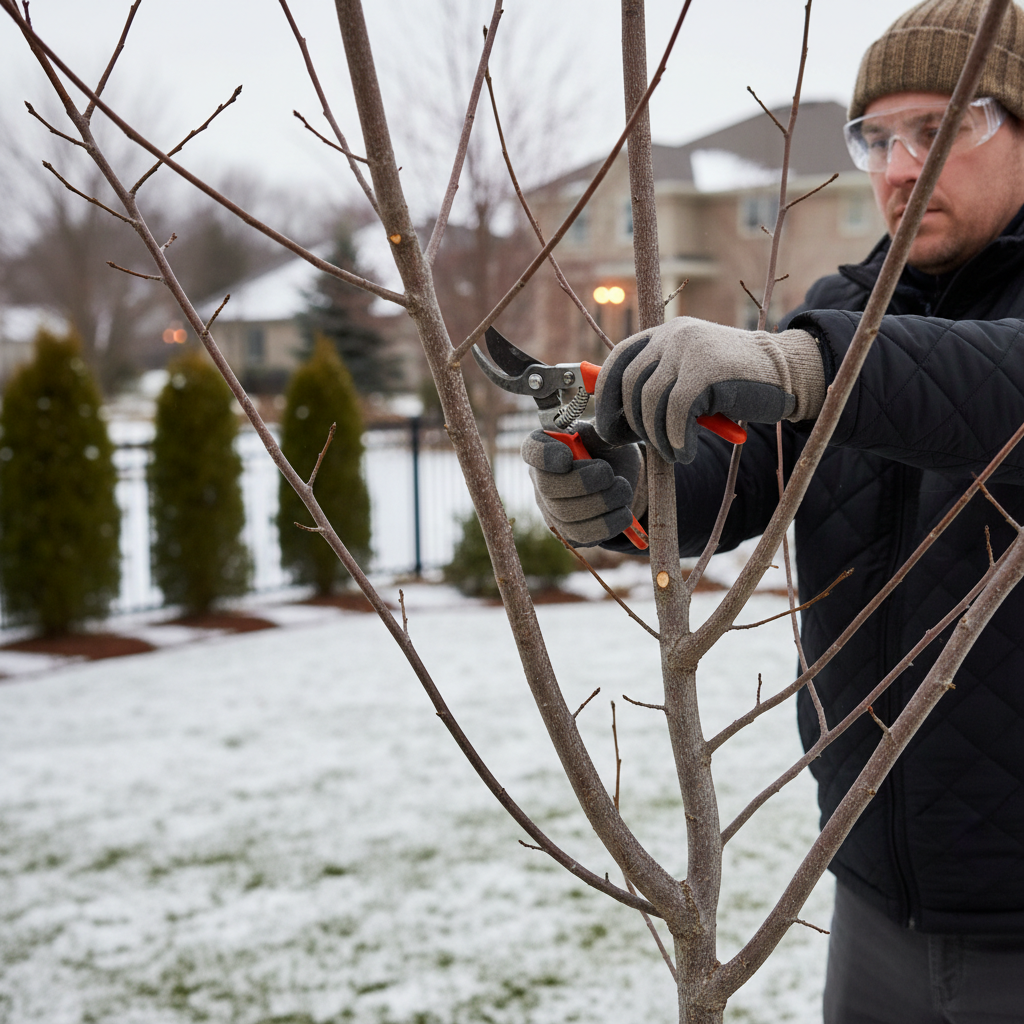
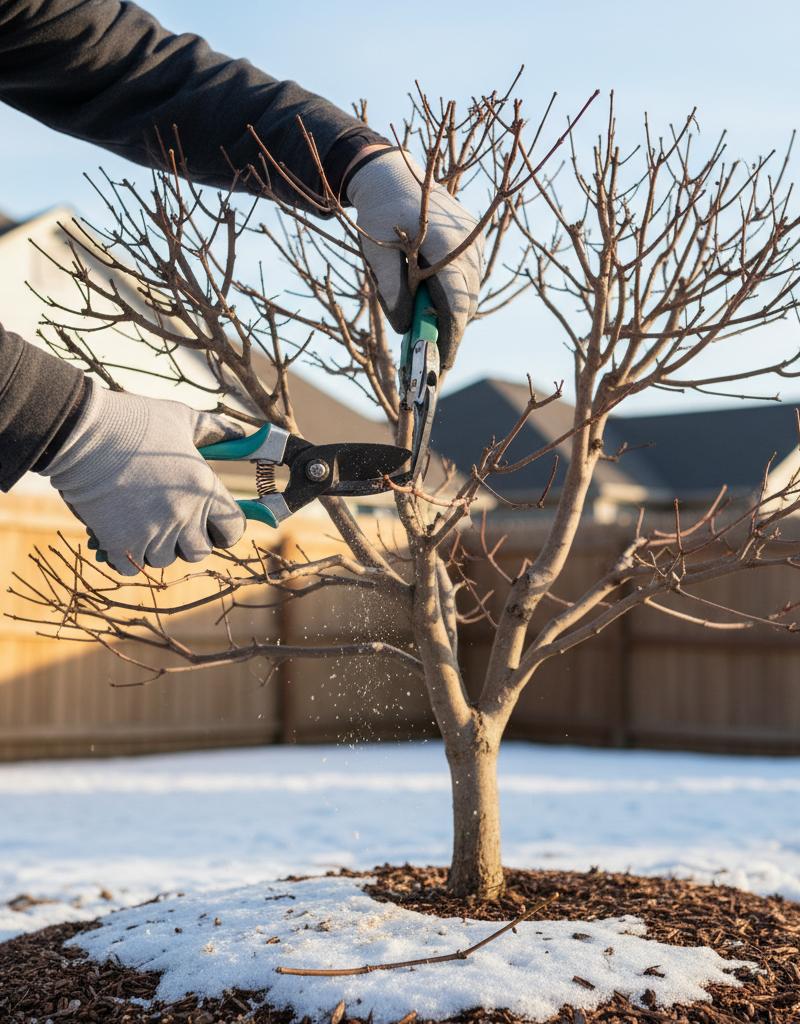
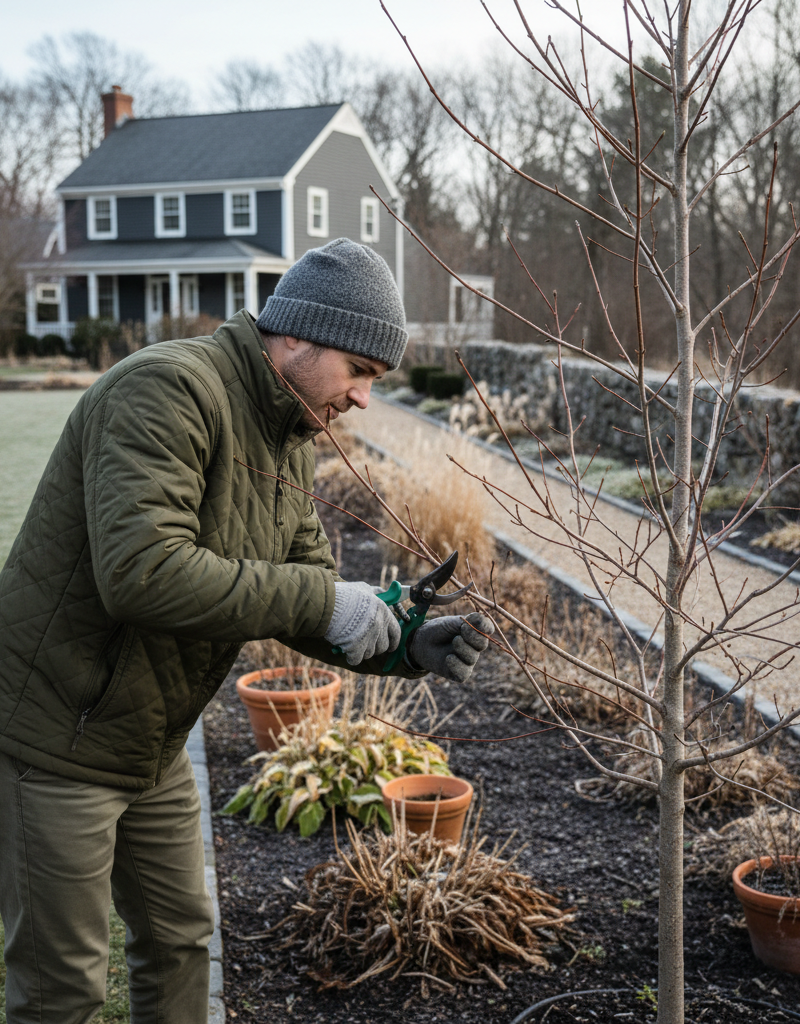
Most deciduous trees benefit from pruning in late winter, typically from January to March, when they are dormant, devoid of leaves, and the risk of disease transmission is lower. This timing allows you to clearly see the tree's structure and minimizes stress. For evergreens, late winter to early spring is often ideal. However, knowing the specific species and the purpose of your pruning (e.g., removing deadwood, shaping, encouraging fruiting) is crucial, as timing can vary significantly. Some trees, like maples and birches, can 'bleed' sap excessively if pruned in late winter, so early summer is often preferred for them.
The Problem
Many homeowners, eager to maintain their yards, often prune trees at suboptimal times, causing more harm than good. Pruning at the wrong time of year can lead to various issues: stimulating excessive growth that's prone to breakage, encouraging the spread of diseases and pests (especially when fungi or insects are active), reducing flowering or fruiting cycles, and causing significant stress to the tree. For instance, pruning oak trees in spring or summer makes them vulnerable to Oak Wilt, a deadly fungal disease. Cutting off spring-flowering trees after they've set buds in late summer or fall means sacrificing an entire season's bloom. The challenge lies in understanding that there isn't a single 'right' time for all trees; proper timing is highly species-specific and purpose-driven.
How It Works
Tree pruning isn't simply about cutting branches; it's a horticultural science rooted in understanding tree biology and seasonal cycles. Trees enter a state of dormancy during winter, a period of reduced metabolic activity where sap flow slows considerably, and growth ceases. This dormancy is critical for pruning because it minimizes stress on the tree. Without leaves, the tree's structure is fully exposed, allowing for clear identification of crossing branches, weak V-crotches, and deadwood. Additionally, in late winter, most disease-causing fungi and insects are inactive, reducing the risk of infection entering fresh wounds. New growth, triggered by spring's warmth and sunlight, can then quickly seal over pruning cuts, promoting faster healing.
Conversely, pruning during active growth periods (spring and summer) removes foliage essential for photosynthesis, which is how the tree produces energy. This can stress the tree and reduce its vigor. Pruning during warmer, wetter months also increases the likelihood of fungal spores and insect vectors spreading into open wounds. For flowering trees, the timing of pruning relates directly to when they set their flower buds. Spring-flowering trees, like dogwoods and magnolias, typically form buds on old wood in the previous summer or fall. Pruning these in late winter or early spring would remove those buds, eliminating blooms for the season. Summer-flowering trees, such as crape myrtles, form buds on new wood in the current growing season, making late winter or early spring the ideal pruning time to encourage vigorous new growth that will produce flowers.
'Bleeders,' like maples, birches, and elms, are a special consideration. When pruned in late winter or early spring, their sap pressure is very high, causing sap to continuously drip from cuts. While generally not harmful to the tree's health, it can be messy and concerning to homeowners. For these species, pruning in early summer after the leaves have fully expanded and sap flow has normalized is often recommended.
Step-by-Step Fix
1. Identify Your Tree Species — Crucial first step for proper timing. Before making any cuts, accurately identify the type of tree you're pruning. Use a tree identification app, a local arboretum guide, or consult with a nursery expert. Different species have vastly different pruning requirements and optimal timings. Knowing your tree's identity is the foundation for successful pruning.
2. Determine Your Pruning Goal — Understand why you're pruning. Are you removing dead, diseased, or damaged branches (DDDs)? Are you shaping the tree, encouraging fruit production, improving air circulation, or reducing overall size? Your goal will influence the timing and extent of your pruning. For instance, removing DDDs can be done anytime, but structural pruning is best in dormancy.
3. Consult the Species-Specific Pruning Calendar — Match your tree to the right season.
- Late Winter (January-March): Ideal for most deciduous trees (oaks, ashes, lindens, fruit trees like apples/pears) when dormant. Most evergreens also respond well to late winter pruning. This is the busiest pruning season. Exceptions: Maples, Birches, Elms, Walnuts, Dogwoods, Magnolias (see below).
- Early Spring (March-April): Good for summer-flowering trees and shrubs like crape myrtles, roses, and chaste trees, which bloom on new wood. Also suitable for evergreens needing light shaping before new growth begins.
- Late Spring/Early Summer (April-June): Best time to prune 'bleeding' trees like maples, birches, elms, and walnuts, as sap flow is less vigorous. Also suitable for spring-flowering trees (dogwoods, magnolias, cherries) immediately after they finish blooming, so you don't sacrifice flowers.
- Mid-Summer (July-August): For light shaping, reducing canopy density, or suppressing excessive growth. Avoid heavy pruning, which can stimulate new, vulnerable growth. Use caution with oak trees in summer to prevent Oak Wilt.
- Fall (September-November): Generally the worst time to prune. New growth stimulated by fall pruning may not harden off before winter, leading to frost damage. Open wounds in damp fall conditions are also highly susceptible to disease. The main exception is removing dead or hazardous branches.
4. Gather the Right Tools & Safety Gear — Prepare for clean and safe cuts.
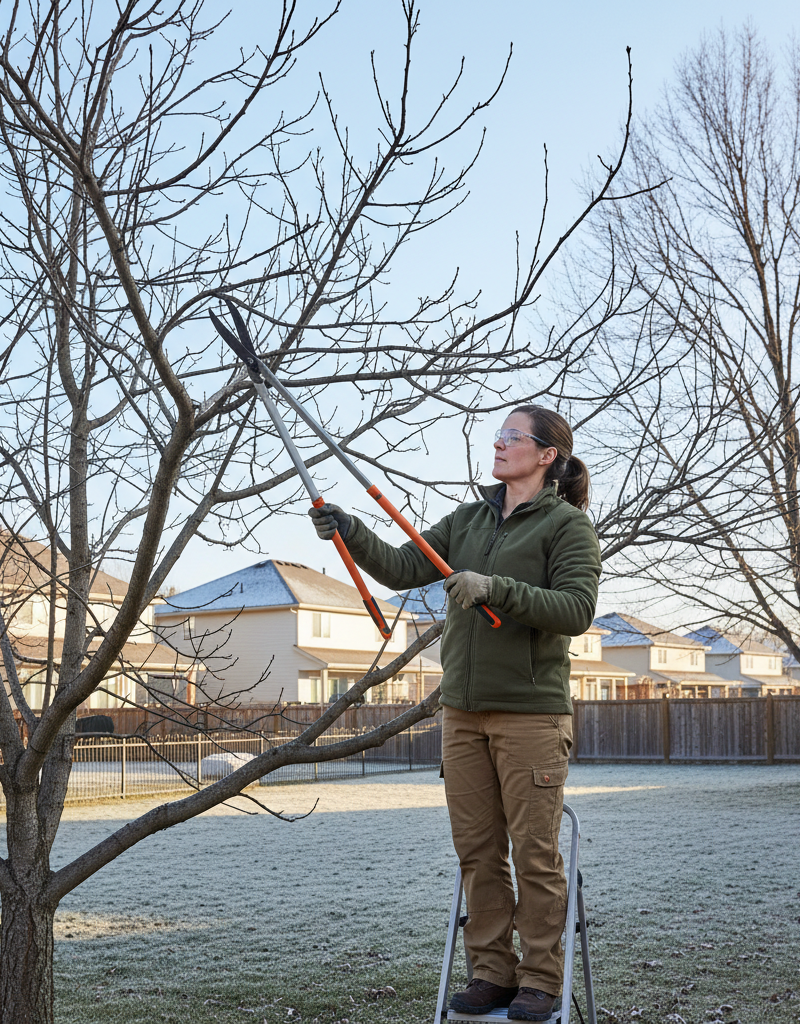
- Tools: Hand pruners (bypass style for branches up to 3/4 inch), loppers (for branches 3/4 inch to 2 inches), pruning saw (for branches over 2 inches). Ensure all tools are sharp and clean.
- Safety: Wear sturdy gloves, eye protection, and a hard hat if pruning overhead. For larger branches or ladder work, consider a spotter. Never prune near power lines; call a professional.
5. Make Clean, Proper Cuts — Promote healing and prevent damage.
- Small branches: Cut just beyond a bud or branch collar (the swollen area where a branch joins a larger one). Aim for a 45-degree angle slanting away from the bud.
- Larger branches (three-cut method): To prevent bark stripping, make an undercut about 6-12 inches from the main trunk, going about 1/3 of the way through. Then, make a top cut a few inches further out from the undercut, letting the branch fall. Finally, make your clean finish cut just outside the branch collar, not flush with the trunk, to allow for proper healing.
- Dead/Diseased branches: Prune these back to healthy wood. Make sure your tools are sterilized with rubbing alcohol or a bleach solution between cuts, especially when dealing with diseased wood, to prevent spreading pathogens.
6. Avoid Over-Pruning — Less is often more when it comes to tree health. As a general rule, never remove more than 25% of a tree's canopy in a single year, and ideally, aim for 10-15%. Excessive pruning stresses the tree, can stunt growth, and make it more vulnerable to pests and diseases. Focus on selective cuts that achieve your goal rather than indiscriminately shearing.
7. Monitor Tree Health Post-Pruning — Watch for signs of stress or improper healing. After pruning, observe the tree for signs of stress, such as wilting, yellowing leaves (though this can also be normal seasonal change), or excessive sap production. Ensure adequate watering, especially during dry periods. Healthy trees should show signs of new growth around the cuts within the next growing season, indicating successful healing.
Common Causes
Many common pruning mistakes stem from a lack of understanding about tree biology and species-specific needs. Here are the underlying causes:
- Generalizing Pruning Timing: Assuming all trees can be pruned at the same time, without differentiating between deciduous and evergreen, or spring-flowering versus summer-flowering species.
- Reacting to Problems Rather Than Proactively Planning: Waiting until a branch is dangerously overgrown or diseased before pruning, often leading to large, stressful cuts outside the optimal window.
- Misunderstanding Dormancy: Not recognizing that late winter dormancy provides the best conditions for most major pruning work.
- Lack of Species-Specific Knowledge: Homeowners often don't know the specific needs of each tree in their yard, leading to generic pruning practices.
- Aesthetic Over Practicality: Pruning solely for a desired shape or size without considering the tree's health and natural growth habit or the impact on flowering/fruiting.
- Ignoring Disease/Pest Cycles: Pruning when specific diseases (like Oak Wilt) or pests (like borers) are active, thereby creating entry points for infection.
Common Mistakes
- Topping Trees: Severely cutting back a tree's main branches to stubs. This is highly damaging, creates weak, dense growth, and dramatically shortens the tree's lifespan. Never top a tree; instead, use proper reduction cuts.
- Pruning Spring-Flowering Trees in Late Winter/Early Spring: This removes the flower buds set the previous year, resulting in no blooms for the season. Wait until immediately after they finish flowering.
- Pruning Right Before a Growth Spurt: Cutting back heavily at the very end of dormancy or beginning of spring can stimulate excessive, weak growth that's prone to breakage and frost damage.
- Using Dull or Dirty Tools: Dull tools tear branches, leaving ragged wounds that heal slowly and are prone to disease. Dirty tools can transfer diseases from one tree to another. Always keep tools sharp and sterilized.
- Leaving Stubs or Flush Cuts: Leaving a stub (a small piece of branch beyond the branch collar) prevents proper wound closure. Cutting too close to the trunk (flush cut) removes the branch collar, which contains specialized cells essential for healing, creating a much larger wound that struggles to close.
- Ignoring the Branch Collar: The swollen ring of tissue at the base of a branch is critical for wound healing. Incorrectly cutting into or past this collar impairs the tree's ability to compartmentalize the wound.
- Removing Too Much at Once: Taking off more than 20-25% of the canopy in a single season severely stresses the tree and can lead to irreversible decline.
Cost & Time Breakdown
| Task | DIY cost | Pro cost | Time |
|---|---|---|---|
| Hand Pruning (small branches) | $0–$20 | $100–$300 | 15–30 minutes |
| Lopper Use (medium branches) | $0–$50 | $200–$600 | 30–60 minutes |
| Saw Pruning (larger branches) | $0–$100 | $400–$1,000+ | 1–3 hours |
| Multiple Tree Pruning | $20–$150 (tools) | $500–$2,500+ | 2–8 hours per tree |
| Emergency/Hazardous Branch Removal | N/A | $500–$5,000+ | 2–8 hours |
Tips & Prevention
- Familiarize Yourself with Your Trees: Spend time learning the specific growth habits, flowering times, and ideal pruning windows for each tree species on your property.
- Prune for Structure Early: When trees are young, focus on establishing a strong central leader and well-spaced scaffold branches. This prevents major structural issues later.
- Sanitize Tools Regularly: Before starting a job, and between pruning different trees (especially if one looks diseased), clean your pruning tools with rubbing alcohol or a 10% bleach solution to prevent disease spread.
- Monitor for Dead or Diseased Wood: Regularly inspect your trees for dead, dying, or diseased branches. These can be removed at any time of year to improve tree health and safety, though proper disposal is key.
- Avoid Pruning During Drought or Extreme Stress: Pruning further stresses a tree that is already struggling. Ensure your trees are well-watered and healthy before any significant pruning.
- Understand Tree Growth Response: Recognise that pruning stimulates growth nearby the cut. Use this knowledge to direct future growth where you want it. Removing a terminal bud, for example, encourages lateral branching.
When to Call a Professional
While knowing when to prune is essential, homeowners must also know when the job exceeds their capabilities. You should always call a licensed arborist for:
- Large Branches: Any branch that requires a ladder, a pole saw, or is too heavy to control safely. Large branches can cause significant injury or property damage if they fall incorrectly.
- Proximity to Power Lines: Never attempt to prune any tree near power lines. This is extremely dangerous and can be fatal. Contact your utility company immediately.
- Diseased or Hazardous Trees: If a tree shows signs of significant disease, rot, or structural instability (e.g., large cracks, leaning severely), a professional arborist can assess the risk and recommend safe removal or mitigation strategies.
- Advanced Structural Pruning: Correcting major structural defects, crown reduction, or highly specialized fruit tree pruning often requires an arborist's expertise to ensure the tree's long-term health and aesthetic appeal.
- Trees Taller Than 15-20 Feet: Working at height with sharp tools is inherently risky; leave tall tree maintenance to professionals equipped with the right gear and training. Ignoring these guidelines can lead to severe injury, property damage, or the irreversible harm of your trees.
Related Articles
Keep troubleshooting with these hand-picked guides from FixlyGuide:
- The #1 Lawn Aeration Mistake Most Homeowners Make (And How to Fix It) — Timing is everything when it comes to lawn aeration, and doing it at the wrong time can do more harm than good for your grass.
- The #1 Pruning Mistake That Chokes Your Shrubs (And How to Fix It Right Now) — Discover the most common pruning error homeowners make and how to correct it for healthier, more vigorous shrub growth.
- The #1 Lawn Aeration Mistake Most Homeowners Make (And When to REALLY Do It) — Discover the crucial mistake many homeowners make with lawn aeration and learn the optimal timing for a healthier, more vibrant lawn.
- The #1 Mistake Homeowners Make When a Sprinkler Head Won't Pop Up — A common problem with sprinkler systems is a head that won't pop up, often due to a simple clog or adjustment issue.
- The #1 Watering Mistake Homeowners Make (And How to Fix It in Minutes) — Discover the most common lawn watering mistake homeowners make and how adjusting your technique can lead to a healthier, greener lawn.
- The One Mistake Homeowners Make When Shingles Blow Off (And How to Fix It Right) — After a storm, finding missing roof shingles can be alarming. Learn the critical mistake homeowners often make and how to properly assess a…
Should you do this yourself?
Answer five quick questions before you start. Safety outranks savings every time.
Your experience with work like this
How high do you have to work?
Does the job involve any of these?
Will it need a permit?
Specialty tools
Free and instant. Educational guidance only — not a quote, inspection, or professional diagnosis.
What should this project cost?
Enter your project details for a realistic cost range before you call anyone.
Cost depends heavily on which system turns out to be the source.
- Regional adjustment
- National average
- Labor share (typical)
- ~$1,620
- Quotes to collect
- 3 written estimates
Educational estimate based on national averages — not a binding quote. Always confirm with written local estimates.
Before you start
Check the difficulty, permits, and safety risk — then decide whether to call a pro.
- Estimate this projectGet a cost range for your scope and ZIP before you call anyone.Open
- Get local estimatesSend one request and compare written estimates from vetted pros.Open
Free, no signup required. Estimates are educational guidance, not a quote or an inspection.
Frequently asked questions
When is the absolute best time to prune most trees?+
For most deciduous trees, late winter (January-March) during dormancy is ideal. The tree's structure is visible, and the risk of disease is minimal. For evergreens, late winter to early spring works well. However, always confirm for your specific tree species.
Can I prune a tree in the summer?+
Summer pruning is generally suitable for light shaping or removing small, weak growth. It's also a good time for 'bleeding' trees like maples and birches. However, avoid heavy pruning in summer as it can stress the tree and remove essential foliage for photosynthesis. Always avoid pruning oak trees during the summer to prevent the spread of Oak Wilt.
What happens if I prune a tree at the wrong time?+
Pruning at the wrong time can lead to various problems: reducing flowering/fruiting, stimulating weak growth, increasing susceptibility to pests and diseases, and causing significant stress to the tree. For example, pruning spring-flowering trees in late winter removes their flower buds, sacrificing a year's blooms.
How much of a tree can I prune at once?+
As a general rule, never remove more than 25% of a tree's total canopy in a single year. Ideally, aim for 10-15% to minimize stress and prevent excessive compensatory growth. Focus on selective cuts rather than shearing.
Discussion
Loading comments…