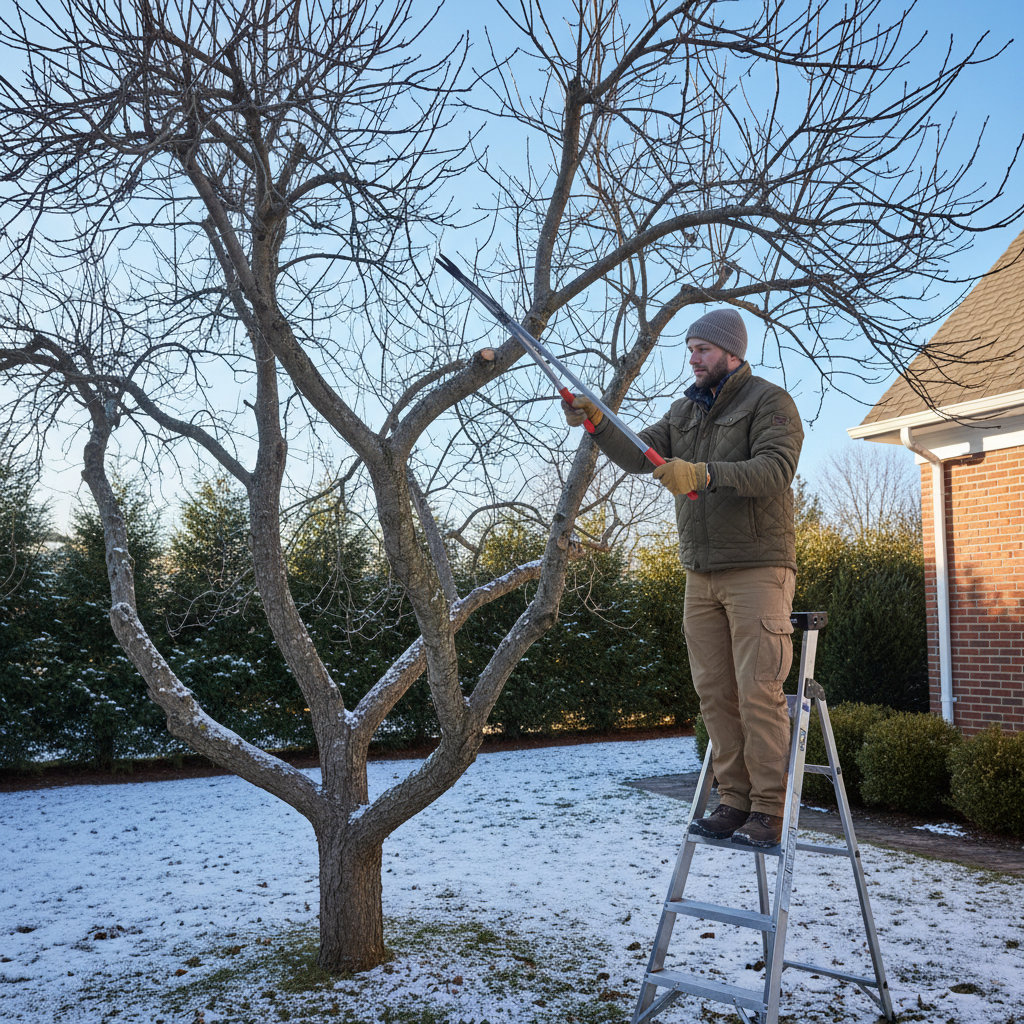
- Determine the Ideal Pruning Season — Base your timing on the tree's identity.
- Most Deciduous Trees (e.g., Ash, Linden, Poplar): Prune during the dormant season, from late fall after leaves have dropped until early spring before new buds begin to swell. Late winter is often ideal, as the worst of the cold has passed.
- Oaks and Elms: Prune only in the coldest part of winter (December–February). Pruning during the growing season creates wounds that attract beetles carrying devastating Oak Wilt and Dutch Elm Disease.
Landscaping · Deck or fence project
| Project category | Landscaping |
|---|---|
| Problem type | Deck or fence project |
| Trade required | Landscaping |
| Urgency | Planned project |
| Safety risk | Moderate safety risk |
| DIY suitability | DIY for experienced homeowners |
| Cost category | High cost |
| Typical timeline | Most builds 3–10 days depending on size |
| Contractor type | Landscaping contractor |
Repair option
Replace failed boards, posts, and hardware; reseal the surface.
Replacement option
Rebuild when framing or the ledger connection is unsafe.
Common causes
- Rot at posts and ledger
- Storm damage
- Adding outdoor living space
Relevant tools:home improvement material pricesproject cost estimator
Published April 24, 2026Last updated August 17, 2026
Tools & materials you'll need
Affiliate links- AmazonBypass PrunersFor branches up to 3/4 inch thick
- AmazonLoppersFor branches up to 1 1/2 inches thick
- AmazonPruning SawFolding or pole saw for branches over 1 1/2 inches
- AmazonSafety Glasses
- AmazonWork GlovesHeavy-duty to protect hands from thorns and splinters
- AmazonLadderIf needed for higher branches; ensure it's stable on level ground and rated for your weight
- AmazonRubbing Alcohol or Bleach SolutionFor sterilizing tools between cuts, especially for diseased branches
As an Amazon Associate FixlyGuide earns from qualifying purchases — at no extra cost to you. Prices and availability are accurate as of publication and subject to change.
How it works
A tree's life is governed by a distinct annual cycle of active growth and dormancy. Understanding this rhythm is fundamental to proper pruning. In spring and summer, the tree is in its active growth phase. Triggered by longer days and warmer temperatures, leaf buds break open, and the canopy expands. These leaves are photosynthetic factories, converting sunlight, water, and carbon dioxide into sugars (food). This energy fuels the expansion of the trunk, branches, and roots. Sap, containing water and nutrients from the soil, flows vigorously upward through the xylem tissue, while the sugars produced in the leaves are transported downward through the phloem to nourish all parts of the tree and be stored for later use. Pruning during this high-energy period forces the tree to divert resources from growth to wound response. A fresh cut is an open wound, and during the active season, airborne pathogens and active insect populations can easily colonize this exposed tissue.
As autumn approaches, decreasing daylight and cooler temperatures signal the tree to prepare for winter dormancy. It begins to withdraw valuable nutrients from its leaves, causing their color change and eventual drop. Photosynthesis ceases, sap flow slows to a near halt, and metabolic activity plummets. The tree survives the winter by consuming the energy reserves stored in its roots and woody tissues during the growing season. This dormant period, from late fall to early spring, is the optimal window for most pruning. The tree is at rest, and the stress of removing a branch is minimal. Without leaves, the entire branch structure is visible, making it easy to identify and remove problematic limbs. Furthermore, most insects and fungal spores are inactive in the cold, drastically reducing the risk of pest infestation or disease infection at the pruning sites.
Step-by-Step Fix
Proper pruning is a combination of correct timing and precise technique. Follow these steps to prune for tree health and structure without causing unintended harm.
-
Identify Your Tree — Before you make a single cut, positively identify your tree species. Different trees have unique requirements. Is it a deciduous hardwood like an oak or maple? A flowering ornamental like a dogwood? A fruit tree? An evergreen conifer? Use a plant identification app, a local gardening guide, or consult your local university extension service. This knowledge dictates the entire pruning schedule.
-
Determine the Ideal Pruning Season — Base your timing on the tree's identity.
- Most Deciduous Trees (e.g., Ash, Linden, Poplar): Prune during the dormant season, from late fall after leaves have dropped until early spring before new buds begin to swell. Late winter is often ideal, as the worst of the cold has passed.
- Oaks and Elms: Prune only in the coldest part of winter (December–February). Pruning during the growing season creates wounds that attract beetles carrying devastating Oak Wilt and Dutch Elm Disease.
- Spring-Flowering Trees (e.g., Magnolia, Dogwood, Forsythia, Redbud): These trees form their flower buds on old wood during the previous summer. Pruning them in winter will remove the flower buds. Wait until immediately after they finish blooming in the spring to prune.
- Maples, Birches, and Walnuts: These trees are "bleeders," meaning they exude large amounts of sap if pruned in late winter or early spring. While this rarely harms the tree, it can be unsightly. To avoid the mess, prune them either in mid-summer after their leaves have fully developed, or during the deepest part of winter dormancy.
-
Assess the Tree and Plan Your Cuts — Stand back and examine the tree from all sides. Your goal is to remove the "Four D's" first: Dead, Damaged, Diseased, and Deranged (i.e., crossing or rubbing) branches. Then, look for weak V-shaped unions, water sprouts (vigorous vertical shoots), and suckers (shoots from the base). Envision which branches to remove to improve structure and light penetration. Do not remove more than 25% of the live canopy in one year.
-
Gather and Sharpen Your Tools — Using the right tool makes for cleaner cuts and less work. Ensure all blades are sharp to slice wood fibers cleanly rather than crushing them.
- Tools:
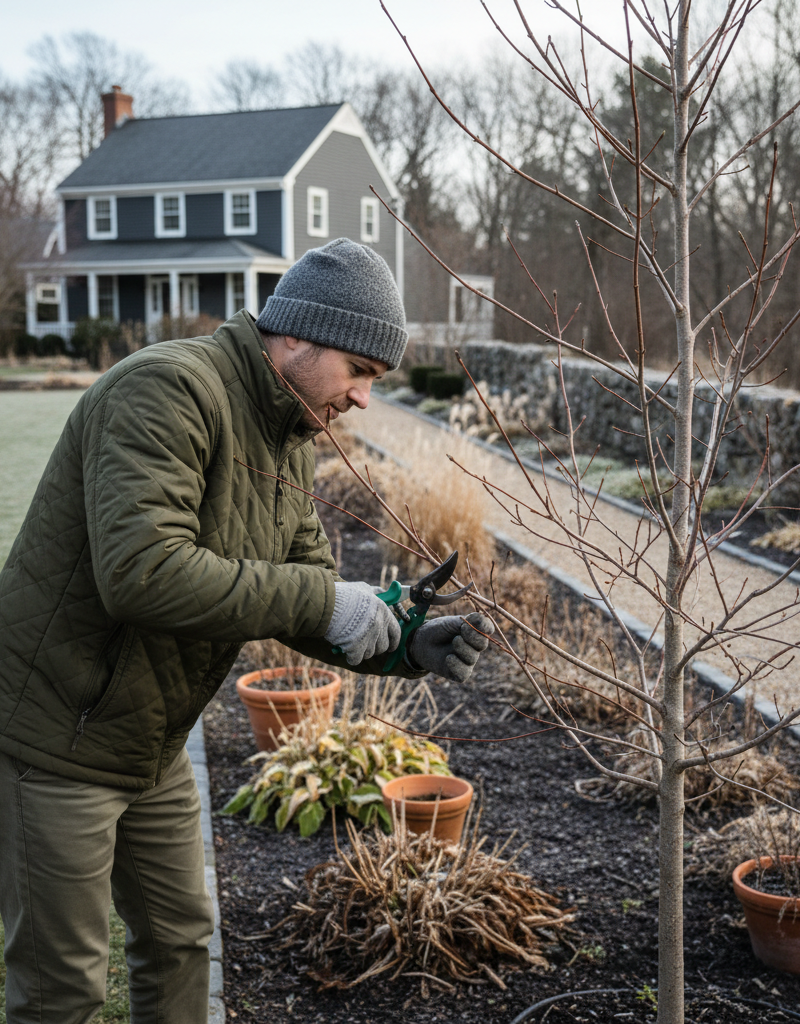
- Bypass Hand Pruners: For stems up to 3/4 inch in diameter.
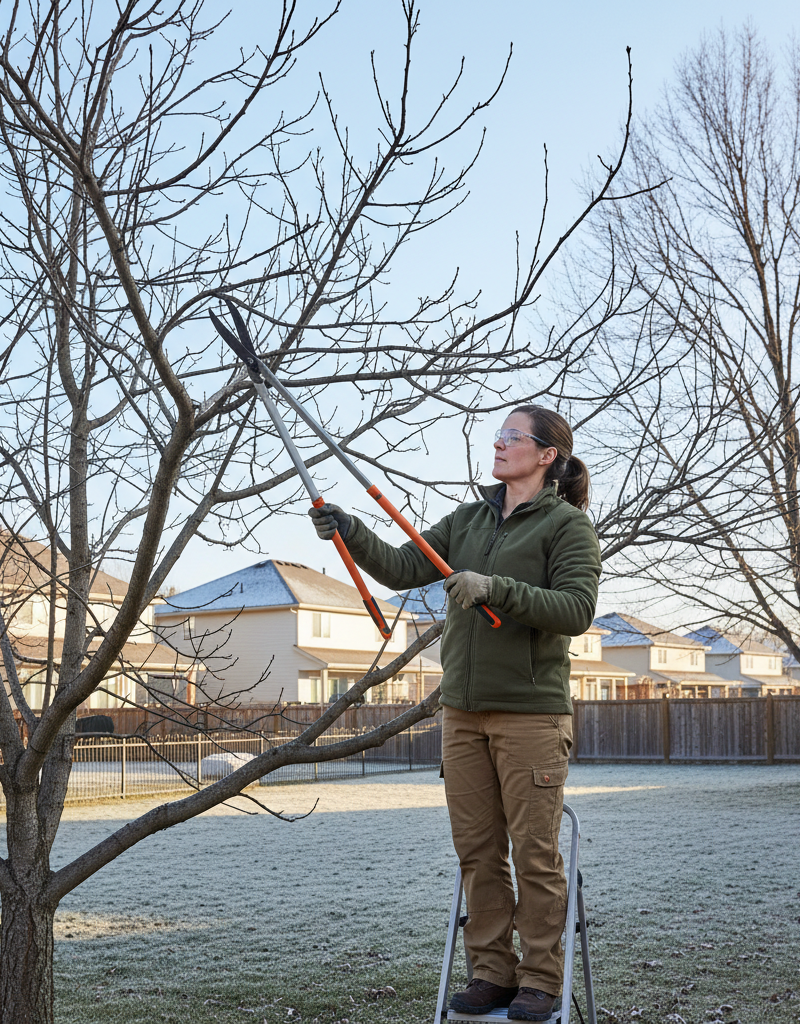
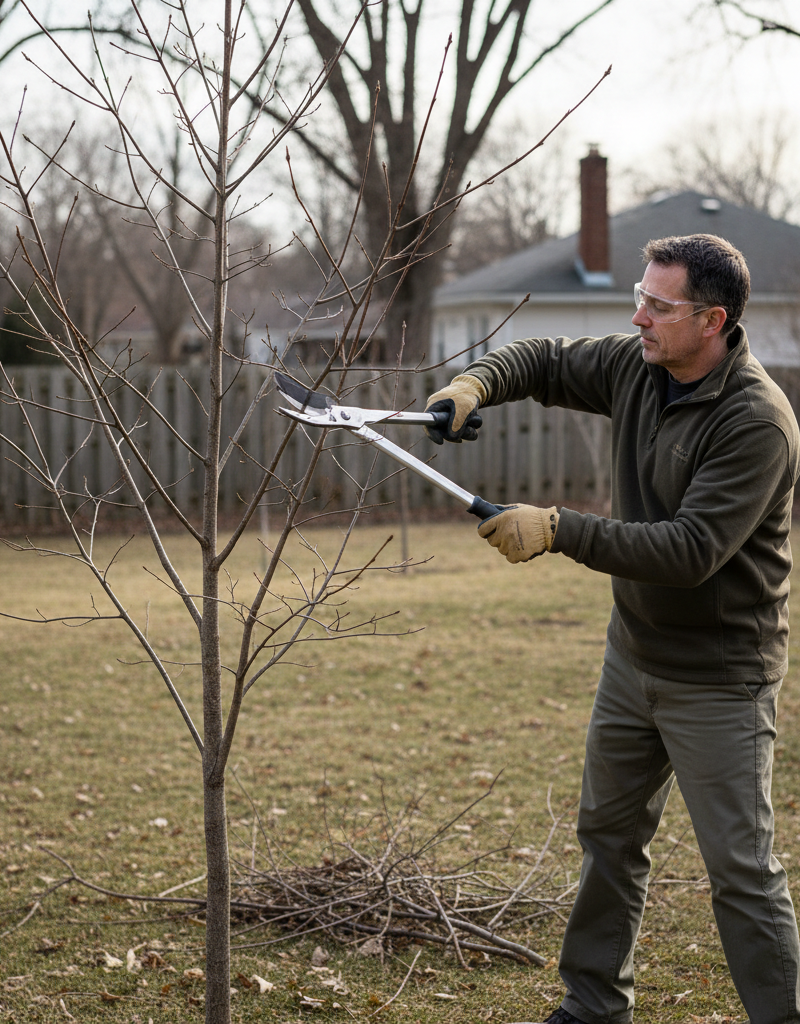
- Bypass Loppers: For branches from 3/4 inch to 1.5 inches. The long handles provide leverage.
- Pruning Saw: For branches over 1.5 inches in diameter. A curved blade is excellent for getting into tight spaces.
- Pole Saw: For reaching higher branches without using a ladder.
- Tools:
-
Sanitize Your Tools — Prevent the spread of disease by cleaning your tools before you start and between trees. If you are cutting out diseased wood, sanitize the blade after every single cut.
- Safety: Wear gloves and safety glasses.
- Procedure: Wipe blades down with a cloth soaked in 70% isopropyl alcohol or a 10% bleach solution (1 part bleach to 9 parts water). Bleach is corrosive, so rinse and dry your tools after use.
-
Use the Three-Cut Method for Large Branches — For any branch over 1.5 inches in diameter, this method prevents the weight of the branch from tearing a long strip of bark down the trunk.
- Cut 1 (Undercut): About 12-18 inches out from the trunk, make a cut on the underside of the branch, going about one-third of the way through. This stops a tear from running down the trunk.
- Cut 2 (Removal Cut): Move an inch or two farther out from the first cut and saw through the entire branch from the top. The branch will break away cleanly between the two cuts without tearing the trunk bark.
- Cut 3 (Final Cut): You are now left with a manageable stub. Make the final cut just outside the branch collar.
-
Locate the Branch Collar — The branch collar is the slightly swollen ridge of tissue where the branch meets the trunk. It contains specialized cells that will heal over the pruning wound. Do not cut into it, and do not leave a long stub beyond it. Your final cut should be a smooth angle just outside this collar. A proper cut leaves a small, circular wound that the tree can compartmentalize and seal.
-
Prune Smaller Stems Correctly — When trimming back smaller branches or stems to encourage directional growth, locate a healthy, outward-facing bud. Make your cut about 1/4 inch above this bud at a 45-degree angle, slanting away from the bud. This directs new growth outward and prevents water from pooling on the bud.
-
Thin, Don't Top — Healthy pruning involves thinning cuts, which remove an entire branch back to its point of origin. Avoid "topping," which is the indiscriminate shearing of the top of a tree. Topping creates a cluster of weak, poorly attached sprouts and starves the tree by removing too much foliage. If a tree's height is a problem, a certified arborist can perform a proper crown reduction.
-
Clean Up All Debris — Rake up all removed branches, leaves, and sawdust. If any of the material was diseased, do not compost it. Bag it for disposal or burn it (where permissible) to prevent pathogens from reinfecting the tree or spreading to others.
Common mistakes
Avoiding these frequent errors is as important as learning the correct techniques. They are often the root cause of long-term tree decline.
- Pruning at the Wrong Time of Year. This is the number one mistake. Trimming a magnolia in February removes its spring flowers. Cutting an oak in June invites fatal oak wilt disease. Instead: Positively identify your tree species and research its specific pruning calendar. When in doubt, the safest bet for most deciduous trees is late winter, but exceptions are critical.
- Making Flush Cuts. Slicing a branch off perfectly flush with the trunk is a common but damaging practice. This removes the branch collar, which contains the specialized cells needed to seal the wound. A large, oval wound is created that the tree cannot effectively close, leading to decay in the trunk. Instead: Always locate the branch collar and make your final cut just to the outside of it, leaving the collar intact.
- Leaving Long Stubs. The opposite of a flush cut, leaving a branch stub several inches long is also detrimental. The tree cannot seal a wound that is far from the trunk. The stub will die, rot, and become an entry point for pests and wood-decaying fungi. Instead: Make the final cut just outside the branch collar, creating a small, clean wound the tree can compartmentalize.
- Using Dull or Dirty Tools. A dull blade crushes and tears wood fibers, creating a ragged wound that is slow to heal and prone to infection. Dirty tools act as vectors, spreading fungal spores and bacteria like fire blight from a diseased branch or tree to a healthy one. Instead: Sharpen your tools at the beginning of the pruning season. Sanitize blades with isopropyl alcohol or a bleach solution between trees, and after every cut on diseased wood.
- Applying Pruning Paint or Sealant. Decades ago, it was common practice to paint pruning wounds. Modern arboriculture has proven this is counterproductive. These sealants trap moisture and pathogens against the wood, inhibiting the tree's natural defense mechanism, known as CODIT (Compartmentalization Of Decay In Trees). Instead: Leave the wound exposed to the air. A properly made cut on a healthy tree will heal itself far more effectively without any dressing.
- "Lion-Tailing" a Tree. This involves stripping all the interior branches and foliage from a limb, leaving only a tuft of leaves at the end, like a lion's tail. This is extremely harmful. It removes the foliage that feeds the branch, concentrates weight at the very tip, and exposes the bark to sunscald. Instead: Use thinning cuts to remove entire branches, distributing cuts evenly throughout the canopy to improve light and air circulation without destroying the tree's structure.
Cost & time breakdown
Costs vary based on the quality of tools purchased and regional arborist rates. Time estimates include research, active work, and cleanup for a proficient DIYer.
| Task | DIY cost | Pro cost | Time |
|---|---|---|---|
| Basic pruning of a small tree (<15 ft) | $50 - $120 (for hand pruner, loppers) | $250 - $500 | 2-3 hours |
| Corrective pruning of a medium tree (15-30 ft) | $100 - $250 (+ pruning saw, pole saw) | $400 - $850 | 3-5 hours |
| Removal of a large branch (4-6 inch diameter) | $20 - $40 (for a quality saw) | $300 - $600 (part of a larger job) | 1-2 hours |
| Annual tool maintenance (sharpening/cleaning) | $10 - $30 (file, oil, alcohol) | N/A | 30 minutes |
| Professional Tree Health & Risk Assessment | N/A | $150 - $400 | 1-2 hours (on-site) |
| Debris removal service | $0 - $50 (if using municipal waste) | $100 - $300 (chipping/hauling) | 1 hour |
When to call a pro
While minor pruning is a manageable DIY task, many situations require the expertise and equipment of a certified arborist. Call a professional if you encounter any of the following:
- Pruning requires a ladder. The combination of unstable footing, holding a sharp tool, and shifting weight is a recipe for serious falls. Arborists use specialized ropes and safety gear to work at height safely. If you can't reach it with both feet firmly on the ground or with a pole saw, it's a job for a pro.
- Branches are near utility lines. Never attempt to prune branches that are close to, or touching, power lines. A single mistake can be fatal. Only specially trained and certified utility arborists are qualified to perform this work.
- The tree is large or mature. For trees over 25-30 feet tall, the risks increase dramatically. Large limbs can weigh hundreds of pounds and cause significant damage to property or people if they fall uncontrollably.
- Major limbs (over 4 inches in diameter) need removal. Cutting and safely lowering limbs of this size requires specialized rigging techniques to prevent damage to the tree and surrounding property.
- The tree shows signs of significant disease, decay, or structural problems. Large cavities, deep cracks, a leaning trunk, or major fungal growth are signs of a potentially hazardous tree. A pro with a Tree Risk Assessment Qualification (TRAQ) can diagnose the problem and recommend a safe course of action.
Prevention & maintenance
Good maintenance minimizes the need for drastic, corrective pruning later in a tree's life.
- Prune for Structure When Young. The best time to shape a tree is in its first few years. Making small, strategic cuts to establish a single dominant leader and well-spaced scaffold branches is far less stressful for the tree than removing huge, poorly placed limbs a decade later.
- Conduct an Annual Dormant Season Inspection. Once a year in the winter, walk around your property and visually inspect your trees. Without leaves, it's easy to spot the "Four D's": Dead, Damaged, Diseased, and Deranged (crossing/rubbing) branches. Small problems can be snipped out before they become big ones.
- Monitor for Pests and Disease. Throughout the growing season, keep an eye out for signs of trouble like discolored leaves, unusual growths, insect infestations (e.g., Japanese beetles, scale), or powdery mildew. Catching these issues early can often be addressed with treatments that prevent branch dieback.
- Maintain a Proper Mulch Ring. Apply a 2-4 inch layer of organic mulch (like wood chips or shredded bark) around the base of the tree, keeping it 3-6 inches away from the trunk itself. This conserves soil moisture, suppresses weeds, and regulates soil temperature, reducing overall tree stress.
- Water Correctly During Drought. A healthy tree is a resilient tree. During extended dry periods, provide deep, infrequent waterings to encourage a strong, deep root system. A slow-trickling hose at the dripline for several hours is more effective than a light, frequent spray.
- Never "Top" a Tree. Resist the urge to shear the top off a tree that has grown too tall. This destructive practice ruins the tree's structure, invites disease, and creates weak, hazardous sprouts. If a tree's size is an issue, hire a certified arborist to perform a proper crown reduction or consider removal and replacement with a more appropriately sized species.
Related Articles
Keep troubleshooting with these hand-picked guides from FixlyGuide:
- How to Prune Overgrown Shrubs for Health — Learn how to properly prune your overgrown shrubs to encourage healthy growth, improve their shape, and increase flowering without damaging…
- The #1 Lawn Aeration Mistake Most Homeowners Make (And How to Fix It) — Timing is everything when it comes to lawn aeration, and doing it at the wrong time can do more harm than good for your grass.
- [How to Prune Overgrown Shrubs Without Killing Them: A
Should you do this yourself?
Answer five quick questions before you start. Safety outranks savings every time.
Your experience with work like this
How high do you have to work?
Does the job involve any of these?
Will it need a permit?
Specialty tools
Free and instant. Educational guidance only — not a quote, inspection, or professional diagnosis.
What should this project cost?
Enter your project details for a realistic cost range before you call anyone.
Cost depends heavily on which system turns out to be the source.
- Regional adjustment
- National average
- Labor share (typical)
- ~$1,620
- Quotes to collect
- 3 written estimates
Educational estimate based on national averages — not a binding quote. Always confirm with written local estimates.
Before you start
Check the difficulty, permits, and safety risk — then decide whether to call a pro.
- Estimate this projectGet a cost range for your scope and ZIP before you call anyone.Open
- Get local estimatesSend one request and compare written estimates from vetted pros.Open
Free, no signup required. Estimates are educational guidance, not a quote or an inspection.
Get the print-ready PDF of this guide
A clean, ad-free, printable version you can keep on your phone or pin to the workshop wall. Free with a FixlyGuide account.
- Print-optimized layout
- Tools, materials & every step included
- Saved to your account
Frequently asked questions
What happens if I prune a tree at the wrong time?+
Pruning at the wrong time can stress the tree, leading to excessive sap bleeding, reduced growth, susceptibility to pests and diseases, and loss of flowers or fruit in the following season.
When is the best time to prune most deciduous trees?+
For most deciduous trees, the dormant season (late fall after leaf drop through late winter before bud break) is ideal. This minimizes stress, allows for clear visibility of the tree's structure, and reduces pest/disease risk.
Can I prune oak trees in the spring?+
No, it is critical to avoid pruning oak trees from April to July in many regions due to the risk of oak wilt spread by beetles. Prune oaks only in the coldest winter months when these beetles are inactive.
When should I prune spring-flowering trees?+
Spring-flowering trees like dogwood, magnolia, or cherry should be pruned immediately after their flowers fade. Pruning before they flower will remove the buds for the current season's blooms.
Is there a bad time to prune dead branches?+
No, dead, diseased, or damaged branches can (and should) be pruned at any time of year. Removing them promptly prevents decay from spreading and improves the tree's overall health and safety.
Discussion
Loading comments…